The Amazon is a river of death. It's an unforgiving environment whose inhabitants live in a deadly daily struggle. The murky waters teem with predators, all driven by one primal goal kill or be killed.
Beyond the caimans, snakes and jaguars on the riverbanks. There's a bevy of hunters ready to strike in its murky waters. These are the most ferocious and weirdest hunters of the Amazon River.
Hi, I’m Danielle Dufault and you're watching Animalogic. The Amazon is one of the most amazing ecosystems on Earth. Its basin is so large that if it was a country, it would be the seventh largest country in the world.
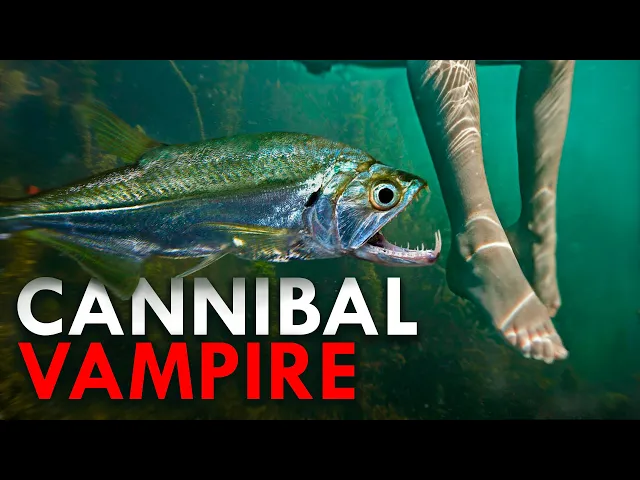
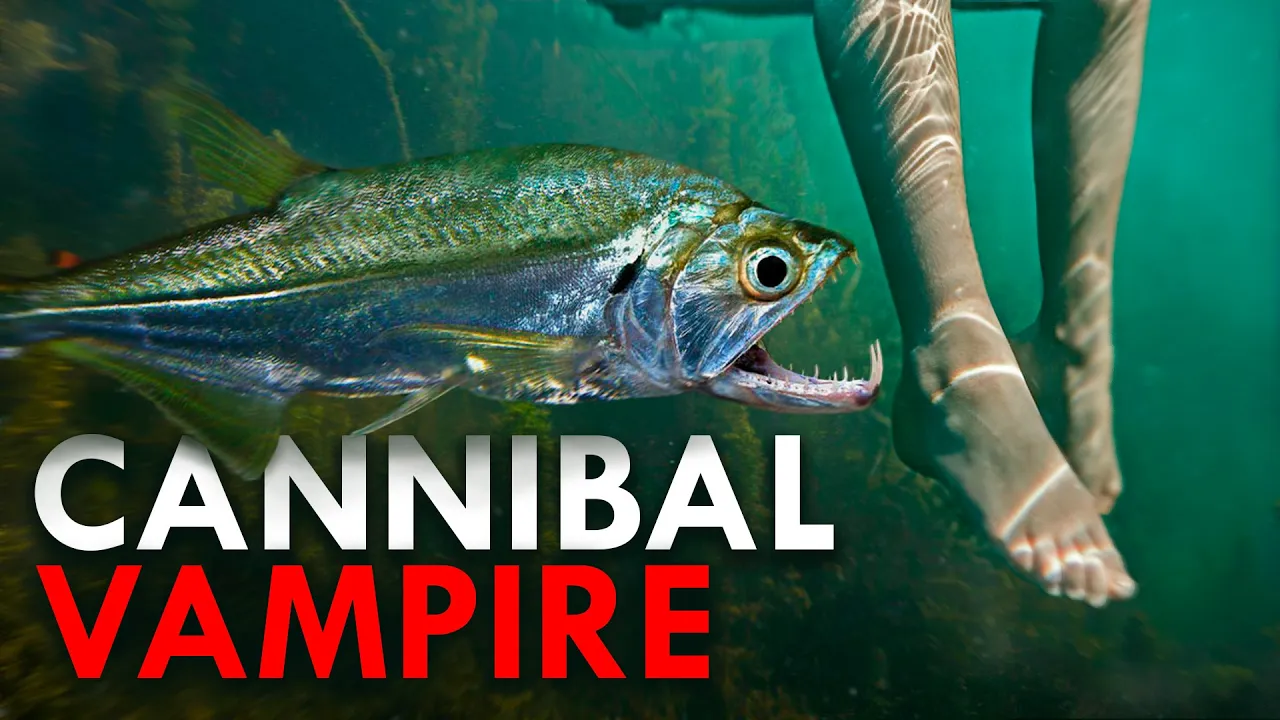
That's a lot of land to house, a lot of predators, and possibly the scariest of them are the fish. And among them, none is weirder than the Payara. Often known as the vampire fish due to its resemblance to Nosferatu.
This is a hardy fish that feasts on piranhas. It preys on the most famously terrifying fish in the world. They're kinda like the Omar of fish.
If you come for the king, you best not miss because the Payara is ready to stab you with its massive fangs. Payaras can be over a meter long with fangs the size of bananas. The fangs are so big that they need extra space in their skull to shield them.
One single bite stabs through the heart and guts of its prey, and then they swallow it whole. You could say this is a little disappointing because they're usually known as vampire-fish, but they don't really drink blood. They just make fish skewers every time they go out on the prowl.
Thankfully for us, in the comfort of our homes. But unluckily for those in the Amazon, there are real vampire fish in the river. But we'll get to them a little later.
One of the things about living in the river is that some areas have low oxygen levels, due in part to the dead plant and animal matter that falls and rots in the river. Some animals have adapted to these environments, but not the Payara. The Payara is all about speed and power and it needs lots of oxygen.
To get it the fish hangs around rapids, waiting for unsuspecting prey to be carried by the currents into their mouth daggers. Because of their awesome looks, Payaras have become a bit of a favorite species among aquarists. But they're aggressive, hard to keep, and require a lot of space.
So please leave them alone in the Amazon to kill off their leisure. Unless you're an expert. And even then.
. . It's not quite a peaceful death.
But all things considered, it's not bad compared to the other ways to die in the Amazon. Payaras are metal as hell. They even look as if they were made of mithril.
But even they would be wary of the giants of the muck. The Arapaima. The Amazon is the largest or second largest river on Earth, depending on how you measure it.
It also has over a thousand tributaries that form a labyrinth of dark water that can be seen from space. The river is over five kilometers wide in some areas, but during the rainy season it floods to over 40km in width, making it impossible to even see the other side. It's so wide and it's banks so ever changing that there are no bridges at all in its 8000 km of length, and humans have to rely on boats for transportation.
But during the dry season, the flood descends into shallow ponds and streams. And it's here where the largest fish in South America thrives. This is the Arapaima, or Pirarucu.
A healthy adult can be over two meters long, with some exceptional cases of three meter long monsters. To hunt, they just need to quickly open their mouth, creating a vacuum and suctioning their prey into their mouths. Some reports even say these jungle leviathans leaped from the water to snatch birds mid-air.
Come on, that's just a cartoonishly terrifying predator. It's like the mosasaurus who jumps up and snatches a pterosaur in Jurassic World. It's crazy.
On top of that, they're covered in a full scale armor, which is kind of a marvel of evolutionary engineering. The scales are made of collagen and calcium phosphate, which makes them tough on the outside, but internally they're made of layers that give them both amazing flexibility and impact absorption. It's a similar structure to that of bulletproof vests.
Piranhas and caimans. Their theoretical foes have a hard time penetrating their armor, especially when they're full grown. So it really can do anything it wants in their tiny ponds.
As the water level gets lower in the dry season, fish often get trapped in ponds disconnected from the main river. You'd think this would be a problem for a fish the size of a bull, but the Arapaima has yet another ace up its fin. It can breathe out of the water.
Arapaimas have adapted to life in low oxygen conditions and drying rivers by turning its swim bladder into a kind of lung. Even in good conditions, they can't use their gills much and instead come up to the surface to breathe every 15 minutes or so. When the rivers and ponds get lower, they can drag themselves to another body of water for short distances.
Unfortunately, their size, armor and surfacing behavior, which make them fearsome predators in their environments have also made them very attractive to fisherfolk, and due to overfishing, they're an endangered species. Fisherfolk can spot them when they come up to breathe, and they can use live bait or even beef and chicken organs as lures to catch them. Their meat is said to taste good, and they have enough of it to feed multiple people for several days.
Their scales can be used to make tools like files and polishing materials, and in some cases, jewelry. There are conservation efforts like fishing bans in areas of their range. But enforcement can be tricky in the middle of the jungle.
The only other fish that can hold an underwater candle to the arapaima in terms of size is the Piraiba catfish. There are reports of some of these catfish reaching lengths of over 3. 5m long, or about two average sized men stacked one on top of the other.
Like the Arapaima these catfish can breathe air from the surface and survive outside of the water for short periods of time. Their barbells or whiskers are full of chemoreceptors and pressure sensors. They can sense and smell any potential prey in their vicinity.
Once it gets close enough, they'll strike. These catfish are most active at night, and they're one of the many reasons not to go to the river after sunset. Another reason not to do it.
Boiling water. Some areas of the Amazon River are almost at boiling point. The highest reported temperature in the water is 99°C, or 210 Fahrenheit.
This was recorded in an area of Peru called Shanay-Timpishka. Waters from the Andes. Go underground and get heated by the Earth's mantle.
When they resurface, they're hot enough to kill most animals for several kilometers. As you can imagine, any animal that falls in gets cooked alive. Thankfully, they're far away from the massive waves the river experiences.
Yeah, killer waves are yet another thing you have to think about when you're an Amazonian animal. During full moons close to the spring and autumn equinoxes, ocean waters get into the river and reverses the flow for up to 800km. They call it the Pororoca.
At its peak, it creates waves up to four meters high that traveled hundreds of kilometers into the river. The waves go on for so long that some adventurers surf them. The current record for longest Pororoca surf is held by a Brazilian man, who rode it for over 12km, and a ride that lasted more than half an hour.
I've tried surfing once, and it was honestly the most fun I've ever had failing at something. That actually sounds like a lot of fun. The worst thing that can happen is that you get hit by debris carried by the wave and fall into piranha infested waters.
Surprisingly, that's not scary anymore. Piranhas have a terrible PR problem. Teddy Roosevelt wrote that he saw piranhas eat a cow in minutes, and from there, all people could picture when thinking about these amazing little predators was how quickly they could turn a human into a skeleton.
But really, they're not that aggressive and would rather go for smaller prey or in some cases, even plant matter, than take a chance with a large animal. Their teeth are sharp, interlocking triangles that can tear flesh out of prey. They're particularly handy when they find dead land animals that fall into the river.
Carrion is a valuable source of food for these fishes. It is true that some species, like the red bellied piranha, can travel in shoals. But these are mostly defensive maneuvers.
Since their waters are full of Arapaimas, river dolphins, caimans and herons just waiting for a chance to devour them. While there are hundreds of piranha bite reports annually, most are just single bites to the foot, often a defensive reaction to someone getting too close to their nest. So, of all the Amazonian animals that you should know about, this is one I want you to know is more chill than you might have thought.
They just look unreasonably scary for a fish their size, but that's not their fault. Their teeth are terrifying, but it could be worse. Imagine if they had human teeth.
Oh, God. Why? This is the piranhas cousin, the pacu.
Pacus have moved away from the hunting life to a more vegetarian, protein heavy diet in nuts. Their teeth, which resemble human molars, help them crush seeds and nuts, as well as other plant matter in the river. Like most seed eaters, they eventually pass them as poop and help trees disperse their seeds.
Now that you mention it their teeth do remind me of another seed disperses I met the other day. So, no, this isn't a weirdly specific mermaid with the mouth of a human and the body of a fish. It's just a specialist and specialists tend to be a little weird.
Like the beaver fish. No, this isn't another weirdly specific mermaid with the face of a beaver and the body of a fish. Rather, it's a relative of the common pleco, a cute fish kept in aquariums all over the world.
Beaver fish or panaques are sucker mouth catfish with specialized teeth designed to scrape wood and tough plants. Their sucker mouths help them attach themselves to wood, while their teeth slowly nodded. Their gut bacteria digests the wood and turns it into nutrients and energy for the fish.
And if someone tries to interrupt its lumberjack ways, they have fin spines that stab anything that tries to bite it. Yeah, this is a fish that's best left alone. In fact, it's best to leave alone anything at the bottom of the river, especially if they have serrated, venomous barbs and aren't afraid to use them.
The bottom of the river is home to river stingrays. There are several species with varying degrees of danger, but they all have incredibly painful venom. In some areas, they're even called something like the “you wish you weren't here fish”.
The saying is actually a little darker than that, but we can't say it due to community guidelines. Beyond unimaginable pain, the stings can cause infections, ulcers and necrosis. They're thought to have evolved to perforate the tough skin of caimans.
So of course it's easy for them to defend themselves from humans. Ouch. First Steve Irwin and now this.
Stingrays are kind of getting in my bad books. Just kidding. I love them just far away from where I swim.
But okay, we've beaten around the bush for too long now. We promised you vampire fish and we're going to give it to you. This is theCandiru!
Candirus are parasitic fish. They're long and thin and have a great sense of smell. It looks for the ammonia rich water coming out of the gills of larger fish, like most of the ones we've mentioned in this episode.
Once the host is found, it attaches itself to gill chambers and sucks on blood until it's full. After that, it lets go, often causing little to no harm to its prey. because of their blood sucking ways.
This fish has been accused of swimming up people's urethras, but this seems to be a myth. Quite simply, urethras are too small for these fish to dig into. They might in some instances be attracted by the smell of urine, but there's a huge jump from checking you out while you're peeing into the river to going into your body.
In some cases, when starved, the fish can go into the nostrils of a large fish. Fishermen might have seen this, seeing their behavior around ammonia, and concluded that they could do that to a human. But no confirmed cases exist.
So don't worry about them or piranhas. If you can, explore the Amazon. It's one of the most amazing and important places on earth.
Just be careful of caiman, anacondas and matamatas. But we’ll tell you more about them in another episode. If you liked learning about the Amazon and the fish in it.
Stick around for an episode all about one of the predators that could potentially eat most of these fish, the Amazonian river dolphin. Thanks for watching. See ya!
Unfortunately, there size armor and surfing. Surfing behavior. Yeah.
No wonder they're so attractive. I’m picturing them with, like, sunglasses. Do you think that they would swim up the urethra of an Amazon.
. . of an Amazonian river dolphin?