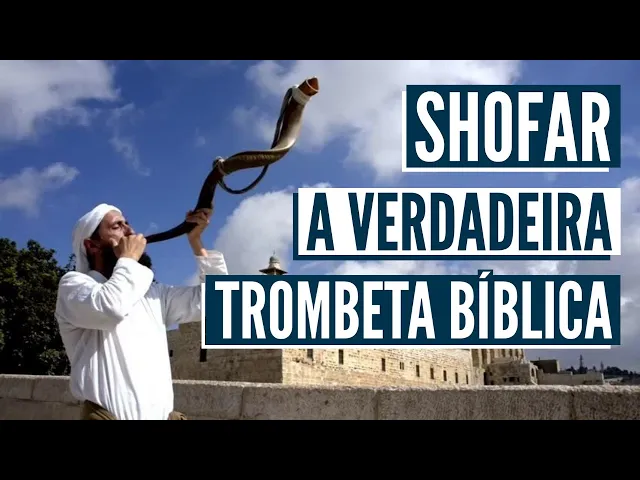
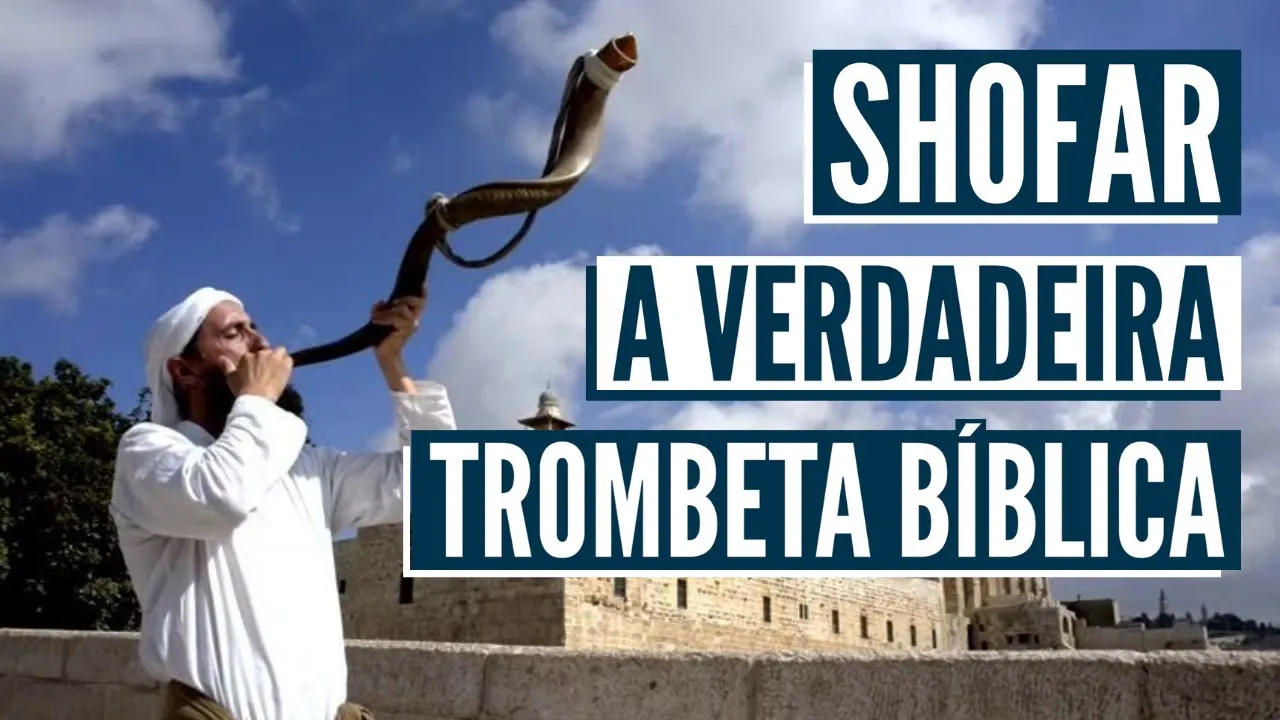
Shalom and welcome back to Israel with Aline! Today we are going to Giv'at Ze'ev, a city very close to Jerusalem, because we are going to visit together a Shofarot factory. A biblical trumpet factory, and understand a little more about this musical instrument which is so important since biblical times and until today.
So if you are ready, let's get started! The Shofar is an animal horn that is used as a trumpet, and it appears in the Bible from the very beginning. The first time is in Exodus 19:19; when the people of Israel are on Mount Sinai, in one of the most striking passages in the Old Testament, the people are gathered at the foot of Mount Sinai and these trumpets are heard, and they make all the people of Israel shudder.
And trumpets were in constant use in Biblical times, for example in the Temple of Jerusalem, the trumpets were used to announce the beginning of each month, and this is also how the Biblical feasts were announced. One important thing to remember: that there is a difference between Shofar and Chatzrotzra, normally in the Bible translations, both are translated as trumpets but they are two very different musical instruments; the shofar, which is the subject of today's topic, and here we can see a Chatzrotzra, as it looked like in the Temple in Jerusalem. [Sound of chatzrotzra] The trumpets; although they have a little different sound, we will hear it later, but they have a little different sound, they were also used by part of the orchestra in the Temple of Jerusalem, they were instituted already from the time of King David.
And the shofar was also used at the beginning of wars and battles, for example at the Battle of Jericho, they play the trumpets, they play the shofar. And there is one more time when the shofar is used, and that is on the Jewish New Year, on the Rosh Ha'shana. The book of Leviticus itself calls the Rosh Ha'shana "The Day of Trumpets," so it was a day when all the people stopped to hear the trumpets.
And since the New Year is approaching, we are going to go deeper into the meaning of the shofar and the connection of Biblical passages with the Jewish New Year. The Rosh Ha'shana, the Jewish New Year, it begins to be told from the creation of Adam and Eve, now how does God give life to Adam? He will blow life through Adam's nostrils, and that is why there is also a connection with the shofar, which is a blowing instrument; we use our life to blow the shofar, and what animal is the shofar made of?
It can be made of any clean animal according to the Bible, but there is one animal that we especially like to use, and that is the ram, the lamb. Why is that? Because it has a connection with another Biblical passage, which is the passage of Abraham going to sacrifice his son Isaac.
If Adam and Eve gave origin to humanity, Abraham will give origin to monotheism, as we know it and as we follow it until today. So Abraham when he goes to sacrifice his son Isaac, the angel comes and stops him and sends a lamb to be sacrificed instead. So when we use the shofar in the New Year, we remember Adam and Eve and we also remember Abraham, our father of faith.
The sound of the shofar also connects us again to the passage on Mount Sinai, where we receive God's commandments. So it reminds us of the keeping of the commandments throughout the year. Now, what does the shofar have to do with war?
As we said, the shofar is also connected not only with beautiful things but also with battles and wars. The shofar reminds us not only of the old wars, but also of the war to come, the war of the end times, but also our war and our inner battle. Since we have to fight every year to become better people, to have good actions, to help ourselves, but mainly to help our neighbor.
But now, folks, enough talking, let's get in the car and go together to Giv'at Ze'ev and see how this shofar is made, and also meet those who are professionals in the story, let's go! [Sound of the Shofar] I loved the reception we had here, but guys, they're working hard, we can see shofars here in different stages of the production process. And now we will see how a shofar transforms from here, to the final product.
But first I want to thank Jerusalem Shofars, where we are now, for opening the factory in one of the two busiest weeks of the year, so thank you very much for letting us come here to film! And the first step in transforming an animal horn into a shofar, is what they call peeling, the horn is normally very rough on the outside, so they pass it through this machine to make it smooth, and exactly what he is doing now, he is going to leave a smooth side, and a rough side to give a different characteristic to the shofar. The shofar is now going to go to the next station, where as you can see, the tip of the horn, it is closed and they need to cut it off.
But if you look at it, it's still plugged up, so no air comes through. So now after cutting the tip-off they are going to open up the space for the air to pass through and for people to be able to play this trumpet. At this point, we can see that the shofar really starts to look like a trumpet that we know, and he also passes the opening in these two other machines, with the idea also of widening the opening a little more for the mouth, smoothing it out, and turning it into a really playable instrument.
This air jet is passed to remove some of the residues, a mini test is made, and now the shofar goes to the last phase; where it's going to be polished, and this is the longest phase of all, so they will polish it well until the shofar is shiny, with exactly the texture and smoothness they want. And then they start making the next one, I mean, they make thousands of shofars a year here, the total number they don't tell us because it's a family secret. It's a little noisy here folks, don't notice, but they are here in a hurry with the preparations for the Jewish New Year; but I want to show you some of the shofars that are already ready.
So for example this animal here, which is called Órix, but this one is just for decoration. Why don't we use this one to play, although it plays very well? Because this animal can use its horn to kill other animals; for example, if a tiger or a lion attacks it in the wild, it can use this horn to kill the other animal, and that is why in Judaism it is considered that this one should not be used for religious ceremonies.
And this one I found beautiful, which is little known, which is also the Taurotragus, which is an animal that is used. We're here with two different shofars, both are made of lamb, but you can see the difference in size, and now we're going to see if there is a difference in the sound, if so, size does matter, let's try first with the small one; [Shofar Sound] It plays but it's not the cleanest sound in the world, and now we're going to see the difference for a lamb like this, the biggest one they have here made of lamb at the moment is this one. [Shofar sound] Well, you heard the difference.
But besides the lambs, we saw that there are other animals here too, and one of the animals that they have here is the Tragelaphus, which is this one, this one has, if we count all the way around, four feet of horn! [Sound of Shofar] It plays well too! [Sound of Shofar] You can see here in the factory that there are hundreds of shofars, if not thousands, and you can see that most of them they're smooth, there's no paint, there's nothing covered, that's the Jewish tradition.
But we can also cover them if we want, but with silver and not with gold, never with gold! Why? For the same reason that we will never use a shofar made of a cow or a bull.
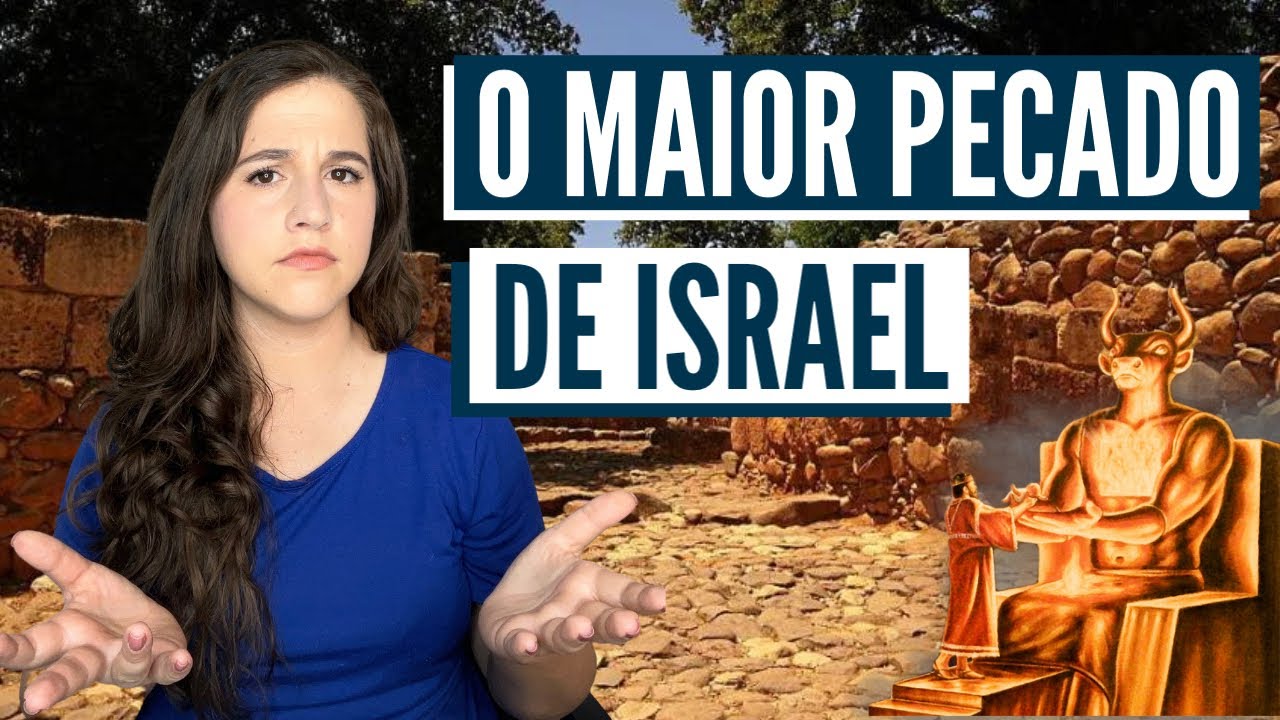
Why? Do you remember the first passage that speaks about the shofar? It is the passage that takes place on Mount Sinai, and Mount Sinai will also be the passage of the golden calf, where the people of Israel will do one of the most abominable things possible: after leaving Egypt they are going to build golden calves and worship them.
And so, when we are now praying to God, using the shofar to bring us closer to God, the last thing we want is to use a symbol to remind us of this great mistake of the people of Israel, which is the golden calf; so we don't use gold, or cows, or bulls. And that is why we are seeing here that they are other animals, and if we are going to cover them, it will be with silver. I hope you have enjoyed learning a little more about the history of the shofar, the Biblical trumpets.
Don't forget to like this video and to subscribe to the channel for more videos directly from Israel, a big kiss and see you next time!