I'm going to talk to you about the worst types of bread that you want to avoid eating, as well as some alternatives for when you're in the supermarket, when you want to make something at home. Now, bread is taking a bit of a beating over the last few years. It spikes your sugar.
It could potentially cause weight gain. But is it breads for or is it the type of bread? In a word, the type of bread that you want to avoid are supermarket breads.
These are mass produced on an industrial scale with extensive automation. And one study that we looked at compared industrial, artisanal and homemade breads. And they found that artisanal bread had a lot more sugar and markers of something called a milliard reaction that we'll talk about in a second.
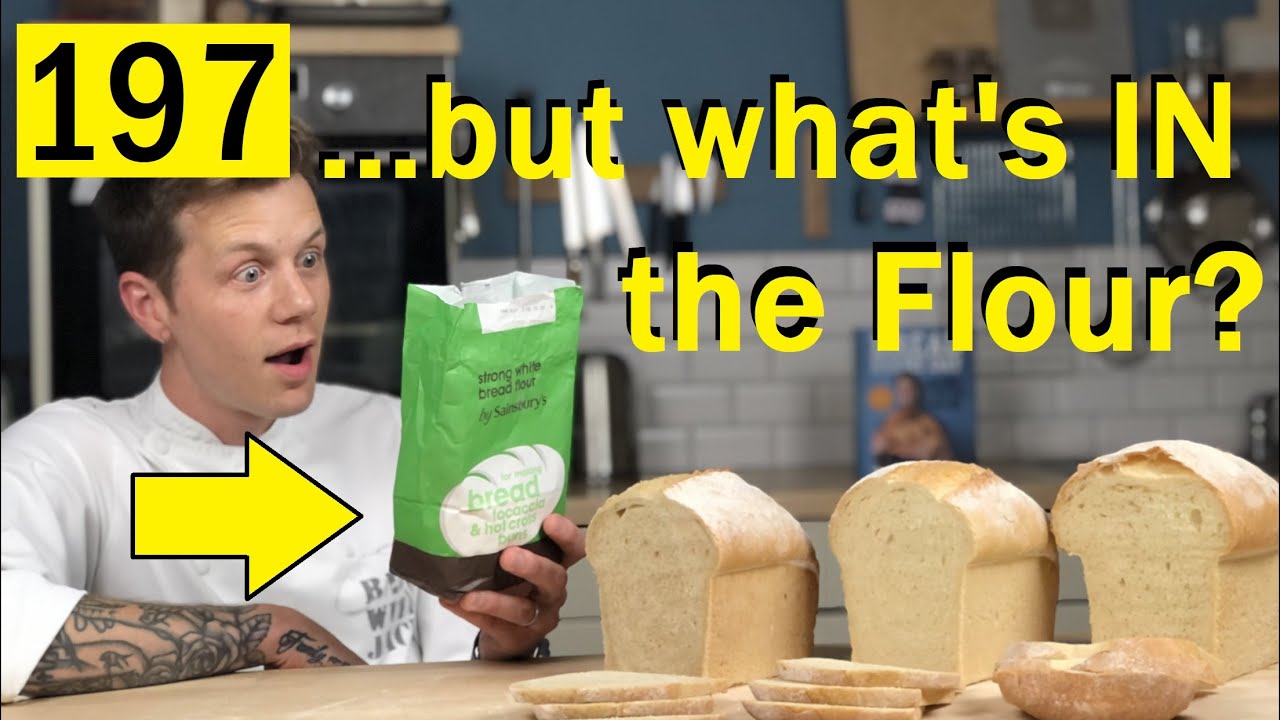
And that makes it not as good for you. In fact, something that I think you should avoid. So this is your typical supermarket bread here.
Let me tell you a bit about supermarket bread. So there is a high degree of processing. So this is a processed food.
It's more likely to contain additives and flavourings mainly texture. It's including emulsifiers hydrocolloid, preservatives. It's going to be it's going to have a lot more things like vegetable oils and as well that shouldn't be anywhere near a bread like sunflower or rapeseed.
They contain higher amounts of sugar content because of the use of certain ingredients, notably soybean flour, which contains more sugar than wheat flour. And then you also have more markers of something called the Marriott reactions. In the Marriott reaction is a chemical reaction between proteins, your amino acids, and reducing sugars to create melanin.
And these are the compounds that give a distinctive aroma of flavour. It's very delicious, but it could potentially increase the number of carcinogens that you find in bread as well, with potential consequences to health. So this is your typical supermarket bread here.
they all pretty much look the same. They're all wrapped in plastic. You can almost tell the difference between the bread just by like weighing it in your hands.
It feels very soft and spongy. There isn't really much substance to them, unfortunately. And, if you look at the ingredients and often like, you know, they've got these green things saying high in fibre, rich in whole grains, just ignore that.
Just just go straight to the ingredients list. That is where they cannot lie. ingredients.
Whole, whole mill, wheat flour, water, yeast, vegetable oils, rapeseed and sustainable palm palms. Not sustainable salt, wheat gluten, emulsifiers E481471472E soya flour. Like I just mentioned up the top here, like these will have more sugars in the flour in the bread because of the inclusion of soybean flour preservative calcium propionate, flour treatment agent, ascorbic acid.
A lot of ingredients that should not be in bread. Bread should just be a couple of ingredients, some flour, water, but a salt but a mixing. That's all it requires.
But because supermarkets have a job to create very cheap and very accessible foods, this is what we are left with. And I'm not saying that you should never, ever, ever have one of these, ever again if you want, like a sarnie and you know, you want to put your favourite ploughman's ingredients in, fine, you know, as a luxury item. But I feel a lot of people are using this as a daily, you know, something to spread some, some butter and jam on every single day.
This is just pure sugar. Unfortunately, I'd love to say that this is as cheap and accessible and it's actually got some health benefits. This really does not this is not a daily staple in my opinion.
So that's supermarket bread. This is the kind of stuff that you want to avoid. Artisanal bread generally follows I say generally generally follows traditional aspects of the homemade production techniques at high volumes, but without the mass production that is found in industrial settings.
So these are typically more representative of the homemade bread, less processed, process. They don't contain additives or flavourings, but artisanal bread can still be heavily processed and made with poor quality ingredients, like an artisanal loaf produced with 100% refined white roll. A milled flour will still be considered more processed, even if it's a sour dough.
So this is an example of artisanal bread. Rather than it being white bread, this is actually a better quality, artisanal bread because it's not just about the fact that it's artisanal. It's what they're putting into the bread itself.
So this is a raw it's very, very different in terms of, the texture, the weight of it. It feels like a brick. It has a very, very dense.
I mean, you can do this with I'm literally punching holes in it if I, if I do that like this. This is rock solid. This is going to have tons of fibre and it's just got a mixture of different grains.
You can tell the structural intensity of this is so, so much better. And the rye flour doesn't have those nutrients stripped from, the grain itself, which is where you have all the b-vitamins, you've got all these different types of fibres that is going to be microbe supporting, not microbe depleting. So this is an example of a good artisanal bread, but it does rely on a spectrum.
So it really depends on what your bakery or artisanal bakery is actually putting into the bread. And they should be pretty transparent about that as well as the, lack thereof of additives. And the study that we looked at, where they compare compared to homemade artisanal supermarket breads, the artisanal breads were classified as Nova three, with the exception of a particular artisanal bread that was classified as Nova four because it contained an additive and ingredient such as powdered egg yolk.
So just because you're artisanal, you don't get a free pass. Homemade breads, on the other hand, employ different cooking methods. Generally steaming, baking, and toasting.
This can impact bread quality and the formation of the volatile compounds that are found in the Malay art. Reaction and one study found that the products of the milliard reactions were less abundant in homemade bread compared to industrial bread over here, possibly due to lower baking temperatures. So one of the things that I think we kind of miss out on is the fact that the I'm going to use this as an example of a homemade bread, that even though it's not technically a homemade bread, homemade bread is going to be used, going to be prepared in your own oven.
You're going to have complete control of any additives. the type of flour that you're using and the temperature. This is going to be really, really rapid.
There's going to be a much quicker fermentation, if any. And they're going to use quick acting yeast as well to get it to rise. So this is quite unnatural in in a word.
Whereas this is a lot more natural in terms of the process used to create good quality bread. question I always get is, is sour dough bread better now? Sour dough is a dough fermented with lactic acid bacteria in addition to yeasts.
And it's called a starter Lactobacillus brevis or Lactobacillus plantarum or baker's yeast. The fermentation process adds many potential benefits, the first of which is nutrient absorption, so it can improve the inaccessibility of certain nutrients that you find in the grain, so your body can actually absorb these nutrients more efficiently when consuming sort of bread compared to bread only made with yeast. So they're in Lys, you know, a very a big difference if you're getting true sour dough bread.
There is also the suggestion that it improves gut health and digestion as well. So pseudo fermentation has been shown to reduce something called Fodmap levels. These are fermentable oligo disaccharides.
People have problems to them with them to various degrees. If you're on a specific IBS diet, it would be tough to remove FODMAPs from your diet, and they're generally found in quite healthy ingredients. So garlic, brassica vegetables, chicory, artichoke.
You find those also in wheat bread. But the same process can potentially alleviate these gastrointestinal symptoms and sense to people. So sudo might have some benefits there.
But there is a big caveat. The evidence is still very conflicted. And many studies do not show the benefits of pseudo bread compared to regular bread.
Bread. Now, I don't know whether this is because they are not using true sourdough bread, because there is a lack of established and internationally recognised definitions of what a salad bread even is, i. e.
the way it's made using microbes and fermentation processes and the types of flour. It can vary hugely and potentially influence the nutritional properties of the bread itself. So that might be why there is conflicting evidence as to whether we know is if sort of true soda bread is at that healthy.
And so today, the beneficial effects of soda bread compared to other types of bread are not clear. Adding more confusion to this mix are the supermarkets who are marketing certain types of bread, a sour dough, bread. Because there isn't a clear definition of what sourdough bread actually means, they can get away with it.
So if you're finding pseudo bread in your supermarket, I'd just be a little bit hesitant. And actually, again, read the ingredients, see whether it is true sourdough bread. It shouldn't have additives in it.
It shouldn't have any sort of suggestion of, you know, sustainable palm oil, soybean flour, none of this stuff. It shouldn't be in there. so just be really, really careful of where you're getting your sort of bread from as well.
If you go to invest in bread, which is what I suggest people do, go to a proper baker, ask them about their process. It should take days. It shouldn't be done, you know, mass produced using these kind of techniques that they're doing.
The supermarkets. Some sections of supermarkets have the bakery section and you have like, a lovely sort of wooden stand and the smell of that, like the air directions. There's wonderful distinctive aromas in the flavours.
And they place them on those wooden shelves and you have, like, this lovely array of, like, different whole mills and rice and all that kind of stuff. That's not a real bakery. That is a fake bakery that is essentially giving you the impression that you're getting a really, really good quality bread when you're not.
They are employing the same mass produce techniques in the back and producing the, the breads at the front. And that is not the type of bread that you want. So anything you find in the supermarket, whether or not it's wrapped in plastic or whether it's something that they're producing in their bakery, I would I would really, really be cautious about because it's not a true bakery.
You're not going to get the benefits of whole artisanal or homemade bread that you can find with far cheaper ingredients, with far better processes. Another question you'll be asking yourself is, are there any health benefits of having birds in your diet at all? Quality whole grain bread, I think, can be part of a healthy diet for most people.
The reason why is because it contains fibre and nutrients. It definitely provides fibre and there are nutrients like folate, iron, calcium, magnesium depending again on the type of flour that is been used. And when you're thinking about the perspective of your diet from what's processed and unprocessed, it is much better than other refined carbohydrates.
So it's a good swap for things like white rice, definitely white bread wraps, buns, rolls, English muffins, certain cereals. So obviously pastries you want to be moving up from that spectrum of highly refined white to less refined wholemeal breads to whole starchy vegetables or things like lentils legumes that are minimally, minimally processed so it can be part of a healthy diet. but you have to be quite specific about the types of breads that you're consuming.
One of the other things I think that bread gets compared to, wraps. So wraps, you know, things that you wrap your chicken and lettuce in and stuff really convenient for lunches and sandwiches on the go. Wraps can be very, very processed as well.
So again, look at the ingredients. You'll see lots of different sunflower oils and vegetable oils. You'll see lots of preservatives.
You see tons of things like calcium and emulsify. It is a hyper processed product. So you want to make sure that these are not part of your daily staples.
And they include the grab and go sandwiches that you're getting from grab and go take out, you know, convenient cafes, the big franchises that are all over the UK and the US. Those franchises, making their margins by using this type of bread, which is a ultra processed product. Just a quick one.
If you're enjoying this kind of content, you will love a free newsletter called eat, listen, read. Every week I send you a recipe that you will absolutely love. Something to listen to, something to read, sometimes something to watch.
Less than three minutes and it will help you have a healthier, happier week. You can find that in the link down below. So whilst I believe that bread can be part of a healthy diet, it really depends on the quality of your bread as well.
The quality of your carbohydrates actually matter. There was a study published in Jama that found that substituting refined grains, starchy vegetables and sugary beverages with equal amounts of whole grains, fruits, and non-starchy vegetables was tied to a decrease in weight over the four year study period. So this sort of simplistic idea that bread is going to make you gain weight and you shouldn't have any carbs in your diet, I think is overly simplistic.
It really depends on the quality of your bread, the quality of your carbohydrates, not the fact that bread will make you lose weight. bread will make you gain weight, or bread is going to spike your sugar levels. It really depends on the quality of the bread as well as what you eat it with as well.
So don't forget that. I mean, I don't know many people that will just eat this toasted on its own. You usually would have this with a bit of fat, whether it's 100% peanut butter, or you can have, some salad leaves on it, some extra virgin olive oil, some cheese, some other sources of protein, like with the rich slim fish or mackerel or something like that.
You're going to have this as part of the food matrix. And so even though this has got some degree of processing in it, it's going to be a lot better, than the other types of refined carbohydrates that you could potentially pair this with, like a bagel or a wrap, for example. So in terms of alternatives to supermarket bread, making your own, we've actually got, a recipe on our app, soaked oats bread.
You find this on the Doctor's Kitchen, app? You'll be able to find that, just download it using the link down below. This recipe actually has pumpkin seeds.
Sunflower seeds, white sesame seeds, porridge, whole oats that are raw chia, flax seed, buckwheat flour, bit of salt, bit of olive oil, bit of, bicarb. And that's it. Like that, all the ingredients you can read, they're all super healthy.
They are incredibly diverse. They're wonderful for your gut health. This is the kind of bread that you want to be consuming.
And now there are some breads out there that are providing a similar, sort of, version of homemade breads that you can make that's actually a gluten free version. This is a brand that you can find in supermarket. It's but not made by the supermarkets themselves.
This is called Seed Fall. And they have a great, list of ingredients, on the front of the packaging as well, which I think is always like a bit of a telltale sign that they're proud they're not trying to hide anything. And again, this has got oats, sunflower seeds, linseed, golden linseed, pumpkin seeds, chia, psyllium husk, organic apple cider vinegar, bit of salt.
That's it. And this can be found in some supermarkets. And again if you feel it it's firm.
It looks like proper bread. It's similar in weight and texture to this. So you can tell just from looking at how non spongy it is.
And like there's no structure to that whatsoever. This is a good product. The only issue with these is that they're a lot more expensive.
This is four slices for £3. Whereas you can make out in the doctor's kitchen up for less than a cup of coffee for subscription for a month. And there's a free trial as I.
If you want a checklist for the healthiest breads to go and eat, I can't go through every single brand, so I'm going to give you the sort of cheat sheet to how you can choose healthier bread. So the first thing is you want 100% whole grains as the first ingredient, like whole wheat or oats or barley or rye. So first thing, you want to be looking for minimal ingredients.
Quality bread should be for main ingredients. The grain, yeast, water, salt or pseudo starter as well. Maybe some seeds, maybe some extra virgin olive oil.
Nothing else. No more sapphires? No preservatives, no need for any added, minerals like calcium.
None of that. You want it to be high fibre. So over six grams per 100g of product is how much fibre you want.
The kind of breads that we create in the doctor's kitchen, on the doctor's kitchen up are upwards of ten grams. And we also have 8 to 9g of protein as well in our breads. But it's quite hard to get that in your regular bread or even your artisanal bread or, baker's bread as well.
And, I think some bonus things that you'd want in a good quality bread, or supercharged bread, more so things like flax seed because they add fibre and healthy fats. you also want a stone milled flour, a sour dough, sprouted grains. These all add extra nutrients that are absorbable for you as well.
local grains, if you wanted to support locally and unbleached flour as well. I tend to go for organic where possible, because I think organic is our sort of vote toward a more sustainable and cleaner landscape. But I don't think it's possible for everyone to go organic.
just depending on where you are in the country as well. And the red flags, I've already sort of, hit this, home, I think quite a bit. Emulsifiers, particularly things like CMC, also known as carboxyl methyl cellulose.
It's commonly used in industrial bread to add volume and shelf life and to gluten free baking to add volume, much like gluten proteins do. It's linked to detrimental impact on the gut microbiota and symptoms of the gist of comfort. So if you see emulsifiers like CMC carboxyl, methyl cellulose, please avoid those and any preservatives, flavourings, added sugar.
the other additives that I just talked about as well as soya flour because of the sugar issues, please avoid those, as much as possible. I hope this has been helpful. If I've missed any, issues with breads that you think I should have, approach or I should have, discussed and let me know and, let me know, what your favourite breads are as well.
In the comments. I want to know. I want to know if I've missed any of the ones that I should be looking out for.
If you love that episode, you'll love this one where I do a deep dive into the health benefits and the health disadvantages of certain types of oats. You can check that out right here.