but our planet's prehistoric past is filled with animals that were even scarier than dinosaurs so for today's video we're counting down the 15 animals that were scarier than dinosaurs starting with number 15 The Jackal opterus meet Jackal opterus The Colossal predator of early devonian year America an ancient aquatic Juggernaut that ruled the freshwater Realms with unmatched prowess disguised under the misleading moniker of sea scorpion this animal was far from a mere Marine creature driving in unforgiving waters of ancient times picture this primeval Behemoth armed with chiler a compound eye that screams power and precision with a visual Acuity that marked it as a top tier apex predator Jackal opter has dominated its EOS system its very existence sending Shivers through the prehistoric Waters now what sets Jackal opterus apart from its relatives is not just its misleading genial appendage but a lethal combination of features that make it the Undisputed heavyweight champion of the world a triangular Telson menacingly enlarged peners and for liims that spell Doom for anything Size Matters and in the case of the Jackal opterus it matters a lot hold your breath for these Dimensions those front pincers are jaw-dropping 14 in and it's still missing a quarter of its length hints at a creature that could stretch up to a mindboggling 8 and 1/2 ft to put it bluntly Jackal opterus is not just the largest urd it's the largest arthropod ever recorded but don't be fooled by its size Jackal op' lightweight build suggests a different story while it might be the largest it's not necessarily the heaviest the true Titans of weight May lie hidden among the Deep bodied walking forms of the hipper opterus casting Shadows that challenge The Jackal opterus and its giant tered counterparts number 14 Mega nura if you don't like bugs you might want to look away step back into the late Carboniferous era and witness the rise of mean nura monstrous genus of insects that defied the Norms of size and terrorized the skies approximately 300 million years ago forget everything you knew about dragon flies and damsel flies Mega nura was the apex predator of its time with a wingspan stretching well over two feet it belonged to the mega nuray family A League of giant dragonfly likee insects ruling the late carrus to Middle perian periods its eyes likely enlarged relative to body size glared down on the unsuspecting while spines on its legs functioned as deadly fineing traps to capture prey examinations hinted at the sheer mass of meura estimating the largest specimens to weigh between 100 to 150 g yet despite its size this aerial Predator faced some vulnerability overheating The evolutionary puzzle of how Carboniferous insects achieve such colossal proportions unraveled through a closer look at oxygen levels and Atmospheric density so enter the controversy surrounding mean nura's gigantism Harley's audacious theory proposed that the Earth's oxygen-rich atmosphere facilitated the insect's colossal flight a hypothesis dismissed initially but gaining Traction in recent times oxygen availability seemed to be the key limiting the upper bounds of the body size for insects yet the perian meura day with wingspans rivaling those of meura posed a challenge to this explanation in a world where oxygen levels had significantly dropped well amidst the scientific debates another theory emerged the lack of aerial vertebrate predators during the carboneros and perian periods gave meura and its kin the freedom to evolve to maximum sizes and evolutionary arms race so to speak between plant- feeding animals and their predators likely fueled this size race number 13 Smilodon enter the world of the Smilodon the iconic saber-tooth Predator that roam the Americas during the PTO Scene Epic leaving an indelible mark on landscapes it's often mislabeled as the saber-tooth tiger smon was a feline Powerhouse a member of an extinct subf family that defied the conventions of modern cats named in 1842 the very essence of sodon's identity encapsulated in its generic name meaning scalpel or two-edged knife coupled with tooth this formidable genus boasted three recognized species with a robust build and exceptionally long upper canine teeth it stood as a true giant among felids in North America smon ruled as an apex predator hunting large herbivores like B and camels with unparalleled efficiency the laa tarpits in Los Angeles California hous the largest collection of Smilodon fossils providing a glimpse into the life and demise of these Predators as it journeyed into South America a shift in diet became evident adapting to new prey species including toxodon lipit turns and the formidable s populator thrived in both open and forested habitats the P toine epic marked a decline of this creature coinciding with The Disappearance of North and South American megaphon its Reliance on larger animals has been proposed as a factor in its Extinction with habitat turnover climatic shifts and anthropogenic impacts contributing to the demise so the extinction of it remains shrouded in mystery number 12 endoceras the ancient giant of the Seas endoceras this colossal spilop pod once dominated the ocean's depths during the middle and upper order of isan approximately 485 to 419 million years ago named after its inner horn endoceras left a mark on the fil record defining the nautiloid order endos Seria with its straight shelled magnificence this marvelous creature showcases a shell with a cross-section slightly wider than high and its mature portion taping laterally into the young with straight and transverse sutures endoceras possesses a large finicle a strategically positioned close to the ventral margin in the young this finicle exhibits concave segments evolving into a potentially tubular structure in adulthood endoceras named by Hall in 1847 has a global distribution with fossil discovered across North America Europe and even in Australia while similarities exist with the genus cheras endoceras stands apart from the Nano due to the distinct placement of its finicle situated ventrally with SEPTA forming from the onset so picture the mature endoceras a behemoth lying in waight on the sea Flor an ambushed predator of unparalleled proportions its strategic Advantage lay in patient waiting moving only when necessary to secure its prey the younger counterparts with compressed cross-sections likely embraced a more active and mobile lifestyle you can find a specimen at the Museum of comparative zoology measuring a preserved 9. 8 ft recent estimates push its complete size to over 19 ft earning at the title of the largest spilop pod by length in the fossil record number 11 Dunc colosus open wide for the dunal atius the ancient Oceanic Titan that ruled the late devonian Waters around 382 to 358 million years ago emerging as one of the first Apex predators to dominate any ecosystem this Mighty jointed neck fish was a pelagic Marvel a true master of open Waters with a predatory prowess that set the bar for all creatures that followed the legacy of dun colosus began in 1867 When J Terrell a hotel owner an amateur paleontologist stumbled upon fossils in the cliffs along lake eie near Sheffield Lake in Ohio the discovery marked the birth of a prehistoric giant that would revolutionize our understanding of ancient marine life initially it was misident defied dunal oist emerged from the depths of Ohio Shale as a distinct species rightfully earning its place in the anals of paleontological History it was the Undisputed ruler of its time having a jaw opening mechanism that was nothing short of remarkable a four bar linkage mechanism connecting the skull thoracic Shield lower jaw and jaw muscles through these movable joints allowing dunal lasus to achieve astonishing speeds of jaw opening completing the process in a mere 50 to 60 milliseconds it also exerted a bite force considered the highest of any living fossil or fish reaching up to, 1300 lb of force this incredible power allowed it to puncture or cut through the armor of free swimming armored prey such as ammonites and other placoderms now contrary to its initial characterization as a slow swimmer dunos has showcased surprising speed potentially fast enough to catch any fish like the orus the fossil record also revealed a remarkable Behavior regurgitating blouses of Fishbones indicating a habit of routinely regurgitating prey bones rather than digesting them this adaptable Predator with its semi-d digested remains of other fish and the presence of teeth in association with the dunal lasus hinted at a complex dietary strategy and a high level of ecological intelligence number 10 sarcus fear the sarcus the Titanic flesh crocodile that once roamed the early Cretaceous Landscapes of Africa and South America reigning Supreme from a span of 133 to 112 million years ago the name itself derived from the Greek word SARS meaning flesh and suus meaning crocodile captures the essence of a creature that epitomized power and dominance sarosa stood as one of the largest predators of its time with the formidable s imperator boasting a staggering length of approximately 29. 5 to 31 ft and weighing an astonishing 3.
8 to 4. 7 short tons it was discovered during expositions in the Sahara Desert from 1946 to 1959 sarcus initially revealed fragments of its might skull fragments vertebrae teeth and scoots the unveiling of it awaited the groundbreaking discoveries of the late 20th century in 1997 and 2000 an expedition led by esteemed American paleontologist Paul Sereno brought forth six new specimens it supported distinctive features at the end of its snout a bulla reminiscent of a gar seen in modern garals yet unlike the sexually dimorphic gar the skulls discovered suggested a universal trade with an enigmatic purpose that continues to baffle scientists to grasp the Monumental scale of this creature scientists turned to the length of its skull a method correlated with the total body length in living crocodilians using regression equations based on garial and saltwater crocodile measurements the largest known skull hinted at a total body length of a staggering 8. 2 ft and weighing around 8.
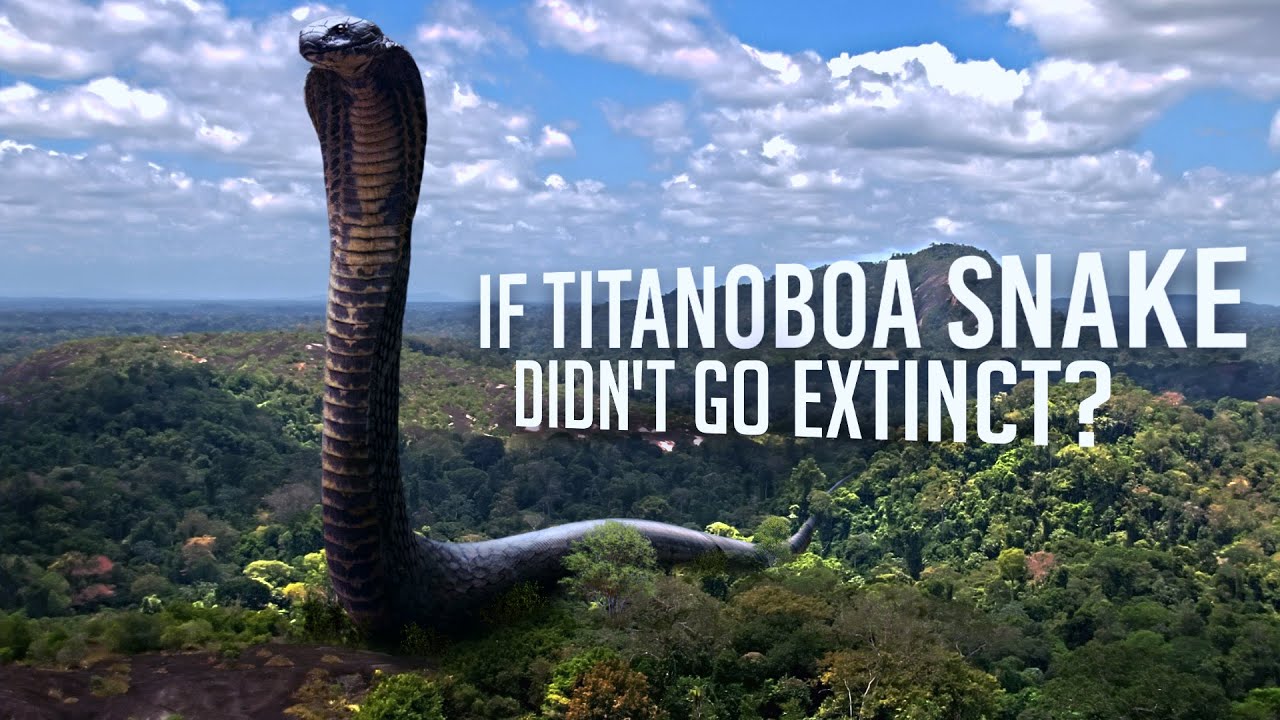
8 short tons these estimates surpassed previous expectations and crowned it as a colossal Titan number nine titanoboa enter the world of tit o boa the Titanic boa that once ruled the middle and late paleos scene with an a inspiring magnitude unmatched in the serpent realm discovered in the early 2000s by the Smithsonian tropical Research Institute in northeastern Columbia this colossal creature formerly known as titanoboa serin Joneses emerged as the largest snake ever on earth rewriting record books and captivating the imagination of paleontologists stretching up to 42 ft and possibly even reaching above 47 ft titanoboa was a behemoth eclipsing the previous record holder gigantus garini from the eosine of Egypt evolving in the aftermath of the Cretaceous paleogene Extinction event titanoboa stood as a testament to Nature's resilience now it was initially identified through thoracic vertebrae and ribs later Expeditions revealed the Grandeur of titanoboa with parts of its skull and teeth originally thought to be an apex predator the discovery of skull bones unveil this surprising specialization titanoboa was more likely a masterful fish Hunter the anatomy of its pallet tooth count and tooth structure all pointed to adaptations for a piscivorous diet setting it apart from its boa relatives and aligning it with modern snakes with a penchion for piscine prey estimating titanoboa size involved meticulous analysis comparing its undistorted vertebrae to Modern boas initial size estimates suggest a length of approximately 2. 1 ft and a weight ranging from between 1,400 and 4,000 lb subsequent discoveries of eight additional specimens of similar size affirm the Reg regular occurrence of these massive Proportions number eight hucog genum in 1977 paleontologist Simon Conway moris Unearthed The Peculiar fossil from the burges Shale in the Canadian Rockies challenging a classification of a half-inch wormlike creature rejecting the analid worm label Conway moris envisioned an organism walking on seven pairs of spines and sporting seven peculiar tentacles on its back dubbed hucog Genia for its surreal appearance the model faced controversy until 1991 when researchers discovered related fossils in China revealing the truth micro dicton a cousin of henia displayed plates instead of spines clarifying Conway Morris's upside down interpretation the fossil was flipped resolving the long-standing mystery of hucog genia's orientation lingering question persisted though which end housed its head Conway Mars proposed The Blob likee structure at one end but in 1992 REM scold suggested it might be a postmortem stain lenium equipped with defensive spines teeth around its mouth simple eyes and throat teeth for digestion had its Limbs and spines better understood its diet does remain a mystery but Mouth Parts suggest a suction mechanism for water and food intake with throat teeth preventing backward movement hallucigenia is a Whimsical name befitting its hallucinatory appearance it unveils crucial insights into the evolution shedding light on one of the planet's largest and most diverse animal groups this physical feature revealed in nature provided biologists with valuable clues about the evolutionary process moving on to number seven arthop plura arop pluram an extinct genus of massive millipedes thrived in North America and Europe approximately 345 to 290 million years ago these colossal land invertebrates reach lengths of over 8 ft making them the largest known invertebrates ever they well preserved tracks up to 20 in wide have been discovered in locations like joggin Nova Scotia now these creatures features are characterized by trilobate tures and turbu covered dorsal surfaces they grow exceptionally large due to elevated oxygen levels and the absence of significant terrestrial verbate Predators with an estimated 28 to 32 trate tures and deamus leg Arrangement arthop plura possessed a sturdy exoskeleton evident in well-preserved fossils contrary to popular beliefs it likely led a forest independent life roaming open areas even after the Carboniferous rainforest collapse although its diet remains un certain it's generally considered herbivorous consuming spores spor fills and seeds due to its massive size requiring substantial nutrition the extinction theories vary with earlier Notions likening it to the decline of coal forests where recent proposals suggest factors like tetrapod diversification and equatorial desiccation contributing to their demise number six the Megalodon belonging to the extinct family otod day it stands as an iconic Giant in the realm of prehistoric Marine Predators this colossal shark scientifically known as otus Megalodon dominated the oceans from the early masine to the Pline epics approximately 23 to 3. 6 million years ago despite its reputation though our understanding of Megalodon's appearance and size is hindered by the fragmentary nature of the fossils available there is ongoing debate among scientists regarding its resemblance to other sharks with some proposing it might have looked like a stockier version of the great white shark estimates put it at a 16 m megal on weighing up to 48 tons a 17 m one reaching over 59 tons and the maximum length at 68 ft tipping the scale at 103 tons Megalodon's ecological impact was profound and its Cosmopolitan distribution is evident in the fossil record this apex predator is believed to have targeted large prey including whales seals and sea turtles juvenile megalodons inhabit warmer Coastal Waters feeding on fish and small whales unlike the great white shark which attacks prey from soft under side Megalodon likely used its powerful jaws to penetrate the chest cavity and puncture the heart and lungs of its prey the iconic fossils of Megalodon are its teeth having characteristics such as a triangular shape robust structure large size fine serrations and a visible v-shaped neck these teeth measuring over 7 in in height are the largest known of any shark species underscoring Megalodon status as the largest macro predatory shark number five Andrew sarcus the Andrew sarus a massive mammal from the middle eosine period provides a brief snapshot into prehistoric life yet much of its story remains shrouded in mystery discovered in Mongolia 1923 by K chanpa and later described by Henry Fairfield Osborne in 1924 Andrew sarcus owns its name to the leader of the Expedition naturalist Roy Chapman Andrews signifying Andrews ruler now what sets it apart is the fact that it's known solely from a single skull resembling that of a wolf but much larger standing at an impressive 3T tall this lone Relic is sparked both Intrigue and speculation among scientists envisioned through artistic depictions appears as a canine with a lengthy snout and adorned with a coat featuring stripes or spots while the exact Hue of its fur remains a mystery scientists utilize the Contemporary herbivores and extrapolate from the skull's dimensions although conclusive evidence is lacking researchers tentatively estimate that the andr Sara stood around 6 ft tall at the shoulder stretching to a length of approximately 12 ft and weighed anywhere from 500 to 1,000 lb if proven accurate these Dimensions would Crown idras Arcus as the largest carnivore mble To Tread upon the ancient Landscapes presenting an imposing figure that would have struck fear into the hearts of herbivores one distinctive feature attributed to it is the substantial hump on its back believed to Anchor its massive head to the body perhaps the most intriguing aspect of it lies in its powerful jaws a characteristic inferred from its skull of course the purpose behind such Jaws remains a subject of debate with researchers speculating about about its potential prey and feeding habits situated along the shoreline upon Discovery there is a prevailing theory that andr sarcus utilized its jaws to Feast on Turtles and mollusks despite the uncertainties that shroud andr sarcus this singular skull has opened up a window into the ancient past inviting scientists to piece together the puzzle of a creature that despite its single representation continues to capture imaginations of those fascinated by the mysteries of prehistoric life number four forest hassay forest HDs commonly known as Terror birds were one of South America's largest carnivorous flightless birds during the cazic era spanning a temporal range from 53.
1 million years ago these apex predators left a mark on the prehistoric landscape with Heights ranging from 3 to 10 ft while their closest modern relatives are believed to be the diminutive cus the terror Birds boasted an imposing presence in their Prime notably titanis walai among the larger species transcended into the South American realm reaching Texas and Florida in North America an intriguing aspect of the Terra Bird's Anatomy lies in its neck a welldeveloped and highly flexible apparatus that enables Swift strikes on prey divided into three main regions the neck has neural spines in higher regions and elevated neural spines in lower regions now this adaptive design facilitated a menacing downward strike akin to an axe cleaving through its prey's skull with speed and power now despite the external appearance of a short neck the flexible skeletal structure allowed for unexpected extensions enhancing the her Bird's ability to intimidate and strike with Precision the beak tightly fused for resilience suggested a formidable weapon capable of causing harm through powerful pecking CT scans on the skulls hinted at a focus downward Force dispelling Notions of side to side head movements now Forest HDs recognized as carnivores displayed a carnivorous lifestyle our observations of fossilized pellets suggest a unique feeding Behavior reminiscent of owls potentially swallowing prey hole and regurgitating IND digestible Parts the rise R and fall of their population coincided with environmental shifts during the Meine and early Pine epics where their birds thrived as predators in the savannah environment however the subsequent emergence of the itmi of Panama 2. 7 million years ago marked a turning point the influx of carnivorous dogs bears and cats from North America intensified their competition possibly contributing to the decline and Extinction of them number three levian levian an extinct genus of macro rep Toral sperm whale emerges from the depths of the myene Epic the genus represented by the sole species El melali takes its name from the biblical sea monster Leviathan while the species pays homage to Herman Melville the author of renowned novel Mobi dick thriving nearly 10 million years ago levetan leaves a fossil Trail hinting at a global presence with isolated teeth discoveries in Chile Argentina California South America and Australia it likely stood as an apex predator in its Marine realm praying on whales seals and other opponents with a total estimated length of about 44 to 57 ft it rivaled the modern sperm whale its teeth measured a staggering 1. 1 ft holding the distinction of being the largest biting teeth of any known animal excluding tusks the distinctive features of it include a basin on the skull along the snouts length housing the spermaceti organ this organ considered in the context of echolocation communication or even ramming prey or other sperm whales adds to the mystery surrounding their behavior now unlike the modern sperm whale Leviathan sported functional teeth in both Jaws adapted for shearing and interlocking offering insights into its predatory techniques with 22 teeth in the lower jaw and 18 in the upper Leviathan exhibited a lower tooth count compared to other sperm whales except for the modern dwarf and pygmy sperm whales various theories speculate on the function of the spermaceti organ suggesting roles in acoustic communication temperature modulation for buoyancy control during deep sea diving and even headbutting contest during mating Seasons as the climate shifted in baline whales evolved the larger and less diverse whale species that emerged posed a significant challenge to the smaller prey that levian like sperm whales once thrived on the extinction timeline aligns with the ascent of orcas the oceanic apex predators and the emergence of large predatory Global failing Dolphins number two helicoprion helicoprion a horrific Genius of shark-like fish have left its Mark and annals of paleontological Discovery primarily through its unique tooth whs these toothy Mysteries arranged in logarithmic spirals within the lower jaw are the main fossils representing helicoprion the fossils span approximately 20 million years during the peran period Now The evolutionary connection to helicoprion to Modern chimeras despite being distant adds a layer of intrigue to its existence the captivating feature of this thing lies in its tooth Arrangement believed to be an adaptation for feeding on soft bodied prey the specialized configuration may have served as a deshelling mechanism for hardbodied spilop pods like nautiloids and ammonoids however precise conclusion about its full body appearance remained challenging due to the limited preservation of its skeletal Remains the presence of a large dorsal fin lacking a fin spine and a tall forked coddle fin aligns with the body plan of an active Open Water predatory fish the absence of pelvic and anal fins coupled with broad Keels along the body underscores this adaptation for predatory Pursuits the estimates based on tooth whls suggest individuals with whls reaching 35 to 40 cm in diameter could have been 16 to 26 ft in length the largest known tooth warl with a diameter of 56 CM indicates an individual over 7.