To start to discuss the politics of Hamas in a normal way rather than oh mustn't talk about it you know so scary you've spoken about them redoing a charter it took them 29 years it's a big problem right there has been continuity and discontinuity in in the Hamas leadership their their top level leaders have been systematically killed they look back at the the policy of suicide bombings and not participating in the 96 Elections Do you think they have some sort of remorse? Do you think there was maybe a tactical error? Even the Nazis put high
walls around the the concentration camps and the extermination camps which the Israelis who are in Gaza filming themselves on on Tik Tok while committing the most ghastly atrocities. President Trump's representative Adam Bullah goes he finds that the the Hamas leaders in Qatar are are people that he can deal with. It Kind of becomes a red herring in a discussion which is about occupation and genocide. Gosh, that's a huge huge question. Speak. And your surname, I pronounce it coin. Yeah. Very nicely done. Okay. No, it's I it's British, so Yeah. Coin. Exactly. I'm sure Americans don't
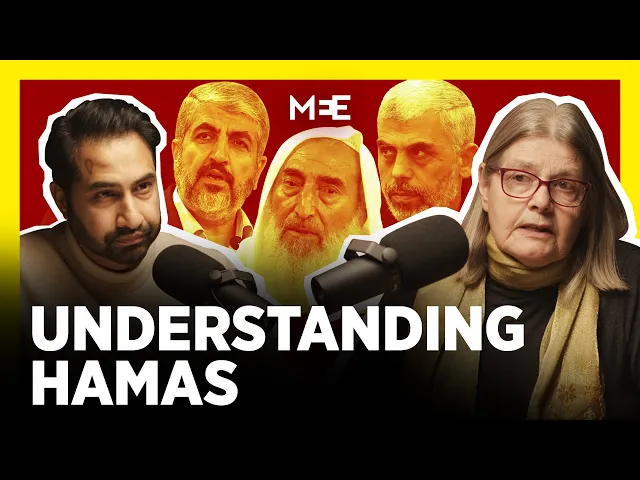
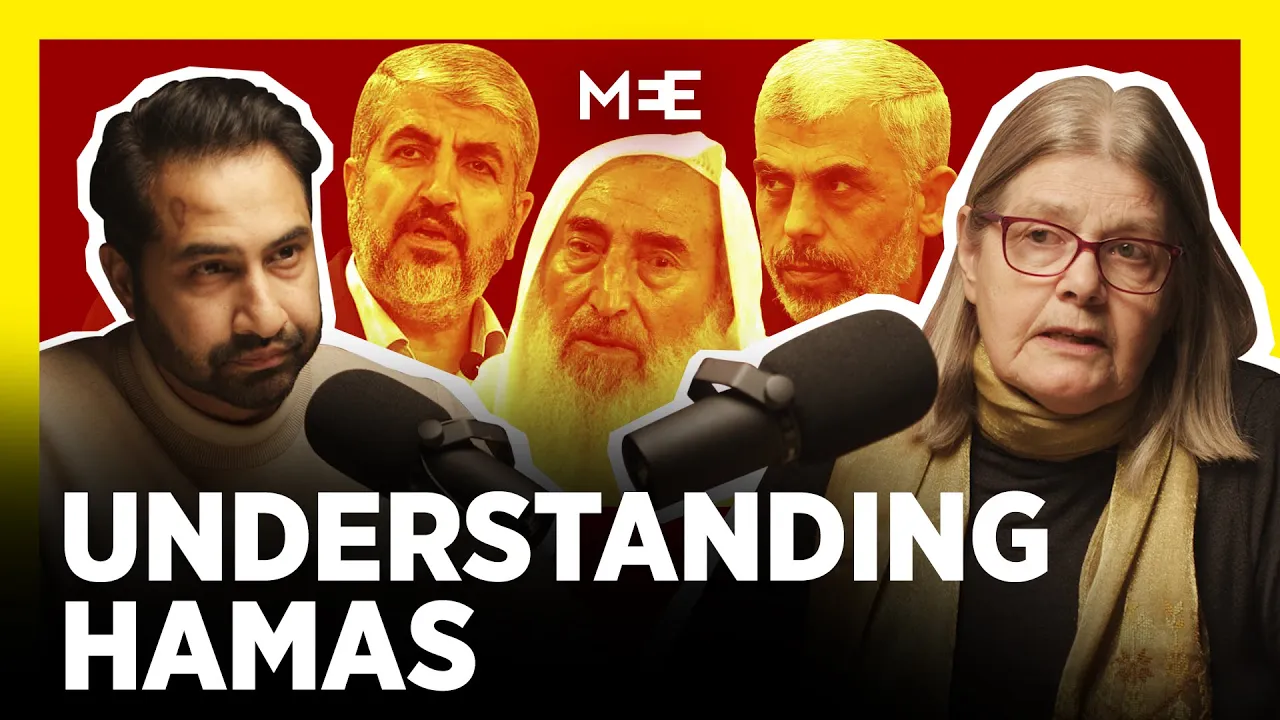
call you this. The English way is you kind of you swallow it. You know. Yeah. Look, I'm South African myself, but I've been around Brit enough to know that you Swallow it. Yeah. Helena Coin. Yeah. Okay, cool. We good? Yeah. Okay, great. Hi and welcome to another episode of Unapologetic. I'm your host Karim. Uh today we speaking to Helena Coin. Helena, welcome to the show. Good to be with you, Shrek. Awesome. Excellent. Helena is a journalist who's covered the Middle East for decades. Um she's recently just published a book with Ramy Hori called Understanding Hamas,
which is why we speaking to her today. Helena, I've just been telling you over the course of the the next hour or so and a bit longer, we're going to be speaking about why you wrote the book, why you chose to do it at this time, uh the narratives around Hamas, um and what you think sort of the future of the Palestinian Liberation Movement and Hamas, um and the people of Gaza and the West Bank, what's sort of in store for them. So, welcome to the show. Well, there's a lot to talk about. It's it's
It's it's really a lot to talk about. just to sort of start us off, uh, why did you write this book? So, um, I'm the head of a small educational nonprofit in the United States based in Virginia. And, um, we have a wonderful board. Richard Faulk is on our board. Ramy Huri is on our board. Um, Nora Barrows Freiedman of Electronic Inifard. We have we have a very distinguished and and wonderful board. In March of last year, we said, um, you know, there's actually A lot of people working on the the question of rehumanizing or
humanizing the people of Gaza who have been dehumanized for such a long time. But one thing nobody seems to be taking on is the question of the Islamic resistance movement, Hamas. Nobody seems to want to talk about it. And because we're small and agile and to be frank, we have very little funding, so nobody's going to sue us, you know, um that's why we're agile. Um we said we want to Really take on the issue of Hamas that nobody else wants to talk about. And so we we arranged in the first instance to have this
this series of five webinars in May of last year ho co-hosted by my wonderful colleague Ramy J. Huri who is a Palestinian Christian from Nazareth. I'm sure everybody knows Ramy's fine work um and myself actually the title of the project and the title of the book is not just understanding Hamas but it's understanding Hamas and why that matters And the that there refers back to understanding Hamas you know because uh so many people were just reluctant to talk about it at all people in the progressive you know pro Palestinian movement it just felt like there
was so demonization of Hamas um that we said we can do this you know and so Ramy and I invited five real specialists now neither Ramy nor I is a specialist in the ma in the matter of Hamas but you know we both have long careers in Journalism we've both interviewed Hamas leaders and activists up and down the chain of command um and we picked out five really wonderful specialists Three of them are Palestinians and two are Europeans. So we ran this this webinar series actually you know when we launched the project and and planned
the webinar series. I thought maybe you know the the ceasefire in Gaza would happen pretty soon. So we didn't have a a long-term purview for the project. But Then it became clear that this this genocide was going on and on and on and people were still very reluctant in the progressive you know anti-ionist movement to talk about Hamas openly. So the next phase was we took the transcripts of the of the webinars um and made them into a book which was fairly easy honestly. Um I have a lot of experience in book editing, book publishing.
I pulled the thing together very speedily and the book came out in September which you know in terms of Yeah, absolutely. Very quick. I mean it's also a great way to put together a very a very sort of interesting intricate piece of work in a very quick way. So good smart publishing trick. Thank you. Yeah, I mean one of one of the benefits of what we did having it be the transcripts is it's very conversational. It's, you know, it it kind of it just flows along. And we had planned each of those webinar sessions To
be sort of pedagogically sound. You know, you start off people assuming that people know nothing, but they're they're interested in learning. Absolutely. Um, and then you take them through and you build progressively on it. So, I I think it given that we produced it so speedily, I think it it really works. I mean, you've mentioned the the sort of the the the fact that even people on the progressive sort of Palestinian movement don't want to speak about Hamas or have Avoided speaking about Hamas. It's been a challenge for us even as a newsroom. Um I
think the issue is it kind of becomes a red herring in a discussion which is about occupation and genocide. So maybe like I think internally or not just in this newsroom but along among the the sort of the people who are uh trying to unpack what's happening in Palestine, it's almost like we'll get there later. Mh. Um, and so in a way like congratulations because I think This gets us there sooner, right, rather than later. But I I mean I think the main the other thing is we living in a climate now where Hamas has
been demonized. You can't have a nuance discussion. Um, you'll be shut down. Um, you if you have credibility on lots of other points. Um, but you sort of want to look at Hamas with any nuance. Um, that will sort of become a red hanger again. So it becomes this weird castle. So, so the the next question I think It's it's it's going to take us in the direction of sort of understanding western policy. But we're now living in a environment where we can get arrested potentially for having this discussion which is just going to be
an academic discussion and trying to understand a very key movement in in the Palestinian liberation sort of umbrella body. Um what do you think that kind of legislation how problematic is it the fact that we have counter intelligence Counterterrorism legislation around around these things now specifically around Hamas? So you know I've been I've spent the last 40 years or so more than that actually in the United States where we have certain protections that are constitutional amendments. They are in our constitution including you know the first amendment which is the right to free speech and speech
and freedom of expression and association. We have the fourth amen amendment which is a uh Protection against undue um seizure and search search and seizure and then the fifth amendment which is the right to remain silent. And in general, I think of like the American Revolution as a kind of settler extremist um revolt again against the Metropole. But I think these these protections in the American Constitution are very valuable, especially when I was preparing to come here last week because there had already been all this bruhaha about the um event That I was doing earlier
this week at LSSE and I was concerned that I might get stopped. I'm a British citizen as well as a US citizen. But that doesn't, you know, that doesn't make any difference. Last week, David Miller, who was returning to London from from say Hassan Nella's funeral in Lebanon, um was stopped and pulled aside at Heathrow. my um friend and colleague Asa Win Stanley, with whom I have a long working relationship, had his, you know, Had his devices seized at 5:30 in the morning a few a few weeks ago from his home here in the in
the UK. So, yeah, there is a a real um concern about these actions. Um I was quite prepared when I came in at Heathrow to be detained and I had, you know, made arrangements with my family. um uh wow and a lawyer and and luckily it all proved unnecessary but who knows when I leave or when I try and go back to the United States but in the United States we do have those three Very important protections which are not present here and that you know it's I know it's scary for all of you um
I I looked a little bit at the counter terror legislation and section seven and whatever and you're not supposed to engage in speech that promotes s the uh prescribed terror organizations. You know, I I grew up here in the 1950s in the UK at a time of rapid decolonization and there were the Mao. You know, we were told be very afraid of the Mao. You Know, this this whole uh demonization of national liberation movements is not new to me at all. I mean, the the Vietkong Yep. or you know for for French-speaking people the the
FLN in in um Algeria. So I mean even the ANC of South Africa at one point. Yes. Absolutely. Absolutely. But with a big difference um as as we noted a little bit earlier that the ANC I think continuously was able to have a spokesperson here in London. I know Somebody who who ran the office even when Maggie Thatcher was, you know, sounding off about the ANC being terrorists and whatever, um, they still were able to have a voice here, which the Islamic resistance movement, Hamas, is not able to. So, I'm going to use my white
privilege to say, I'm not for Hamas. I'm not against Hamas, but as people who are concerned with ending this goddamn genocide, we have to have it through a Negotiation. And that negotiation has to happen, including the Islamic resistance movement, Hamas. A point to be also made is that right now the Trump administration is negotiating with Hamas. Um so I mean there's all sorts of you know contradictions within uh even the you know the policy circles. Just to now get to kind of the meat of the discussion and and the name of the book. Um we're
going to get into we're going going to have a very detailed discussion About Hamas and who they are. Um we're going to talk about October 7th. A big part of OC what we mentioned earlier on when we said people are scared to speak about Hamas. I mean the big obvious reason is also because of October 7th right? is because of the scale of the attack kind of puts someone on the defensive when they're trying to advocate for Palestinians immediately. Um, unfortunately it I mean maybe not always but it doesn't seem to put Israelis on the
defensive when you talk about Israel's crimes. Um, but just just to begin the conversation in like sort of three to five minutes, who is Hamas? Yeah. Who are Hamas? Well, goodness. I I my my easy answer would be people your viewers should buy the book. But um Hamas was um established by the Palestinian branch of the uh regional Muslim Brotherhood organization in December of 1987 at the time of the uh the outbreak of the first Inifada. It was established primarily in Gaza. And one thing I've noticed from my work both on the PLO and then
continuing through this work is that Gaza has always been the crucible of the Palestinian liberation movement in the modern era in the postNakba era. And you know the reason for this is because Gaza is where you have the greatest concentration of refugees from 1948 and their families um who are living on Palestinian land. you know, they're not The guests of the Lebanese government, the Jordanian government, the Syrian government or whoever. So, so this gives them a rootedness as and a sort of a a concentration and a a a focus. So, that's why, you know, Yasa
Arafat and and uh Abu Yad and Abu Jied and all of those back in the day when they founded Fat, they they were in Gaza and that's where they did it. And Gaza has been playing a similar role um in the more recent era. So prior to 1987, the Palestinian branch of the Muslim Brotherhood was one of the branches that was really not focused on politics. They were focused on um trying to build the religious community based on um observant family life and and supporting the life of these families, many of whom of course were
refugee families. I mean very needy. So it was social services, it was education. Um and interestingly all along Sheikh Ahmed Yasin the founder of Hamas the founder well you know the prior to that the head of the Palestinian Muslim Brotherhood was very focused on women's rights and women's advancement women's education. He built a lot of uh mosques in Gaza. I mean it's it's tragic to even think about this right now honestly. Um, but he always built them with two stories. So there was a story for the for the women to gather and pray And a
story for the men. You know, that's fairly rare. This is just one of the the examples that we discussed in the book of the ways in which Hamas is different from ISIS or al-Qaeda. um which is obviously one of the ways in which people in this country try to to distract and and misrepresent Hamas. Oh, it's just like ISIS. You know, they they're head choppers. They, you know, they they've they oppress women. They um They're very intolerant of religious minorities, all of that. No, they I mean Hamas distinguishes itself from those other more extreme organizations
by virtue of they have a I mean they're kind of like the Muslim Brotherhood in Egypt was a sort of socially conservative um and in many ways politically conservative view of of the world um but one that is is was always very supportive of women's rights Um, So they entered the political arena in December of 1987 and almost immediately got um had their leaders u arrested and they was they were still trying to figure out how to do politics if you like. the the sec more secular nationalist organizations um fat and and the uh PFLP
and and the DFLP and and all of those. The Communist Party, Communist Party was quite strong in in Gaza in the 1980s. Um they knew how to do politics. Hamas was still sort of feeling its way. um a lot of the leaders were were arrested and then in 1988 they issued their their charter which um has been a sort of millstone I want to say from a from a political point of view millstone around their neck ever since because it is you know an openly anti-semitic program and actually in in one of our conversations that's
in the book we talked with Dr. Azam Tamimi who is you Know has really studied all these matters very very close. He said and I have no reason to disbelieve him that the charter that was issued in 1988 was just essentially some random school teacher in the refugee camp because all the leaders were in jail. But there was the need a felt need to have a a program. This is what we stand for. And so this guy kind of wrote it and then it became um the charter and and And they were not able to
under undertake a systematic kind of organizationwide process to update this until 2017 when they issued a new document um which supersedes the the 1988 document. and is much more of a clear anti-colonial analysis of the nature of the Israeli state, the Zionist project and you know very very strongly differentiates between opposing Zionist Colonialism and opposing Jews. Um, of course, nobody in the west really has studied this change very much apart from some of these experts whom we were able to consult in our in our project who were able to explain the various you know stages
through which uh the movement went and and the the status of this new 20 well it's not new it's like eight-year-old 2017 document but you know of course the the haters still up on the the 1988 charter and say, you Know, this proves that Hamas is anti-semitic and blah blah blah. you've spoken about women and and and sort of the framing around women that's in the in the sort of the narratives and also around the charter and those are two things that are always brought up if you see Pierce Morgan or any any any discussions
the charter a lot more often and then there's almost the slur that because they're an Islamist sort of resistance movement or fighters that They will probably be horrible towards women um if it's not a direct sort of sort of attribution um what are the other misconceptions that the public um and key policy makers have around Hamas and how How many of those those misconceptions is because of manufacturing of of Israeli and how much of it is because of Hamas's own flaws to kind of put out their messaging more effectively? I mean, you've spoken about them
redoing a charter. It took them 29 Years. It's a big problem, right? Um so where do you think that that balance lies? Gosh, that's a huge huge question. Speak. Um so I I think I'll start with the misconceptions. I mean the misconception here or this is sort of something between misinformation and disinformation. Um before you continue clarify for audience because I know what it is but just very briefly what's the difference Between misinformation and disinformation? Yeah. So so misinformation is just like oh gee I'm sorry I I thought you lived on that street but actually
you live on this street you know. Um disinformation is when I say, "Oh, I live on that street because you don't want me to visit you on the other street." Yeah. So, you know, it's the deliberate um spreading of lies. Um so I I've actually also started to develop this uh this critique Of corporate media in the west that there is misrepresentation of Hamas or other Palestinian movements and there is also I think disrepresentation. So the misrepresentation would be sort of accidental. You know you didn't quite understand the facts. But disrepresentation is when you represent
the fact in a way that you know is false. So anyway, that's my new um like Analytical uh development. I thought of that yesterday or the day before. Great. Congratulations. Good to know. Thanks. So um one of the things that obviously gets uh oh I I I want to use the word demonization here as frequently as possible. One of the ways in which uh Hamas is routinely demonized is with through this um idea that they are just you know violent people uh motivated by blood lust or maybe even carnal lust. The desire to engage in
mass rapes. Although the mass rapes thing like the beheaded babies, you know, the oh these these uh these Hasbbor lies have have embedded themselves very deep in many layers of the western political elite. I mean, embedding yourself in Joe Biden's brain perhaps is not too difficult because, you know, his cognitive functioning not so great. But, you know, he was referring to the 40 beheaded babies for months after it had been Categorically disproved. Um, but the mass rapes has actually sort of settled in the in the popular imagin imagination much more deeply, I think, which is
a pity. But um it has also obviously been debunked primarily by the fact that the UN special raptor who went there to investigate these claims said she found no evidence and was you know actually prevented from searching for evidence which I think tells you everything you Need to know about the validity of these claims. But um so anyway, this this portrayal of Hamas as irretrievably violent. Um of course that's very continuous with this demonization of any anti-colonial movement that we discussed earlier. Uh you know the FLN are so violent you can't possibly deal with them.
But on a number of occasions, um the the political leadership of Hamas has absolutely demonstrated that they call The shots. Maybe call the shots is the the wrong uh they're in charge. So back in the mid 1990s after the American settler in Hebron, Baroo Goldstein opened fire on worshippers in the Ibrahimi mosque in El Khalil in Hebron, killing 29 and injuring scores of others. The Hamas leadership said, you know, if Israeli extremists can do this against our civilians with impunity, then we're Going to show that Israeli civilians should have no impunity either. So then they
launched um suicide bombings on the buses. I I was in Israel. our um our our contributor Paula Karedi I think at the time was living in Jerusalem. She said it was a scary time and definitely I I went on a couple of short visits. It was a scary time. But then in 1996 when um the first Palestinian Legislative elections were held. This was under the under the the opaces of Oslo. Of course, Hamas had opposed the Oslo Accords, the whole Oslo process, and had a very strong critique of Oslo, which as it turns out was
totally valid because Oslo was such a deeply flawed um arrangement. But um these legislative elections were held in 1996 under the like flowing from Oslo under the the rules of Oslo. And the Hamas political people Said, "Well, we're not going to participate in the elections." Although actually it turns out Ismael Hanei had wanted to participate in the elections in those elections but the the collective political leadership decided not to so he didn't. Um we're not going to participate but we we want to allow them to proceed. So for the period of the elections, we will
halt all the the suicide bombings and all the actions against um civilians inside Israel and The military complied 100%. You know, it was a great demonstration. And we've seen one more recently, you know, with the with the with the ceasefire that was signed on January 15th of this year by the political leadership in Qatar with the Israeli occupying forces in in Gaza. And there have been I have seen no reports of any violation of that ceasefire from from the the Palestinian side and that includes you know Hamas's Own military of the Alasam brigades and then
all the all the allies in the in the resistance coalition like Palestinian Islamic Jihad and and Alaka brigades and and the Popular Front Abuali Mustapa brigades. they've all complied with the ceasefire whereas of course we can look at what the Israelis have done since January 15th which is they've killed you know I think 200 people um but but I think it's important for people in just Just to correct you when you said January 15 you said you meant 2025 not 2024 because you said 20 case because there was also a small but that was December
2023 so just you're talking about January January January this most recent. Yes, thank you for the for the for the clarification. Actually, the earlier one was November of uh 2023. And again, they you know, we we had we had the political leadership signs this ceasefire deal and The military complies, you know. So to me this is very important evidence that it's not you know that the military are running riot and doing you know atrocities and and violent things and well we don't see them doing atrocities you know there were violations of international humanitarian law that
happened on October 7th from the Palestinian side and from the Israeli side in terms of the Hannibal directive. But the ones that Were committed from the Palestinian side, it's totally unclear who committed them and in what context. For example, taking civilians as hostages is a violation. Who took those hostages? We know that some of them were taken by parties other than than Hamas. Um, but there's never been an independent impartial investigation into who was responsible for which atrocities on October 7th and right now I don't Think there ever will be one given the extent impossible
to actually conduct that kind of investigation. Yeah. Okay. So we I mean what what else do you think are the big just when you think about the general public that they just don't understand about Hammer? you you've you've painted this this idea that there's this idea that's deeply embedded in sort of the western psyche that these are violent people who just sort of want destruction and have a blood lust Against Jewish people or Israelis or Zionists. Um and then you've mentioned that they're very very organized um and disciplined which which does imply that you know
it's actually negative in terms of October 7th because it implies that they were under instruction to commit the atrocities that were committed. Although I understand that you're making the same point that it's complicated to understand who exactly committed the atrocities. But coming back to the Question to what extent do you think this is Hasper and what extent do you think this is some errors of Hamas? Um do you think for example going back because you've obviously interviewed the leadership for a long while. Um do you think when they when they now look back in the
early 2010s do they look back at the the policy of suicide bombings and not participating in the 96 elections? Do you think they have some sort of remorse? Do you think there was maybe a Tactical error? Um what's what's your thoughts on that? Well, those are good questions and I think they're really hard to answer. That makes them good questions obviously, but um you know there has been continuity and discontinuity in in the Hamas leadership. Their their top level leaders have been systematically killed. you know from Sheikh Ahmed Yasin and Abdulaziz Rantisi and Ismael Shana
Abu Shanab and more recently obviously um Ismael Han and and Yahwir um and Muhammad Dave but Muhammad Dave was more at the military level so I I think what they've developed knowing you know they were always subject to these decapitation um operations is is a very robust collective leadership. Um I've actually one time in 2009 I I was able to interview I think I had set up the interview with um Abu Wal Michelle in in in Damascus back in the day. Um and and when I went in, you know, there were like five or six
of them sat around and they defer to each other. It it was very for me since I've I've done some interviewing with fat leadership. It was a real it was a very stark contrast because you know in the fat leadership it's all you know ab back in the day or I actually haven't done that much interviewing I have to Say with Abu Mes um but but it was it was very sort of autocratic and people would you know cowtow to him and flatter him endlessly and then talk talk behind his back. I mean they oh
boy it was it was like very poisonous kind of attitude amongst the leaders there in in in the case of the the Hamas leaders when I've seen them they they have acted together in a very collegial way and I think that's part of the the that that's the strength of the Organization um because everything gets discussed and then you know when when when the the secretary general gets killed, the other members of the political um bureau, political committee, whatever it's called, you know, they all they all are just about at the same level of understanding
of this factor and that factor. Um so I think it gives them um resilience, but maybe it It prevents them from being agile. I'm not sure. Because agility also comes. I mean like Abu Amar jumping onto the Oslo gravy train was was just a horrendous mistake for the Palestinian movement. So maybe there's something to be said for being more collegial and moving more slowly. I mean I think I mean I'm a South African and the ANC operates it in a very similar way with the I mean till today with the NEC and the fact that
they Defer to each other. The one exception is when Nelson Mandela negotiated in prison in secret with the apartate government, he wasn't Abu Amar. So I think that's the difference. Just for our viewers who don't, Abu Omar means Yashat. Um and I mean I think it's what I've also picked up is that your Tajid for a non Arabic native is just really good. Your pronunciations of Hamas and these names Awar. It's just it's very impressive. So that's that's a separate Uh thing. But just I mean but tell us also about about h how deeply embedded
and it sounds like a horrible word when you because when you combine it with Israeli husb embedded but just what a social force Hamas is. Um and I when I say this it's not and I think you're going to clarify it in the answer so so I don't need need to clarify it anymore but just they're much more than a than an armed resistance or even a liberation movement. Just tell us a bit about that. So yeah um as I'd mentioned earlier you know they grew out of this movement that didn't engage in politics that
was about living the right life and building you know strong families and so on and they kept that I mean the social services the kindergartens the you know support for for for charity and and uh looking after the poor and and supporting um educational endeavors at all Levels. That's continued and and honestly any successful resistance movement has to do that because you if you launch just an armed resistance then the the occupying power is going to you know come back and and hit you very hard and if you don't have social resilience then then that's
the end of it. you know, you cannot succeed as a resistance movement or a national liberation movement. I I'll give you an example. One of the books I I published Was by um a an amazing woman leader in the uh Algerian LN. She was the woman who, if you've seen the movie in the battle of Alers, she was the one who who put the bomb inside the the milk bar and then she holed up in the casbar. She's still alive. She's in in Alers today. Um, she holed up in the casbar with with uh I
think a couple of other women and a couple of men who had all been in the military wing. Um, and then the French finally got them. And as The French came into the room in the uh sort of series of rooms in the casbar where they were holed up, her main concern was that she had also been responsible for the women's networks in that part of of Alers. And she had the names of all the women on pieces of paper. So she was desperately trying to to burn them with a lighter so that they wouldn't
get the names of the women in the women's organization. So, you know, she had that dual Role. And I think any any successful national liberation or or anti-occupation resistance movement has to look at at social resilience. Um, which possibly is even more important than than than military action. I don't know. I mean, it it brings us back to another misconception because another sort of trope against Hamas is that they've taken billions of of Qatar's money and everyone else's money and money that the Israelis have allowed them to access and built tunnels and ignored ignored the
people of Gaza and ignored social services. Um, speak to that, but also I mean, Israel's complete destruction of everything in Gaza, the 17 universities that existed, almost all the schools are not schools anymore. I mean the Palestinians are now still like sort of getting together and and trying to create schools but the the infrastructure itself has been Destroyed. Um give us a sense of just how developed Gaza was in terms of its educational capacity, high literacy rates, high professional rates, high PhD rates. Um just just give us a sense of that to get an understanding
of just what has been destroyed in Gaza, but also what Hamas's contribution it's not just their contribution but what their contribution to that was. Oh goodness, this is such a painful subject to me because uh my friend uh Dr. Rafat Ari got uh killed um in December of 2023. I published his first book, the book that he like loved the most and I published his second book. Um and um he was not the only intellectual leader in Gaza, obviously far from the only intellectual leader. He he taught English at the uh at the Islamic University
of Gaza and and the the head of the university, Dr. I forget his name. Tufan. I remember that. Yeah. Anyway, was was Killed in a targeted assassination. We're not just talking about, you know, accidental bombing. We're talking about targeted assassination of an intellectual leader. and and Rifat in one of his last um interviews with the electronic antifod said, you know, if they come after me in person, the only thing I have that I can do is I can throw my expo marker at them. And honestly, when Yahwir was Killed by the drone and he threw
the stick at them, I mean, it was eerie to me the the resonance between. So, so Rifett had never been involved in in armed struggle at all. There has been this this intentional campaign of scholasticide of destroying the entire um educational infrastructure along with you know the the water infrastructure everything that made Gaza into a semifunctioning society in which Young people were were able to develop their skills in a remarkable way. Um, and and what a what a loss to to humankind to have lost those universities, those hospitals, that medical expertise, those teachers, those writers,
um, those gorgeous children. But anyway, I'm I'm not going to become uh emotional because we can't afford to become emotional. Um I forget the rest of your question. No, it's fine. I think you you've you've dealt with that. I mean, uh, I'm going to I'm going to not try to make you more emotional, but I'm going to get more personal just so that we just so our audience can understand your own expertise and how much you're grounded within the study of this and how much you've covered it before we move on when we start speaking
about Fata in a bit more depth and we start Speaking about the West Bank and and and what's potentially what is in store in the future. You've obviously got a lot of proximity to the conflict. You've covered it for a long time. You've spoken to leaders on both sides, all sides including Israelis. What has been sort of the toll of that both personally and professionally? Just give us a sense of give us also just like before you even get there just what you have been Doing. Um like when did you start? What what what what
got you interested in this? Um have you spent time? How much time you've spent there? How long you've been covered this? Just give us briefly just a very a good sense of that and then what what what's the toll of that being professionally and personally? Um, oh gosh, you do ask small questions, don't you? Uh, okay. So, I went um to Beirut in um July of 1974 to become a foreign Correspondent because, you know, it's a kind of white privilegy type of thing that, you know, Evelyn Ward did it, lots lot of famous writers did
it. Um, and I I didn't have any female uh role models. this had always been a male thing. Um, and then about nine months after I went there, the civil war broke out and it was tremendous for my career, you know, because I was there. I was somewhat fluent in Arabic by then. And actually, the first, you know, serious job I got With a western media outlet, I got hired by Reuters to be a an Arabic English translator. This explains the tajid and your fantastic pronunciation. So yeah. Well, actually it it was a complete fluke.
I mean I my Arabic was pretty crappy at the time, but uh anyway, you know, my wonderful colleagues um in in the Reuters newsroom would help me, the you know, the native Arabic speakers. Um and uh it it was it was a good experience. And then I also um got hired By the Christian Science Monitor which was a very um famous and and serious newspaper daily newspaper that covered foreign affairs that was always distinguished by the fact until 2007 that they didn't take advertising. They were run by this somewhat niche church of Christian Science there
in Boston. um and and they didn't need advertising which distinguished them on everything to do with the Middle East because they didn't have advertisers breathing down Their neck and threatening boycots if they allowed, you know, a writer to say something that was critical of Israel. And so I had a very good relationship with them including I did a regular column on on global affairs for them until 2007 when they were forced I guess by economics to start taking advertising and then it was whoops bye-bye Helena. So you know then I had to reinvent myself. That's
a a bit of a by line anyway. Um bit of a by way. So yeah, I Was also working for the London Sunday Times and actually there's a a great story in the in the Sunday Times magazine last Saturday about um that era when I was in Beirut um when our our correspondent David Holden was killed and there's going to be a book come out about that in which I am quoted. Uh but uh the nice thing was that the Christian Science Monitor would take a story every day um if if you know things were
moving fast but they didn't have big ex big Expense budgets. Lond London Sunday Times could only take it maximum one story per week and but they had wonderful uh expense budgets. So I would travel all around the region you know on the Sunday Times expense budget and file stories for the Christian Science Monitor. So it was it was very uh you know synergistic. Yeah. I had great editors at the monitor. They always said you know Helena you're not competing with the New York Times to get a scoop. Your job is to tell our readers why
this story is important. Um so that's been my attitude toward the news ever since. Really well schooled by my editors there. Um, you know, you don't want to look at the epiphenomena. You you want to understand what's going on that that causes those things, you know, to happen. Um, so I I did that and then, you know, as I say, I got sandbagged by motherhood. Um, and couldn't continue to be a a a foreign Correspondent. So I came here briefly and um then I went to the states to write my first book which was basically
just um mining my own notebooks of the interviews I'd done and then going back to some of those interview subjects who were leaders of fat mainly but also the democratic front and the popular front and trying to pin together the how these constituent factions of the PLO had actually you know been born and what Their their history was and what their relationship with the Arab states was. Um what the relationship between the outside because by then by the time I encountered them they were in Beirut. Prior to that their their leaders had been in Jordan
until black September of 1970. Um and prior to that there was a a small period when when Yasa Arafat and some of the fatter fighters had been in the West Bank but they didn't weren't able to do much there. So they were Essentially outside the homeland trying to run a a national liberation movement and so what the relationship was between their leadership outside the homeland and then the the the resistance movement within the homeland. And that that's been a a factor in many national liberation movements, including the Algerian one. But in this case, um you
know, well, a majority of the Palestinian people are forced by Israel to live outside their homeland. So, you know, the the political weight of people outside the homeland is is pretty large, but the people inside the homeland are the tip of the spear or or however you obviously after the PLO was was uh expelled from Beirut in 1982. I was writing my book. I was sitting there in in Cambridge, Massachusetts, trying to write my book um trying to raise my kids as a single Parent because by then my marriage had fallen apart. And um the
Israelis were bombing the out of Beirut. You know, all my friends and and colleagues and comrades in Beirut were being shelled. It was a very traumatic time for me. Um but I was able to like what do you what's the word? Um anyway, I transformed my my trauma into into writing the book channel. You were able to channel. Yeah. And and so the book came out in I finished the book in in 1983 and it came out in 1984. Um and then I wrote a book about Lebanon doing the same thing like um mining my
own notebooks for like I I interviewed everybody. Bashir Jama. I went I remember going in um August of 1976 after the uh Bashir Jamael's forces and Camille Shamun's forces had had captured Telazata refugee camp and one of the most chilling things um I remember about Bashir Jama is that you know in any war there are atrocities. I Mean, I've I've learned that from work I've done on other issues in subsaharan Africa that atrocities happen in a in a situation of war, you know, and so if you want to end atrocities, then you end the goddamn
war or the reasons for the war. Yeah. So, um that you know that happens in any war, but usually uh military and political leaders are kind of embarrassed about that. Um, and even one thing I I I note quite frequently is that even the Nazis put high walls around the the concentration camps and the extermination camps, you know, they were embarrassed in in essence about what they were doing there, which the Israelis who are in Gaza filming themselves on on Tik Tok while committing the most ghastly atrocities, they don't have that sense of shame. And
neither did Bashir Jamal. So after the Telazata refugee camp fell, He called a press conference and we all most of the press people were in West Beirut. We all hold got into cars and drove over to to the um Felangist headquarters in East Beirut. And I swear to God, what he said was, "I am proud of what you're going to see in Tel A." It was spine chilling. I mean I I still remember many many details of what I saw. I mean, I I was wearing a pair I I stupidly was wearing A pair of
red sandals and you know, I was treading with these red sandals which I never wore again in the gore of of of bodies that had been run over by the the caravan of of little pickup trucks that the Katy supporters used to come in and loot the pathetic ic little belongings of the people in the refugee camp who had been killed and were lying on the road and then the the looters would come in. They had a little um permit that they were Given to, you know, this allows you to come in and loot and
they would just drive over the bodies. I mean, you know, that was the Katib. And so they, you know, of course they were natural allies of of Ariel Chaon. Anyway, okay. Sorry that that was you did go um quite quite away from what you were asking. No, no. I mean it's it's it's all interesting because I think the part of the question was the personal and professional toll it's taken on you and that was all in There. Given all that you have covered and all that you've seen um in the course of you having these
five conversations and piling and compiling the book with with Ramy. Um what new things did you learn uh about Hamas? Um, I think I learned a lot more detail from all of our um, guest experts about how Hamas is organized at the political level, at the interior political level. Um, I mean, Paola Karedi, you know, who who spent a lot of time in Jerusalem Interviewing Hamas people and and a range of other people, you know, she explained that there are like four wings. There's the there's Gaza, there's the West Bank, there's the diaspora and and
then there are the prisoners. So the prisoners are are one of the four wings, you know, the prisoners are really an important political constituency. So, you know, and and then how they make decisions amongst these four wings. I mean, I I found all that Really interesting um and new. I I got something new from from all of them. I mean, I've known Moen Rabani and Azam Tamimi um for a long time, but I I'd never had such good interactions with um our other three experts. So, it it was a very enriching experience. One thing I
want to say about the book um I I explained earlier that like the way the the webinar series was designed, it was designed for people who are not specialists. you know, you assume when People come to the first session that they don't know anything and you want to find out what they know and so we ran this little poll and asked people, you know, do you know what Hamas stands? I mean, like just the name and and and you know, so so a person who's a little bit of a specialist may find that introduction a
bit like Mickey Mouse. I didn't I I mean maybe I'm not a specialist, but I was reading through it last night in preparation for this and I Found it very interesting to because I think it's interesting to try to understand how much people understand. Yeah. Yeah. So that you can speak to them as as effectively as possible. So what we did at the end, we actually included um some of the basic documentation. We included considerable excerpts both from the 1998 and from the 2017 charter documents. We include an excerpt from the document that the Hamas
leaders put out in January of 2024 about Um the operation of October 7th, the operation of uh the Alexa flood. Alexa flood. And we put in, you know, things that non-speists might want to know like the timeline, a little timeline that we put in and what, you know, you call dramatis persona, like who who because of course in the conversations we were referring to this person and that person, but we didn't have time during the conversations to to explain, you know, well, uh, Abdul Aziz Rantisi was Such and such a person. Um, and and we
put in a bibliography. So we really do hope that it's going to be a sort of um a primmar as we say in America primer I guess here u you know that can help people in the general public to start to discuss the politics of Hamas in a normal way rather than oh mustn't talk about it you know so scary. um you are a journalist and you have covered the region for well it seems like four decades or longer so it's a Connected question um but both in terms of when you were writing uh the
book about the PLO back in the 80s um and in terms of what you see from media coverage now and going back to obviously you when you were given freedom uh to and a big expense budget um to go and do what you needed to go get done um that was one outlet so there was there was one outlet in the you know you know in a plethora of other outlets that maybe weren't as friendly or that interested Or didn't have that that weren't interested in the motivations of why why things were occurring. But when
you compare cuz it's almost the same sort of climate whether you're bookw writing or writing for a newspaper or media outlet. Um when you compare sort of the the the climate now to writing this book or putting this book together and what you see in the media compared to what you were doing in the 80s, is it similar? Cuz I mean maybe it is like I have no Idea cuz I I was very young as a little baby when you were compiling that book. um or is it is it remarkably different? Is it much more
challenging? How is it challenging? Um how is it more challenging? What's not more challenging? Just how do you compare sort of the media and narrative environment now compared to then? Um you know, I'm not active in the media right now. I wish I could be. I wish I had more time to do my own writing, but I've been, you know, administering the uh the publishing company and and and the nonprofit, and it's too much goddamn administration to be frank. Um, but my sense is that it's the balance of world power that is very different now
and that opens new opportunities for communication and media to operate at different levels. So, you know, back in the in the 70s and 80s when I started my my writing career, um you know, we were still in the Cold War. So, the big kind Of anti- like Syrian or anti- Egyptian tropes were, oh, they're, you know, they're in in the pocket of the Soviets, you know, they're part of the the Soviet threat. And um of course the Israelis were um were kind of fueling that trying to make themselves into essential allies of the West. And
then we had the end of the Cold War and the spread of of Clintonism and the rules-based Order lorded over by by the United States. and that that brought its own kind of um coloring to to the global media environment. But we also had in in that context the rise of Al Jazzer as a global media presence which was interesting and challenging and you know because nobody had ever seen anything like that before. That was um a good presence in the Englishspeaking world as well as in the Arabic speaking world. Um and and now we
have a a a a very Different again media environment globally in in which let's face it the the uh the people who are citizens of of the white empire constitute about 12% of humankind which is roughly the same as the percentage of South African citizens in the apartheid era who who who were Right. A and just as apartheid was not sustainable within South Africa, it's not sustainable in in the global context, especially when you have the Rise of China and the bricks, including South Africa as the S in bricks and and um you know the
what uh some people call the global south, some people call it the global majority is becoming much more and more um more of a presence economically and politically and I would say also in terms of global media. So and the fact that we now have internet-based media helps that to happen. So so I'm pretty excited. I mean Back when uh the internet was new, my son Tar said to me, "Oh mom, you should start a blog." And I said, "A what?" and you know, so he he explained to me and showed me how I do
it and I started blogging in 2003. It was so exciting to be able to have those conversations across national borders. I mean, I don't know if you remember, but like just the blogging around Iraq. I I remember it very I mean, yes, I do. and and the idea that there were people sitting in Iraq Able to to write and and broadcast through the internet their experiences under the American bombs was mind-boggling and so exciting. And so, you know, I I think all of that both, you know, the the development of the internet and the the
growth of the global majority is is going to open up a lot more um opportunities for all of us to communicate. It's just that here in the heart of the white empire, um, you know, Recognizing that England is is is one of the one of the like prime developers of of of settler colonialism starting in Ireland and moving on from there to large chunks of the earth's surface. So, you know, I really feel we are sitting here in in the heart of the white empire. We got to recognize that um what goes on here with
you know Zionist protests and whatever it's a tiny portion of of what's happening in terms of global History and people sitting in Malaysia or or Southern Africa like look at what happens in London or Colombia University and they can't believe it. like how do the Zionists how dare they try to control the globe what they think of as the global narrative but this is not the global narrative you know what happens in London or or New York is no longer the only global narrative so to me that's exciting I mean it's a great point and
increasingly I I think people And and I know this because I I obviously fratinize with my friends and family in South Africa all the time I think increasingly these places look like basket cases And and I I honestly it just seems like what is this world like we go to university and say what we want and you know for good or bad and and clearly in the centers of the great seats of learning people are now struggling to do that and it's there's no other word Besides basket case like it it looks and seems extremely
immature extremely silly um and very much like like the it's not just the economic order is turning but almost like the civilization and morality order is turning. I mean, and the and the hypocrisy the hypocrisy over joke. It's it's completely ridiculous. You know, we're for the rules-based order. We oppose the Russian atrocities in Ukraine. Um but but genocide in Gaza. Ah, whatever. No, I mean, if anything, It's been insightful to try to I mean, just witnessing the last 16 months, I mean, it's been horrible, but it has been insightful in terms of trying to understand
what narratives were like in the heights of colonialism and slavery and to see how they were able to own the the white minority, supremist minority were able to own language and think that they can then change reality. But it's just the narrative which is eventually going to turn because you're not Changing reality. And and we have to recognize that this genocide that's underway in Gaza in all its its tragedy and its goriness and it its just outrageousness is not the first genocide in history. You know, every time the white Empire has has like invaded the
Caribbean or or Australia, they've done exactly this. Absolutely. And and often far far worse. But we never heard about it until, you know, later you can dig up some details. Yes. Absolutely. Um, Coming back to discussing Hamas and and sort of the the details of it and and what you've learned from it. Um, we've discussed a lot of what the misconceptions are about Hamas and we we've kind of hinted on, you know, maybe strategic failures about them. I mean what do you see are are there are there and I don't even want to use the
word shortcomings because in some instances there has been atrocities both from the second inif and now but but in terms of Understanding their leadership structures and what they've tried to do um what do you think are their shortcomings they're not great at uh communicating um but you know look at look at the obstacles that they face in doing so I I think I really don't want to speak too much about their shortcomings. I think they have shortcomings evidently but compared with the things that have been done against them like the behavior of Of the PLO
leadership has been outrageous. But then for example when uh when President Trump's representative Adam Bullah goes he finds that the the Hamas leaders in Qatar are are people that he can deal with. He previously was the one who who who dealt on behalf of the first Trump presidency with with the Taliban leaders. So he knows how to deal with people who are different. I'm not saying that that Hamas is the same as the Taliban, but but you know, he Recognizes that that when you have to you have to do a negotiation and the other side
in according to what he has been saying has been putting forward some very interesting proposals. I'm I'm kind of impressed by what he says they've been saying. I'm I'm surprised by some of what he claims they have been saying. Um, could they have done things better? Should they have um predicted the unhinged ferocity of the Israelis Response to to October 7th? I don't know. I mean, that is a question that people say, "Oh, you know, would they have done October 7th if they'd known what the response would be?" Nobody will know. Well, maybe some people
will survive that can be um interviewed later, but obviously Sinoir and Dave can't be interviewed. Um there have to be other people in in the military planning who who we could ask, you know, did you actually think This thing through to the bitter end? But but let's face it, the Israeli military collapsed much more speedily than I think almost anybody would have predicted. You've mentioned compared to things that the PLO have done. Can you give us a sense uh our audience as well just just what Hamas leadership in Gaza has been like um over the
course of since 2006 with PLO leadership in the West Bank and what are the key sort of Macro differences? Ah well the PLO leadership in the West Bank has been acting in effect as subcontractors for the Israeli occupation including um you know they they set up this whole system of area A and area B and area C. In area A, this is all um deriving from Oslo. In area A, which is kind of the city centers, town centers, the the uh PA, which the full name of the PA is Palestinian interim Self-governing authority. So it's
supposed to have been an interim body that lasted five years, it has now lasted what 20 whatever 30 whatever. Um, so in area A, the the PA has allegedly full control and then there's area B around that where they have civil control, but the Israelis have security control. And then there's area C where the Israelis have civil and security control but some Palestinians are allowed to live there you know like in Mustafar and these places you know that are under constant threat um from the settlers. Um but actually I mean I was in Ramla a
few times and the Israeli military enter with impunity with um advanced coordination from from the PA forces. So the idea that the PA are responsible for security in area A is is is pie in the sky. You know actually they are acting as subcontractors for the Israelis. So in in Gaza the situation was very Different. I have to note that both of these portions of the occupied territories and and East Jerusalem and East Jerusalem is is an integral part of the West Bank. Um although it's been annexed by Israel. Um, both these are captive markets
for the Israelis and therefore have been profit centers for Israeli economic interests since 1967, which is outrageous if you think about it. And every single time that a Uh that the Israelis go in and and destroy stuff, whether in the West Bank or in Gaza, and then there's a ceasefire, and then the Japanese and the EU pour in a lot of money for reconstruction, all that reconstruction material has to go in through Israel or from Israel and it's a profit center, you know, for for Israel like um and the same I hope the same does
not happen in the reconstruction of Gaza that takes Place over the coming years because that would be outrageous. I mean, I think the the reconstruction of Gaza has to take place on the basis of the end of Israel's occupation of Gaza. And I hope the Arab states see it that way as well, because so long as Gaza remains an economic um a captive economy, then then they cannot have, you know, anything meaningful in terms of of national development. Um, but they did have since 2006 a degree of Development that was under the eyes of the
Israelis as part of this Israeli colonial policy of divide and rule. So whenever Western nations from time to time they would kind of wake up from their slumbers and say, "Oh, we've got to, you know, give something to the PA. We've got to give them a framework or a horizon for for negotiations that may last 500 years, but we got to give them some kind of a a diplomatic horizon. Then, you know, the Israelis Would allow more Qatari aid into Gaza to build up um the Hamas opposition, not opposition, counterbalance. Yeah. Um competition to to
the PA. Um so they they honestly did not want to find themselves administering Gaza. Uh that that's quite clear. But um Taric Bakonei wrote this book um with the really unsuccessful title of Hamas contained which is an excellent book but the title is is you know because Hamas was not Contained but I think that was that was the Israeli goal to use you know a few little um cuttery funded uh projects to keep Hamas contained in Gaza and more or less quiescent then um obviously we we saw that that was not the case. You've used
the term captive market. I've never actually heard the term before. I think it it very accurately describes what's what's going on. Just just just to clarify, I mean, it's part of the Question as well, but the idea there, the influence there was that in reconstruction efforts, the the Israelis siphon off um some money, not to mention that it's a captive market in the sense that they can plunder and and and and steal um and often also sell their goods um and establish monopolies uh to so sort of as a as a clientele. Um that's what
you meant, right? Just absolutely. It's it's a term in in development economics. Yeah. You've mentioned uh the Reconstruction of Gaza almost like it's an inevitability. Um I know that you know that it may not be an inevitability. Um you've also mentioned talks that are happening right now with Trump's negotiators and and Hamas. Um at the same time there's Israel who in all likelihood does not want to see Gaza reconstructed. Um does want to ethnically cleanse Gaza. At least that's that's the notion I get from all of their activity. Um they are annexing the West Bank.
Realistically, when you take all of this into into consideration, um what do you think's going to happen? You know, there are so many possible futures. Um I think the Israelis are overextended. They're trying to carve out chunks of Syria and Lebanon. There are forces inside the Israeli political system that talk about going to the Euphrates. And meantime, the Israeli Military by all the accounts that I read in Harets and elsewhere in the Israeli media are actually fairly reluctant to restart the military operations in Gaza because they've suffered some losses. They've suffered, you know, some hundreds,
serious number for Israel of of, you know, actual deaths, but a lot of um mental health issues. you know, in this country, I I I think the kind of the mental health Anguish of of pro-Israeli people who say that, you know, I can't talk about demonization of Hamas. I can't talk about solidarity or whatever because it'll trigger their emotions. I tend to like discount that, but I think it's true that a lot of Israeli military people and their families who have been in Gaza and been participating in some of these horrible atrocities have suffered mental
health um Consequences because they have been acting in an inhuman way. And I think there is a a real reason that the IDF significant people in the IDF leadership are reluctant to to resume the military operation. They have been given you know how many thousands of these 2,000 pound bombs. So those you can drop from on high and they may be dropping them on Iran. They may be threatening to drop them on Iran, but I think the international community is is aware of These dangers. I've seen like a lot of good and interesting reports of
the Chinese Navy doing exercises in the Gulf of in the Arab Gulf, you know, that portion of the Indian Ocean that's up there. And um we know that the Chinese have done some remarkable diplomacy including between bringing about a reconciliation between Saudi Arabia and and Iran which they did almost exactly two years ago in March of 2023. So it's we're no longer talking about US power being unchallenged and unchallengeable in the region. the Russians have have concluded a an very intriguing defense relationship with Iran. And so, you know, the idea that that however many 2,000
pound bombs that the Pentagon can give to Israel is going to solve anything. It I it's not going to solve anything um in the modern era. But of course, a lot of people are going to get Very badly hurt along the way. Will the people of Gaza be further attacked and and bombed and starved? Well, they are being starved right now. um they have shown unbelievable resilience, but we can't as as people who who support their rights make any demands that the people of Gaza have to stay resilient if if they you know they've they've
demonstrated their resilience and And no our our job rather than sitting and and you know thinking what they should do is our job is to stop our governments from continuing to arm and support this genocide and the the many Gazas that Israel is doing all over the West Bank right now in front of our very eyes and the the encroachments in Syria and in Lebanon. You know there is a reason that the United Nations was founded in 1945 on the basis of International law with the International Court of Justice that is supposed to implement and
and oversee the implementation of international law. The International Court of Justice has ruled that Israel's entire occupation of the West Bank, including East Jerusalem and of Gaza, is illegal. So now we need to see the powers in the global majority confronting this tiny but vicious white empire and tell the white empire it's time to obey the rules. And Of course in terms of white empire include Israel's leadership as part of that. Final question. I know it's been a long interview so thanks for bearing with me. If there's one thing that you'd want readers to take
uh from that book or even viewers of this of this episode, um what is it? Um, I would want them to support a negotiated ceasefire ASAP and to see that that that the Hamas leadership is a a body that has to be a part of this Negotiation and that is positioned to to be a constructive and productive part of the negotiation. Um, and then to let the Palestinian people, of whom I'm not one, have the the best chance at having some kind of a democratic process to build a new national leadership for themselves that would
include all the relevant political factions. Excellent. Thank you so much, Elena. Thank you so much for your time. My pleasure. [Music]