[Music] everybody and welcome to the pt on ice daily show my name is christina previtt i am one of two lead faculty for modern management of the older adult we teach three courses in the older adult division hi jordan we teach the online eight week essential foundations we teach our advanced concepts which you're required to take essential foundations where we deep dive into different clinical populations and we teach our live course hi jeff um and i hope you guys are you're kind of following along because one of the things that we have talked about is
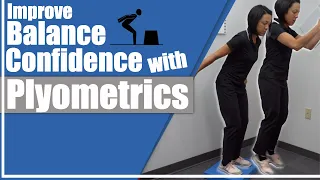
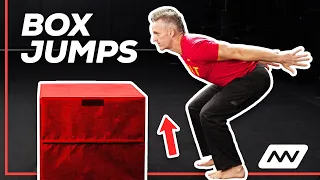
this concept of dosage of exercise so if you guys have followed us at all in the podcast or if you've taken any of our courses you know that we are trying to work on translating a lot of exercise prescription principles that are typically thought about in the older or sorry in the younger population and translating that in to the older populations and so one of the things that definitely has been traditionally thought of to be specifically relevant to an athlete or a younger population is jumps and plyometrics and so hear me out i know that
a lot of people who are working specifically in geriatrics are thinking my clients haven't been able to jump in 10 15 years and that is a hundred percent my point and so when i'm working with a lot of my older adult clients i try and implement some sort of plyometric or jump style training with a lot of my clients irrespective of orthopedic injuries i've had plenty of clients who have symptomatic neoa who have had multiple joint replacements who i've been able to implement this training with without any sort of adverse event or flare-up and musculoskeletal
pain but um the question is is it safe first and then how do we implement that and that is what i want to talk about today so in terms of safety what's nice is that there was a systematic review that was completed that looked at the efficacy and safety of plyometric training in older adults this was published by petrovsky and colleagues and what we know about plyometric training is that there's two things that are really heavily involved with plyometrics one is the amount of force that goes through the bone and so it's important for bone
health we know that especially for women who are post-menopausal that we want to make sure that we are applying impact to the bone and the only way we're going to do that is by applying load and we have more and more studies like the lithmore trial which did chin up drop downs where they were actually getting individuals with moderate to severe arthritis to be jumping and landing rather rather hard on the ground to try and get more osteoblast formation to counteract some of the loss in osteoclasts that happen as a result of age and especially
in an individual who has osteoporosis and so we're seeing more and more of these these research trials that are trying to stimulate bone health and osteoblast formation for individuals especially who are osteoporotic and so that's number one is why we might be trying to implement this type of training so this would be that patient population the second one is around um reactionary force development and so we know that jump training is a form of power training and more and more literature has supported the fact that strength training and power training are both unique methods to
be able to increase functional capacity increase force development and decrease risk of falls in older adults and so in this instance when you are actually implementing plyometrics or jump training you're kind of killing two birds with one stone if you can get your client to do it so we're going to talk about a little bit of spectrum of impact that we can be doing with our clients from a low-level uh client to somebody who's a little bit more uh kind of in the outpatient setting in the community dwelling older adult so first things first is
it safe so what we know is that when there when this study was looking at a multiple randomized control trials that had implemented plyometric training for older adults they saw that most studies showed a statistically significant increase in strength and power when there was a resistance training or sorry when there was a jumping component included in the program rather either in isolation where you're getting individuals to do a couple of jumps per day or if it was added on as a component so there were some studies that just implemented plyometrics and gem training there were
others that implemented resistance training and then resistance training plus impact training using plyometrics and jumps and there was a larger improvement in that group i'm not really sure if they were volume controlled so we can look at the research methodology methodology later but the biggest thing that i took from this systematic review was that one it was considered safe two it was considered feasible for a large cohort of older adults and three there were no significant adverse events reported in any trial outside of something that we would see in a standard exercise program so there
were some instances of musculoskeletal pain or some um sort of like uh delayed onset muscle soreness that prevented them from from performing the next class but in general there was no like no risk of fracture no large exacerbation no hospitalization etc etc so that's really important and so that's kind of the starting point of this research vein and now we need to start getting into some of the specifics and so the next question is how do we implement jump training with our older adult clients and so we're going to start low level talking about how
to just start putting impact through the bone if you have a client who is for example wheelchair bound and then we're gonna move up all the way into burpee style training and jump training for our older adult clients so i hope i'm gonna try and if you guys are listening on the podcast i'm gonna try and speak through these examples as much as possible if you're watching on facebook or instagram i'm going to be a little bit further apart so if you have any questions just let me know and i'll try and get to them
by the end of this podcast but when we're thinking about a client who is wheelchair-bound the biggest variable that we're going to be able to manipulate is impact through the lower extremities so they may not be able to stand up to do things like stomping which is going to work on that impact but they can definitely do things in sitting so if we're doing you know marches why can we not do a hard land i want to hear your feet is the cue that you can give to your client and what it's going to do
especially for a client who isn't doing a ton of weight bearing this type of just impact through the bone can at least help to try and maintain the integrity of bone mineral density that they have at present it may not get to a critical threshold for us to see that improvement based on some of the literature that we have in osteoporosis but we could definitely be trying to maintain then if we have a person who we can get in standing with assistance then same thing can start having them have a two-hand assist and do a
big march and what that's going to be doing is doing a little bit of impact training getting your body ready to start doing some things like jumping okay from there if you have a client who can stand using two-hand assist one of the things that you can start doing is lateral stepping so oftentimes in home health in sniff assisted living facilities we do a lot of reactionary stepping where we're going side to side maybe we can put a cane down and have them navigate over that obstacle especially as a part of a well balanced falls
prevention program so once a client feels comfortable with that and i wouldn't recommend using a cane at the very beginning just in case is that from the stepping strategy you can ask them to try and hop and especially for individuals who are relatively frail who are experiencing clinical levels of sarcopenia they are probably not going to be able to get off the ground but just by trying to laterally move and try to initiate the act of you know that power that jump you're going to get them to increase the amount of force development increase the
motor unit recruitment and start trying to turn on those fast twitch fibers rather than just solely relying on slow twitch and that is why the literature is supporting the use of implementing both power and strength training especially in a geriatric population so getting them to do lateral hops again implementing this into your balance program in a variety of settings you can do forward hops too and because you're only going from one foot to the other it's more of a impact weight shift you're gonna have a lot of your clients not have the same fear of
this type of movement um versus if you were to say i want you to just two foot jump off the floor okay so once you've kind of done some of these jumping strategies one of the other things that you can do is start incorporating jumps in to your burpee or floor transfer training hear me out so one of the biggest ways that i implement jumping into my my exercise programs is when i'm starting to work on floor transfers by using an elevated burpee so if you are in home health skilled nursing or hospital acute settings
inpatient rehab etc etc this is probably going to be a counter or an elevated plinth you guys have seen that the background stayed off before you know that i'm in a gym that very closely resembles across the gym so i am using a barbell the nice thing about being able to use a plinth is that you can change the height of the burpee but that's a whole other topic but solely for the impact portion i get my clients to step back step in and then they use their upper extremity to jump this is where i
get a lot of that aha moment with my community dwelling older adults seeing me for rehab many of my clients don't actually realize that they have lost the capacity to jump that they physically cannot get off the floor if they wanted to and so it's definitely something that i implement a lot and ends up with a lot of conversation so i think i saw jeff's comment about volume so some of the research on jump training says that even doing one or two sets of five jumps which would be incorporated with the burpee is enough to
start seeing some improvement in some of physical outcome measures so the the volume actually doesn't have to be extremely high um but definitely something that you can start implementing like i have a client who's got metatarsalgia and osteoarthritis in his ankle right now and i had him doing jumps and he was shocked that it didn't actually negatively impact his ankle pain at all and he was also shocked that he couldn't get off the floor stiff ankles may have something to do with that but okay so if i'm getting here and jump and then you can
start using less and less upper extremity assist in order for you to be implementing this more and more another thing that is typically thought of for older adults or is not typically thought of sorry is um doing things like skipping so i don't have my skin rope i didn't think this through enough but when you have clients who are doing skipping um one of the greatest things is that it's progressing that forward step switching that we were talking about those forward leaves but on in place and it's doing the coordination of moving the rope i
have a client who's almost 70 years old and i thought to her like i kind of put the bug in her ear that i think that she'll be able to skip again hasn't skipped for 20 25 years and she was able to do it the strategy wasn't like this the strategy was around over over around over over but i started working on coordination i started working on reactionary strength i started working on reactive balance all of these things um and it's really really important so there's a question there could running be considered impact training absolutely
especially if you are trying to get them to run with speed so sprint training so obviously as we get older we're not going to have the same power generation but even changing from you know a low intensity steady state run like a three out of ten and getting them to do intervals of 10 15 seconds where they're going as fast as they can is going to be important i have a client in his 70s right now who continues to play baseball and that is one great way of doing impact training because as soon as he
hits the ball he's sprinting as hard as he can to the first baseline and he does that for fun and i think that's really great and he's had people try and tell him that you know at his age he shouldn't be doing that and i am trying to do the exact opposite and tell him that he can run and i will try and help facilitate him being able to run for as long as possible so that's a really good question too all right and then some other examples of jump training can be like jump squats
so again you can use upper extremity assist or not you can use a bench or not so sit to stand don't sit to stand jump and that's another great way to add a little bit more you're actually not spending any extra time really in your exercise prescription but you're getting a lower extremity strengthening exercise as well as power generation and then as your clients get stronger get better are able to handle more loading then you can start removing like upper extremity assist get rid of the bench behind um have something there just in case and
this may also act as a graded exposure for individuals who have a lot of fear of doing things like getting off the floor um or even like going up and down stairs because getting off the ground without anything to hold on to in case they lose their balance may actually be something relatively triggering for a lot of our older adult clients with a high fear of falling all right so i hope you guys found that helpful so if we're gonna take this down number one we know that the clinical significant takeaways number one jumping and
plyometric training has been shown to be safe and feasible in the literature so it is something that we can be implementing as another tool in our toolbox it doesn't actually take a ton more time when we are thinking about our exercise programs implementing a small jump at the end of some of the movements that we're doing already allows us to get another stimulus to the bone and to the muscle without having to think about more and more um having more and more time especially when time is limited in our treatments we can go from lower
level where the impact of our strength and plyometric training is probably going to be related to bone health especially for wheelchair-bound lower level clients who aren't doing a ton of weight bearing so they're not actually getting a ton of loading through their axial skeleton to promote osteoblast formation to counteract osteoclast bone degradation so even just doing in sitting like uh heel drops or marches that have an auditory sound to them can be effective to start implementing some impact through our lower extremity when we go from there up for our individuals who are in home health
assisted living skilled nursing who can do some standing related activities we often have them doing things like wall push-ups or burpees to ledges and we can implement an upper extremity assisted jump from there and that's a good starting point as we continue to go along the spectrum we can reduce the amount of upper extremity assist we can um use different variations like jump squats we can start implementing things like skipping and for every person across the spectrum as long as standing is tolerated to even a little bit like you can still use an upper extremity
assist you can do some lateral hopping or quick transfers over from left to right right to left in order to start working on that reactionary and control and try and optimize the amount of motor unit recruitment and force development that individuals are doing in their balance program all right i tried to keep this under 15 minutes i have failed if you guys are not honor hump day hustling that is a email that goes out every wednesday that gets all the faculty to start uh including articles for their like in their extended topic area and keep
you up to date with some of the things that are coming out in the research i hope you guys are subscribed if you are not i encourage you to do so if you are interested in joining any of our modern management courses we are in asheville north carolina october 3rd and 4th i don't think i will be i don't think my country is going to let me leave just yet um but if you're interested in online if you're not trying to look for a live course our next essential foundations course is october 28th so last
course before the um before the holiday season which i can't believe i'm even saying thanks jeff i really appreciate that all right have a wonderful wednesday everyone and i will see you all on the podcast on monday bye hey thanks for tuning in to the pt on ice daily show if you enjoyed this content head on over to itunes and leave us a review and be sure to check us out on facebook and instagram at the institute of clinical excellence if you're interested in getting plugged into more ice content on a weekly basis while earning
ceus from home check out our virtual ice online mentorship program at ptonice.com while you're there sign up for our hump day hustling newsletter for a free email every wednesday morning with our top five research articles and social media posts that we think are worth reading head over to ptnice.com and scroll to the bottom of the page to sign up