One exercise that we still do today is asking the question, "What is the dumbest possible idea we could do for this? " Our brains are wired to just repeat things that we've seen be successful in the past. You kind of have to trick your brain to come up with a bad idea to truly be thinking in sort of innovative territory.
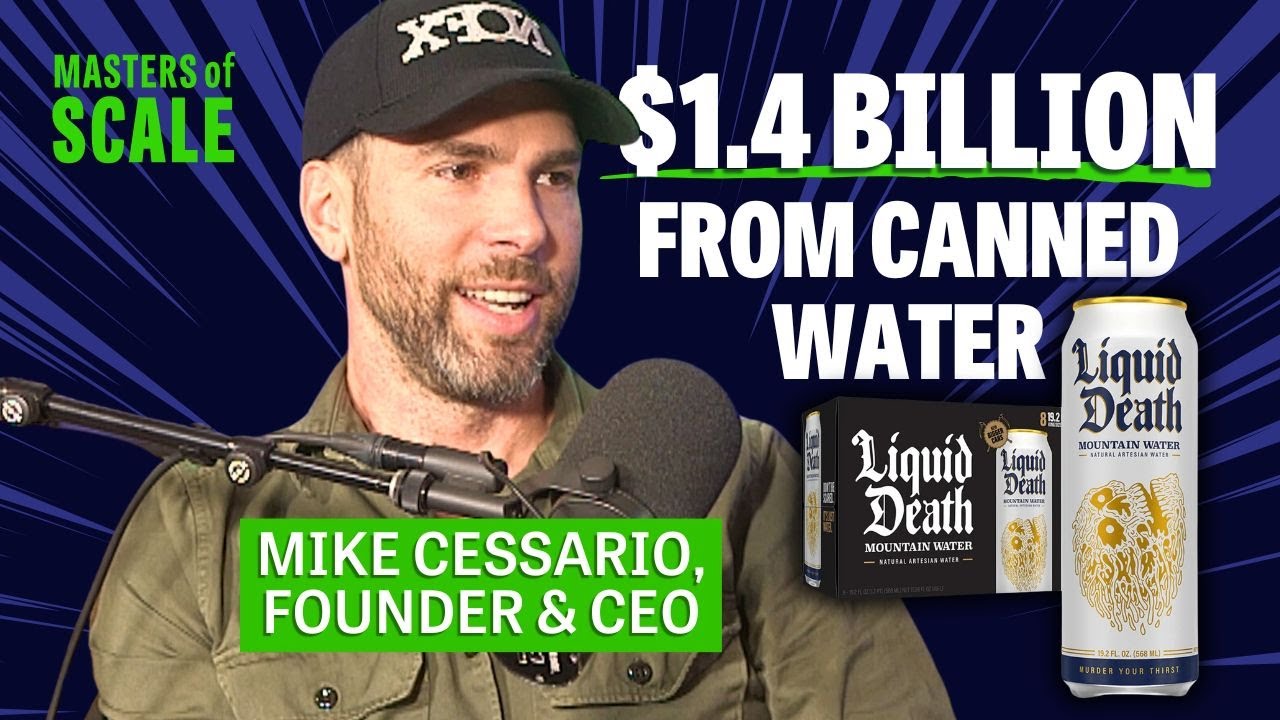
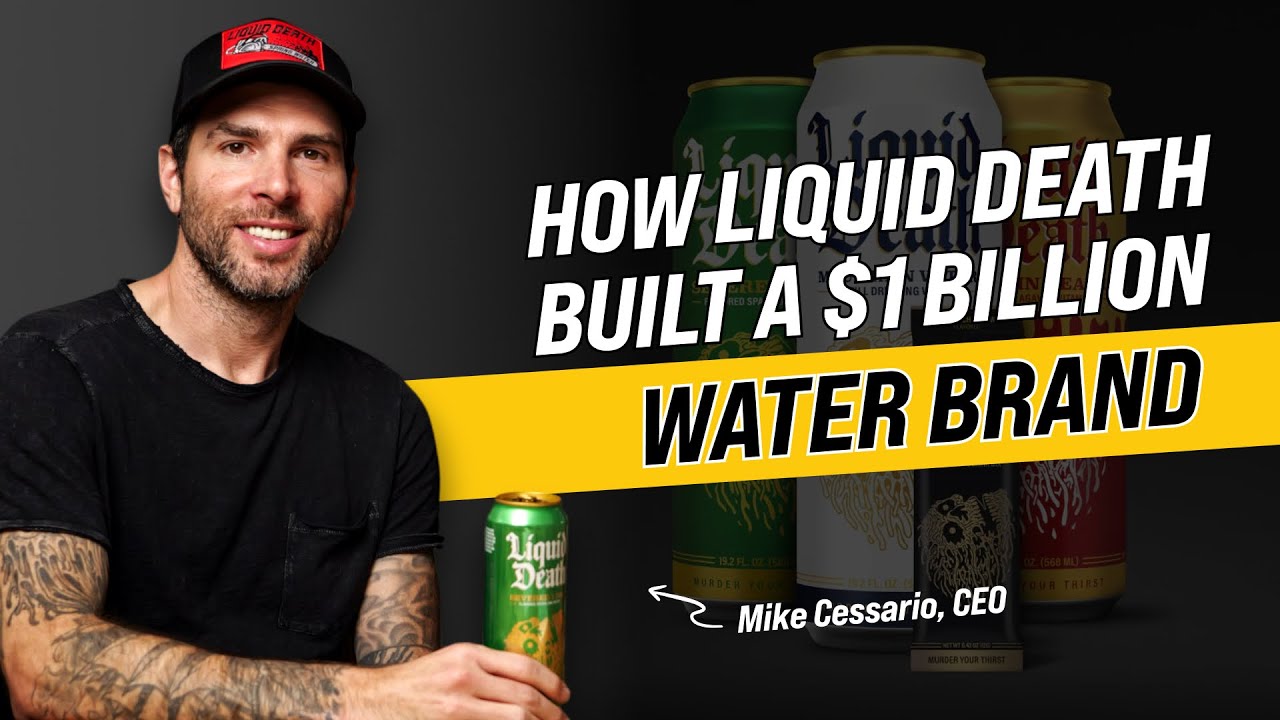
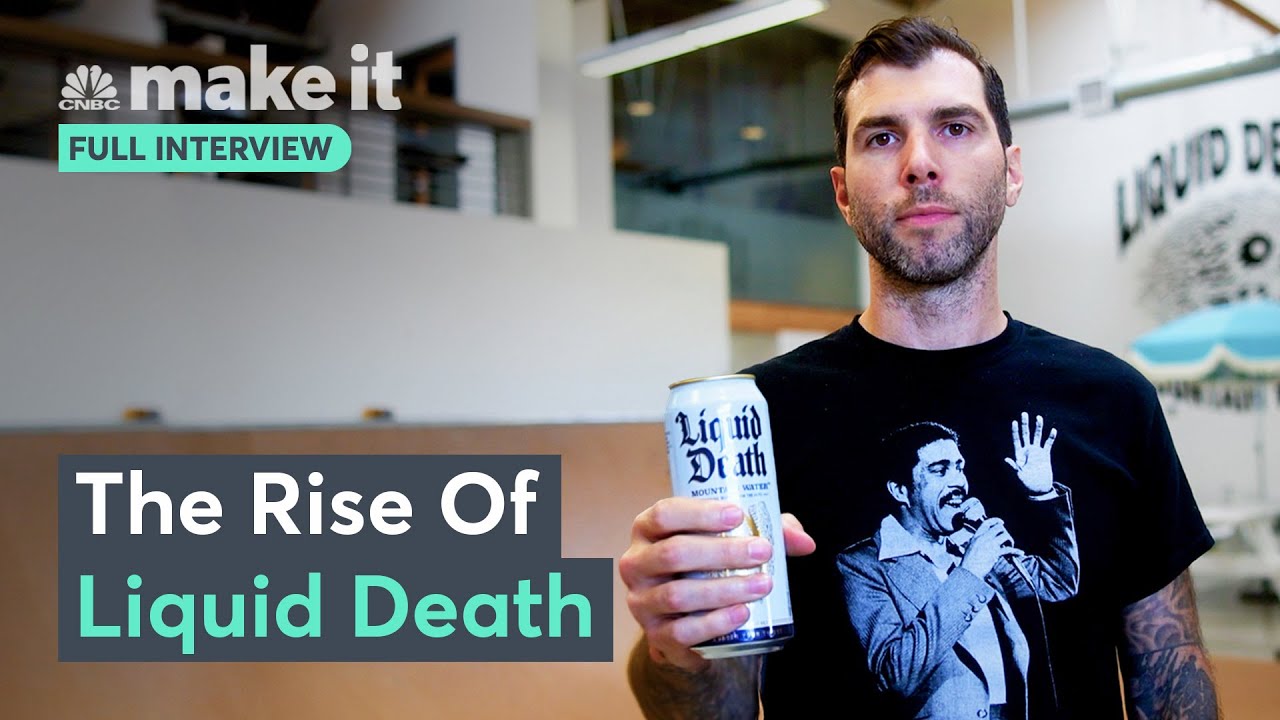
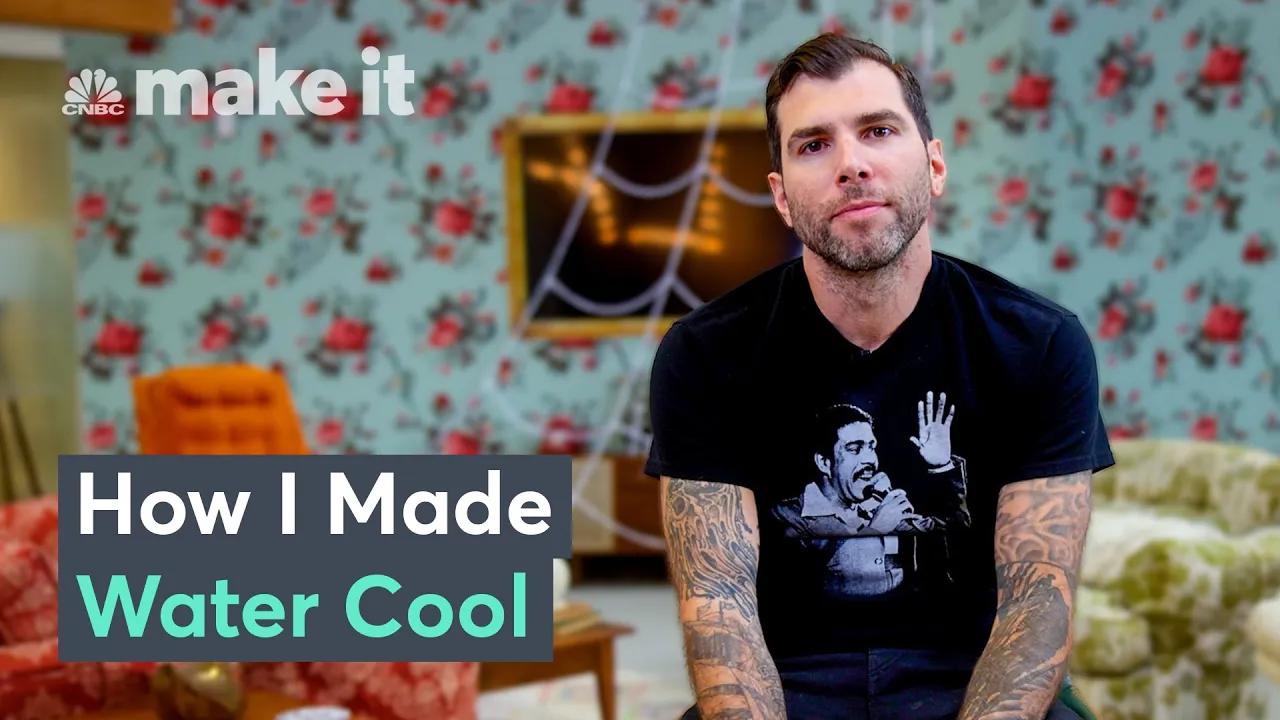
This is 40-year-old entrepreneur Mike Cessario, and when he devised the brand name for his product, he came up with something unconventional. What's the dumbest possible name for a super healthy, safest beverage possible? Liquid Death.
Probably the dumbest name. Yeah. Liquid Death.
Water in a can. Dumb name. Skulls on the packaging.
But according to Mike, the co-founder and CEO of Liquid Death, that's part of the reason why his company has brought in nearly $130 million in sales this year alone. "If I saw that in a store, or if someone I knew saw that in the store, I'm pretty sure they're going to have to pick that up and be like, 'What is this? '" And once someone picks something up, you've basically won.
There are three numbers to watch out for in Mike's story: 3 million, the number of views that Liquid Death's first commercial got on Facebook; 100,000, the amount of sales that Liquid Death made in its first month; and 195 million, the total amount of funding that Liquid Death has raised. Here's how Mike Cessario took a funny idea he once had for a commercial and turned it into a $700 million brand. For CNBC, Make It, I'm Zach Green.
This is Founder Effect. As a kid, Mike remembers an older cousin gifting him his collection of MAD magazines. It turned out to be a formative moment for him.
"I just completely ate that stuff up, and it was kind of crass and vulgar, but it was art, and it was really funny, and it was spoofy. " Mike started playing guitar in punk bands and says one of them had several offers from recording labels to put out a record, but he also felt creatively drawn elsewhere. "I was doing the show fliers, designing the album covers— all the business creative stuff.
" Instead of pursuing a music career, Mike opted to attend the Art Center College of Design in Pasadena, California, studying graphic design and eventually advertising. "I just wanted to make people laugh," which is what really attracted me to advertising because it seemed like it was more of a place for humor and comedy than graphic design was. In 2009, a friend of Mike's put him on the backstage list for the Warped Tour in Denver, Colorado.
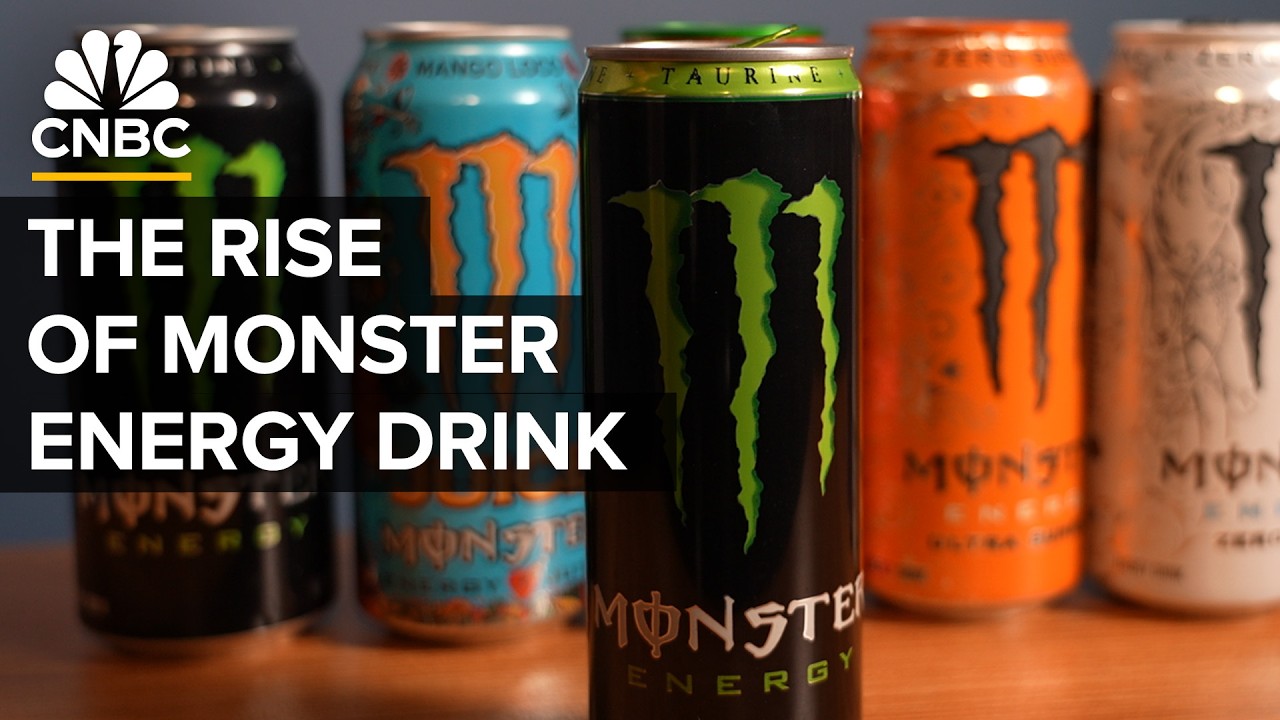
Many of the bands were sponsored by Monster Energy. "I was just hanging out with them, and we saw these stacks of what looked like Monster. These guys are drinking it, and it turns out like, oh, it's actually not Monster, it's water because these guys don't actually want to drink these energy drinks.
I remember thinking that was kind of messed up. I'm like, man, that's so sort of sneaky. Like, at that time, it was really only energy drinks that were throwing money at these guys, so they kind of had to take it.
But at the same time, it started making me think about, why aren't there more healthy products that still have funny, cool, irreverent branding? Because most of the funniest, memorable, irreverent branding marketing is all for junk food: Bud Light, Dos Equis, Snickers, Doritos, Red Bull. And that was, I think, planted the early seed of probably what ultimately ended up becoming Liquid Death.
" Early in his career, Mike started working at ad agencies around the country. While the work wasn't always creatively fulfilling, his clients helped hone his own marketing philosophy. "We were working on Virgin America, the airline, and I started getting into Richard Branson.
I love Virgin's sort of business strategy, which was to find a really stale category of products and be the one really cool, exciting product in it. And they were able to get all this market share really easily because they were just so disruptive and sticking out like a sore thumb in whatever kind of category that was. " Mike put his theory about funny advertising to the test while working at a firm in Nashville, Tennessee.
The health food brand Organic Valley wanted them to come up with an ad campaign for their protein shake. "They were talking to, like, bros in the gym who were looking to put on muscle— that's a big part of the protein market. And they knew they had to market differently to those guys than they did to, like, organic moms that they did most of their other products.
" So, venturing outside their comfort zone, we pitched them this idea of "Save the Bros. " "Every day, millions of bros drink protein shakes in order to get jacked, yoked, totally swole. But most bros are unaware of the scary chemicals and artificial ingredients inside these shakes.
" And they almost killed the idea right before it went live! "Then we launch it, and it goes completely viral. " But despite success in advertising, Mike still struggled creatively, so he decided to create his own brand where he could control the marketing.
After an unsuccessful try at craft brandy, he remembered a pitch he had once made for a canned water ad poking fun at energy drinks that the bands at the Warped Tour definitely weren't drinking. "I always knew that there was something in that idea, and it kind of just stuck with me. Just on the side, over the next few years of working at random agencies, I was always just sort of continuing to develop this concept of canned water and like, what can it really be?
" But how could a new product break into the crowded bottled water market, which is valued between $146 and $350 billion, according to Pitchbook? "The only way the brand would have a chance at survival is if the actual product itself has to be so insanely interesting, where so much of the marketing is baked into the product; if someone sees this on the shelf, am I willing to bet they have to pick it up because it's so weird or interesting? And then they're probably going to take their phone out, take a photo of it, and post it on their social channels for free to their hundreds of followers.
" To prove that the idea was viable, Mike decided to produce a commercial for it despite having zero cans in production. "We designed a 3D render of a can that looked real. I came up with a commercial idea for this brand that we shot for like $1500.
" Bucks. We put a few thousand dollars in paid media to push the video out and to push the post out over the course of maybe three or four months. Don't fall for the marketing bull—.
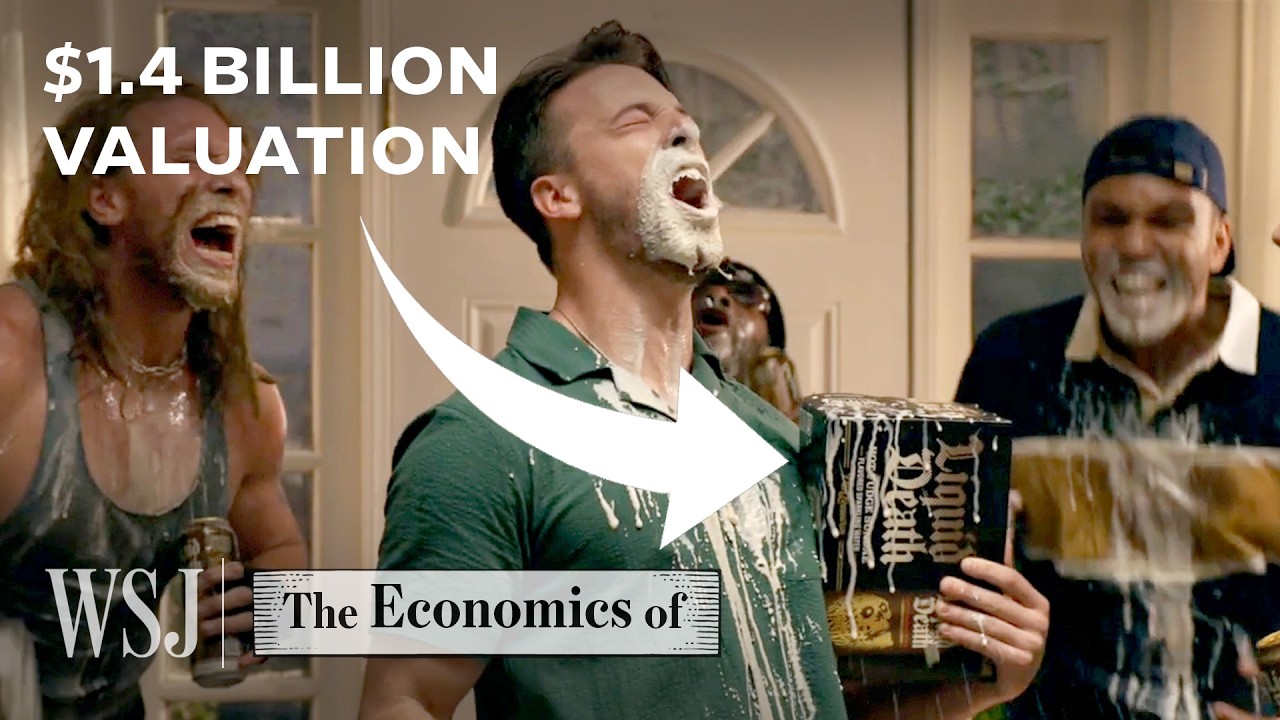
Water is not yoga. Water is liquid death. Four months in, the video had 3 million views.
The page had almost 80,000 followers, which was more than Aquafina on Facebook at the time. We received hundreds of messages and comments from people saying, "This is the greatest thing ever. Where do I get this?
Is this real? " A 7-Eleven franchisee in Michigan reached out: "How do I get this in my store? " So then I used all of that social traction to get people to take me seriously, and we raised a small round of funding to actually produce a minimum run of actual product.
Mike was able to raise $150,000 in initial funding, and after finding a water supplier in Austria, sold the first cans of Liquid Death online as a direct-to-consumer business. In our first month, we made $100,000 in sales and spent about $2,000 on marketing. We sold out of product.
We didn't order near enough to meet the demand. We were sold out for over a month. The first big retailer to take an interest in Liquid Death was Whole Foods.
They're really big on sustainability. They loved our "death to plastic" message—bringing death to plastic bottles, cans that are infinitely recyclable—and they liked that we were talking about these things in a way that no other brand in their store was really doing. They said, "Hey, we want to launch you full national out of the gate in March of 2020.
" So we literally loaded into Whole Foods on March 15, 2020, the week the pandemic lockdown started. That came with its own host of problems, but we still started seeing real growth in Whole Foods throughout the pandemic year. While still far below brands like Dasani and Aquafina, Liquid Death sales grew from $2.
8 million in its first year to $45 million in 2021. Mike says they're on track to hit $130 million by the end of this year. One of the most surprising things to everybody was how wide the audience really was for something like this.
Hundreds of parents message us on social media saying, "Thank you, Liquid Death. You finally got my nine-year-old excited to drink water instead of soda because he thinks he has something he's not supposed to have. " The construction worker who typically buys two energy drinks at a 7-Eleven might now be buying one energy drink and actually going to buy a Liquid Death.
Liquid Death for me is about how to get all these people, who don't typically make healthy decisions, to want to participate in a healthy brand, purely from the brand standpoint at first, and then they just start incorporating it into their day. Liquid Death has raised $195 million in funding and is valued at $700 million. A big part of that growth has been fueled by Liquid Death's appearance on the shelves of over 60,000 retail locations throughout the U.
S. , including 7-Eleven, Walmart, and Target, where it sells for about $1. 89 a can.
But more than anything, Mike says that it's creating an emotional connection to a brand that drives consumers. People think that taste is why things are successful or unsuccessful, or why one brand is better than another. All the data shows that is not even close to the case.
Monster didn't become a $50 billion company because it tastes so much better than Red Bull. Most people probably couldn't pick out an energy drink in a blind taste test if their life depended on it. Our brand is all about comedy and making people laugh.
We're not tying our brand to some specific niche like action sports. I think as long as we're constantly just riffing on culture, we can go for as long as something like Saturday Night Live is relevant because we're literally just a part of culture and making people laugh. At the end of the day, we're really creating an entertainment company and a water company.
We don't want to create marketing; we want to actually entertain people and make them laugh in service of a brand. If you can do that, they're going to love your brand because you're giving them something of value.