[Music] foreign After a long wait we are here and I'm very happy and I want to thank Mauro Biglino for the invitation to to this conversation. Today is an important date because we had recently with Mauro a conversation with bishop Roy Sano and theologian Buddhist theologian professor Nakasone recently in which we announced that Mauro was about to publish a new book. It wasn't ready yet, then it was in print but now finally it is ready.
So I'm here to discuss with Mauro this new book of his, his latest work: Gods of the Bible. And actually I want to be more precise than that because the title is: Gods of the Bible - a new interpretation of the Bible reveals the oldest Secret in history -So first of all Mauro: thank you very much for this invitation, really. And I want to thank also to the publisher because this book has been published by Tuthi and thank you very much thank you to you.
First of all I want to say that you are the senior editor of this book and so it's for me a great pleasure to have you here and first of all I also want to say, want to apologize for my English that it's very very basic and for this reason I prefer to write down the answers to your questions only for avoid to forget important concepts or to express them with too many incorrections. Because actually, this is a point that I wanted to make, we are having this conversation in English because this is the first, Mauro correct me if I'm wrong, the first book that you published in English. The first so it is directed specifically to an anglophone readership and the title is Gods of the Bible.
I already know that yes I worked as a senior editor for this book and there there is going to be an Italian version of the book in the future soon but at the moment this book is available for English readers, which is also, which is also a novelty for you. Before moving forward with the questions- because I sent you a few questions that I had while reading this book- I want to give the audience here a short introduction of your work. Because Mauro Biglino is a Bible scholar, is a Bible translator is a best-selling author for Mondadori which is Italy's major publishing house.
Also Mauro has translated 17 books of the Old Testament and he has published these books with Edizioni San Paulo Edition San Paolo, is the Italian major Catholic publishing house and whose Vatican approved texts are currently used in the Bible study and Hebrew Bible departments and universities in Italy. So Mauro is a professional translator of the Bible and from this experience which lasted more than 10 years is starting voicing his doubts and showing the contradictions that he found in the Bible while translating it and his approach to reading the Bible is that of a literal reading of the Bible. This is important as we move forward and before I ask you the first question.
I don't know if there is anything that you want to add on this point so Mauro there are many subjects that you touch in this book from the angels to the the name of Yahweh from the malachim to the cherubim and many other subjects but the the book is long so we cannot address all the topics today. We are going to address only one and the main topic of the book which is the Elohim and we can see from the title itself which is of course provocative because uh it is gods of the Bible which is of course an attack to the idea of monotheism in the Bible. So let me start exactly from here because Elohim, the Hebrew term Elohim, is usually translated as God in the Bible but you strongly argue in this book that Elohim actually represents a plurality of individuals, why is that Mauro?
As I said before I read the answer so to Express only the in most important concept. If one reads the Bible with an open mind it becomes clear that Elohim does not mean God. This is clearly a later reading that came from the demands of Judeo-Christian monotheistic theology.
Yet the term Elohim has been translated as God. My work tries to remove the incrustations of 2. 000 plus years of theological elaborations that prevent us from reading the Bible for what it is, a historical source, an ancient historical source.
In particular the Bible describes the relationships of the people of Israel, i. e. Jacob's family, with Yahweh who is none other than one of the Elohim.
One of many Elohim. Yes because reading the Bible we will find various situations in which it is clear that Elohim is a plurality. First I open a parenthesis: Elohim is always translated as God in the Bibles you have at home but it has a plural ending in Hebrew.
This should already be an important signal. The grammatical issue is still debated. I talk about it in the book.
But it makes no sense to go into it now. However there is some irrefutable textual evidence of the plurality of the Elohim. There are situations in the Bible that describe the presence of multiple Elohim.
We even know the names of this Elohim colleagues of Yahweh. Kamosh for the Moabites, Milkom from the Ammonites, Adad for the Arameians, Melqart for the Tyrians and many others and so on. In my book all this is explained in detail of course.
When I had the pleasure to read this book in advance I found very interesting actually Mauro that you didn't - yes- address the grammatical points of Elohim but you didn't, you didn't go in details into it because actually there are arguments that in my opinion, at least as a reader, are much more interesting. And and one of this is exactly what you're saying now that there are lists of names of other Elohim so it cannot be clearer than that, that Elohim represents a plurality. But you know to stay on this track I want to ask you the second question which is: can you actually provide some examples of situations in the Bible in which there are clearly more than one Elohim?
Yes, the examples are countless. In the second chapter of my book I put together a long list of biblical passages in which the Elohim clearly present themselves as a group, starting with the famous passage in Genesis of the so-called creation: let us make men in our image and likeness. I and many Jewish scholars wonder: who is God talking to?
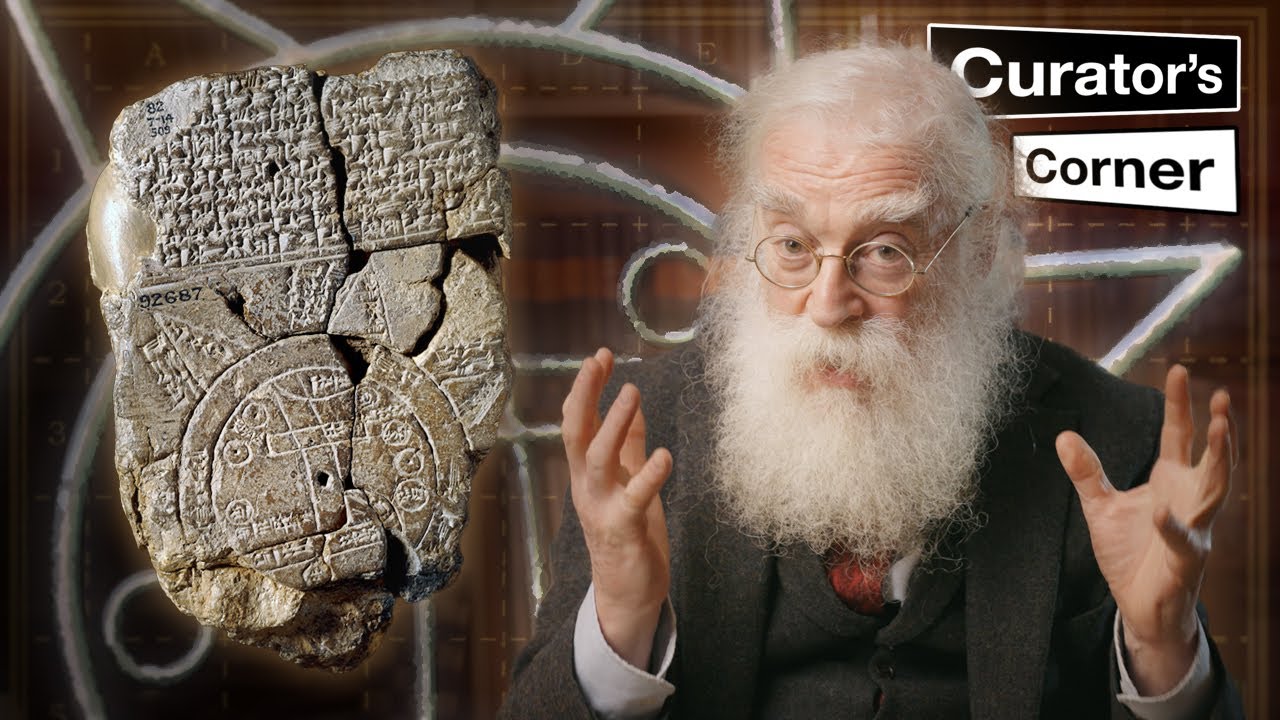
We should know that the source of this passage is an older creation story of Sumerian origin in which the Anunnaki, the Sumerian deities, decide to make men in their own image and likeness. Their purpose was to make the man work for them. The Elohim are none other than the biblical equivalents of the Anunnaki, clearly a plurality.
Then there is the famous passage from Genesis 6 where the sons of the Elohim mate with the daughters of men because they find them beautiful. They begat other sons and daughters with them; therefore, they are clearly a plurality. Unless we want to say that God loved mating with thousands of women.
This is in Genesis 6, I encourage you to read it. Absolutely. However one of my favorite passages is when Jacobs meets two angels, two malchim, during a journey.
and he exclaims: this is a camp of the Elohim! And then he calls the place Mahanaim, which means "two camps. " Can we even think that two camps of Elohim were inhabited by only one transcendental and unique God?
I talk about all this at length in my book. But the most famous passage is Psalm 82, where we even have an assembly of the Elohim. It goes without saying that if it was an assembly, there must have been at least two individuals!
At least two. In the book I delve into these topics, also responding to the objections of the monotheistic theological reading. Without theology, the Bible becomes a beautiful book, a very beautiful book.
We must never forget that the stories of the Bible are born in a given historical context. But the Bible, as a book, was written in a much later historical context in which ideological and theological impulses of a particular type were already operating. The test is therefore adapted to the new needs.
No book in the word has been subject to change, supplemented, corrupted, corrected, falsified and amended as much as the Bible. Monotheism is a later addition to the Bible, not its original background which is clearly polytheistic or at least monolithic. Thank you Mauro.
Also I would like to emphasize something that you just said, which is very interesting because you always say. Because not only in this book but all the other books that you have written you encourage your readers to read the Bible, which is something very different from what the Catholic Church at least have done, has done in the past centuries, in which up to a certain point - and also very recently - the faithful could not read the Bible autonomously. They could only read it through.
That's right, that's right, it's fundamental. Yes, exactly. So this is the encouragement: to not only read your book, the new book Gods of the Bible but also the Bible because uh it clears up many many issues.
There is another famous passage that you discuss in your book in which there are many Elohim which is Deuteronomy 32, in which the Bible shows that there is a hierarchy between the Elohim. So They are a plurality but also this plurality has a hierarchy clear here, okay. Exactly, this is also a crucial step.
This is also a passage derived from earlier Sumerian stories. Sumerologists know this Sumerian narrative as "Enki and the word order. " In this story, the commander of the Anunnaki Enki defines the word's fate by organizing the division of power among the lesser Anunnaki, those under him.
And this division is described in great detail. Enki is superior to all others, he can determine the destinies of various lands and territories named in succession: Sumer, Ur, Meluhha, Dilmun and so on. The Supreme Leader establishes what we would today call a "New World Order.
" Enki also distributes privileges and responsibilities to the Anunnaki under him, he assigns the development of the various activities that form the basis of human civilizations to the minor "gods": agriculture, breeding, weaving, building, etc. The Sumerians were so accurate in describing these events that they did not forget to mention the less edifying aspects of the behavior of these so-called gods. The Lesser gods were often dissatisfied with the tasks; they argued about responsibilities and complained that Enki excluded them from the land distribution.
This behavior is not surprising, given their human nature. This Sumerian tale is recorded in the Bible in the Deuteronomy 32. But in the Bible the Anunnaki are called Elohim and the supreme commander is called Elyon.
Actually Elyon means "the one who is above. " It is generally translated as "The Highest". It is none other than the head of the Elohim, the boss.
Now, during this division of the lands and peoples of the world, the protagonist Elohim of the Bible gets a relatively meager allotment indeed. Yahweh is assigned the family of Jacob, that is, the family of Israel. Be careful, note that there were other branches of the same family, other Hebrews, but not all are assigned to Yahweh, only Jacob's family.
Moreover, a family without land! The Bible says that Yahweh found a Jacob "wandering in the wilderness. " I imagine Yahweh's face, I imagine.
In fact the whole relationship between Yahweh with his people develops in a long series of wars to conquer the Promised Land. This whole narrative blatantly contradicts the idea of a universal God. Yahweh was a local lord, perhaps enraged by his unfortunate fate.
The Bible tells us that there was a book, that unfortunately went lost, that was called "The wars of Yahweh" I wish we could read it! At any rate, the title itself shows that Yahweh had no power to promise anything that did not have to be conquered by sword and force. Going back to Deuteronomy: it is evident that there are many Elohim, each of which receives a particular assignment and land allotment.
Yahweh, probably one of the most insignificant Elohim, receives the family of Jacob, the family of Israel and in short Yahweh was a clan leader, a local deity. There was nothing Universal about him. Thank you Mauro, it was very interesting and we have learned from your answer that actually the Bible was not born in a void but there was a context around it.
So, which is actually very important to highlight is especially the connection with the Sumerian Acadian Tales. So given that my next question is: what are the main characteristics of this Elohim? I have explored it in various book chapters to which I refer for details.
First, we reiterate again that Yahweh was one of the members of the group of Elohim. This Elohim were all different in character, role and position. We have seen that Elyon, for example, is "he who stands above.
" But here really we touch the heart of the problem. Who were these Elohim, and where did they come from? No one can tell.
In fact also monotheistic theologians struggle to explain that Elohim means God, no one in the world knows for sure what Elohim means, no one in the world. However, some things are certain: the Elohim lived longer than men, much longer, probably a thousands of years, but they were indeed not immortal. The Bible itself states this in Psalm 82, which I mentioned earlier.
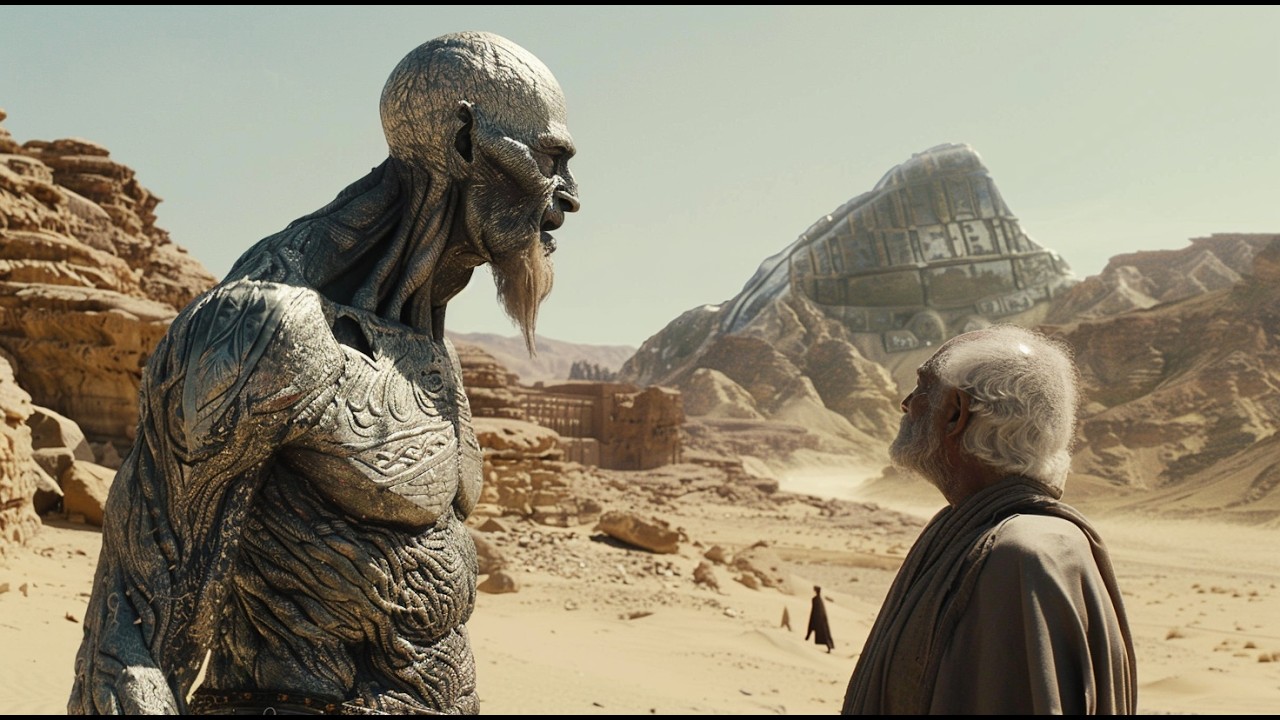
They also have another critical feature. Not only are the Elohim biologically more advanced than human beings, they are also more technologically advanced. The Bible clearly speaks of flying machines.
The Bible clearly tells a very powerful weapons that arouse men's amazement and horror. The Bible tells clearly of advanced technologies such as genetic manipulation. All these things are described clearly in the Bible.
In my book, I bring to light this information hidden in the text's literal sense, freeing it from the theological fog that has prevented reading this amazing test for too long. To summarize, we don't know where the Elohim comes from. Still, we know they are biologically and technologically more advanced than humans.
And we don't find it hard to believe that our ancestors, faced with the Elohim, could have mistaken or retained them as divinities. Mauro I cannot but recall that very recently we spoke with the Bishop, a Methodist Bishop Roy Sano and of course what you're saying now in your answer, this this thesis of you are very controversial. I understand from the perspective of a believer but at the same time when we spoke with Roy Sano this Methodist Bishop, he confirmed the possibility of extraterrestrial intelligence and therefore advanced technology engineering manipulation and so forth, and so on are actually present in the Bible and he said it to us very recently.
So from here I want to take you to the next question that I have which is the identity of God. Because obviously the Elohim Yahweh was a warrior. Actually it does not correspond to our contemporary idea of God.
What can you say about about this? indeed this is an argument contrary to monotheistic theology. We must try to historicize.
Whatever Elohim means, we must remember that the ancient Semitic mentality, which produces the biblical stories, was concrete and practical. As we have seen in Deuteronomy 32, the context is that of a group of nomads, of shepherds who wandered in the desert. This was Jacob's family when he met Yahweh.
So it is wrong, anachronistic, anti-scientific, anti-logical to think of being able to attribute to those stories and tales concepts that were only developed much later in the history of humanity in entirely different situations. There had not yet been Greek philosophy, there had not yet been Platonism, and the idea of One, of transcendence in the sense we understand today. It is a complex and perhaps somewhat abstract discussion, but it is fundamental.
Our idea of God did not come from the Bible. Today's idea of God has taken shape in century of theology forged by the hammers of ancient and medieval philosophers. Our idea of God was completely "alien" to the ancient Semitic mentality.
Even if, to return to our introduction, Elohim means God, it is certainly not the God we mean. However I don't want to venture into discourses that are too abstract. I am a translator of Biblical Hebrew I say one thing: the Bible is simple.
The Bible is an open book if we read it after having removed from our noses the glasses of theology we had forgotten. We don't need to resort to metaphors or allegories. Based on my studies of ancient Hebrew, I do a literal reading of the Bible.
I have published 17 Old Testament books with the most important Italian Catholic publisher San Paolo Edizioni. These books are studied and used in Bible studies departments. What I say comes from my concrete experience with the text, not from some personal fantasy.
And I have also openly declared my method from the beginning: "pretending that the Bible is true," that is taking seriously the literal sense of the words written in it without theological superstructures. Everything becomes very clear. Pretending that the Bible is true, a literal reading of the Bible.
All this approach takes you to a very different reading of the Bible compared to spiritualistic interpretation typical of the theologians with respect to this. I wanted to ask you Mauro one curiosity that I have, because in your book Gods of the Bible you mentioned the malachim and you speak a lot about the angels since the angels are the epitome of the spiritualistic interpretation in the Bible. Can you please say something more about the malachim in in the Bible?
That of the angels is another element of clear spiritualist derivation. But this subject makes us understand what I was trying to say earlier: the ancient Semitic mentality was very practical and concrete, very little inclined to our transcendental and spiritualistic elucubrations. The angels of the Bible have nothing to do have nothing to do with the angels that theologians and priests talk about today.
Those usually translated as angels in the Bible are actually malachim. Malachim simply means "messengers". The Elohim therefore had messengers who acted as intermediaries between themselves and men.
They were Messengers bearers of news. Nothing more. Perhaps they were lesser Elohim, but they certainly had no spiritual characteristics: they do not fly with feather wings, they do not appear or disappear.
Many translations we find in the Bible to this respect are wrong or misleading. In reality this malachim appear to be very human: they get tired, sit down, eat, drink, have to ask questions to understand the things and so on. In short, they behave like all those who have a physical body.
They have nothing to do with the spiritual angels described by theology. Here too the discussion is very long. But in my book I have devoted several chapters to angels and cherubs, which are yet another completely different thing.
However, I hope that I have passed on some general concepts and that the listeners will want to delve deeper into my book and the Bible itself. I always say: let's read the Bible. Actually, let's re-read the Bible!
But this time without the theological lens before our eyes. We may discover beautiful surprises in the Bible! I actually had the pleasure to read your book, new book Gods of the Bible before the publication and I have to say that a chapter on the angels, on the malachim is very, very compelling and it was really a pleasure to discover in your book this concreteness of the Bible with respect to this subject, the malachim.
But also with respect to many other subjects that you mentioned: the ruach, the kavod, the Elohim, the name of Satan, the many many other things. Really the topics that we could open today and discuss are endless but the time is tyrant, as we say, and and so Mauro I want to take this chance to thank you for this invitation and again to thank Tuthi publisher. This is the third book that Tuthi publishes, because you probably saw The Naked Bible with them and also they published Prima della Fede which is a wonderful book by Gian Matteo Corrias, so thank you to duty, thank you to you and of course I encourage everyone to read the Bible and also buy and read your new book.
okay. Thank you, thank you to you and I would like to thank everyone who has followed us in this interview. Thanks and greeting to all, thank you very much Mauro and well we look forward to reading you.