[Music] these sweeteners actually seem to have a metalic trunks oh your blood sugar what's your blood sugar do says 63 but I feel good yeah so this is this is like the lived experience with type one so um 99% of the time things are pretty good but here's a scenario where I show up do something totally different in my lifestyle that has such a potent impact on control like the exercise yeah we had workout this morning yeah I wasn't going to let Tom smoke my so um so either way um I so it caused a
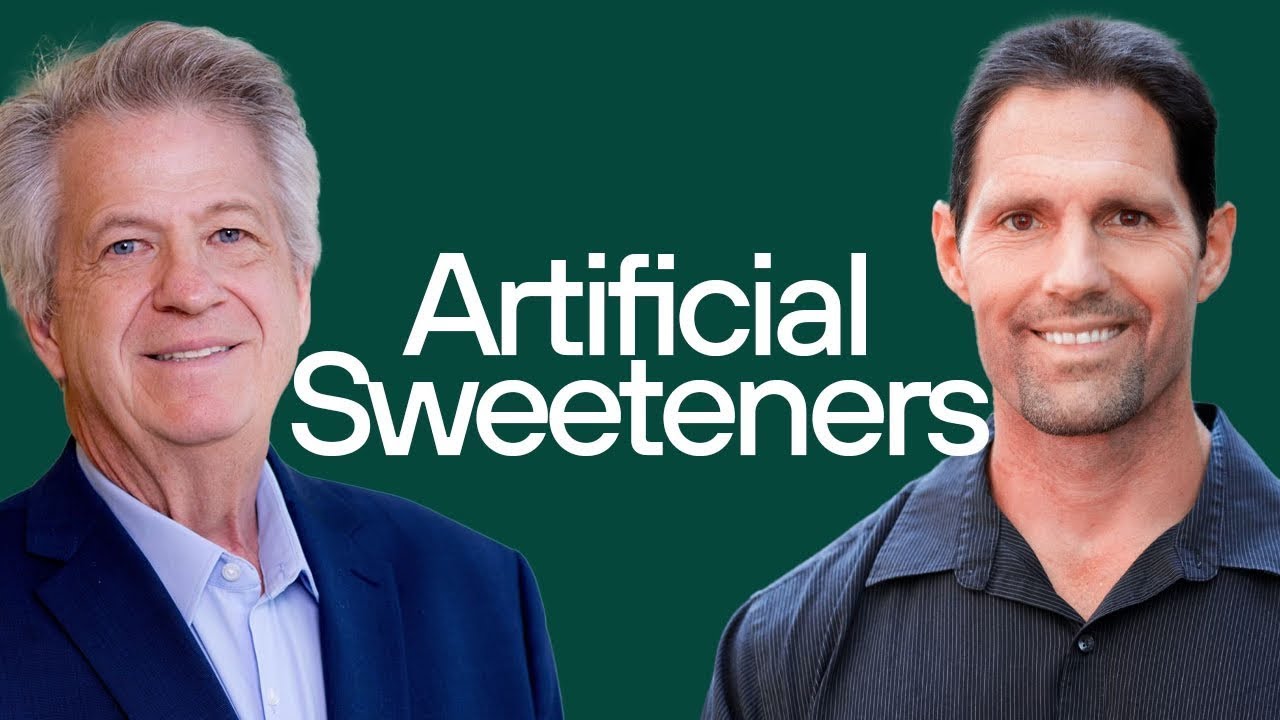
a spike but the difference in you you you versus me is that insulin will be released immediately and immediately bring back up bring back down for me an insulin I take is about three to four times slower than anyone else all right dror Andrew kutnik there's some pretty interesting new emerging stuff coming out in the world of sucrose and non-nutritive sweeteners uh you are a diabetes and metabolic Health researcher at Sanson Diabetes Research Institute I mean this is a lot of your world and I'm curious I mean can you tell us a little bit about
this kind a recent study that came out on sucrose and what we're learning in humans now yeah that study actually is a recent study but not the only study to show its effect it was a study looking at the impact of sucralose on human insulin resistance and it didn't look so well for sucrose but the story on that actually goes back quite a few years all the way back to some original studies where the idea was okay if I have sugar and I can replace it with something that doesn't have the calories of sugar but
tastes like sugar that's a net win and it it probably is but what started to come out of the literature as people started consume them more and there was higher levels of adherence as the scientific Community got more and more interested and there started to be studies in preclinical models uh in rodents looking at high doses of these artificial sweeteners in the diet of animals and what they were finding is that these animals were developing uh what were signs of dis glycemia and insulin resistance and so how would they even studi this they would give
glucose and their glucose would go much higher after they were chronically consuming things like sucralose and there was actually a number of studies that came out in animals showing that repeatedly now for a long period of time this didn't seem to translate to the Real World experience of patients or or human beings and so a lot of people just ignore this all this is just rodents rodents aren't humans it doesn't translate however multiple studies at this point have started to point to the idea that these artificial sweeteners may not be so benign okay and that
maybe there is the possibility that when you consume artificial sweeteners and this study you're referring to was sucos and that's where most of the data Maybe negative data has started to come out on uh looking at you know consuming over time uh a volume of sucrose in the diet uh which you can get in a lot of you know Foods or drinks that that this study specifically showed insulin resistance as a result of chronic consumption it's not the only human study at this point to show that either what does this tell us well there's a
lot that we can learn from this number one is that if we're talking about replacing high fructose corn syrup high volumes of sugar for some that doesn't have the calories of sugar I think that's when but if you're now going to choose from the sweet of sweeteners and that's really important to let's say you need you replaced sugar or high fructose corn syrup to lose weight well obviously you don't want to have those excess calories is probably not good for your goal but now you're over here trying to replace that with something that's analogous to
it what do you choose and I think that that's a very open-ended question at this stage because a lot of emerging evidence has started to illustrate that maybe not all these sweeteners are the same and some might actually have detrimental effects on metabolic Health in some individuals so when you look at metabolic or negative Metabolic Effect I mean are we looking at and this is can be your opinion too and I can you know yeah mention that right out the gate I mean is it a cilic insulin response is it actually acting at a cellular
level like what does it seem to be at least in the case with sucos I don't think we fully know that answer right now uh with a lot of the major studies that have come out have looked at administration of them and looking at the physiology using like insulin these things called insulin clamps which you infuse insulin over time and you can see this very controlled rigorous impact of insulin in in individuals so like it's a way of manipulating insulin and really finding out is insulin levels changing with with chronic consumption and so what a
lot of these Studies have shown is looking at pre- and post some type of of chronic administration of sucrose and what they're showing is that in these you know really refined experimental settings doing gold standard assessments of insulin resistance that individuals who are consuming this over time at least at the volumes they were they were consuming it at which is still within what some people are consuming it isn't they weren't like blasting these people with ridiculous dosages that no one can consume with even within that these these reasonable doses you're seeing in these physiologic studies
insulin resistance how that's actually happening is very much in question a lot of what is speculated in emerging evidence out of preclinical models is that it might be changing some of the microbio microbiome composition and then that might be translating to unknown impacts but ultimately translating to in in result levels of insulin resistance at the muscle how we're getting from A to B to C is is still an open question I don't think that that's a refined science that people are going to say yes I completely know but emerging evidence seems to suggest that a
microbiome sh shift maybe facilitating uh some intermediary step that ultimately leads to insulin resistance insul C resistance is often linked to things like inflammation and so there might be an intermediary impact of things like artificial sweeteners changing microbiome composition ultimately changing some degree of inflammatory response maybe not in all people but in some people maybe leading to end stage what is a sign of more insulin resistance but again this all hearkens back to this idea of from a practical perspective why is someone doing this uh ultimately all things controlled you just dump you know a
ton of sucos in your system that's probably not a net win but if you're shifting away from something that was worse that is probably a net win but there's also a lot of questions about sucrose is not the only sweetener um in fact sucis you know you have artificial sweeteners um you know not a lot of those fall into the non-natural category and then you also have these natural form of sweeteners and I think emerging evidence is very much suggesting these are not all the same no they're definitely not after today's video I put a
link down below for my favorite allulose brand it's called RX sugar they've been around for a while I'm a good friend to the owner Steve and he's a really cool guy that put together a real serious Dream Team when it came down to like medical advisors and advisers in general so I'm happy to be a part of what they're doing but they're also some really good tasting chocolate sticks these are called their swy sticks now they put these out on the market to sort of be an alternative for people to be able to have sort
of a candy bar like thing the best way that I can compare it and I have to be careful saying this is kind of like a Twix Spar I get that's how they are they're like a stick and you bite into them they kind of have a little bit of a crunch and they have the gooiness they've got a caramel flavor they've got a chocolate flavor a vanilla flavor a chocolate mint flavor my personal favorite is the chocolate caramel one but bottom line I put a 20% off discount link so if you go to RX
sugar.com discount td20 which that link is just down below that's going to get you 20% off whatever you want but I definitely recommend you try the chocolate sticks because if you're someone that craves something sweet you could be literally surprised that when you eat one of these sticks your blood sugar might even go down if you had it with some sugar so if you were to eat one of these sticks possibly with something that had some sugar in it you might find that your blood sugar stays stable not to mention potentially some of the other
stuff that I'm talking about here with fatty acid transport so really wild stuff so you use the code td20 and I'm telling you these things are the close thing that you're going to get to an actual candy bar without all the chaos and metabolic distress that comes with a real candy bar but they also have good stuff too they have their uh sweeteners that you can use like a syrup for coffee they have their regular stick packs that are just straight up alos granulated alul so all that is down below so that link Top Line
in the description underneath this video please check out RX sugar and also check out the Dream Team like Dr Dom de austino and some of the others that are on The Advisory Board you may or may not have seen this I know there's some literature discussing uh like the co-ingestion of sucrose with sugar being seemingly not good like it seems as though when those are combined that is even worse than just sucrose alone worse right or worse than just sugar alone I remember Dr Kyle Gillette talking to me about this like there's actually some evidence
there um I don't know if just a an additional insulin response that happens like where you're taking in I don't know if that's the case or not have you seen much about that or heard that well I know in a lot of the studies that have shown this these negative responses and especially initially have utilized you know experimental designs that allow you to co-administer things like sugar with sucralose whether chronic sucralose Administration or just an acute Administration and looking at the glycemic response POS that and it's always higher so just experimentally that is what people
are using to actually assess let's say the glycemic tolerance you know or glucose tolerance test with something like sucralose um and seeing negative effects of that that's actually some of the original data that pointed to this that maybe it wasn't so benign um and so I know from experimental perspective people have co-administered them just to see the impacts that they can have on things like uh glucose control post or glucose tolerance tests which thens allude to the idea if you see a higher glucose level maybe there's insulin resistance and now we're at the stage where
emergent evidence seems to suggest that this is not a one-off report that you're referring to that recently came out that there's multiple signs of evidence within humans not just pre-clinical models that yeah there might be some degree of insulin resistance that is occurring we don't completely appreciate how that seems to happen it might be based on pre-clinical evidence due to the microbiome which might be playing a role and I'm just purely speculating here on on inflammatory responses but it's not I think uh a completely settled science at this stage yeah we definitely underestimate the impact
of the microbiome I think that at least in the in the the lay person does right it's oh it's microbiome we don't know much about it okay yeah it's a pretty pretty hefty lever to be pulling or not pulling and what's interesting is I'm going to talk about my own doal experience with certain things this is wild you being a type 1 diabetic can really appreciate sort of the um the Nuance in in my attention here on this yeah I found when I'm wearing a CGM and I've noticed why found when I wear a CGM
I pay particularly close attention to this but I had noticed before that in a fasted state if I had monk fruit my glucose would drop into the 30s found that very very interesting and this is pure monk fruit sweet ner not monk fruit arrol not monk fruit molted extra and pure liquid monk fruit not bashing monk fruit I like monk fruit I would choose monk fruit any day of the week over sucralose or aspirin 100% but I find it very interesting that my glucose would drop Sol low indicating that was there potentially some insulin response
there not everyone has that response right I'm a very sensitive highly insulin sensitive person um have you seen anything like that before that's an interesting question because yes there is some emerging evidence maybe less so on monk fruit but maybe some other sweeteners and so to really help people appreciate the type of sweeteners that are out there we talked about Hy fros corn syrup and sugar th those fit over here on the caloric High caloric side of things you know the more you have the more calories you get high sweet [Music] flavor then you have
this category of artificial sweeteners where it's something like a sucrose or an aspartame or um one of these other types of sweeteners falls under then you have what you're talking about which is these naturally derived sweeteners which come from things like fruits or plants those come from Stevia that comes from a leaf you have things like monk fruit you have things like allulose those are the three that are most well-known that are over the- counter that people can consume that actually come from fruits or plants so right out the gay people often feel more comfortable
with these just by the default that they're not chemically synthesized manufactured and also the data we're seeing over here on things like suc we're not yet seeing that over here on on on this side of things actually the emerging evidence seems to suggest that the opposite is happening over here with some of these now there's not as much evidence across all of these together to really understand what's truly going on but let's talk about some of the preclinical evidence and also some of the emerging evidence that may indicate why these may be distinguishable from this
or this category over here and one great example of that is something like allulose which is derived from fruit and in the context of allulose there was all thiser and evidence that in preclinical models that there might be more to the Metabolic Effect of these these largely non-caloric sweeteners and and keep in mind you know Stevia mon fruit allulose they're all have a sweet flavor okay they all are largely non-caloric non- enogen at least that's what we you know lend to believe because a lot lack of glycemic response and so that's a net win right
if someone wants to have something sweet let's say you're struggling with obesity or type two diabetes you want to lose weight you want to have you know birthday cake for your birthday but you don't want to just load it with sugar or you want to make you know some alternative and lower your calories or something on those lines you know that these might be a great option but some of the emerging evidence particularly in the context of things like alul has actually shown that something like an allulose which is such a unique molecule if you
take fructose and you take the the third carbon and flip the third carbon U molecule it's called C3 epimer that you can actually have a lot of the same physiology of fructose being largely non-caloric and so what we see is that in animals at least there were some really well done mechanistic studies showing that consumption of allulose actually causes a a a naval a na uh a vagal nerve response that facilitates an increase in indogen G1 production now we know that happens with fructose so what this is showing is that you take a C3 epimer
which largely makes it non-digestive um not largely non-caloric and that but you're still having this go1 response this endogenous go1 response well there's also evidence that it also lowers glucagon and at least in preclinical U models and we know that there's some evidence that gp1 endogenous production can lower uh glucagon production so now with even more emergent evidence from Recently published studies that actually show in these gastric in xevo models looking at the digestion rate if you co-administer things like rice with allulose that you actually appear to alter the entic breakdown of things like carbohydrates
slowing the gastric EMP emptying of things like carbohydrates or rice so when you look at all that together that that seems like a potent molecule for potentially lowering the glycemic response post meal allowing for the body to not have as much of a challenge um to uh it secrete insulin and maybe keep glucose in the normal range particularly for people who have let's say pre-diabetes type 2 diabetes or type 1 diabetes but where's the human evidence on this right it say it doesn't always translate from mice and I've done I've done all the way from
cells to mice to humans and what I've seen in the lab is that not everything you do in the cell translates to the mice and not everything you do in the mice translates to the human but sometimes it does and so there were two studies in allulose and humans and both of those studies the first one being a co-administration uh with uh sugar and if you co-administer allulose with sugar or just having Sugar by itself that allulose appeared to blunt the gemic magnitude post Administration so analogous to an oral glucose tolerance test where you take
glucose see how high your glucose gets and how long it takes to resolve to normal glycemic levels well it seemed to blunt that quite a bit and um and appear to have a a neutral or actually lowering of insulin response so that's very interesting right but it's preliminary right it's not a gold standard or GL tolerance test um we don't know if that would translate you know smaller study but interesting because it's seeming to suggest that it may be modeling a lot of what we're seeing in these pretty clinical models or replicating uh in the
human setting this's other study where individuals were actually during Ramadan they took patients who had type 2 diabetes during Ramadan where they fast all day put a CGM on them and then gave them allulose prior to administer or prior to their feeding window now there's no control over what they were consuming during this feeding window but one would assume that you know they probably were eating similar things um in in the same person so kind of a crossover design and what they were showing is that these individuals you know after this prolonged fast they have
alos or vers don't have aulos that the individuals who are having aulos with type 2 diabetes were having a lower glucose response again very interesting but not necessarily Ironclad story but what it seems to suggest repeatedly is that there is this emergent really well done istic work in preclinical and initro models with something like an allulose which is uh a very analogous analogous molecule to fructose but largely noncaloric because you switch the three uh the third carbon and it's a you know this three C3 epimer if people care to know exactly what it is but
I've even tested this on myself so I have type 1 diabetes and I was very curious about this um and this is by no means clinical advice or telling one you know this is this is what you know this must be a thing but what I have seen personally is that if I were to take something like an aulos uh with a meal and I've actually tested this in kind of a really controlled setting where I've I've controlled my insensitivity activity day of the week all these controls and I administer a a mixed meal tolerance
test blend the food up so I'm not having this all these confounding variables like what order of the food did you have it in did you have the protein first the fat first the carbs first you know I controlled all these variables the time of day the amount my insulin sensitivity within the day and actually gave the same amount of food and just took 40 gram of allulose with that meal with the Assumption okay this is a real response if it really is having an endogenous GP Ro response if it really is lowering glucagon if
it really is slowing gastric imping then it should in theory lower the glycemic burden in in a scenario like me where I have type 1 diabetes and I use this tool called an automatic insulin delivery system which automatic automatically controls B on the glycemic amplitude how much insulin delivered so everything's controlled I'm I'm removing all my bias from the scenario and what I saw was a pretty potent reduction in the glucose Spike postal this is only like my scenario and I have type 1 diabetes so it may not obviously apply to anyone else frankly um
but it does tell an interesting story and I'm I'm the lived experience of this that some of these sweeteners actually have potent metabolic effects specifically I know that the the data right now in preclinical and some emergent evidence in humans even my own experience with alos is that it it seems to potentially help reduce the glycemic burden of uh post prog glycemic response and in and in my specific case I also saw a reduction in insulin leads not just postprandial but I also saw a reduction in insulin needs when I co-administer with every single meal
over two straight days so what that seems to suggest to me is that some of this emergent pre-clinical data on the glucagon lowering effect may be very real because we know in patients with type 1 diabetes they also so besides having dis glycemia also have a couple other subtle changes one their basil levels of glucon are higher so you're spilling out more glucose on a regular basis um so you need more insulin on a basil level to maintain home uh normal glycemia but we also know that post prenal the gluc glucon response is higher so
you have more amplitude of glucose release from the liver postfeeding well if you are lowering glucagon at each meal you're lowering ing the amount of glucose spillage at each meal so in theory you need less insulin to control all the glucose release in essence what in the context of something like type 1 diabetes what the seems to suggest just suggest not randomized control trial to validate this we don't know that yet okay C about that but it's seemingly suggesting in the context of type 1 diabetes that it's frankly normalizing some of the disregulated uh incr
metabolic responses we know are occurring in a context such as type 1 diabetes and we don't yet know if that would fully translate to all individuals I know for me it seemly seemingly is suggestive that it might be but this gets back to your original question that I these sweeteners actually seem to have a medicol trunks oh is this your blood sugar what's your blood sugar doing it says 63 but I feel good but you can leave this in see oh let me uh let me give me one second will prevent that from being a
repetitive thing just gonna go into diabetic com I hear on yeah that' be good be good film I'd open with that for sure see see yeah so this is this is like the lived experience with type one so um 99% of the time things are pretty good but here's a scenario where I show up do something totally different in my lifestyle that has such a potent impact on glay control like the exercise yeah we had a hard workout this morning yeah I wasn't going to let Tom smoke my so um so either way um I
so it caused a a spike but the difference in you you you versus me is that insulin will be released immediately and immediately bring back up bring back down for me an insulin I take is about three to four times slower than anyone else so I also lowered my settings and so as a result it isn't able to catch that as early so what it does is it gives all this insulin but then there insulin sensitizing response post exercise and glucose uptake y so what happens with that well now after all this has happened there's
all this glucose uptake on top of insulin sensitivity that the system is not always seeing so it's not always prepared for right so if you give um on a normal day it's it's Prime for what's happening 99 90 to 95% of the time in this scenario where it went high and then self-corrected afterwards usually the system is thinking oh I need to give as much as I can you know this might be you know a mismanagement of insulin in this scenario a totally different physiologies is happening that leads to Future insulin sensitivity a drop glucose
uptake all happening simultaneously and so of course it's like a recipe for um going low or you can actually also see the insulin on board you can see how much is on board on a regular basis so when you have these kick in of insulin sensitivity glucose uptake independent of insulin as well this is it's actually been times where I've eaten an entire meal after like an hour and a half run and it I need no insulin for a meal zero um now it's not common but sometimes it happens so um we're leaving all this
in I mean this is interesting seriously it's good it's good it's yeah just open with you pounding Smarties but take advice from this guy with no context yeah they would they would think oh this guy doesn't know what doing all right we're back after you almost went into uh insulin shock there um or diabetic coma all right where were we yep so we were talking about uh the various forms of sweeteners and how all of them don't seem to potentially have the same response you know we talked about some of the uh caloric based sweeteners
we've also talked about some of the artificial sweeteners and some of these natural forming uh sweeteners that seem to not be benign and actually might seem to have some pestal metabolic benefits and we talked a lot about one scenario where there's a lot of animal data xvivo data and also some emerging human data and that's in the context of allulose and when you ask the original question you're talking about hey you know this I took something like a monk fruit MH and saw my blood glucose come down and I I think what we have to
start appreciating is that some of these might actually have in many cases if you say you had obesity pre-diabetes type 2 or type one some metabolic benefits to them um you know if you could co-administer a sweetener and it actually lowers your blood sugar level for someone who's struggling with hypoglycemia or variable glucose levels that could seemingly be a very potent and beneficial thing or just lowering the the amplitude of a postprandial glycemic response has relevance and importance to overall health for people so there's one scenario what can be very beneficial but you know it
nothing's for free in life right so you always have to manage you know is that is that add value to your overall health do you need something like that and and maybe some people do some maybe some people don't I want to talk the one we didn't really talk much about is is a r rol y um rral you know it's come to press over the last year couple of times and interestingly enough um and I say unfortunately because I think you and I both know that that that main study was kind of garbage we
could talk about it yeah um I've seen less and less products using rol I think it scared a lot of people like I've seen less I've seen less of rol on the market and um but can you just give like even molecularly and bringing it you know big picture we don't have to get super granular no pun intended but like what is a rol a ryol is it fits into the sweetener category it's used for a lot of low carbohydrate based uh let's a cookie or muffin or one of these other Alternatives because it tastes
a lot like sugar and it can be used for baking now in the context of ariol there a study that came out that had showed that higher and higher levels of ariol were associated you pulled samples from subjects these large epidemiological uh databases where you have a ton of subjects they had blood stored you can pull blood from that and actually assay or measure the amount of Earth to in their blood and what it showed is that people who had higher levels of ryol had higher incidences of things like uh cardiovascular disease or all cause
mortality um and there's a lot that you have to be careful about with that assumption why with someone with higher ariol in their blood maybe have higher risk for for you know alal mortality or cardiovascular disease you know why would that be and so what these researchers attempted to then do was look at well well first off if you consume allulose does that cause let's say high levels of allulose well yeah when you consume alose or sorry not alose ariol this spoke there if you consume Athol at high levels does that then cause arrol in
the blood and yes it does I mean but that's kind of a no-brain right you consume a molecule as long as it can pass the intestinal barrier and get uptake in the blood will you see in the blood yes so no big surprise there but then they made the association um by looking at another another step not in humans not in a a real world scenario but in a model system looked at if I had higher levels of ariol would it cause changes in coagulation factors and and they showed at least PR preliminarily that uh
maybe it would but this was not in a in a real world human-based model system so that caused a huge stir first off was in a very um reputable uh often higher Prestige Journal so that always get gets people to pay more attention to it the title of it said that arol induced these adverse outcomes um which is is that actually what happened no because they actually never gave ariol in human beings to actually show any biological response that had an adverse effect it was never shown so what is being taken away from this from
a public interest perspective from a general population news perspective is not actually what the study showed we also know that individuals like patients with diabetes who also have higher levels of inflammation also have higher levels of endogenous ariol production so what what is that telling us well it's telling us that first off the original part of the study that looked at epidemiology showing that individuals with higher levels of orthol in their blood are associated with with worse outcomes from from a big picture big population level does not actually mean that consuming aulus has adverse effects
it may just mean that individuals who have inflammation obesity and type two diabetes have higher endogenous ariol okay so that you can almost Corner that right here okay there's that that's actually the most likely scenario because the levels of alul they were showing in in there are so subtle and low they don't match what the pharmokinetics of someone consuming no arrol with C in their own study no and it's the pintos phosphate pathway I mean you're producing arrol basically when there's I don't want to say metabolic distress but essentially in a metabolically deranged like that's
that's going to happen and that's also going to be linked with poor heart disease risk and I mean it's it just makes sense and I don't think I think I don't want to think they were playing on that I want to think that they're they were more altruistic than that but I don't know you know in the sense like playing on the fact that people aren't going to know that there's this you know PPP that this pathway and because just for the sake of brevity the same research group produced something on on xylol just a
couple months ago too and xylol is produced via the I think it's a what is Zol is a byproduct of they produced it in the body too is it also through the pintos fos actually not familiar with the pathway I think it's still to the Pinos phosphate pathway it's very similar situation like they were looking like same thing oh look it's elevated in uh in rodents oh look when we consume xylol xylol levels go up in the blood oh look these people that have high levels of xylol In The Blood also have poor I think
in the case of zyol was particularly stroke they were looking at um so I don't want to think that like maybe these studies are just nefarious I like to hope that there's better in the world than that but at the very least at least very poorly misrepresented and titled so I will say that one I have no idea the intentions of the research I can never speak to that because I'm not in their lab I don't know um but it's usually not necessarily at the research level at the over the researcher level it's often about
how that is portrayed and a little bit of the to be fair title was very uh insinuator so uh there is that and I don't think the data necessarily supported that uh that's at least my opinion um take it or leave it but you know when you have messaging um that shows it it's suggestive that something like RR talking have all these adverse effects and it's such a commonly utilized alternative to sugar in a lot of uh products and you can say oh it might be linked to these terrible things man that's going to get
a lot of clicks you know oh man like I need to go in my cup and look like like what has arrol in it and so yeah I mean like it's it's going to produce it's going to produce clicks which helps news stay relevant and and all these other things so I don't want to make too many assumptions there other than to say that I'm not surprised um and that's part of the game unfortunately when you're a scientist and you're trying to help people you're a great science communicator and so you know this all too
well that you know what you say may not necessar be what other people said you said um or in this case uh what the science showed in this publication isn't necessarily what someone said it is implying it is doing it at least suggested a negative potential but left the can of worms completely wide open unanswered and completely speculative so at this stage we left with basically nothing really from that other than man okay it'd be cool if you did a following study actually administering to humans which by the way isn't that hard to do it
would be very quick and easy we could you know you you obviously need IRB you need a little bit of funding uh and you just administer it to like say 10 people look at these same things that they were showing I mean that would be very simple to do uh not very much cost at all and I little surprised it wasn't in the paper to be honest with you because of how much resources it would take to do all the other things they did I'm a little surprised that it wasn't there um but either way
I'm sure someone will do it and we'll see we'll see does it actually relate or does it actually translate the way that it has been present at the stage I would speculate it probably not yeah uh at least nowhere near what the insinuation has been on a social front on a public uh front so yeah the rol gets a bad rap is it fair I don't think so uh at least the evidence doesn't necessarily support at this stage we'll see as more evidence comes out but hey I mean if someone wants to be cautionary and
be careful you know uh unfortunately Rell is going to sit in that bad rap category until someone comes and disproves that but it's very hard to undo the first to the plate um once the message is out there whether it was the right one or the wrong one that's usually predominant theme until a lot of work is done to undo it so unfortunately that's that's where we stand hopefully this communication will help clarify that a little bit um but uh I don't want to say the damage is done but that's kind of how it goes
but I mean look at look at where we are now with I mean even uh you know fat is bad right it's taken us how many decades to like kind of unpack that a little bit more you know it's like the win initial First Market makes a big difference in a lot of different categories one more question on this because I'm genuinely curious if allulose is essentially just a flipped carbon um fructose would it technically break a fast like would you be I mean is it basically like you're taking in fructose like whereas like if
I were to have coffee with like monk fruit I would consider that probably not breaking effect fast um you know maybe let's say Stevia given my weird response with monk fruit but Stevia like does practically nothing to me Stevia is generally like my go-to for like I actually don't mind the bitter taste to it like I think it tastes good in coffee I think it tastes good in tea so I like Stevia with that I do like allulose but I don't consume allulose fasted because I feel like it's still kind of a food in a
way which is actually one of the reasons I also like it yeah right because it's also kind of a food and I think it has great metabolic benefit but I I'm inclined to think that kind of breaks a fast but I'm curious your take on that it depends on how you're defining the fast if you're defining the fast as how most people Define it which is low glucose intake which then triggers low insulin release insulin being the master Kingpin of metabolism so the lower the insulin really causes this metabolic switch which then causes you know
uh increase in epinephrine and glucagon which then causes lipo liasis response the low insulin facilitates fatty acido o and ketogenesis and the liver like all these metabolic switches is a lot of what people are going after when they're going after a fast so in that context in theory no because your insulin would in theory be even less so you might be augmenting a fast if you're looking at it from that perspective based on what we know th thus far um but if you're facilitating certain metabolic pathways um would you be shutting down things like I
don't know uh bar gamma bar Alpha you know like one of these other am or one of these Pathways like amk specifically one that's associated with lower energy availability you know ATP ADP type of ratio um we don't know and yeah we don't know that uh and but what we do know so far is that it doesn't have a glycemic response based on the evidence we have so far it's largely noncaloric it seemingly suggests that it might be lowering total insulin needs how that might be happening might is totally speculative but it based on preclinical
evidence may be due to uh lowering of uh background in glucagon or postrenal glucagon you know so this is largely speculative at this stage we don't really know the answer to it but I actually think in theory would augment a fast if you're if a fast is defined as lowering glucose needs or glucose in the blood which then facilitates a lowering of overall insulin requirements that's the metabolic switch for most people they're they're going after fast but if you define the fast differently then maybe we have a different conversation definitely man well uh Dr KW
and everyone finds you uh honored to be here yeah I I try to stay active on Twitter uh at a or uh you know X you know however people toine it a k u t n i k I'm also on Instagram Andrew cnck PhD I also have a website where I try to put out as many free resources as possible for people who you know are uh uh just trying to learn more about metabolism or a lot of information about type 1 diabetes and that's Andrew cut.com so right on my man thanks brother