Good day. Today is Thursday 15th May 2025 and we are at a most extraordinary moment in the Ukrainian conflict. And I think I can sum it up very simply by saying that the professionals are going calmly about their business whilst all around them the amateurs seem to be going collectively mad. I say that because that's the only way to describe as far as I can see the events of the last Couple of days. Now notice I'm not making any moral value judgments here. I'm simply talking about the way in which um um the two sides
are preparing and going about their business. Um, one methodically, systematically towards an objective, a clearly defined objective. Um, the other obviously making it up as they going go along. Uh, making all kinds of bizarre proposals, decisions, theatrical performances, Demonstrative statements. Um, all of which collectively I'm not going to say that they mean absolutely nothing but cause more confusion than anything else. Well, let's talk first of all about the professionals. Now, as everyone knows what the the whole sequence of of events of recent events began basically last week. The Europeans were in touch with the Americans.
The Europeans have been making a massive effort to get the Americans back on site with Ukraine. Um, various officials within the United States, almost certainly Secretary Rubio, definitely and unashamedly, General Kellogg, but no doubt many others, and Lindsey Graham in Congress. They'd all been w working towards the same end to get Donald Trump to abandon basically his efforts to normalize relations with Russia by recommitting forcefully to support for Ukraine by agreeing to the European proposal, the European suggestion that the Europeans and the United States and the Ukrainians collectively put together an ultimatum demanding that Russia
agree to a 30-day unconditional ceasefire starting on Monday. In the event and in the event that that ceasefire did not happen on that day, all of these countries, Ukraine, the Europeans, the United States would then impose further sanctions upon Russia. Now to repeat Again, the French today have been talking about the importance of strangling the Russian economy. This is the first same French finance minister I believe who has been saying this for years now. Anyway, he's been talking about doing this. The European Union has negotiated and pushed through another 17th sanctions package, which it must
be said doesn't seem to me to move the dial at all or amount to very much. But anyway, they've been talking about Sanctions. Lindsey Graham has been talking about bone crushing sanctions against the Russians. General Kellogg has said that the sanctions um on a um level on a level from 1 to 10, have only reached three and it's time that they were dialed all the way up to 10. Um there's been threats of putting secondary sanctions on countries that buy Russian energy products and that kind of thing. Um all of this ultimately as I suspect
even some of the leaders in Europe are now perhaps starting to understand the the level of delusion and even irrationality there um seems to have no limit. Anyway, the Europeans all seem to any no doubt they some of them still think that these sanctions can achieve the results they want. But to be honest, I get the impression I increasingly get the impression that the real purpose of this was to get Donald Trump to sign off on these sanctions. In fact, there were articles in the Financial Times and the Guardian which uh quoted anonymous European officials
all but admitting as much that the entire objective was to get Donald Trump to sign off on further sanctions, more sanctions against Russia. The assumption being that if Donald Trump does that, then the whole normalization of relations between Russia and America is off the table, that the United States will recommit to Ukraine, that more weapons supplies from The United States to Ukraine will begin and all of that. So that that was the objective and it looked for a time last week as if the Europeans were close to achieving that objective. So they all went to
Kiev, Stara, Macron, um, Tusk and Matz, and they issued there their ultimatum, their demand that Russia agreed to the 30-day ceasefire, which Russia had already rejected, an unconditional ceasefire within 30 day 30 days beginning on Monday. And they said That unless that happened, the Europeans, the Americans, the Ukrainians would launch these sanctions against Russia. And then Putin stepped in and made his speech, a speech which we now have come to understand was carefully prepared sometime in advance, or at least sections of it were. And apparently it was not a speech completely made in response to
what the Europeans were doing, but um it had Already been discussed. The ideas in it had already been discussed with some of the leaders who had come to Moscow to attend the victory day celebrations, including of course President Cining of China. Anyway, Putin then made a speech in which he again rejected the ceasefire proposal again said that Russia would not be threatened or intimidated by threats of sanctions to do that which it saw as disadvantageous to Itself. But he did again reaffirm Russia's continued readiness to begin negotiations. and he said that the Russians would put
together a negotiating team and that negotiating team would be sent to Istanbul on Thursday, in other words, today and they would be waiting there for the Ukrainians to come. Anyway, that was what Putin said on Saturday. And then well the Europeans, General Kellogg, the Ukrainians, they were somewhat taken aback by this response. It clearly was not quite what they'd expected. They however started to say that this wasn't enough, that there had to be a ceasefire first. General Kellogg actually said that before any talks could begin. and they then essentially started to say that the sanctions
would come into effect um if there wasn't the ceasefire on Monday and that the clock was ticking and all of That and then all of that was thrown into chaos when Donald Trump suddenly and abruptly intervened said that well appeared to welcome Putin's proposal and insisted did that Ukraine must send a delegation to Istanbul on Thursday to meet with the Russians there. So that that is the introduction. That's where this all begins. Now the Russians ever since then have worked on their proposal and it is important to Remember that the idea of resuming the Istanbul
negotiations and the word resuming is important and we'll see why in a moment. The idea of resuming the Istanbul negotiations is a Russian proposal. It was the Russians who first proposed it. They are the people who have been insisting on negotiations. The Russians of course negotiated with the Ukrainians in the first weeks of the war in Bellerus and eventually in Istanbul in February and March 2022. Note by the way that there was no ceasefire in place during the duration of those talks and well some people did seek a ceasefire but it was never suggested that
the talks would not happen unless there was a ceasefire. So the negotiations did take place in Bellarus in Turkey. We know that the talks in April came very close to an agreement. There was a draft agreement that was reached. There were still many issues to resolve. However, the Ukrainians and the Russians both initialed the agreement. The agreement then, the agreement, the the understanding that was reached then in Istanbul was that the Russians would then send to the Ukrainians certain um proposals in writing to deal with the Outstanding issues, the remaining issues that were still in
contention. And in return for the fact that the negotiations were taking place, the Russians would also, as urged upon them by the Europeans, would also withdraw their troops from Kiev. Now, the Russians have always said that that was the reason their troops withdrew from outside Kiev. It was as a goodwill gesture um Made at the point where it looked as if the negotiations in Istanbul were about to succeed. They were urged to make that step by the Europeans and they took that step. They withdrew their troops from Kief and about two weeks later, as they
said they would do, they sent their written proposals to the Ukrainians as to how to move forward with the draft agreement that had been reached reached in Istanbul. Well, there Was no response. Ukraine never responded to those written proposals. They didn't say that they were not interested in further negotiations. They just went silent and didn't respond at all. And of course, the fighting then resumed. Well, it didn't ever completely end, but the fighting then escalated and the war intensified and it has remained at the same very great level of intensity ever since. So that was
what happened in the spring of 2022. Now the Russians have always said ever since then that they are prepared to resume the negotiations that were broken off in Istanbul. They made their proposal to the Ukrainians, their written proposal at that time. It was for the Ukrainians to respond to it. except of course that the Ukrainians didn't respond to it. Eventually in October 2022, Zalinski issued his decree prohibiting Ukraine from engaging the Russians in any sort of negotiation at all. From that moment going forward, the Ukrainians have only been seeking victory over the Russians in the
war. They've been encouraged to in that stance by the Biden administration and by the Europeans and no negotiations have ever taken place. The attempt to restart the Russian proposals to restart the Istanbul negotiations have been met with um Silence. And then in June 2024, after Ukraine's 2023 offensive was defeated by the Russian army and ended in disaster and after the Russians captured Avdka and began their great offensive which led to the fall in the following months of Kurakovo, Celidovo, Uglad and brought the Russians to the outskirts of Pacross. Anyway, in June 2024, Putin revisited the
topic of the negotiations that took place in 2022 in Istanbul. And he said that Russia was still interested in moving forward with what was agreed with in Istanbul. It was still open to negotiations. It would not however prepared to agree to temporary ceasefires which Ukraine would be able to make use of in order to improve its military position. And of course, a lot of things had Changed since April 2022 when an agreement was reached in Istanbul in draft and any further negotiations needed to take into account those changes. Those changes included the fact that in
September 2022 after the Ukrainians pulled out of the Istanbul negotiations, the Russians held referendums in the four regions, Donets, Lugansk, Zaporosia, and Hasson. The referendums produced Results which said that the people of these regions wanted their regions to unite with Russia. Russia accepted those four regions as part of Russian sovereign territory. And as far as Russia is concerned, as far as the constitution of Russia is concerned, these regions are now Russian territory. Again, I understand that many people don't accept that, but that is the Russian position and that is what I am discussing now. So
Putin said that in Light of this change and this is what he said in June 2024. Um the new proposals that the Russians would put in the event that the Istanbul talks resumed was that Ukraine would have to recognize that the four regions were part of Russia and pulled out any remaining troops it had from those four regions. And if that happened, well then a ceasefire might take place. Anyway, that was Putin's position in June 2024. He was speaking about re Revisiting Istanbul, returning to the Istanbul format. He wanted the negotiations, any future negotiations to
build on what had been already agreed in Istanbul, including limitations on the size of the Ukrainian army, protections for Russian speakers in Ukraine, um um obviously Ukraine's neutral status, neutral and non-aligned status. the whole question of security guarantees for Ukraine and by the way For Russia as well. Um all of that was in Istanbul. Not all those sections by the way of the Istanbul agreement have been published. Um the New York Times has published some selective sections of the Istanbul agreements but we've never seen their entirety. But I understand that significant movement was made on
all of these issues. So Putin said that what needed to happen was that there needed to be further negotiations to build on All of that and taking into account the new territorial realities that as far as Russia is concerned, the four regions are now Russian. And it is because Putin couched his proposals on of June 2024 in those terms that we on the Duran, that is to say, Alex Christophoru and myself have always referred to the Russian position since then as Istanbul plus. It is the proposal that was agreed in Draft at Istanbul plus the
additional territorial changes and a number of other matters that have arisen as a result of the changes in the situation which have taken place since then. Now if you understand all of that then you will understand better the nature of the Russian proposal that Putin made on Saturday and you will also understand the makeup of the Russian negotiating team. Now, Yesterday I made in my video I made some comments about what I thought the Russian negotiating team would look like. I said that I did not think that Putin himself would go. In fact, I thought
that it was inconceivable that it would he would go. that if he did indeed go, it would not be a sign of a serious negotiation. It would be a sign that this had become basically a theatrical performance, a summit meeting between Putin and Zalinski for which no ground, nothing had been pre-prepared. It's impossible to see what would have resulted out from such a meeting. In order to end a conflict of this kind, you need careful negotiations and you need a strong negotiating team. I said that I thought the negotiator. I didn't think that foreign minister
Lavough would lead it because well by that point we were already being told that it would not be him. But Lavough is the foreign minister of Russia. He cannot be tied down and expected to conduct dayto-day negotiations for hours on one single topic with the Ukrainians. negotiations which might lead nowhere. I made comparisons with the Paris negotiations between the United States and the North Vietnamese and I pointed out that the head of the negotiating team, the North Vietnamese negotiating team was not a member of North Vietnam's Polit bureau. It was not a senior politician in
North Vietnam. It was in fact a retired foreign minister. And I said that I expected that the chief negotiator, the Russian chief negotiator would be someone of that kind of status. And I said that I expected that the rest of the negotiating team would be made up of experienced experts and professionals that we we are much stronger negotiating team than the one the Russians put together for the 2020 talk 2022 talks in Bellarus and Istanbul that they were likely to be many more military people involved in this on this occasion and that it would be
a serious negotiating team and I also predicted that because Putin himself wouldn't go and because Lavough wouldn't be there um all the usual people in Europe in the media the various political leaders ers, they would all say that the fact that Putin himself wasn't going meant that The Russians weren't really serious about these negotiations, that this is all a game that the Russians were playing. Whereas, in fact, the sending of a negotiating team made up of serious negotiators would say the exact opposite. that this was a serious attempt to get the negotiations going again and
that had the Russians on the contrary done what the Europeans, the Ukrainians and various others were demanding and attended in the person of Putin and Lavough and Ushikov and all of the others then on the contrary it would show and this is not a serious attempt at negotiation. ation. This was just performance and theater and I didn't believe that the Russians would do that. Well, that's all there in my video of yesterday and that is exactly how things have played out. The Russians have appointed exactly the kind of strong delegation that I expected that they
would, and it is a much stronger Delegation than the one that they sent when they tried to negotiate with the Ukrainians before in February and March and April 2022. The reason it is much stronger this time is because in reality the negotiations in 2022 were run by Putin himself. He did these conducted these negotiations from a distance but he was basically running everything through his negotiators. So he did not want a strong team at that Time. This time clearly he is taking a step back. He expects the negotiators this time to do the hard work.
And I think the reason for the change, by the way, is because he expects and or hopes that this time, unlike what happened in 2022, the Americans will be supportive and involved. So he wants serious negotiators to deal with the Americans. And we now have, as I said, the shape of the Ukrainian of the Russian negotiating Team. Now I'm going to go through it. We've got the details that have been provided by TAS. Now the leader of the negotiations, the chief negotiator or at least the head of the delegation is again Vladimir Medinski, former culture
minister, a man with no diplomatic experience. He was the man who headed the negotiating team before the one that met with the Ukrainians in March and February, March, April 2022. I that his Reappointment to be chief negotiator is the only thing about this negotiating team that differs from what I expected. And I think that the reason that Putin took the decision to reappoint Medinski and in fact it makes complete sense thinking about it why Putin would appoint Medinski is because of course it was Medinski who reached that draft agreement or was the chief negotiator when
the draft agreement in Istanbul in April 2022 was agreed and outlined and initialed by the parties. It is his initials that are there on the draft agreement. He knows those negotiations inside out. But most importantly of all, his reappointment as head of the delegation re-emphasizes and underlines the Russian point that Istanbul won is the starting point of the negotiations. What is taking place from a Russian perspective is a resumption of the Negotiations which took place in Istanbul and which were then broken off. The Russians do not want it to appear that these are entirely new
negotiations because to repeat again their position is Istanbul plus that's their negotiating stance. That's the demands that they're going to be making. So if this is a resumption of the earlier negotiations, treating the result of the earlier negotiations as a starting point, it makes sense to have the same Chief negotiator as the negotiator who was there at the previous round of the negotiations. So Medinski is the leader, but others are now joining him. So, Deputy Foreign Minister Mikall Galuzin. Now, the Russian foreign ministry was represented by another deputy foreign minister, Foreign Minister Ruden, Deputy Foreign
Minister Andre Rudenko at the talks in um previously in 2022. Galuzin is a much sharper and more aggressive individual. Um, from what I've seen of him, um, he's able to talk very tough language and, um, he's, I would say, definitely a more hardline figure than, um, the one that than Rudena was back in April 2022, March, February, March, April 2022. Then we have the person who I suspect alongside Galusin is going to be the chief negotiator. Igor Costukov. He is an Admiral in the Russian military but most importantly he is the head of the main
directorate of intelligence of the Russian general staff. He is the head, in other words, of the GRU, the famous Russian intelligence organization which is supposed to have done all these terrible things over the last few years. I'm not going to get into the details of any one of them. You can easily find out if you wish um um who he is and what what that organization is. There's Endless books about the GRU. It is, by the way, Russia's oldest intelligence organization, created in the spring of 1918, shortly after the uh Lenin and the Boleviks seized
power in Russia. It is also, as I understand it, by far the largest military intelligence organiz uh intelligence organization that makes up the Russian intelligence community. And of course its primary purpose is to support the Russian armed Forces. So its primary mission over the last three years will have been Ukraine. The Russian military wants to know of course everything there is to know about the situation inside Ukraine. military, economic, pretty much everything. And all of that will have been investigated, researched by the Russian military's intelligence Organization, which is the GRU. And it will all have
passed through. Costukov and Kukov will be reporting will have been reporting to the chief of the general staff of the Russian military Valeri Gasimov who of course then provides the instructions to the commanders the actual group of forces commanders. And as we will see shortly, Gasimov has had an important role undoubtedly in Preparing this negotiating team. So I'm going to say that Kosukov and Galuzin, the hardliner from the foreign ministry, the senior military intelligence officer are going to be the chief negotiators. Already it looks like a much more formidable team than the one that the
Ukrainians faced back in 2022. The fourth key member of the delegation is Deputy Defense Minister Alexander Foreman. He was a member by The way of the 2022 negotiating team. He is I believe he is a military officer but he is mostly a diplomat. He does most of the diplomatic work for the Russian military and well he's an obvious person to have on the team but as I said the two main negotiators are going to be Guzin and Costukov and Costukov is the perhaps the the key person to keep an eye out an eye on anyway
there is, and this is another Major difference from the Russian negotiating team of 2022, a whole list of experts who will also make up the team. And these are people who could be described as professional technocrats within their various departments. They are there to work with the chief negotiators to give them advice. It's exactly the kind of thing that the Russians do. It is a classically constructed Russian Negotiating team. You have the chief negotiators, the people who do the talking, and then you have the backroom people in the room next door, perhaps sometimes in the
room. They're there to keep the negotiators advised of any particular um um points or details that need to be looked into. And they are Alexander Zorin, first deputy head of the information department at the general staff of the Russian armed forces. In other Words, another member of the military. Notice that we have three military officers now involved. In fact, as we will see, there are actually more than that. In fact, it's four military officers. We'll come to the next one. But here we have we have Zorin. He's the head of the information department. Then there
is Yelena Poor Prefya, deputy head of the presidential directorate for state policy and humanitarian areas. Um, she will be Negotiating the return of civilians who have been taken prisoner by the Ukrainians in Kosk region or at least that is what the Russians claim. She will be dealing with all of the various humanitarian aspects of the conflict. She'll be there to give immediate information to the negotiators about these issues. Alex Polish Chuk, director of the second department of CIS countries at the Russian foreign ministry, another diplomat in other Words, but one with previous experience of Ukraine.
And then Victor Schveesto, deputy head of the main directorate for international military cooperation at the Russian Defense Ministry. another person from the military, another military person with diplomatic experience. Sir, a very very much stronger team with four people from the military directly involved and one of them Kosukov somebody who understands the military situation knows it backwards and is deeply involved about the with the situation in Ukraine and someone who reports directly as head of Russian military intelligence to the chief of the general staff to Valeri Garasimov. And before this team was sent to Istanbul, they
met with Putin in the Kremlin. And the Kremlin has provided us with information about this Meeting. And they've not provided us obviously with the transcript or readout of the discussion because that would be highly classified. But we are told who was there. So Putin obviously was there. Medinski and Galuzin and Kosukov and Fman were all there. But look who else was there too. other participants and this is not therefore it's they say other participants but this might not be an Exhaustive list of participants but other participants included secretary of the security council Sergey Shawyu former
defense minister he also very familiar with the situation in Ukraine he by the way has just extended his contract as an actual serving member of the Russian army forces. So he's actually a general and he remains one. Um just to say but he's also of course Putin's national security adviser. First deputy minister Dennis Manurov he is in overall charge of the economy. Ushakov obviously Putin's foreign policy aid. Belellus the defense minister. Lavrov the foreign minister. Bornikov, the head of Russian counterintelligence, the FSB. Narishkin, the head of Russian civil intelligence, the civilian intelligence agency, the SVR,
Russia's equivalent to the CIA, the head of the Rosadia organization, General Zalort. This is A organization that has both a military and an internal security role. It controls armed troops, some of whom are participating in the special military operation. And then critically, who else was there? the chief of the general staff of the Russian armed forces, Valeri Gerasimov, and all the commanders of the groups of armed forces in the zone of the special military operation. So, Gerasimus, the entire military Leadership of Russia involved in the conflict, all of the various generals, Lapin, Morvichev, all of
them, they're all there, all of them in this meeting discussing the negotiating strategy that will be followed by Russia at the talks in Istanbul. This is a much much more powerful negotiating team that the Russians are sending. It has been fully briefed. There have been extensive discussions About the negotiating strategy. The negotiating team has a much higher military profile than the previous negotiating team from 2022 had. and Gasimov and the rest of the military are directly and fully engaged and involved. So exactly as I said the kind of approach I would have expected from the
Russians. It it is textbook. I I if you ask someone like say Ray McGovern, the former CIA analyst who rose high in The CIA, used to prepare the president's daily brief, who is an expert on Russian affairs, he will tell you exactly this. This is nothing absolutely nothing surprising about this kind of um delegation that the Russians are sending or the way in which it has been pre-prepared and organized by the Russians prior to the negotiations. If you ask Ambassador Freeman, Jazz Freeman, he would tell you exactly the same. It is predictable. The Russians Are
doing it exactly by the book. The fact that they are doing it by the book to repeat again tells us that they are serious about this that they are professionals that they are acting professionally that they are engaging or preparing for professional negotiations serious negotiations. What about the other side? Well, I'm going to say it as of the moment of making of this program. I am not at all clear what exactly the other Side is doing. Zalinski when Putin first proposed the negotiations in on Saturday appeared to say no. Then when it became clear that
Trump wanted the negotiations to take place, he said, "Well, yes, he would go and would negotiate provided the Russians agreed to a ceasefire first." The Russians have not agreed to a ceasefire. The Europeans apparently worked on Zalinski and told him that he had to go because if he didn't go or if he didn't send someone, he Would bring down upon himself the wroth of Donald Trump and that would ruin their wonderful plan to impose more bone crunching sanctions against Russia and to box Donald Trump into supporting in Ukraine. So after a lot of dithering and
hesitation, put uh um u um Zalinski said that he would go, but then he said that he would go, but he would really only decide whether to go depending on whether Putin went. And then he said that um if Putin didn't go um he would Not meet with any other Russians. And then he said that he would go because he was the only person who is permitted by his October 2022 decree to negotiate with the Russians. everybody else is prohibited from doing so. And then he said that he would go to Turkey um whether Putin
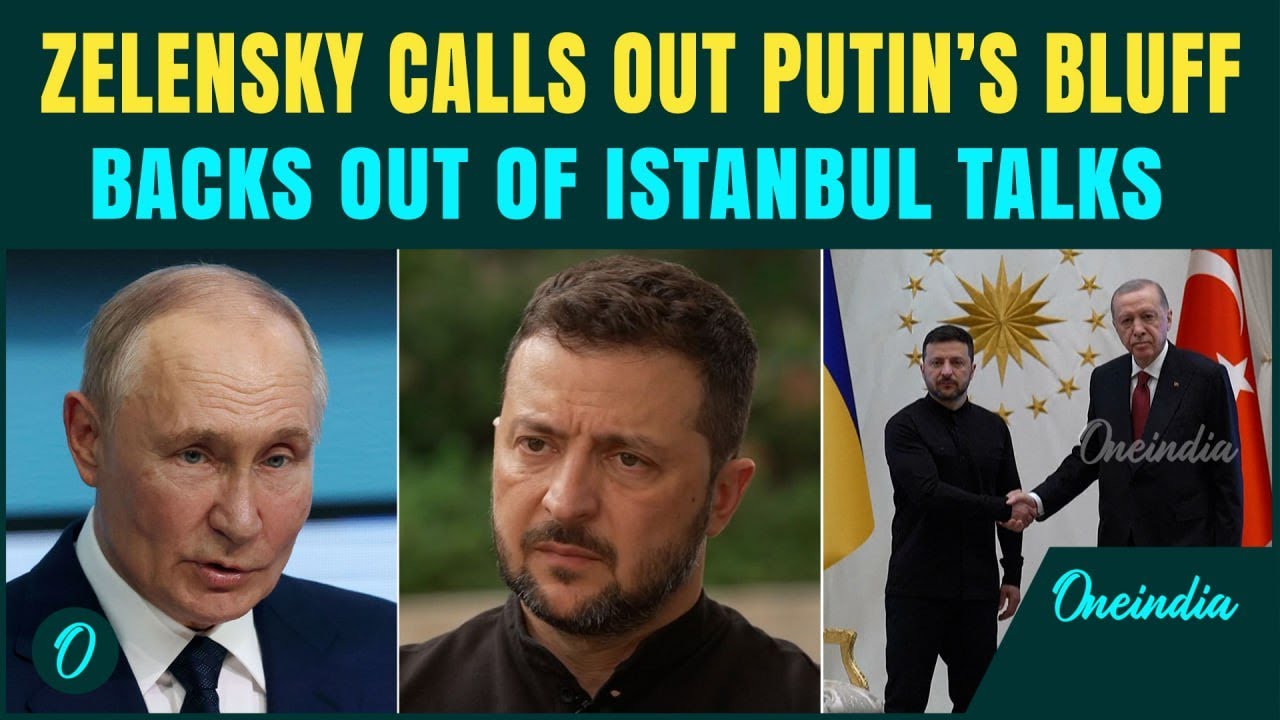
turned up or not. He would dare Putin apparently to come and well he wouldn't go to Istanbul However he would go to Anchora to meet with President Erdogan. Um exactly why and to what end by the way I am completely unable to understand but he would go to Anchora he would only decide after he spoke to Erdogan in Anchora whether he was going to engage the Russians in some way or not. Um and indeed um the reports say that though the Russians have arrived arrived some hours ago in Istanbul and they're waiting for the Ukrainians
to Turn up. Um Zalinski has flown to Anchora not to Istanbul at all and he's there and he's going to have this meeting with Erdogan. why you couldn't just have picked up the telephone and spoken to Erdogan by phone. Obviously, that hasn't been explained at all. Anyway, he's not going by himself. He's bringing various people with him. So, his chief of staff, Andre Yermak, uh his defense minister, Rust Mumarov, the foreign minister. And these Are all ministers. They're not professional experts. They're not negotiators. As I've discussed in previous programs, bringing political people into a negotiation
at this stage is, shall we say, unorthodox. Um if we go back to the Paris negotiations between the United States and North Vietnam, you didn't have you know the entire US cabinet participating in the negotiations at That time. The United States appointed a strong negotiating team which met with the North Vietnamese also appointed a strong negotiating team. They sat across the table. There was a lot of discussion and debate about how to organize that table by the way which I'm not going to waste time on discussing in this program but anyway the they met across
the table and the political people the ministers the senior officials the political leadership they would become Involved as the negotiations progressed they would speak to each other to to help the negotiators sort out any difficulties. Henry Kissinger, Donald Trump's n sorry, Richard Nixon's national security adviser would speak to the chief official that the polit bureau, the North Vietnamese polit bureau assigned to cover the talks. It was Leukto and that was how the negotiations were conducted then. But no, Zalinski Obviously works by his own rules. He's brought his cabinet or much of his cabinet with him
to Anchora and as of this time it's still completely unclear to me whether these people are going to stumble to meet with the Russians. Um, Zalinsk's aid and Mikail Podoliaak yesterday was sort of suggesting that they would not, but today it seems as if they might. I have to say I think it would be Extraordinary and would be something that Donald Trump would absolutely not want to see if no one from Ukraine showed up in Istanbul at all. Anyway, presumably someone from the Ukrainian team will come to Istanbul, but it's not clear at the moment,
at least to me, whether they're going to actually meet and discuss and meet with the Russians. That's the first thing. The second thing is that Zalinski Is again saying that yes um maybe possibly some kind of discussions with the Russians might take place, but the only topic that will be discussed or at least that the Ukrainians are authorized to discuss is the 30-day ceasefire. And that is the only issue and it must be unconditional. It must be again a take it or leave it proposal. The Russians have put together this massive negotiating team and apparently
the only thing that this Team is going to be offered is a single demand which has been obeyed already by multiple people multiple times which the Russians have already rejected multiple times for an unconditional 30-day ceasefire. Well, given that this has already been communicated to the Russians many times, why does it need Zilinski and his people to come to Turkey to convey it again? Again, it all seems to me very strange, incredibly confusing. But it's not just the Ukrainians that are confused, confusing, and all over the place. In my program yesterday, I said that Witgo,
Rubio, and um and Kellogg were all being sent by Trump to Turkey. What I had not realized is that there is a NATO foreign minister's meeting actually taking place in Turkey as well at the resort of Antalia, which Rubio would anyway have been expected to attend. So that is why Rubio actually is in Turkey. So it was not because of the negotiations in Istanbul though that does put Rubio very close at least in the same country as the place where the negotiations in Istanbul are supposed to be taking place. But Witgo and Kellogg have also
been sent there. And I've already pointed out and I pointed out in my program yesterday that Witgo and Kellogg appear to have completely different views about how the United States should approach this conflict. Are they going to Istanbul though? Apparently they're All currently in Antalya. Witkoff apparently does want to go to Istanbul. I expect that Trump will want him to go to Istanbul. Trump has also at times floated the possibility that he might go to Istanbul. He said, as Donald Trump does, and we should take this always, with a measure of generosity, that the reason
that Putin isn't coming to Istanbul is probably because Trump himself is not Going. The reality of course is the exact other way round. But anyway, let's let's put all that to aside. Um Trump nonetheless does still seem to want to see progress in the talks that are going to happen in Istanbul. So it is likely that Kellogg will go. Will sorry that Witgo will go? Will Kellogg go? Probably presumably. But then, as I said, Kellogg and Witkoff don't really agree. Witito has been talking mostly to The Russians and appears to be veering towards accepting their
conditions. Kellogg rejects those conditions entirely and has his own plan, which is the same plan basically as the one that the Europeans have. And he, of course, is an advocate of sanctions. So, what exactly are the Americans going to do anyway? Are they going to wait to see because the Russians are going to wait to see whether the Ukrainians turn up? If the Ukrainians do turn up, will the Ukrainians speak to the Russians? If they do speak to the Russians, what exactly will the American role be? Will they just be there to provide encouragement and
to um hand out the cakes and the tea? Or will they um be engaged in the negotiations in some way? or as has to be much more likely will they be the transmitters between the Russians and the Ukrainians of whatever messages the Ukrainians and the Russians want to Exchange with each other. I've already said previously in my program yesterday that if we ever get into that kind of situation where the Russians are speaking to the Americans and not to the Ukrainians, even if the Ukrainians are in the room next door, then eventually we could find
ourselves in a situation where this has become a negotiation between the United States and Russia. Just as the Paris negotiations ultimately became a negotiation between North Vietnam and the United States with the Ukrainians like the South Vietnamese basically pushed to one side. Something which I would have thought the Ukrainians would not want. But anyway, Zalinski refuses to cancel his October 2022 decree unless he's simply going to disregard it. Now, it's difficult to see how the Ukrainians can meet with the Russians. given that Zalinski who says that he himself is exempt from this decree. Um given
that Zilinski himself apparently does not intend to be with the Russians in Istanbul. I say apparently because from one moment to the next things may change. Now, by the time this video goes up, I am making this video earlier in the day on Thursday. Um, the negotiations were supposed to Start at 10 p.m. at 10 10:00 a.m. local time. They were then put back until 2:00 p.m. local time as everybody waits to see what Zilinski is going to do. By the time this video goes up, you will probably know a lot of the answers to
these questions. Whether the Ukrainians are going to go, whether they are going to meet with the Russians, what the role of the Americans is going to be, whether the Americans are going to have any Role. But nonetheless, it is still useful, I think, to s to lay this all out now, if only because what it shows, going back to my comments at the start of this video, is the contrast between the two sides. The Russians methodically, systematically preparing, working hard over the last couple of days, putting a powerful Negotiating team together, briefing undoubtedly the various
people who want to be who are going to be involved in the negotiations. The meeting in the Kremlin with Putin, which I've just talked about, is going to be have been only one of many briefing sessions that these negotiators will have gone through. and um since Saturday. So, as I said, this will have been a carefully prepared buildup to the arrival of these negotiators in Istanbul. Um that is how The Russians work. Just to repeat again, um people who've worked in the law, who are litigators will be very familiar with this sort of thing. the
way big law firms carefully prepare for meetings with the other side. It's not that different. Anyway, the careful systematic thorough preparation by the Russians and this bizarre cacophony of Zilinski is coming, he's not coming, Putin is a coward for not coming. Um, we're only going to discuss ceasefires. We're not going to discuss anything else. Um, we're not going to meet with the Russians if Putin isn't there. We are going to meet with the Russians if Putin is there. The Americans are going to be there, but maybe they're not going to be there in any negotiation
where one side is thoroughly and carefully prepared in the way that the Russians are and the Other side is all over the place. And the people who make up the Ukrainian delegation are politicians Yermak the others ultimately even though they're the decision makers amateurs. Well, in such a in such a contest, the odds obviously are going to be stacked very heavily in favor of the professionals against the amateurs. I I have to say that um again in my work experience I have seen situations like this arise before um um when individuals decided to take on
giant corporations backed by massive law firms in legal proceedings and ended up trying to negotiate all by themselves or deal all by themselves with the enormous forces that the other side, you know, the law firms would be able to put together. And I've seen I've seen it how it happens And I've seen how zany the whole thing can become and how well what the outcome tends to be. And I don't expect or see frankly anything different this time. Though of course this is all happening on an extraordinary scale. Anyway, there we go. Now I ought
to say that the Americans as I say don't look particularly well organized either. They're divided between each other. There has been a lot of criticism and it Is clearly malicious criticism of Steve Wickoff circulating in the United States and in the media. He's supposed to breach protocols by meeting with Putin without talking to him in Russian. Witkov apparently speaks Russian and speaks it well. Meeting Putin onetoone and speaking to Putin in Russian and not through an interpreter. There's been criticism that Witgov doesn't come with strong backing from staffers and people of that Kind. I read
a piece by Seymour Hirs which says that the Russians are laughing at the Americans for the incompetence of their negotiators. I don't think the Russians are laughing at the Americans. I think they would far prefer that the Americans were properly organized because that would make the negotiations much more orderly and structured and they're nothing like that at the moment. And I certainly don't think the Russians are laughing at Wickoff. just to say um I've read many comments that the Russians have made about Wit Golf, comments that people like Lavough have made and they all acknowledge
that he is hardworking, extremely intelligent, he is very quick on the uptake. The Russians have been impressed at how quickly he has absorbed much of the detail of what is a very complex conflict. But of course, Wickoff is ultimately one Individual taking on this Russian machine all by all by himself. And until that changes, until the Americans get their act together, it it's difficult to see these negotiations going anywhere very far. Now, I am not going to try to predict what is going to happen over the course of today. Probably by the time this video
goes up, we will have some clearer idea. Um, first of all, I don't even know whether There's going to be any kind of negotiation at all. I mean, it would not entirely surprise me if the Russians found nobody turning up and when evening came took the flight back to Moscow. I mean, that that is not impossible. Or it could be that some kind of talks would begin. If they do then um the Russians have previously said Ushikov actually gave some pointers about this previously that the Russians would treat this as the first meeting. No one
should expect any breakthroughs from a first meeting in any negotiation. It be an attempt to try to understand better what the other side is doing and who the other side that they're actually going to be negotiating with is. I mean will it be Yermach for example or will it be Omarov? Will it be Zilinski himself or will it be Kellogg or will it be Wickgov? I mean all of all of these are important factors for anybody in negotiations to know. You need to have a Sense of whom you're actually going to be negotiating with so
that you can develop a relationship with them over time. So that is probably what the Russians are expecting. We could have some kind of a meeting. It's far from clear to me what that meeting is going to achieve and whether it's going to take things further at all. And of course, it could be that the whole thing would simply fall apart Before it even properly gets going. Anyway, we shall see. You will know by the time you're watching this program a lot more about the outcome of this first day of discussion than I do. The
other big question if the negotiation does failed to result in any great breakthrough and assuming that there is no announcement for example of a follow-up meeting which would be a step Forward by the way if there was a follow-up meeting presumably in Istanbul and incidentally just to quickly add an important point. The Russians apparently made sure with Erdogan that the meeting would take place just to again emphasize that this is a resumption of the negotiations that took place in 2022. Um, it's going the negotiations are going to take place in the same building, the same
palace in Istanbul Where the previous negotiations took place and apparently are expected to happen in the same room. This is clearly something the Russians wanted in order to emphasize the continuity. Anyway, it could be that we will get agreements, an agreement to at least meet again, but who knows? And then, of course, if there is no great breakthrough, if there's no ceasefire announced today or tomorrow, what is Donald Trump going to do? Is he going to go along with the Europeans and Back their call for further sanctions? Now, um, as I've said already, the Europeans
are dismayed that Trump has not announced those sanctions first despite the expiry of the so-called ultimatum that was presented to Putin on Saturday. Uh, they will be hoping that he does come round to the sanctions again. There's a great deal of hand ringing in Europe that it makes no sense for the Europeans to go on threatening The Russians with sanctions, which are not going to have any effect because they cannot do unless the United States supports them. So, well, will the Europeans be able to swing Donald Trump back to their side? Well, it's important to
stress that Trump himself never seems to be completely sure of his own mind on this and he is Under considerable pre pressure, domestic pressure. General Kellogg, of course, never ceases to advocate for further sanctions. Um, another person who never ceases to advocate for se for further sanctions, who claims to have the backing of 72 members of the Senate, a twothirds majority in the Senate for further sanctions, is Senator Lindsey Graham, who is, I think it's fair to say, a extreme Hardliner with respect to any conflict. at all. I said that Rubio, Kellogg, and um Witkoff
are all in Turkey attending this foreign minister's meeting in Antalia. Somewhat concernedly, it turns out that Lindsey Graham is there also. And I can't help but think that that is a bad sign. Clearly he is turned up in Antalia because he wants to back the Ukrainians whatever happens because he clearly Wants to get these sanctions imposed on the Russians. So the Europeans are acting as spoilers. There's been, by the way, reports about this, especially in the Ukrainian media. Uh there's even reports that the Europeans are telling the Ukrainians, wreck the negotiations so that we can
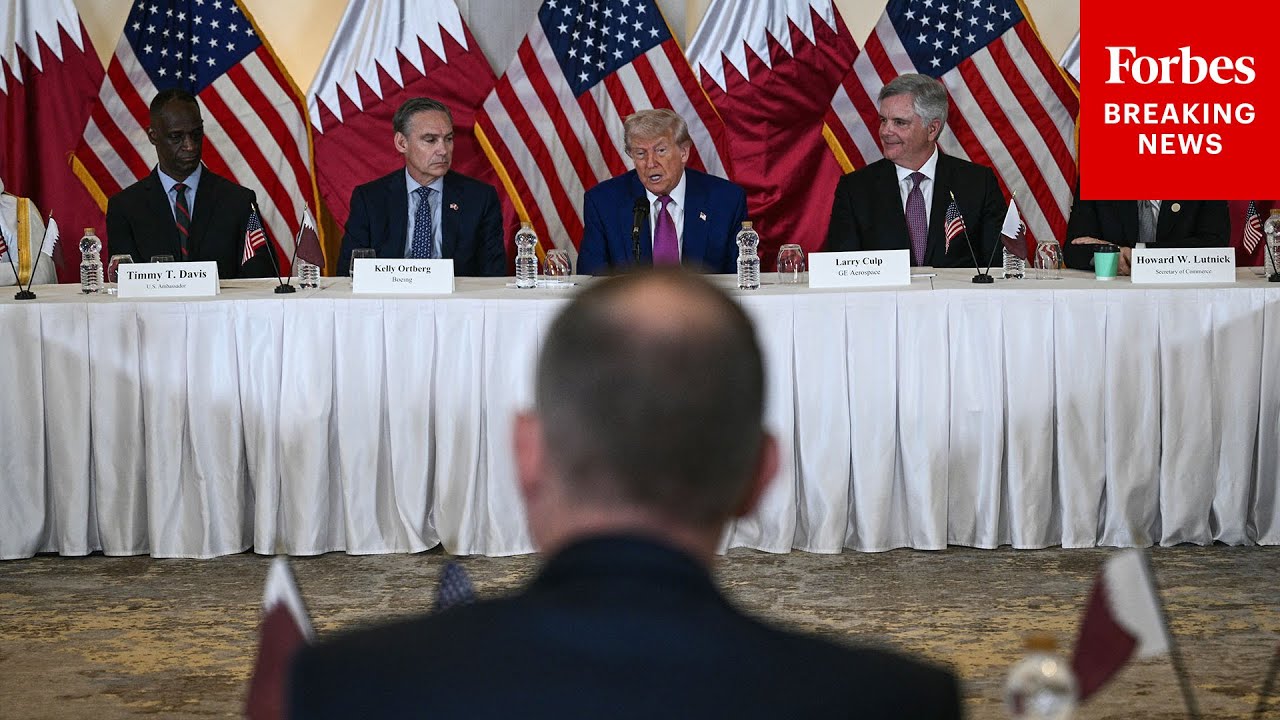
get to the point where Trump imposes the sanctions. And it looks as if well but I mean I can't help but think that Lindsey Graham in his own way different from the Ukrainians is probably hoping to see the same thing happen. So anyway, it's not clear at the moment what exactly it is that Trump himself does intend to do. Now Trump is in has been in the Gulf in Saudi Arabia in the Amirates. He's having all kinds of meetings with people there. and he delivered a very long actually rather interesting 50inute speech whilst he was
in Saudi Arabia said a great deal and it perhaps repays Revisiting but he did say something over the course of this speech which might be relevant to the situation that we're seeing play out now. I say might be because I don't know over the course of this speech Trump made I think the strongest criticism of the neocons and he actually called them neoons that I have ever seen him make. And of course, criticism of a kind that no recent American president had made has made. He talked about the extraordinary economic booms that he has seen
in Saudi Arabia. Some of us might have skepticism about this m boom, but never mind. That's what Donald Trump said about it. And then he said this and it's crucial for the wider world to note this great transformation has not come from western interventionists or flying people in beautiful planes giving you which is to Say the Saudis lectures on how to live and how to govern your own affairs. No, the gleaming marvels of Riyad and Abu Dhabi were not created by the so-called nation builders near or liberal nonprofits like those who spent trillions and trillions
of dollars failing to develop Carbal Baghdad so many other cities. Instead, the birth of a modern Middle East has been brought by the people of the region themselves. The people who are right here, the people Who have lived here all their lives, developing your own sovereign countries, pursuing your own unique visions and charting your own destinies in your own way. It's really incredible what you've done. In the end, the so-called nation builders wrecked far more nations than they built. And the intervent and the interventionists were intervening in complex societies that they did not even understand
themselves. They told you how to do it, but they had no idea how to do It themselves. peace, prosperity, and progress ultimately came not from a radical rejection of your heritage, but rather from embracing your national traditions and embracing the same heritage that you love so dearly. Now, this is obviously addressed to the Saudis and to the people of the Middle East, and one can see that. But this is a very very strong set of statements Altogether. Perhaps too strong in some ways for the context of this particular speech. Note the scathing criticism of the
so-called nation builders, neocons, or liberal nonprofits like those who spent trillions and trillions of dollars failing to develop carbal Baghdad and so many other cities. Now, one of those neocons, as Donald Trump obviously knows, was none other than Senator Lindsey Graham. The same person who wants to escalate the crisis over Ukraine, who wants bone crunching sanctions against Russia, who wants to go on supporting Ukraine, who wants to continue to see unlimited funding for Ukraine. I'm not saying that this is a veiled threat to people like or criticism of people like Lindsey Graham. It is too
much about the Middle East to be about that. But is it not possible to see here signs of Donald Trump's own Deep frustration with the fact that the neocons are still there, that they won't go away, that they're still badgering him and pressuring him and pressuring the United States to engage further in more conflicts, specifically the conflict in Ukraine, that they want to get him to impose more sanctions to supply Ukraine with more weapons to send to Ukraine more money. Is it not possible to see behind these words some of some signs of This frustrated
and increasingly angry man who at one of the same time may feel and you know Donald Trump isn't sitting across the desk to me. I don't know what exactly he feels, but who may feel that Ukraine is another massive distraction and waste of resources and waste of America's time. But he can't completely break away because of the power of these people around him. The ability of Lindsey Graham to marshall the Senate. Bear in mind what I've already said previously in previous programs. Getting 72 senators to back a bone crunching sanctions proposal against Russia is as
much a threat to Donald Trump because 72 is enough to impeach Donald Trump as it is a warning to Russia. just saying. Um, could it be, as I said, that what we've seen in these words from Donald Trump is That burst of frustration that he might understandably feel. Well, maybe I'm wrong. Maybe Donald Trump is generally in full control of the situation. He's angry with Putin for not going to Istanbul. He hasn't shown any sign of it yet, but maybe he is furious with Putin for not going. Maybe his intention all along has been to
find some means to back Ukraine. Maybe this is all a trick to stop the Russians advancing. Maybe it's intended to appease his own Electoral base. Or maybe maybe he senses another massive trap from the United States. Trump is always one of these people who acts more from instinct than from careful analysis. But his instinct is often sound. Anyway, maybe he senses another trap for the United States. Another trap for him personally. He's angry about it, but he doesn't completely know how to get out. Well, I'm going to quickly finish with One very last comment, which
is about the rather extraordinary intervention of President Lula of Brazil. President Lula attended the victory day celebrations in Moscow. He then flew on to Beijing to have further discussions with President Cining. Lula and C China and Brazil published a statement supporting the Russians in Putin's proposal for direct negotiations with Ukraine. The Chinese are very keen to see these negotiations Underway. Then of course, Zalinski comes along and demands that the negotiations be replaced in effect by a personal summit meeting between himself and Putin. So Lula, a man of I have to say some degree of self-importance.
I'm being kind here, feels that he has to involve himself in all of this. He has to be part of the limelight. He presumably expected that Putin would set everything aside and go to Istanbul. So he wanted to come to Istan to Moscow to be seen as the person who persuaded Putin to go to Istanbul. Um Lula has friends in Brazil and in France especially. They've been critical of the fact that he chose to go to Moscow to attend the Victory Day celebrations. He wants to assuage them and to appease them. And so off he
went to Moscow to try as he said to talk Putin to go to Istanbul. Um, I think this is another and I sorry to say this, another example of the Madness that seems to have taken hold over people over the last couple of days in the event he wasn't able to meet with Putin who was tied up obviously sorting out his negotiators and briefing them and discussing with them how they would proceed with the negotiations and who also had, by the way, a very friendly and productive meeting with the prime minister of Malaysia. Just saying.
But anyway, Putin, polite man as he is, though he Didn't meet Lula, nonetheless, took a call from him. And well, if you go to the Kremlin's website, you will see that it's full of all sorts of nice words, but that nothing of any substance was discussed. Uh we read for example that u President Lula conveyed his impressions of the visit he just made to China paid particular attention to the joint statement in support of the president of Russia's initiative on resuming notice the word resuming direct talks between Russia and Ukraine in Istanbul. For his part,
the president of Brazil intends to do any everything possible so that the talks prove successful. What exactly can Lula do? Putin expressed gratitude to the authorities of Brazil and China for their sincere willingness to contribute constructively to the search for solutions. And then Lula thanks Putin for the warm reception Lula was given in Moscow um Over the course of the celebrations of Victory Day. Well, there it is. I mean, I I I'm not going to waste any more time with this. It's again classic Putin. Um he humors Lula, treats him politely, but then sends him
on his way. So, there we go. Um, I'm not going to discuss the military situation today. There's been further developments and they're quite important and they all point to further Russian advances, but I'm going to defer that until tomorrow. Tomorrow, we will know more about what, if anything, is going to happen in Istanbul. And until then, um, all that remains is for me to wish you a very good day, to remind you again that you can find all your all, um, all our programs on our various platforms, Locals, Rumble, and X, that you can support
our work via Patreon and Subscribe Star, and by um um going to our shop, links under this video. And please don't forget, if You've liked this video to tick the like button and to check your subscription to this channel. That's me for today. More from me soon. Have a very good day. [Music]