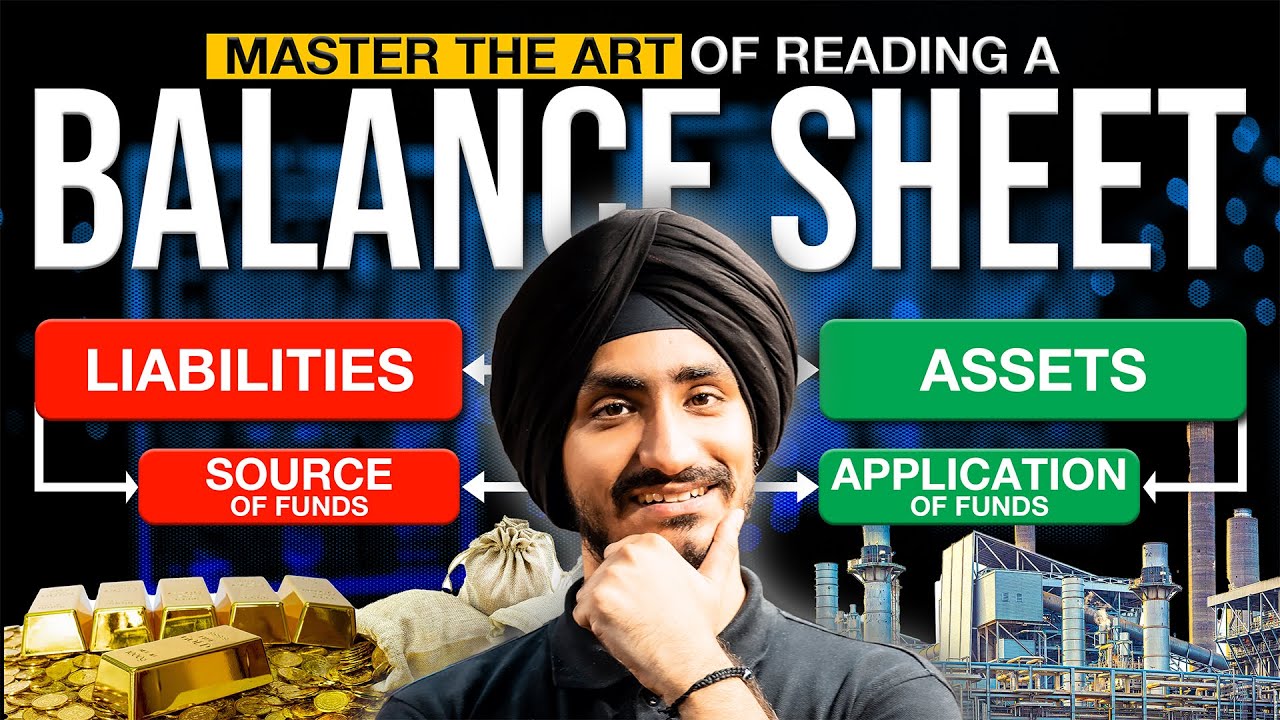
[Music] in this video we'll talk about the consolidated balance sheet of a company [Music] the consolidated balance sheet of a company is on a year-on-year basis meaning the numbers of this year gets carry forwarded to the next year so on and so forth whereas the p l that we looked at in the previous video talks only about the specific year in consideration so this is a subtle difference between p l and the balance sheet which you need to be aware of i've got the balance sheet of bajaj auto here i'm continuing on the same example
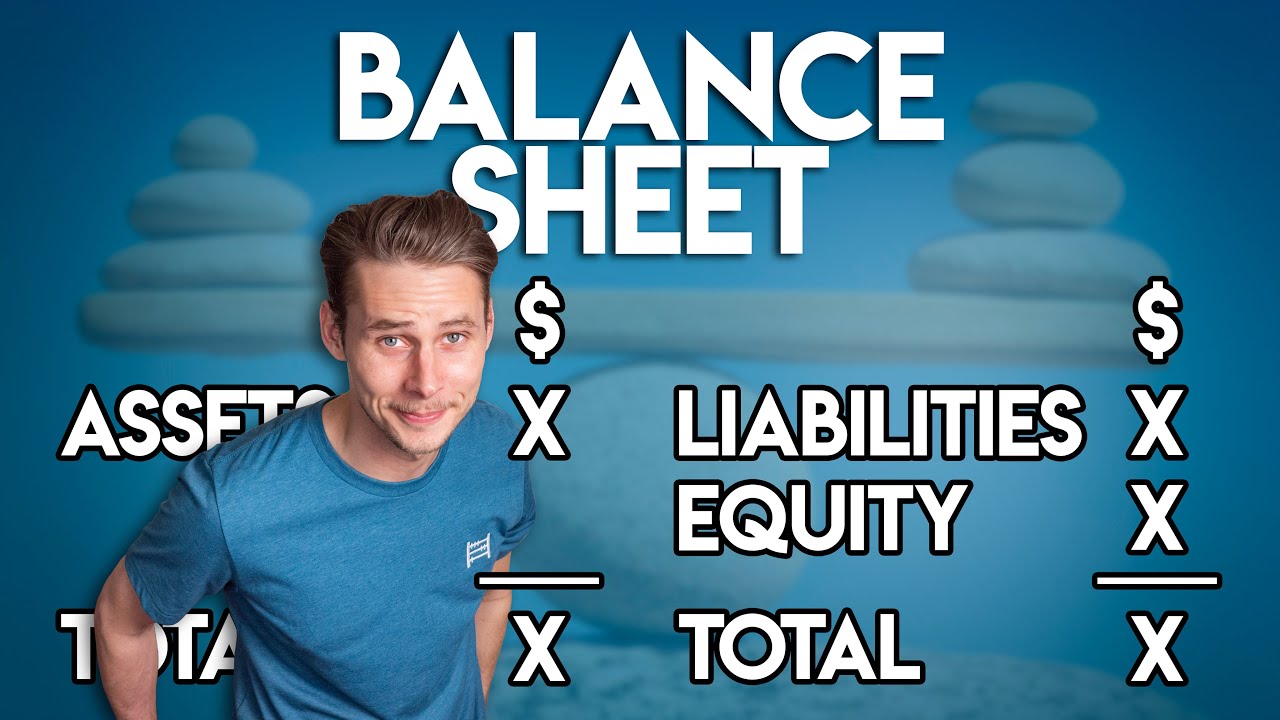
that we spoke about in the previous videos the balance sheet consists of two broad sections that's the assets of a company and the liability of the company now both assets and liabilities can be broadly divided into two sub-categories each the non-current assets and the current assets the non-current liability and the current liability so in a sense you have four small divisions within the balance sheet so let us focus on the asset part of the balance sheet non-current assets are assets which are which have a long-term economic benefit to the company this can include things like
the property plant and machinery it can include intangible assets intangible assets are things like trademarks and patents that the company holds it can also include financial investments these investments are usually long term in nature it could be a long term government bond for example long-term investment and mutual funds so all these things put together from the non-current assets of the company now the current assets are also similar in nature but it's just that these are assets which have an economic output within one year's time frame some of the examples of current assets are inventories inventories
is nothing but the finished goods that the company has and and is ready to be sold hopefully over the next one year it can include trade receivables these are receivables these are payments that the company is expecting it could be from vendors or customers within the next one year it can include loans that they have given out and the repayment that they are expecting within the next one year and cash and cash balances are held with the bank now as you can see in bajaj auto for the year 2021 the total non-current assets of bajaj
r2 auto stands at roughly about 19 400 odd cross the current assets of bajaj auto stands at 14187 crores so the sum of current and non-current assets will give me the total assets held by bajaj auto in this case it is nineteen thousand four hundred plus fourteen thousand one eighty seven giving me thirty three thousand six hundred one cross so when you are looking at the asset side of the balance sheet please pay attention to some of the largest line items in the balance in the asset side in this case clearly the in financial investments
that is the non-current site is a large line item so i would be interested to dig further into this and how can i do that i can do that by going to the associated node the associated node is 5b in this case so i would go there and dig deeper into what sort of investments that the company has made here just to understand the the nuances of that particular line item i also see that plant and the property plant and equipment is also a heavy line item 1500 hot cross so i would go to note
number two here and spend more time to understand the nature of this particular line item so the point here is that whenever whenever you find a heavy line item in the balance sheet you go to the associated note and dig deeper to understand the nuances of that particular line item now let us focus on the liabilities part of the balance sheet now as you can see that there is the non-current liability there is the current liability just like the way we had the current and non-current assets but we also have a third part here in
the liabilities which is the equity part we will talk about the equity part a little later in this video to begin with let's understand what a liability is a liability simply put is the obligation the financial obligation of a company think about an individual who's borrowed who's taken a personal loan now at some point the person has to return this loan back to its lender right so that's a financial obligation in the same way a company two has different financial obligations all that bunch together is what is reported in the liabilities part of the balance
sheet non-current liabilities are financial obligations which can be fulfilled over next few years whereas the current liabilities are financial obligations which has to be fulfilled within one year time frame so to put this in perspective think about a credit card loan that you've taken which needs to be fulfilled over the next month or two that would be a current liability for you as an individual whereas you've taken a housing loan which you intend to fulfill over next let's say five years or ten years that would be a non-current liability on your own personal balance sheet
so let's just take a quick look at uh some of the line items in on the non-current liability side for for instance in bajaj auto there is a line item which says provisions and there is also an associated node numbered 16 so you can always go to the associated node to understand the nature of this particular line item let me do just that so so note 16 gives me the details of the provisions under non-current liability and as i can see it consists of provisions made for welfare schemes provisions made for compensated absences it also
includes warranties which i'm guessing are claims on on the bikes that they've sold so all these things put together forms the long term provisions of bajaj auto which is what is mentioned on the non-current side of the balance sheet likewise you can do the same thing for the current liabilities parts as well for instance we've got a line item which says other current liabilities with an associated node number 19. you can always go to that particular note to understand the nature of that particular line item so let me do just that so as you can
see other financial liabilities here includes things like security deposits commissions payable it includes the employee benefit payables and it also includes the other payables all these things bunch together forms the other other current liabilities of the balance sheet so the other section of the liability side of the balance sheet is the equity section the equity section has two parts to it one is the share capital of the company the other one is called the reserves and surpluses in this case bajaj auto simply calls it the other equity but if you go to the associated notes
you will see that it split into reserves and surpluses of the company in a very simplistic way think about the shared capital as the amount of money that the promoters and the early investors put into the company to start the company in this case the share capital happens to be 289 cross now going ahead if the company raises more money for whatever purposes then the share capital will actually increase other equity like i mentioned includes reserves and surfaces let's actually go to the nodes of other equity to understand the nature of that line item the
associated note is 14 so let me go to note 14 here like i mentioned other equity includes reserves and surpluses the reserves and surplus of a company is basically profits flowing in from the p l statement and sitting in the reserves and surplus part the company earmarks funds for different purposes and that's what really the reserves and surplus of the company represents i would encourage you visit varsity's fundamental analysis module we've got tons of information there and and lots of comments around this topic please do read through that and if you've got any queries do
post a comment and we'll be happy to get back with the response key takeaways from this video are [Music]