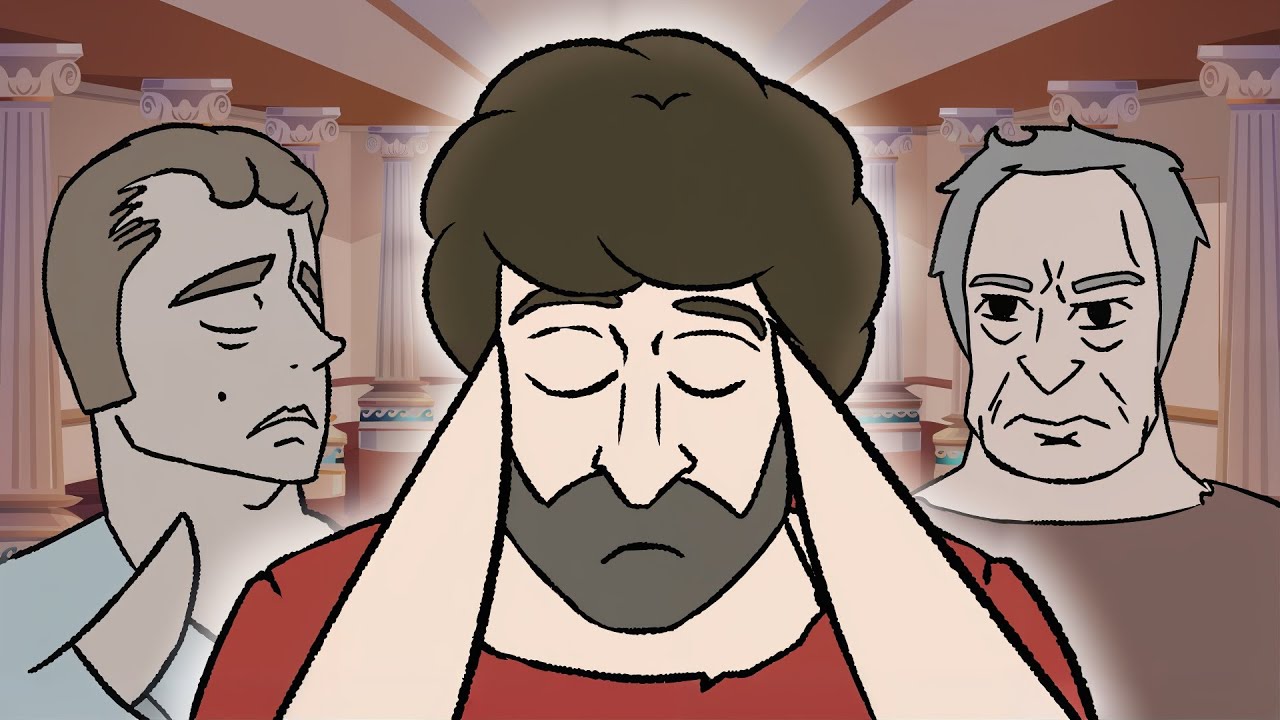
One day, a man lost his most valuable possession. In some versions of the story it’s his wife, in others his son, in others his job, and in others it’s something else. But in this version, it’s his horse.
It ran off towards another village. The man’s neighbours felt bad for him. “What a tragedy,” they said.
But the man’s father comforted his son and said, “Don’t worry about it son. Maybe this will bring you good luck. ” Months later, the man’s horse returned with more horses from the other village, so now, in a sense, the man was rich.
All of his neighbours congratulated him. “What a blessing,” they said. But the man’s father warned him, “Don’t be too proud son.
This might be an omen of bad luck. ” A few days later, the man’s son was riding one of the new horses when he fell off and broke his leg. “What a tragedy,” said the neighbours.
But the man only heard the words of his father, “Don’t worry about it son. Maybe this will bring you good luck. ” Months later, all of the young men in the man’s village had to go to war.
But his son was excluded due to the injuries he had received while riding the horse. So the man was incredibly grateful, because nine out of ten of those young men died in the war. If the man’s goal had been to keep his son perfectly protected, the breaking of his son’s leg would have seemed to be a bad event.
But if the man’s goal had been to protect his son from war, the breaking of his son’s leg would have seemed to be a good event. But if the man’s goal had been to protect his son from physical injury, the breaking of his son’s leg would have seemed like a bad event at first, but a good event later, because the broken leg prevented his son from suffering even greater physical injuries in the war. But, hypothetically speaking, if we continued the logic of the story, if the man’s village was invaded a year later and all of the survivors of the first war were captured and tortured, then the breaking of his son’s leg would have seemed like a bad event again.
Therefore, we can never truly tell if an event that happens to us is good or bad. We perceive an event as bad when it prevents us from achieving our goals, but the prevention of one goal can lead to the fulfilment of a greater goal—just as the son’s broken leg prevented him from having to go to war. So a little bit of pain early on prevented a greater pain later on.
Because of the uncertainty of the future, we can never know whether an event is good or bad, because we don’t know what impact it will have on the future events in our lives. When the man’s horse first ran off, he didn’t know that it would lead to him having more horses, which would lead to his son breaking his leg, which would lead to his son not having to fight in a war. And still, he doesn’t know what effect his son not fighting in the war will have on both of their futures.
And even when the man is on his death bed, he will not know whether any of the events of his life were objectively good or bad, because he does not know how the events of this life may affect the events of his next life, if a next life exists that is. And yet, in some sense, if he follows his father’s advice, it doesn’t even matter. When seemingly bad events happened to the man, the man’s father told him to believe that something better would come from it.
Presumably, this prevented the man from sitting around and crying about his fate, playing the victim and wasting his time. Rather, he productively moved forward with his life, and quite possibly, he might have even been happy, as he may have been anticipating the good luck that was still to come his way. And when seemingly good events happened to the man, the man’s father told him to believe that it might lead to something bad.
Presumably, this prevented the man from being attached to whatever he might have gained in life, and so if he ever lost it, he would be able to let it go and not feel horrible. Rather, he would still be able to productively move forward in life with the hopes that something better might come along in the future. So the father’s advice was incredibly wise.
Because when you believe that all good things eventually lead to something bad, and that all bad things lead to something better, you give yourself the strength to constantly move forward and upwards. Nothing can keep you tied down or restrained from progress. You begin to see the entire world as conspiring in your favour, as constantly leading you towards something better.
And this is no mere delusion. Because firstly, what you want to happen in life, aka your goals, are subjective. You get to choose them.
Secondly, what actually happens in life, aka the outcomes of reality, are objective. They happen based on the laws of nature. Thirdly, frustration happens when the outcomes of reality deviate from your goals.
In other words, frustration is what you feel when what must happen is different than what you want to happen. So finally, if you follow the logic, frustration is the true mark of delusion, because it means that you think your desires are more important than the laws of nature, that what you want to be the case is more important that what must be the case. To be without frustration is a sign of enlightenment, and the best evidence of that is the Buddha.
The core of Buddha’s teachings are summarized in the Four Noble Truths: 1. There is suffering. 2.
There is the origination of suffering. 3. There is the cessation of suffering.
4. There is a path to the cessation of suffering. Buddha tried to help people overcome frustration and suffering, and he said that the source of frustration was desire, and that the source of desire was ignorance.
In other words, desire, which is wanting things to be different than they must be, is birthed of ignorance and causes frustration. Conclusion The wise person believes that all good things eventually lead to something bad, and that all bad things lead to something better. And so they live their life in an upward spiral, overcoming frustration and ignorance, and like the Buddha, they become undefeatable.
If you want to become undefeatable, here’s a practice you can incorporate into your life. I call it radical gratitude. Create a table with seven columns.
Label the first column “event”. In this column, write down whatever event occurred that you either judge as good or bad. Label the second column “what lesson(s) can I learn from this event?
”, the third column “what virtue(s) or skill(s) can I develop from this event? ”, the fourth column, “what can I teach others based on how I respond to this event? ”, the fifth column, “what might this make me attached to and afraid of losing?
”, the sixth column, “What vice(s) or bad habit(s) might I develop from trying to sustain this attachment? ”, and the seventh column, “What lie might I teach others based on how I am trying to sustain this attachment? ” Whenever something you perceive as a bad event happens, fill out columns 1-4, and whenever something you perceive as a good event happens, fill out column 1 and then columns 5-7.
This practice will help you think like the man’s wise father. It will help you see the bad that lies in the good, and the better that lies in the bad. Ultimately, you will learn to live your life in an unstoppable upward spiral, and if you can do that, you will become undefeatable.
But if you want to be intelligent as well as undefeatable, I recommend checking out this week’s sponsor: Brilliant. With Brilliant, you learn by doing. They teach you math, data analysis, programming, and AI through thousands of fun and interactive lessons.
Each lesson is filled with hands-on problem solving that lets you play with concepts—a method proven to be 6x more effective than watching lectures. Plus all content on Brilliant is crafted by an award-winning team of teachers, researchers, and professionals from MIT, Caltech, Duke, Microsoft, Google, and more. Brilliant’s first principle approach is the most effective way to learn, because it helps you build understanding from the ground up.
For example, in their courses on data analysis, Brilliant helps you gain insight by working with real data sets from sources like Airbnb, Spotify, Starbucks, and more. Brilliant teaches you to parse and visualize these massive data sets to make your interpretations easier to perform and more useful. Plus these courses are perfect for learners of any level to start and continue learning data analysis, with a full suite of new content covering data visualizations algorithms, regression models, and more.
To try everything Brilliant has to offer for free for a full 30 days, visit brilliant. org/freedominthought or scan the QR code onscreen—or you can click on the link in the description. You’ll also get 20% off an annual premium subscription.
As always, thanks for watching, and I’ll see you next time.