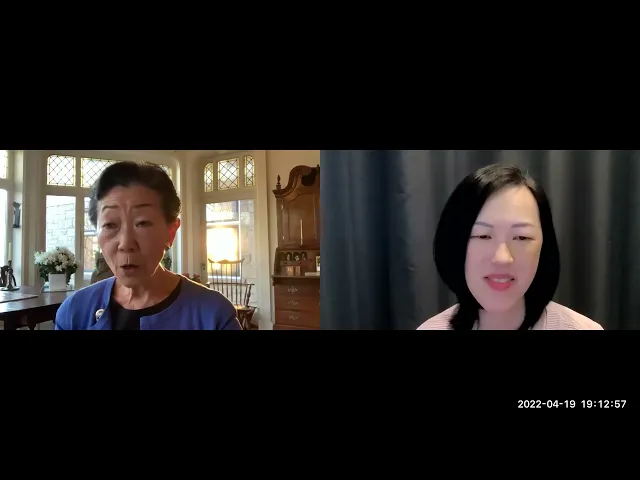
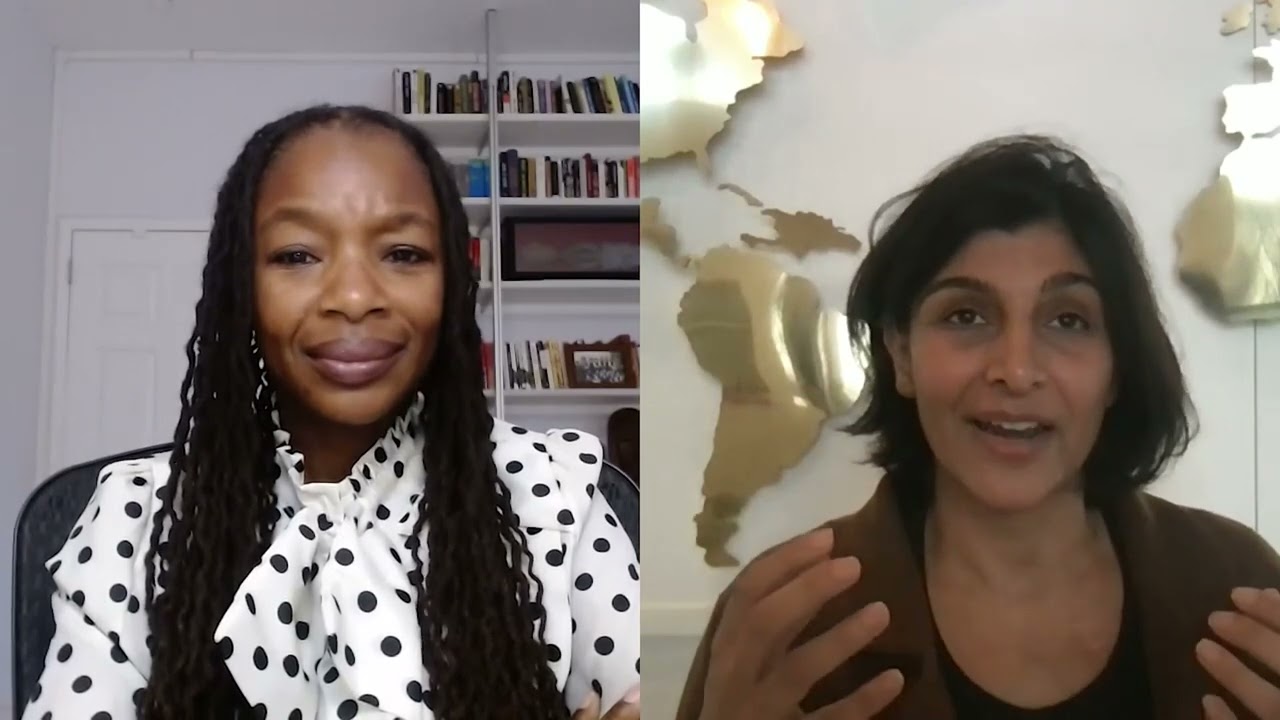
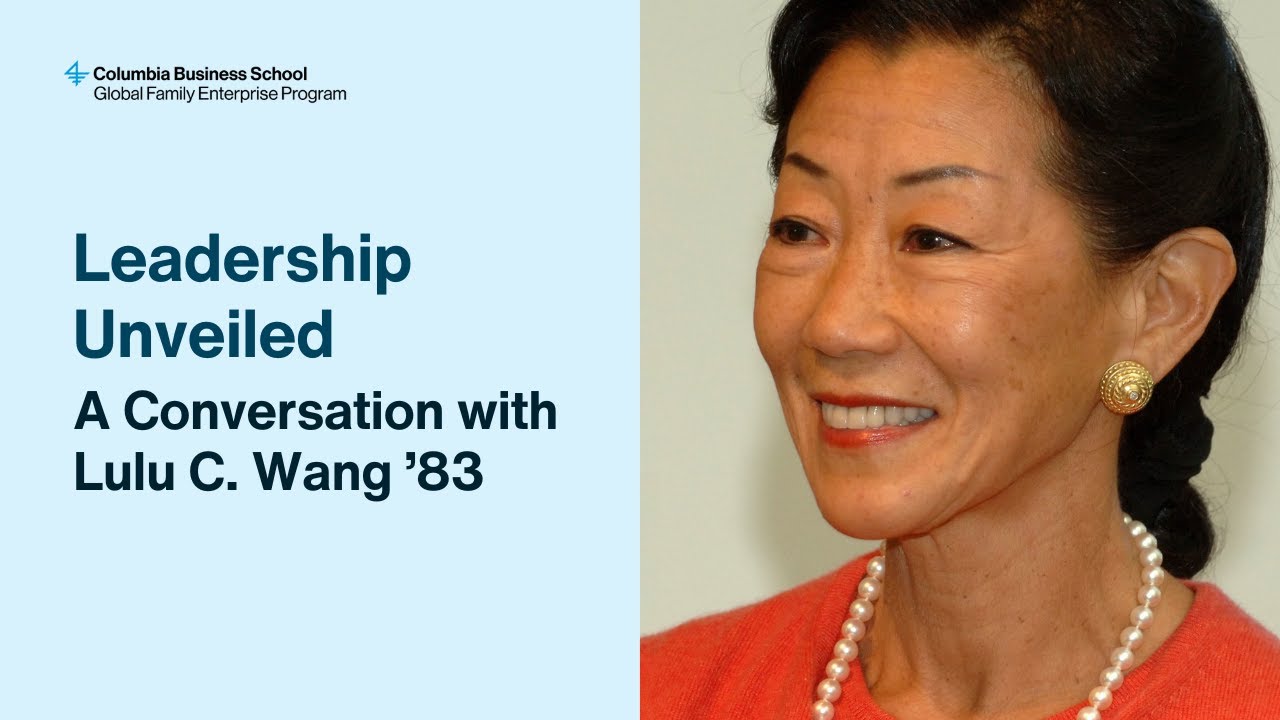
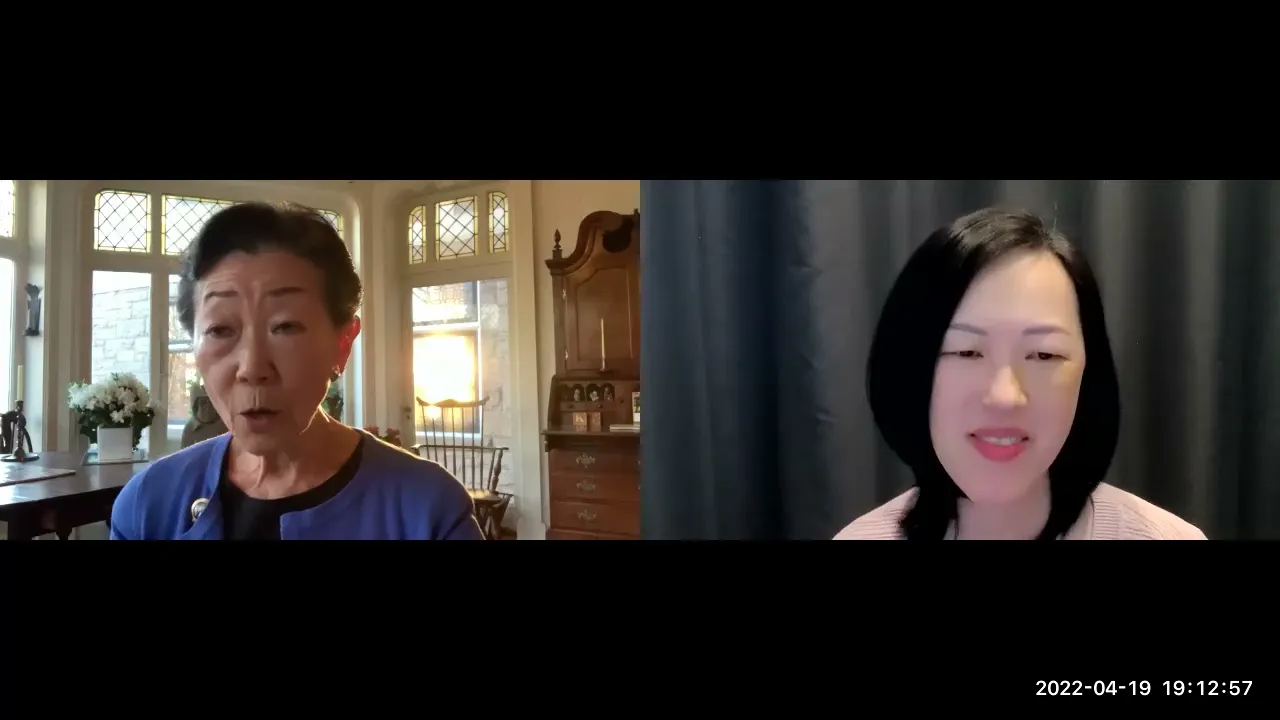
hello good evening my name is lulu chao wong i graduated from columbia business school in 83 and i'm the chair and founder of tupelo capital management and very proudly the moderator of tonight's event tonight is the 29th program of the sir gordon roof distinguished speakers series which is hosted by the jerome chasing institute of global business at columbia business school the jason institute as many of you know is really the hub for global business at the columbia business school the event tonight is really a culmination of two of the chase institute's leading programs on china
these are gordon wu speaker forum and then the lulu wong senor asian scholars both of the programs endeavor to focus on the business leaders as well as the academic and professional leaders of china and we bring them to the campus to share and to practitioners as well as a scholarly discourse now tonight we are deeply honored to have our keynote speaker miss deb liu and she is uh follows in the wake of a number of very prominent um speakers who come before the wu firm in the past most notably is daniel shu uh one of
the co-founders and cio of tencent and um who is the legendary president of china merchants bank and then uh way christensen who just retired as the ceo for morgan stanley china and then the co-ceo of asia pacific and um from taiwan since we tried a very balanced roster of speakers uh stephen pang one of our alums and the head of the largest uh listed hotel operator in taiwan okay for most international hotels um so before i i hand the podium over to deb i just would like to give you a quick review of her many
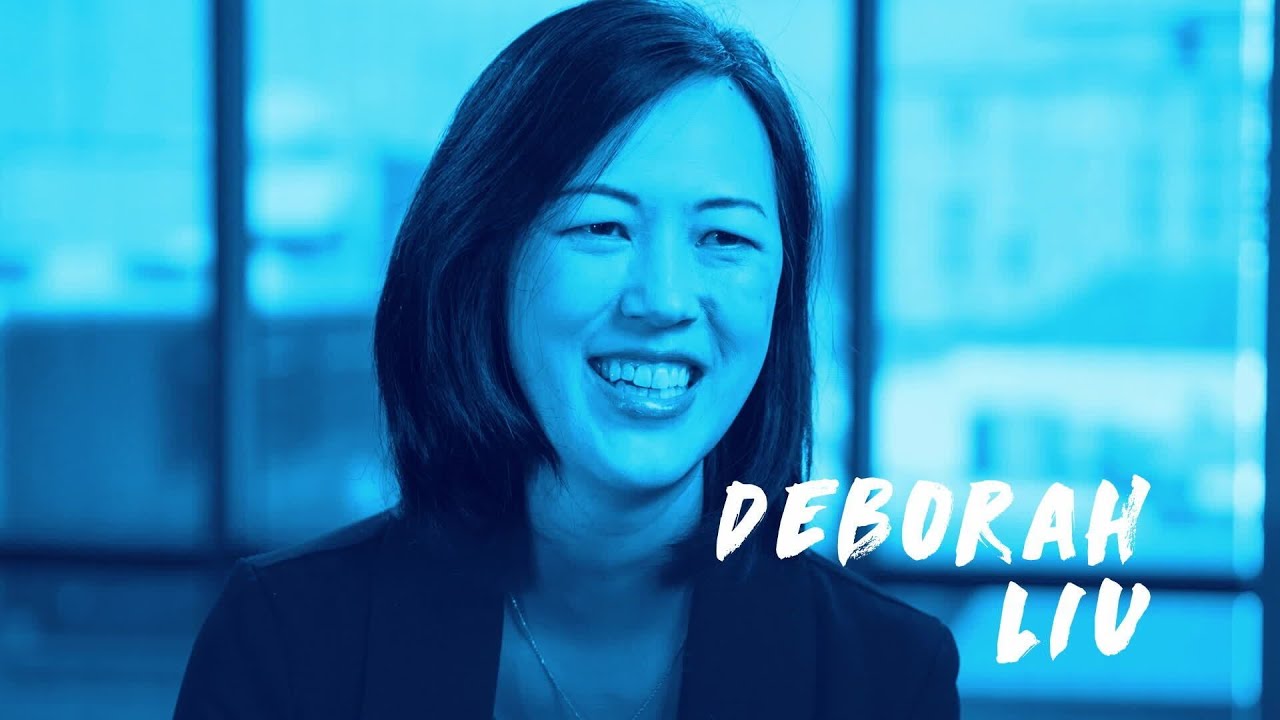
many distinguished event achievements uh deb received her bs in civil engineering at duke university and her mba unfortunately not at columbia but a very good school stanford and she lives in california with her husband and three kids just the three kids alone is quite an achievement then um deb joined ancestry.com in march of 2021 so really in the pandemic and she joined as president and ceo and is a member of the board of directors prior to joining ancestry deb was a senior executive of facebook where she created and led facebook's marketplace she also led the
development of facebook's first mobile ad product apps building the company's business games and payment plan platform including facebook pay she was named by um payment source as one of the most influential women in payments and one of business insider's most powerful female engineers and deb has worked in the tech world for 18 years she doesn't look old enough to have done in 18 years but she's a long-term pro there and prior to facebook um death had years of product experience at paypal and ebay and actually led the integration of these two products perhaps particularly interesting
to me and to many of our audience tonight she has really been a great advocate for diversity in women in technology and because and related to that she's the founder of women in product a non-profit organization to connect and support women in the product management field including technology she serves on the board of intuit and she's also a seed investor and advisor to several startups um she's also a member of the committee 100 where deb and i have our connection with both fellow members and i know we have many members online tonight and um notably
as an outstanding asian american she received an award from the gold house to uh recognize her impact on the asian american community now interestingly enough deb is she has just finished a wonderful book and it'll be published september 20 2022 and it has a wonderful title and the title is take back your power um it is um going to be distributed to the first 100 of you who came on logged in tonight so you early birds get rewarded um we will if you can um uh email ryan hatta who will be managing the distribution of
the books and his um email is rkh2127 at gsb caleb colombia.edu he will then be able to um make sure that the books arrive and i i can't wait for my copy dab so we have a we have a terrific uh program before us tonight and um without further ado i'd like to begin to just a conversation with deb and give her a chance to talk about her wonderful experience uh dealing with leadership um particularly as a woman in in the tech field but many other issues of leadership that are are the same for both
men and women one of the things that i think has become an iconic um conversation among women deb has been um a quote that you made about sheryl sandberg that when you read her when you talk to her she gave spoke to you in five words which really really impacted and changed your life and i wonder if um for those who have not heard about this famous conversation and you can share with us tonight what that was and why it impacted you yeah you know i just finished um a product review with all the executives
at facebook and you know it was one of those meetings with you know all vp for the company and i remember walking away from the conversation feeling really good about it and cheryl pulled me aside she said dub you can stop fighting now you've won and i just remember thinking what do you mean and she said you know you have such fight in you you know i had fought for everything that i had i felt like i needed to fight for every decision i just i had grown up in a place so i grew up
and i was born in queens new york and then when i was sixth i moved to charleston south carolina small small town outside of charleston oh uh-huh and growing up the way i look and who i was was um very very difficult in a small town in the south and you can imagine that and so i just felt like i had to fight to for everything you know to not be discriminated against not have people enter a house to not have people constantly tell me that i didn't belong and so i had this fight and
i brought that through and it you know one thing that you should know is that the thing that takes you to where you you are will always fail you at some point and what happened was i used that fight that anger that you know disappointment and how i grew up as fuel to make me successful and then i realized that at some point it was starting to burn me that this fuel was actually hurting more than it was helping and so i reflected on that and i um this article came out from cnbc if you
want to read it and and it's really about um how those words really made me reflect on the thing that made me successful was starting to hurt me and later i wrote an article um so i have a sub stack and someone can share the link but i have a sub stack and i wrote an article about my reflection on this about how the things that you know whatever your past is those things can make you successful but they can also be your achilles heel and so you know what i realized was that i had
used that fight too much and that i needed to leave with grace and that was a transition for me and it took me a long time to get there even after she said that but it was also a moment when i realized that you know the things that i i loved about um i loved about what gave me power and strength also could take away the same thing right and it's interesting that this um need to be strong is very characteristic of women in business they feel that they're expected to be strong not show weakness
and sometimes they don't realize at a certain point either they no longer have to exhibit that kind of a macho characteristic because it begins to hurt their relationship with people and i think we all know in management uh your ability to lead people is so 90 of the game um but in in terms of how you have grown over the times since you became ceo of ancestry um you've had a whole new set of responsibilities and uh in the very early days of ancestry did you feel you had to have a set plan for the
first 90 days and and did if you had that do they pan out okay for you well i think when you go into a new job and actually i wrote about this this past week which is all the mistakes i made i reflected on a year back and and you know and i i kind of share a little of the lessons and i was talking to a fellow ceo who was also appointed last year and she said i made all the same mistakes too but you know when you come into an organization there's so much
context that you're missing why things are the way they are it's easy to blame the previous administration it's easy to make mistakes not understanding why things are you know situated the way we are and i encourage you know the way that i wanted to start and even when i came in with the best intentions i still made these mistakes you know be curious rather than critical because when you go in you have fresh eyes you see what's broken but you don't know why and in some ways those fresh eyes are really precious and they're really
special but at the same time if you go about it the wrong way if you judge without being without context you risk alienating the people around you and so for me i started with a listening tour where the first couple months i listened to about 60 or 70 people within the organization and then i summarized it as kind of a state of the union and i shared the input and i think that that actually was a great way to start but at the same time i think taking that a step further how do you continue
that conversation because now you know after about 90 days they kind of expect you to have the answer and you don't i mean this company is 35 years old how would someone three months and be able to have the answers and so really continuing that inquiry and curiosity that was really important as part of the work that we were doing you know we shared a new vision but it was the what and then the question was how are we gonna implement it and how was really bringing everybody else along and if you you can say
the what and you can be right but if you can't bring people along you risk alienating everyone and getting nothing done absolutely i think you're beginning with a listening tour was so wise um i think so many people again because they try to show strength they come hit the ground running and they want to you know issue their uh mandates right away but i think the best leaders that i know of have really spent a lot of time listening and they become known to uh the people who work for them that this is the guy
who is the boss but he likes he or she listens and listening has two advantages one you learn a lot yes uh and two it shows respect for the people you're working with and respect it goes a long way to making people feel that they want to accept you that you can be their leader so um it's so so interesting to hear your your listening tour and then sharing your observations as you as a newcomer listen pick up what is the way things are done and be able to reflect is the way it's always been
done a good way or maybe this room for change and how might you suggest in a very constructive way to the team i think this is all the beginnings of a great leader and uh so glad that you that's how you proceeded but um let's talk a little bit about ancestry i think many people here have probably used it and are familiar with it but um now as the ceo what do you see as the um the biggest challenge ahead of this growth business and is it too early now to ask you for a vision
well you know one of the things that um is important for our vision is we have traditionally just been a very successful company serving a core audience so these are people who are core genealogists who want to discover their family history all the records that we have tended to be for western european um origins and so if you were an american immigrant from western european origins or you're in in western europe we had an amazing product but someone coming in who looks very different than the core customer i was reminded that you know according to
mckinsey study that i saw as i was coming in you know 80 percent of families actually are interested in their family history just because we don't have those records we haven't scanned them we haven't talked to the parishes doesn't mean that different races or different parts of the world do not care about their family and we had built such a deep and engaging product but for a super of the world and so the world the work that we're doing is really building ancestry for all you know making it possible for everyone to discover connect and
craft their own family story and so that's the vision that we set out which was really not just for the people for whom we have records but what if we made a product that was more accessible to everyone regardless what if it's possible for you to maybe tell your own story so we don't have the records from you know the british government from where you know the ship records from from france but have you know so much of your family history is really the stories that your grandmother or your mother are still telling today he
helped build a platform to tell that story and that's the next chapter of where we want to go is to make it more social make it community-oriented to really not just be hey let's build a family tree but let's actually capture all those family stories that have been passed down for generations so that we can capture it for future generations too yeah well that's so important and um it's interesting if you look across different cultures certain cultures are known to be very family oriented and that's the basis for their strengths and notably usually the asians
are referred to as being um strong on family perhaps the latinos as well and other cultures not as strong on the family basis but as you look at your uh users across ancestry.com do you see any kind of patterns forming in terms of um what sectors or cultures tend to be really interested in what they can gain from ancestry well i think that different cultures because our product was so much based on records that we already had it was towards those of western european descent at least for now we hope to expand that it doesn't
mean that people don't try to use our product is that we haven't built that product for kind of everyone that said i would say that most people actually do care about their family and their family history but it is something which takes time and investment to you know really like do you are you sitting down and actually capturing those things and we hear stories of people who you know when their grandma one person came up to me at a conference and said when my grandmother was passing away she you know she was in hospice i
just asked her so i could capture everything the names of everyone and we built the family tree together i stored all of it on ancestry so that i can tell my kids someday because they'll never get a chance [Music] and you know this is somebody who who you know said i just never thought to capture all these things until she was very very sick and i hope that that's what we do is we don't wait till the end of someone's life to capture it but that we're capturing along the way that all the stories you
tell at christmas or you know when you when you reminisce about your favorite place of the vacation or hey you know did you know that your family came from here and we have a connection there you're capturing a little bit at a time as opposed to trying to capture an entire lifetime of memory in two weeks right do you sort of provide a how-to for your families to begin to cobble together the stories and build it into something more sustainable so that is something we're starting to work on which is right now it's mostly you
know you come in and you put in the information you have we hint we show you what we have and you're slowly unfolding your story that way but what we'd love to do is for example do a q a you know you can send your mother your or your great aunt these ten questions they would fill out you know because then it's structured it's like you know what do you remember about where you grew up you know do you remember you know can you tell me what your parents were like things that you would just
not naturally in a conversation just pull out and start saying but to give your great on an opportunity to to share her story too and as part of his own journey i have been you know looking into my family history and so i started contacting my cousins and my aunts and uncles who are a lot of my aunts and uncles are in their 90s or 80s and i asked them like what's the name village we're from in china because i never knew i had actually been there but i didn't actually know the specific village i
knew the area and so they said you know they thought about it i actually had to ask several people and now they found the actual name of the village where my father's family is from and where my mother's family's from i just didn't know until i started this journey myself as well well it's so important for all of us to speak to the uh the older generation because all too soon they pass and um sometimes you've lost that that generation above you and they're the um holders of the the family archives and the memories and
so anytime you have an older member of the founders still has good memories uh it's important to try to get when my mother turned 90 she lived 103. but when she turned 90 we thought we needed to do something really to to capture and celebrate her life so we took um there were nine adult members of the family and i just arbitrarily divided her life into nine chapters and each family was assigned a chapter and each family was charged with interviewing her writing that part of her life and then finding the pictures in the scrapbooks
it was it was a wonderful thing because one my mother loved it when you get older sometimes you feel your family sort of forgets you and each family spent a lot of time really interviewing her and thank goodness um she was the only one left in the generation who remembered what life was like in china the different relatives she went through all the political upheavals and migration to the u.s but this was captured in each chapter by each family in their voice oh wow that's incredible yeah so the chapters had different voices but the main
character was still my mom so if it's something that um you and your uh uh participants can do it's a great way to capture a life before um you lose all the the memories but so we've all talked about family and that's that's really the key to your business and do you find that with the the rise of the nuclear family and globalism and now the deglobalization um do you find families are actually changing in the way they they view each other and view themselves well i think one thing that coveted has done is it's
reminded us the power of family you know for so long i think you know when you when you have access to your family anytime it's very different than when you lose access to them you can't see each other for two and a half years right most people haven't seen their family in a couple years at this point at least you know and so think about that and they think about that dislocation or disconnection and i think has brought has reminded us how powerful family really is when you can't see them you can't access them and
how difficult that is and so that is a good reminder because you know people are spread all over the world and i think now you know i saw my friend was just saying that she saw her mother for the first time in two and a half years and how touching you know and her brother hasn't seen her daughter in two and a half years and her daughter's five right so half her life she hasn't seen her grandmother wow yes that's how you know it fortunately my in-laws had moved here just before the pandemic like a
year or two before my father lives with us so we didn't have that happen to us but you know just think about the dislocation of like not being able to go home and to see what's happening only through facetime or resume yeah so that is one of the most important things is now we're reminded that life is short and you know very fragile and it's something that we we need to remember all right that's really one of the great upsides of the pandemic that we all really began we spent time with our families and began
to really appreciate them and um talking about different generations um you're now old enough to be the dispenser of advice and so there are many young people on the call tonight who are so anxious to hear um what um advice you might have for them young men young women particularly the young women because they know what a champion you are of women but um and particularly asians too who are so proud that you are a successful asian american and and role model um are there is there any advice you can give to these young people
especially if they have ambitions to really become a ceo like you you know it's interesting i i was talking to somebody yesterday and i have reread the ascend study for those of you who have not you should get a copy of it ascend studies asian american success in tech sure and um the the the um they have this executive parity index where if you're an asian woman you have a basically 30 chance of getting into in the index as opposed to if you're a white man it's like 180 probability of being successful and again this
is just based on data eoc data from all the big tech companies and i worked at a very big tech company and i know exactly what that is like and it's you know again this is not a world full of overt discrimination where people are saying we're not going to promote you because you're asian or because you're a woman but it's a lot of subtle things it's a lot of things that are unconscious bias it is so many things that are very difficult to pinpoint and i think you know my book is really about that
so the first chapter of the book is really about how there's it's just there's not a level playing field that i could if i had a magic wand i'd want that for all of us but that's not the existence we all live in and so the question is how do you take back your power in the moments that you have that opportunity how do you learn to ask for what you want how do you learn carve your own path how do you learn to you know speak up for each other and find allies and and
i wrote this book from the perspective of all of the mistakes i made like along the way things i wish i could have told my younger self and i realized that i tell the story of many women particularly women of color who have faced very similar situations and how they chose to really zig when other people bagged how do they chose think differently about their careers and you know each of those women generously offered their time and they said look one woman's like i refuse to allow labels to find me and so no i realize
that i'm going to define myself successfully the way i wanted to find myself and you know another woman said i just had to learn to ask she's the woman who was the head of johnson space center and she said you know her boss had asked her you know her skippable boss had asked her well you know who should we pick for the next head of this you know organization and she said well what about me and they and they said well well did you want the job we didn't realize you wanted the job and she's
like what do you mean i'm literally you know in waiting for this job and and you know you think that a woman who she went to space she is the person i think first the second hispanic woman in faith you know and it's amazing to hear their stories of how you know these small things that they learn along their career can really empower us as the next generation in taking the next level too right i think that's so important to take such a a positive and um view these setbacks as um catalysts for positive action
i think so often um members of minorities spend a lot of energy being angry and that that anger doesn't really turn into constructive um power for them and as you say you want to take back the power and make sure that the power is you and you don't waste power by feeling sorry for yourself or feeling a victim by really saying how will i rise above this accept it and then rise above it and that's that is a really important point and part of the reason i wrote this book was you know when cheryl cheryl's
my mentor and sponsor so i i know her really well but she wrote the book lean in and so much of the criticism she got was well why should women have to lean in we should just fix the system and my book says you know what the system is the way it is and it tells the story of a woman she was the head of um computer science at carnegie mellon she's 75 years old and she started an organization 45 years ago you help bring more girls in the stem and they thought that they would
be done by now and we went to the 40th anniversary dinner and all of them were like we're not done yet and the history bends towards justice and fairness absolutely but these this is a group of women who started an organization brought a million girls through this organization to bring them into stem and she was still fighting every single day to bring every girl into computer science at carnegie mellon and she was an inspiration for me to write this book partly because she said look i thought the work would be done but the work is
still not done after all this time and she tells the story of how you know she was basically fired from berkeley and almost fired from middle class college because she was a woman and they didn't want women faculty there the point of all of this is that she believed that we would be done by now and maybe 40 years from now we believe we'll be done too and i hope in the very end of the book i i said you know my daughters are 13 and 10. i hope someday they'll read this book and they're
like we don't need this but i'm not banking on that right i'm not banking on that that you know within 20 years or 10 years when they get out into the workforce that that life will be fair and instead i think we have to live within the reality that we have you know getting angry over injustice is and you know we can use that as rocket fuel but you still have to do the work you still have to show up to every day at work you still have to ask for what you want you can't
just be angry and that's not enough right and um when you say you have to ask for what you want also ask for what you're worth um and this is all part of your your mantra is find your voice when you want to take back your power and are there other um elements of taking back your voice that would be helpful to share with young people um it's a is a well-used phrase but how exactly do they take back and find their voice you know it's so often i struggle with this a lot you know
especially as a woman a minority you want to be right every time you speak you never want to make a mistake you just you you know every word you speak is more risky and so you want to be absolutely right you want to button up everything and then you're you might leave yourself out of the conversation i remember so um i tell the story of carol izzaki she's an amazing career coach a leadership coach and speaker and she's she's just her thing is you go into a meeting and you're afraid to say something so you
walk out you didn't say anything and she said if i told you she calls it the unintentional terrible strategy and she said your strategy is i'm gonna go in this meeting and not say anything who walks in saying that but how many times have you walked out having done that and so for her she she teaches women especially how do you actually walk in with an intentional strategy to be heard and if you're going to meeting you weren't heard were you even there did it matter right and i think that that's incredibly powerful and incredibly
important to really be intentional about your voice about the things that you speak up about the things that you you represent and to say you know what i might not be right but i want to be part of this conversation needs to be heard and two it's scary it's hard i'm extremely introverted and you know it would have horrified me to actually speak in front of a group like this but at the same time i realized that all of these things are a skill and so i treat things that other people treat as innate qualities
as skills and i said i'm going to learn it i might not be good at it i may not have a natural talent for it i'm not i don't have a natural talent for public speaking i don't have a natural talent for being warm i don't have a natural talent i'm extremely introverted and so i said i'm gonna learn and teach myself how to be better at these things and i think that's the superpower you know if you have imposter syndrome you don't say well i'm going to be the expert someone is always going to
be smarter than you instead what you should say is i'm going to be the expert at learning faster than other people an assimilation of information faster of of learning faster of you know understanding faster that is going to be my superpower you don't have to be the best you just have to learn the fastest absolutely and i think and a part and parcel of this is really having the confidence that you may have something worthwhile to share with the meeting so often women go in um and the the question comes up and they really have
a good answer but they second guess themselves they they hesitate and before you know a man has raised his hand and his answer is probably not half as good as hers and she ends up kicking herself and uh and i think the important thing is to feel confident that you have as good an answer as anyone else in the room and you should raise your hand and speak out and also i find um [Music] when there are a few women in the room they're minority and it could be a racial minority too when one speaks
out the rest begin to find their voice and their confidence and sometimes um you almost have to say well um i've got to make sure that women are noticed in this room so if i don't speak up i'm adding to that that invisible um gender so i have to speak up so i i think if you think you're doing for other people um and you're not just doing for yourself because a lot of women don't like to show off they think raising their hand they're showing off but if you say i'm doing this because i
want women to have a voice then you're empowering yourself and the others in the room yeah absolutely all right and then we talked about how you find your voice and along the way we talked a little bit about how to be seen and we talked about how to be seen in a meeting but are there any other ways um for a woman with her eyes set on the c-suite that she can increase her visibility and her sense of value to her um her colleagues yeah i saw actually a question and it was along this lines
which was when did i start writing this this did i start writing and then how did i come up with writing this blog you know in 2016 i had a manager who said you know i want you to write more and i thought that was crazy i never wrote i didn't write anything i barely ever posted internally in you know the internal equivalent of slack i didn't you know which is called workplace i didn't i posted very little and um yeah i just didn't have much of a voice and he said i think you need
to do this and he asked me to do it and he said i'm requiring you he was my new manager we had a very fraught relationship and he said this is the only thing i'm going to ask of you you can ask anything you want of me but my thing is you have to write and publish something every month and i'm like what am i going to write about what am i gonna say like why would anyone listen to me and i remember a year later i said to him like my greatest fear when i
write is that no one wants to read what i have to say and he and he writes pretty prolifically he's actually pretty well known and and he said oh my my problem is i worry that everyone's gonna read what i'm saying and i said that's so typical of him and me right he's a guy with a big voice you know every when he walks in the room everyone notices and i try to sneak in and he said but the answer for both of us is the same thing we should write for the one person who
needed to read this today and that gave me the freedom to say you know what maybe not everyone's gonna agree with what i'm gonna say maybe not everyone needs to read this but one person two people a handful of people may get value out of this someday this might touch somebody so let's focus on that anything if i kind of you know it's the problem is um you you overthink that's actually why most people don't do things they overthink it what if someone judges me what if i do this wrong what if i what if
someone corrects me and i just said you know what i'm just gonna write because it's it's my gift and you know what people might receive it differently than i hope and that's okay and you know it was um i started publishing the newsletter last year at the beginning of the year and that was my so every year i do a challenge you know so i do these new year's resolutions right and um my challenge was can i write a newsletter for you and so i tried really hard and i got i think i posted 50
times by the end of the year um and it was really interesting to see just the feedback how you know how it opened up conversations and it was something which by the way people think it takes a long time it actually doesn't i spent about an hour an hour and a half per post so it's actually not that big of a investment and but the the thing that i care about is it has opened so many doors to conversations i never would have had i have met so many people who reach out i had a
friend from singapore paying me he's like i was in a meeting today and someone shared your post in the middle of this meeting he works for this big tech company in singapore and he said when that person pulled up your article i said i know her that's so crazy that some random person in a company in singapore but the point is that it opens conversation it opens you up it opens you up for criticism but it also opens you up to a conversation and connection and opportunity and so i think sometimes we worry about the
criticism when we we think about the upside human nature is that we we worry about downside risk more than we worry about the opportunity and so i asked you to flip down its head because every time you put yourself out there every time you invest every time you you adore something every time you're out there you could be wrong but you know you couldn't be right and i think often we kind of say well you know we're very risk-averse but you know life doesn't is not lived by not taking risks a lot of success is
taking risks when it's the hard thing to do and also you can um add to the conversation by not having a declaration but a good question that adds to the conversation because very often a good discussion is advanced by having good questions asked by the participants and then as people move through they they learn together so there are so many ways that speaking out can can benefit you and and your group um i was just just to finish up on the idea of um being seen because being seen as part of taking back your power
if you feel you've contributed and people think you are a contributor so they're not really seeing you at the level that you think you should be seen at and therefore they're not seeing you as at a higher level how do you try to correct that you know that is one thing i did post about this which is you know why you're not getting promoted and there was an article about this there's a few things so one thing i've seen when people get stuck in their career is that there is a u-shaped hole in the organization
that you've created no one can imagine you doing more and one of my sponsors and mentors said to me you need to like work yourself out of a job so that people can see that you could do more if you have a successor who can take your job you can now take on a second team you can take on but the problem is we get better and better and better at doing something where our scope narrows to the point where we're the expert and there's a literally is a blue shaped hole in the world but
then you can't ever go you know left right top down you just you're stuck and so i encourage people to really think about what you know two years from now where do you want to be and how do you open up the aperture how do you think about looking at the worlds really different and so the the part that i think people worry about is if i'm not great at this job i'll never get another job it's like if i'm not great at this job and i can't find someone else to take on the things
and delegate so that i can open up and learning the challenge is that in companies there's just tension between impact and learning right impact is what you give to the organization today the more you do your job the same exact job the more impact you have and the easier it is but you're probably learning less if you're in a new job you're learning more but you're probably terrible at it at the start and say that tension is constantly pulling against you so i would encourage you to actually have a discussion with your manager and say
hey you know my plan is to get to here what is the gap between me and this next promotion or this opportunity to manage or this opportunity to take on more can you give me guidance as to what the distance is and what a plan would be to get there absolutely no instead of saying promote me you're saying let's work together and you're and now they're on the journey with you and if they say well we don't see a future with you here great you have your answer but if they say you know you're right
i think you could do more here are the three things you need to do to prove that and you say okay over the next three months i'm gonna check these things off here's what i'm gonna do and now you have a plan and once you check it off it's very hard for them to say well the documents send an email saying hey we agreed to this this is what we're doing here's the progress i made and then have another conversation in three months i feel like we treat our careers kind of like we're just throwing
something over the fence we're like okay so someone else's problem to take care of me no your career is something you care about more than anyone else you're not caring for it like a garden where you're you know where you're attending to it you're watering it you're reading it absolutely well deb you've given us so much good advice tonight and i suppose the one thing um most people learn from is by their mistakes and so um for someone as successful as you perhaps might be helpful for our listeners to have you just share with you
um in looking over the course of your career is there anything that if not a mistake but something you had done differently you know the biggest challenges i've had with my career is each of the children that i have and i am extremely fortunate by the way i wrote an entire chapter about how your career is more successful if you have um if you have balance at home if you actually have somebody who can take care of work and so you know you can do more work if somebody can take care of the work at
home and so the the thing i say is the most important career decision you you make is who you choose to marry and that's true for everybody like not a gender thing you know whether whether you're a same-sex couple or or office of sex couple who you choose to marry who you choose is your partner and who is way more important to your career than almost anything else you could choose to do and to you know the thing that i struggled with with each of my children was i completely lost my way after each of
the children were born i basically lost my job after each of them so i kind of stepped back i had a second in command they were doing a good job i didn't want to displace them and so i had to figure out what i wanted to do next and i kind of restarted each time that is really hard to see a lot of women who go through that in particular after you take four seconds off it's really hard to kind of figure out you're kind of in a different head space right and so i lost
a lot of momentum there and i had to really force myself to get back into the game and i think that's really hard you know physically and mentally to get back in the game when you're just out of here for so long and my youngest so my youngest was particularly hard because she had colic for a year my father hospice when she was born all these things happen all at once and i restarted my career yet again in a new team i left my team i started over and these things really have taken a toll
because you're basically taking a step backward every time and trying to restart and re-energize and you know in the end each time i fought my way back but i can see why a lot of people like step back and say you know what maybe not i don't have it's in me and that's why you lose a lot of people if you actually look at the women who leave tech a lot of them leave in their mid-30s when you have two three kids what am i gonna do how am i gonna get the kids to school
you know how am i gonna juggle daycare nanny what if someone gets sick and the burden often falls to the woman that's just how it works in our society fortunately my husband is incredible and i've had the best of husbands but i don't know how people do it every day and it's really hard and so it's just a reminder that you know i had to talk myself into staying in tech i almost i actually quit i went to the vp i was looking for and i said i quit i want to leave tech because i
just couldn't deal with it and i'm glad i didn't um but it was really hard to kind of stay in the game for a long time when you just feel like just parenthood and and working in a high intensity career is very difficult absolutely and i think you were mentioning the emotional toll i think so many women who um take time off to have family they they their self-confidence is damaged and they're not sure if they're able to make the return and given that um how can companies and colleagues help women get past that that
threshold i think a lot of it is do you have a support system and do you have kind of the scaffolding and companies to really help because there's you know it's kind of when it's a free-for-all it's just the burden it ends up in the limit women because they're the ones who physically have to be pregnant they're breastfeeding it's just it's difficult but if you have support if you have flexibility that is incredibly important so that women can ease back into work so they can figure out what it is you know that they need to
do with child care and if and that kind of support is really priceless well that's something that um hopefully we all are alert to and whether we're there the bosses or with the colleagues or we're the ones who are reassessing ourselves that we can all come together to try to um empower women who take leave for families it's so important that families can can work alongside careers but i i apologize we've run over our time i know you have such a heavy schedule but i do have good news for our listener our participants is that
um deb has very kindly agreed to do a roundtable with students on thursday um that's the 21st um between one o'clock and 145 and it's a much coveted seat at the round table and we do have a few seats left so um first come first serve um if you have time to participate in this 45 minutes in person um online um deb um please email um ryan hatta and his email again is r k h well his number is rkh20 at gsb.columbia.edu and uh i think he'll tell and when you do email him he would
like you to send him a current cv as well as two questions you might have for depth this way it helps to move the round table along more efficiently but so deb i can't thank you enough it's been such a pleasure and so inspiring to hear your story i'm sure our young people in particular have learned a lot and um on behalf of a json institute for global business we want to thank you for joining us and and feel free to always come back even though you're a stanford graduate you're not a you're not an
honorary cbser so we would welcome you back anytime thank you thanks for the invitation lulu and i didn't get to all the questions in the q a but if you do subscribe to my newsletter if you just reply to any of the newsletters i will get it and i'm happy to answer questions there as well great thank you i got you some of the questions that were texted to me but i know we could take another hour of your time but we i have to let you go so thank you again from all of us
thank bye