The Strangest Moon Of Our Solar System The beginning of the 17th century was marked by revolution with adoption of the telescope. Objects beyond the bounds of human visibility — both in terms of clarity and faintness — were suddenly converted from unobservable to visible at will, thanks to larger apertures and the ability to gather more light at once. Suddenly we were able to observe new objects in our night sky.
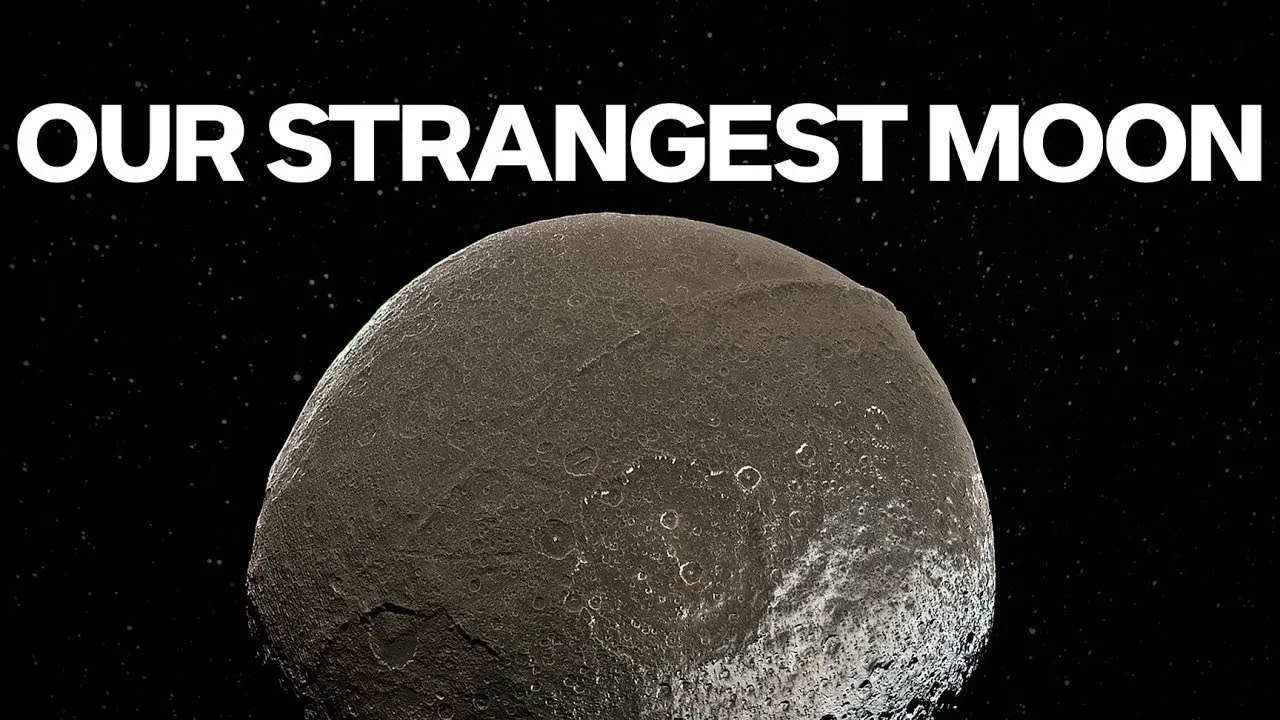
New objects and features emerged, including Venus's phases, Saturn's rings with many features inside, Jupiter's four major moons, and much more. But there was one object in the night sky that baffled even the best of astronomers, Saturn’s moon- Iapetus. This moon would go on to become one of the strangest moons in our solar system.
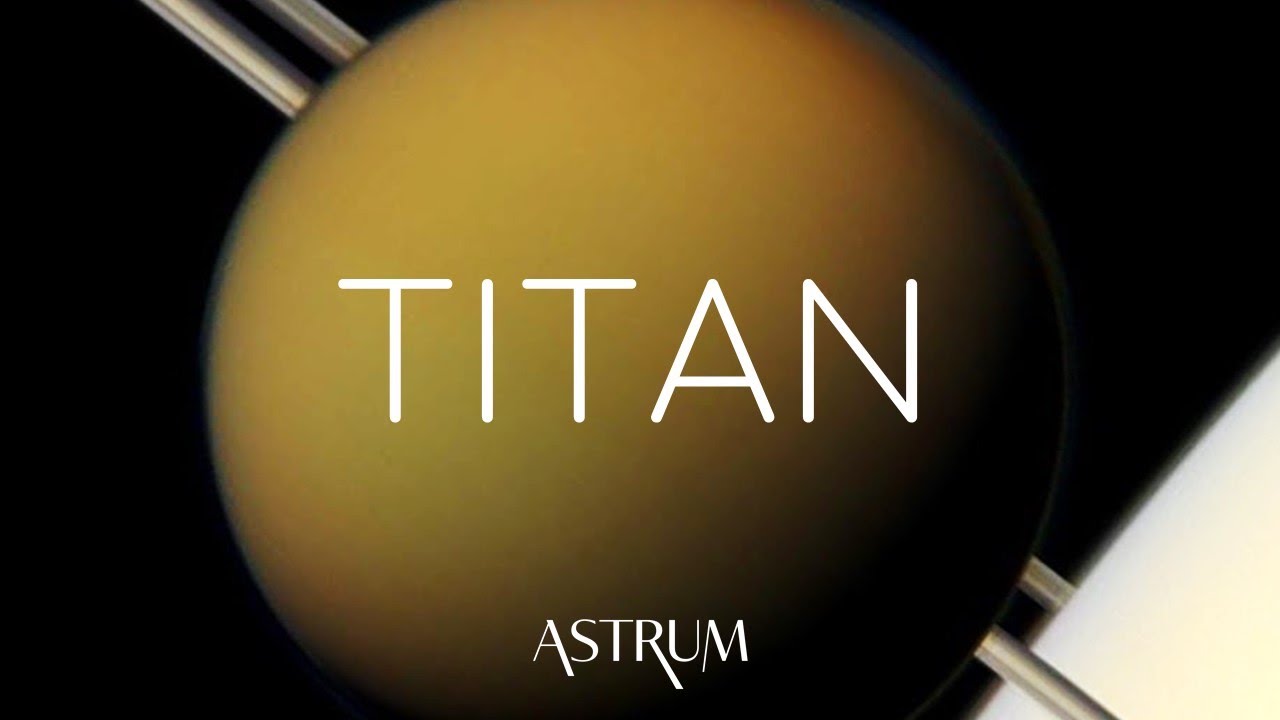
What made it different and so strange? Let's talk about that more in this video. In 1671, Italian astronomer Giovanni Cassini was studying Saturn, which already had a massive moon known as Titan, when he found another moon: Iapetus.
While Cassini would go on to discover many other moons of Saturn, including Iapetus, it was one of the oddest objects anyone had ever seen in the sky. Cassini located Iapetus on Saturn's western side, but when he looked for it later in its orbit, on Saturn's eastern side, it was nowhere to be seen. Iapetus — was quickly observed doing something no other moon had ever done before: it was only visible for half of its orbit.
Iapetus was utterly invisible the other half of the period, unable to be identified by any method, yet seemed to obey regular gravitational rules throughout. This remained true for decades, until Cassini, with a far improved telescope, finally saw it in 1705, a full two magnitudes fainter than it appears on Saturn's western side. As astonishing as that was, it was only the beginning of unravelling the enigma of Iapetus, our solar system's strangest moon.
Today we have the benefit of hundreds of years of scientific progress at our disposal. We now have telescopes with hundreds of times the light-gathering power of the greatest telescopes of Cassini's day, views that take us into wavelengths that the human eye isn't capable of observing. We also have had numerous observatories in space, and a few of them — like the Voyager 1 spacecraft or NASA's Cassini mission — actually traveled to and imaged these distant worlds in situ.
Saturn, like all of our solar system's gas giant worlds, has its own distinct and diverse system of satellites, primarily in the form of moons and rings. The primary rings are by far the most visible feature, with small, young moons and moonlets nestled inside. Saturn has eight significant, conspicuous moons outside of the main rings: Dione, Rhea, Titan, Hyperion, Mimas Enceladus Tethys And finally Iapetus.
Of all these eight moons, Iapteus is the outermost one and possesses three distinct unique features. What are these? Let's look at all of them one by one.
1. ) Iapetus doesn’t orbit in the same plane as the rest of the Saturnian system. Saturn has the second fastest speed of rotation in our solar system, taking 10.
7 hours to complete a full circle around its axis. Saturn's rings, which are almost entirely formed of water-ice, revolve in the same plane. And, of its eight aforementioned moons, seven orbit within 1.
6° of the same plane, with only Mimas inclining more than half a degree. Except, of course, for Iapetus. Iapetus, which orbits Saturn at more than twice the distance of Titan or Hyperion, is tilted at 15.
5° with respect to the rest of the Saturnian system, which is a challenging characteristic to explain. A moon is often formed from one of three sources: a circumplanetary disc, a collision that generates a large amount of debris, or a gravitational capture. Given that Iapetus is Saturn's third largest moon, that it appears to have a similar composition to Saturn's other prominent moons, and that it has almost no orbital eccentricity, even the most cunning gravitational encounters would struggle to move Iapetus out of Saturn's plane, if that's where it formed in the first place.
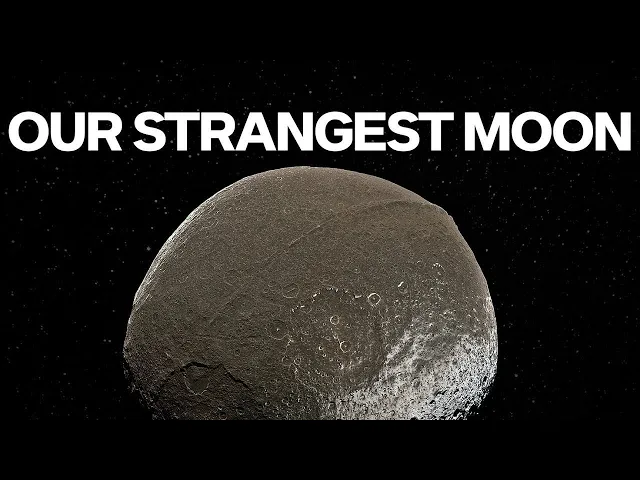
2. ) The second unique feature is- Iapetus has an abnormally shaped equator. Iapetus, like the Earth, moon, and sun, is not a perfect sphere.
However, unlike the Earth and Sun, which swell somewhat at the equator and seem compressed at their poles due to the balance of gravitation and the angular momentum created by their rotation — a situation known as hydrostatic equilibrium — Iapetus' characteristics are completely wrong for its motion. Its equator is 1492 kilometres in diameter, whereas its pole-to-pole diameter is just 1424 kilometres, which would indicate hydrostatic equilibrium if Iapetus rotated a full 360° every 16 hours. But it doesn't because Iapetus is tidally bound to Saturn, which means it rotates once every 79 days.
Furthermore, the Cassini mission's visit to Iapetus revealed something completely new and unexpected: a massive equatorial ridge stretching 1300 kilometres across, or nearly the whole diameter of the planet. The ridge is about 20 kilometres wide and 13 kilometres high, and it almost precisely follows the equator. Apart from the main ridge, there are several detached parts, solitary summits, and sections where the single ridge appears to split into three parallel ridges.
It is the only world in the solar system with this trait, and no hypothesis can explain how this world got to have these equatorial properties. 3. ) Iapetus has a distinctly two-toned color.
Believe it or not, Cassini himself proposed this explanation for what he was seeing when Iapetus was initially found. Cassini hypothesised that the same telescope that observed Iapetus over Saturn's western hemisphere should have been able to reveal it over Saturn's eastern hemisphere: Iapetus' one hemisphere must be fundamentally considerably darker (and fainter) than the other Iapetus must be tidally locked to Saturn, such that the same hemisphere faced us at the same time in its orbit and this difference must have been noticeable when larger telescopes became available. Not only did Cassini nail his forecasts for his 1670s-era observations, but he was also the one who made the key initial identification of Iapetus off Saturn's eastern side in 1705, after acquiring improved equipment.
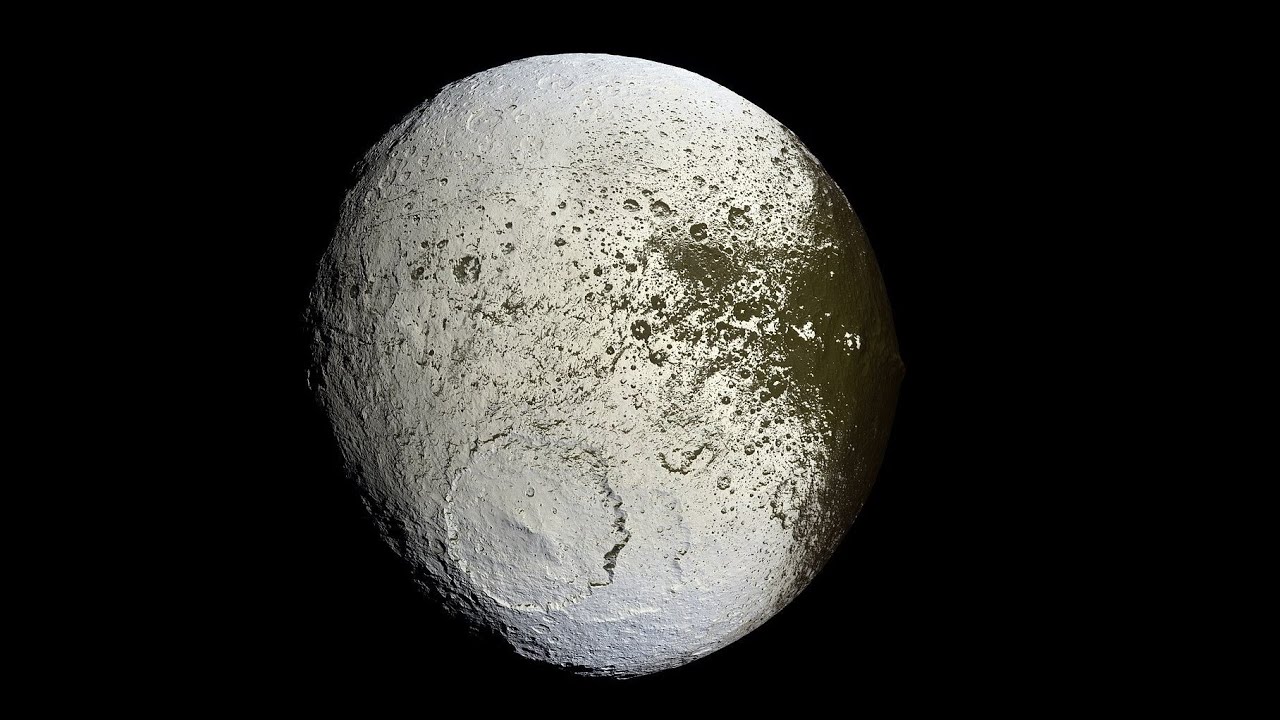
Unlike the other two conundrums, this one has eventually been solved, which would have been a near-impossible undertaking in Cassini's time. A full-color map of Iapetus shows that the "leading" hemisphere is exceedingly dark, almost reddish-brown in colour, whilst the "trailing" hemisphere is snow white: coated with numerous volatile ices. As it turns out, there's an enormously massive but low-mass ring of matter, inclined to both Saturn's rotational direction and Iapetus' orbit, that spans almost 100 million kilometres, just shy of the Earth-sun distance.
The explanation for this outer, diffuse dust ring is simple, obvious, and entirely illogical. It is derived from Saturn's only other huge moon, the captured body Phoebe, which circles almost totally opposite Saturn's rotational orientation. When this caught frozen body is exposed to sunlight, it emits volatiles, which is today regarded to be the ultimate source of Iapetus' two-toned tint, but the narrative is a little more complicated than the simple one you could have constructed.
Iapetus ploughs into the particle stream emitted by Phoebe. When exposed to direct sunlight, the side of Iapetus without the Phoebe particles retains less heat than the side with the particles, and so the ices on the "hotter" section are more likely to sublimate, landing on the "colder" side. Over time, the frozen volatiles accumulate on the "colder" side, while the icy volatiles of the "hotter" hemisphere are cooked away, leaving just the non-volatile particles that are better at absorbing heat behind.
That is the most widely accepted explanation for Iapetus's two-toned appearance. When we consider all of these facts, as well as the bulk qualities of Iapetus, such as its density and composition, we may build a scenario that isn't always true (and certainly isn't widely accepted), but that provides a plausible explanation for how Iapetus came to be. The proto-sun was heating up in the early days of the solar system, while instabilities occurred in the surrounding protoplanetary disc.
The two largest and earliest instabilities would develop into the genuinely enormous worlds Jupiter and Saturn, while all of the gas giants grew circumplanetary discs. Each of these discs would shatter, generating a succession of moons in the same plane. Iapetus was one among these, and it may have developed as a result of an early, massive collision in the young Saturnian system, or it may have been pushed out of the Saturnian plane by gravitational forces.
Iapetus, one of Saturn's eight major moons, is the only one from which the ring system can be seen. Iapetus was revolving quickly in the early days of this system, causing it to bulge. Major impacts produced its five greatest craters and kicked up debris, causing it to solidify swiftly.
Some of that material may have formed a ring or a moon that was tidally broken up into a debris disc, which then dropped down onto the surface of Iapetus, building the equatorial ridge and freezing in the bulge. Once Phoebe was caught, a small portion of its dust-rich volatiles landed on Iapetus' leading hemisphere, causing the ices to sublimate and deposit darker material. Throughout the rest of the solar system's history, the ices congregate on the trailing hemisphere, allowing the darker material to accumulate on the leading side.
By now, it's nearly a foot (about 25–30 cm) thick. Nonetheless, regardless of how attractive this scenario appears to be, we do not currently have enough information to either validate it or rule out alternatives. The equatorial ridge and bulge could have evolved if Iapetus' crust "froze" solid in its early stages, with the ridge produced by ice material that upwelled and consolidated.
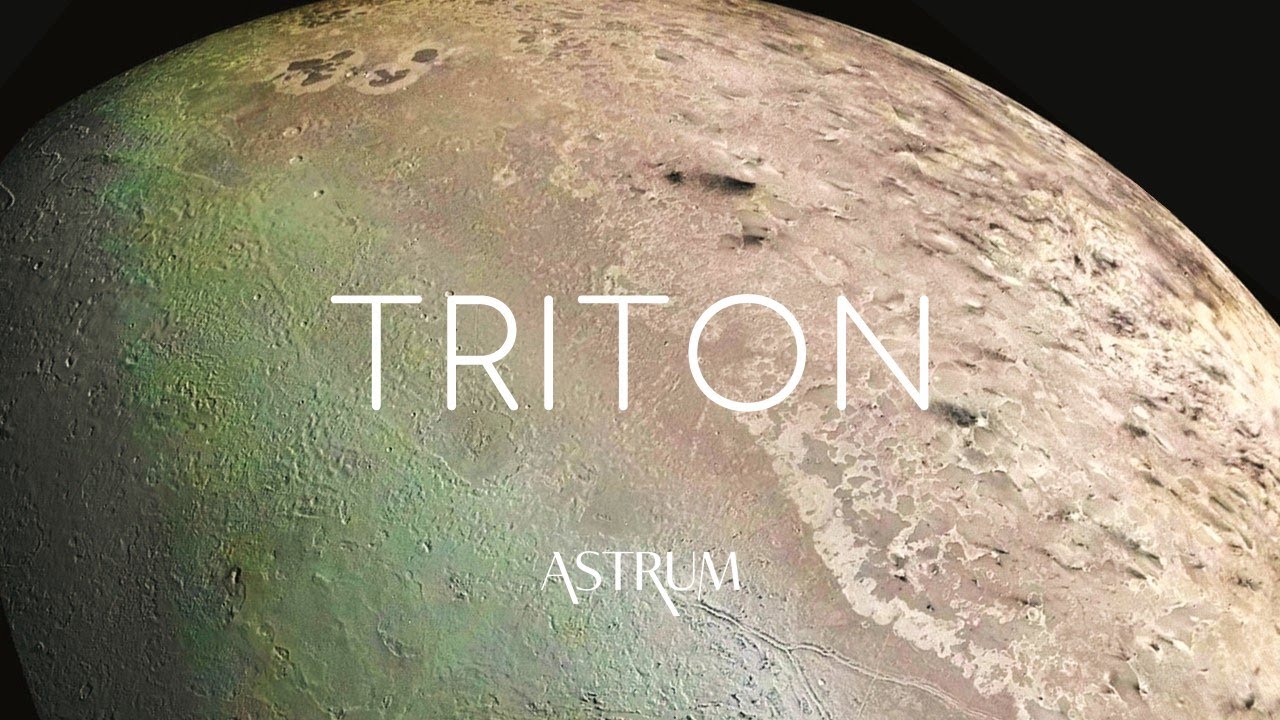
Alternatively, a substantial amount of aluminum-26 could have become trapped in the moon's interior, heating Iapetus and causing these characteristics to form. And, given that there are no in-plane bodies farther out than Iapetus, it's possible, though not likely, that this is a captured body, similar to Neptune's Triton, that ejected whatever primitive system the primary planetary body originally contained on its way to gravitational capture. It is critical in science to maintain two opposing thought processes at the same time.
On the one hand, we must consider the entire system's observed phenomena and properties and take the position that most comprehensively explains everything that has been observed without any deal breaker conflicts. On the other hand, you must consider every possible explanation that hasn't been definitively ruled out, leaving your mind open to modifying every part if newer, better data pushes you to do so. We're in 2021, 350 years after Iapetus' discovery, and we still can't explain everything.
That is the nature — and limitation — of the scientific method. So what do you think about the strangest moon of our solar system, Iapteus? Let us know what you think in the comment section below.
And don't forget to like the video and subscribe to the channel, it encourages us to keep on making high quality content for you! !