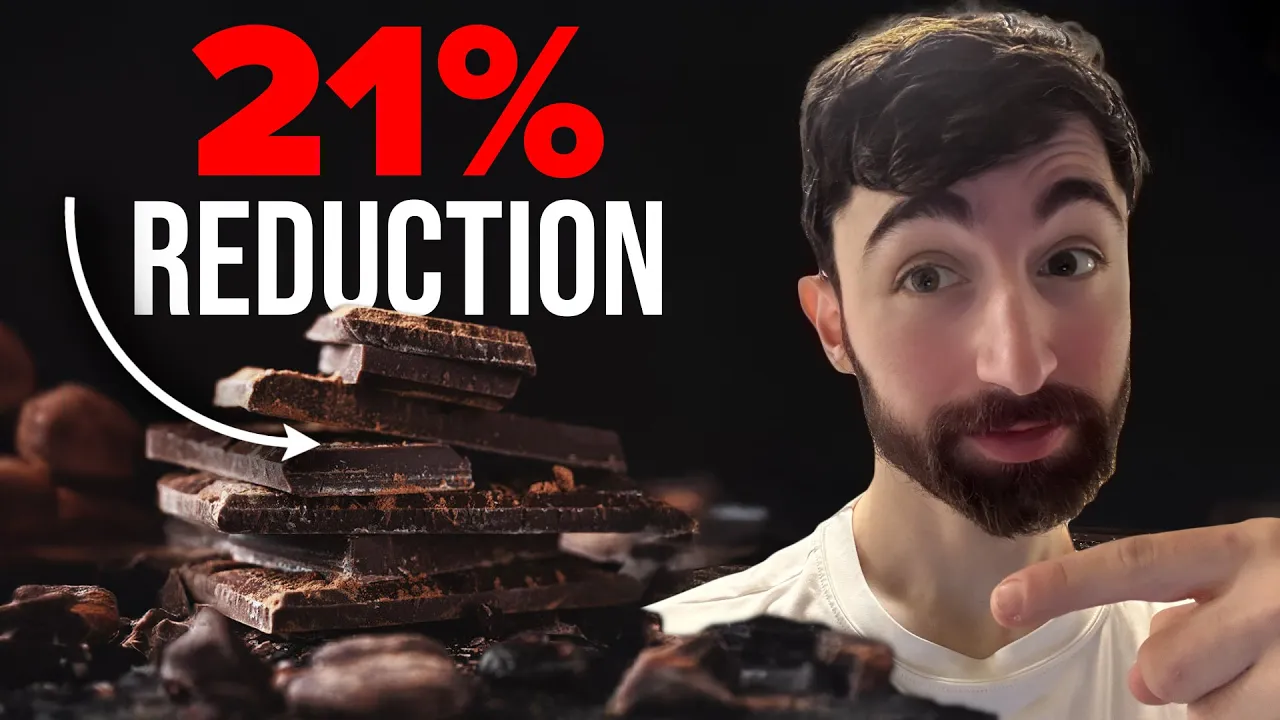
does chocolate really prevent diabetes kind of like warding off a metabolic dor now this question has been top of mind since a major publication came out in the bmj British medical journal claiming a 21% reduction in type 2 diabetes risk in those who ate at least five servings of dark chocolate per week chocoholics rejoice maybe but just how legitimate are these findings we're going to go over this study and I'll explain to you why the findings unfortunately aren't all they chocked up to be or chocolated up to be but I won't leave you high and
dry I'll also open your eyes to just how complex chocolate science truly is give my opinion on the overall state of chocolate science and I'll suggest how to get the most health bang for your chocolate buck with science and practical tips but first let's break down what they did in this study what it says and what the study doesn't say this was a large scale observational study where they looked at associations between chocolate intake and the development of type 2 diabetes over three separate cohorts the nurse's health study the nurse's health study 2 in the
health professionals follow-up study there were a total of 11,654 participants included and they looked at the associations between types of chocolate dark and milk versus type 2 diabetes and the main findings were as follows there were two participants who consumed at least five servings per week of dark chocolate but not milk chocolate showed a 21% lower risk of type 2 diabetes and two intake of milk chocolate but not dark chocolate was Associated positively with weight gain overall this sounds nice provided you like dark chocolate and not milk chocolate and if you want to believe dark
chocolate will protect you from diabetes I recommend you stop this video here and enjoy ignorance as Bliss oh you're still watching very well let's discuss why I'm skeptical that dark chocolate will meaningfully reduce your risk of type 2 diabetes first first and foremost there was a clear signal of what's called healthy user bias in this study healthy user bias means that one group in this case dark chocolate eaters tend to have other healthy habits that can explain the observed effect here lower incidents of type 2 diabetes and you can see that looking at the data
here I'm showing you data from table one where those with higher dark chocolate intake tended to have more physical activity more multivitamin use generally overall diet quality score so higher diet quality and lower BMI and for most of these it was actually an apparent dose dependent effect so more dark chocolate consumption coupled with like more physical activity and conversely for high milk chocolate users there was a suggestion of less Healthy Living including higher smoking rates and lower diet quality so is it as simple as those who chose to eat dark chocolate are also just healthier
people in general and those who chose to eat milk chocolate are just less healthy people in general well maybe in part it could be that simple although a challenge could be but they the researchers adjusted for these factors in their mathematical modeling that's a Counterpoint however it's important to realize these statistical adjustments are just best guesses and necessarily incomp complete in fact the authors themselves write in the paper we cannot entirely rule out the role of confounding in our observed associations and that residual or unmeasured confounding or both may still exist furthermore in a subgroup
analysis in this study they also found no association between dark chocolate consumption and type 2 diabetes risk among individuals with lower diet quality which is consistent with the idea that Founders the healthy user bias we mentioned was carrying the Lion Share of the reported effect another big red flag was that there was massive study heterogenity amongst the cohorts the three we mentioned in other words the associations between dark chocolate intake in type 2 diabetes were not at all consistent among the three cohorts in fact they were primarily driven by one of the three cohorts with
a supposed 51% reduced risk in type 2 diabetes in the heavy chocolate users and the health professionals follow-up study the hpfs which I think is actually a pretty absurd and unbelievable value and also one with a giant confidence interval at that 8 to 74% and there was no association noted in the nurse's health study the paper actually reads in the nurse's health study neither total nor subtypes of chocolate were statistically significantly associated with the risk of type 2 diabetes Now if this was actually a biological phenomenon whereby the chocolate was protecting against type 2 diabetes
then I'd expect the data to be more consistent and instead what we see is the data appears super noisy as noisy as an attention hungry elephant with a bullhorn and as a last deide before we summarize these points because I realize I've been throwing a lot of jargon at you what is dark chocolate anyway are we talking about 95% or 100% dark chocolate bars or pure cacao or 50% dark chocolate truffles since this is a self-reported questioner that was the basis for this study these items all get lumped together although they're obviously not the same
actually in the discussion they do Define dark chocolate which is a somewhat arbitrary term with a lower bound of 50% cocoa now I don't know about you but to me that's candy not true dark chocolate and that's just my two cents then again I'm a bit of a chocolate snob so what do we make of all this at a high level am I saying that dark chocolate isn't healthy after all myth busted no not exactly if we look at the larger body of literature I think there's something to dark chocolate and the flavonols in dark
chocolate I'm going to put a pin in that word for a moment being Health promoting in fact on balance I think the literature says more about dark chocolate for being good for cardiovascular health than actually diabetes prevention and that's a whole other kettle of fish however these new data in the bmj that are promoting all these headlines they don't Inspire confidence in me that dark chocolate as defined in this study is actually protective against diabetes I think the bulk of the apparent protective effect here is more a function of other factors that happen to Cluster
with dark chocolate consumption rather rather than the dark chocolate consumption itself the big point is I really don't put much stock in these data I think the headlines are just headlines so before this paper was published there were conflicting data on whether dark chocolate might protect against diabetes and now well I don't think the story has changed one iota but we are not done because now we need to ask the super important question why why are there data conflicting why can't we get a straight answer on what seems like a simple question well setting aside
the fact that it's next to impossible to do a proper randomized control trial isolating for one food in terms of incidence of chronic disease here diabetes there's huge variability as we mentioned and what we're even calling dark chocolate or chocolate I think we can agree that dark chocolate as in a dark chocolate truffle with sugar and additives that's highly processed is very different than 100% dark chocolate bar or pure cacao those are very different things but in the literature they get clustered and beyond that and this will blow your mind consider that there are tons
at least four variables and probably many many more that result in variation in pure cocoa that goes to the manufacturer and this is even before the manufacturer starts to process it and mix in the cocoa with other ingredients to make the chocolate so chocolate comes from the theob broma cacao plant it's a bean and there are many different varieties of theobroma cacao plant at least 10 and they are grown in different regions with different soil conditions and they are fermented by different microorganisms yes chocolate is a fermented food and then they're fermented for different durations
and all this happens well before the chocolate goes to the manufacture and then there's roasting something called cing and all these steps which can all change not only the chocolate flavor profile but also the nutrient profiles of the chocolate and again that's all separate from the added sugar and additives and percent on the chocolate kind of crazy right it's more complicated than we realize so it's easy to see how chocolate science can get super confusing but to boil this down and make things as simple as possible for you before we get onto our practical tips
on balance I just want to say my opinion is I think dark chocolate is a perfectly healthy food it can be high in flavonols antioxidants fiber if that's a target for you healthy fats including healthy saturated fats and dark chocolate without much added sugar doesn't tend to spike blood sugar given us low glycemic impact it has a glycemic index of around 20 on a roughly 0 to 100 scale with zero being carb free foods like eggs and meat and 100 being pure glucose sugar so chocolate's a pretty good option for a dessert that won't spike
your blood sugar if you're actually having real real dark chocolate and honestly I think the best thing you can do to reduce your risk of type two diabetes is eating a we that reduces sugar intake and keeps your blood sugar stable and chocolate can be a part of that method and it pairs incredibly nicely both metabolically and in terms of flavor profiles with healthy fatty foods like a good Macadamia butter or a tahini so on balance I say chocolate is great you should go for it but now how do you get the most bang out
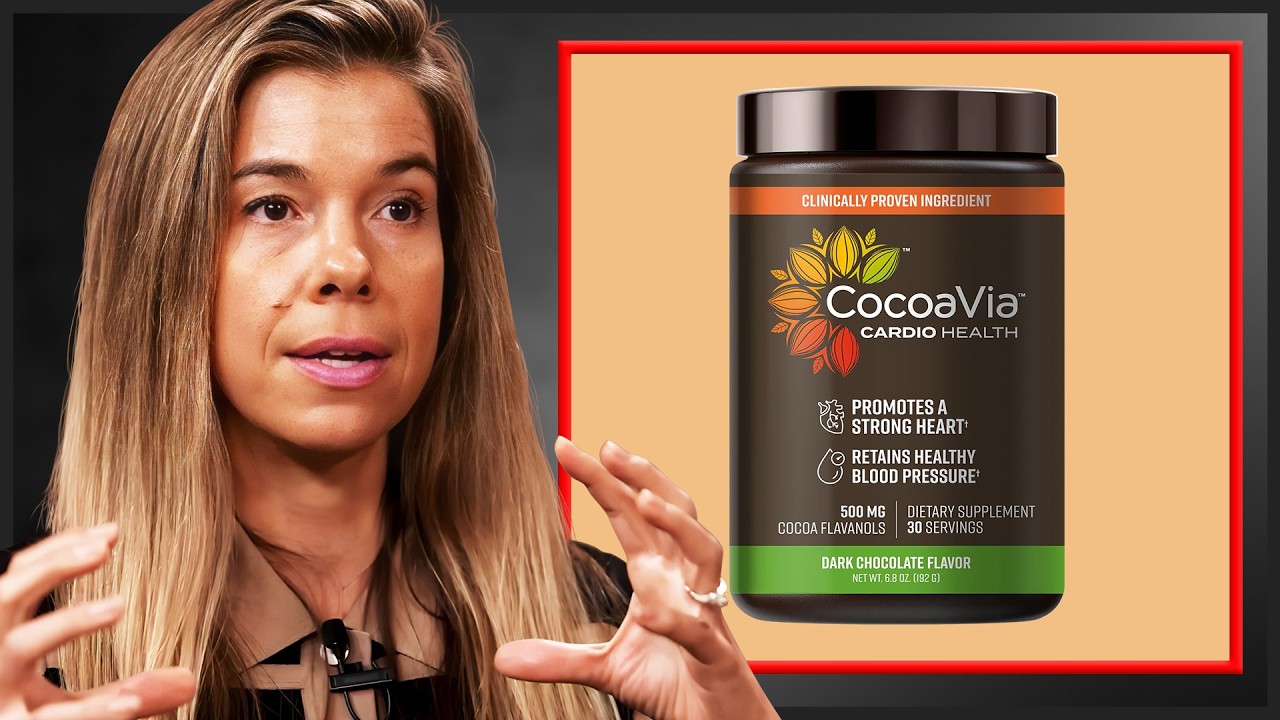
of your chocolate Buck well I think theistic darker is better still applies shoot for something that is at least 80% dark chocolate the closer you can get to 100 the better and if you can find it some chocolate makers will even put the Flav and all content on the packaging flavonols are a family of antioxidant compounds thought to give dark chocolate its Health Halo where it arises in the literature and the main flavonol in chocolate is called epicatechin which has also been shown to have health benefits on blood flow blood pressure and possibly even mitochondrial
function it's also found in foods like green tea which as you probably know also have a health Halo so if you can find chocolate with the flavonol levels on the package that's a really good sign but if you you can't don't worry generally higher levels of percentage so darker chocolate and less processed chocolates will boast the higher flavonol levels that means you want to look for something with less roasting less alkalinization less dutching these are all processes that can reduce flavonols in chocolates and don't worry no need to take notes if you just check the
caption on the video I put all the notes there for you now my personal favorite if I'm going to plug a brand I have no affiliation with this brand but is stone ground 95% tasa dark chocolate the stone ground process preserves a lot of the fenol and it's super delicious it's a little bit grainy but I actually really like that and it's also as an aside been tested in as low and heavy metals like lead and cadum which has been a concern among common chocolate brands so when I eat chocolate this is probably the brand
I use the most again no affiliation I just like the brand and another option is to use pure cacao or cacao powder which you can mix in with things like Macadamia butter or tahini as I mentioned and if very dark chocolate like the 90 95 100% is too bitter for you I recommend just making your own dark chocolate at home which isn't too hard this way you can add your own sweet source to make sure you're not adding sugar or potentially harmful sugar alcohols like your rol which I covered in a recent video or artificial
sweeteners and if you want a great recipe from my friend Martina again I'm linking it below and you can use just pure cacao powder and alos and other simple ingredients maybe add a dash of vanilla or cinnamon you can customize it it's actually really nice especially if you like cooking so bottom line there are lots of healthy ways you can use chocolate and this video isn't meant to undermine that can be a health food but there's a deeper lesson here about what we want to believe versus what the data actually say based on a pre-existing
Narrative of the healthfulness of chocolates and possibly personal preferences for those chocolate lovers among us including myself we would want to believe these headlines we want to believe that chocolate reduces type 2 diabetes risk by 21% but the fact of the matter is the science was not strong and it's critical we break this down and dig into the methods in limitation because science is about looking for the truth because it's the truth not when it's just the truth we want to hear so I'm sorry life is not like a box of chocolates it's like a
box of confusing as heck headlines but together we can break them down Elevate our minds and stay curious I hope you found value in this one I'm really interested to see how you'll respond anyway [Music]