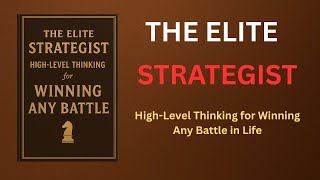
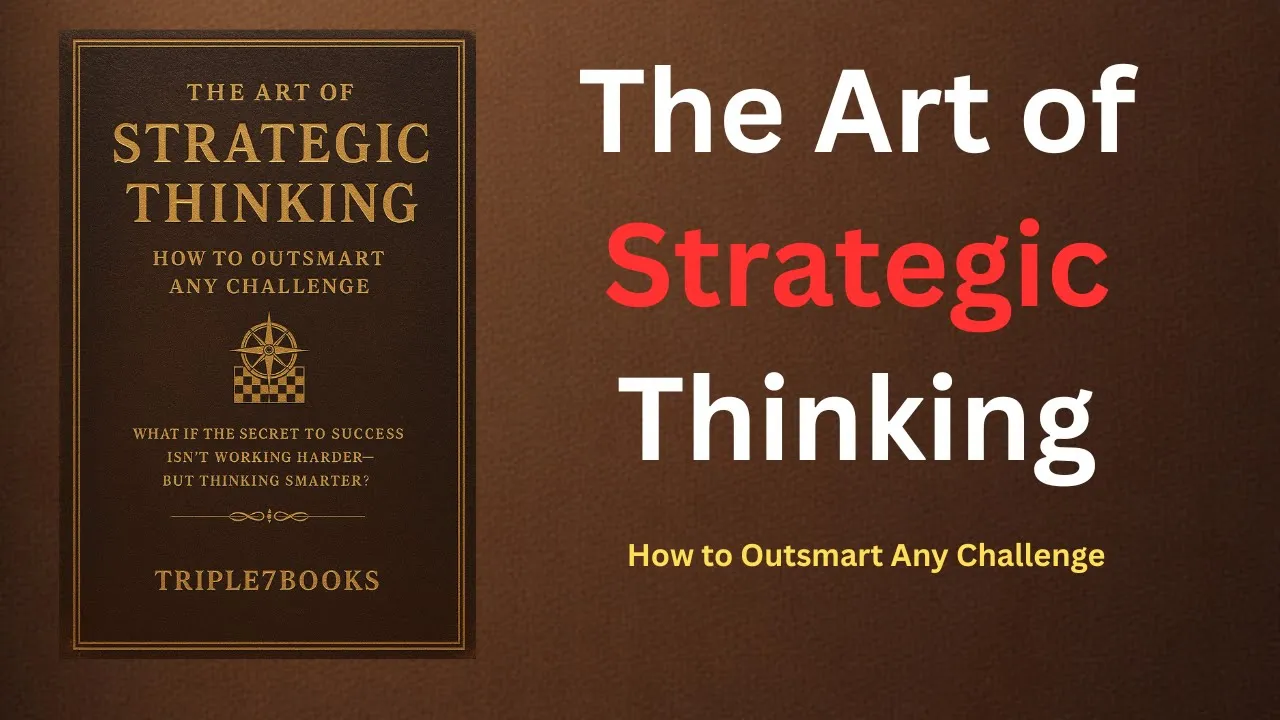
What if the key to mastering any challenge isn't about pushing harder, but about thinking sharper? In this audio book, you'll discover the powerful strategies top thinkers use to anticipate change, make smarter decisions, and achieve lasting success. Unlock your potential to outthink obstacles, act with precision, and take confident control of your life's direction. Introduction Why strategic thinking is your greatest superpower. Let me ask you a simple question. When life throws you a curveball, do you react or do you respond strategically? In a world that constantly demands your attention, that pressures you to move fast, to speak
up, to take action. How often do you pause and ask, "What's the smartest move I can make right now?" That pause, that brief moment of Intentional thought is the birthplace of power. It's where ordinary people become extraordinary. It's where you stop playing checkers and start playing chess. This right here is what strategic thinking is all about. And let me tell you, it's your greatest superpower. The split second that changes everything. Most people live on autopilot. They get up, scroll through their phones, react to the day, respond to emails, run errands, and try to catch Their
breath in between. When problems arise, they respond with urgency, not clarity. Emotions take the wheel. Panic, frustration, fear. These feelings drive decision after decision. But strategic thinkers, they play a different game. They pause. They observe. They plan. They don't just think about what's happening right now. They consider what happens five steps from now. They ask questions like, "What's the long game here? How does This fit into the bigger picture? What's the ripple effect of this choice?" This mindset is the reason some people seem to navigate chaos with calm, pivot under pressure, and create breakthrough results
while others are constantly putting out fires. Strategic thinking isn't just for military generals, CEOs, or political masterminds. It's for you right now. No matter your background, title, or goals, you have access to this tool. The only Thing you need to do is learn how to use it. And that's exactly what this audio book will teach you. What is strategic thinking? Really, let's clear something up. Strategic thinking is not about being manipulative, rigid, or cold. It's not about plotting endlessly, or outwitting everyone in your life. It's not some elite skill reserved for boardrooms and war rooms.
Strategic thinking is a way of approaching problems and Opportunities with clarity, foresight, and intelligence. It means being intentional instead of reactive. It means thinking before you act, choosing your battles, and anticipating consequences. It's about seeing patterns, understanding systems, and knowing which levers to pull to make the biggest impact. It's also deeply personal. Strategic thinking can help you decide how to respond when your partner is Upset with you. It can guide you through career changes, difficult conversations, parenting dilemmas, business challenges, and financial uncertainty. It gives you control where others feel chaos. It gives you choice where
others feel cornered. Think of it as your internal GPS. You input your destination, assess your starting point, scan the possible routes, avoid the roadblocks, and then move forward calmly and Confidently. Why strategic thinking matters more than ever. We live in the age of information overload and constant distraction. The speed of the world is increasing, but strategic thinking teaches you to slow down your mind even when everything around you is speeding up. It's the difference between being swept away by a storm and learning to navigate it like a skilled sailor. Strategic thinking helps you Make better
decisions faster. Reduces stress and emotional reactivity. Clarifies your goals and priorities. gives you an edge in work, relationships, and daily life. Builds confidence through clarity. Let me give you an example. Imagine two people lose their job unexpectedly. Person A panics. They send out hundreds of resumes, take the first job that responds, and spend the next year Feeling stuck, underpaid, and burned out. Why? Because they reacted. Person B, on the other hand, takes a day to process the shock, then steps back and thinks. They assess their finances, consider their long-term goals, reach out to mentors, and
only apply to positions that align with their values and skills. Within months, they land a role that not only pays better, but also fuels their passion. Same event, two wildly different outcomes. The difference, one person reacted, the other one strategized. Strategic thinking and success, two sides of the same coin. Look at the most successful people in any field. Entrepreneurs, athletes, artists, or leaders. What do they all have in common? Yes, they work hard. Yes, they're disciplined. But above all else, they are strategic. They don't just show up and hope for the best. They plan. They
pivot. They calculate risk. They know when to say yes. And more importantly, they know when to say no. They know how to think several moves ahead, anticipate obstacles, and stay focused on the goal even when things get messy. Strategic thinking allows you to control the controllables, manage uncertainty, and maximize opportunity. And here's the secret. It's not about having perfect plans. It's about developing the skill to adjust Intelligently as things change. The best strategists aren't rigid. They're adaptable, resilient, and clear on what matters most. That's what this audio book is going to teach you. Not just
how to plan better, but how to think better. To lead yourself wisely, to outsmart any challenge life throws at you. What's ahead? A quick preview of the journey. Here's how we're going to break it down. In chapter 1, we'll explore the Foundations of a strategic mindset, what it takes to stop reacting emotionally and start thinking long term. In chapter 2, we'll talk about clarity, how to define what you really want, and reverse engineer the path to get there. In chapter 3, we'll focus on information, how to gather what you need without getting stuck in analysis
paralysis. Chapter 4 will teach you how to see the big picture, spot hidden connections, and understand complex situations more Deeply. In chapter 5, we'll unlock the power of anticipation. Learning how to plan for the future while navigating the present. Chapter 6 is all about timing. When to act, when to wait, and how to move with precision. Chapter 7 dives into the concept of leverage. How to get bigger results with less effort by using your resources wisely. Chapter 8 will help you stay agile, adapting to change without losing your Vision. Chapter 9 explores the psychological side
of strategy, how to understand people, build influence, and communicate with impact. And finally, in chapter 10, we'll bring it all together with execution. How to turn strategy into real world action and success. Each chapter will include examples, practical tools, and mindset shifts to help you think more clearly, lead more effectively, and solve problems like a Strategist. By the time we're done, you won't just understand strategic thinking. You'll live it. You'll move through life with more purpose, power, and poise. You'll stop getting stuck in the noise and start creating outcomes that matter to you. Final thought,
you already have what it takes. You don't need to be a genius to think strategically. You don't need a fancy degree or high IQ. All you need is The willingness to slow down, think clearly, and act with purpose. That's it. You already have the raw material. This book is just the blueprint, and I'll be right here with you every step of the way. So, take a deep breath. Get ready to shift gears because you're about to learn how to outsmart any challenge not by chance but by choice. Let's begin. Chapter one, the strategic mindset. How
to think before you React. Let's begin with a truth most people overlook. Your greatest power isn't your knowledge, your talent, or even your experience. Your greatest power is the ability to choose how you think. Because in the end, it's not the smartest, fastest, or strongest people who win. It's the ones who can pause, evaluate, and think clearly under pressure. That's the essence of a strategic mindset. What strategic thinking really means, when people hear The word strategy, they often imagine military generals huddled over maps, business tycoons calculating profits, or chess masters plotting their next moves. And
yes, those are examples. But strategic thinking is not limited to high stakes war rooms or executive board meetings. Strategic thinking is a mindset, a way of approaching decisions, challenges, and opportunities with purpose and perspective. It means asking yourself, What outcome do I want? What's the smartest path to get there? What are the potential obstacles and how can I prepare for them? What are my resources and how can I use them wisely? Strategic thinkers don't act just because something feels urgent. They act when it makes sense. They weigh possibilities, think in terms of consequences, and focus
on positioning themselves. For success, not just for Now, but for the long haul. Here's the difference in action. A reactive mind says, "I'm mad, so I'll say something right now." A strategic mind says, "I'm mad, so I'll cool off and figure out how to address this in a way that actually solves the problem." A reactive mind panics when things go wrong. A strategic mind steps back, reassesses, and looks for options. Reactive mind wants quick fixes. A strategic mind wants long-term results. This isn't about being slow or indecisive. It's about being deliberate. It's about owning your
response instead of being controlled by emotions, pressure, or fear. Why most people react? Instead of think, let's be honest, reacting is easy. It feels natural. You get triggered and you respond. Something surprises you and you immediately do or say something. That's how we're wired. Fight or flight, Survival instincts, instant reactions. But we're not living in the wilderness anymore. We live in a world where most challenges require thinking, not instinct. And that's where many people fall behind. They send angry emails, make impulsive purchases, lash out in relationships, quit things too soon or hold on too long
because they're stuck in reaction mode. It's not their fault entirely. Society celebrates speed. Move fast. Act now. Don't think, just do. But think about this. You don't need more speed. You need more direction. That's what strategic thinking gives you. Direction. Strategic thinkers pause. They reflect. They train themselves to think before they act, to plan before they speak, to see consequences before they unfold. And that pause, that simple pause is where your power lives. Replacing emotional reactions with calm analysis. Let's talk about emotions Because we all have them. And let's be clear, emotions are not the
enemy. They're signals. They give you valuable information about how you feel, but they're not always the best decision makers. Imagine this. You're driving and someone cuts you off. Your heart races. You want to honk, shout, or speed up. But if you pause even for a second and think strategically, you realize this moment doesn't deserve your energy. Now apply that to bigger moments. An Argument with a loved one, a setback at work, a financial crisis, a health scare. Your first emotional reaction might be fear, anger, or hopelessness. But if you've trained your mind, you can acknowledge
those feelings without acting on them. Here's a practical tool. The 3- second rule. Before you respond, pause for three seconds and ask, "What outcome do I want? Is this reaction helping or hurting that outcome? What would a Strategic version of me do next?" These three seconds can save relationships, preserve your energy, and completely change the course of a situation. The goal is not to suppress your emotions. It's to manage them with wisdom. Think of your emotions like weather. You can't control the storm, but you can choose how you dress for it, how you move through
it, and whether you run blindly or walk with intention. Calm analysis means stepping Outside the storm and asking, "What's really going on here? What are my options?" This simple shift from emotion to evaluation turns chaos into clarity. developing mental discipline and long-term thinking. Now, here's the part most people avoid, discipline. Because strategic thinking isn't just about what you do in the moment. It's about how you train your mind over time. Mental discipline means practicing the ability to delay Gratification, resist impulsive urges, think beyond this hour, this day, this week. Ask yourself, where do I want
to be 6 months from now? What would the version of me a year from now thank me for doing today? What habits, thoughts, or people are pulling me off course? Most people make decisions based on how they feel right now. Strategic thinkers make decisions based on where they want to be later. That's not always fun. It takes Restraint, but it pays off every time. Here's another mental tool. The future you test. Before you make a decision, imagine your future self watching you. Would they applaud your choice or cringe at the consequences? This habit trains you
to zoom out and see the bigger picture. And when you can zoom out, you gain perspective. You stop sweating small stuff. You stop chasing instant wins that sabotage long-term goals. Let me give you a real world Example. Say you're offered a new job. It pays well, but the hours are brutal and the environment is toxic. A reactive mind might say, "I need money." Say, "Yes." A strategic mind says, "Yes, money is important, but what will this cost me long-term? My health, my peace of mind, my time with family." That pause could lead you to negotiate
better terms, find a smarter option, or prepare a transition plan. In short, it gives you power. Strategic Power. Training your mind to think strategically every day. Now, you might be wondering, can this be learned or are some people just born with it? Let me reassure you, strategic thinking is 100% learnable. But like any skill, it needs practice, repetition, intentionality. Here are a few ways to train your strategic mind daily. Ask better questions. Every time you face a challenge, ask, "What's the real issue here? What would success look like? What's the smartest next step?" Strategic thinkers
don't obsess over problems. They obsess over clarity. Journal your decisions. Take 5 minutes at the end of your day to reflect. What choices did I make today? Did I act strategically or react emotionally? What will I do differently tomorrow? This builds awareness and consistency over time. Play mental chess. When you're in a tough spot, don't just focus on the first move. Think two, three, even four Moves ahead. Ask, "If I do this, what happens next?" Just like chess, life rewards those who can anticipate, not just respond. Surround yourself with strategists. Your environment matters. Spend time
around people who think long-term, who make thoughtful choices, who value growth over gossip. Their habits will rub off on you. Final thoughts. From reactive to strategic. Your new identity. You were Not born to live on autopilot. You were built to lead, to make powerful, intelligent, and thoughtful decisions. Every single challenge in your life becomes more manageable when you switch from a reactive mindset to a strategic one. This isn't just a skill. It's an identity shift. You're no longer the person who panics, overreacts, or spirals. You're the person who pauses, evaluates, and plays the long game.
So today, start claiming that identity. Practice the pause. Ask the smarter question. Choose the next move, not the next impulse. Because the truth is, your mind is your most powerful weapon. And once you learn to master it, there's no challenge you can't outsmart. Chapter 2. Clarity is power. Defining your endgame. Let me ask you a question. one that sounds simple but reveals everything. What do you really want? Most people can't answer that with any real precision. They'll say things like, "I want to be successful. I want to be happy or I want to make more
money." But that's vague. It's not a strategy. It's a wish. Strategic thinking begins with clarity. Because if you don't know exactly what you're aiming for, you can't build a smart plan to get there. And if you don't have a clear destination, every detour starts to look like an opportunity. So here's the truth. Clarity is your greatest leverage. Why vague goals create real Problems. Imagine getting into your car and driving without a destination. You could burn gas for hours, turn in circles, end up lost, or worse, nowhere. But that's exactly how most people live their lives.
They wake up and react to whatever is urgent. They chase random opportunities. They copy what others are doing. But they never stop to ask, "Is this actually moving me closer to what I truly want?" You see, without clarity, you say yes to distractions. You waste Time on goals that aren't yours. You confuse activity with progress. That's the hidden danger of being busy. You can stay in motion without moving forward. But clarity fixes that. When you know your endgame, every decision becomes easier. You stop reacting. You start aligning. You stop second-guessing. You start moving with purpose.
Step one, understanding your true goals. So let's start here. What is your true goal? Not What your parents wanted. Not what society told you. Not what sounds cool or trendy. What do you want? To answer this, go deeper than surface level answers. Here are some questions to guide you. What does success look like in my eyes, not anyone else's? What kind of lifestyle do I want to live? What impact do I want to have on others? What do I want to be known for? When I look back 10 years from now, what will I regret
not doing? You're not Just chasing a career, a relationship, or a title. You're chasing a feeling, a life, a legacy. The more specific you get, the more powerful your vision becomes. Specificity fuels strategy. Instead of saying, "I want to be successful," say, "I want to build a business that gives me freedom and helps people. I want to be debt-free and invest $100,000 by age 40. I want to work 4 days a week and spend Fridays with my family." That's real clarity. And real clarity leads to real action. Step two, reverse engineering success. Once you've defined
your goal, don't just admire it, reverse engineer it. Strategic thinkers don't just dream forward. They plan backward. They look at the end result and ask, "What would have to happen for this to be true." Let's say your endame is to become a published author. Start by imagining the moment you're holding your book. Now ask, "What's the step right before This?" Maybe it's getting a publishing deal. Before that, finishing your manuscript. Before that, writing the chapters. Before that, outlining your book. Before that, carving out time every week to write. Suddenly, your goal isn't just a fantasy.
It's a series of clear, manageable steps. This is called reverse engineering, and it's the fastest way to turn a dream into a strategy. Here's another example. Say Your goal is financial independence in the next 10 years. Ask yourself, what does financial independence mean to me? How much money? What kind of lifestyle? How much do I need to earn, save, and invest each year? What skills or opportunities would make that possible? What can I start doing this month to move in that direction? You break the big goal into small trackable milestones. And those milestones, they become
your road map. Most people don't Fail because they're lazy. They fail because they don't know the steps. Strategic thinkers map the steps in reverse. Step three, setting outcomedriven priorities. Now, let's bring it all together. Clarity without action is just noise. That's why strategic thinkers don't just ask what should I do. They ask what matters most right now based on where I want to go. That's the secret to outcomedriven priorities. Not all tasks Are created equal. Some things feel urgent, but they don't really matter. Other things don't feel urgent, but they're massively important. Strategic thinkers prioritize
based on impact, not impulse. Let's say your goal is to launch a side business in 6 months. You could scroll through branding ideas for hours, watch YouTube videos on logo design, or spend that time building your first product, reaching out to potential clients, or validating your idea. Which One moves you forward fastest? Every day, ask yourself, is this task directly aligned with my endgame? Will this get me closer to my goal or just keep me busy? Here's a tool, the power priority filter. Write down your top three goals. Then write your weekly to-do list. For
every task, ask, "Does this directly support one of my top three goals?" If not, eliminate, delegate, or delay it. This one habit will save you hundreds of hours over the next year. It also gives You a powerful word, no. Because once you know your destination, you're allowed no required to say no to the things that don't help you get there. Remember, saying no to good things is how you say yes to great ones. Bonus, the ones sentence strategy. Here's a powerful exercise. Define your entire strategy in one sentence. For example, I'm building a coaching business
to replace my 9-to-5 income in 12 months. I'm prioritizing Health and strength so I can live 20 more highquality years. I'm creating digital products to earn passive income and buy back my time. This forces clarity. If you can't explain your strategy in one sentence, you're not clear yet. Write it. Read it daily. Let it guide your choices. Final thoughts. Don't just move. Move with meaning. Let's wrap up with this truth. Movement isn't progress. Clarity turns Motion into momentum. You're not here to stay busy. You're here to build something that matters, to live on purpose, not
on autopilot. To lead your life instead of reacting to it. Strategic thinking isn't about being perfect. It's about being precise. So, starting today, define what you truly want, not what others expect. Reverse engineer that goal into simple daily actions. Ruthlessly prioritize what matters most. Because once you're Clear on the what and the why, the how becomes a lot less mysterious. You're not just dreaming anymore. You're designing. Chapter 3. Information is ammunition. Learn before you move. Imagine you're walking onto a battlefield. You can't see the terrain. You don't know where the enemy is hiding. You have
no idea what weapons are available. Now tell me, would you charge forward? Of course not. Yet that's how most people approach life, Business, relationships, even their health. They act without insight. They move before learning. They confuse movement with mastery. But you, you're learning to think strategically. And one of the golden rules of strategic thinking is this. Information is ammunition. Learn before you move. If clarity is power, then information is precision. It allows you to see clearly, aim accurately, and execute with confidence. It gives you an edge most people will never have because most people don't
take the time to learn before they act. Let's unpack this essential habit and show you how to turn knowledge into action without falling into the trap of overthinking. The VI smart strategist gathers before they go. Every master of strategy, from SunSu to modern-day CEOs, shares a common belief. Knowledge is power, but only if it's the right knowledge. The goal isn't To know everything. It's to know enough of the right things to make a smart move. Let's say you're launching a business. What information do you actually need? Who are your customers? What do they already buy?
What do they complain about? What's missing in the market? What are your competitors doing and more importantly not doing? You don't need an MBA to gather this. You just need curiosity and discipline. Here's the shift. Stop guessing. Start Discovering. Make research part of your strategy. Not as a stall tactic, but as your launchpad. The best strategic moves are almost invisible. They look effortless. But behind them is always one thing, insight. How to gather relevant, timely information. Let's make this practical. There are three filters you want to apply to your research. Relevance, timeliness, and credibility. Relevance.
Does this information actually help me Make a decision or solve a problem I have right now? Avoid going down rabbit holes just to feel smart. Timeliness. Is this recent? The world changes fast. Don't base your strategy on 5-year-old advice. Credibility. Who is giving this information? Are they proven, experienced, or just loud? Remember, the internet is full of noise. Your job is to find the signal. Once you have a few trustworthy sources, go wide first, then go deep. Let's say you want to improve Your personal finances. Don't just buy the first course or follow a random
influencer. Read foundational books. Compare perspectives. Look at data. Talk to people who've done what you want to do. And here's the key. Don't stop with surface level facts. Ask yourself, what's the implication of this? What's the context? How does this apply to my specific situation? Strategic thinkers never stop at what happened. They ask, why did it happen? And what can I learn From it? Avoiding the trap of overthinking or underpreparing. Now let's talk about the danger zones. Paralysis by analysis and reckless execution. Strategic thinking is about balance. Some people research endlessly. They gather more and
more information hoping for the perfect answer. But perfection is a myth. You'll never feel 100% ready. Other people act impulsively. They don't plan. They don't check. They just move and crash. Both Extremes are dangerous. Here's a better approach. Learn just enough to understand the landscape. Identify your knowledge gaps. Fill the most important ones. Move forward with a strong but flexible plan. Think of it like this. Don't build a house without a blueprint. But also don't keep redrawing the blueprint forever. Your goal is not perfect information. Your goal is sufficient strategic intelligence. Ask yourself, what do
I need to know to Make a confident decision? What's the minimum viable knowledge to act wisely? If you hit that point, go refine as you move. Turning research into actionable insight. Here's where strategy separates itself from trivia. Collecting facts is not enough. You need to turn information into insight. That means asking what patterns do I see here? What's working and why? Where are the gaps? What are others missing that I can Use to my advantage? Let's say you're preparing for a career change. You research the job market, identify in demand skills, and notice that your
ideal role value storytelling and data analysis. That's an insight. Now you can act. Learn those two skills. Build a project around them. Position yourself accordingly. That's research turned into strategy. Here's a simple three-step method to turn any research into insights. Collect smart. Use the Relevance, timeliness, credibility filter. Synthesize fast. Don't just copy, combine. Look for overlaps, contradictions, and hidden opportunities. Act immediately. Apply your insights in a small low-risk experiment. Test fast, learn faster. Remember, data means nothing without direction. Insight without action is just intellectual entertainment, information. As a long-term asset, strategic thinkers treat knowledge like
An investment. The more you learn, the more connections your brain can make. The more patterns you recognize, the more shortcuts you create. This is why top performers read constantly, not to memorize facts, but to train their minds to see. Every book, every conversation, every article becomes part of your mental toolbox. And one day, in a tough negotiation or a split-second decision, you'll reach into that toolbox and pull out exactly what You need. That's not luck. That's strategic preparation. So ask yourself, what should I be learning this week? What's one area of my life or work
that would improve dramatically if I became better informed? Pick that area and dig in. Not forever, just enough to act smarter than 90% of people who never do their homework. Final thoughts. Don't just move. Move with insight. Let's close this chapter with a Powerful truth. Fast is good. Smart is better. Fast and smart is unbeatable. You don't need to be the loudest, the flashiest, the most gifted. You just need to be the one who sees clearly while others guess blindly. Because when you learn before you move, you don't just react. You respond with intent. You
save time. You avoid mistakes. You increase your odds. That's not magic. That's strategy. So remember, gather relevant, Timely, and credible information. Avoid extremes. Don't stall or leap blind. Convert research into insight and insight into action. In a noisy world, the thinker wins. And now you're becoming a master of strategic thought. Chapter 4. Seeing the board, mastering the big picture. Picture this. Two people playing chess. One is focused on their next move. The other is watching the entire board Several moves ahead. Thinking not just about pieces but about patterns. Who do you think wins? It's the
one who sees the big picture. In life, business, relationships, and decision-m, it's never just about what's right in front of you. The most powerful strategists, the ones who lead, adapt, and outperform, don't just react to what's happening. They see the board. They know how the pieces fit. They understand the patterns. They anticipate what's coming Next. That's what this chapter is about. Big picture thinking. Because in a world full of noise and distractions, the ability to zoom out and see clearly is a superpower. Systems thinking, strategy at the macro level. At the heart of big picture
thinking is a concept called systems thinking. What is it? Systems thinking is the ability to see how parts connect to the whole. Instead of viewing problems in isolation, you recognize patterns, interdependencies, and hidden Causes. Let's make it real. Imagine you're a manager and your team's productivity is dropping. Most people would just look at the individuals, work harder, fix your habits. But a systems thinker asks, "Has the workload changed? Are the tools outdated? Is communication breaking down? Is something upstream causing a downstream effect? They zoom out to identify root causes, not just symptoms. That's strategic thinking
in action. Every challenge is part of a system. And once you understand the system, you can influence it. You can redesign it. You can outsmart it. Connect the dots where others see. Chaos strategic thinkers have a special ability. They connect dots that others miss. They see connections across industries, disciplines, and even time. While most people are stuck in their lane, strategists are scanning the horizon. They look for trends, tipping points, Ripple effects, relationships between forces. This ability to think in networks is rare and powerful. Take Elon Musk for example. Whatever you think of him, his
strategy is built on systems thinking. He connected the dots between energy, transportation, AI, and the space industry. That's not accidental. That's perspective. You don't need to be a billionaire to do this. You just need to practice zooming out and asking bigger questions. How does this fit into The larger picture? What are the second and third order consequences? Who else is affected by this decision? What pattern is emerging here? Big picture thinkers don't just see what is, they see what could be. Pattern recognition, the strategist's super skill. No, let's go deeper. Big picture thinking trains your
brain to recognize patterns. And patterns are the strategist's greatest weapon. Why? Because human behavior, Market behavior, and even personal growth all follow patterns. Once you recognize a pattern, you can predict outcomes. Avoid repeating mistakes. Identify leverage points. Let's say you notice a pattern in your own decision-making. You rush when under pressure. That's a strategic insight. Now you can plan for it, slow down, and create protocols that protect you. Or maybe you see that every time your team launches a new product without customer Feedback, it flops. That's a pattern. Now you adjust your process. Great strategists
don't just work harder, they work smarter because they learn from patterns. Here's a question to ask regularly. What's really going on here beneath the surface? The more you look for patterns, the more they'll appear. And the more you act on them, the more strategic your moves become. Mapping the landscape, players, power, and positions. Here's where it Gets exciting and tactical. Strategists map the landscape like military generals or worldclass negotiators. They don't enter any situation blind. Instead, they ask, "Who are the players? Who's involved directly and indirectly? Who has influence even behind the scenes? Where's the
power? Who makes decisions? Who shapes opinions? Who controls resources? What are the positions? What are each person's interests? What do they stand to gain or lose? How are Alliances forming or shifting? Whether you're entering a business meeting, a negotiation, or a new relationship, this kind of mapping gives you clarity. Because once you know the structure of power, you can position yourself with intelligence. Imagine you're applying for a job. You don't just submit a resume. You research who's on the hiring team, what their backgrounds are, what values the company prioritizes, who might advocate for you internally.
That's how you play the board, not just the game. In personal relationships, too, mapping helps. Who influences your partner's decisions? What are the emotional dynamics at play? Where are the unspoken expectations? Seeing the board helps you avoid walking into traps and spot opportunities nobody else sees. Thinking in layers and timelines big picture. Thinkers don't just think Wide. They also think long. They consider timelines. What happens if I do this today, next week, next year? They think in layers. What's the surface issue? What's the deeper emotional or systemic cause? What will this affect three steps later?
Let's say you're thinking about switching careers. Instead of just asking, "Will this pay more?" You also ask, "How will this affect my lifestyle? What new skills will I gain? Where does this path lead 5 Years from now? What doors will this open or close?" That's layered thinking, and it turns decisions into strategic investments. Here's a daily exercise. Before you act, zoom out. Ask yourself, what's the ripple effect of this move? Over time, you'll start thinking on multiple levels like a grandmaster in chess. Planning not just your next move, but your next five. Avoiding tunnel vision
and short-term traps. One of the biggest Dangers in life is tunnel vision. Getting so focused on one problem or goal that you ignore the bigger picture. Tunnel vision leads to poor decisions. choosing speed over sustainability. Winning today but losing tomorrow. Solving one problem while creating three more strategic thinkers zoom out before they zoom in. They ask, "Is this part of the long game? What trade-offs am I making? Am I solving the right problem?" It's not about being Cautious. It's about being composed and calculated. When you see the board, you become the rare person who doesn't
panic in chaos because you've already mapped the terrain. Final thoughts. See further. Play smarter. Let's bring it all together. Big picture thinking isn't a skill reserved for CEOs or generals. It's available to anyone who trains their mind to think wider, deeper, and longer. So, here's your takeaway. Start asking bigger questions. Look for connections, patterns, and power dynamics. Map the players, see the pieces, and anticipate the plays. When everyone else is focused on the next move, you'll be building the next 10. That's not luck. That's vision. And the ability to see the board, that's how you
outsmart any challenge before it even arrives. Chapter five. Anticipation. The key to outsmarting obstacles. There's a moment in every game, every negotiation, every challenge when the one who sees ahead quietly takes the lead. No drama, no sudden moves, just calm calculation. They already know what's coming. They've already thought it through. While others react, they're executing. That's the power of anticipation. Strategic thinkers don't wait for the wave to hit. They watch the Tide and position themselves before the storm. They don't just prepare for what's likely. They prepare for what's possible. And that's what we're about to
explore. This chapter is your invitation to start thinking two, three, even 10 steps ahead. Not with fear or anxiety, but with clarity and confidence. Let's break it down. The art of thinking several moves ahead. Let's return to our chessboard. What separates the amateur from the master? It's not memorization. It's anticipation. The master knows that every move changes the shape of the future. So, they don't just ask, "What do I want to do next?" They ask, "What will this trigger? How will the other side respond? Where will this lead five moves from now?" In life, this
might look like starting a side hustle knowing it'll open future freedom. Saying no to an opportunity because it leads to the wrong kind of yes. Investing in a Relationship knowing the trust built now pays off later. It's not magic. It's foresight. And foresight is a skill. You build it by stepping outside the moment and asking, "If I take this path, what's likely to happen next?" Then do it again and again. Follow the chain forward. The more you do this, the more natural it becomes. You'll begin to see future outcomes forming like shadows before they arrive.
Scenario planning. Prepare for multiple futures. Life isn't linear. It throws curve balls, detours, and surprises. That's why great strategists don't just plan. They scenario plan. Instead of betting everything on a single outcome, they prepare for multiple possibilities. This doesn't mean being paranoid. It means being positioned. Here's how to think in scenarios. The likely scenario. What is the most probable outcome? This is your baseline plan. The best case Scenario. If things go better than expected, what's your play? How do you scale, double down, or ride the wave? The worst case scenario. If things go wrong, how
do you protect yourself? What's your scene? exit strategy or damage control. The wild card. What if something completely unexpected happens? New competition, sudden opportunity, personal change. How do you stay adaptable? This approach is used by Elite entrepreneurs, military leaders, and even astronauts. And it works just as well for everyday life. Planning a career shift? Map the best and worst outcomes. Launching a product. Consider delays, demand, and disaster recovery. Starting a relationship. Think ahead to values, goals, and friction. Points. The goal isn't to predict the future. It's to be prepared no matter which future shows up.
Contingency thinking. Your hidden armor, closely Related to scenario planning, is contingency thinking. This is your backup plan mindset. The ability to say, "If plan A fails, I've got B, C, and D in my back pocket." Why is this powerful? Because it removes fear. It builds confidence. It keeps you moving forward, calm, and focused even when things don't go as planned. Think of contingency thinking like a mental parachute. You hope you never need it, but knowing it's there Frees you to act boldly. Ask yourself, what's my next move if this doesn't work? How can I pivot
without losing momentum? What small adjustments can turn setbacks into stepping stones? Contingency thinking also makes you resilient because now obstacles aren't failures, they're alternate routes. You stop fearing uncertainty and start embracing it. You're not caught off guard, you're covered. reading people, anticipating behavior Before it happens. Let's shift from systems and scenarios to people. Because when you can anticipate human behavior, you become an unstoppable strategist. Every decision, every negotiation, every collaboration involves people. And people, despite their uniqueness, follow predictable patterns if you know what to look for. Here's how to read people like a strategist. Study
motivations. Ask, "What does this person Really want? Is it respect, security, power, freedom, recognition?" Watch patterns. How do they behave under pressure? How do they handle conflict? What have they done in similar situations before? Listen between the lines. What's not being said? What emotions or fears are driving their tone, silence, or enthusiasm? Anticipate reactions. If you challenge them, will they get defensive? If you praise them, Will they open up? If you propose, change, will they resist or adapt? When you learn to read people like this, your strategic options multiply. You can lead more effectively. You
can negotiate with precision. You can diffuse conflict before it ignites. And perhaps most importantly, you can build trust by showing others you understand them. Because in the end, people don't want to be controlled. They want to be seen. And The better you see them, the better you can predict their moves and work with them, not against them. Training your mind to anticipate. Now, let's talk habits. How do you make anticipation second nature? Here are five powerful practices. Pause before you decide. Before any big decision, ask, "What are the next three likely consequences of this move?"
Create space between impulse and Action. Play mental simulations. Visualize possible scenarios, good, bad, and strange. Ask, "How would I respond?" This builds mental agility. Use the 10 10 rule. How will this decision affect me in 10 minutes, 10 months, 10 years? It expands your time horizon. Keep a what if journal regularly. Jot down what if X happens? How would I respond? Think of it as contingency training. Debrief decisions. After key moments, reflect. What did I expect? What actually happened? What did I miss? This turns experience into wisdom. Every time you anticipate effectively, even in small
things, you sharpen your edge. You build mental reflexes that will serve you when the stakes are high. Final thoughts, from reaction to prediction. Anticipation isn't about living in fear of the unknown. It's about becoming a master of it. It's the shift from reacting to predicting, from Surviving to strategizing, from uncertainty to clarity. And here's the best part. You don't have to see the entire future. You just need to see further than the average person. Because when you think several moves ahead, when you plan for multiple outcomes, when you read people with clarity, you stop being
a pawn in the game and you become the one moving the pieces. That's the power of anticipation. And it's yours now. Chapter six. Timing is strategy. When to move and when to wait. There's a saying among seasoned strategists, the right move at the wrong time is still the wrong move. Power, insight, even bold vision. None of it matters if your timing is off. If you move too soon, you waste energy. If you wait too long, you miss opportunity. But if you strike at the perfect moment, suddenly the world opens up. That's what this chapter is
all About. Not just knowing what to do, but knowing when to do it. Timing is strategy. It's the quiet force behind every major breakthrough, every decisive win, every brilliant decision that looks effortless in hindsight. Let's dive in. Why patience is the ultimate strategic weapon. Let's start with a tough truth. Most people lose not because they lack ideas, ambition, or talent, but because they move too fast. They chase the short-term win. They act on impulse. They push when they should pause. Why? Because patience feels like weakness. It feels like doing nothing. But in reality, patience is
power in disguise. True strategic patience is active. It means waiting with awareness, preparing while others panic, observing when others rush. Think about nature. The eagle doesn't flap around. It soarses, waits, watches, and then dives. The archer doesn't shoot Immediately. They draw, aim, breathe, then release. A seasoned negotiator doesn't speak first. They listen, analyze, and respond with precision. This kind of waiting isn't passive. It's precise. It's knowing. The difference between motion and progress. And most importantly, it's understanding that the goal isn't to act fast, it's to act right. Identifying high leverage moments. So, how do you
know when it's the right time to Move? Welcome to the concept of leverage points, moments where small actions create massive results. High leverage moments are the sweet spot of strategy. The one conversation that shifts an entire deal. The one tweak that transforms a failing project. The one message sent at just the right hour. But these moments are easy to miss unless you're looking for them. Here's how to identify them. Watch for tension peaks. Often the best time to act is When tension is highest. When your action can bring clarity, resolution or release. In negotiation, this
is when silence has stretched and the other side is leaning in. Time the market, not the mood. Whether it's business, relationships, or career decisions, align your moves with external readiness, not internal impatience. Feelings lie, patterns don't. Monitor signals, not just noise. Look for signs beneath the surface. Shifts in behavior, timing, readiness, or power. Often, opportunity whispers before it knocks. Leverage the readiness window. Timing isn't just about your readiness. It's about the world's readiness. Don't launch too early. Build anticipation. Don't wait too long. Ride the momentum. Think of it like surfing. You don't control the waves,
but if you learn to read them, you know exactly when to paddle, when to rise, and when to ride, Avoiding impulse decisions. Let's talk about the enemy of great timing, impulsiveness. We've all been there. You feel a spark, a surge, a burst of inspiration, and before you know it, you've hit send, made the call, pulled the trigger. Sometimes it works. Most times it doesn't because impulsive decisions are reactive. They feel urgent but often lack context. And in strategy, context is everything. Here's how to avoid impulse decisions without losing Your edge. Build in a delay rule.
For any big decision, pause for 24 hours. This one habit alone can save you thousands in regret. Ask the 5-year question. Will this matter in 5 years? This reframes temporary emotion into long-term thinking. Check your triggers. Recognize what throws off your timing. Fear, ego, boredom, urgency. Once you spot the trigger, you can stop the spiral. Consult a neutral voice. A Trusted friend or mentor can be your mirror. If they're not emotionally involved, they'll see the timing gaps you might miss. Shift from reaction to response. Reacting is instant. Responding is intentional. Always aim for the latter.
Remember, strategy is about stacking the odds in your favor, not gambling on adrenaline, escaping analysis. Paralysis. Now, let's swing to the opposite extreme. Overthinking. Some people wait too long. They analyze every angle, run every scenario, imagine every failure. They don't miss the train because they were late. They miss it because they never boarded. That's analysis paralysis. Here's how to move through it without losing strategic precision. Set a decision deadline. Give yourself a realistic but firm timeline to decide. Clarity loves a clock. Define enough information. Strategic thinkers Know when they've gathered enough intel to move. You
don't need all the facts, just the right ones. Use the 70% rule. If you're 70% confident, move. Waiting for 100% certainty leads to missed windows. Even Jeff Bezos uses this model to act decisively. Trust the process, not just the outcome. Sometimes you can't guarantee the result. But if your thinking is clear, your timing is usually close. Remember, perfection is the enemy of progress. Many high performers wait for the perfect plan, but perfect is a myth. Momentum matters more than mastery. You can always adjust midcourse, but you can't steer a parked car. The strategic sweet spot,
balancing speed and stillness. So, how do you balance it all? Here's the truth. Strategy is a dance between patience and precision. You need to wait long enough to see the full picture, but act fast enough to Seize your moment. It's the art of being ready and patient. So when your moment arrives, you don't hesitate. You move with confidence, with power, with clarity. Here's what that looks like. A founder who doesn't rush to launch, but doesn't miss their market window. A job seeker who waits for alignment, not just availability. A creative who doesn't publish before the
work is great, but doesn't overedit forever. This is the sweet spot of strategic timing. And when You master it, you stop chasing life and start meeting it exactly where it's most powerful. Final thoughts. Time is not your enemy. It's your weapon. Timing isn't just a detail of strategy. It's the heartbeat of it. Move too soon and you fail. Move too late and you miss, but move just right and the world bends in your favor. So, here's your new mindset. I don't need to rush. I don't need to wait. I need to read the moment and
then move with precision. Whether It's a business deal, a big life change, or a simple daily decision, the more you trust in timing, the more powerful your presence becomes. Because in the end, great strategists don't force the game. They feel the rhythm and then they make their move. Chapter seven. Leverage. How to win with less effort. There's a secret behind every outsiz success story. It's not always about hustle. It's not about working 18our days grinding through burnout or Carrying the whole weight on your shoulders. It's about leverage. Leverage means using a small input to create
a massive output. Think of it like this. A single person can't lift a car. But give them a hydraulic jack, a tool that multiplies their strength. And suddenly what was impossible becomes effortless. That's leverage and it's available to you right now. You don't need superpowers. You just need to think like a Strategist. In this chapter, we'll explore how to spot your hidden leverage points. Work smarter, not just harder. Use people, tools, and systems to multiply your power. Ready to stop pushing harder and start pulling smarter? Let's begin what leverage really means. Leverage is one of
those words people toss around without really defining. In strategic thinking, leverage is this. Using minimal effort, resources, or time to generate maximum impact. It's about creating a force multiplier. A way to make one action produce exponential results. Here are a few real world examples. A single social media post that brings in thousands of customers. An automation that saves you 5 hours a week. A connection that opens doors to new partnerships or opportunities. A decision that removes 10 daily problems at once. The best Strategists aren't just asking, "What do I need to do?" They're asking, "How
can I make this easier, smarter, and more effective?" That mindset changes everything. Step one, identifying your leverage points. The first move is simple but powerful. Spot where your leverage lives. Look at your goals. Now ask, where am I putting in 80% effort for 20% result? Where am I getting 80% of my results from only 20% of my actions? This is the famous 8020 rule, also known as the Parto principle. It tells us most of our results come from a small number of our inputs. The trick is to double down on the few things that matter
most. Here are four common leverage points to examine in your own life. Time leverage. What tasks can you automate, delegate, or eliminate? Skill leverage. What unique skill gives you the biggest return? Are you maximizing It? Network leverage. Who do you know that already has access, answers, or influence? Platform leverage. Are you building assets like content, tools, or reputation that work while you sleep? The goal isn't to do more, it's to do less better. Step two, working smarter, not harder. There's a myth that success only comes from hard work. And while effort matters, it's smart effort
that truly separates winners from the worn out. Here's how to shift into working Smarter. Batch and block group similar tasks together like emails, meetings, creative work, and handle them in focus time blocks. This minimizes mental switching and boosts efficiency. Systematize repetition. Anything you do more than twice, build a process, templates, checklists, standard operating procedures. These aren't just for businesses. They're for anyone who values time. Use the rule of three. Pick three High impact tasks per day. If everything's a priority, nothing is. Focus creates leverage. Ask better questions instead of how can I get this done?
Ask how can this get done without me? How can this get done faster? What would make this unnecessary? Strategic questions create smarter paths. Step three, leveraging relationships. One of the most powerful but underused Forms of leverage other people. If I have seen further, it is by standing on the shoulders of giants. Isaac Newton. You don't have to know everything. You just have to know someone who does. Here's how to build relationship leverage the right way. Be a giver. First, help others solve problems. Offer value before asking for it. This builds trust and trust is leverage.
Map your network. Who do you know? What are they great at? Where are The gaps you can fill or where they can fill yours? Make a personal strategic relationship map. You'll be surprised how connected you already are. Collaborate. Don't compete. Find people with complimentary strengths. Partner on projects. Co-create. 1 plus 1 can equal five when the synergy is right. Leverage mentors and allies. A 30inut conversation with the right mentor can save you three years of trial and error. Don't be afraid to reach out, ask Questions, and listen deeply. People are not just contacts, they are
catalysts. Step four, leveraging technology and tools. We live in an era where technology is leveraged on tap. Yet many people still use their smartphones to scroll instead of solve. Here's how to turn tools into time savers, not time wasters. Duh. Automate repetitive tasks. Use tools like Calendarly for scheduling. Zapia for workflow automation. AI tools for Writing, summarizing, or research. Every minute you automate is a minute you reclaim. Use AI as an amplifier, not a replacement. Smart strategists don't fear technology. They use it to think faster, research deeper, and execute cleaner. Ask yourself, what can AI
help me start, speed up, or simplify? Free. Build or use systems, create dashboards, spreadsheets, templates, or databases that organize your work and free your brain for higher level Thinking. Invest once, benefit. often buy the for write gear, software, or setup once and let it serve you for years. One-time investments often produce long-term leverage. Remember, every tool is either a lever or a distraction. Choose wisely. Step five, leveraging resources. Strategically, resources aren't just money. They're time, energy, knowledge, people, and positioning. Strategic thinkers ask, "What do I Already have that I'm not using? What resource do I
need that could change everything? How can I turn what I lack into creative advantage? Some ways to use resources better. Repurpose old work into new value. Turn blog posts into a book, videos into courses, barter skills instead of buying services. find underutilized assets, space, tools, people, and reframe their use. Leverage is rarely about more. It's about Better. Final mindset shift. Leverage is not laziness. Some people confuse leverage with laziness. They say that's a shortcut or real success takes sweat. Here's the truth. Leverage isn't about escaping work. It's about designing your effort so every ounce matters.
It's the difference between digging with a spoon or digging with an excavator. It's not cheating. It's thinking. And the moment you realize that, you unlock a new level Of possibility. Final thoughts. Build a life that compounds. The most powerful use of leverage. Creating things that compound. That means building relationships that grow over time. creating content or assets that work while you sleep. Designing habits and systems that improve with each use. Leverage isn't just about today's effort. It's about setting up winds that stack tomorrow and The day after and the day after that. Give me a
lever long enough and a place to stand and I will move the world. Archimedes, you have the lever. You're finding the place to stand. And now you're ready to move mountains with less force, more finesse, and strategic power that multiplies. Chapter 8. Adapting on the fly. Strategic agility in action. Life rarely goes according to plan. Your strategy might be solid. Your goals might be clear. You may have prepared For everything you thought could happen. Then the world shifts. A curveball comes your way. The rules change. The market flips, the relationship cracks, the unexpected arrives, and
it doesn't knock first. This is where many people freeze, panic, or quit. But not the strategic thinker. You see, there's a secret that every master strategist knows the plan matters, but the ability to pivot matters more. Adaptability isn't Weakness. It's intelligence in motion. In this chapter, we'll explore how to pivot without panic, how to make fast, effective decisions under pressure, how to stay flexible without losing focus. In short, you'll learn how to bend without breaking. Let's dive in the power of strategic agility. In today's world, agility is one of the most underappreciated forms of power.
It's not enough to be smart. You need to be Smart in motion. Strategic agility means this. You can respond to change with clarity, make quick but thoughtful decisions, and realign your actions without abandoning your long-term vision. It's what Navy Seals call calm is contagious. It's what entrepreneurs call pivoting. It's what athletes call flow. It's the ability to adapt on the fly without losing control. This isn't guesswork. It's a skill. And like any skill, you can train it. Let's Begin with the most important shift of all. How to pivot without panic. Part one. How to pivot.
Without panic, panic comes from surprise. From thinking you had control and suddenly realizing you don't. But here's the first rule of strategic agility. Expect the unexpected. change, disruption, failure, delays. None of these are anomalies. They are inevitable. The real question is not will something go wrong. It's how ready Am I to respond when it does. Here's how to pivot without losing your cool. Slow down before you speed up. When everything feels urgent, the worst thing you can do is react on impulse. Take a breath. Create space. Ask what's actually happening. What's the new reality? What
matters most now? Reassess the landscape. Strategists don't cling to what was. They update their mental map in real time. Ask what's changed, what's still true, what assumptions need Adjusting. Three, define the new objective. What was your original goal? Now ask, is that still possible? Is there a better outcome available now? What's the next best move? Pivoting isn't about giving up. It's about recalculating. Just like GPS, recalculating root doesn't mean you failed. It means you're still going, but with better data. Part two, real time Decision-making. You don't always get time to research, plan, and prepare. Sometimes
you need to make decisions right now. So, how do strategics Thinkers make fast effective decisions without freezing. They follow a few core principles. Use the UDA loop originally developed by military strategist John Boyd. The UDA loop is a powerful framework for quick thinking. Observe. What are the facts right now? Orient. What do they mean in your context? Decide what's the best option available. Act. Move swiftly and prepare to repeat the cycle. The loop repeats constantly. It's fluid. It keeps you sharp, adaptable, and always one step ahead. Define your decision filters. When the pressure is on,
you don't want to invent criteria. Predefine your filters. Does this move align with my values? Does it protect or progress my long-term vision? Does it avoid irreversible damage? These Questions help you cut through noise and act with clarity. Trust your trained instinct. Strategic agility is a mix of analysis and intuition. The more you've trained your thinking through reading, reflection, pattern recognition, the cool. More your instincts become educated guesses, not random reactions. Don't ignore your gut. Just make sure it's a gut informed by experience. Part three, staying Flexible. While staying focused, this is where most people
struggle. They either stay too rigid, refusing to change course, or become too scattered, constantly shifting focus. Art is to be fluid in approach but fixed in purpose. Here's how to strike that balance. Hold your vision. Loosen the plan. Your why shouldn't change every week, but your how should. Say your goal is to grow your business, launch a book, or transform your health. That vision Stays, but the route may need constant tweaks. Ask, "What hill am I climbing? What path gets me there now that the terrain has changed?" Flexibility isn't about losing sight of the goal.
It's about finding a better road when the old one crumbles. Use feedback, not fear. Fear makes you retreat. Feedback makes you refine. Everything is feedback. A failed launch, a missed opportunity, a surprise twist ask, "What is this teaching me? What can I improve? What did I learn about myself?" The strategic mind doesn't fear feedback. It feeds on it. Maintain rituals in chaos. When things feel uncertain, routines become anchors. Whether it's your morning habit, journaling practice, weekly review, or mindset reset, keep your rituals steady. They're your compass in the storm. Consistency in your behavior creates clarity
in your thinking. Real world strategic agility in action. Let's look at a few examples of strategic agility in the real world. Case one, Netflix. Netflix started by mailing DVDs. Then the internet got faster and they pivoted to streaming. They didn't cling to the old model. They adapted ahead of the curve. Later they started producing original content. That move put them in direct competition with Hollywood and positioned them as a leader. They evolved again and again and their strategic agility built an empire. Case two, a freelancer in a crisis. When the pandemic hit, a freelance event
photographer lost all bookings. Instead of panicking, she asked, "Where is demand growing?" She pivoted to product photography for e-commerce brands, then built a remote setup. Within 6 months, she was earning more than before. She didn't wait for Conditions to improve. She adapted with speed and clarity. That's strategic agility in action. Final thoughts. The future belongs to the flexible. The world is changing faster than ever. Industries, tools, opportunities, everything is moving. Rigid minds break, reactive. Minds panic. But strategic minds, they pivot, adjust, evolve. The bamboo bends in the storm but doesn't break. If you want to
Outsmart challenges in the real world, you don't need perfect plans. You need a flexible strategy rooted in a clear vision, grounded values, and a calm thinking mind. Adaptation is not a backup plan. It's your greatest edge. Chapter nine. Psychological warfare. Outsmarting through influence. In the chess game of life and leadership, brute force is rarely the winning move. True power lies in Influence. The subtle art of guiding others thoughts, feelings, and actions without them realizing it. This is psychological warfare. Not the war of violence, but the battle of minds. It's about understanding what drives people, how
they decide, and how you can ethically shape those decisions. Today we'll explore the fundamentals of human behavior and motivation. How to communicate strategically and persuade effectively. Why ethics matter when Wielding influence. Let's unlock the invisible forces that make strategic thinkers unbeatable. Part one, understanding human behavior and motivation. Before you can influence others, you must understand what moves them. At the heart of every decision is a web of emotions, needs, and beliefs. Here's what every strategic thinker needs to know about human motivation. People are predictably Irrational. While humans like to think of themselves as logical, most
decisions are influenced by emotion, habit, and bias. Daniel Conorman, a Nobel psychologist, taught us that our brains use shortcuts called huristics that sometimes lead to irrational choices. As a strategist, understanding these predictable quirks helps you anticipate responses and guide outcomes. The three core human needs psychologists often highlight three universal needs driving Behavior. Autonomy, the desire to feel in control of one's actions. Belonging, the need to connect and feel accepted. Competence, the urge to feel capable and effective. When your strategy taps into these needs, whether in negotiation, leadership, or persuasion, you activate powerful motivators. The power
of storytelling humans are wired for stories. Facts and figures persuade the mind, but stories move the heart. Stories create empathy, Simplify complexity, and anchor ideas in memory. Great strategists use storytelling as a bridge, turning dry logic into compelling influence. Part two, strategic, communication, and persuasion. Knowing what moves people is just the start. Next, you must master how to communicate your ideas so they resonate and inspire action. Here's how to do it strategically. The art of listening persuasion starts with listening. Before you influence, you must understand what are their fears. What do they value? What objections
do they hold? Active listening shows respect and reveals the keys to unlock resistance. Speak their language. Effective communicators adapt their message to the audience's worldview. Use words and frames that connect with their values and priorities. For example, a Logical thinker responds to data and analysis. An emotional thinker responds to feelings and vision. Adjust your language to meet them where they are. The principle of reciprocity. People feel compelled to return favors and kindness. This ancient social rule can be a powerful lever in influence. Give first a compliment, helpful information, or a small gift. It creates goodwill
and a subtle obligation. But remember, authenticity is key. Manipulation backfires. Framing and anchoring. How you present information shapes decisions. Framing, emphasizing certain aspects of a choice. Anchoring. Using a reference point to influence perception. Example, presenting a price as only $10 a day feels more affordable than 300 per month. Great strategists carefully frame offers and arguments for maximum impact. Part three, the ethical side of influence. With great power comes great Responsibility. Influence is a tool. Like any tool, it can build or destroy. Ethical influence means respecting autonomy and freedom of choice. avoiding manipulation, coercion, or deception.
Seeking win-win outcomes rather than exploitation. When you lead with integrity, your influence builds trust, the foundation of lasting power. Practical tips for ethical influence. Be transparent. Share your Intentions honestly. Listen more than you speak. Truly understand needs and concerns. Aim for mutual benefit. Influence that harms others backfires in the long run. Respect boundaries. Know when to push and when to pull back. Ethical influence is not weakness. It's strategic strength. Real world examples of psychological strategy. Nelson. Mandela's influence. Mandela's power wasn't in force. It was in his ability To inspire reconciliation. He understood the fears and
hopes of both sides in apartheid South Africa by listening, communicating vision, and fostering empathy. He shifted a nation's mindset. Steve Jobs and storytelling jobs didn't just sell products. He sold dreams. His presentations told stories that connected with customers identities and aspirations, making Apple an icon. Final thoughts. The invisible edge. The most powerful battles aren't Fought with weapons. They're fought in the mind. When you master psychological warfare through influence, you unlock an invisible edge over challenges and competitors. Remember, understand what drives people. Communicate with clarity and empathy. Influence ethically and with respect. This is the art
of strategic thinking at its finest. Chapter 10. execution. Turning strategy into Realworld results. You have a vision. You've thought strategically. You've adapted with agility. You know how to influence and lead. But none of it matters if you don't execute. Execution is where dreams meet reality. It's the bridge between your ideas and outcomes. Many people get stuck here. They have brilliant plans but struggle to take consistent action or they lose momentum or get overwhelmed by details. That's why this chapter is Crucial. We're going to uncover how to bridge the gap between plans and action by building
strategic habits, systems, and feedback loops that keep you moving forward no matter what. Part one, bridging the gap between plans and action. A great strategy without execution is just a wish. The difference between winners and dreamers is this. Winners do what they say they'll do. Dreamers keep planning, dreaming, and Hoping. So, how do you get from planning to doing? Break it down into small, clear steps. Complex strategies can overwhelm. You need to chunk your big vision into specific, manageable tasks. Instead of grow my business, start with reach out to five potential clients today. Write a
blog post this week. Launch a social media ad next month. Each small step is a building block. Over time, these blocks stack into skyscrapers. Set deadlines and Accountability. Deadlines create urgency. Without them, tasks linger indefinitely. Add accountability by sharing your goals with a mentor or friend. Using apps or calendars to track progress, rewarding yourself for milestones. Accountability turns intention into action. Eliminate distractions and bottlenecks. Identify what stops you from acting. Is it fear, perfectionism, lack of clarity? Are there environmental distractions? Design Your workspace and schedule to minimize friction. clear obstacles so momentum flows freely. Part
two, strategic habits and systems execution isn't just about bursts of willpower. It's about daily habits and reliable systems. Habits automate success. Systems create consistency. Build keystone habits. Keystone habits are small actions that trigger positive ripple effects. Examples include morning routines that set your mindset. Daily review of priorities, journaling to track wins and lessons, identify and cultivate habits that align with your strategy. Create systems for repetition systems are workflows and routines designed to produce results regularly. For example, a weekly planning session, a customer follow-up process, a monthly performance review systems reduce Decision fatigue and keep your
efforts focused. Part three, measuring and refining. Your progress execution is not a set it and forget it process. You need to measure results, learn and adjust. Track key metrics. What matters gets measured. Choose a few critical indicators of progress such as sales or leads generated hours spent on focused work, client satisfaction, personal well-being, and energy. Regularly review These numbers. is to stay informed. Reflect and adapt. Schedule weekly or monthly reflection time. Ask yourself, what worked? What didn't? What can I improve? Use insights to tweak your strategy or execution systems. Celebrate wins and learn from losses.
Recognition fuels motivation. Celebrate milestones, no matter how small. When setbacks happen, view them as learning. Opportunities, not failures. Every lesson sharpens your Strategic edge. Real world example. Elon Musk's execution strategy. Elon Musk famously breaks his massive goals into tiny actionable tasks. He schedules his day in 5-minute blocks and constantly reviews progress. His relentless focus on execution paired with strategic vision drives innovation and results. Final thoughts. From strategy to success. Strategy without execution is like a map without a journey. Execution Turns your mental game into realworld impact by breaking down goals, building habits and systems. And
measuring your progress, you transform intention into unstoppable momentum. Remember, a plan only becomes powerful when acted upon consistently. Your greatest strength is your ability to do, not just think or plan. Closing the journey you now hold. The tools to outsmart any challenge. A strategic mindset that thinks before reacting. Clarity in your goals and Priorities. The ability to gather and use information wisely. Seeing the big picture and anticipating obstacles. Mastering timing, leverage, and agility. influencing others ethically and effectively and finally executing with discipline and reflection. This is the art of strategic thinking. Use it, hone it,
and watch how you transform every challenge into an opportunity. Thank you for joining me on this journey. Now it's your turn to take The next step and outsmart whatever comes your way. Conclusion: Your strategic edge. Living life as a master tactician. You've come a long way from understanding what strategic thinking really is to mastering mental discipline, clarity, timing, leverage, and influence. And finally to executing your plans with precision and resilience. Now it's time for the most important step. Making strategic thinking your lifestyle. Embed strategy Into everything you do. Strategic thinking isn't a skill you switch
on and off. It's a way of living. Every decision, every conversation, every action becomes an opportunity to outthink, outmaneuver, and outlast. Ask yourself, how does this choice serve my long-term goals? What's the bigger picture here? What can I learn and improve from this moment? Make these questions a habit. Over time, your mind will naturally move towards Strategy, not reaction. Becoming unshakable in the face of challenge life will throw obstacles. Some will surprise you. Some will shake your confidence. But when you live as a master tactician, you become unshakable. You don't panic. You don't freeze. You
assess, adapt, and move forward, always with purpose. Challenges become your training ground. Failures become feedback. With your strategic edge, you turn Uncertainty into advantage. Final words of encouragement. Remember, every expert was once a beginner. Every strategic thinker started with curiosity and a willingness to learn. Keep honing your mindset. Keep practicing your skills. And most importantly, keep taking action because the greatest victory isn't just outsmarting others. It's outsmarting your own limitations. You have the power. You have the tools. Now go live Strategically and win every day. Thank you for allowing me to guide you on this
journey. Here's to your unstoppable success.