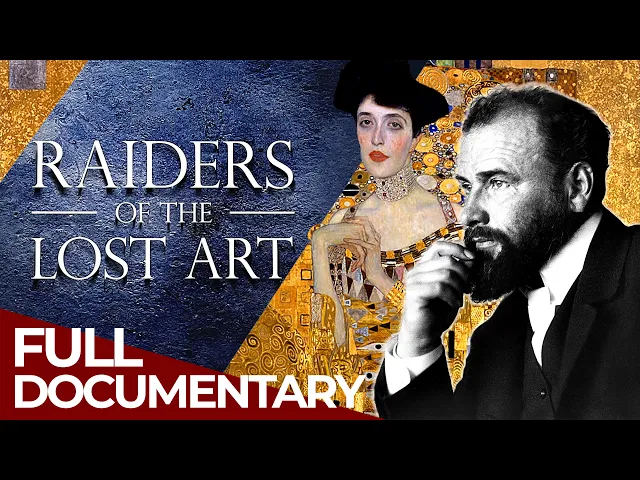
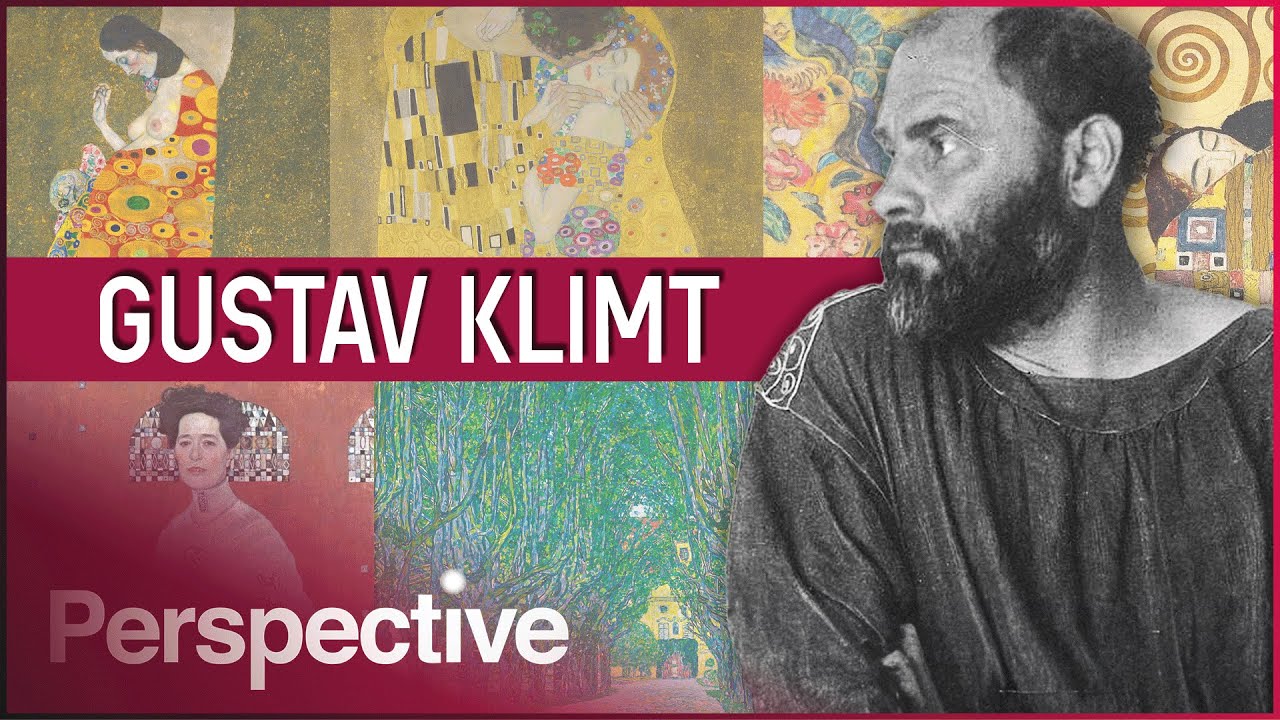
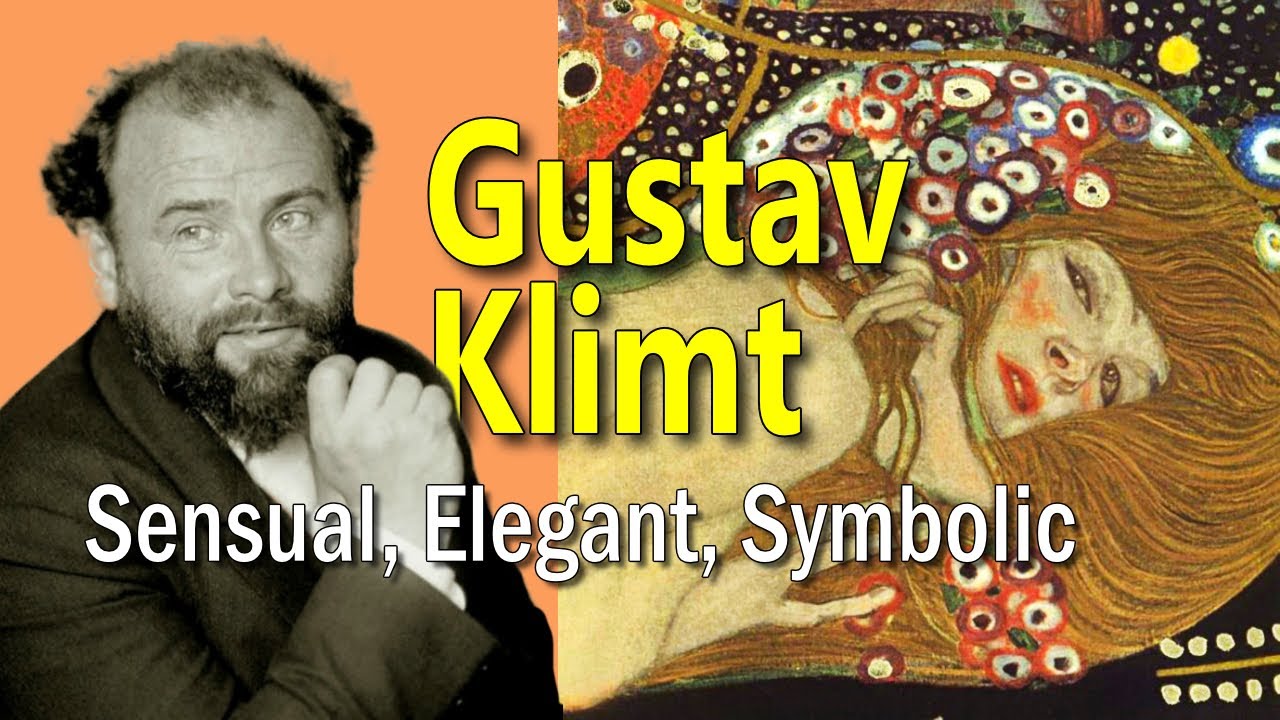
[Music] gustav klimt lived a colorful life that matched his exuberant paintings especially his most famous work of all the portrait of adele block bauer adele blockbaugh was a fascinating lady for her time really modern really forward thinking adele's husband ferdinand wanted to give it as a anniversary present to adele's parents klimt actually spent over three years an incredible amount of time working on the portrait klimt's most lasting and iconic work was the pinnacle of his aptly titled golden phase it's incredibly meticulous and ornate and must be very very difficult to paint it's completely gleaming it's like a jewelry box little did he know just how troubled a history this painting would have the nazis confiscated his paintings including the blackboard portrait limpt would probably have been labeled a degenerate artist if he had lived up until that time how did this portrait get caught up in an epic legal battle and subsequently become the world's most expensive artwork [Music] [Music] i can paint and draw i believe this myself and a few other people say that they believe this too but i'm not certain of whether it's true gustav klimt was born in 1862 on the outskirts of vienna he was brought up very conventionally he was born into an austria that had been incessantly at war and then suddenly wasn't and so it was a very comfortable secure affluent boring world by the time he was 30 that had all changed and he was living in a city where there was schoenberg and mahler and freud and wittgenstein and it was just the most extraordinary effulgence of brilliance his father was a craftsman a gold engraver and gustaf was brought up in an environment in which art was discussed and he decided to study the vienna school of arts and crafts and he had a fairly conservative education there it was a strange time in that there was a real duality between immense progress and a sense of stagnation in society a lot of this progress i think was driven by a huge surge in the population there were these two opposing sides of society in vienna real wealth juxtaposed with real poverty and klimt kind of straddled the tube he was born one of seven children in a small suburb of vienna very very poor their stories of him and his brothers being teased at school because they had going to school in rags but there was also the mobility that his talent was recognised and he quite quickly became very famous in vienna vienna was then the capital of the austro-hungarian empire very wealthy but it was an extremely artistic city and in the late 19th century and turn of the century it was very avant-garde and there was a lot of interesting exciting things going on in the art field so it was a great time for an artist to emerge at this time the vienna secession was emerging meaning a whole new artistic movement was beginning to flourish the vienna succession was set up in 1897 it was a group of art rebels those artists who wanted to break away from the conventional artistic scene in vienna they set up an exhibition venue where they showed avant-garde art and klimt was its first president so he played a crucial role in its founding he started his career really working with the state doing various murals eventually ended up completely turning his back on that and being a leader of the secession there'd already been a berlin secession and a munich succession so fiona was rather parochial in that sense but it was a rejection of the kind of art that himself had been making he really represents that move from traditionalism through to something really quite radical whoever wants to know something about me as an artist which alone is significant they should look attentively at my pictures and their seek to recognize what i am and what i want [Music] gustav klimt was an unusual character unlike most of the artists in vienna around the same time he steered clear of the burgeoning cafe society he was a very private person but his reputation did spread quickly and patrons sought him out he was very reclusive it seems his first studio the one he was in for 20 odd years was right in the center of vienna and he in spite of that he didn't socialize he continued to work with artists at the secession organization but he didn't mix so much with viennese society by this time he'd begun to make it and patrons and dealers would knock on his door so this is actually part i think of the legend of klimt is that he was quite reclusive he was in his studio a lot of the time he had quite an unconventional dress sort of loose-fitting tunic robe and he would be there working away night and day really he wasn't someone who was out in about march he was really based in the studio and this i think this sort of added to his mystery i have never painted a self-portrait i am less interested in myself as a subject for painting than i am in other people above all women klimt may not have socialized as much as the other artists of his era but he certainly didn't shy away from all human interaction it's thought that he fathered at least 14 children in his lifetime yet there was always one constant in clint's life his companion emily flerger he frequently wrote postcards to her [Music] on my first days here i did not start work immediately but as planned i took it easy for a few days flicked through books studied japanese art a little flint became quite close to one of the floga's sisters emilia floga who had established a dress salon with her two sisters called the schwester floga or flogger sisters fashion salon klimt's brother ernst who died very young was married to helene emily's younger sister and unfortunately he died which made klimt really the guardian of her learn and he became very close to the vloger family and he had long correspondence with her she was really in the center of the avant-garde bohemian circles in vienna quite a rebellious lady she was klimt's lifelong companion they were almost certainly lovers as well but the relationship is a bit ambiguous klimt actually he never married and had a string of lovers which emily fluger is said to have been the model in the kiss which is klim's probably most erotic work clem's earliest pictures that really incorporated gold were was when he was working on a portfolio for this important viennese art publisher called gerlachenschenk and he offered a work called the kiss which did have a rather lavish use of gold and that would have been in the late 1890s shortly thereafter in 1901 he made a painting called judith one and many people believe that's actually a portrait of a jello buck bower herself and that includes rather lavish use of gold not only in the the frame and the background um for the figure but also the gold choker that she's wearing which is rather similar to the choker that we see on the portrait of the jalapeno herself in 1903 he went to ravenna where there are the amazing byzantine mosaics and frescoes and he said it was sort of nothing short of a revelation for him these incredible images icons surrounded by gold so i think that's really where we can see the start of using gold leaf the golden background has an amazing effect on the portraits and it's very very dramatic but also we have to remember that it was in his childhood it was in his upbringing his father was a gold engraver so he had the sort of the double lead into it where it was a family career essentially it was during this golden phase that klimt began his first official portrait of adele bloch bauer it's believed that um gustav klimt met adella black bauer and her husband most likely through the vienna secession ferdinand bloch bauer was one of the most important art collectors in the city and who know that ferdinand approached gustav klimt and asked him to paint a portrait of his young wife who would have been about 25 years old at that time ferdinand wanted to give it as a anniversary present to adele's parents ferdinand was pretty rich he was a sugar merchant but adele's father was really rich i mean he was a very eminent banker and he was head of the eastern railways and all sorts of things and that occurred certainly by the summer of 1903 and we know that klimt began work on the portrait in the winter of 1903. adele blackburn took at least three years and when you look at it you can see why i mean it's incredibly meticulous and and ornate and must have been very very difficult to paint this portrait of a viennese society woman would become an object of desire for many including a nazi officer but how did this artwork leave its home in vienna and end up in the possession of a wealthy u. s art collector the portrait of adele block bauer is one of klimt's best-known works little did he know its turbulent future as he meticulously created this masterpiece flint was a very slow artist he liked to spend a lot of time with his sisters making upwards of hundreds of sketches in fact he probably made at least 200 sketches just for the first portrait of the della block bauer about 125 of which are known to survive and we have a few of them in the collection of the museum here today it was very meticulous of course this was very frustrating for his sitters who would be there for many many hours the delebach bower would have traveled to his studio on the outskirts of vienna in one of the outlying districts spent hours and hours with him at a time in a private chamber where he made these sketches and certainly that would have deepened the closeness of their relationship now there's a lot of speculation surrounding this many people have assumed that they were lovers or delved into that we have absolutely no evidence part of that is because of the very sensuous nature of the portraits of judith 1 and judith 2 which are believed to be portraits of adela herself i'm a painter who paints day in day out from morning till evening figure pictures and landscapes more rarely portraits klimt may have claimed that there was nothing special about him but his art was a different story his portrait of adele block bauer would eventually be hailed as a masterpiece and become an iconic work of art this painting is a really interesting combination of naturalism and decorative symbolism it's the two sit by side by side the portrait is is incredibly complex and many people have described it as being something of a secular icon and i do think that's a rather apt description so in the rendition of her flesh so her face and her arms which is actually only one twelfth of the painting you see this quite naturalistic style you really get a sense of the person the detail in her face i think the first thing that you notice are the eye shapes sort of elliptical shapes on her down there also appeared to be amuletic devices the all-seeing eye of god which some people also see as a relation to the egyptian widget eye which would provide perhaps a form of protection for her there are theories that this is the eye of horus it's an egyptian symbol protecting the vulnerable an eye of protection warding off danger we know that adela suffered extremely poor health and was very frail her entire life in fact she died when she was only 43 years old in 1925 and rather unexpectedly she also had tried to raise a family with her husband and had two miscarriages and lost the only child that she brought to term just a few days after his birth and this is believed to have occurred while klimt was working on the painting so he might have incorporated those amuletic motifs as a sign to try to help her be successful in being a mother finally i would add that he included her initials a and b are scattered really throughout the gown and other parts of the canvas an absolutely marvelous composition and that's really the secret of the success of the painting the way that these different elements are brought together and sort of almost seamlessly merge as in a sort of mosaic at the same time as the portrait of adele block bow was first presented to the world gustav klimt first met the young artist egon sheila he would take him on as his protege and eventually sheila would also become a celebrated artist egon sheila was like many other young artists at that time slightly younger generation than klimt and they really looked up to him as the leader of the avant-garde someone had broken away opening up the art world in the city and bringing in something new he was incredibly generous to sheila you know i think sheila was 17 and klimt was 45.
he was president of the secession and he was you know very eminent and this little oak turned up and said you know i want you to mention me and he said okay and he found him models and he got him shown i suppose he recognized something in sheila's work you can really see the belief and good will between clint and sheila they even swapped drawings sheila proposed it and klimt said to sheila you're a much better drafter than me why'd i ever want to do that but he still did the swap of the drawings and also when sheila got into a bit of a tricky financial situation clint came to the rescue introduced him to his most important patron august lederer who then commissioned sheila to paint his son so he was really a big supporter of sheila in his early career gustav clintoni sheila had both benefited from the amazing artistic and cultural flourishing that occurred in vienna at the turn of the 20th century but world war one was around the corner and while they were able to steer clear of the conflict they both perished as a result of the spanish influenza epidemic of 1918. after t it back to painting a large popular dusk with a gathering storm klimt's work only became more and more highly regarded after he died he was seen as the greatest painter to come out of the vienna secession but another artist a far less successful one named adolf hitler had also come out of vienna and in the 1930s under his leadership nazism was taking over austria and germany with the rise of the nazis and really with their invasion of austria with the anschluss of march of 1938 ferdinand realized that this was you know going to be extremely bad news for him and he fled the country and shortly thereafter he was accused of tax evasion and other crimes and all of his properties were seized and he ended up settling in switzerland where he lived impoverished a lawyer was appointed to oversee the glock bower collection and homes and all of their assets he worked with various museums in the city and collectors to organize trades and outright sales of these works and through that this particular portrait as well as the second portrait of the book bauer ultimately ended up in the collection of what is today the belvedere museum questions remained whether this was its rightful home as there appeared to be conflict between adele's final wishes and the contents of ferdinand's will he left a will naming all of his property to belong to his family's heirs so he mentioned his nephew in particular and his two nieces one of which was maria altman she had to flee vienna during the war her husband got taken to duck out to the concentration camp and was used almost as a pawn to bribe his brother and as soon as he was released they just completely bolted out of vienna maria altman and her husband um ended up settling in the u.