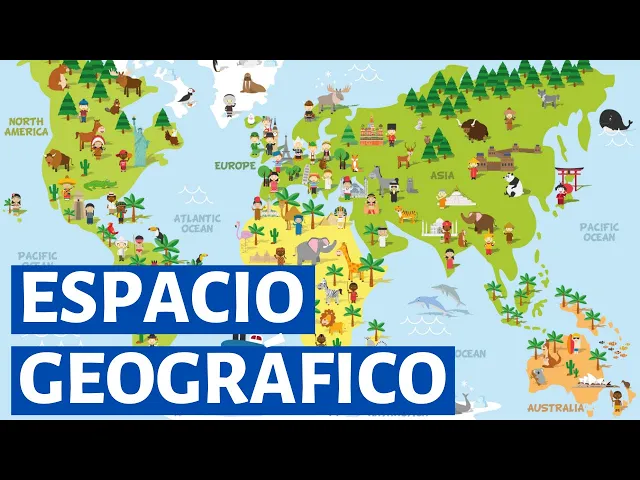
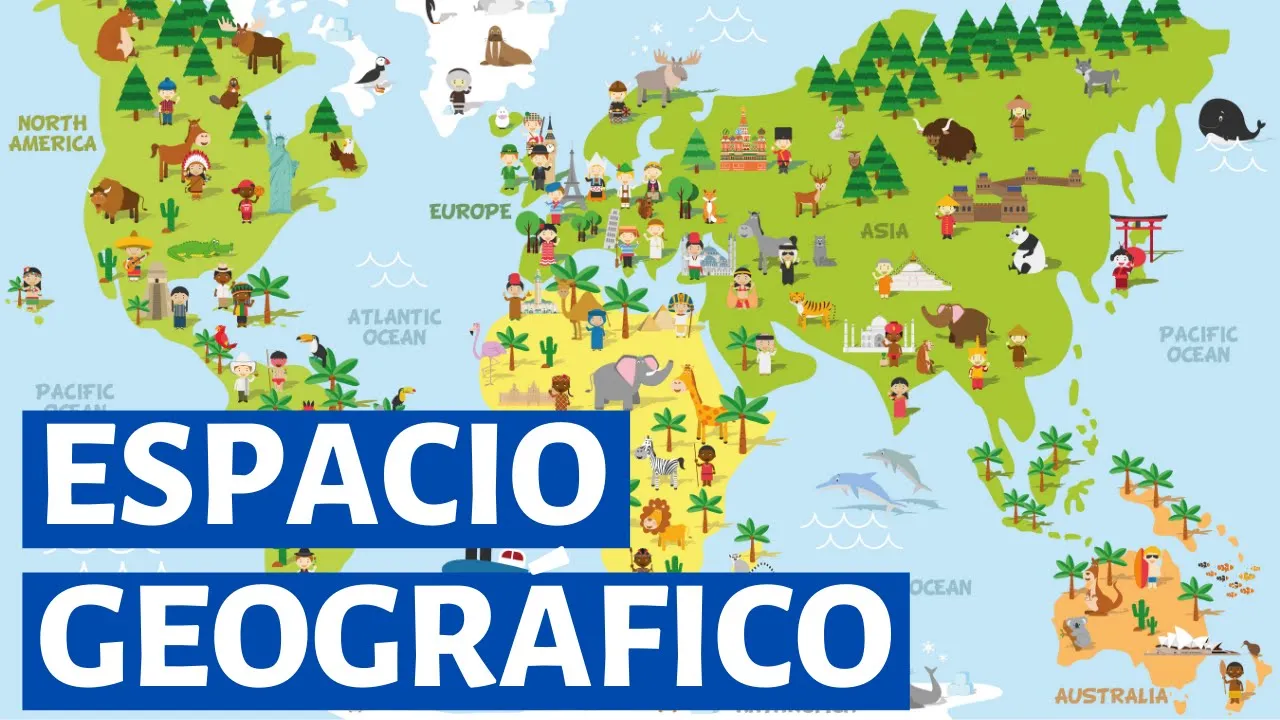
The geographical space is the space where nature and the social and cultural elements of a given society coexist. In other words, it is a set of natural elements (mountains, valleys, plains, diverse vegetation, etc. ) and human elements, such as buildings, streets, monuments, where human life is possible.
A geographical space is always intervened by human action. In other words, a city, a country, a region, a municipality, are geographic spaces. Geography is the science that deals with its study and classification.
The geographical space is the organized space for life, where the human being interrelates with his fellows and with the environment, and where the social, political, economic and cultural organization of a people takes place. In many geographical spaces, such as cities, it is possible to see the passage of time: through their buildings and monuments, for example, the evolution they have had, their growth or their changes can be verified. Therefore, it is a dynamic space.
Characteristics of the geographic space The geographic space is characterized by two basic dimensions: the locational and the ecological perspective. Locational dimension It refers to the possibility of locating a certain space by means of coordinates and being represented on a map. Ecological dimension Refers to all living beings in a given geographical space.
These two dimensions have allowed geography to study and analyze geographic space from three areas or perspectives: spatial, landscape and ecological-environmental study. We could say that history has a significant weight within a geographical space, since, in the same way that a biologist can record the evolution of species, elements from different times can be traced (from ancient times, medieval, modern, etc. ) .
Components of the geographic space The geographic space consists of the following components. Natural components They are those constituted by the natural characteristics of a site without the human hand having intervened. Examples of natural components are valleys, mountains, deserts, lakes, seas, rivers, etc.
Social components It is everything built by the human being that corresponds to the various activities carried out in a geographical space. These components can be religious monuments, markets, etc. We refer to everything that is needed to establish a community, and that the human being builds.
Political Components Political components have to do with the way power is organized in different human societies. From here derives the delimitation of borders that divide the countries of the world and the way in which each one organizes its territories (geopolitical organization). Economic components These components are imprinted in the geographical spaces resulting from the dynamics of production and consumption, that is, of the market, with which societies seek to satisfy their needs.
In this sense, in many places the different social classes are easily recognizable by the characteristics that each one brings to the geographical space. Cultural components They are those related to the particular way of being of each community, its customs, its language, its traditions, its gastronomy, its architecture, etc. , and that throughout its existence is preserved.
Types of geographic space and diversity There are those who point out that there is no specific typification, and classify geographic space into two large groups, intervened and non-intervened spaces. However, there are others that classify it by land use, by its degree of transformation or by its extension. Types of geographic space according to land use Urban space Urban space (urban landscape, urban zone, urban area, urban nucleus, among other names), is that specific and characteristic of cities and urban centers, which is generally defined by the number of inhabitants.
Each country usually has its own criteria to establish which site is a city: for example, for Japan a settlement will be a city from 30,000 inhabitants. Urban centers generally have a larger population and within their limits economic activities of the secondary and tertiary sectors are concentrated, at the same time that infrastructure of all kinds is noticed. In other words, apart from the houses, you will see many office buildings, buildings that house stores (malls, shopping centers, etc.
), numerous restaurants, cinemas, theaters and everything that citizens need. There is a spatial organization through zones, municipalities, neighborhoods, streets and avenues. Rural space These are areas that have fewer people, animal or crop farms abound and there are large tracts of land without any type of buildings.
Types of geographic space according to their degree of transformation Those intervened by human beings and those not intervened would enter here. In the former are the cities and towns, and all that space where the human being has built something. In the second, there would be all the natural spaces where humans have not yet built something, such as the glaciers of Antarctica.
There are fewer and fewer non-intervened environments. Types of geographic space according to their extension Geographic spaces according to their extension can be of the first order or of the second, third or even the eighth order. It refers to the portions in which they can be grouped.
The first order would be the continents. The second, regional portions within a continent: South America, Eastern Europe, Northern (or Northern) Africa, Southeast Asia, etc. The third order is each country: Spain, Germany, Venezuela, Mexico, Saudi Arabia, Israel, etc.
The fourth order indicates the regions within a country, they can be called provinces, states, departments or federal entities (province of Andalusia, in Spain, province of Buenos Aires, in Argentina, Zulia state, in Venezuela, etc. ). The fifth order are smaller regions, such as municipalities; the sixth would correspond to the neighborhoods; the seventh to avenues or streets, and the eighth to homes.
Examples of geographic space Mexico City (city) Mexico City, the capital of Mexico, is one of the most populous cities in the world. Both in the center of the city and to the north, you can appreciate the different historical periods it has had. In fact, in Tlatelolco there is the Plaza de las tres Culturas, where there are remains of the Mesoamerican culture with pyramids, a church built with the same stones from the colonial era and finally, huge blocks of houses surround it, a testimony of the modern era.
Ribagorza (rural space) Ribagorza is a region of Huesca, in the Aragonese Pyrenees. Its small towns are nestled in a rugged nature, surrounded by mountains and waterfalls. Nowadays, its population density is very low and it serves as a framework for tourist activities and environmental conservation.
Ukraine (country) It is located in Eastern Europe. To the east it borders Russia; to the north with Belarus; to the west with Poland, Hungary and Slovakia; to the southwest with Moldavia and Romania and to the south with the Black Sea and the Sea of Azov. kyiv is its capital and the largest city in the country.
Palermo, Buenos Aires (neighborhood) It is one of the oldest neighborhoods in Buenos Aires. It is located north of the city and is the largest, a large part of its territory is occupied by the forests of Palermo, a conglomeration of parks and green spaces. It is fundamentally residential, although an important part is dedicated to recreation (gastronomy, cultural centers, cinemas and theaters).