As soon as you go in and you talk to the enterprise, a CEO, CFO, CIO, whatever it may be, it immediately goes to an ROI conversation like this is going to save me a boatload of money. And in some cases, it is. That being said, if you only focus on the benefit of the ROI, what happens is immediately if you're an employee, you start to think, man, my job's being replaced. We need to flip that narrative as well. We need to start to think about how do we use this technology to drive ROI to get
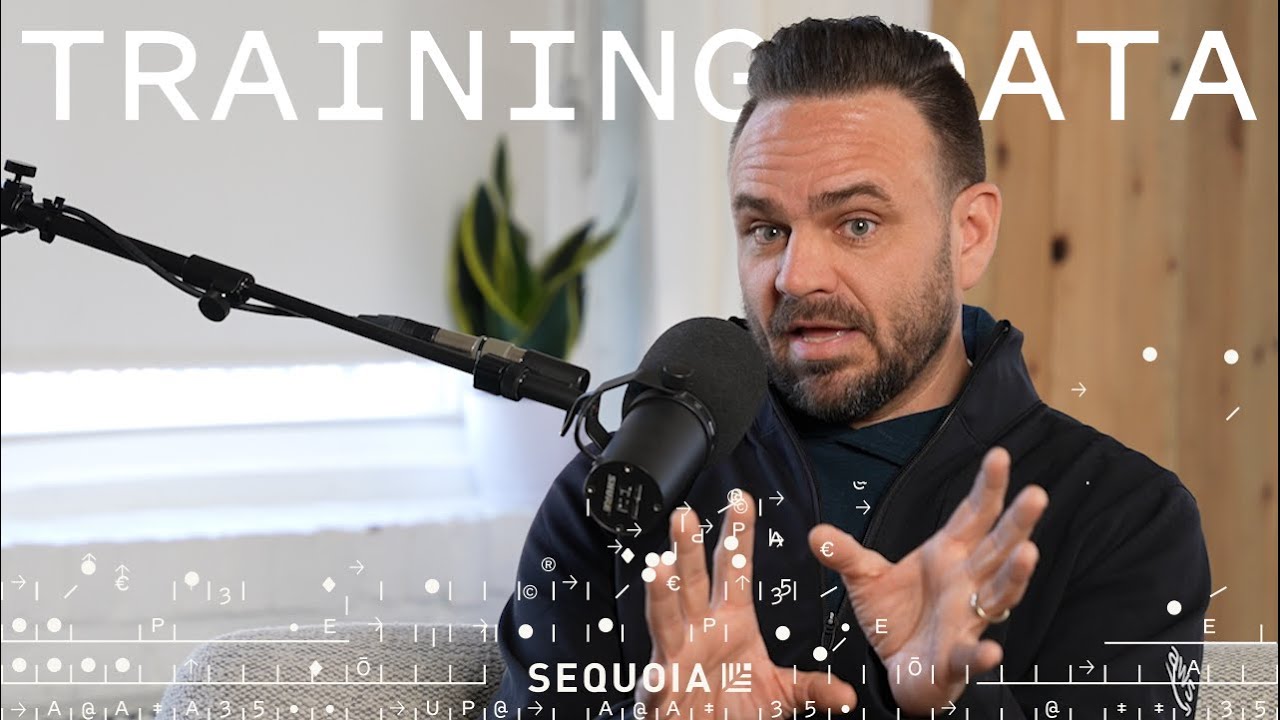
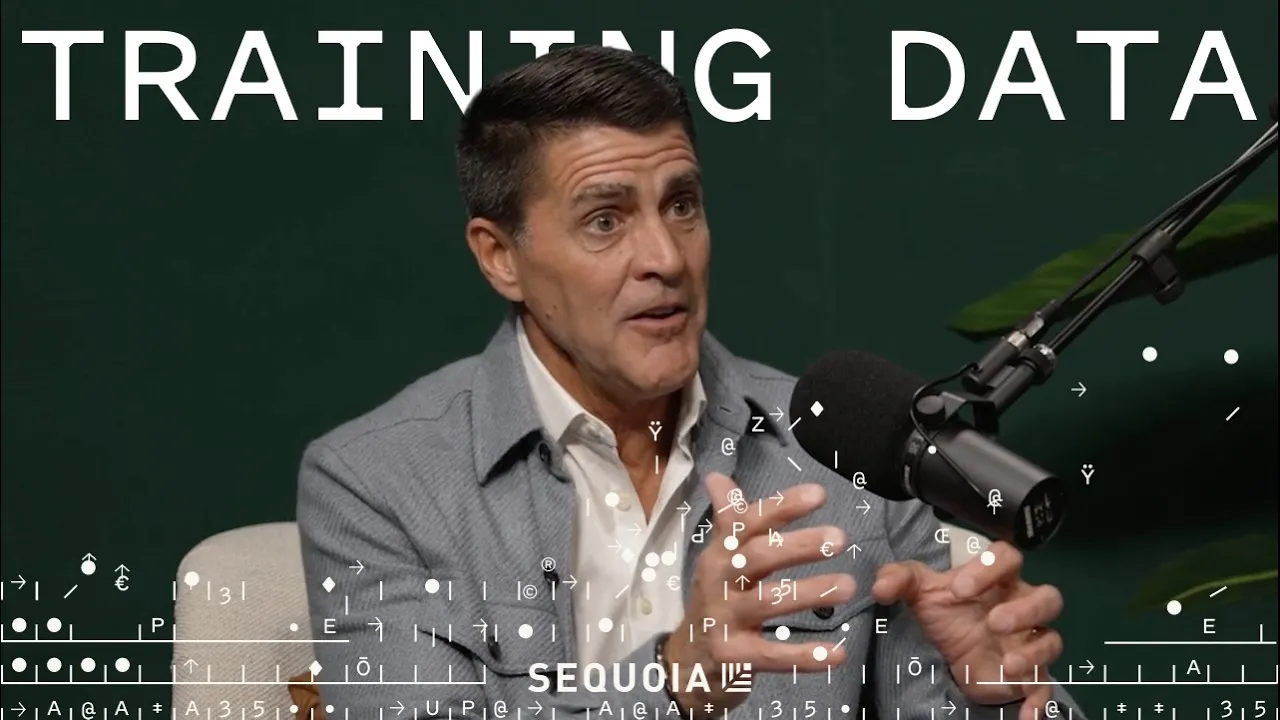
dollars to reinvest in the business to drive growth. We need to talk about AI from a growth value proposition, not just an ROI value proposition. And that's how you get the employees and agents and AI to peacefully coexisting enterprise and really drive growth for [Music] companies. Greetings. Today we're joined by current Workday CEO, former Sequoia partner, and perhaps the most beloved executive in technology, Carl Echinbach. Workday, as you may know, is a system of record for people and the numbers produced by those people. As we move into a world where people are complemented by AI
agents, workday is on a path to become the system of record, not just for people, but also AI agents and of course all the work done and numbers produced by those people and those agents. Carl talks about Workday's three-pronged approach to monetize AI through seatbased pricing, role-based agents, and consumption-based API access. He also talks about how to implement AI and how to transform a company while preserving your culture and values. We hope you enjoy. Carl, welcome to the show. Thank you for having me. It's great to be here with both of you. I couldn't think
of two better podcasters to be with, Sonia and Pat. Come on. We We couldn't think of a better venture capitalist who is moonlighting currently as a CEO to be doing this show with. Okay, moonlighting. I like that. Actually, I am moonlighting because I have responsibilities here with you and my other job. Right. Some days I wonder which I'm doing more. No, I didn't say that. I'm doing the other one more if I'm honest. But I appreciate still being part of the partnership. It's an incredible uh opportunity to still engage with what I think is the
most iconic venture capital firm of all time, Sequoia. And just to be around it in some capacity and see people like you and all my partners is truly a blessing for me to still be involved. So, thank you. Thank you. We really appreciate that. All right. All right, we're going to start with a question on workday. Okay, so you guys are the ultimate system of record for people in a world where AI is replacing people. What happens to the system of record for people? Interesting. So if I may, we are the system of record for
the two most critical assets of any company, their people and their money. Okay? Because we have the financials platform. Good distinction. Interestingly enough, they're one and the same. And we get asked and I get asked all the time, you're a system of record in the enterprise. AI is coming. It's a transformative technology. It's going to disrupt everything, especially in the enterprise. And companies like you might be in trouble. And I would say with a bias towards being biased, I think we're in a very unique position. And let me explain why. Today, 20 years old as
workday, we've been managing and supporting our clients most critical assets. As I said, Pat, they're people in their money. Yep. And we now have a database, a highly curated database of more than 70 million users that is processing 30% of the job wrecks in the United States last year. And when you think about AI, at the end of the day, it's all about data. I think you guys would agree with that. Now, it's not just about data. It's the context of the data. Mhm. And when you have that much data and you have the context
of it and you're in the actual workflow, the business process workflow, you can then use agents to drive actual results that people see value in doing in using. This is where we start to talk about things like role-based agents and the impact it can have on the enterprise. The other thing I'd say when you have 11,000 customers, you've been around 20 years, you've been that core system of record, it led to us becoming the system of truth. People trust us. And anytime you go through one of these major tectonic shifts from one technology to the
next generation of technology, I believe especially in the enterprise, the enterprise customers look to us and say, "How are you going to help us with that transition?" Just like 20 years ago, you helped us with the transition from on premises to the cloud for HR and finance. Yep. So the combination of the data, the context of the data, we're in the workflow, the trust we have, and I think at the end of the day, as we talk about agents, and I'm sure we'll talk about it here, I think domainspecific agents with highly curated data are
much more beneficial in the enterprise than just general purpose LLM models that are out there. Agreed. That's why we think we're uniquely positioned. I get asked all the time, are the incumbents in trouble because of the startups? And quite frankly, it's not an or, it's an and. There's going to be success across the board. You guys have a bunch of great companies that we work with that actually bring more value to the system of record. So, it's both. I think there's opportunity for everyone. Pat, and your point on trust is a good one, and that's
definitely been a recurring theme amongst the application AI companies that seem to be working. Let me ask you a question on product though. So, let's say that I am an AI developer of some sort, or more practically, Sonia is an AI developer of some sort, and she shows up at workday because she heard that there's this treasure trove of information that you've amassed over the last 20 years, all of these records and all the context around the records. How much of that is actually available for you to go build cool AI stuff with? And how
much of that due to permissions or information architecture or 20-year-old company stuff? How much of that is not available? Or or said differently, in actually building with AI, all the data that you've amassed is obviously an advantage. How accessible is it? And what roadblocks are there to making the most of all that data when you try to turn it into product? Yeah, it's a great question. Um, if you look at the amount of companies and technologies that access the workday system of record, it's a lot. For example, identity companies, for example, active directory. When you
onboard a new employee, guess where they all come and do that? on top of the Workday platform. Today they do it through an open set of APIs, general purpose APIs that we put out there for people to develop on and connect with us. Going forward as we start to think about this world of AI and the potential of all of these agents entering the world in the enterprise, someone has to think about how you onboard them in a secure, responsible, ethical, compliant way and make sure their identity and access controls and all the data they
get access to has governance around it. Today that's the risk. That is the risk in the enterprise. When we talk to CIOS, the first thing they say to us, we love agents. We love this technology. We love what potentially could happen with with agents. But we are concerned we're seeing agent sprawl across the enterprise. My analogy, Pat, is remember when we always used to talk about shadow IT creeping up and how do you get it back because of the security and compliance controls that you want in a corporate uh headquarters or a corporate function. That's
what we're seeing. Now, what we're seeing is people want to bring agents into the enterprise. They want access to our records. They want to onboard them just like we would a human worker. They want to do it with a digital worker. And what we're building is something called an AI gateway where you're not going to be able to do that to a generic set of APIs that we have today. You're going to have to come through this agent, if you will, gateway to onboard into the enterprise through us. Yeah. Say more about this. So people
people are using Workday or will be using Workday to onboard AI agents analogously to how they might onboard human employees. Bingo. I'm going to hire you as my next sales rep, Pat. So what we announced, uh, that was a good setup and you didn't even know it. Uh, about a month and a half ago, we announced something called an agent system of record. And think of it as the unification of a system of record between human workers and digital workers. Just like human workers get onboarded in the enterprise today. They come through workday. They get
onboarded. They get assigned to whatever organization they're part of. They get their benefits. They get tracked. They get monitored. And they get looked at for performance reason. And then you do benchmarking of all your human employees to drive workforce management and capacity planning. The world of AI comes about. Agents come into the enterprise. Everyone says they're going to come into the enterprise. Okay. How do they get into the enterprise? Who onboards them? What organization are they part of? What access rights do they have? Who controls them? Who measures them? No one. Today, we think in
the future and as we talk to our customers with this new agent system of record, that unification of human and digital workers on a common platform is the path forward. And then once that's in place, you can start to do workforce management, workforce planning around all of your workforce because it's no longer a workforce of human. It's a workforce of human and digital workers and that's what we've developed and we're in the process of bringing to market. That's so fascinating. So it's a system of records for your your people and your money but your people
includes your your human people and now now your agents as well. Exactly. And there's a lot of fear out there Sonia that these agents as they come into the workforce are going to completely displace all the human workers. Right. And we're going to, you know, I hear some of my peers go out there and talk about we're going to see a 20, 30, 40% reduction in the human worker, right, going forward by all of the agents in this whole AI revolution. I fundamentally don't believe that to be the case. Yeah, it's interesting. I I remember
the I remember 15 years ago hearing a Neil articulate the vision for workday and part of it was the reason people and financials go together and the analogy to the last generation before that which is you know the ERP systems of yester year SAP and such physical manufacturing was the economy and so the same system that took stock of all of your machines was the system that was your financial backbone and with the original workday day, we're moving into a knowledgebased economy. And so the same system that takes stock of your people is the system
that provides your financial background backbone. And now as we move into an AIdriven economy, the same system that takes stock of your agents is the system that is also financial backbone. And because it's fluid between the people and the agents, it makes sense that it would all live in one place. it all and if you think about you know the workday platform everyone thinks about us having a HR platform and a finance platform but if you look at the architecture they're one and the same exactly as you just described now layer on top this new
workforce called digital workforce on top of it that benefit you've got for the last 20 years continues but it brings these agents into the enterprise in a much secure way. Yes. Yes. And then practically speaking, how do you how do you take this to market? How do you how do you roll this out? Do you do you need some sort of a standard unit of pricing and packaging that an AI agent builder can adhere to? You know, how a person is a person. And granted, there are lots of different types of people, but everybody's got
a date of birth, you know, everybody's got a title. um what are the common characteristics of AI agents that will allow them to sort of map into this framework that you guys are now and how do you price them as well and also how do you go to market right I remember being at Sequoa I'm going to back up and that'll answer your question do you remember when this whole actually I was talking to RU about this last week and everything was going to go PLG everything's going productled growth you don't need sales reps you
don't need you know 37year sales veterans like myself anymore. You don't need the enterprise. You don't need the top down. I'll tell you the times are coming back. With AI, it's a top down sale in most cases. It's not productled growth up through the enterprise. You're selling to the heads of departments or heads of functions or a CIO. So, I think the distribution is coming back to a much more inhuman uh sales motion. You're seeing that. We're absolutely seeing I think that's a common thread if you look at the AI companies that are really working.
It's fun because I told RU when I saw him last week, I'm like, see, I told you PLG is good, but it's not the panacea that everyone thinks. You are still going to need people like me someday. Yes. And they do, right? Um, so, so, so I just thought I'd wanted to talk about as far as pricing goes, there are multiple ways people are pricing AI and then I'll speak specifically about agents. Let me back up. Two years ago when co-pilots came to market, a lot of our peers, a lot of my peers and competitors
immediately went to market and they basically said to their customers, we now have a co-pilot and because we have a co-pilot, we're going to raise our pricing 20%. And we made a decision and I specifically said I do not want to do that. I don't think it's the right thing. Co-pilots are going to become part of the core foundation of all products and it should be built in, not bolted on and it should be the value our customers get and receive by paying us a subscription fee on an annual basis. We have to innovate. Yeah.
To be honest, we got beat up quite a bit. Why aren't you doing this? You have co-pilots. You should be monetizing. And I said because it's the right thing to do. When we bring true value, right, with our agents in the future and we can show you a strong ROI or a value equation, then you'll pay us. Fast forward to today, we price our AI solutions in one of three ways. Number one, we pay price it based on seats. So we are a seatbased company for the most part. And if we have an agent or
an AI technology that provides value to all of the employee population, then we will do an uplift based on that agent or that technology. Uplift per seat per seat. Okay. The second would be based on an actual agent itself. Like if I can come to you Pat and say we're rolling out a payroll agent and you think about how many payroll administrators you have today, but we bring a role-based agent into the market. I'm making this up and we're gonna say it's $50,000 a year for this agent. Today you have a payroll agent or a
payroll employee over here looking at everything. All you they're doing is administration and that cost $200,000. You'll say, "hm, I'll do this." So you can do it based on the role. Do some of those cannibalize the seatbased model of core workday? Meaning if I now have a payroll agent, I need to hire fewer payroll people and I would have been paying for a seat in workday for each of those payroll people. Does the agent business cannibalize the sort of original seatbased business? I don't think so. Okay? Because what AI should allow that payroll administrator to
do is go off and do more high value tasks and drive more strategic outcomes for the company as opposed to just being replaced. If you think about what we do today, you, me, everybody, we spend the majority of our day working with technology, sitting at our desk, working on a phone, we're working with technology. The power of AI is going to happen when we transform that equation and the technology works for us. Yes. And we don't even know what's happening. Right now, we're interfacing with all of these, you know, chat bots and all of these
different, you know, LLMs out there, the consumer, but in the enterprise, what's going to happen and the value is going to happen when these agents and AI technology start to work on our behalf. We don't do those tasks and we go off and do other things. So, we're going to flip the equation around. So that's where I think the value comes in for existing employees to go get new skills. Just like the AI momentum could be called the revolution. I think we're going to go through a skills revolution with the existing workforce to train them
to go do other things. And and if you look at the history of time, people like all of us, all employees, they're very pliable. Yeah. They're adaptable. And what do we always figure out to do? How to leverage technology? Technology is the single biggest source of productivity gains in the history of time. For sure, right? That leads to GDP growth. That leads to company growth. The other thing we need to work on is this narrative that's out there. As soon as you go in and you talk to the enterprise, a CEO, CFO, CIO, whatever it
may be, it immediately goes to an ROI conversation. M like this is going to save me a boatload of money and in some cases it is. That being said, if you only focus on the benefit of the ROI, what happens is immediately if you're an employee, you start to think, man, my job's being replaced. We need to flip that narrative as well. We need to start to think about how do we use this technology to drive ROI, to get dollars, to reinvest in the business, to drive growth. We need to talk about AI from a
growth value proposition, not just an ROI value proposition. And that's how you get the employees and agents and AI to peacefully coexisting enterprise and really drive growth for companies. Y sorry we sidebar. Let me come back. There's another way to monetize it and how I'm thinking about it. Okay. So we got first off we have uplift on all the seats. Second one we have price per agent. Yeah. Think about that value based pricing, right? Based and then the third is consumption based. Okay. meaning how many times is something like I was talking to Brett Taylor
as Sierra right they do it based on consumption and outcomes right and as you know Pat being on their board right we're thinking about the same things how many times back to your initial question are people hitting us to get access to our data so we can base on consumption okay so when all of these agents come out in the world and all of these agents say wow I need to get access to the data to be registered or whatever it is we got to get access to workday say okay great please do so but
we're going to charge for that access going forward as opposed to just that open set of public APIs. So in that case it's a it's a platform business and it's sort of metered almost metered consumption model right and then you can price it to you go out a lot of people today are going out and saying here buy so many you know cons so so much consumption and then as you do it you burn it down over time right uh that's that's a big model that's out there and we're going to do all the above
you mentioned AI for productivity okay you are easily top three most productive human beings I've ever met possibly top one probably top one honestly But you're certainly top three. Um, as an insanely productive human being, how are you using AI to make yourself more productive? Have you have you do you have any favorite products? Do you have any favorite workflows? Like what Studio Gibbly pictures? Yeah. Any great Studio Gibli pictures? Yeah. What are you doing with AI to make yourself more productive? Yeah. So, inside of Workday, and then I'll talk about how I use it,
too. Inside of Workday, we've rolled out a whole bunch of, you know, productivity tools around AI. We have Slack AI, we have Zoom AI, we use Gemini all the time. Gemini is something I use all the time. So, an example, I'm preparing for earnings every 90 days, which is so much fun. Please join me if you guys want. Um, all the analyst reports come out, right? And, you know, how do you summarize them? How do you you throw it in Gemini and boom, and they give you save, you know, hours of reading. That's one example.
Or you're on a Zoom call that you missed. Like, how does that get summarized back to you? I use those type of things all of the time. Yeah. And it just makes me that much more productive. Uh clearly one of the things we're doing inside of workday and I think it's it first of its kind at scale. Uh we're launching this month something called everyday AI where all 20,000 employees have to go through training on AI and how to learn how to use all of these tools to drive personal productivity and through that personal productivity
gain workday gets gain. Yeah. Yeah. Right. So we and they have to test out there's an entire curriculum. It's a really interesting way to get people excited about AI, how to engage with it and leverage the technology as opposed to be afraid of it. And we think it's one way to drive, if you will, that peaceful coexistence between the technology and the humans to drive overall gains for the company. That's another example how the whole company has to do it. And I'm launching it in two weeks. Very cool. Can you tell us more about the
agents that you're bringing to market? So, you mentioned the payroll agents. What what other agents should folks expect from you? We bought a company at this time last year about a year ago called hired score and they have what I would describe as a recruiter agent. So, if you think about recruiting Sonia in the HR function, it is talent acquisition or recruiting is probably one of the most expensive functions you have. Yeah. Right. in HR. This recruiter agent we brought to market, we can give it to a recruiting organization or talent acquisition organization and they
in a very short matter of time can see a 50% increase in recruiter productivity. Just think you get a hundreds of resumes for a job. Today someone searching now it basically can do that in seconds and say here's the top two or three you should go after. But it's more than just recruiter productivity. It also has proved to accelerate time to hire by 20 30 up to 40%. So your recruiters are more productive and you can accelerate your time to hire. Then once you get them inside the building, we have two other AI products. One
is called talent optimization and the other is a talent mobility agent. And when you implement them, we have seen upwards of 40% reduction in attrition. And the reason for that is for the employee, it takes a look at of all your skills, your background and your experience. And for the manager, you say, I have this project or outcome I'm trying to achieve and it starts to do the matching between the two. So what it drives is an increased level of internal mobility with your workforce which drives down attrition because people feel like they're getting new
opportunities. So that's like a full life cycle of agents from recruiting to onboarding to talent optimization to talent mobility and all that we can monetize because people can actually see you see a reduction of 50% of you know you know um need for additional recruiters. That's pretty powerful. Yes. Can I ask you a question on you mentioned this idea of matching talent to other opportunities inside of their company? One of the ideas that we've heard from a few different companies at this point is this idea that thanks to AI the matching problem that is here
is a job to be done here is the right person to do the job. Thanks to AI that matching problem is now possible. Historically, it wasn't because you'd have to collapse the dimensionality of that problem to things like what is the title, what is the geo, what is the pay scale, which really doesn't tell you whether or not this person is going to do a good job. And so I'm curious, are you are you a believer in the ability of AI to actually match the right talent to the right opportunity? And if so, is that
a big theme for Workday going forward? We heard a glimpse of it with the internal product. Is there more of that to come? Absolutely. And it all becomes completely or highly dependent on skills. It's all about skills. It's not about pedigree or college or anything else like you know there like let me give you one statistic um and then I'll come back to say how we do it. Accenture, one of our biggest partners out there, who's a very reputable, as you know, system integrator, global system integrator. Today, their new hires, 30 to 35% of their
new hires do not have a college degree. Hm. It's pretty amazing because what they've done, they're probably one of the most advanced companies I've worked with that looks at skills and job outcomes or job wrecks they're trying to fill and then they use AI to match the two, right? And that's what our product does internally. Let's say you have 10,000 employees. Because we are the system of record, we know all the skills you have and you have this, if you will, database of all the skills of your employees. So now when you want to try
to hire someone, you first look inside and say, "This is what I'm trying to fill this job. These are the projects this person's going to work on and these are the type of skills that are required." Then you look at your own 10,000 employee population. Say, "Wow, here's all the skills Billy or Susie have." And you do that internal matching. And so as we move to a skills-based outcome world, right, this becomes more and more valuable inside of companies. um for people not to just hire based on pedigree is how we like to think about
it. Carl, I remember when I interviewed for Sequoia, you were very memorable. Uh and I mean so much of so much of that interaction though is just a human can I see myself working with this person being inspired by being around them every day. Do you think that AI can actually and a agents can disrupt the actual interviewing process and and you know the the process of actually selecting the right candidate for the job and in terms of some of the human judgment elements? It's a great question because you know me I like doing this
with my partners like you. It is all about the human touch and human connection uh in the relationship you establish with the other person. That's really what's important at the end of the day. But that's also why we always talk about and you talk about probably the same thing. There's going to be a human in the loop in all of this, especially in hiring. I personally would not accept someone into our company if they was 100% done purely based on skills and skills requirement. There has to be a human in the loop all the time.
I think Yeah. And and I know we talk about where AI is going in the future and it will have emotions, it will have feelings, it will have empathy. I'm I'm trying to get there with everyone. Um but I still think this is required um ultimately when you're going to hire a human. In fact, one of the things I think that's going to change, and here's an example of where humans will not just necessarily be replaced by AI, but since AI is going to have such a profound impact on human productivity, it's going to free
us up to move from a world of technology transformation to a skills transformation by people like us now going and picking up skills that I actually think we've lost in the workforce. Right? those life skills, those people skills you're talking about. How do you learn to network? How do you learn to give feedback if you're a manager? How do you collaborate? How do you lead with empathy and feelings? That's we lost a lot of that during co and now we got to get that back as people come to the office. How do we educate and
train and mentor the younger people? You can't do it all the time over Zoom. There has to be a human connection to make that happen. So we're now talking about how do we use the AI transformation of the workforce to transform skills that we think are missing in the enterprise to bring the two together ultimately to drive better outcomes for both employees and companies. This is one of the optimistic views of AI that I think we very much believe in and we hear similar things. You know, Winston at Harvey talks about how the legal profession
is going to kind of go back to what it was 50 years ago where it's less about processing transactions and it's more about human connection and the advice and the consuary role that people can play. You know, Christopher O'Donnell a day talks about how because AI generated CRM does a lot of the drudgery for you, you can actually focus on the human connection too. And so I think the the optimistic view and and sort of what I'm hoping for out of the world of AI is technology to your point earlier on how we work for
technology and it's going to work for us. Technology kind of fades into the background because AI is doing a lot of the work and it sort of frees you to have the human connection be more well front. I think we move from a world where we're working with technology to the technology working for us and today it's front and center and we talk about how we're using AI but the power of AI is these models learn right and they start to do things autonomously on your behalf so you don't even have to do it so
you go do new things and the last thing I'd say is this is this is factual technology enables change. Mhm. That's all it does. It enables change to drive change. It still takes people no matter what. Well put. People are going to be involved with AI. They have to implement it. They have to embrace it. They have to teach people how to use it. And they have to teach people new skills. Technology only enables change. It doesn't drive. It still takes humans. So this is one of the ironic things. I completely agree with the point
and and maybe a different way to frame that. One of the ironic things ironic things about this agentic economy agency is the thing that is uniquely human right the ability to determine what is it that I want to achieve here that is still a uniquely human thing you can dispatch an AI agent to go reason through the steps and figure out how to get there but deciding what question should I ask what is the objective you know that's still a uniquely human thing I think another framework would be you know Google sort of commoditized knowledge
open AI is sort commoditizing intelligence. Agency is the thing on top. You know, intelligence is making use of that knowledge. Agency is determining to what end. And that's the thing that is still uniquely human. And I think the argument in favor of AI is it gives you superpowers to go do that. Yeah. I I think it's well put. Again, especially in the enterprise, Pat, I think there's so much opportunity. I think AI will drive a step function change in human productivity. No doubt. No question about it. I think how we get there, there's different views.
there's different opinions, right? Um, and I think, you know, we at workday and myself for sure think it's going to be a peaceful coexistence of humans and technology working together just like we've done in, you know, the past major tectonic shifts. I remember when cloud evolved and came about, everyone said everyone's going to CIO organization, you're not going to need any more people. I don't know. There's probably more people than ever working in, you know, the CIO's organization. People say developers aren't going to be needed. I'm not sure that that's going to be true. We'll
need less junior developers, but really architects and senior developers are still going to do the final work and approve it or not. Back to Sonia's point, we're not going to have Carl vibes coding the dead code base. Yeah. No, I would love to see Carl. That would be a problem. I'm I'm There are some things I can do and there's a lot I can't. That's one I can't. Right. So, we talked about transformation a bit and how people are going to transform and AI is going to transform the workplace. Um, the timing of your transition
into the CEO role at Workday was pretty interesting because it was January of 2023, I believe. And so, we're just a couple months post chat GPT moment. Yeah. And so, you you came into a company that was at that point 17 years old, 18 year years old, something like big company, already many billions of revenue and tens of thousands of people. And from the outside looking in it it seems like you have driven transformation on at least two vectors. You know one is driving just efficiency and velocity and just kind of basic you know cleaning
up the business getting it in better shape sort of transformation. And then the second of course is the AI transformation. And so the question is because I think there are a lot of people you know looking at transformation over the next few years. What did you do to drive transformation? what was effective for you? What were some of the maybe what was a crucible moment or two that you had to sort of bust through to actually drive change in an organization with that much scale? Yeah. No, listen it is a big company um when I
joined and it's a one of the most successful obviously software companies of our generation if not ever. Um and it wasn't Carl who drove any transformation, it was a team that drove it with me, right? and to get their support was probably what I had to do and work on most. Um, let me start with what hasn't changed and what will never change because I think it's very special and it will never be transformed. When Anne Neil and Dave, the founders of Workday, uh, who worked together and Dave was the founder of Peopleoft, when they
sat down to start this company 20 years ago, Pat, the first thing they did is they said, "What kind of company do we want to build and what is the core foundation of the company and how we're going to scale from this day forward?" And the first thing they did is they sat down, they wrote values. They wrote six values of the company. And to this day, we still talk about those six values as the foundation for the company. We focus on our people first, our customers, two eyes, integrity, and innovation. Uh, and the last
two is we like to have fun. And the sixth one is profitability. And profitability is the sixth one for a reason because if we do the first five right, we're going to be profitable. And even today, that's all I talk about when I'm in front of the company or in front of customers. We talk about how important a values-based company is. That being said, our culture is strong because of those values. But culture, while the values will never change, culture does change as companies scale and grow. And part of our transformation is to think culturally,
how do we actually become a bigger company? Uh how do we run things more effectively and more efficiently and drive a deeper level of operational rigor? Uh how do we transform? A lot of work has been done because probably of my experience and background. I can't change who I am or where I came from on the go to market side. How we've segmented the market, how we've gone deeper into verticals. Uh how we've expanded and you know built a true partner ecosystem. I now say I don't want to build just an ecosystem around workday. I
want to build an entire economy. Our partners are now not only deploying us, but they're all now taking us to market, they're selling on our behalf. They're being rewarded and most importantly they're innovating like crazy on top of the workday platform. We're unique that we're both a platform company and an application company at the same time. And the platform is starting to resonate as we open up the aperture. Some of the things we talked about earlier to allow people get access to the platform. They're innovating on top of us and then they build it once
a partner can sell it to our marketplace and sell it to our 11,000 customers. Right? Build it once, sell it to many. So we've done a lot on that side. And then on the technology side, yeah, I stepped into this. Everyone knew about AI. We knew AI was going to become, you know, a big part of a company like Workday. It always, you know, has been on on the road map. In fact, you know, if you talk to Anneil, who I think is one of the most, you know, thoughtful, uh, mindful and smartest, you know,
enterprise software guy I ever met. Like he's been doing AI and machine learning in the platform for a decade, right? That's what he said. So, this is just the next evolution. I didn't know stepping into this like this was going to happen this quick. And I think one of the things that we've done in some of the transformation and crucible things we're doing is moving with speed and velocity at scale. Yep. Like we're moving much faster. Uh we're we have a sense of urgency because we think we're uniquely positioned because of the data set we
have. Um we think we got to move quick before anyone tries to come and disrupt us. So, we're focused on disrupting ourself and I think that's been a lot of fun. Um, unfortunately, you know, to support all of these growth initiatives and these transformations that we're going through. Um, one of the hardest things I've ever had to do in my career is a sizable um, you know, transformation of our people where we did a restructuring earlier this year, about 8% of our workforce, about 1,650 people. And listen, that was the hardest thing I've ever had
to do in my career. When it's on your your watch and your time to do that at a values-based company is not easy. So getting all the the leadership and and my partner and Neil and the board to support that uh was a heavy lift. Um but the way we did it was incredible. The empathy we showed, the caring, the loving, uh, the embracing of our workmates that were leaving us, the packages and severance we gave them was done in such a way that I think people felt as good as they could going through this
type of a transformation. And now we freed up all of these opex dollars to go invest in these transformations on both go to market and the product side. Um, it's been incredible. It'll be two and a half years here in a couple months. Uh it's been a great experience. Um and I'm grateful for the opportunity. I feel a sense of um you know pride to continue this you know endure this company well beyond you know my time here and feels like days there's a lot of pressure if I'm not lying but you know I have
an amazing set of people that I get to serve alongside of that believe in our mission believe in the product believe in the technology and believe we're actually having an impact on the world because we manage more employees than anyone out there today that's pretty fun pretty cool So if the first 20 years of workday were sort of helping usher your customers through this on-prim to cloud transition in the next 20 years, I know this is oversimplified, but the next 20 years are helping to usher your companies into this world of AI. Does the nature
of the moes that you build as a business change when you go into the AI world? or said differently, you've had this wonderful moat historically which is being a core system of record that a lot of other applications sort of orbit around. Does the nature of the moat for the next 20 years change with AI or is it kind of more the same? It's just the AI version thereof. I think the moat remains the data. When I think about data, data is the new UIUX for AI. Think about that. Data is the new UIUX for
AI, right? Garbage in, garbage out. Highly curated data with context in great outcomes with agent. So I think it's a both. I think our moat is what allows us to build the next set of moes and that is role-based agents. Yeah. And if we can bring role-based agents because if you think a lot of today what you see in agents if you a lot of them are just super co-pilots. They're task agents. They call them agents, but they're doing a task. Yes. And it's automating some repetitive task, right? Think of RPA on steroids almost, right?
Yes. When you go into a world where we leverage the mo of data and we have the context of the data and we understand the skills humans have, think about now building role-based agents that doesn't do a task, it picks up skills. Mhm. And because we know that, I think that's going to become our next big moat along with the data we have as we transform how people work alongside of agents and not just use them to solve a repetitive task. M so I think as the world goes into the future because of that moat
I think people do trust us to help them navigate the unknown of AI to help them you know take advantage of it in the future specifically obviously we're not a consumer company but in the enterprise should we jump in a lightning round uh oh let's do it surprise you go for it where's the lightning come on which of your beloved Sequoia partners do you miss the Oh, wow. I got it. Ready? Yes. Emily, there you go. Nailed it. Nailed it. That That's actually That's the best answer you could have possibly given because I don't think
anybody will take offense at that answer. Listen, I love all my partners. Uh, listen, I, as I said earlier, Sonia, I'm so grateful you gave the old operator a chance to come in. And I think some people were nervous about me coming in, but I dove in. I learned thank you to you two especially I'd attempt to write those damn memos and I'd be like all right that's enough let me get some help and you guys would just I remember the red lights coming back I'm like damn it I thought that was really good until
I give it to you two. Um but I hope you saw that I came in with no ego and came in as an apprentice and I dove in and learned and cold called prospect. It was like I went back 30 years of my career bagging the phones and I didn't think I was any different than anyone else. And hopefully you saw that. It was amazing. It was an inspiration to all of us. This is a thing that I don't think people appreciate is like people I think people assume that oh well Carl is such an
amazing operator. You plop him down at a venture capital firm. Of course he's going to be successful. I don't think what people realize is the degree to which you embrace the beginner's mindset and like truly learn the job from scratch. And and that was that was it was hard truly inspirational everybody. But I had people like you like and Doug and Ruof and Jim and you name all the out every partners like everyone like I remember coming out of partner meetings and I'd say get in this conference room what's a DA what's a mau what's
this? I'm like what are you guys talking about right and then you learn it more and yeah but great it was amazing that's why I still appreciate being around all of you. Yeah. All right next question. I think that it's safe to say you would be a consensus pick for most people's Mount Rushmore of CEOs. No. God, no. Pat, who is on your Mount Rushmore of CEOs? Who are the four CEOs that you really look up to and admire? Wow. Um, one would definitely be top of mind comes Joe Tucci. Just an incredible human being,
incredible leader. People will run through walls for him as I would. Um, he was pretty special. Um, I don't know. I haven't thought about that, Pat. I don't know him well, but I'm super impressed in with what Sachi's done. He's pretty impressive watching come up from the technology side and his success. Uh, I thought um been pretty impressive. Oh jeez, I don't want to call anyone out because then I'll miss someone. Um, you could just leave the four spot open and say, "Hey, you know who you are." Yeah, that's a that's actually a really good
question, Pat. I must admit. Um I I don't know if I have anyone top of mind, but I I really uh get impressed with people who find a way to to have longevity as a CEO and that are very pliable or adaptable as things change in the world, right? They find they don't just kind of root themselves into what they were or how they used to lead or what they used to think, but they think about how to transform themsel. Just like we talked about business transformation, how do you personally transform yourself to operate in
whatever era you're in. I think people who have a a long career as a CEO is is something I'm always impressed with as well. Um I don't know. Then the fourth one, you know, there's many I'll use your line. There's so many of them out there, I can't even think of answering only one. Fair enough. Favorite AI app that you use in your personal life? What What do you do with your your wife and your kids? Okay. With AI? No, I use I use Gemini because it's accessible. I mean, I use Chat GPT, right? I
definitely use them a lot. You know, just asking questions. Yeah, I probably I mean, that's what I use probably more than anything else. Just a generic, you know, I'm gonna start sending you some AI songs. Yeah. Yeah. There you go. I think my kids use some they send me funny stuff and they're like I'm like what the hell are you guys doing? But uh but no, I I just use more of the the the business uh tools around AI uh to try to help me become more productive and get more hours in the day. Yeah.
For any founders who are listening who are in the process of growing into being CEOs, if you had to pick one piece of advice to give them, what would the one piece of advice be? Yeah, quite simply, um it would be to focus on the success of others, not focus on your success. That's very well put. All right. Thank you, Carl. Thank you, partners, for having me. Thank you, Carl. An honor and pleasure to be here with you. Um it's great to be inside the Sequoia building again. Thank you. It's great to have you back.
Thank you. Heat. Heat. [Music] [Music]