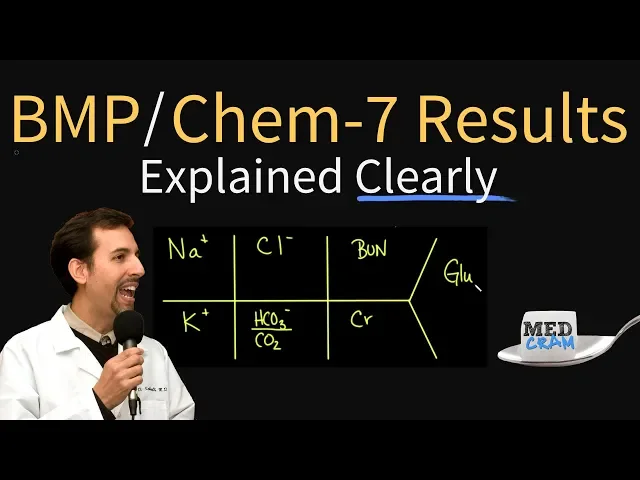
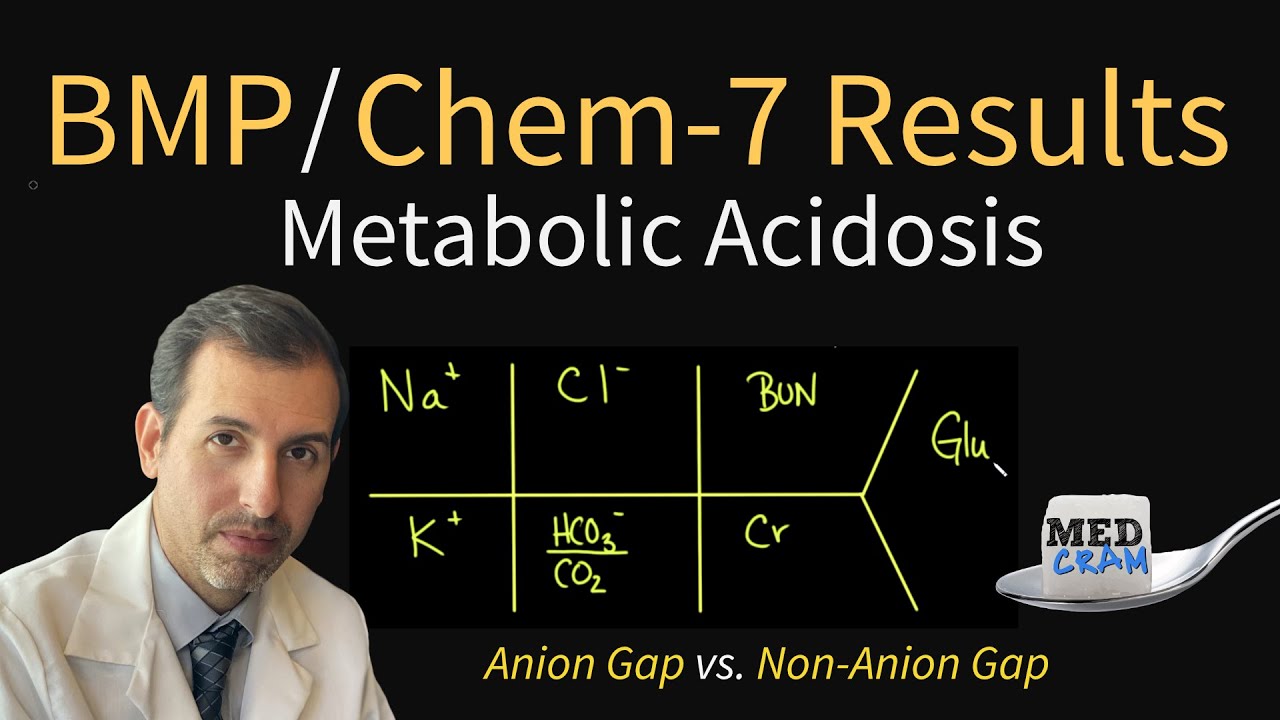
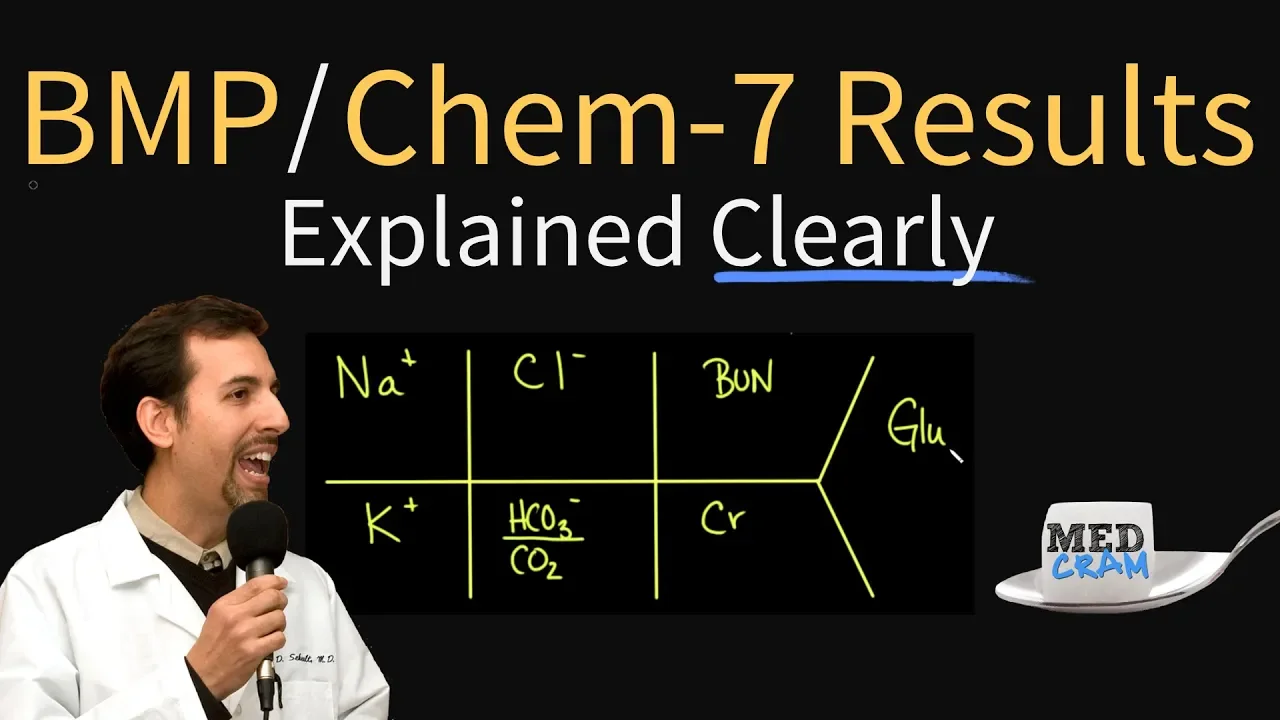
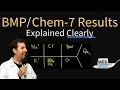
welcome to another MedCram lecture this is the beginning of a series where we're going to talk about the chem-7 as it's known or the basic metabolic panel and this is the structure that the chem 7 or basic metabolic panel is usually delivered in and this first column here are the positive charges and we'll talk about that that's sodium and potassium those are the abbreviations the middle column here are the negative charges chloride and bicarbonate this is otherwise known as co2 you'll see that written a number of times so bicarbonate is actually measured as co2 and
so you'll see this expressed as carbon dioxide but it's really measuring the bicarbonate concentration this third column has to do with the kidney and we have the B UN never call it the bun call it the B um and then here on the bottom we have the Kratt Neen and then here finally at the very end we have glucose now the units that these things are reported in this first column is milliequivalents per liter or another way of saying it is millimoles per liter and that goes for all of these here on the left-hand column
same with this middle column this is also milliequivalents per liter or millimoles per liter the B went in the Kratt mean however are expressed in milligrams per deciliter and glucose also in milligrams per deciliter now outside of the United States sometimes these are expressed differently as well depending on the units and so we'll be sticking to milligrams per deciliter and so I want you to notice that the first column are positive charges the second column are negative charges the third column here has to do with the kidney and again this is the glucose and so
that's the basic pattern that we're going to be using now in this series we're going to be going into detail in each one of these seven values the sodium is a very important marker in the body it's also very important ion it is important in terms of water and fluids and compartment and spaces potassium is very important in terms of electrical conduction in neurons and it's also very important in cardiac conduction as well as other things chloride is the counter ion for sodium and we'll see that it it depends a lot on the sodium concentration
we'll also see of course with bicarbonate is very important with acid-base buffering and things of that nature that has to do with the kidneys and here we have the kidneys and we have the be UN which is filtered in the glomerulus but also reabsorbed and we have the creatinine which is filtered at the glomerulus but also excreted in the distal convoluted tubule and we'll talk more about the B UN and the cramping and then finally we'll also talk about the glucose concentration and what that has to do with now all of these items are very
strictly regulated in the body and so we're going to be talking about when these things are low and when these things are high and what are the systems that regulate them to keep them in the normal range so join us as we talk about sodium first and we'll go on to the rest of these items thanks for joining us