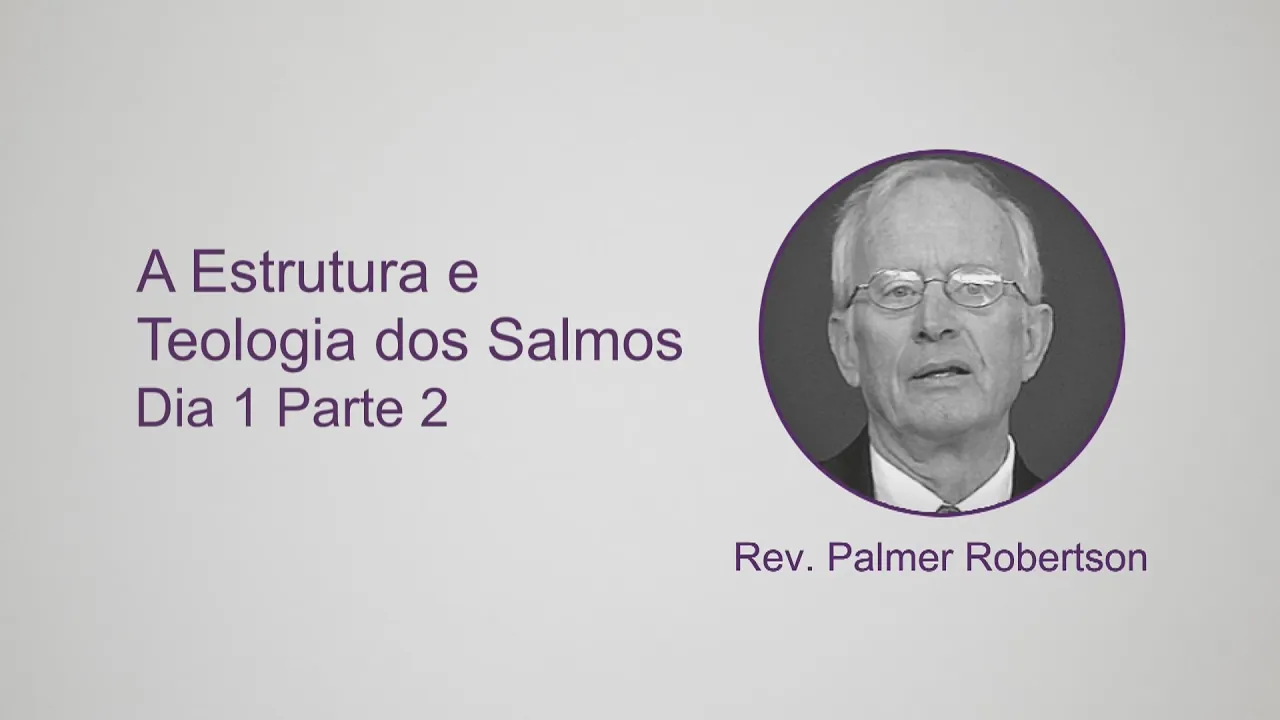
[Music] [Music] foreign that's just a little notice about what we're studying in this in these lectures this is among us his fellow ministers yes i i wanted to do some work on the book of songs and i i realized that i had never done anything with the theology of the psalms as such mr i had dealt with individual psalms and various aspects of the psalter virus individuals so i thought i would maybe write an introduction of 15 or 20 pages summarizing the theology of the song and because of my interest in biblical theology i i didn't want to arrange it in systematic categories you understand i love systematic theology but there's still something special about studying the progressive revelation in the bible so i didn't want to arrange the theology of the psalms under god man sin salvation eschatology what all the songs say about these topics and then i ran into a suggestion that the best way to get to the theology of the psalms is to start with psalm 1 and work through to psalm 115. tell someone and then i discovered that this was the growing edge of salter studies to begin to see structure within the software yeah yeah instead of a 15 or 20 page introduction i ended up with 270 pages of the flow of the psalms in terms of the structure and so i'm just giving you just uh the 15 page version of the 275 pages but hopefully it would stimulate you to look more into the structure of the songs yes of is something far beyond anything you could imagine in terms of the beauty of its structure so hopefully someone will put this in portuguese maybe one of you someday okay if we go to the next slide we're going to look at the developmental structure of the psalter go back again and look more in particular today and look at each one of these five books and see what is their main emphasis and book when you begin to read from little assault or isn't that the impression that you get who are all these enemies why are there so many enemies you think something unique well this constant confrontation with enemies represents the struggle of david to establish the messianic kingdom of righteousness and peace but why david from the perspective of biblical theology why is david the one that writes the song because you could not have the celebration of the kingdom until you had the king and the kingdom established but not until david do you have the covenant of the kingdom [Music] so it's very appropriate that david would be the one that would write these psalms it's david's struggle to establish the kingdom against all these [Music] no less than 30 refer specifically to the enemies in one way or another of the remaining 11 several others imply enemies five referred to death as the last great enemy uh the death of them death is the last great you go back to genesis 3 15. the seed of the woman will crush the head of the serpent but the serpent will crush the heel of the seed of the woman that has been going on through all the ages and will continue this confrontation with enemies does not end here it continues throughout the book of psalms um yes over 40 believers in egypt died on palm sunday just two weeks ago while they were worshiping so that's the the overarching theme of book one the confrontation with the enemies 15 16 and 17 are very beautiful psalms but have no reference to the enemies some things they say but next we go to book two the next slide and now we have enemies that are still present but the emphasis is on communication with these enemies rather than confrontation with the enemies two very significant contrasts may be seen between book 1 and book 2.
and the first is a contrast in the use of the name for god you know there are two basic names for god in the scriptures in the old testament elohim is the general name for god elohim is the covenant name for god okay now look at the contrast and people have noted these contrasts and wondered about them for many many years in book one for example they 48 times 85 to 15 percent now so clearly we're talking about the covenant lord yahweh in book one the conservative why this change of names from book one to yave with the emphasis on the ave to book two elohim in addition there's a deliberate substitution of the names at several points psalm 14 and psalm 53 can be compared both begin the fool is said in his heart there is no god and you read through these two psalms and they're very close they're not identical there are some differences but they're very close to yet psalm 53 of book 2 replaces yahweh in psalm 14 with elohim four times don't answer immediately what i've taught you to answer okay why is is concentrating now and it's mostly david on communication with these enemies as i say it's almost like the billy graham of the song he's preaching the gospel to the nations now we just had a moved into a new area and we had a neighbor from an african country he's very friendly and he doesn't ever meet a stranger he talks all the time he comes and says glad to meet you what do you do and i say we're missionaries sent by jesus christ to share his gospel missionaries now did he say i believe there's a trinity up there uh they are the holy spirit elohim even the old testament does it especially genesis chapter one talks about elohim is the creator the genesis but then when it speaks of the relationship of god to human beings he speaks of yave elohim the lord god now the second difference that you notice quite dramatically is a difference of attitude toward these enemies and toward these foreigners foreign those people over there and us over here them in contrast with us [Music] david in book one stands clearly in a relation of adversary with the enemies in book 1. listen to the prayers of david as they're found in book one with relation to his enemies foreign psalm 3 strike all my enemies on the jaw break the teeth of the wicked psalm 3 verse 7 levantages in your salvation [Music] you get the it's difficult if not impossible to find a single psalm in book one where blessings are extended toward the enemies e quasi the strongest teaching about hell is found in the teachings of our lord jesus emphasis my spartans will we have to recognize that there is a seed of satan among humanity is and ultimately this enemy must be destroyed if god's people are going to prevail may not be able to identify them but we can pray these same prayers as david identification is [Music] psalm 47 verse clap your hands all you nations shout to elohim with prize of joy celebrated hear this all you peoples listen all who live in this world psalm 57 verses 9 and 10. it days i will praise you o lord among the nations i will sing of you among the peoples what great is your love reaching to the heavens in this same psalm there's a recognition that he is in the midst of a lion [Music] yet his prayer in verse 11 of psalm 57.
that the glory of elohim will be over all the earth psalm 65 for elohim is the hope of all the ends of the earth and the father sees he's dealing with the enemy excuse me 28 through 30. versus 50 68 68 verses 28 through 30. the beast among the wreaths in fact the beast that's an image of of the power of of foreign nations uh the herd of bulls among the cavs of the nation so what what's some of them is that in the psalm yes psalm 68 28 30.
i don't know how you translate okay yeah but they must be the boys but then at the end the kings their kings will bring gifts bars of silver to the temple of elohim in jerusalem this is one of the most amazing songs it actually isn't mice uh here you have a substitution very clear substitution of at the end of a worship service your pastor may lift his arms and someday you may do this as an ordained person and you say you say yahweh bless you and keep you yahweh make his face shine upon beat you and be gracious unto you yahweh lift up his countenance upon you and give you peace you know that benediction is [Music] where does it come from number six number six number six the priestly benediction and immediately after the benediction the next verse says the boys so they shall set my name upon the people and i will bless them the unchanging god the covenant lord but now psalm 67 says what does it say may elohim be gracious to us and bless us may how could he do that likely bypass this how could he substitute elohim for yahweh when the whole framework of that blessing is the manifestation of the name yahweh the god the covenant lord of israel do you catch something of the amazing character of this transformation in this verse and what is the purpose of this may elohim be gracious to us and bless us and make his face shine upon us that is upon israel why does what does verse the next verse so that his salvation may be experienced among the of nations god bless us deals i've been sworns so that the nations can be blessed okay that is amazing are you and if you read it further along so israel's blessings will fall on the nations then the nations will bless israel the land will yield its harvest and elohim our elohim will bless us argentina maybe that's where paul gets this this idea of going back and forth god blesses the nations the jews are moved to jealousy and the jews are blessed the the jews are blessed and they become radiant christians and they bless the word in english you may not have a word in in portuguese undulation can you say that undulation what is undulation significa undulation it is going back and forth back and forth like this inflation god bless us so that the nations can be blessed so that god will then bless us so that the nations can be blessed so it goes back and forth and back and forth and back [Music] there is quite a difference between book 1 and book 2.