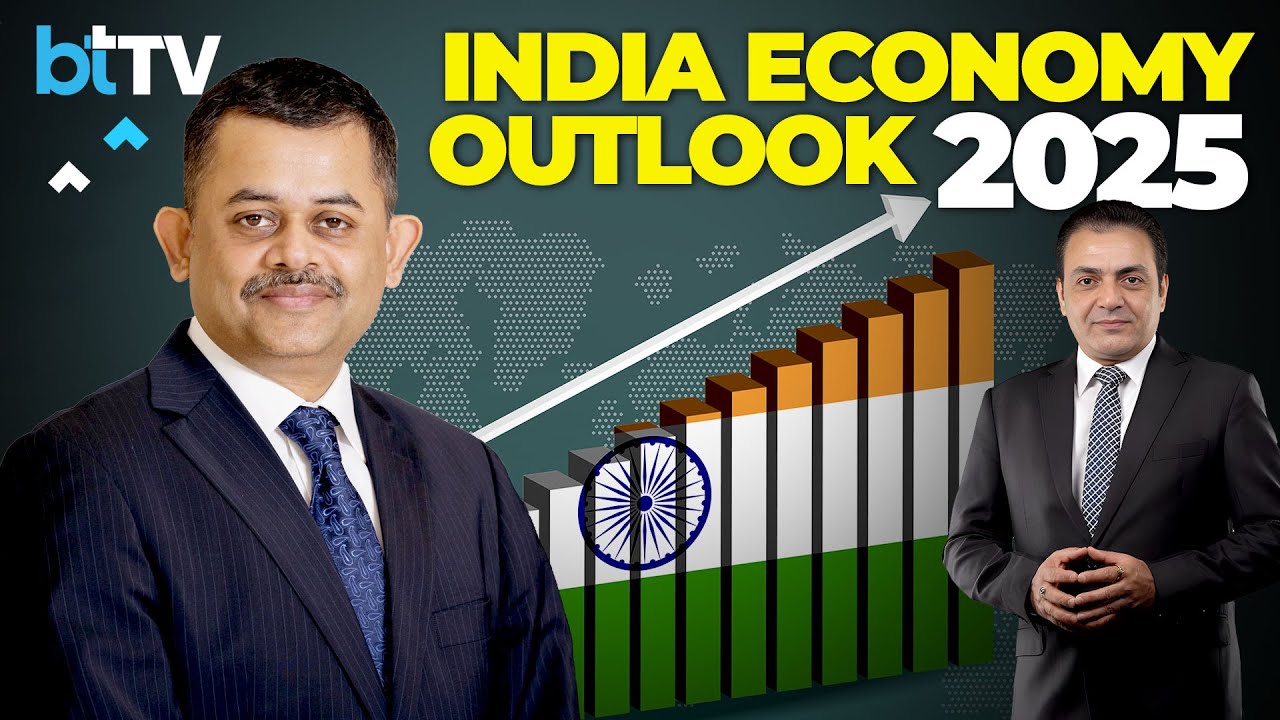
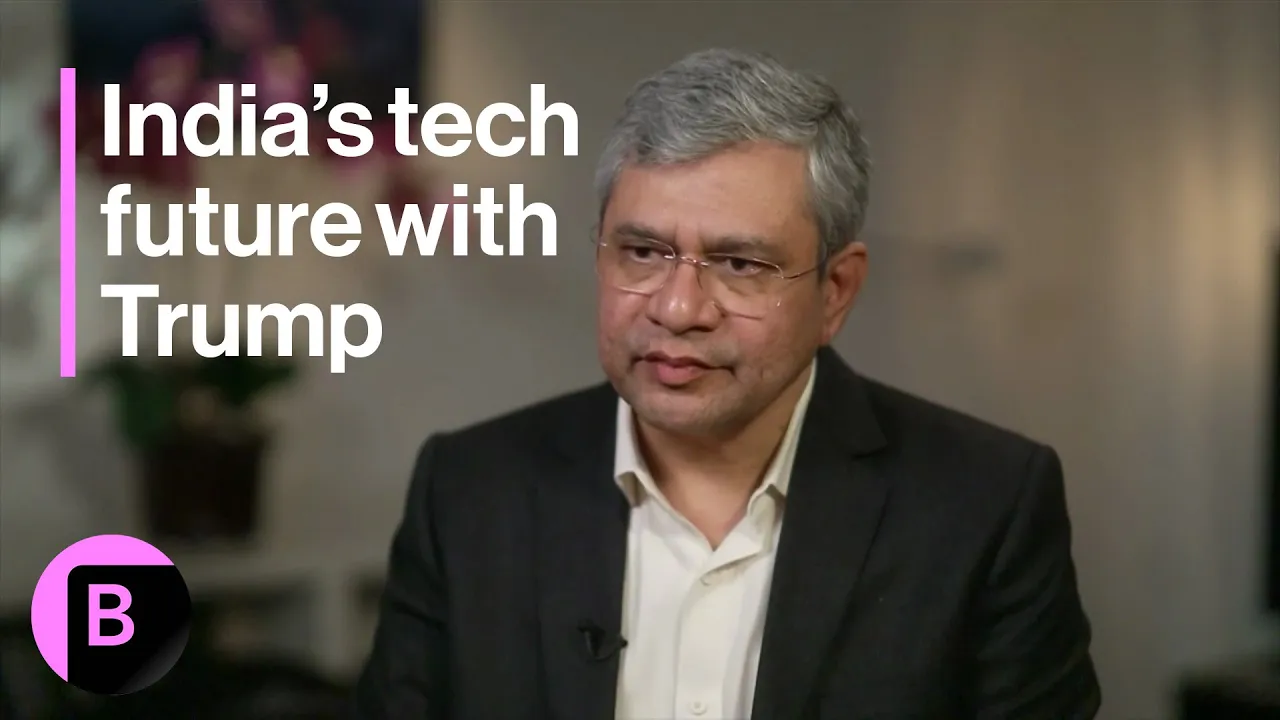
I'm going to ask you a question that I've asked every single guest here in Davos 6. 5% growth it's not bad but is it good enough see we are targeting 6 to 8% consistent growth over 5 seven years that's the kind of economic thought that we have there will be uh cyclical variations over quarters over a year or so but the consistent growth rate 6 to 8% that is what we are targeting so 6. 5% then is in some ways the bottom end and an underperformance uh well as I said in this range there will be variations obviously right right but as long as we are getting 6 to 8% consistent growth rate over next few years it's good it won't happen automatically what do you hope the government will do to take us to the upper end of that band we have had uh very good investment program and uh the way we have uh prime minister's economic thought his economic thought is based on four pillars public investment in Social digital and physical infrastructure focus on Innovation and Manufacturing inclusive growth and simplification these are the four pillars of his of his economic thought and that has given us good results the last many years and that is continue that is going to continue to give us good results in the coming years this may not be your uh you know sort of immediate or direct uh you but do you think that to move to 8% we might need a loser fiscal policy or do you think that some of the heavy heavy lifting will have to be done by monetary policy or would you say it will just be organic listen all the three levels the fiscal policy the monetary policy and the credit uh in the system has to be managed in a very nice harmonious way MH we cannot say fiscal versus monetary or monetary versus credit right it has to be seen in the holistic sense um I would say looking at the way our RBI has managed and the way the finance ministry has done a very comprehensively good job at uh managing all the three levels in a very nice way we will continue to get the results that we want so you don't expect because we are two weeks before a budget and the reason why I'm pressing on this is that you don't think that this is occasion for a fiscal policy push of any kind listen let the budget come okay you are the government representative here in da so I must ask you that question you don't think I mean you're an expert at this so you you don't think that we need a fiscal policy push at this time a fiscal policy push of about 11 trillion rupe investment is uh reasonably high level uh simultaneously there is a lot of focus on the private investment which is coming in manufacturing which is coming in many services which is coming in gcc's which is coming in the housing sector all that is in any case adding to the the entire thing so we are 320 trillion rupe economy today uh 31% total investment so n so that means about 90 trillion rupe investment is happening government investment of 11 to and if you add the state and the other effective total capex is of the order of 16 uh trillion rupees balance all that is coming from the private investment so that is working well and I think that uh momentum should continue we are seeing very good jump in the rural consumption uh we are seeing sectorally uh very balanced kind of growth employment generation is of the order of 1 and a half million a month formal jobs 1.
4 million a month uh forance jobs so I would say that uh we should stay course and we should do more simplification which is what we are doing right now lots of uh laws taken out of the statute book book new laws being written so the reforms in the legal structure also is very important for the economy so all that thing all that is happening in a very I would say a harmonious way so and should not be changed that is as close view I will get of the budget as a citizen um but this is going to be an exceptional year and the reason I say that is because we've already seen this in the last couple of weeks since president Trump took oath that there will be a lot of policy volatility uh and that will impact trade it will impact fund flows and it will mean that countries like India will have to find ways to keep the machine chugging at the speed that they want it to keep chugging how con concerned are you about the ill effects of some of these policies such as tariffs or a change in fund flows on India's growth Story one thing which uh we should look at and we should consider is over the last 10 and now almost 10 and a half years our Prime Minister Narendra Modi G he has brought a major factor in the way the world looks at India that major factor is trust that relationship of trust whether it's with Europe whether it's with us whether it's with Japan so many uh different activities the way our foreign policy was conducted where our economic thinking has been uh executed it's very clear clear that the entire world today looks at India as a trusted country which respects IP rights which is a democratic country a very vibrant democracy which believes in the values that many of the uh societies look as uh look at as most important values so I would say the trust will outweigh any of the negative impacts but of course we must calibrate our thinking and our response as things happen you've had phenomenal success in the electronics Manufacturing space are you concerned for instance if some of the Tariff changes and president Trump has spoken of imposing tariffs on India during his campaign and as recently as yesterday spoken of the bricks grouping and imposing tariffs on the bricks grouping of which India is a member hence I ask you this question are you concerned that the success you've seen in electronics manufacturing which is export Le which sources components from China will get disrupted in any way because of these tariff changes potentially um if such changes happen we'll have to calibrate our uh entire policy entire structure as of now I don't see that as a major threat because one we have a very strong Talent base very strong design base that is one competitive advantage that we have second as I said India is seen as a trusted partner by us and by large part of Europe I mean the entire Europe so these these factors combined will give us will continue to give us that Advantage we are about $ 1220 billion production now we hope to reach 500 billion uh production in coming six uh 7ish years and that will also create and we also working on the component ecosystem now so getting the component ecosystem in India would mean lot of these uncertainties get hedged gets uh mitigated okay so do you think that maybe your government uh is likely to respond like China has done we heard from the vice Deputy of you know in in Davos yesterday where he said that um China is Keen to import more um do you believe that India might also look to mify president Trump by seeking to import more from the US um by reducing certain tariffs of course there will be discussions on Commerce there would be discussions on uh what we sell what we buy all those things will happen they already happening any specific I wouldn't like to developments that you could on that but India will seek to reciprocate um and mify president Trump so as to spare itself from any kind of adverse are based on mutual respect and mutual trust so we will look to cut customs duties I'll put it as simply as that I wouldn't like to respond in that way I would like to say that yes all discussions will happen looking at the listic needs of both the countries and accordingly we'll take decisions okay speaking of geopolitics I want to ask you one more question um Bloomberg has reported this that large companies like apple and others have found it a challenge to be able to Source components from China Source you know sort of trained Personnel from China I know this is a question you get asked often but what is your ministry and government doing to help mitigate that situation so if you look at today apart from the final product the the value chain and the component and the module ecosystem there are so many Indian uh companies which have uh developed over the last few years where they've gone up the learning curve they have established themselves as very reliable suppliers to uh large uh iPhone and uh other smartphone manufacturers so that is a trend which is already there and as I said we are focusing on getting the entire component ecosystem in the country so that uh the passive components the submod modules the Active Components are part of the semiconductor program that entire component ecosystem gets developed and the countries have taken uh at least our country has taken very consistent stand on this consistent efforts on this have already been made so I don't see that as a very big risk yeah but minister to be able to build the factories that actually manufacture the components the capital Machinery much of it comes from China and from what we understand China is blocking uh you know sort of the movement of some of that Machinery to India China is blocking the movement of trained Personnel that can operate that Machinery to be able to build those components so I'm wondering if the government is in conversation or looking for alternate ways to mitigate this situation of course uh there are conversations going on and of course there are engagements on this these are matters which every government wants to engage with every other government so I wouldn't like to get into the details of that when resol what is important is that while we are developing the component ecosystem there are many machines which are today designed and built in India I can give you some examples in the lines that are being built for iPhone in uh I won't let me not take names but uh some of the uh many of the Capital Equipment which were earlier imported are today manufactured in India designed in India and manufactured in India that's what I was the point I was making is our country has a very significant design capability of course yes and that's a very big strength our country has very important Talent pipeline that's a very big strength compared see uh there are geographies which look at cost as the only arbitration only point which is advantageous for them here we are looking at cost when uh there's a cost element there is a design element there is a talent element there is a domestic Market element sure so combine all these four factors and you'll find that it's a very significant Advantage we have and and that will take the medium to long term to develop and for that you know sort of uh atbara as the Prime Minister says to develop in India in the immediate moment though um and this is not just in the electronics Industry there are many players and hence why I'm pressing on this question many players saying that we need the government to be able to speak to China and ease this process I hope it will ease okay but you have no news to share with me on on when it might happen Okay you spoke of um you know uh component Manufacturing in the country um anything that you can itemize for us on how you hope to be able to help let's say for instance apple and the iPhone production base to expand significantly besides the pl schemes which now everyone in the world is fairly familiar with wait for a few weeks we are working on this scheme uh it's improper for me to like share more than that let the scheme be F uh let the scheme be finalized the entire component ecosystem thing be finalized then I'll discuss about it can you give us a sneak peek at the Contours of it in any fashion no none whatsoever okay um you know the third issue that I wanted to bring to you and again this is connected to geopolitics are you concerned that there might be some clamp down on H1B visas and I do know that Indian IT industry has considerably deked itself from that situ ation but nonetheless you think that it might be disruptive to India I think president Trump has also spoken that uh Talent which is coming from across the world including India is a very important talent for uh US economy so I think it will it will work out well so no big concern on that front either uh at least the IT industry has been feeling very uh of course when things change uh we we'll recalibrate I stand but as of now the IT industry is feeling reasonably confident that they'll be able to manage through okay one final question you put out rules on data privacy um and there is an age uh of consent uh that you have put in the rules um this age gating we might you know how far do you think you might want to take it as far as what Australia is seeking to do or somewhere in between and how effective can it be made so we have attempted a very unique techno Le solution here uh we have used virtual tokens in multiple applications that we have in our digital architecture and we thought that instead of having a hardcoded stuff like what Australia has done it's much better to have a more nuanced uh approach the approach in which we look at the use cases which are harmful for children and try to uh protect the children from those use cases okay rather and we would and uh our approach is that innovation the benefit of Technology should be harnessed to its maximum right so children uh who get the benefit of Technology let's say in education let's say in learning let's say in getting exposed to the new technologies in expressing their creative talents why should we deny the children for children of that that's why we have kept this very unique way where we have we are trying we are appro we are attempting to use Virtual tokens which will be be a very use case focused it wouldn't be a one brush Paints the entire thing it's going to be very very focused and very uh nuanced way of uh child gting would it be fair to describe this as an experimental approach because the trade-off in this could be Effectiveness right uh and I'm guessing that's you know sort of well thought through trade-off at this point in time in in in in the in the world of technology things evolve every week every quarter every month so that's why we didn't hard code anything in our get it digital personal data protection bill and the rules we have kept it very principles based we have kept it minimalist we have kept it non-prescriptive we have kept it in a way that it evolves with the technology it evolves with practice it evolves with the way users and The Regulators use it okay Minister bashov you get asked a lot of questions on electronics it these are all the you know the bright new Industries to talk about not enough questions on Railway I know it is a gigantic task to reform the railways can you enumerate just one or two or three things that we can look forward from the railway sector in the course of this year that will change not just the traveler experience but the way you're putting Capital to work in the railway sector as well absolutely and Railway is a very important part of economy the cost of logistics can be reduced only by having larger share of uh rail Transportation because rail transportation is close to it's like 40% of the road transportation and 95% less polluting yes so it's very important to have rail Transportation as a significant uh part of the uh economy uh our prime minister has put very big focus on expanding Railway number one number two on electrifying it number three on getting the new technologies right so expanding last year we added 5,300 km of new railway tracks to give you a perspective countries like Belgium Switzerland the network is 5,000 km right so adding that kind of network every year uh we have electrified practically 97% of the Railway Network by now and in the 10 and a half years we have electrified 45,000 km of Railway Network that's more than the network of Germany so it's very large effort which has really helped the uh Railway Network to be able to meet the demand of users significantly better than what it was 10 years ago so last year we carried 1. 6 million tons of cargo that's huge and uh the incremental cargo that we are adding every year is very significant compared to the years before that right like it used to be 5 10 million every year addition 10 years ago now it is some days some years it is 100 million ton addition some some years it is 40 million ton incremental cargo addition over a large base much larger base days right so that means we are able to cater to the demand in a significantly better way the passenger demand also we are meeting in a very significantly better way right so last year we uh carried uh 695 cror so just short of 7 billion people so and we adding that this year also it will be significantly more than that so increasing Capac you made changes there right sir the feedback seems to be there are that you know there aren't enough trains for um you know um General passengers and and then the the distribution has moved more towards the higher paying luxury rules right no no it was uh it was a wrong narrative to to be and uh let me clarify that see when you have uh lhb coaches which are good safer coaches then you have to have power cars so that's why this distribution had uh some people started questioning it but the distribution has always been 2/3 non-ac coaches and 1/3 AC coaches that has been the distribution and it remains that it remains that way you haven't changed the proportion added now special program for General coaches so that more and more people who would like to travel when they are not able to reserve a ticket right they should also be able to travel and especially the low income families should be able to travel but apart from that we have also taken up a program for four new types of trains okay vhat chair car all of us know about it right vhat sleeper again now done tested testing in the fin Amit bat trains are like 22 coaches 11 coach sleeper 11 coach General right so that is like 1,000 kilm 450 rupees and the seat quality everything is absolutely like a vhat train right so we are focused on getting making sure that the citizens at the bottom of the pyramid the uh families which are having lower lowest income they should also be getting very dignified Travel Service and uh these are the efforts we are making for short distance for Mid distance for long distance is there a number I can put to it so that it's easy for people to understand saying this is the additional capacity you're adding to General travel or for you know for uh so General coaches we are adding uh in this financial year by 31st March we would have added about 1,500 coaches okay and uh and that would be what percentage of the total coaches sir that would be of the total coaches about 12% or 12% so you or maybe 9% okay so you've enhanced the general category significant capacity by almost a tenth and you I mean in this particular fiscal and in the next fiscal will that continue another tenth is that will continue simultaneously other trains are also getting built so it's going to be more or less 2/3 1/3 in that range a bit of more skew towards non-ac coaches but then actually we are adding both we are adding both almost equally okay yeah because we need and the deployment of coverage it's rapidly uh progressing what's the milestone for this year sir see uh we finalized the design of cage 4.