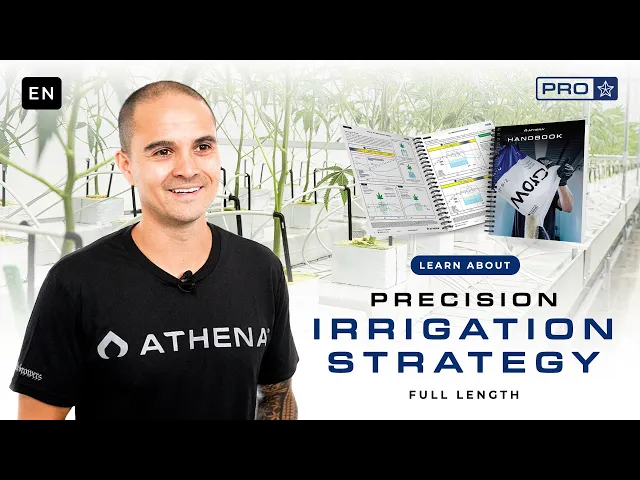
[Music] what's up Athena fam my name is j oil facility advisor for Athena egg I have 14 years of cannabis cultivation experience and manage 40 strange specific zones over 20,000 ft of campy I also studi environmental science and plant biology at Ohio University in this series we'll go over the art of fine-tuning your irrigation strategy to influence plant growth maximize yield and optimize quality we'll show you how to leverage technology and data to make informed decisions about when and how much to irrigate the key to achieving optimal plant growth depends on making precise adjustments to
both the environment and the root Zone once all environmental factors are properly managed implementing a proper irrigation strategy can elevate your Garen to the next level I cannot stress this enough running a high substrate EC may burn your plants when all environmental factors are not within the correct ranges make sure to reference our environmental chart to make sure your environment is completely dialed in before attempting to run an elevated EC in the substrate now let's talk about the necessary tools required to fine-tune your irrigation strategy probably the two most important tools we have in the
garden the EC and pH meter to give our plants the most effective nutrient solution we need to make sure our nutrient concentration and pH is at optimal levels be sure to calibrate these meters often to be able to see the EC within the root Zone a substrate sensor is crucial for us to decide when to irrigate and for how long a precise irrigation strategy can require up to 20 irrigation events sometimes more so a timer or controller that will allow you to program multiple events is really important and last but not least a dialed in
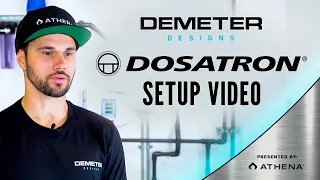
irrigation setup this will allow us to provide nutrient solution to our plants in equal and precise amounts a proper irrigation setup would include a pressure assessing pump particulate filters and micro irrigation emitters such as quar gallon and half gallon per hour Nim emitters I won't go into too much detail about irrigation set up on this video but if you're looking to get a professional irrigation setup designed for your facility check out the meter designs they can help take the guest work out of Irrigation Design and make insulation more efficient by creating fertigation and irrigation plan
sets and rendering now that you understand the necessary tools needed for implementing a successful irrigation strategy let's go over some of the common irrigation terms volumetric water content percent or vwc the volume of water a substrate is holding at any given time shot a single irrigation event maintenance shots P2 irrigation events that maintain your Peak vwc per Target throughout the day fuel capacity the maximum water holding point of a substrate or the runoff point of a substrate full saturation when a substrate can no longer hold any more water and BWC per can no longer increase
runoff the water that is drained from a substrate dry back the period between irrigation events when the substrate is drying out this is the the difference in vwc per from the last irrigation event of the day to the first irrigation event of the following day additional dryback the decrease in vwc per that occurs during P3 after the lights turn on and before the first irrigation event of the day I like this use the saying transpiration before irrigation poure water EC or PW EC the EC of the water within the pores of the substrate we also
refer to this as substrate EC in these videos input EC the EC of a solution applied through irrigation events Peak vwc per Target the vwc per established by the last P1 event and maintained through the day by P2 phase EC stacking the strategy of limiting runoff and or increasing drive back to increase substrate EC now let's talk about your substrate selecting the correct substrate size will allow you to have more control over your BWC per and substrate EC think of a 1gallon pot as a Ferrari and a 5G pot is a semi- the Ferrari is
much more agile compared to the semi- making it easier to change directions and weave through traffic to our desired destination more quickly the same concept applies to controlling our substrate EC and vwc perc the smaller the substrate size the faster our dryback will be making it easier to adjust water content and substrate AC with strategic irrigation events the type of substrate size we use needs to be predictable and consistent this is why I recommend using either 100% cocoa or rock wool both substrates consist of a single texture throughout and do not contain any Iration material
such as paralite that could give us false readings when using our substrate sensors in my opinion 2 Gall cocoa pots or 6x6 rock wool cubes are the most ideal substrates for a precise irrigation strategy both substrates have predictable dryback and are easily manipulated with irrigation events we covered the essential tools and terms of Precision Irrigation setting the foundation for optimiz in plant growth understanding these Basics is vital for a successful irrigation strategy we have just scratched the surface of Precision Irrigation today we'll be covering crop steering crop steering is an advanced cultivation technique that involves
making fine adjustments to environmental factors such as temperature humidity light and substrate EC to promote stress at specific times to manipulate plant growth we'll focus on how to manipulate irrigation events to effectively encourage either vegetative or generative growth this allows the grower to steer the plant towards a desired result why would we want to stress our plants stress can actually be a good thing when it's timed right inducing stress will push more generative growth cues while alleviating stress will trigger a vegetative growth response vegetative growth is when a plant's energy is focused on producing more
Roots CHS leaves and increasing flower size plants that are in a vegetative growth phase will typically grow taller and wider generative growth is when a plant's energy is focused on producing flower sites more rapidly plants that are in a generative growth phase will typically grow more compact with shorter internodal spaces being able to bounce back and forth between these two types of growth will allow us to control the height of our plants while also being able to put on mass when it's time so you must be wondering how can irrigation strategy promote vegetative or generative
growth to induce vegetative growth we want to alleviate stress by lowering substrate EC typically we do this in one of two ways by forcing more run off and having a shorter dryback period forcing more runoff will flush the medial of builtup salts and a shorter dryback will give the substrate less time to concentrate our substrate EC when drying out to promote generative growth we will induce water stress by increasing substrate EC this is done in two ways by utilizing a technique called EC stacking and or creating a larger dryback EC stacking is done by using
irrigation events to maintain proper vwc percent to keep your plants from wilting while allowing little to no runoff a larger dryback is done by ending irrigation events earlier in the day to give the substrate more time to dry out both techniques will initiate a stress response in our plants by increasing the EC in our substrate understanding how to strategically thy vegetative or generative growth throughout the growth cycle can make all the difference in achieving the best possible yield and quality when it comes time to harvest during veg our goal is to promote rapid growth of
roots choots and leaves so we will be pushing more vegetative Focus strategy here during the first four weeks of flowering when our plants are stretching we want to limit vertical growth initiate flower formation and stack our Bud sites closer together during this time we'll be steering more generatively after our plants are done stretching and flowers are formed we want the buds to swell and put on as much mass as possible by alleviating stress we're going to be decreasing our substrate C by pushing more runoff and decreasing our dryback so this will be a vegetative growth
irrigation strategy for weeks 5 through 7 and finally when our plants are 2 weeks away from Harvest we want to reduce any builtup nutrients in our substrate and encourage our flowers to ripen during this time we are actually going to be using both vegetative and generative irrigation strategies how is this possible we will be forcing more runoff to flush our media to decrease substrate EC but we will be also ending our irrigation events earlier in the day to create a larger overnight dryback during this time our plants are still putting on mass so vegetative strategy
is necessary but we are also wanting to U some sort of stress to Signal the plant to finish up and this happens with the larger dryback as you can see by utilizing strategic irrigation events we can effectively time vegetative and agentive growth cues during crucial points of the growth cycle getting this strategy dialed in can significantly increase yield and optimize the quality of your end product that we all work so hard for to more easily understand Precision Irrigation strategy you must first understand an irrigation phase graph this is your typical irrigation phase graph it illustrates
the four irrigation phases while highlighting the correlation between volumetric water content percent and substrate EC irrigation phases are broken up into p 0 P1 P2 and P3 p 0 is additional dryback once lights are on or transpiration before irrigation P1 signifies the first irrigation events after lights are on until our Target BW c% is reached P2 represents our maintenance shots during lights on period where we maintain our Target BWC per throughout the day P3 is our dryback period from the last irrigation event of the day to the P0 phase of the following day the main
point to understand on this graph is the relationship between vwc per and substrate EC this is the fundamental principle we use in Precision Irrigation to crop steer or guide our plants to a desired outcome once you understand how to manipulate your substrate EC you utilizing strategic irrigation events that affect vwc per you can create a dialed in irrigation strategy for any strain to reach its full potential during P1 is possible to see an increase or decrease in substrate EC this depends on the substrate EC prior to the start of irrigation events during vegetative steering if
substrate EC is equal to your input EC P1 irrigation events will cause increase in substrate EC until runoff occurs during generative steering substrate EC is typically greater than your input EC as P1 irrigation events will cause a decrease in substrate EC due to dilution our P1 irrigation phase is very important because it sets our Target vwc per that will be maintained throughout the day during our P2 phase it is very important to select the target vwc per that aligns with your substrate EC goal and is determined by whether you're steering vegetatively or generatively during veg
hitting the correct targets becomes crucial to enable our plants to reach their full potential all good Growers know that a solid foundation set in veg with Healthy Growth is key to producing big sticky nugs and flour so when transplanting clones into New Media we must be extremely careful not to overwater the substrate excess water can lead to stagnant roots and delay growth when using rock wool as your substrate soak your media in PH adjusted nutrient solution until fully saturated if using cocoa saturate your media by pouring nutrient solution over the top of the substrate until
2% of the total substrate volume in runoff is achieved reference our runoff volume chart to help calculate the volume of your runoff using a media sensor note the vwc percent at the point of runoff after transplanting your clone into your media we want to make sure that we have a 35 to 40% dryback before we irrigate again to encourage Roots Str stretching in the media and to avoid overwatering depending on your substrate size this could take multiple days to achieve this dryback to calculate your dryback take your vwc per at the point of runoff and
multiply by 65 to calculate a 35% dryback or multiply by 6 to find a 4% drive back this drive back is an example of a relative change we calculate our drive back using a relative change because the decrease in vwc per will be proportional no matter what the vwc is at fuel capacity once we achieve our 35 to 40% dryback it is now time to start utilizing P1 irrigation events when initiating P1 we want to make sure we have transpiration before irrigation our first shot should occur 1 to 2 hours after our lights turn on
we'll use as many 2 to 6% shots that are needed until fuel capacity is reached and we achieve 2 to 7% runoff use a clone tray with a insert to collect runoff and determine volume Mark your vwc per at the exact point when we achieve 2 to 7% runoff this will be our Target BWC per which will be important when planning our P2 irrigation phase each P1 shot must be spaced 15 to 30 minutes apart to slowly allow the nutrient solution to Wick into the substrate and avoid challening which can occur if a too large
of a shot is applied at one time after this first P1 irrigation event we won't irrigate again until we see a 20% dryback in our substrate a 20% dryback could take 1 to 3 days depending on substrate size but eventually it will begin to occur every day we will continue to use P1 irrigation events each time we reach a 20% dryback your during the beginning stages of veg we will focus solely on P1 and P3 phases because growth is slower and plants transpire less rapidly after our dryback exceeds 20% introducing P2 irrigation events becomes necessary
to maintain optimal substrate moisture throughout the day veg is the most delicate time during our growth cycle for this reason it is crucial that we hit all of our dryback targets to avoid stunted growth let's take a moment to review P2 and P3 irrigation phases and why they're important the P2 phase is also known as the maintenance phase because we use P2 shots to maintain our vwc per Target within the substrate throughout the lights on period the P3 phase occurs after our last irrigation event of the day this is the point in which our subtrate
is given time to dry out until we irrigate again the following day being able to utilize our P2 and P3 irrigation phases to find the right balance between BWC per runoff volume and dryback is the most important concept to understand stand to dial in your irrigation strategy now let's talk about when to add P2 irrigation events this is crucial to make sure our plants do not dry out too much and that our subtrate e does not become out of range early in the growth cycle our plants are smaller and transporting less rapidly at this stage
we are only using the P1 irrigation phase to maintain the amount of moisture in the substrate without exceeding 20% dryback in our P3 once our P3 dryback exceeds 20% is now necessary to add P2 irrigation events so that our plants don't dry out too much we will Begin by adding a single P2 shot 1 to two hours after the end of the P1 phase to bring our vwc per back to our Target if your dryback still exceeds 20% at the end of the day we'll continue to add additional P2 shots space equally apart until our
dryback is within the correct range as we learned in video two on crop steering manipulating dryback and substrate AC will allow us to promote either vegetative or generative growth by timing our P2 shots correctly we can effectively control our substrate AC and dryback to control our substrate AC we need to increase or decrease the amount of runoff in our P2 phase P2 shots above the point of fuel capacity will flush the media of builtup nutrients which will decrease substrate and promote vegetative growth to promote vegetative growth our goal is to achieve 8 to 16% of
the subrate volume and runoff per day to promote generative growth our P2 shots will result in little to no runoff which will increase our substrate AC this is called EC stacking during generative steering we are looking for 1 to 7% of the substrate volume in runoff per day to control the amount of dryback we can add or subtract P2 shots to the end of the P2 phase to decrease our dryback we will add irrigation events to the end of the P2 phase this will decrease the amount of time our subrate has to dry out which
will alleviate stress and promote more vegetative growth cues for vegetative growth we will be looking for 30 to 40% dryback to increase our dryback we will subtract irrigation events from the end of the P2 phase this will increase the amount of time our substrate has to dry out which will increase stress and promote generative growth cues for generative growth we are looking for a 40 to 50% dryback our dryback targets are calculated based on a relative change rather than an absolute change calculating dyb backs using a relative change is more accurate because vwc per at
fuel capacity can vary in different substrates most of our decisions for irrigation strategy are made from data collected from our substrate sensors but collecting runoff is also helpful we can verify that we're achieving the correct volume of runoff and that our EC and pH values are within the correct ranges properly collecting runoff is crucial to making the correct changes to our irrigation strategy throughout the growth cycle now let's get into our runoff procedure at the beginning of a lights on period before P1 irrigation events begin select two to three plants within the irrigation Zone that
are of average size and in different areas of the Zone this will give the best representation of the average runoff for plants within the Zone Place each selected plant on top of a clone tray with insert this will allow the plants to freely drain into the tray without sitting and runoff allow P1 and P2 irrigation phases to run as normal collect runoff from each tray immediately after the P2 irrigation phase ends to avoid loss due to evaporation measure the volume of runoff in a graduate cylinder using a calibrated EC and pH meter test runoff EC
and pH compare runoff EC to substrate EC on substrate sensor to validate accuracy of substrate sensor runoff EC tends to be slightly lower than substrate EC refer to the runoff and substrate EC ranges chart in the Precision Irrigation strategy procedure and adjust irrigation events accordingly to keep subrate EC within the correct ranges on growth stage based on runoff p pH adjust input nutrient solution to keep substrate pH within the correct ranges note the pH should be slightly higher in runoff than the input solution to indicate a healthy developing plant a lower runoff pH indicates that
a plant is having problems using nutrients within the root Zone a lower pH usually occurs when a root zone is overwatered and Roots begin to rot when planning an irrigation strategy for full irrigation Zone your sensor needs to be placed in a plant that best represents the entire Zone as a whole this is because plants position in different areas within the irrigation Zone experience different rates of dryback due to variations environmental variables such as temperature and air flow for larger irrigation zones it may be necessary to utilize multiple sensors to gather an accurate representation of
the irrigation Zone as a whole this infographic shows the variances in BWC per that can be seen if different areas of the irrigation Zone based on environmental factors within a grow room you can see the plant that are positioned along the aisle of irrigation Zone tend to dry out more quickly than plants in the center of the Zone also plants that are positioned in front of a fan will be exposed to more air flow which will cause them to dry out more quickly be sure to keep these principles in mind When selecting the correct plant
for sensor placement be sure to check our Precision Irrigation strategy calculator on our website to help you plan your irrigation events to cap off our series on irrigation strategy let's go over a few additional tips that will help when dialing in your ear irriation strategy number one it's helpful to know the volume of water we are irrigating in a day in your irrigation Zone add an extra set of emitters in a pitcher to measure your shot volume throughout the day number two sometimes the EC of our runoff can be too high for our meters to
measure if you get it outer range reading when checking your runoff first be sure that your meter is calibrated if you are still getting out of range reading mix your runoff with equal amounts of reverse osmosis water and check the e now take that reading and multiply by two to get your correct reading for your runoff EC number three throughout the grow cycle our fuel capacity tends to decrease because our Roots grow into our substrate and take up space the substrate is unable to hold as much water at this point run your irrigation events and
wash your plant that contains the substrate sensor and as soon as you see runoff Mark your vwc perc this will be your new Benchmark to plan all your irrigation events from I like to do this procedure at least once a week that's it on our Precision Irrigation strategy Series be sure to watch our other videos on the Athena YouTube channel for more videos on our top products and procedures to help you be successful in the guard also check out the we The Growers podcast where we bring perspective best practices and discuss the latest technology in
the industry