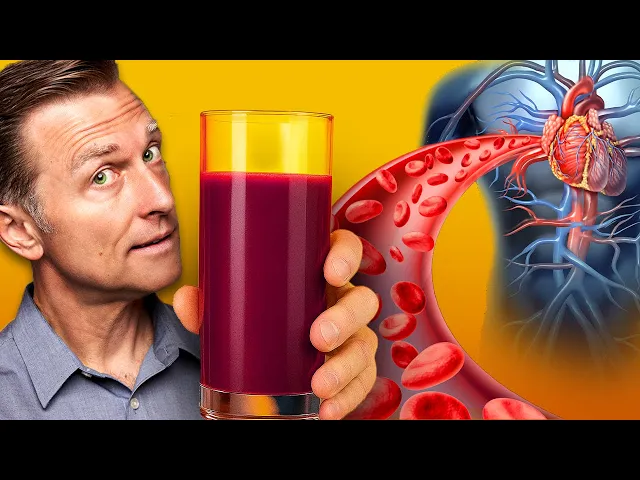
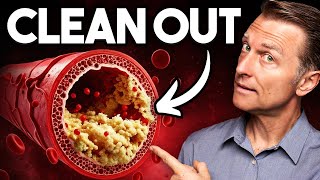
Today we're going to talk about a very specific drink that can help you unclog your arteries. And this relates all the consequences that happen when you have damage to your arteries. High blood pressure, clots that can develop that can actually turn into a stroke and heart attacks.
Now, one of the problems that people have when they go to the doctor is the doctors don't really focus on root causes. They're looking at things later on the chain of events like high blood pressure, like high cholesterol, and then they treat those, but they don't really get into root causes. One of the big root causes for plaquing in the arteries, especially heart attacks, is this thing called endothelial damage.
What is that? You look at the inside of an artery, there is this single layer of cells. It's called the endothelial layer.
And when that becomes damaged, there's a cascade effect. There's all sorts of consequences from that. And one of the first things that happens is you get inflammation, okay?
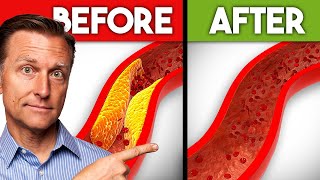
And then your body's going to come in and try to repair it. And that plaque is composed of calcium, cholesterol, and protein. So realize the plaque is really a repairerative action from the inflammation that started inside your arteries.
Now, there's another little piece of the puzzle and that is called nitric oxide. When someone develops endothelial damage to the inside of the artery, their nitric oxide goes down and now they lose control of blood pressure because nitric oxide helps as a vaso dilator. It increases more blood flow.
And when we lose that, not only are we going to get a blood pressure that's going to go up, we're going to get increased risk of clotting. And by the way, 90% of heart attacks involve clots. One of the big reasons for that is endothelial damage because now we don't have enough nitric oxide and that's going to raise our risk for getting clotting and that can affect the heart or it can go up into the brain.
We're going to also get more inflammation, higher blood pressure. The actual artery wall will get thicker and stiffer. So there's less flexibility.
There's going to be more blood pressure problems. And of course the problem is the doctor is going to focus on the blood pressure but not do a lot for this endothelial damage. Unfortunately what you should know about nitric oxide is there are natural things to keep it very very high in the body.
Number one is just being out in the sun. The sun will give you vitamin D which is probably one of the most potent things to increase nitric oxide as well as infrared. Half of the sun's rays are infrared.
Infrared helps increase nitric oxide. So there's two things that sun gives you in relationship to this which is very powerful. When you breathe through your nose, you increase nitric oxide.
When you take magnesium, you can increase nitric oxide. The next thing I want to talk about is if we're trying to unclog your arteries. Let's say there is plaque in the arteries.
How does it get reversed? Well, it just so happens there's something called RCT, reverse cholesterol transport. And so there's a transport mechanism to take the cholesterol buildup in the arteries and reverse it and bring it back to the liver where it's recycled.
And just so you know, this is a really confusing topic. A lot of times doctors or other people will tell you that dietary cholesterol is creating the big problem. You have to realize that your body makes most of the cholesterol in your bloodstream.
And so, it's a necessary thing. It's a building block for hormones. It helps with a lot of things, but when we're dealing with this problem right here, it's more late on the chain of events.
It's not an actual root cause. The things that can help reverse the cholesterol transport and allow it to go from the artery back to the liver is nascin, vitamin B3. Niacin greatly helps remove cholesterol from the arteries.
HDL, that's considered good cholesterol because it basically takes the cholesterol from the peripheral part of the body from the arteries and brings it back to the liver. Exercise will do it. Also, fasting, this means not eating so frequent.
And then low carb diets. Let me just touch on the low carb for a second. Someone came in and told me, "Dr Ber, your program really didn't work for me.
And I said, wait a second. You told me you lost weight. You even had your cholesterol tested and that was better.
Explain to me why it didn't work. Well, I tried your low carb diet for a couple weeks and then I went back to my normal foods and the problem came back. So, that was interesting because so many people have normalized this high carb diet and unfortunately it is the opposite of being normal.
If you just take a look at your blood sugar, okay, a normal blood sugar is 80 milligrams per milliliter. What does that mean? That basically is equivalent to one little teaspoon of sugar in all of your blood.
Whereas you take the average person who's consuming 45 to 65% of all their calories being either refined sugars or refined starches and starches are sugar. You're talking about the average person consuming between 50 to 100 teaspoons of sugar every single day. Now, that's off of 2,000 calories per day.
And a lot of people have more than that, so I'm being conservative. But how can so many people consume so much sugar yet have normal blood sugar? How can that be?
It doesn't make sense. Well, that's because sugar is so toxic for your arteries. It's like something that goes in there and rusts it out that you have a protective mechanism.
That's called insulin. Insulin comes in there like a vacuum cleaner and sucks it out as fast as you put it in there. This is why so many people can live on so much carb yet have normal blood sugar because the insulin is working overtime.
Well, that only happens for about 15 to 20 years before the pancreas is so exhausted it just can't work anymore. So at that point our insulin goes lower and lower and lower and our blood sugar higher and higher and higher and now the person goes into a pre-diabetic state and then a diabetic state. And that's really what diabetes is.
It's a condition of high sugar in the blood because insulin can't compensate anymore. Out of all of the things that can remove fat from your liver, the low carb diet is at the top of the list. You can remove 40% of liver fat within just 14 days if you're on a lowcarb diet.
But the big thing you need to know is all that refined sugar is being converted into cholesterol. All that refined sugar is creating inflammation and creating endothelial damage starting this whole cascade of things happening. This is why it's so important to be on a low carb diet to keep your nitric oxide super high.
A lot of the excess cholesterol that you have in your body in your liver is routed out through help with the bile salts. So, we need a good amount of bile to get rid of excess cholesterol. When people remove their gallbladders, sometimes they have a problem with cholesterol building up.
So, we need bile salts to help deal with excess cholesterol. Couple of the points with calcium in the arteries. Magnesium is the master controller over calcium.
So the antidote to this calcium problem is the up your magnesium. Now think about the arteries. The arteries are controlled with a muscle.
They contract with calcium and they relax with magnesium. So if there's any blood pressure problems, magnesium is a really important mineral. Polyphenols are very very powerful in helping protect the endothelial layer.
And there's going to be a very powerful polyphenol in the drink that I'm going to recommend coming up. Also, vitamin K2. Vitamin K2 actually can help prevent arterial calcification.
It's the vitamin that takes the calcium from the soft tissue and keeps it in the bone and your teeth. Super important. in helping keeping the arteries healthy.
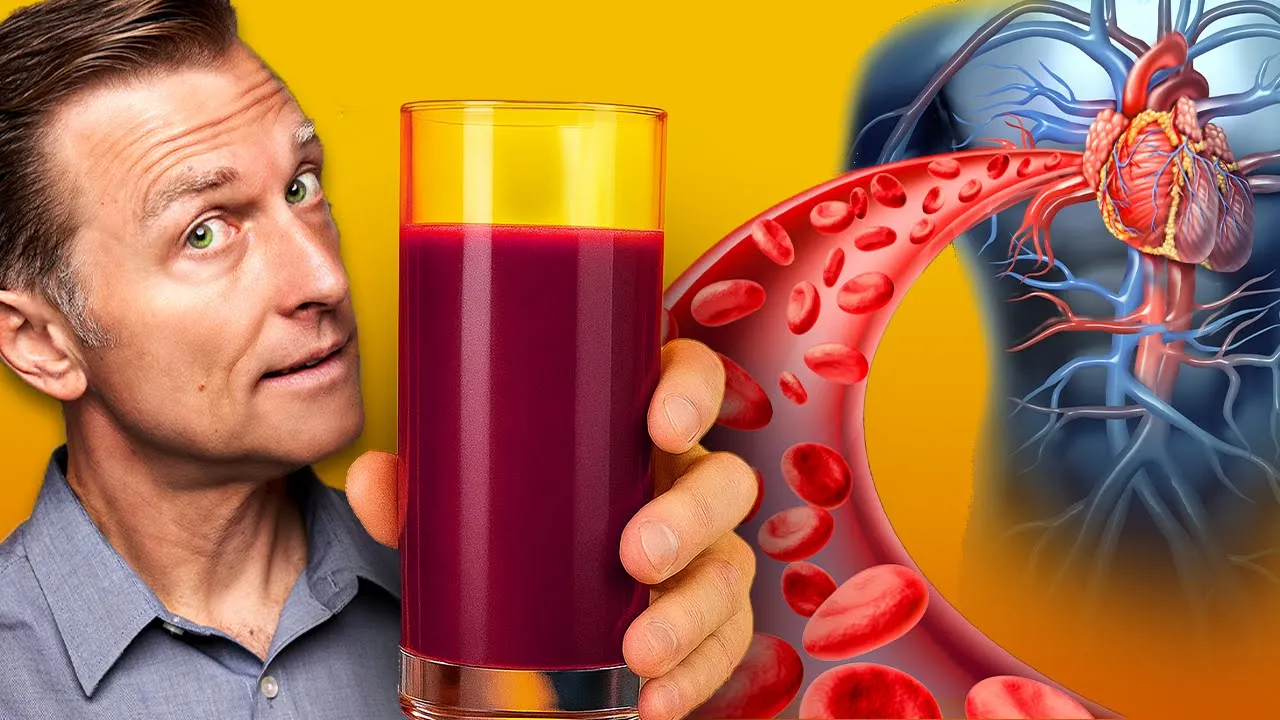
Now, let's talk about the one drink that can help you. It's basically using cacao powder with high flavonoles. Maybe you've heard of cocoa powder.
That is roasted cacao. So, this is from the raw bean and this is the stuff that they make chocolate from. But when you have this barely refined raw product, you have a ton of these flavonols, which are basically plant chemicals that have a lot of antioxidants and a lot of cool properties, which I'm going to explain to you.
But cacao powder acts just like exercise in a cup. In one study that they did, they compared vasoddilation or blood flow to the artery from cacao powder and compared that to a medium exercise and it came out very similar. And that is because cacao powder is a potent trigger of this enzyme machine that helps you make more nitric oxide, which again is a vasod diilator.
It allows more blood flow to happen. And so it's just bizarre to me that you could literally consume something and create similar effects to exercise. It's just wild.
Now, one of the things that I do in the morning, I actually put a little scoop of beetroot juice powder with it. It adds a really interesting taste. I like it.
But beetroot itself is probably one of the highest things with nitric oxide. So, I'm combining two things together to create an even more powerful effect. And sometimes I will warm up the water a little bit, but I will not bring it to a full boil.
But if it's a little bit warmer, it all mixes a little bit better. But sometimes I'll have it cold. But I want to differentiate cacao powder with beetroot powder.
Beetroot powder actually gives you nitric oxide. Okay? Because there's nitric oxide in here.
Cacao powder actually stimulates the enzymes in your body to make more nitric oxide. And I will put that link down below of that trial. This is the name of the trial right here that showed the same dilation as moderate exercise, which is just mind-blowing.
Another study that I found with cacao powder is it showed that it reversed arterial stiffness. Okay, if your arteries are stiff, right, they're hardened, your blood pressure is going to be higher. This usually happens when you age, but some people are getting it younger and younger.
This is not a good thing. Cacao powder can help make your arteries less stiff and make them more flexible. That's pretty wild.
And the cool thing about cacao powder's effect, as I was reading through the research, is it's cumulative. It actually builds up in your system over time and it can help teach your arteries to make more nitric oxide again. So, the effects build on each other over time.
In another study, and this is pretty wild, they tested people that were between the age of 50 and 80, and these people consumed cacao powder on a daily basis for just 14 days. The results in the thickness in their arteries at this age compared to people that were 20 to 30 years younger as far as the thickness goes. I mean, that's like totally anti-aging on steroids.
And the other thing about cacao powder, it's not just helping your heart and your arteries. It's also helping your brain. It's helping your skin.
It's helping a lot of organs and tissues in the body. And so, a couple ways to take this. You can just take it as is.
Mix it in some warm water, drink it in the morning, but make sure that it's not at the same time as you're drinking coffee. Now, sometimes I will mix it with my coffee, but most of the time I don't because the caffeine in the coffee, unless you're doing decaf, can interfere with the full benefits of nitric oxide, okay? Because caffeine tends to vasoc constrict, and we're trying to create a vasoddilation.
So, the best thing to do if you want the best results, especially for the arteries, is to have it two hours before your coffee or two hours after your coffee. But if you just want more cognitive benefits, okay, without the heart benefits, then just put it right in your coffee. And so sometimes I'll add the beetroot powder to it, sometimes I won't.
Sometimes I'll add a little pinch of sea salt or even a little scoop of magnesium glycinate to get my magnesium because that's one nutrient that I really benefit and also it's just good for the heart. And the last point is you don't want to put cacao powder in boiling water. can be in warm water, but when you have it in boiling water, now we're heating it up because this is a raw product.
I also recommend if you can get an organic version, it's just a little bit better because they use sprays in certain countries that they get this from. Anyway, go ahead and try it and then comment down below of your results. And if you haven't seen this video of the best meal to help unclog your arteries, I put it up right here.
Check it out.