Well, hey there and welcome back to Himler's History. Now, we've been going through unit 9 of the AP World History curriculum and we've been considering all the causes and effects of globalization. But you didn't think that everybody was happy about that globalized culture and economics, did you?
You're so crazy. Well, that's what this video is about. Resistance to globalization.
So, if you're ready to get them brain cows milked waybo style, then let's get to it. So, in this video, we're just trying to do one thing, and it is this. Explain the various responses to increasing globalization from 1900 to the present.
And as I've mentioned in previous videos in this unit, the process of globalization affected social, political, and economic realities in nearly every corner of the known world during the 20th and 21st centuries. In general, it was the global north who benefited most from this process in terms of prosperity and cultural influence. The nations of the global south got together in the 1970s and demanded that correctives be applied to the current international economic order.
But the wealthy nations of the world said, "Oh, that is so cute. " And nothing really ever came of it. But in 1999, this global inequality was brought to the world's attention through a protest movement called the Battle for Seattle.
And that year, the World Trade Organization was hosting a meeting in Seattle in order to plan its goals for global commerce and the expansion of free trade. Now, the WTO had long been a target for those with anti-globalization sentiments because by their reckoning, organizations like the WTO had lowered labor standards, created the occasion for environmental degradation, spit on human rights, and prevented developing nations from protecting themselves against Western interests. And so in response to all of this, something like 40,000 protesters showed up to this meeting in 1999 to challenge the idea that free trade was the highest value of the world community.
And this got the world's attention because only 2 years later in 2001, the world's social forum was created which embodied the ideals of these anti-globalizationists and work to create a more equitable world. Now related to this economic resistance of globalization were protests against the International Monetary Fund or the IMF and the World Bank. Both of these organizations work together to foster global monetary cooperation and by their own reckoning to reduce global poverty.
The most visual protest against these entities occurred in 1988 at their meeting in West Berlin. Their complaint was that the World Bank and IMF favored richer countries over poorer ones. And their protests expanded by 2001 to include protests across the world in 23 nations, mostly the poorer ones who felt they were being slighted by the system.
Now, if you're watching this and you live in the global north, you're thinking like, why do these people oppose globalization? Like, after all, it has created so many of the comforts that we enjoy today. And that, my friend, is precisely the point.
If you live in the global north, you enjoy those comforts, but in many cases, it's at the expense of those who live elsewhere. Let me just give you a couple of examples. Their first complaint is that globalization has created unsustainable strains on our environment.
Now, I already talked about this in the video on topic three, but here it's just enough to know that a major complaint is that shipping goods all over the world releases much more carbon dioxide into the environment, therefore accelerating climate change, and it's developing nations who feel the impact of that change most acutely. Others see globalization as a threat to their national sovereignty. A very good example here is the departure of Great Britain from the European Union.
British conservatives argue that membership in the European Union put constraints on their ability to make political and economic decisions in Britain's own best interest. Additionally, in their minds, this partnership with the EU forced them to accept more immigrants than they wanted. And so to correct all of this, the British government engineered Brexit, which officially removed them from the EU.
Okay. Now, others resisted globalization because of human rights abuses. There are some trade agreements that rely on child labor to make them profitable, and others like the garment industry rely on paying their workers very low wages.
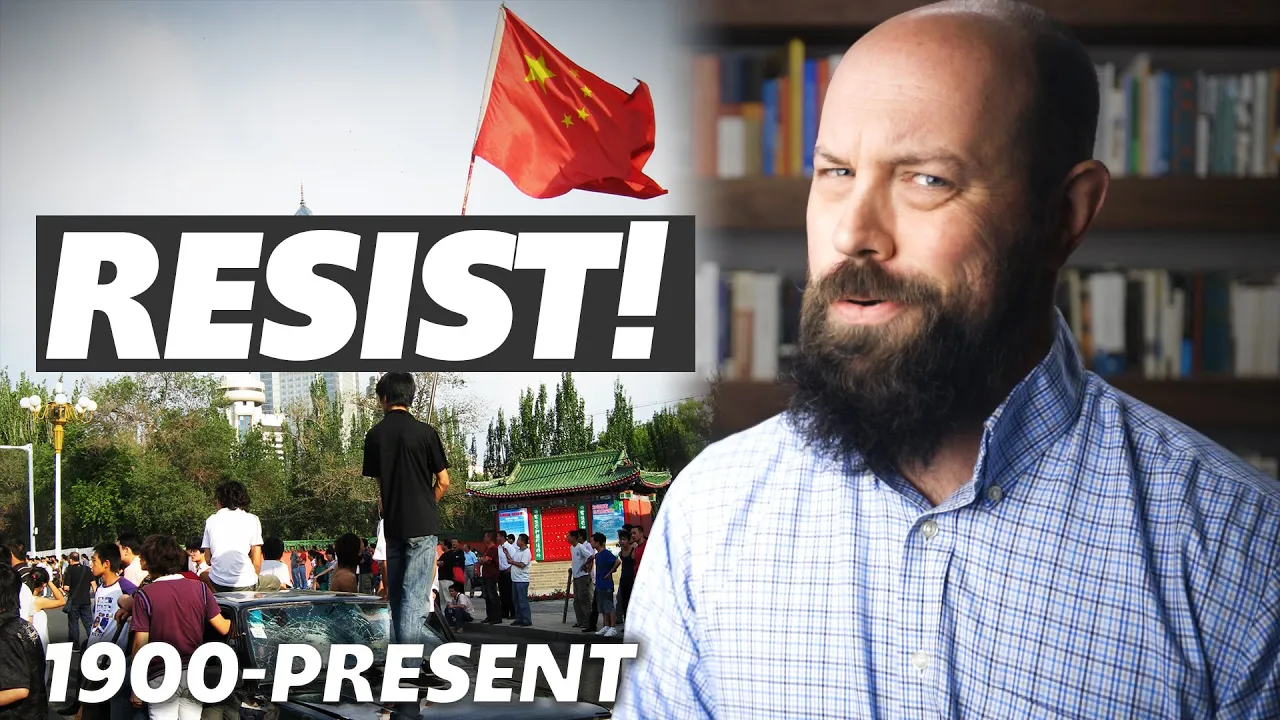
Now, while economics is a large target for anti-globalization protest, another significant one is social media. And for this, let's have a look at China. China went ahead and shut down sites like Facebook and Twitter because by their reckoning those sites were responsible for creating unrest in their country.
In 2009, a riot broke out between the ethnic Hans and the minority Weaguer population. The Weaggguers are Muslims and have had a long history of abuse in China. But the point is, the Chinese government blames social media sites for trafficking in ideas that caused this uprising and therefore shut it down.
But people still need their social media. After all, those memes ain't going to share themselves. Anyway, to replace those filthy western social media platforms, China introduced its own platform called Waybo, which allowed the Chinese people to do the same things they did with Facebook and Twitter, but without the danger of Western ideas sneaking in because the government filtered out any information that they deemed unfit.
So, the point of all this is that although globalization brought many economic and social blessings to some parts of the world, that blessing did not extend to all. Therefore, many people rose up to resist globalization. Well, okay.
That's what you need to know about unit 9, topic seven of the AP World History curriculum. If you want help getting an A in your class and a five on your exam in May, then click right here and get review packet. If you were helped by this, you want me to keep making these videos, then by all means, subscribe and I shall oblige.
Himler out.