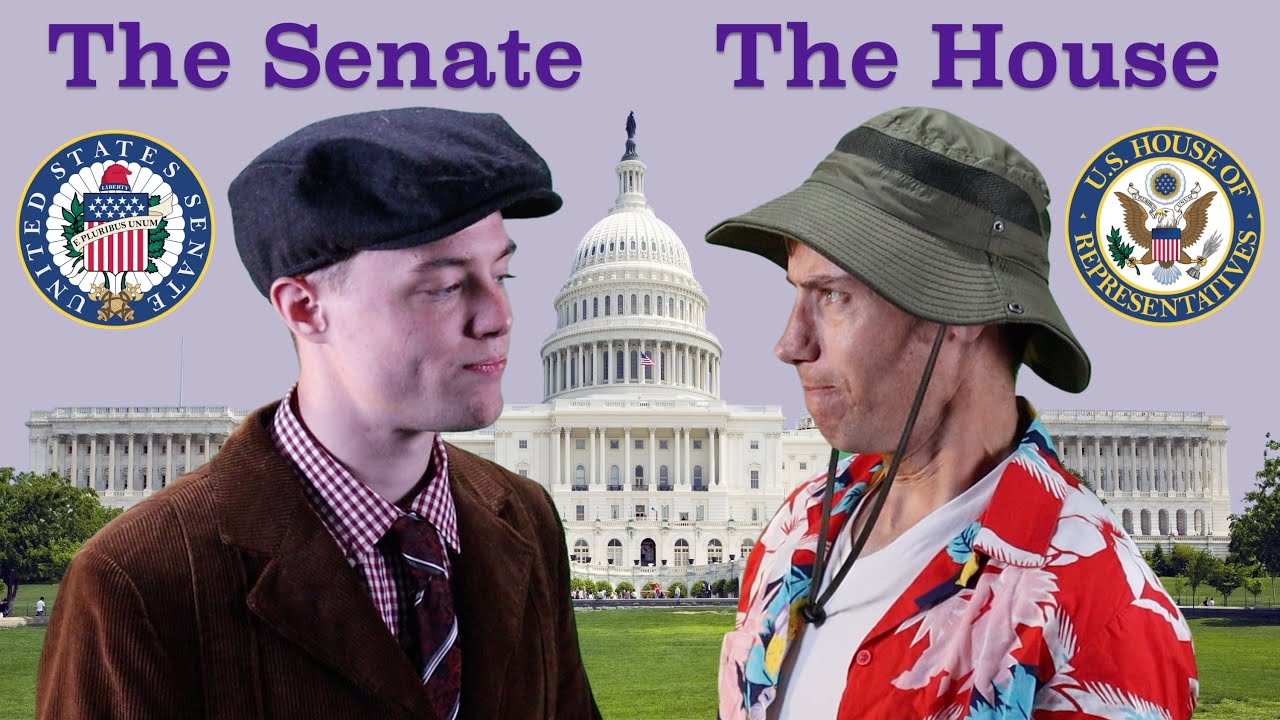
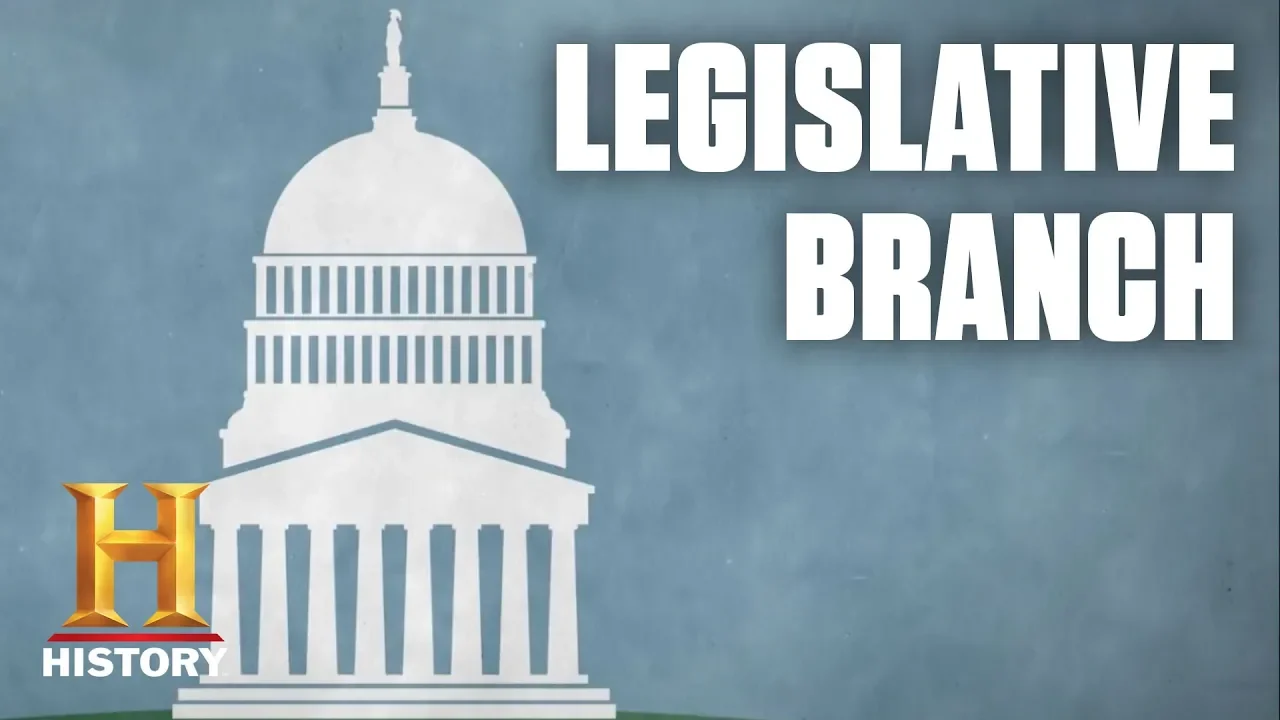
- There are three branches of government in the US, legislative, executive, and judicial. [MUSIC PLAYING] The legislative branch is comprised of the United States Congress, the bicameral legislature responsible for writing and passing all federal laws, among various other functions. [MUSIC PLAYING] Back when the Founding Fathers drafted the Constitution, debate stirred over the type of legislature they'd have, one with equal representation, ie, the same number of representatives for each state, or of proportional representation, in which the number of representatives reflected the size of each state's population.
Unable to choose, they settled on both, a legislative branch with two houses, the House of Representatives and the Senate, which together, form the Congress. This was all outlined in Article I of the Constitution, which also notes the functions, powers, and parameters of the Congress and its individual representatives. A congressman's primary responsibilities include representing the interests of their constituents, working together to write laws, overseeing other government agencies, and passing bills.
But of course, that's all way easier said than done. To understand how it all works, we have take a closer look at the makeup of the two distinct houses. [MUSIC PLAYING] The first and lower house is the House of Representatives made up of 435 elected officials.
Each state is allotted a number of congressmen determined by their total population. To become a member of the House, one must be at least 25, have lived in the US for seven years, live in this state they will represent, and be elected by the people. Congressmen serve two-year terms and are up for re-election every even year.
The House is led by the Speaker of the House, who is elected by the House of Representatives. The House has a few exclusive powers not shared by the Senate. Only the House can initiate tax laws and spending bills.
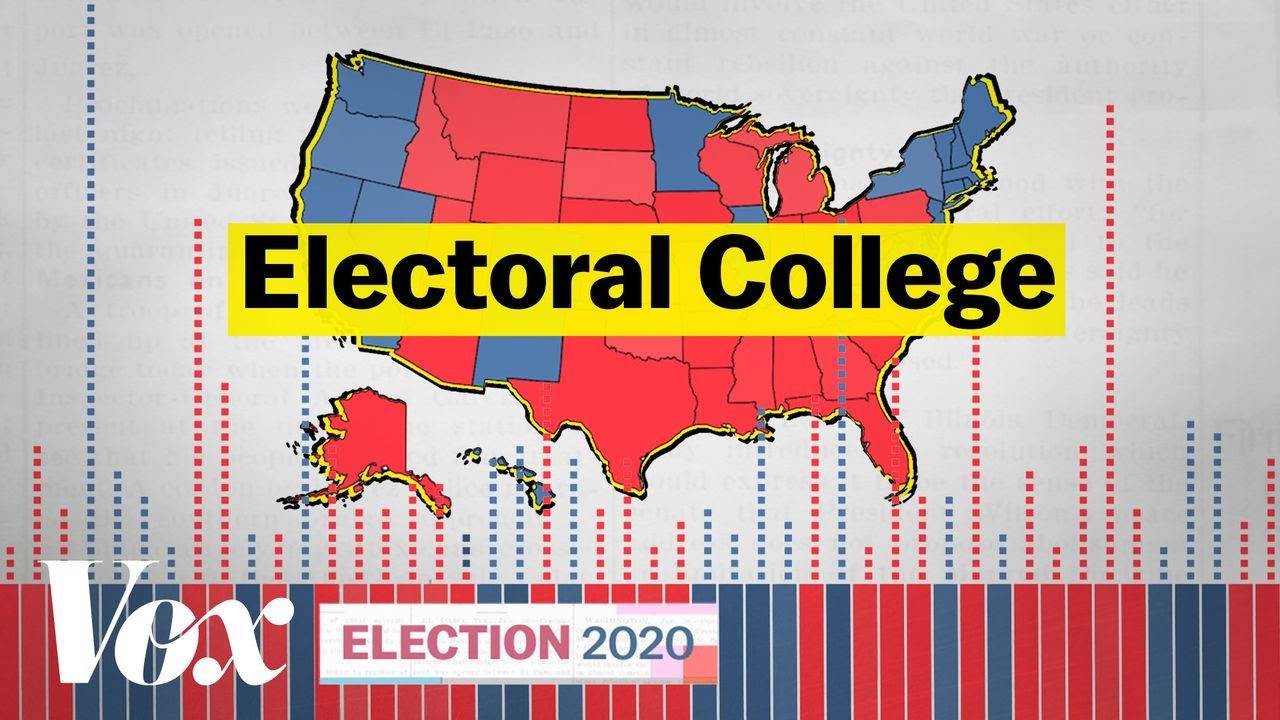
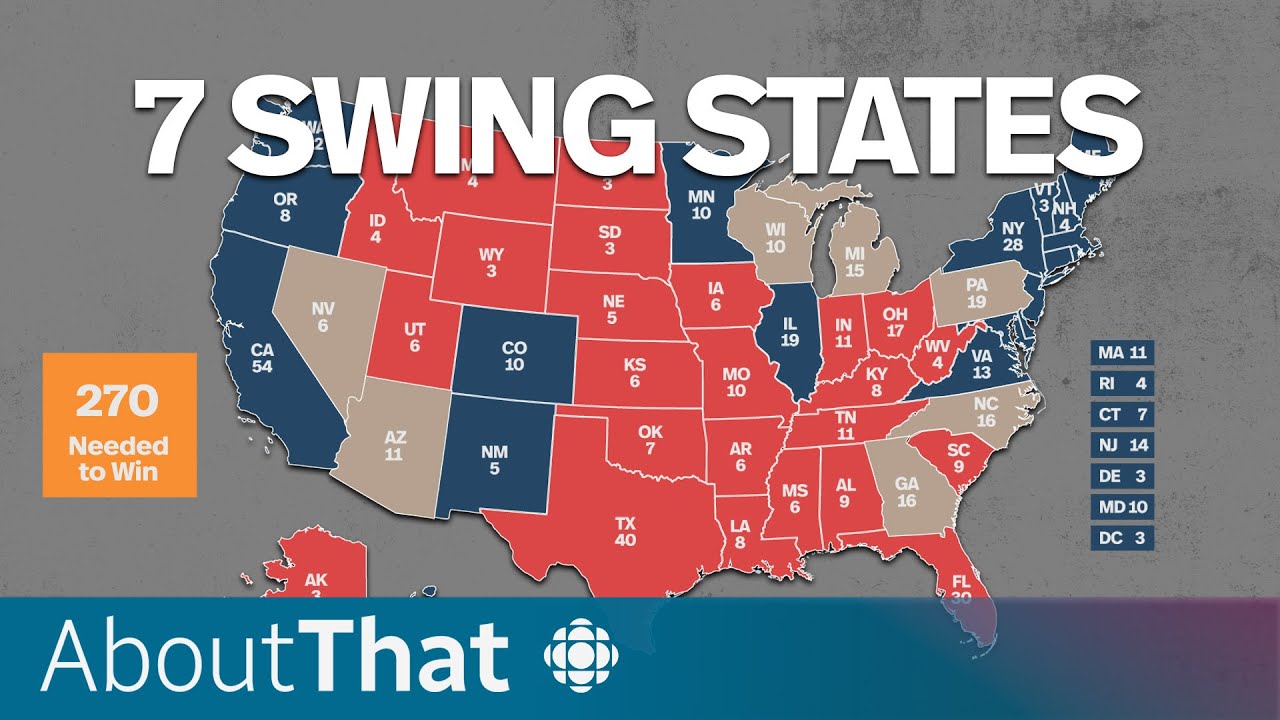
Only the House can initiate impeachment of a president or other government officials. And in the event that there is no majority in the Electoral College for one of the presidential candidates, it's the House who casts the deciding vote. The Senate, or the Upper House, is made up of only 100 elected members with two senators from each state.
Here, a state like Wyoming has as strong a voice as California, even though California has a much larger population. To run for Senate, one must be at least 30 years old, have lived in the US for nine years, and live in the state that they will represent. Senators serve six-year terms.
Every even year, a third of the Senate is up for re-election. Before the 17th amendment was ratified in 1912, senators were elected by the state legislatures. But now, they are elected by us, the people.
The vise president of the United States serves as the head of the Senate, but he or she may only cast a vote in the event of a tie. The Senate exclusively has the power to approve presidential appointments and treaties. And when the House moves to impeach a government official, it's the Senate that tries them.
Together, both houses have the power to tax, coin money, declare war, and regulate foreign and interstate commerce. But Congress's bread and butter is writing and passing bills. [MUSIC PLAYING] Getting a bill passed is no easy task.
A bill can originate in either the House or the Senate. But before it gets voted upon, it goes through a series of committees, and amendments, and floor debates. After a vote, it moves to the other chamber, and the process continues.
If the one chamber makes any edits to a bill passed by the other, it has to go back for another vote. The House and Senate must vote to approve the exact same bill before it can move on. If it fails to get a majority vote, it has to be reintroduced.
If it passes, it goes to the president's desk for approval. If the president chooses to veto a bill, which essentially voids it, Congress can push back the veto override. But to do this, they needed 2/3 majority vote in both houses.
Failing to pass legislation is an inevitable part of congressional routine. Congress is the only branch of government whose members are elected directly by the people, and the only part of government that tries to balance the relationship between the power of the nation and the individual states.