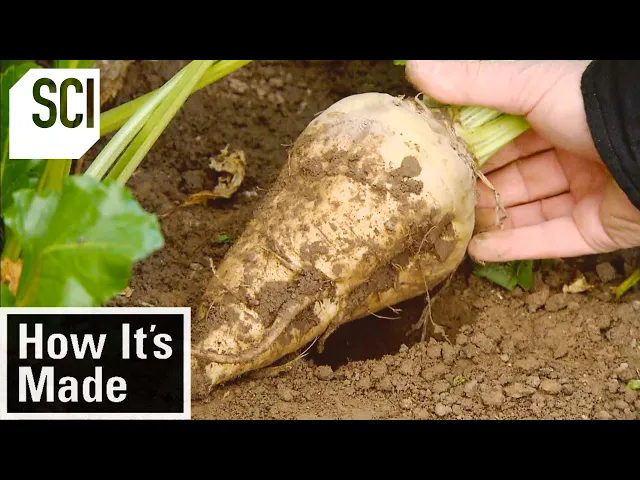
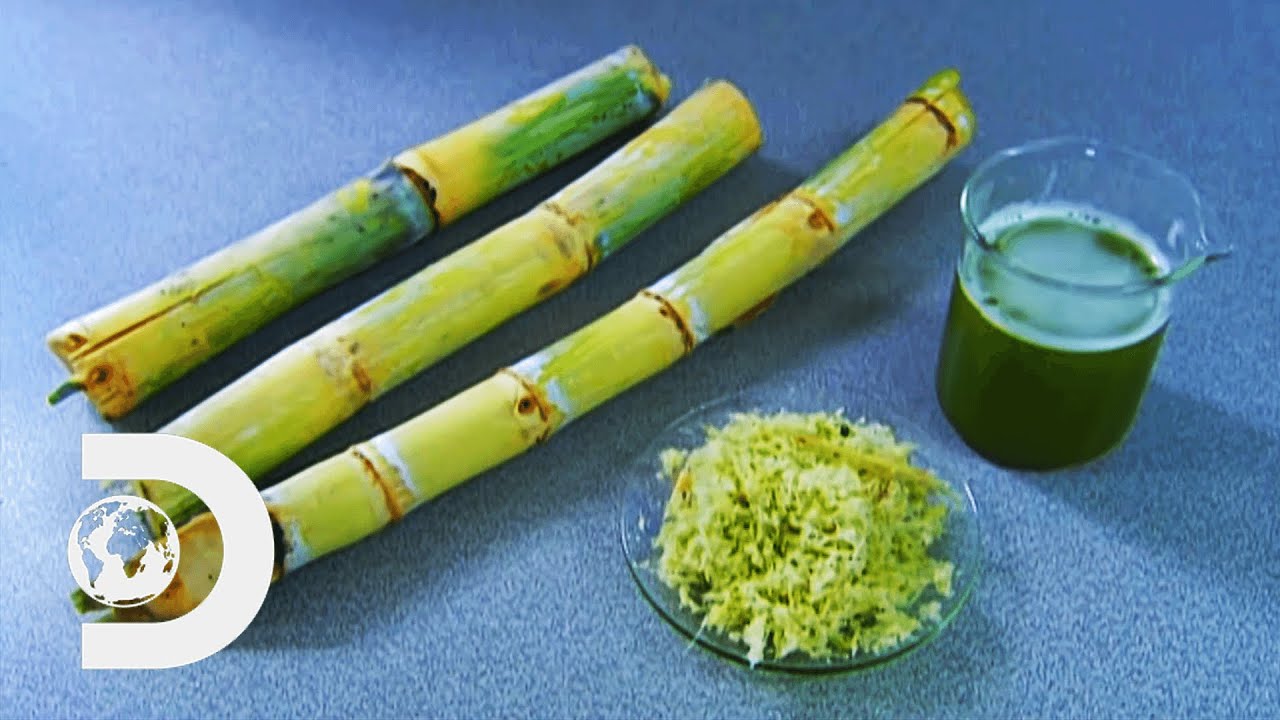
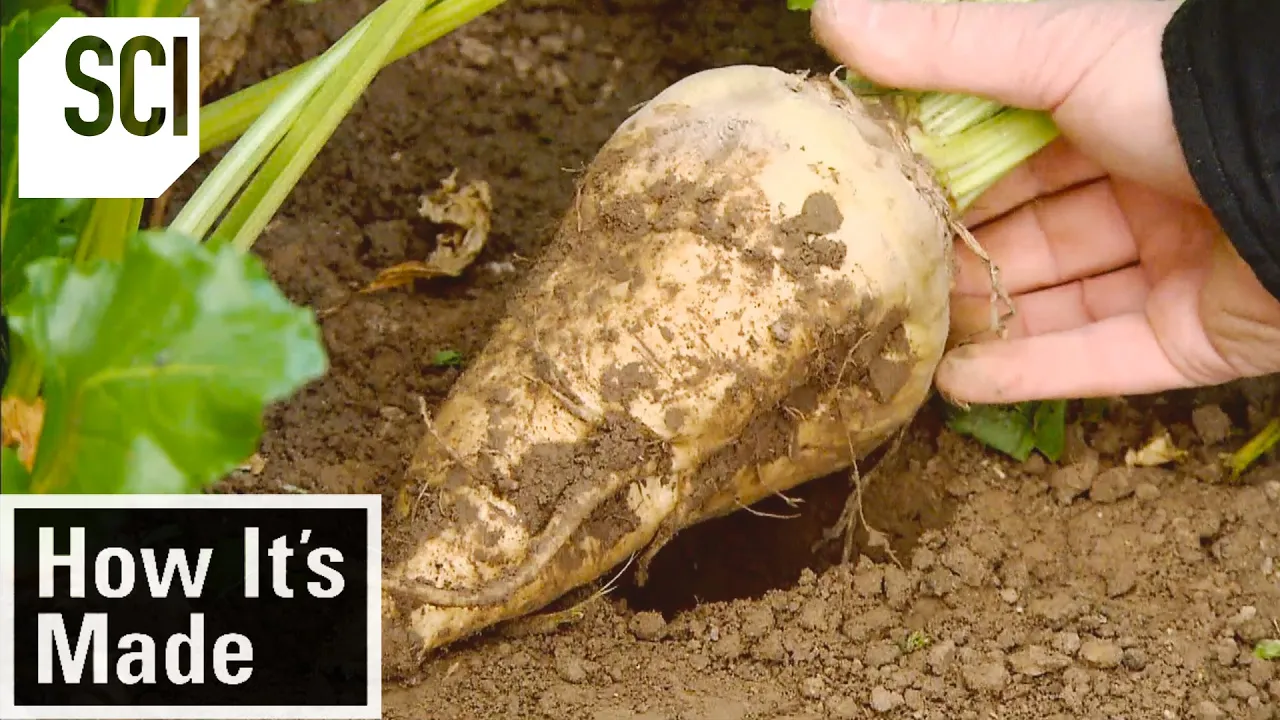
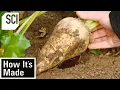
[Music] a common assumption is that all white sugar is derived from sugar cane but 30 percent of the world's white sugar supply comes from the sugar beet while sugarcane grows only in tropical climates the heartier sugar beet can be cultivated in cooler regions and in poorer soil it takes about seven beets to produce a little more than two pounds of sugar the byproducts of processing molasses and beet pulp are used for animal feed the processing of sugar beets yields various grades of sugar the lower ones are reprocessed to become white sugar farmers plant beet seeds
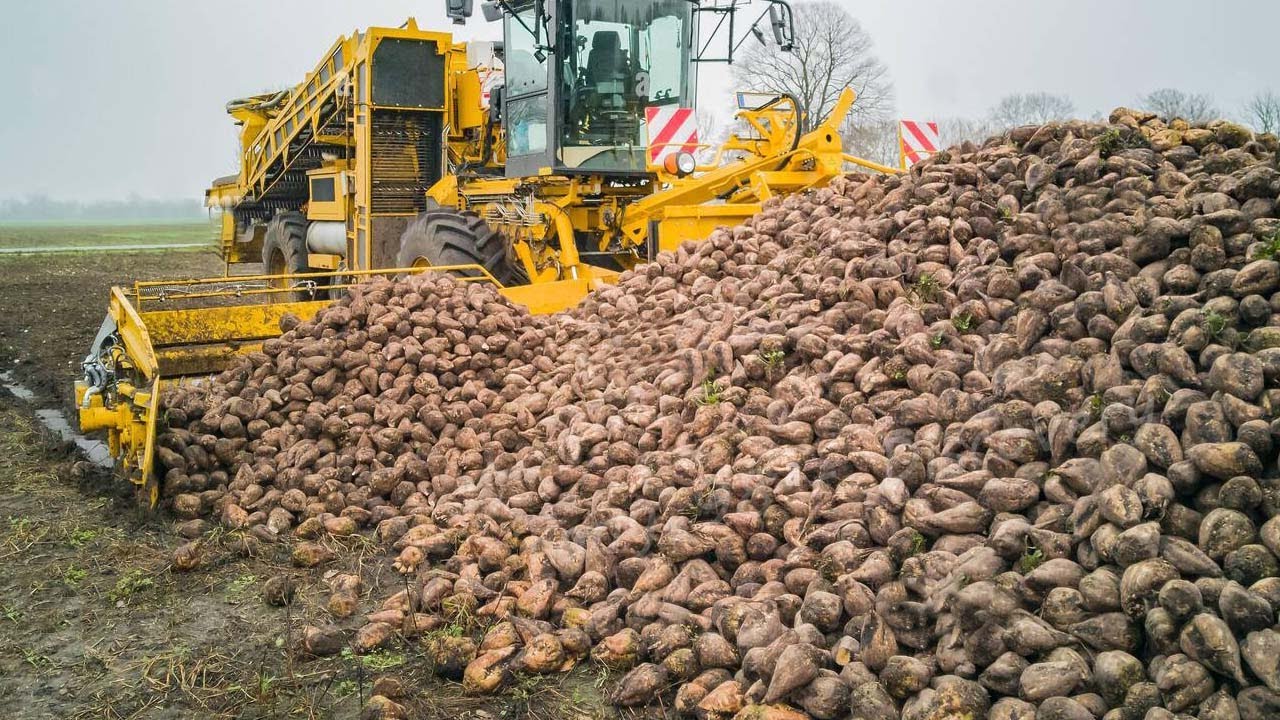
in the spring and harvest the mature crop in the fall mechanical harvesters attack six rows at a time they rip the plant out of the ground chop off the leaves and crown leaving just the bulbous root a beetroot typically weighs about two pounds seventeen to eighteen percent of that is sucrose which is sugar a loader transfers the harvested beets into trucks the loader sieve removes about a third of the soil along the way [Music] when the trucks arrive at the sugar factory they unload the beets soil and stones included onto a conveyor belt which transports
them to a washing station first they head into a revolving drum where under a shower of water the beets rub against each other dislodging the soil the water flow floats the beets which then exit the drum the stones stay behind collected in separator buckets along the edge a screw conveyor moves the beets to a transfer system which brings them inside the factory to be processed into sugar inside slicing machines cut the incoming beets into cassettes strips about the shape of french fries but smaller the cassettes travel on a conveyor belt into a large tank of
hot water where they soak for a few minutes this gets their cell membranes to begin opening clearing the way for the sucrose to exit during the next operation in which the cassettes are pumped to the bottom of a 22-yard high extraction tower a rotating shaft within the tower transports them slowly upward against the downward flow of hot water this draws out the sucrose producing a sugary water called raw juice the next step is to purify this raw juice in a giant kiln they burn limestone with coke to produce the chemical compound calcium hydroxide also called
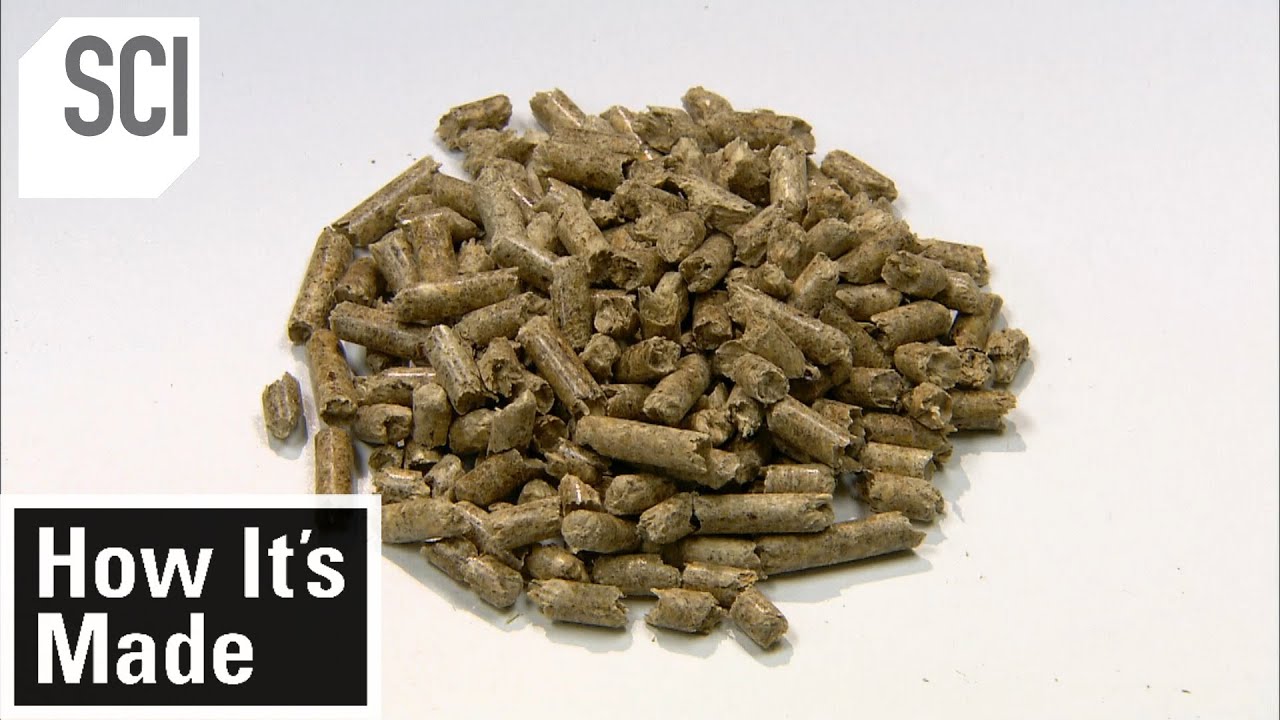
lime milk they added in several stages to the raw juice meanwhile they press the sucrose strip cassettes into pulp to sell as animal feed they add carbon dioxide to the lime milk and juice mixture this absorbs one third of the juice's impurities enabling a filtration system to remove them the raw juice exits as a golden sugar solution called thin juice the thin juice then enters a six step evaporation process which reduces it to a thick syrup-like juice from there they pump it into a four-phase crystallization system in phase one they heat and add seed crystals
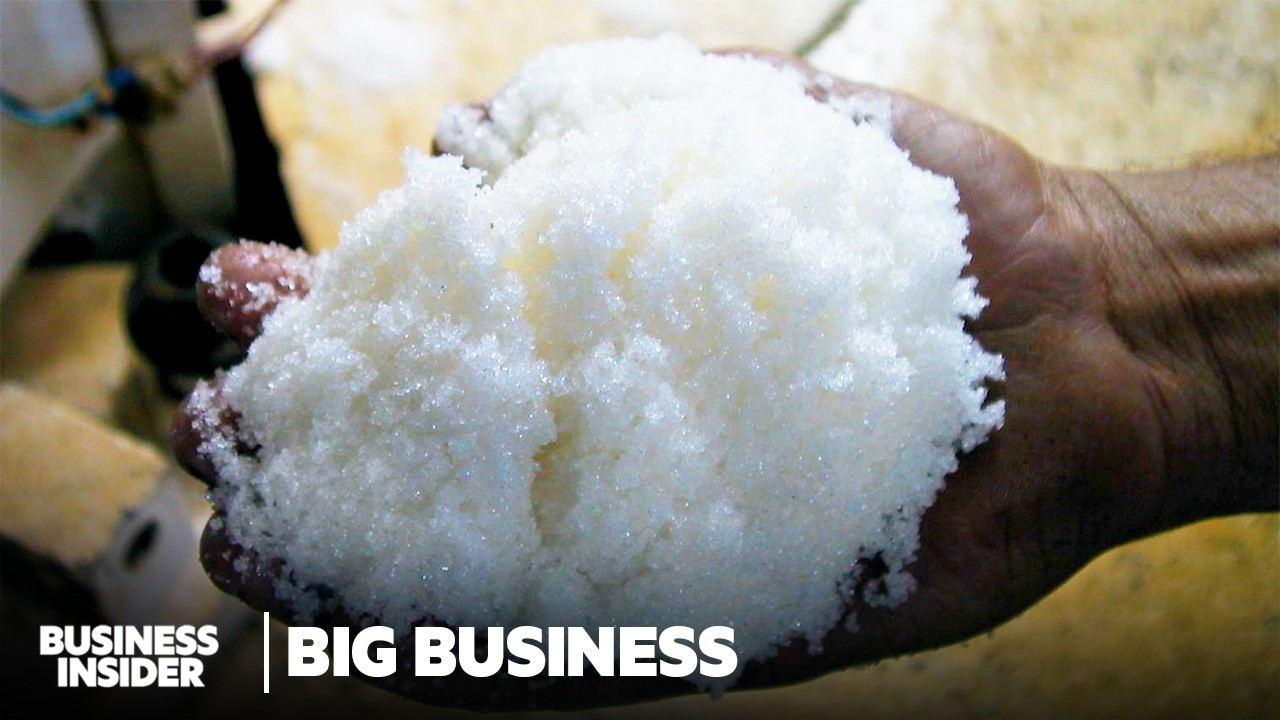
tiny identical size sugar crystals made separately using a complex cooling and evaporating process as the water in the juice evaporates about half of the sucrose crystallizes growing the seed crystals then a centrifuge machine separates the crystals called refined sugar from the remaining syrup the syrup goes through this crystallization centrifuge process three more times producing a lesser grade of sugar each time the factory dissolves and recrystallizes the lowest two grades the highest grades of sugar go into dryers on the way passing through a screening machine which separates any crystals which are too large the factory dissolves
these crystals then puts the sugary liquid through the crystallization process again so in the end there are two grades of beet sugar which go into silos where they're stored until it's time to package them for sale as refined sugar and white sugar you