Chapter 1 - Born into Greatness. Winston Leonard Spencer Churchill, born on a cold November day in 1874, in the grand echoing halls of Blenheim Palace, the very heart of British nobility. A boy who, even from his first breath, seemed destined for something beyond the ordinary. But behind the opulence and the power of his birthplace, shadows lingered. His father, Lord Randolph Churchill, a man of immense political influence, was distant, cold. Lord Randolph's sharp mind and fiery ambition were evident to all. But they were not directed at his son. Young Winston longed for his father's approval, a
smile, a word of encouragement. Yet, time after time, he was met with silence, with icy indifference. His mother, Jenny Jerome, beautiful, dazzling, and always at the center of society, was a different kind of presence. She was warm and loving when she was around. But often, she wasn't. Her social life in London swept her away, leaving Winston in the care of nannies and tutors. He watched her from afar, craving her attention, hoping that one day she would truly see him. As a child, Winston's world was one of contradiction. He had every luxury, every privilege, yet he
was profoundly lonely. He was sent off to boarding schools at a young age, where isolation followed him like a shadow. His letters to his parents were filled with desperate pleas for affection, for recognition, but their replies were few and cold. At school, Winston was rebellious, unruly, always in trouble. His schoolmasters despaired of him, this small, stubborn boy with a fiery temper and an iron will. He struggled with his studies, especially in subjects like math and Latin, where failure seemed to chase him at every turn. His reports were filled with disappointment. But beneath the surface, something
was stirring. Though he faced academic hardships, Winston had dreams, big dreams. Dreams of adventure, of action, of doing something great. He imagined himself as a soldier, a leader, a man of destiny. The vast British Empire, stretching across continents, called to him like a distant drumbeat. Even as a boy, he could see it. He could feel it. Someday, he thought, someday, I'll make my mark. But life as a child of privilege came with expectations, and Winston felt the weight of them heavy on his young shoulders. He was supposed to be polite, obedient, a shining example of
aristocratic perfection. Instead, he was wild, loud, constantly in trouble. Would he ever be enough? As he grew older, those early years of loneliness and rejection shaped him. His determination to succeed burned brighter with every setback. He would prove himself, not just to the world, but to his father, to his mother, to anyone who had ever doubted him. I will make them see, he whispered to himself time and time again. His failures, instead of breaking him, became fuel for his ambition. The world didn't know it yet, but Winston Churchill was a force of nature in the
making. At Harrow, the prestigious boarding school where he was eventually sent, things didn't improve much academically. Again, he struggled in his studies. He was placed at the bottom of his class, and his schoolmasters were less than kind. They saw a boy with potential but little interest in formal education. He often found himself daydreaming, imagining battles, conquests, grand speeches that would sway nations. But Harrow would give him something far more valuable than grades. It would give him a voice. Winston joined the school's debating society. Here, finally, was a stage where he could shine. His words were
powerful, his speeches electrifying. Though young, he had the ability to inspire, to move people, even those older and wiser than him. With each debate, his confidence grew. He wasn't just the rebellious boy in the back of the class anymore. He was a leader in the making. But outside the debating hall, life remained a battle. His father's health began to fail. And though Winston tried desperately to impress him, Lord Randolph was slipping away, both mentally and physically. The few times they spoke were filled with tension, frustration. Lord Randolph had little faith in his son's abilities. He
thought Winston was wasting his potential. He couldn't see the fire inside the boy. And so, when Lord Randolph died in 1895, Winston was left with an unfillable void. His father had passed away, never having seen the greatness his son would one day achieve. But that loss, that sorrow, only sharpened Winston's resolve. Now, more than ever, he would show the world who he was. He would prove to his father's memory, to his mother, and to himself, that he was destined for greatness. The young Winston, standing at the crossroads of his youth, made a decision. He would
not follow the easy path of privilege. He would not settle for a quiet life of wealth and status. No, Winston Churchill wanted action. And so he chose the military, the path of a soldier. War, he believed, would give him the chance to build the legacy he so desperately craved. And so, at the age of 20, he entered the Royal Military Academy at Sandhurst. It wasn't an easy road, far from it. He struggled at Sandhurst, just as he had at school. But this time, failure wasn't an option. With relentless determination, Winston pushed through. And soon, he
would find himself on battlefields across the world, fighting not just for Britain, but for his name, his destiny. Chapter 2, The Making of a Warrior. Winston Churchill, soldier, adventurer, and fearless seeker of glory. His path to becoming a warrior was anything but smooth. But from the moment he left Sandhurst in 1895, the young man was determined to forge his own destiny. He had chosen a life of action, of battle, and above all, of proving himself, not just to others, but to the voice inside him that constantly whispered, you're meant for more. Fresh out of military
training, Churchill longed for adventure. The British Empire, vast and mighty, stretched across the globe. And Winston yearned to be at its front lines, where history was made. No longer the boy struggling in classrooms, he was now an officer of the British Army. And his first taste of battle was about to come. In 1895, Churchill was posted to Cuba as a war correspondent. Yes, a war correspondent. Though still a soldier, he had discovered something else he loved, writing. Here in the battle-scarred hills of Cuba, the young officer began sending back reports that captured the horrors of
war with an honesty that was rare for the time, the sights, the sounds, the smell of gunpowder. It is intoxicating, he wrote. But this was only the beginning. Next came the rugged, unforgiving plains of India. It was in this far off land that Churchill first experienced the true brutality of combat. He fought against Afghan tribes in the Northwest, risking his life for the empire he had always dreamed of serving. His letters from the battlefield were filled with both excitement and fear. Would he survive? In those moments, facing death in the dust and heat, something inside
him hardened. This was the life he wanted. This was how he would prove himself. But war wasn't just about fighting. Churchill's mind was always active, always observing, always thinking. He wasn't satisfied with simply following orders. He wanted to understand why the battles were being fought, what the greater strategy was. His ability to analyze military campaigns, combined with his skill in writing, set him apart. His reports were widely read back home in Britain, and slowly, the name Winston Churchill began to rise. His next adventure took him to Sudan in 1898, where the British were battling the
forces of the Mahdi. Here, in the blistering heat, Churchill fought in the famous Battle of Omdurman. Charging on horseback, sword drawn, he faced down an army of thousands. It was a scene straight out of the stories he had loved as a boy. But this was no fantasy. Death was all around him. The screams of men and horses filled the air. It was the closest I've ever been to death, he later admitted. But there was also a thrill, a sense of purpose that came from fighting for something greater than himself. Churchill survived Omdurman, and his fame
grew even more. His dispatches were read by politicians, generals, and the British public alike. He had become both a soldier and a storyteller, a rare combination. His words captured the raw power of battle, but they also revealed something deeper. Churchill wasn't just looking for personal glory. He was starting to understand the burden of leadership. He was learning that war wasn't just about victories. It was about the men who fought, the sacrifices made, and the lives lost. But Winston wasn't content to remain on the battlefield forever. He had a burning ambition to enter politics, to follow
in the footsteps of his father, Lord Randolph. However, he knew that military success alone wouldn't be enough. He needed fame. He needed something spectacular to catch the attention of the political elite in London, and in 1899, fate handed him exactly what he needed. South Africa, the Boer War. The British Empire was once again at war, this time against the fiercely independent Boer Republics. Winston jumped at the chance to go, not just as a soldier, but as a journalist. He sailed to South Africa with one goal in mind, to make a name for himself. But little
did he know, he was about to become the subject of one of the most dramatic stories of the war. Just weeks into the conflict, Churchill found himself in the middle of a firefight. His train, carrying supplies and soldiers, was ambushed by Boer forces. As bullets flew and the situation grew desperate, Churchill took command. He wasn't even officially a soldier in this campaign. He was a journalist. But that didn't stop him. With incredible bravery, he rallied the men and helped save many lives. Yet, despite his heroism, he was captured. A prisoner of war, locked away in
a Boer prison camp. For most men, this would have been the end of the adventure, but not for Winston Churchill. No, for him, it was just the beginning of another. After weeks of planning and scheming, he made a daring escape. Traveling hundreds of miles across enemy territory, with nothing but his wits and courage to guide him. He arrived in British controlled territory a hero. His name splashed across newspapers in London. Winston Churchill, the man who had defied the Boers and escaped against all odds. This escape didn't just make him famous, it made him a legend.
When Churchill returned to Britain, he was greeted with fanfare. The press couldn't get enough of him, and political doors that had once been closed were now wide open. His time as a soldier was coming to an end. But his political career was about to begin. The boy who had once been told he would never succeed in school, had now proven himself on the Battlefields of faraway lands. But more than that, Winston had learned the power of storytelling. Through his words, he could shape how people saw the war, how they saw him. And he knew that
this skill, perhaps more than any other, would be his greatest weapon in the battles to come. As this chapter draws to a close, we see Winston Churchill standing on the threshold of a new life. His days as a young soldier were behind him, but his thirst for greatness was far from quenched. The listener feels the tension, the excitement, the sense that something much larger looms on the horizon. What lay ahead for this young warrior turned politician? As history would soon reveal, Winston Churchill's greatest battles were yet to be fought. Chapter 3, Political Rise and Fall.
Winston Churchill, the rising star of British politics, was now poised to make his mark in a new arena, Parliament. After the daring exploits in Cuba, India, and South Africa, he had become a household name. The newspapers celebrated him as a hero, and his escape from the Boers had cemented his reputation. But being a soldier was only the beginning. He craved something more, power, influence, the chance to shape history. Politics would be his new battlefield. In 1900, Churchill stood for election as a conservative candidate in Oldham. He gave speeches that dazzled the crowds, fiery, passionate, and
full of conviction. Britain is the greatest empire the world has ever known, he declared. His voice ringing with confidence. The people listened, enthralled by the young man who had faced death and returned with stories of Courage. He won the election, stepping into the House of Commons as one of the youngest MPs. This was the moment Winston had been waiting for. But politics, he soon learned, was a very different kind of fight. Churchill's early years in Parliament were marked by both boldness and controversy. Though he entered as a conservative, he quickly found himself at odds with
his party's policies. Winston was a man of principle, unafraid to speak his mind, even if it meant going against the very people who had helped elect him. The poor should be cared for. The working class deserved better wages and conditions. These ideas weren't popular among his fellow conservatives, who believed in maintaining the status quo. Churchill's rebellious streak, the same one that had caused him trouble in school, now emerged on the political stage. Within a few short years, Winston had done the unthinkable. He switched sides. In 1904, he crossed the floor of the House of Commons
and joined the Liberal Party. His move shocked many, angered others, and earned him the label of a traitor among conservative ranks. How dare he turn his back on his own party, they fumed. But Churchill wasn't driven by loyalty to any one party. He was driven by ideas, by his belief in progress, in action. And the liberals, with their reformist agenda, seemed to be the right vehicle for his ambitions. Now, a liberal MP, Churchill pushed for social reforms with relentless energy. He championed workers' rights, supported unemployment insurance, and sought to improve conditions for the poor. His
speeches were fiery, often laced with sharp wit and biting criticism. He fought for change in a system that, in his eyes, had failed the common man. But with every step forward, there was a backlash. Winston's political career was soaring, but it wasn't without its bumps. In 1911, he was appointed First Lord of the Admiralty, putting him in charge of the Royal Navy. It was a prestigious position, and Winston, always fascinated by military matters, threw himself into the role. The drums of war were already beginning to sound across Europe, and Churchill knew Britain's Navy would be
its first line of defense. When World War I broke out in 1914, Churchill's leadership was crucial. He pushed for modernizing the Navy, preparing for what he saw as an inevitable conflict. His vision and energy seemed endless. He even visited the front lines in France, always eager to be where the action was. This is the greatest test of leadership the world has ever seen, he declared. And Winston believed he was up to the challenge. But the war, like politics, was unforgiving. In 1915, Churchill made a fateful decision, one that would haunt him for years to come.
He pushed for the Gallipoli campaign, a bold but risky plan to open up a new front in the war by attacking the Ottoman Empire. He believed it could be the turning point in the conflict, a master stroke that would lead to victory. The plan was daring, ambitious, and a disaster. The campaign was a catastrophic failure. Thousands of soldiers died on the beaches of Gallipoli, trapped by enemy fire, unable to advance or retreat. The losses were staggering, and the blame fell squarely on Churchill's shoulders. The press turned on him, once heralded as a hero, now branded
a failure. The government, too, lost faith in him. In the aftermath of Gallipoli, Winston was forced to resign from the admiralty, his reputation in tatters. How far had he fallen? The sting of failure was bitter. Churchill, the man who had risen so quickly through the ranks, who had tasted glory on the battlefield and in politics, now found himself cast aside. His political career, it seemed, was over. He was devastated. Gallipoli wasn't just a military failure, it was a personal humiliation, one that shook him to his core. The ambitious young man who had once dreamed of
greatness now found himself in the political wilderness. But Winston Churchill was not a man to give up. Even in his darkest moments, the fire inside him never went out. After Gallipoli, he retreated from public life. He spent time painting, a hobby he had taken up to soothe his restless mind. He even rejoined the army, briefly serving on the Western Front. But all the while, he was plotting his comeback. In the years that followed, Churchill slowly rebuilt his political career. It wasn't easy. He faced opposition at every turn, and the scars of Gallipoli followed him like
a shadow. But Winston refused to be broken. He took on lesser roles in government, using each one as a stepping stone. He watched, waited, and prepared for the moment when he would once again rise to power. This chapter is not just a story of political triumph and defeat. It is a lesson in resilience. Winston Churchill's rise was meteoric, but his fall was devastating. Yet even in the depths of his despair, he never lost sight of his ultimate goal. The listener can feel the weight of Churchill's disappointment, the bitterness of failure, but also the unshakable determination
that defines him. Chapter 4, Out of the Ashes, Into the Wilderness. Winston Churchill, once the star of British politics, now found himself cast into the shadows. The disastrous Gallipoli campaign had left a stain on his reputation that many thought would never wash away. The newspapers, once full of praise, now branded him with a single word, failure. His political enemies whispered in the halls of Westminster, and even his friends turned their backs. It seemed that Churchill's career, once so full of promise, had crumbled in an instant. In 1915, after resigning from his post as First Lord
of the Admiralty, Churchill slipped quietly out of the spotlight. The man who had once commanded fleets now felt like a ship adrift at sea. I am finished, he reportedly told his wife Clementine, as he sat in their home, his heart heavy With defeat. What now? What could a man like Churchill do, when the very thing he had devoted his life to, leadership, had been ripped away from him? Yet, this wasn't the end of Winston Churchill, far from it. If anything, this was the beginning of a period that would shape him in ways even he couldn't
foresee. They called it the Wilderness Years, a time when Churchill was pushed to the fringes of political life. But in that wilderness, amidst the loneliness and doubt, he would find the inner strength and wisdom to become the leader the world would one day desperately need. At first, Winston did what he always did when life seemed unbearable. He turned to action. While many expected him to slink away into obscurity, Churchill shocked everyone by rejoining the military. Not just as a politician overseeing strategy, but as an officer on the front lines. In 1916, he went to fight
in the trenches of France, at the heart of the brutal bloody Western Front. He lived among the soldiers, sharing their hardships, enduring the constant danger of enemy fire. For a man who had known the heights of power, it was a humbling experience. But it was also a healing one. Winston found solace in the camaraderie of the soldiers, in the raw, simple courage that war demanded. It reminded him of who he was, a fighter, a man who would never retreat from a challenge. This is where I belong, he wrote to Clementine. But even as he fought
in France, the hunger for politics still burned inside him. He wasn't done, not by a long shot. When the war finally ended in 1918, Churchill returned to Britain. The country was changed, exhausted by the years of war, and so was Winston. He had seen firsthand the cost of poor leadership, the devastating consequences of misjudgment, and the importance of vision. These experiences would stay with him, deepening his resolve and sharpening his perspective. But despite his readiness to return, Churchill's journey back into politics was far from easy. The post-war world was full of new challenges, social unrest,
economic turmoil, and the rise of new political movements that threatened the old order. Many still remembered Gallipoli, and even though the war had overshadowed that failure, it lingered Like a dark cloud. Churchill, it seemed, was always a step away from being haunted by his past. He took up a series of less prominent positions in the government, rebuilding his political career brick by brick. But it was slow, frustrating work. His passion, his energy, and his brilliance remained. But the world was changing, and Winston often found himself on the wrong side of public opinion. He spoke out
against Indian independence, fiercely defending the British Empire at a time when many in Britain were beginning to question its future. He was out of touch, some said, a relic of the past. His warnings about the dangers of communism fell on deaf ears, and his outspoken criticism of the Labour Party's socialist policies earned him enemies on both sides of the political spectrum. At times, it seemed as though Churchill was shouting into the wind, his once powerful voice drowned out by the noise of a new world. By the 1920s, Winston Churchill was still in Parliament, still making
speeches, still fighting for his ideas. But the fire that had once carried him to the highest levels of government had dimmed. He was no longer the rising star. He was a man many considered past his prime. The wilderness years dragged on, and Churchill began to wonder if his moment had passed forever. And yet, amidst the darkness, there were flickers of light. It was during this time that Winston began to paint. Yes, paint. He took up the brush as a way to calm his restless mind, to escape the pressures of politics, and To find peace. Painting,
he once said, is complete distraction. I know of nothing which, without exhausting the body, more entirely absorbs the mind. As strange as it might seem, those hours spent in front of a canvas helped Churchill survive the long, lonely years of political exile. The act of creating, of shaping something with his own hands, restored a part of him that had been lost in the turmoil of war and politics. But even as he painted, Churchill kept his eye on the horizon. He watched as Europe grew increasingly unstable. In Germany, a new danger was rising, a man named
Adolf Hitler. Churchill, always the student of history, recognized the signs of tyranny, even when others did not. Throughout the 1930s, as Hitler's power grew, Churchill's voice once again rang out in warning. We must rearm, he cried. We must prepare for the storm that is coming. But few listened. For much of the 1930s, Churchill was a lone voice in the wilderness, crying out against the dangers of Nazi Germany. The British government, desperate to avoid another war, pursued a policy of appeasement, hoping that giving in to Hitler's demands would prevent conflict. Churchill was outraged. He called appeasement
feeding the crocodile, hoping it will eat you last. But still, his warnings were ignored. Once again, Winston found himself on the fringes of power, watching as the world moved toward Disaster. Yet, in his heart, he knew that his time would come again. The clouds of war were gathering, and Winston Churchill, the man who had faced so many battles, both on the field and in the halls of power, was preparing for the greatest challenge of his life. He had spent years in the wilderness, but as the storm approached, Britain would soon need him again. Chapter 5.
The Gathering Storm Winston Churchill stood at the edge of history, watching the storm clouds roll in. The 1930s were drawing to a close, and the world was teetering on the brink of disaster. In the halls of power, few listened. In fact, many hoped against hope that war could be avoided, that appeasement, diplomacy, and Compromise would keep the coming darkness at bay. But not Churchill. No, he knew better. He had seen this before. He had lived through one world war, and now he could see another on the horizon. Only this time, the enemy was even more
dangerous. For years, Churchill had been warning anyone who would listen about the rise of Adolf Hitler and the Nazi regime. We must rearm, he cried, as others preached peace. We must prepare, he urged, as political leaders in Britain and across Europe signed treaties and made concessions to keep Hitler's ambitions in check. But each time, his voice was drowned out by the chorus of optimism. Surely, they thought, no one would be foolish enough to start another war so soon after the horrors of the Great War. How wrong they were. Churchill, cast out of the inner circles
of power, watched with mounting frustration. He knew what was coming. He saw it in Hitler's speeches, in the brutal expansion of the German military, in the persecution of Jews and political opponents across the Third Reich. He saw it in the swastika-covered parades, the salutes, the madness that was spreading across Europe. And yet, Britain did nothing. The policy of appeasement, led by Prime Minister Neville Chamberlain, was in full force. Chamberlain, eager to avoid conflict at all costs, famously returned from Germany in 1938 with a Piece of paper in his hand. A peace agreement signed by Hitler.
He waved it in the air, beaming with pride. Peace for our time, he proclaimed. Churchill was outraged. Do not delude yourselves, he shouted. This is only the beginning. But once again, his warnings fell on deaf ears. He stood alone, a voice in the wilderness, his frustration growing as Hitler continued his march across Europe. And then, the unthinkable happened. In March 1939, Hitler's army invaded Czechoslovakia, tearing up the treaty Chamberlain had so Proudly displayed. The world gasped, but Churchill was not surprised. He had been right all along. By September 1939, the storm that Churchill had long
predicted finally broke. Hitler's forces invaded Poland, and the world was plunged into war once more. Britain and France declared war on Germany, but even then the full scale of the coming conflict was not yet understood. Many believed it would be a quick fight over by Christmas. Churchill knew better. This was going to be a war unlike any the world had ever seen. As the bombs began to fall, Churchill was called back to power. He was named First Lord of the Admiralty once again, the same position he had held during World War I. His return to
the Admiralty marked the first step in what would become the most significant chapter of his life. The war was only beginning, but already, Churchill's leadership, vision, and fierce determination were evident. His voice, once ignored, was now growing louder, more urgent, and impossible to ignore. The early months of the war were marked by what came to be known as the Phony War. Though Britain and Germany were officially at war, there were few major battles, and the expected large-scale conflicts didn't materialize immediately. But beneath the surface, the tension was building, and Churchill knew it was only a
matter of time before the full force of the Nazi war machine was unleashed. Then, in the spring of 1940, it happened. Hitler's armies launched a lightning-fast invasion of Western Europe, overwhelming the defenses of Denmark, Norway, Belgium, and the Netherlands. The world watched in horror, as country after country fell to the relentless German blitzkrieg. France, too, was on the verge of collapse. The British army, sent to aid their allies, was caught in the chaos, retreating to the beaches of Dunkirk, with the Nazi forces closing in fast. The situation was desperate. Thousands of British soldiers, the core
of Britain's fighting force, were trapped, with no way out. And it was in this moment of crisis that Winston Churchill rose to power. In May 1940, with Chamberlain's policy of appeasement in tatters, Churchill was called upon to become Prime Minister. The nation turned to him in its darkest hour, desperate for a leader who could face down the Looming catastrophe. Churchill, always ready for a fight, accepted the challenge without hesitation. This was his moment. His first act as Prime Minister? Ordering the evacuation of Dunkirk. In one of the most daring operations in British military history, civilian
boats, fishing vessels, pleasure yachts, even ferries, were sent across the English Channel to rescue the stranded soldiers. Against all odds, over 300,000 British and French troops were saved. It wasn't a victory in the traditional sense, but it was a powerful symbol of defiance. Britain would not surrender. Churchill's speeches during this time became legendary. They were not just words. They were weapons. We shall fight on the beaches, we shall fight on the landing grounds, we shall fight in the fields and in the streets, we shall fight in the hills, we shall never surrender, he thundered, his
voice crackling with determination. His words electrified the nation, stealing them for the long, brutal fight ahead. It was clear, Britain would not bend, even as the rest of Europe fell under the Nazi boot. But even as Churchill rallied the nation, the storm grew darker. France fell in June 1940, and Britain stood alone against Hitler's seemingly unstoppable forces. The full weight of leadership now rested on Churchill's shoulders. Would Britain survive? Could it stand alone? The odds were grim. The Luftwaffe began its bombing campaign, launching the infamous Blitz. Night after night, bombs rained down on London and
other major cities, reducing them to rubble. Civilians huddled in underground shelters, waiting for the dawn. But Churchill, undeterred, walked through the bombed-out streets, visiting the wounded, shaking hands, offering words of comfort. His very presence was a symbol of resistance. We can take it, he would say. And what is more, we can give it back. His resolve, his defiance, became the heart of Britain's war effort. Under his leadership, Britain did not falter. In the skies above, the Royal Air Force, outnumbered and outgunned, fought back with unparalleled Bravery during the Battle of Britain, forcing Hitler to abandon
his plans for an invasion. It was a turning point, but the war was far from over. Chapter 6 The Call to Lead May 10, 1940 The day Britain's destiny shifted, the day Winston Churchill received the call to lead, the war had already begun, and Europe was crumbling beneath Hitler's relentless blitzkrieg. France was falling, Belgium was teetering, and the British Expeditionary Force was retreating from Dunkirk, clinging to hope as the Nazi war machine crushed everything in its path. In this moment of unimaginable crisis, Britain turned to one man, Churchill. Neville Chamberlain, the architect of appeasement, had
resigned. His policies discredited, his hopes of peace shattered. The world was now engulfed in flames, and Britain needed someone with fire in his soul, someone who wouldn't negotiate with the devil. Churchill had been waiting for this moment, his entire life had prepared him for this. When the call came, he answered with the weight of history pressing on his shoulders, but with his fierce, unyielding spirit ready to fight. I felt as if I were walking with destiny, he later wrote, reflecting on that pivotal moment. All my past life had been but a preparation for this hour,
and for this trial. Churchill knew that the stakes couldn't be higher. If Britain fell, the free world would fall with it. There was no time to hesitate, no room for doubt. He moved swiftly, taking the reins of power and rallying his government behind him. But there was no honeymoon period for the new Prime Minister. The war was here, and it was terrifying. Within days of Churchill taking office, Hitler's armies surged deeper into France, and the French Government was on the verge of collapse. Britain was alone, facing the full force of the Nazi onslaught. Many in
Parliament feared the worst, whispering in dark corners that perhaps an armistice, a peace deal with Hitler, would be Britain's only chance of survival. But Churchill would hear none of it. You cannot reason with a tiger when your head is in its mouth, he roared in one of his first speeches as Prime Minister. For Churchill there was only one option, victory. His voice, steady, commanding and resolute, became a beacon of hope in the darkest of times. Victory at all costs, victory in spite of all terror. Victory, however long and hard the road may be. These weren't
just words, they were a promise. But the situation was dire. In late May, as the Nazis closed in on Dunkirk, it seemed that Britain might lose its entire army. Over 300,000 British and Allied troops were trapped on the beaches, with nowhere to run, no way to escape. The German forces were tightening the noose, and if those soldiers were lost, Britain would have no defense left against a full-scale invasion. In that moment, Churchill made one of the most critical decisions of the war. He launched Operation Dynamo, a bold, desperate attempt to rescue the stranded troops from
Dunkirk. But this wasn't a typical military evacuation. Churchill's call went out to the civilian population of Britain. Anyone with a boat, no matter how small, was asked to cross the English Channel and bring the soldiers home. The response was overwhelming. Hundreds of fishing boats, pleasure yachts and merchant ships set sail, braving enemy fire, rough seas and mine-laden waters to pull off one of the most miraculous rescues in history. The evacuation of Dunkirk wasn't a military victory, but it was a triumph of the human spirit. Churchill called it a miracle of deliverance, and for good reason.
Over 300,000 troops were saved, more than anyone had dared hope. But Churchill, ever the realist, knew that this was only the beginning. Britain had escaped disaster, but the full weight of Hitler's war machine was still looming. In early June, as France fell to the Nazis, Churchill addressed the British people with one of his most famous speeches. The country was bracing itself for the inevitable onslaught, and morale was dangerously low. But Churchill's words lifted the nation's spirits and steeled its resolve. His speech, delivered with a growl of defiance, rang out across the airwaves. We shall fight
on the beaches. We shall fight on the landing grounds. We shall fight in the fields and in the streets. We shall fight in the hills. We shall never surrender. Those words, echoing in the hearts of every Briton, sent a clear message to the world. Britain would stand alone, if necessary. It would fight on, no matter the cost. Churchill's speeches were more than just words. They were weapons, wielded to inspire courage and resilience in the face of overwhelming odds. Every speech, every radio broadcast, stirred the souls of the British people and became a rallying Cry for
freedom. His ability to turn fear into determination was unmatched, and in those critical early months, it was Churchill's leadership that kept Britain in the fight. But the enemy was relentless. After the fall of France, Hitler turned his gaze across the English Channel. Operation Sea Lion, the Nazi plan to invade Britain, was set in motion, and the first phase would be an air assault. If Germany could destroy the Royal Air Force, the invasion would follow. And so began the Battle of Britain, a battle for survival fought in the skies above England. In the summer of 1940,
the Luftwaffe launched wave after wave of attacks, bombing airfields, factories, and cities. The Royal Air Force, outnumbered and exhausted, fought back with everything they had. The tension was unbearable. Night after night, Churchill stayed awake, watching the skies, receiving reports, his heart heavy with the knowledge that Britain's fate rested on the shoulders of a few hundred young pilots. But he never wavered. His confidence in the RAF never faltered, even as the bombs rained down on London and other cities in what would come to be known as the Blitz. Churchill knew that this battle wasn't just for
Britain. It was for the free world. If we fail, he said, the whole world, including the United States, will sink into the abyss of a new dark age. The gravity of the situation was not lost on him, but he still managed to find words of hope in the darkest of moments. And then, when the tide of the battle began to turn in Britain's favor, Churchill delivered one of his most famous lines. Never in the field of human conflict was so much owed by so many to so few. With those words, Churchill immortalized the bravery of
the RAF pilots, the few who had saved Britain from invasion. Their courage, combined with Churchill's indomitable spirit, had kept the flame of freedom burning when it seemed the world might be consumed by darkness. As the Battle of Britain came to a close in the autumn of 1940, Hitler called off his invasion plans. Britain had survived, bloodied but unbroken. The war was far from over, but Churchill had led his nation through its darkest hour. His leadership, his words, and his unshakable belief in victory had kept Britain standing when all Seemed lost. And yet, Churchill knew the
fight was far from won. The coming years would bring new challenges, new dangers, and new battles. But for now, as the chapter draws to a close, we see Churchill standing tall, his nation behind him, ready for whatever came next. He had answered the call to lead, and Britain, against all odds, had found its strength. CHAPTER VII THE BLITZ BRITAIN STANDS ALONE Autumn 1940. Britain, battered but not broken, stood alone. France had fallen. Nazi Germany now controlled almost all of Western Europe, and across the English Channel, Adolf Hitler, frustrated by his failure to break the Royal
Air Force in the Battle of Britain, turned his rage on the British people. His plan was simple, terror from the skies. If he couldn't conquer Britain with tanks and soldiers, he would try to bomb them into submission. And so began the Blitz, one of the most harrowing chapters in British history. Night after night, the skies over London filled with the roar of German bombers. Sirens wailed across the city, sending people scrambling into underground shelters. The bombs rained down with terrifying precision, reducing entire neighborhoods to rubble, turning homes, businesses, and landmarks into piles of twisted metal
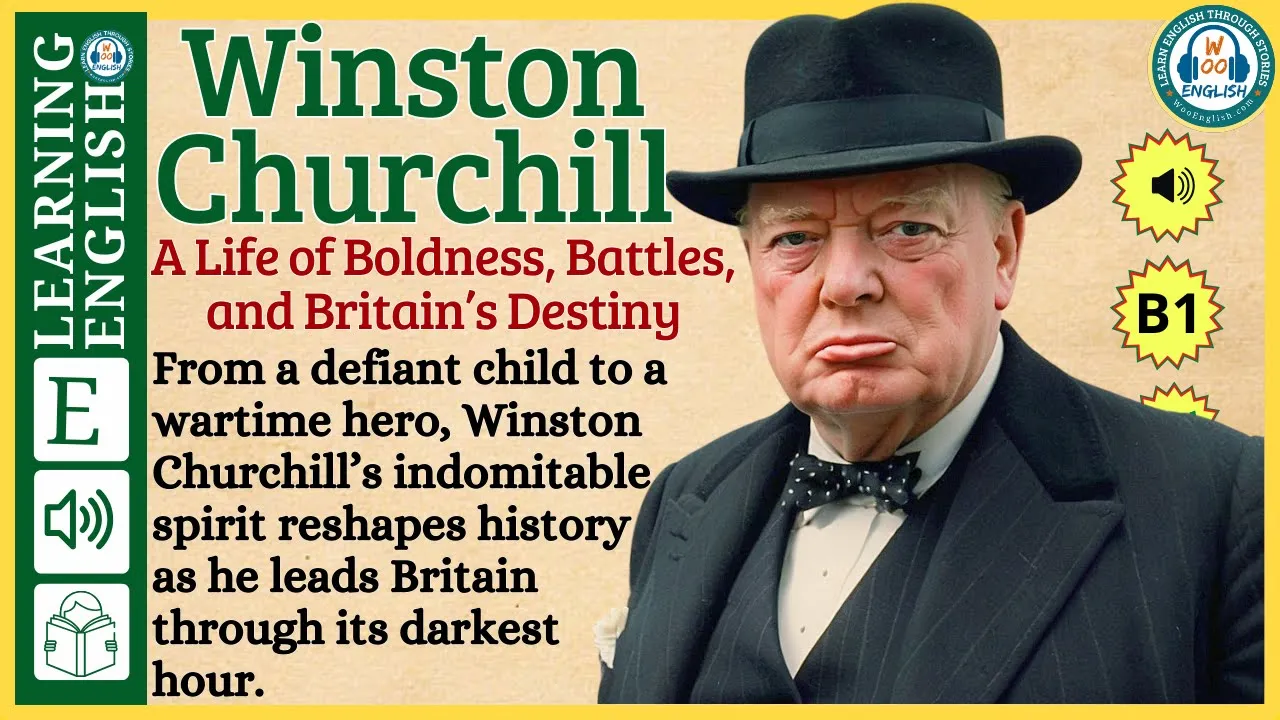
and ash. London burned, week after week. But still, it did not break. For Winston Churchill, the Blitz was personal. Every bomb that fell on London seemed to him like a direct assault on the British spirit. But instead of retreating into a bunker, Churchill did the unthinkable. He walked among the ruins. Dressed in his signature black suit and bow tie, the Prime Minister visited bombed-out neighborhoods, shaking hands with survivors, offering words of comfort, and more importantly, words of defiance. He would emerge from the rubble, smoke swirling around him, cigar clenched in his teeth, his bulldog-like resolve
unshaken. Good old Winnie, people whispered as he passed. Their faith in him growing stronger with each appearance. Churchill had a unique ability to transform fear into courage. His mere presence reminded the people that Britain could and would endure. We can take it, he would say, standing in the wreckage of bombed streets. And what is more, we can give it back. The Blitz wasn't just about physical destruction. It was psychological warfare. Hitler believed that relentless bombing would crush British morale, that the people would turn against their government and demand peace. But the German dictator underestimated both
the British people and their leader. Instead of surrendering to fear, the British grew more resilient. And much of that resilience was driven by Churchill's voice, a voice that refused to yield to terror. Throughout the Blitz, Churchill continued to deliver speeches that electrified the nation. He understood that words could be as powerful as bombs, and his speeches became a rallying cry, not just for Britain, but for the world. In those dark days, his voice boomed over the radio, carrying messages of hope and defiance to Every corner of the country. Let us brace ourselves to our duties,
he declared, and so bear ourselves that, if the British Empire and its Commonwealth last for a thousand years, men will still say, this was their finest hour. His words had the power to stir even the most weary hearts. As Londoners crawled out of their air raid shelters each morning, they clung to Churchill's speeches like lifelines, feeling the strength of his determination coursing through them. It wasn't just about surviving the Blitz. It was about standing tall in the face of evil, about refusing to let Hitler dictate their future. But Churchill's leadership was not just about inspiring
speeches and public appearances. Behind the scenes, he worked tirelessly to ensure that Britain could continue to defend itself. He met daily with military chiefs, strategizing not just how to withstand the bombing, but how to Strike back. His relationship with the Royal Air Force grew even closer as they fought night after night to protect the skies over Britain. And though the Luftwaffe was relentless, Britain's fighters were fierce. The Blitz stretched on for 57 consecutive nights and then continued sporadically for months. Cities across Britain, not just London, were hit hard. Coventry was almost entirely destroyed in one
horrific raid, and the industrial city of Birmingham suffered brutal attacks. But as the bombs fell, something incredible happened. Far from crumbling, British society began to rally together like never before. Communities came together to clear the rubble, help the wounded, and rebuild what had been lost. Volunteers worked side by side with the military, firefighters, and police to keep the country Running. Churchill recognized the extraordinary resilience of his people. This, he knew, was the true strength of Britain, its people. In one of his most famous radio broadcasts, he paid tribute to the civilians who were enduring the
Blitz with unwavering courage. These are not dark days. These are great days, the greatest days our country has ever lived. And we must all thank God that we have been allowed, each of us according to our stations, to play a part in making these days memorable in the history of our race. But even as Churchill celebrated the strength of the British spirit, he knew the war could not be won alone. Britain's resources were stretched to the limit. Its cities were crumbling, its military was outnumbered, and its people were exhausted. Churchill understood that Britain needed allies,
and it needed them fast. And so, he began to focus on strengthening Britain's relationship with the one country that could tip the balance in the war, the United States. President Franklin D. Roosevelt had been carefully watching the events unfold in Europe, but America, still scarred by the First World War, was reluctant to join the fight. Isolationism ran deep, and many Americans believed that Europe's problems were not theirs to solve. But Churchill was relentless. He knew that Britain couldn't hold out forever without American help, so he bombarded Roosevelt with letters, telegrams, and personal appeals. In his
correspondence with Roosevelt, Churchill mixed charm with urgency. He didn't just ask for help. He painted a picture of the world's future if Hitler were to win. The free world, he argued, was at stake. Democracy itself was under siege. If Britain fell, America would be next. Slowly but surely, Roosevelt began to shift his position. He offered support in the form of supplies and military aid, even though the United States wasn't officially at war yet. As the Blitz dragged on, Churchill also sought to unite his country by reinforcing the idea that Britain's fight wasn't just about survival.
It was about fighting for a greater cause. In speech after speech, he framed the war as a moral battle between good and evil, a fight for the Very soul of civilization. This is a war of the people, he declared, and it must be waged not only by soldiers, but by the men, women, and children who make up the fabric of our national life. By the end of 1941, Hitler had turned his attention to the Eastern Front, invading the Soviet Union in Operation Barbarossa. The bombing of British cities began to slow, but the Blitz had left
its mark. Thousands were dead. Entire cities had been laid to waste. And yet, Britain had stood firm. The bombs had failed to break the spirit of the British people. And, under Churchill's leadership, Britain had held the line against the most fearsome military force the world had ever seen. Chapter 8 Allies, Victory But at what cost? 1941 The tide of war was turning, but the road to victory was still long and blood-soaked. Winston Churchill had led Britain through the firestorm of the Blitz, rallied his people in their darkest hour. And now, the winds of fate were
beginning to shift. But with victory in sight, new dangers emerged, dangers not only on the battlefield, but in the delicate balance of global politics. By this time, Britain was no longer fighting alone. Churchill's tireless efforts to court the United States were beginning to pay off. The relationship between Churchill and President Franklin D. Roosevelt, though separated by an ocean, was becoming one of the most important partnerships in modern history. Churchill, with his cigars, brash wit, and bulldog determination, and Roosevelt, the calm, thoughtful leader of the free world, were united by a common cause, the destruction of
Adolf Hitler. In December 1941, everything changed. Pearl Harbor? The Japanese attack on the U.S. naval base brought America into the war at last. Roosevelt, bound by the cries of a wounded nation, formally declared war on Japan, and soon after, Germany declared war on the United States. It was a moment of relief for Churchill, but also a moment of reckoning. At last, Britain had a powerful ally on the battlefield. But now, the war had truly become a global conflict. The Pacific, the Atlantic, Europe, North Africa. War was everywhere. In January 1942, Churchill traveled to Washington to
meet Roosevelt in person. Their friendship deepened over late-night discussions, strategy meetings, and long dinners. Churchill, ever the showman, charmed Roosevelt and his inner circle, using his characteristic humor and flair to win their trust. But behind the warmth and laughter, Churchill knew this was a critical moment. The alliance between Britain and America would shape the future of the war, and Churchill needed Roosevelt's unwavering support, not just in words, but in action. Together, they agreed on a strategy, Europe first. Though Japan had attacked America, both leaders understood that the real threat to global freedom lay in the
heart of Europe, Nazi Germany. Defeating Hitler was their top priority, and the combined forces of Britain, the United States, and Their allies would focus on liberating Europe before turning full attention to the Pacific. But while the alliance with the United States brought new hope, it also introduced new tensions. Churchill was no longer the sole leader of the Allied effort. He now had to work alongside Roosevelt and, increasingly, Joseph Stalin, the leader of the Soviet Union. Stalin, whose forces were locked in a brutal battle against the Germans on the Eastern Front, had his own ideas about
how the war should be fought, and, more importantly, how the post-war world should be shaped. Churchill found himself navigating a delicate diplomatic dance, trying to keep the Allies united while fiercely protecting Britain's interests. The year 1942 was a bitter one for Churchill. Despite the growing strength of the Allied forces, the war was far from over, and the losses were Staggering. North Africa became the focus of intense fighting, as British and American forces clashed with German Field Marshal Rommel's Afrika Korps. For months, it seemed as though the Axis powers might dominate the Mediterranean, cutting off vital
supply routes. But then came El Alamein. The Battle of El Alamein in October 1942 marked a turning point. Under the command of General Bernard Montgomery, the British forces delivered a decisive blow to Rommel's troops, halting the German advance. For Churchill, this victory was monumental. He famously declared, Before Alamein, we never had a victory. After Alamein, we never had a defeat. The tide had finally turned in Britain's favor, but the road ahead was still fraught with peril. As 1943 dawned, the Allies began to focus on Operation Overlord, the invasion of Nazi-occupied France. Churchill had long dreamed
of liberating Europe, but the reality of planning such a massive operation was dawning. The British and American forces needed to coordinate an invasion unlike any the world had ever seen. The planning was meticulous. Every detail scrutinized, every possibility considered. And yet, the risks were terrifying. Churchill knew that failure would be catastrophic. At the same time, tensions between Churchill, Roosevelt and Stalin continued to simmer. Stalin was growing impatient, demanding that the Western Allies open a second front in Europe to relieve the pressure on Soviet forces in the east. Churchill, ever wary of the Soviet dictator's ambitions,
wanted to ensure that Britain's influence in post-war Europe would not be overshadowed by Stalin's growing power. The three leaders, each with their own vision of the future, were bound by necessity, but distrust simmered beneath the surface. Finally, in June 1944, the day Churchill had been waiting for arrived. D-Day, the Allied invasion of Normandy. As dawn broke on June 6th, the largest amphibious invasion in history unfolded. Thousands of ships, planes and soldiers crossed the English Channel to storm the beaches of Nazi -occupied France. Churchill, who had feared that the invasion would be a bloodbath, was deeply
moved by the bravery Of the troops. The success of D-Day marked the beginning of the end for Nazi Germany. Slowly but surely, the Allies began to push the Germans back, liberating France, Belgium and eventually the Netherlands. But as victory in Europe came within reach, the horrors of war became ever more apparent. The discovery of the concentration camps, where millions of Jews, political dissidents and others had been systematically murdered, shocked the world. Churchill, though hardened by years of war, was deeply affected by the magnitude of the Holocaust. It was a reminder of what they were fighting
for, not just to defeat a military enemy, but to vanquish an evil that had threatened the very fabric of humanity. In May 1945, victory finally came. V-E Day. Victory in Europe. Churchill stood before the crowds in London, his face etched with both pride and exhaustion. Britain had survived. It had fought the mightiest war machine the world had ever seen and emerged victorious. But at what cost? The country lay in ruins, its cities devastated by the Blitz, its people scarred by loss and hardship. Churchill, the man who had carried Britain through its darkest hour, was now
faced with a new reality. The war was over, but the challenges of peace were just beginning. And yet, even in the glow of victory, Churchill's mind was already turning to the next great threat, the Soviet Union. The alliance with Stalin had been necessary to defeat Hitler, but Churchill had never trusted the Soviet leader. As the war drew to a close, Churchill warned of the dangers of Soviet expansion in Eastern Europe. He saw the seeds of a new conflict, the Cold War, beginning to take root. Victory had been won, but peace was not yet secure. In
July 1945, just months after V-E Day, Churchill's world was rocked by another shock. He lost the general election. The British people, weary from years of war, voted for the Labour Party, seeking change and renewal. Churchill, the man who had saved Britain, was suddenly out of power. It was a bitter blow. But ever the fighter, Churchill accepted the verdict of the people with grace. His legacy was already secure. He had led his nation through its greatest trial. And now, the torch was being passed to a new generation. Chapter 9 A Fading Leader The war was over.
The guns had fallen silent. And Britain, under Winston Churchill's indomitable leadership, had stood victorious. But as the jubilant cheers of V-E Day faded, so too did the political power of the man who had carried the nation through its darkest hour. In July 1945, just two months after victory in Europe, Churchill faced an unexpected defeat. The people of Britain, weary from years of sacrifice, turned away from their wartime hero. In a stunning election result, Churchill's Conservative Party was ousted, and the Labour Party, led by Clement Attlee, swept to power. Churchill, the unshakable wartime leader, was now
a man without office, his influence seemingly waning as Britain looked toward a new future. The election result came as a crushing blow. For Churchill, it was not just a political defeat. It was personal. He had devoted every ounce of his energy, every waking moment, to leading Britain through the war. Now, in the aftermath, the nation had chosen a new direction without him. He accepted the result with his characteristic grace, though the sting was undeniable. They have a perfect right to kick me out, Churchill remarked to friends after the election. That is democracy. That is what
we have been fighting for. But deep down, the loss weighed heavily on him. How could the people have forgotten so quickly? How could they turn their backs on him after everything? For Churchill, this was a turning point. The fierce battles of war had been replaced by the quieter, more subtle struggles of peace. Attlee and the Labour government focused on rebuilding Britain, creating a welfare state, nationalizing industries, and addressing the deep economic and social wounds left by the war. They offered hope for a better, fairer Britain. While Churchill seemed to many like a figure of the
past, a man whose vision was tied to empire, not the egalitarian future that so many Britons now desired. But Churchill was far from finished. Even as he stepped into the role of leader of the opposition, he remained a towering figure on the world stage. His speeches still commanded attention, his words still carried weight, and his mind was still sharp with ideas and warnings. He continued to shape public opinion, urging Britain to remain vigilant in the face of a new and growing threat, the Soviet Union. In March 1946, Churchill delivered one of his most famous speeches
in Fulton, Missouri, alongside President Harry Truman. Standing before an audience in the heart of America, Churchill uttered the words that would define the next era of global politics. From Stettin in the Baltic to Trieste in the Adriatic, an iron curtain has descended across the continent. The Iron Curtain With those words, Churchill captured the looming menace of Soviet expansion, the divide between the Free West and the Communist East. He had been instrumental in defeating fascism. But now he sounded the alarm about the next great challenge facing the world, the Cold War. His speech sent shockwaves through
political circles. The war was over, but the fight for freedom was not. Churchill, ever the strategist, saw the dangers ahead more clearly than most. But back home, Britain was changing. The days of empire were beginning to fade. The colonies that Churchill had once held so dear were seeking independence, and Britain, exhausted from years of conflict, was no longer the global superpower it had been. Churchill struggled to accept this reality. To him, the British Empire was a symbol of strength and unity, a beacon of civilization. But the world had moved on. The winds of change were
blowing through Africa, India, and the Middle East. Churchill, for all his brilliance, remained tied to the past, his vision clouded by nostalgia for a time when Britain ruled the seas. His health, too, was beginning to fail him. The years of war, the constant pressure, and his relentless work ethic had taken their toll. In 1949, Churchill suffered a stroke, though he kept the news hidden from the public. He recovered, but the warning signs were clear. The great man of war, the Lion of Britain, was aging. His steps grew slower, his once roaring speeches now tempered by
fatigue. Yet, despite these signs of decline, Churchill's mind remained razor sharp. He had lost none of his intellectual vigor, none of his passion for politics and global affairs. Then, in 1951, in a remarkable political comeback, Churchill returned to Downing Street. He was once again Prime Minister, though this time the context was very different. The war was over, and the challenges Britain faced were no longer about survival, but about rebuilding and reimagining its place in the world. Churchill, now in his late 70s, approached this new role with the same determination and spirit that had defined his
career. But there was a quiet acknowledgment, even among his closest allies, that this Churchill was not the same man who had led Britain through the war. His second term as Prime Minister was marked by a focus on maintaining Britain's global influence in a rapidly changing world. He worked to strengthen ties with the United States, particularly as the Cold War intensified. Churchill's relationship with the new American president, Dwight D. Eisenhower, was warm, though Churchill privately worried about the growing tensions between East And West. His deep distrust of Soviet intentions never wavered. He believed that only through
unity between Britain, the U.S., and the West could the free world resist the spread of Communism. But his health continued to decline. In 1953, Churchill suffered another stroke, this one far more severe than the first. Once again, he hid the extent of his illness from the public, but those around him could see the strain. His speech slurred, his movements slowed, and the man who had once been a tireless force of nature was now visibly frail. Yet Churchill refused to step down. His love for Britain, for politics, and for the world stage was too strong to
let go. Finally, in 1955, with his health deteriorating and his energy waning, Churchill resigned as Prime Minister for the last time. It was the end of an era. After more than half a century of public service, after leading Britain through some of its greatest triumphs and deepest tragedies, Churchill stepped away from the spotlight. He was succeeded by Anthony Eden, one of his closest allies. But the shadow of Churchill's legacy would loom large over British politics for years to come. Though no longer in office, Churchill remained a revered figure. His name was synonymous with victory, with
courage, with the unbreakable spirit of Britain. He spent his final years painting, writing, and reflecting on his remarkable life. He completed his six-volume history of World War II, which would go on to win the Nobel Prize in Literature, a testament not only to his leadership, but to his extraordinary ability to capture the Essence of history with words. But even as he reflected on his achievements, Churchill was not blind to the complexities of his legacy. He knew that his leadership during the war had secured his place in history, but he also understood that his views on
empire, his resistance to decolonization, and his reluctance to adapt to the post -war world had left him somewhat out of step with the new age. Churchill was a man of contradictions, a visionary who could see the dangers of tyranny, yet a man bound to the traditions of Britain's imperial past. CHAPTER TEN RETURN TO POWER 1951 Winston Churchill, the Lion of Britain, returned to Downing Street. At seventy-six years old, he had already lived the life of ten men. War hero, political maverick, and architect of victory in World War II, his legacy was already Etched into the
annals of history. Yet, after six years in the political wilderness following his 1945 defeat, Churchill's story was far from over. He wasn't ready to fade away just yet. Britain needed him again. Or so he believed. The post-war years had brought tremendous change. The Labour Party, led by Clement Attlee, had revolutionized Britain's social landscape, creating the National Health Service, nationalizing key industries, and laying the foundations of the modern welfare state. It was a bold vision, and it resonated with a war-weary public. But by 1951, Britain was once again struggling. The economy was faltering, rationing was still
in place, and there was a growing sense of frustration. The Labour government was losing its grip, and Churchill, ever the opportunist, saw his chance. The general election of October 1951 was closely fought. Attlee's Labour Party still commanded immense loyalty, but Churchill's Conservatives, with promises of a return to strength, prosperity, and stability, swayed enough voters to claim victory. Despite Labour winning more votes overall, Churchill secured a majority in Parliament due to the electoral system. And just like that, the man who had once stood alone against the Nazi onslaught found himself back in the seat of power.
Yet this was a different Churchill, older, wiser, but also wearier. The energy and fire that had fueled his wartime leadership had dimmed somewhat, and he knew that Leading Britain in peace was a different challenge altogether. Gone were the urgent black-and-white decisions of wartime. Now, Churchill faced the complex realities of rebuilding a nation in the aftermath of destruction, with a world order reshaped by both the triumphs and the tragedies of the 20th century. Churchill's return to Downing Street was met with a mixture of relief and uncertainty. His supporters hailed his comeback as the return of Britain's
greatest statesman, while others whispered doubts about whether an ageing Churchill could truly lead Britain into the future. His health, never robust, was a source of concern. He had suffered several strokes by this point, but his indomitable spirit refused to yield. I am ready, he declared upon returning to office, but even he knew this would be a very different kind of fight. One of Churchill's main goals in his second term was to secure Britain's place on the world stage. The balance of power had shifted dramatically since the war, and Britain's empire, once vast and unchallenged, was
crumbling. Decolonization was speeding up, and countries across Africa and Asia were demanding independence. Churchill, ever the imperialist, struggled to accept this new reality. The loss of India in 1947 had been a bitter pill to swallow, and now other colonies were slipping away. Churchill believed that Britain's greatness was tied to its empire. To him, the idea of letting go of the colonies was akin to surrendering the very essence of what Britain was. He fought to maintain control wherever he could, especially in places like Kenya and Malaya, where insurgencies threatened to unravel British authority. Yet the winds
of change were blowing too strongly for even Churchill to stop. The world was moving on, and Britain, though still a major power, was no longer the empire it once was. In his foreign policy, Churchill focused heavily on strengthening the special relationship with the United States. His friendship with President Dwight D. Eisenhower was warm and productive, though Churchill was wary of the growing tensions between East and West. The Cold War had fully taken root, and Churchill, the man who had once stood alone against Hitler, now found himself confronting the specter of a new ideological battle, one
that pitted democracy against communism. The Iron Curtain that Churchill had warned about in 1946 was now a reality, dividing Europe into two hostile camps. Churchill, ever the strategist, believed that the only way to preserve peace was through strength. He supported rearmament and worked closely with the Americans to ensure that NATO, the newly formed alliance, would be the bedrock of Western defense. But while Churchill was focused on global affairs, the domestic front was proving to be far more challenging. Post-war Britain was struggling economically. Rationing, which had been in place since the war, continued well into the
1950s. The country's infrastructure was in dire need of rebuilding, and there were growing demands for modernization. Churchill, however, was not a man of the future. His gaze was firmly rooted in the past. His reluctance to embrace new technologies and modern social policies left his government out of Step with the rapidly changing world. He faced growing pressure from within his own party to step aside, particularly from Anthony Eden, his chosen successor and foreign secretary. Eden, younger and more in tune with the new political realities, was eager to take the reins. But Churchill, despite his age and
failing health, was reluctant to let go of power. For him, stepping down meant the final end of his political life, and he wasn't ready for that. Not yet. In 1953, Churchill faced a significant personal crisis when he suffered a major stroke. The severity of the stroke was kept secret from the public, and even many in his government were unaware of just how incapacitated Churchill had become. He withdrew from public life for several months, spending time recuperating at Chartwell, his beloved country estate. Despite his weakened condition, Churchill was determined to return to office, and against all
odds, he did. But it was clear to those around him that the end of his political career was near. The world was changing faster than Churchill could keep up with. The Cold War was escalating, with the arms race between the United States and the Soviet Union spiraling into dangerous territory. The threat of nuclear war loomed large, and Churchill, ever the voice of caution, began advocating for détente, a relaxation of tensions between East and West. He believed that peace, no matter how fragile, was the only way to avoid the horrors of another global conflict. By 1955,
it was clear that Churchill could no longer carry the burdens of leadership. His health was failing, and his once mighty presence had faded. Finally, on April 5th of that year, Winston Churchill resigned as Prime Minister for the second and final time. His resignation was bittersweet. He knew that his time had passed, that Britain needed fresh leadership to face the challenges of the future. Anthony Eden succeeded him, but the shadow of Churchill's legacy would loom large over British politics for years to come. Though he had stepped down from office, Churchill remained a beloved figure in Britain
and across the world. He spent his remaining years reflecting on his remarkable life, writing, painting, and enjoying time with his family. He was awarded the Nobel Prize in Literature in 1953 for his six-volume work, The Second World War, A monumental achievement that solidified his place not just as a statesman, but as a historian and writer of immense talent. Chapter 11, The Legacy of the Lion The echoes of Winston Churchill's speeches, his triumphs, his failures, still reverberated across Britain and the world. The man who had once stood alone against the tides of tyranny, who had led
his nation through war, now stood on the shores of retirement, watching as history continued to unfold. Yet even in retirement, Churchill's presence was felt everywhere. His influence lingered in every decision, every debate, every shift in global politics. He was a lion in winter. By the late 1950s, Britain was changing rapidly. The empire that Churchill had fought so fiercely to preserve was disintegrating. One by one, colonies declared independence. India, the jewel of the British Empire, had already parted ways in 1947, and now nations across Africa and the Caribbean were following suit. For many, this was the
dawn of a new era, a time for self-determination, freedom, and a break from the colonial past. But for Churchill, it was a painful process. He had always believed that Britain's greatness was tied to its empire, to the vast dominion of territories that had once spanned the globe. Watching it unravel filled him with a deep, almost personal sadness. Yet Churchill's legacy was not defined by empire alone. His greatest achievement, his most enduring gift to the world, was his unwavering defense of freedom in the face of unimaginable odds. World War II, with all its horrors, had tested
the very fabric of human civilization. And in those dark years, Churchill had been the unbreakable force that kept the flame of hope alive. Even after stepping down as Prime Minister, Churchill continued to shape the narrative of the war. His six-volume memoir, The Second World War, published between 1948 and 1953, became the definitive account of the conflict, praised for its vivid storytelling and strategic insight. In these pages, Churchill not only documented the events of the war, but he also crafted his own legacy, positioning himself at the heart of Britain's victory. For Churchill, the act of writing
was as much about preserving history as it was about preserving himself within it. In 1953, he was awarded the Nobel Prize in Literature for his writings and speeches, a rare honor for a politician, but one that cemented his place as not only a statesman, but as a man of letters. The prize recognized not just his memoirs, but also his unparalleled ability to wield words as Weapons. Churchill's speeches had carried a nation through the darkest times, and now those same words were being immortalized in the annals of history. But as the years passed, the complexities of
Churchill's legacy became clearer. He was, undoubtedly, one of the greatest leaders of the 20th century. Yet, he was also a man of deep contradictions. His vision for Britain's role in the world, his fierce imperialism, and his refusal to adapt to the changing winds of decolonization left him at odds with the future. While many celebrated him as a hero, others began to question the cost of his views on empire and his resistance to social reforms. Domestically, Churchill's second term as prime minister had been largely focused on foreign policy, leaving the pressing issues of post-war reconstruction, housing,
and health care to his successor, Anthony Eden. His reluctance to engage with the social changes sweeping across Britain meant that, for many, Churchill was a figure of the past, a man who had saved Britain but was now out of step with the nation's future. And yet, even as the world moved on, Churchill remained a symbol of resilience. The Cold War, with its simmering tensions and ideological battles, echoed the same struggles Churchill had faced during the war. He had been one of the first to recognize the threat of Soviet communism, coining the term Iron Curtain in
his famous 1946 speech. As the years passed, it became clear that the Cold War would dominate global politics for decades, and Churchill's early warnings about the Soviet Union proved to be prophetic. His relationships with other world leaders during his final years in office had also left a mark on Global diplomacy. His friendship with Franklin D. Roosevelt had been one of the most significant partnerships of the war. But after Roosevelt's death, Churchill had struggled to find the same rapport with subsequent U.S. presidents. His relationship with Dwight D. Eisenhower, though warm, was more practical than personal. And
Churchill's influence over global affairs slowly waned as the post-war generation of leaders took center stage. But while Churchill's political power was fading, his stature as a global icon was only growing. He was showered with accolades, given honorary degrees, and received invitations from leaders across the world. In 1953, Churchill was made a Knight of the Garter, one of the highest honors in the British monarchy. He was also offered the title of Duke of London, an extraordinary gesture. But Churchill, ever modest in such matters, declined the honor. He preferred to remain simply Winston. In his later years,
Churchill spent more and more time at Chartwell, his beloved country home. It was here, surrounded by the rolling hills of Kent, that he found solace. He spent his days painting, an activity that had brought him peace during the tumultuous war years. His paintings, many of which were of landscapes and seascapes, offered a glimpse into a softer, more introspective side of the man. When I get to heaven, he once said, I mean to spend a considerable portion of my first million years in painting. But even as he found peace in his personal life, the toll of
a lifetime of service and stress was beginning to show. His health, which had been fragile for years, continued to decline. He suffered several strokes, the most severe in 1953, which left him physically weakened, though his mind remained sharp. Despite these challenges, Churchill continued to attend parliament, always determined to contribute, even if his voice no longer carried the same weight as it once had. By the early 1960s, Churchill's public appearances had become rare. His frailty was visible, and those who knew him well could see that the lion was preparing for his final rest. In 1963, President
John F. Kennedy made Churchill an honorary citizen of the United States, a unique honor and a final Testament to his profound impact on the world stage. It was clear to all that Churchill's influence transcended borders. He belonged not just to Britain, but to the world. As 1964 turned to 1965, Winston Churchill, now 90 years old, quietly slipped away from public life. On January 15, 1965, he suffered another stroke, one from which he would not recover. He died on January 24, 1965, exactly 70 years to the day after his father, Lord Randolph Churchill, had passed. His
death marked the end of an era. The nation mourned, and the world paused to remember the man who had saved civilization in its darkest hour. Churchill's funeral was the largest state occasion in Britain's history, attended by world leaders, royalty, and dignitaries from every corner of the globe. His coffin was carried through the streets of London, draped in the Union Jack, as hundreds of thousands of people lined the streets to pay their respects. In one final act of symbolism, as Churchill's coffin passed down the Thames, the cranes of London's Docklands dipped in salute. The same cranes
that had stood as silent witnesses to the bombs of the Blitz. As this chapter closes, we are left with the image of Winston Churchill, the Lion of Britain, resting at last. His legacy, both monumental and complex, would be debated for decades to come. But one thing was certain. Churchill had changed the course of history. He had fought not just for Britain, but for the very soul of humanity. And though the man was gone, the spirit of his leadership, his courage, and his fierce belief in The power of words and action lived on. Chapter 12. The
End of an Era January 24th, 1965. The world stood still. Winston Churchill, the indomitable lion, the man whose voice had carried nation through its darkest days, was gone. As news of his death spread, the gravity of the moment settled in. It wasn't just the passing of a man. It was the end of an era. For over half a century, Churchill had been a constant presence in the world's political landscape, shaping the course of history with his unyielding will and iron resolve. Now, his watch had ended. The days that followed were marked by reflection and reverence.
People across Britain, and indeed the world, began to reckon with the enormity of his legacy. This wasn't just about a leader who had steered Britain to victory in World War. It was about a man who had embodied the spirit of resistance and courage when hope seemed lost. For many, Churchill wasn't just a political figure. He was a symbol of survival, of determination, of never giving up in the face of overwhelming odds. London prepared for a funeral unlike any other. Churchill had been offered a state funeral years before, and now the plans were set in motion.
It would be the largest state occasion in British history, a tribute fitting for a man of Churchill's stature. Dignitaries from over a hundred countries descended upon the capital to pay their respects, including presidents, prime ministers, and kings. It wasn't just Britain that mourned. Churchill belonged to the world. The day of the funeral, January 30, 1965, dawned cold and grey. The streets of London were lined with thousands of people braving the chill to catch a glimpse of the solemn procession. Churchill's coffin, draped in the Union Jack, was placed on a gun carriage and drawn through the
streets by naval raidings in the traditional military style. The sound of the marching boots, the rhythmic clatter of the gun carriage, and the muffled tolling of bells echoed through the city. A hush fell over the crowds. This was more than a farewell. It was a collective moment of remembrance. As the procession passed landmarks that had played a part in Churchill's extraordinary life, Westminster, Whitehall, the Santa Taf, the weight of his achievements seemed to settle over the City. The same streets that had once been filled with the roar of bombers during the Blitz were now silent
as the people paid their final tribute to the man who had stood against that storm. For many, it was impossible to separate Churchill from Britain itself. He had become a part of its very identity, a towering figure whose legacy would outlast even the grand buildings he passed by. One of the most poignant moments came as Churchill's coffin was carried past the docklands of London. There, the giant cranes, normally busy loading and unloading goods, bowed in unison, dipping as if in reverence to the man who had once walked those same docks during the war, offering words
of strength when the bombs had fallen. It was a symbolic gesture that captured the spirit of the day, Britain saluting its greatest son. The service itself, held in St. Paul's Cathedral, was a somber affair. Inside, the vast domed ceilings seemed to hold the weight of history. The great and the good of the world filled the pews, their faces solemn as they listened to the eulogies. But it wasn't just the elite who mourned. Outside, in homes across Britain, millions watched on television, united in their grief. Churchill had been more than a leader, he had been a
voice of the people. And now, the people wept for him. As the service ended, Churchill's body was transported by train to his final resting place in the small village of Blaydon, near his birthplace at Blenheim Palace. It was a fitting end. Churchill, who had strode across the global stage for so long, now returned to the quiet Countryside where his journey had begun. As the train passed through towns and villages, people lined the tracks, standing in silence, tipping their hats, some with tears in their eyes. For many, it was the last goodbye to a man they
had never met, but felt they knew intimately. But even as Churchill was laid to rest, the complexities of his legacy lingered. The world had changed so much during his lifetime, and even more since the war. The empire he had cherished was gone, replaced by a new world order of independent nations. His imperialist views, once considered noble, were now seen as outdated by many. The struggles for independence in India, Africa, and the Caribbean were stark reminders of the flaws in his vision of Britain's global role. Churchill was, after all, a man of his time. His fierce
opposition to Indian independence, his harsh stance on labor strikes, and his belief in The supremacy of British rule now seemed out of place in a world that was embracing self -determination and social equality. Some saw him as a relic of a bygone era, a man who had won the war but failed to adapt to the new realities of the post-war world. Yet, these criticisms did little to tarnish his reputation as one of the greatest leaders of the 20th century. The world remembered him for his courage, his indomitable will, and his unmatched ability to rally a
nation through words alone. His voice, deep, gravely, filled with conviction, remained immortal. His speeches, broadcast to millions, had been the backbone of Britain's resistance during the war. We shall fight on the beaches. We shall fight in the fields and in the streets. We shall never surrender. Those words had become legendary, not just in Britain, but across the world. And even now, long after his death, they were still quoted, still remembered, still carrying the same power they had when they first echoed across the airwaves. Churchill's ability to wield language as a weapon was perhaps his greatest
gift. He understood that words could shape not just the present, but the future. And through his words, Churchill had ensured that his legacy would endure. His writings, his speeches, and his memoirs became a permanent part of the historical record, studied, analyzed, and revered for generations to come. But Churchill's legacy was not just one of words. His leadership in Britain's darkest hour, when the nation stood alone against the might of Nazi Germany, was his most enduring achievement. Without Churchill's refusal to bow to the pressure of defeat, without his unrelenting belief in victory, the course of history
might have been very different. He had been the anchor in the storm, the voice that refused to give in when all seemed lost. As the years passed, the world would continue to grapple with the complexities of Churchill's legacy. He was not a simple figure. He was a man of immense contradictions, a champion of freedom, yet a defender of empire. A man who inspired with his vision, but whose views on race and empire reflected the prejudices of his time. A leader who brought his country to victory, but who struggled to adjust to the peace that followed.
Yet, despite these contradictions, Churchill's place in history remained unshakable. He was, and always would be, the man who saved Britain. The man who stood when others faltered. The man who roared when the world was silent. And though he was gone, his spirit lived on in the Britain he had fought so hard to defend. As this final chapter closes, we are left with the image of Winston Churchill. A man whose life spanned two world wars, who witnessed the rise and fall of empires, and who shaped the world we know today. His passing marked the end of
an era, but his legacy, complex and grand, would continue to inspire and challenge future generations.