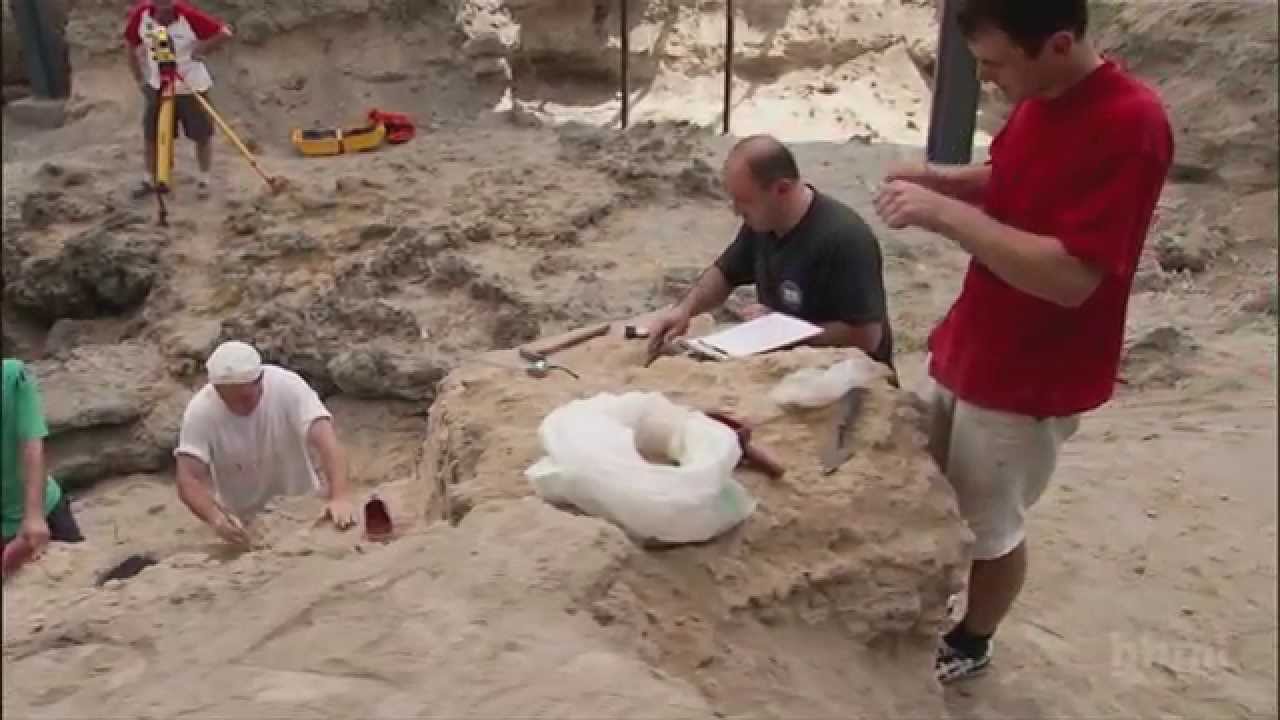
[Music] [Music] humans without a doubt the smartest animal on earth yet we're unmistakably tied to our ape Origins millions of years ago we were Apes living ape lives in Africa so how did we get from that to this what happened what set us on the path to humanity the questions are huge but at last there are answers more than 6 million years ago we took that first step to separate from the Apes we see the launching of the career that ultimately led to Homo sapiens and 3 million years ago we see the root of our big brain begin to take hold in a tiny creature more like a chimp than a human the frontier of human evolution is really being brought to this razor sharp edge and we now know that for millions of years many different humanlike species live together on the planet until one day there was only us Homo sapiens the most complex adaptable animal on Earth so how did we get this way and why a radical new Theory reveals how episodes of cataclysmic change forced our ancestors to adapt or die I think we should actually look to our proud ancestry and how we evolved in East Africa and say that's how we survive that we can survive the future so get ready for a ride through millions of years of our history it's the story of becoming human our story right now on Nova [Music] millions of years ago on the plains of Africa a momentous event took place Apes that had walked on four legs stood up and walked on [Music] two eventually this change in posture would be followed by a change in their brains somehow over time they would become us we know it happened but we've never known when or why until now in the Sahara Desert a 6 milliony old fossil called tumai May hold the secret of how we first walked upright we are writing the first chapter of human evolution we are very close to the beginning very close and the fossilized bones of a child from 3 and2 million years ago hint to us about the beginnings of human thought we're discovering how many different human species lived on Earth at the same time and why all but one died out we Homo sapiens are the first ever to be alone so what powered our Evolution why did we become human scientists are scouring the most remote parts of Africa for Clues the search for answers begins here in the afar Northeastern Ethiopia it's part of the Great Rift Valley a deep cut in the Earth where geologic forces are ripping Africa apart millions of years of History are brought to the surface in layers of exposed [Music] rock it's hot and desolate dangerous too ancient rivalries and modern weapons have turned the afar into a No Man's Land of simmering conflict but zarai aliman has made this forbidding place his life's work he's searching for the fossilized traces of our earliest human ancestors the fossil bones of animals like antelopes elephants and pigs are abundant but the fossils of our ancestors are extremely rare then in a stroke of luck zarai makes the find of a lifetime a find that illuminates our origins in a unique way on that afternoon we decided to survey this Hillside and the first thing that was spotted was a cheekbone of the face it was a face so tiny it had to be a baby but not a baby chimp he could tell that from its shape the skull was embedded in Sandstone but as aai turned it over he could see more bones inside everything was squashed against uh the base of the skull and completely covered by Sandstone block Clues to the age of the fossil came from a distinctive feature in the landscape white bands of volcanic ash and that is a volcanic ash dated to 3. 4 million years ago if the volcanic ash is 3. 4 million years old zarai fossil which was lying just above it must be younger it was a child from the dawn of human evolution about 3.
3 million years ago zarai called the baby Salam the Ethiopian word for [Music] peace then he set off on a quest to unravel her many Mysteries her journey began a very very long time ago imagine the entire span of recorded human history taking us back to the Egyptian pyramids about 5,000 years double it 10,000 years ago when plants were domesticated and agriculture begins double it again to the time when Ice Age Hunters paint stunning images on Cave walls and keep doubling six more times taking us back 1. 3 million years when the first creature who really looked like us hunted on the plains of Africa and then keep traveling back another 2 million years and only then do we arrive in the time when Salam lived in Ethiopia nearly 3 and 1/2 million years ago what were Salam and her family like what kind of world did they live in the answers are hidden in their fossil bones Adis Ababa Ethiopia zari's home he's one of a whole new generation of African scientists trying to unravel the mysteries of human Origins zarai has brought his precious fossil here to the National Museum his challenge is to release her from the tomb of sandstone in which her bones are [Music] encased he quickly identifies her she's from a species considered by most scientists to be an ancient ancestor ostr opacus afarensis a small chimp-like creature who walked on two legs this is the same species as the famous Lucy discovered in the 1970s by Don Johansson Lucy was terribly important because she was really an amalgam and she of of different characteristics of ape and human I think specimens like Salam and Lucy are extraordinary simply because you can look at them and see evolution in the making [Music] but seeing evolution in the making will take some work salam's fossilized bones are solid rock held together by a mesh of soft Sandstone it has to be painstakingly removed you spend hours hours and hours and days and years and years and then removes the sand grains grain byrain working every day he's been at it for eight long years but the payoff has been [Music] amazing as the work progressed zarai revealed an almost complete [Music] skull and tucked beneath it was nearly her entire spine along with both shoulder blades other bones were found nearby an almost complete foot this is the kneecap the TV here never before had a child skeleton been found so ancient and so complete her bones would fit in a shoe box but they speak volumes about her life for example to find out how old she was when she died zarai looked at her teeth but not the baby teeth visible in her jaw the adult teeth growing inside the bone as seen in a CT scan from that we know Salam died at age three like Lucy she testifies to a crucial step in our Evolution unlike like apes these creatures walked upright as the first fossil Don Johansson found clearly revealed it was scking out of the ground like that and I gently tapped it with my uh sneaker and this is what fell out of the ground and it is the this is your the top end of your shin bone so the kneecap would sit right in here and very close by in two pieces I found this bone and when you put them together and you see how they move and articulate that it has all the Hallmarks of uh of an upright person other bones confirm that Lucy walked on two legs like us this is Lucy's pelvis and uh in a and you can see how different a chimpanzee is and the reorientation of these these hip bones in a in a chimp they're facing straight forward so here's this is this is what every body is sitting on in their living room right now so they're not identical but clearly these two resemble each other much more closely right then either one of these uh resembles the pelvis of of an ape from the waist down Lucy was like us from the waist up she and her kind were all eight Salam skeleton is the the same with chimp-like shoulder blades giving her the range of motion needed for climbing and Swinging these ancient creatures Must Have Spent time in the trees possibly sleeping there at night to keep away from predators but walking upright on the ground during the day they were at home in Two Worlds what was their environment like it must have been very different from the Great Rift Valley of today across the border in Kenya is one of the hottest and most Barren places on Earth a vast expanse of volcanic rock and burning desert that's how it is now but there's good evidence that for most of its history it was very different researchers braving temperatures over 100° are seeing signs of a dramatic transformation here in the seuda valley the seuda valley was entirely covered in water up to an elevation of about 580 M so you can imagine that that's all this Valley were filled by a huge Lake a huge Lake that's deeper than any of the Great Lakes in fact the entire African continent used to be a lot wetter than it is today many millions of years ago long before Salam and Lucy Africa was a wet tropical environment covered with rainforest this is where the ancestors of Salam and Lucy lived they probably looked a lot like chimps but then Africa started to gradually dry out the rainforest began to shrink by salam's time 3 to 4 million years ago the Great Rift Valley was a mosaic of different environments we know that from the fossils of the animals that lived here their bones litter the ground this is a canine of a hippopotamus so this is probably a skeleton of a hippopotamus how can one find hio in this type of environment being nice anti the fossils tell tell the story of a vanished landscape this is a Laro of an antelope 3 million years ago the rift valley was a patchwork of grassy Plains scattered Woodlands lakes and rivers definitely very different from what we see here today wow a nice big here as their environment changed scientists believe our ancestors changed too [Music] they had been creatures who spent most of their time in trees like chimps and orangutangs today but as their forests shrank some of them develop the trait that we take for granted bipedalism walking on two legs this is one of the defining characteristics of humans but how did bipedalism develop and why bipedalism is such an unusual trait there's no other mammal that habitually walks on two legs like we do because it's Unique it's hard to figure out why it happened there are a lot of [Music] theories one of them is that they stood up to be able to see over Tall Grass another theory they stood up up to be able to pick fruits off of the low branches of trees the way chimpanzees do today another theory states that they stood up to cool more efficiently so that we don't have as much sun beating on so much of our body and I think the most compelling idea the most compelling hypothesis is that it saved us energy and energy is crucial to survival [Music] let's go back to the dense forest home to our ancient ape ancestors 10 million years ago like many Apes today they were perfectly suited to a life in the trees they're very good at climbing in trees they're phenomenal at climbing in trees on the ground these ancestral Apes could probably walk on two legs for short distances if they had to carry something fantastic climbers but also able to walk and run rapidly and effectively but not economically walking was tiring but they didn't have to walk far but if you're chip and you only walk 2 to 3 km a day doesn't really mean much right it's not it's not going to have that much of effect on your energy budget but energy demands would change as the force started to disappear our ape ancestors had to walk walk more they have to go farther to get from one fruit patch to another fruit patch for example Dan Lieberman is an expert on bipedalism in Apes for example he believes that walking on two legs evolved because it saved energy when you compare the energy consumption of humans to chimps there's no contest a chimp is an energy glutton it spends enormous amount of energy about four times as much energy as a human walking whether it walks on four legs or two a chimp can't compete with a human gate it's poorly designed to withstand the forces of gravity it has to spend a lot of muscular effort to keep itself from collapsing into a little pile of chimpus or whatever with each step according to libran small anatomical differences created large Energy savings setting our ancestors on the path to bipedalism a path that would eventually lead to us but how long did it take when Lucy's kind were first discovered many people thought they were the so-called missing link between apes and humans but the science of genetics has transformed our understanding with the technique called the molecular clock today scientists can compare DNA from closely related species to find out how long ago they split from a common ancestor it's just a very simple idea that the rate of change in DNA sequences is more or less constant over time and that's an extraordinarily powerful concept because it means that you have a way of determining when two species last Shar to common ancestor living forms evolve because DNA sometimes spontaneously changes as it copies itself these changes happen at a surprisingly regular rate by counting the differences between the genetic code of chimps and humans we can calculate how long they've been evolving away from each other the dates that one almost always gets are around 5 to 7 million years ago for when humans and chimpanzees last shared a common ancestor here was proof that humans diverged from the Apes much earlier than we thought about 6 million years ago it shows Lucy and Salam weren't one step removed from chimps but many they may even be closer to us than to the first human ancestor so what came before Luci and Salon who was our earliest ancestor until the 1990s the fossil record was [Music] blank fossil Hunters combed East Africa's Great Rift Valley but could only find small fragments older than 4 million years then in 1997 a French Anthropologist called Michel brune decided to look somewhere [Music] else we decided to go to Africa but to the west to the west of the Great drift 1,600 mil to the West at the edge of the Sahara desert in Northern Chad obviously if you only go to the field in East Africa then you are going to find fossils only in East Africa this was the situation Michelle was looking in a place where the few animal fossils he turned up were all around 6 million years old no one expected any humanlike fossils to be found in a layer that ancient no and everyone said no there just aren't any fossils there Michelle was not to be deterred he was stubborn many thought to the point of madness he and his team spent years searching the desert for signs of our ancestors and year after year they came up empty then on their 26th expedition in 2001 they found a smashed misshapen skull around 6 million years old they called it sahelanthropus jadensis there were no bones apart from the skull could it be a human ancestor or just another ape the skull was so deformed it was difficult to tell Michelle would have to reconstruct it his first step was to take the skull now nicknamed tumai to a particle accelerator in grobla France to use its powerful X-Ray Scanner over a thousand pictures of the fossil were taken to build a 3D image of the crushed skull using the virtual image the skull could be restored to its original shape it was then reproduced by a type of 3D printer equipped with lasers which hardened plastic when it finally Rose from its bath the cast of two m skull was ready for detailed study the cast allows Michelle to answer an important question did this ancient creature walk on two legs millions of years before Luci or Salon it's how the skull connects to the spine that provides the vital clue and Michelle could defer that from the shape of tumi's skull if tumi's skull is set on the neck of an ape that walks on all fours his eyes Point downward that can't be right set on the upright spine of a bipad his eyes Point straight ahead for Michelle this proved tumai walked upright anatomically speaking he had a receding back skull of a biped the back of his skull is not that of a gorilla like some people are trying to say no no no not at all all you have to do is look some scientists still question whether tumai was really a biped but if Michelle is right his 6 milliony old fossil is a good candidate for the first human ancestor discoveries like this are changing the way we see human evolution scientists used to have a simple idea the growth of open grasslands forced our ancestors out of the trees they became bipeds and in short order brain size increased human evolution took off we were on our way to becoming human that simple idea prevailed for more than a century Darwin thought that we left the trees uh walked on the ground upright freed our hands made tools got big brains reduced our canines and so on all at the same time but walking upright may not have automatically led to big brains at all from tumai to Salam both bads brains stayed small and they weren't the the only ones over millions of years there was a profusion of upright Walkers with complicated names and chimp sized brains like auroran Tanis what we're seeing is a fluoresence of species multiple species they're probably subtly different from each other arpus raminus but it's important to recognize that they're not major differences among these species ostr Opus Africanus they were bipeds big snouts more or less chimp sized brains kenyanthropus plat UPS this way of life this Suite of adaptations lasted for millions of years small brained bipedal Apes were extremely successful debates rage among scientists about which one eventually led to us but as a group they flourished for about 25 times longer than we've been around they survived and thrived as brain size flatlined for almost 4 million [Music] years but that doesn't mean nothing changed there's evidence that the seeds of our Humanity were growing in these aplike [Music] creatures one key difference between humans and apes is the length of childhood but what do we know about the childhood of our early ancestors we knew all about the adult individuals but we didn't know much about the children the brains of baby chimps have an early growth spurt they're almost fully formed by age three in humans that growth spurt is slower and it takes nearly two decades for our brains to fully [Music] mature but what about salam's brain 3. 3 million years ago but of course most exit her skull tells us all we need to know this we have her milk teeth you and her adult teeth which give us her age 3 years old and we have a cast of the inside of her skull which tells us about her brain uh when you have this you can directly measure how much of the brain was formed at age three from other fossils we know how large salam's Brain would have been as an adult so zarai could calculate how much of her brain was already formed by age three when she died he knows what the answer would be for a chimp by age three a chimpanzee would have over 90% of the brain formed but salam's brain was only around 75% of its adult size suggesting it was growing up slower [Music] childhood would have been her time to learn to learn the survival strategies her family group needed to live in a dangerous World perhaps this set the stage for our longer human childhood when culture is handed down but is there any other evidence salam's brain was becoming more human and less eight to find out compare a human brain to a chips this is the brain of our closest relative the chimpanzee brain slightly larger than you would expect of a typical primate for their body size not greatly so there's a scientists look for Clues to the evolution of the brain in the folds and furrows on its surface one important structure is called the lunate sulcus when chimpanzees as in many primates there's this big deep sulcus here the the lunate sulcus the lunate sulcus is a deep Furrow in a primate's brain it divides parts of the brain related to vision from the rest of the neocortex which is where more complex thought happens the human brain doesn't have this deep Furrow and the neocortex is bigger than the vision structures which have moved far to the back typically say so did Salam have the Deep Furrow and small neocortex of a chimp or had something changed brains don't fossilize but her remarkably complete skull provides a way to see some of the different structures of her brain a cast of the brain case called an endocast preserves the impression of the brain surface Ralph Holloway has a collection of 300 brain endocasts from many of our ancestors what a paleon neurologist like myself will be looking for are those indications on the endic casts that might suggest reorganization taking place and that's why things like the so-called Infamous lunate sulcus becomes important Ralph claims that his chimp-like ancestors evolved into creatures like Salam and Lucy the lunate sulcus the furrow marking the vision structures moved back making room for a larger neocortex the thinking part of the brain if you look carefully what you've got here is a depression that could very likely be the lunate sulcus and so that's suggest then by australopith theine times that you you know you're having a beast that is simply smarter than present day chimpanzees if that's the case although still the size of a chimps salam's brain had been rewired but there was a long way to go she and her kind were still very apelike [Music] it would take another million years for the seeds of humanity contained in salam's tiny frame to bear fruit it's a Time still shrouded in mystery for almost half a million years the fossil record is virtually silent but in this blank period something something is happening in 2 and 1/2 milliony old layers scientists begin to find something [Music] new we might be tempted to call them rocks but someone was shaping them they are the first stone tools the way we know this is a tool instead of just a broken rock is that it's broken in um a very particular way breaking a flake off this way that way this way back and forth so there is a method behind how this rock was broken in in order to make it into a tool and it's not a random method it's considered unlikely they were made by ostr opacus Lucy's kind ostros was around for a couple of million years and did not make stone tools but if not Lucy's kind then who the Gap in the fossil record makes it difficult to say but that's not surprising tools preserve easily bones much less so finally the skulls of a new creature begin to turn up is this the tool maker the skulls are different from what came before they represent the dawn of a new era beginning around 2 million years ago this is our era the era of the genus homo humans the mysterious tool maker homo Havis is the first of these new creatures but we definitely have evidence that the stone tools were being used to to break the long bones in order to get to the marrow inside the long bonees there were clear cut marks on the bones of turtles crocodiles big antelopes little antelopes even hippos really big animals like hippos so we know that meat had become an a new important part of the diet of homohabilis the first fossil to be called homohabilis included 21 bones of the hand and was nicknamed handyman this little bone is the bone at the end of the thumb and that little bone in homo Havis like in humans is very Broad and the broad bone reflects having a broad pad on the thumb with a lot of surface area for fine Precision grip with newly dextrous hands this creature could make better tools but what was it like the few skeletal bones that have been found indicate a creature much smaller than us about the same size as Lucy and salam's kind ostr opius three 3 to 4 ft tall Homo habilis was still aplike in many ways but with a critical difference what we've see in the evolution of homo Havis is an expansion in the brain size compared to ostop pyus so here is the skull of ostras and it has no forehead it just has a straight slope behind the orbits whereas here in homo halis you see um a sloping elevated forehead and in epicus the area behind the orbits is pinched in also reflecting a small frontal region in contrast in homo habis we see an expansion of that area behind the orbits that points to an expansion in the cognitive capabilities of higher functions of higher reasoning functions of the brain it was an expansion equivalent to a doubling of brain volume once you go from something like 400 CC's and australopithecines to say 7 00 800 cc's in homohabilis yes you're getting getting a big increase in cognitive capacity and along with his bigger brain Homo habilis was starting to look a lot more human The Contours of fossil skulls allow Reconstructionist Victor deck to reveal the faces of early human beings [Music] gone is the projecting snout of an ape in Homo habilis the face of humanity is emerging this poses a great Enigma why after millions of years of flatlining did brain size and mental capacities suddenly take off [Music] 2 million years ago what jump started human evolution scientists all over Africa looked for Clues here in Kenya they found some at the southern end of the Great Rift Valley it's a hot bed of tectonic activity where ancient layers are forced to the surface 10 million years ago Africa was a much wetter place a tropical Jungle which has been slowly drying out ever since but these rocks in Kenya show that Africa's gradual drying Trend was punctuated by bursts of wild climate fluctuation Rick pots is an expert in reading the Rocks this layer right here represents about a thousand years of environmental stability but then we had an Abrupt volcanic eruption and then the lake was around for perhaps 500 years before a drought and the lake came back so in some cases we saw this through layer after layer of environmental [Music] change with his trained eye Rick could see some layers were once Lake beds others Desert Sands still others came from volcanic eruptions a snapshot of a million years of climate history this observation led him to an amazing new idea rapid change as a catalyst for our Evolution and I began to think that well maybe it's not the particular environment of a savannah that was important but the tendency of the environment to change could it be that the need to Survive Violent swings of climate made our ancestors more adaptable a group of scientists has come here from Germany to find out just how radical these swings of climate really were it's hard to believe but these huge Rock formations are made of the shells of tiny one- celled organisms called datom there are many different kinds but they all live in water their shells collect in layers of rock that pile up over millions of years proving that this whole valley was once a giant Lake and yunginger analyzes these Rock samples under the [Music] microscope what I've discovered was that those white layers consist of a special kind of diatoms which only live in deep legs but between the white layers she also finds other species of datom which only live in shallow water it means that in this spot a massive Lake appeared and disappeared and reappeared many times these Lakes are are really significant these are not small or pots and what we've been able to document now is is a series of lakes that's are cycling when we're talking freshwater lakes the size of Lake Victoria filling the whole Rift Valley and then disappearing enormous amount of water rushing in through this area this constant Flux Of turnover of change an awful time to live here it's not just a unidirectional change it's going back and forth against the backdrop of a slow drying Trend Africa was periodically pulsing with climate change wet dry then wet again sometimes in the space of a thousand years punishing drought alternated with storms and monsoons River and forests sprang up then turned to dry grassland All In The evolutionary blink of an eye so we have a complete change of our ideas from this slow drying out to this incredible change between wet and dry wet and dry what effect did that have on our ancestors could these periods of climate instability be the key to understanding The evolutionary leap from small bipedal Apes to the larger brain toolmaker Homo habilis to know that scientists needed a detailed record that went back further than the datom way back to the time when Homo habilis was evolving 2 million years ago that's only found in one place under the ocean layers of deep sea sentiment tell a story that goes back millions of years they have to be drilled from the ocean floor at his laboratory in Upstate New York Peter Dominico keeps thousands of columns of sand silt and rock a library of ocean cores one of the really attractive features about ocean sediments is that they accumulate very slowly but very gradually and continuously over time [Music] each 3-ft Long Core holds a continuous record of dust carried on the Wind from Africa into the ocean where it now sits on the bottom nice there you go wow sweet okay an expert eye can detect distinct layers thick in dry years when the dust is easily picked up by the wind thin in wet years by measuring the layers they can tell when the climate was wet or dry so we can read these deep sea sediments almost like an earth history book of past changes in climate to make sense of all this dirt they have to know when it blew into the ocean they can do this by dating the shells of tiny sea creatures that sank to the bottom at the same time so this gives us an age the other analysis gives us the climate nice peter took this finely detailed climate diary and compared it to the Grand Arc of our human evolution for the 3 million years between tumai and Salam when brain size was flatlining African climate was stable dry getting a little drier then came 200,000 years of wildly varying climate careening unpredictably between wet and dry during that time stone tools appeared along with the larger brained creatures that made them Africa was also home to many other humanlike species climate instability put pressure on all of them so there are these time periods when African climate was really unstable so anything that was living there at the time would have had to adapt to really dramatically different climate changes those that couldn't adapt died out like Salam and Lucy's kind better problem solvers like Homo habilis [Music] survived the new discoveries about ancient climate upheavals in Africa have led Rick Potts to formulate a bold theory of human evolution the traditional idea we have had about human evolution is that it was the Savannah the grassy plane with some trees on it that was the driving force but but instead what we've discovered is that climate changed all the time and so the idea that we've come up with is that variability itself was the driving force of human evolution and that our ancestors were adapted to change itself it's a simple but revolutionary idea human evolution is Nature's experiment with versatility we're not adapted to any one environment or climate but to many we are creatures of climate change I think we should actually look to our proud ancestry and how we evolved in East Africa and say that's how we survive that we can survive the future because we are that creature because we are that smart today climate change seems to threaten our survival but it may have held the keys to the the astonishing story of how we became who we are because it didn't stop 2 million years ago these dramatic upheavals would continue for another million and a half years propelling our ancestors down a road leading ultimately to the smartest creature the world has ever known Nova's got a brand new Evolution website with lots to explore about our ancestors we want to know what you think bookmark it today and give us your feedback find it at pbs.
org a mystery Unearthed a nearly complete skeleton this is a big strong creature the first species that looks like us looks like us and surprisingly is like us nearly 2 million years ago now meet him face to face a groundbreaking Nova special tells a new story of human evolution our story part two of becoming human birth of humanity next time on Nova [Music] this Nova program is available on DVD and Blu-ray at shop pbs.