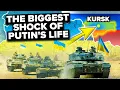
It’s August 6, 2024. The date marks the first time that Ukraine’s pilots have started flying F-16s, an event that many see as a potential turning point for the Ukraine war. Granted, the limited number of F-16s provided to Ukraine by its Western allies won’t allow it to establish full aerial superiority over Russia.
But now, it has options – localized superiority is possible, as are aerial attacks on Russian encampments and even Russian territory. It's a big moment for Ukraine. But soon, the arrival of F-16s is going to be overshadowed by Ukraine making a move that nobody expected: Ukraine is about to invade Russia.
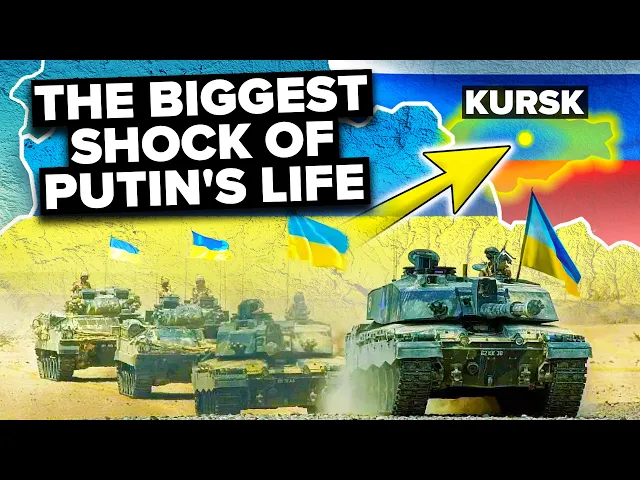
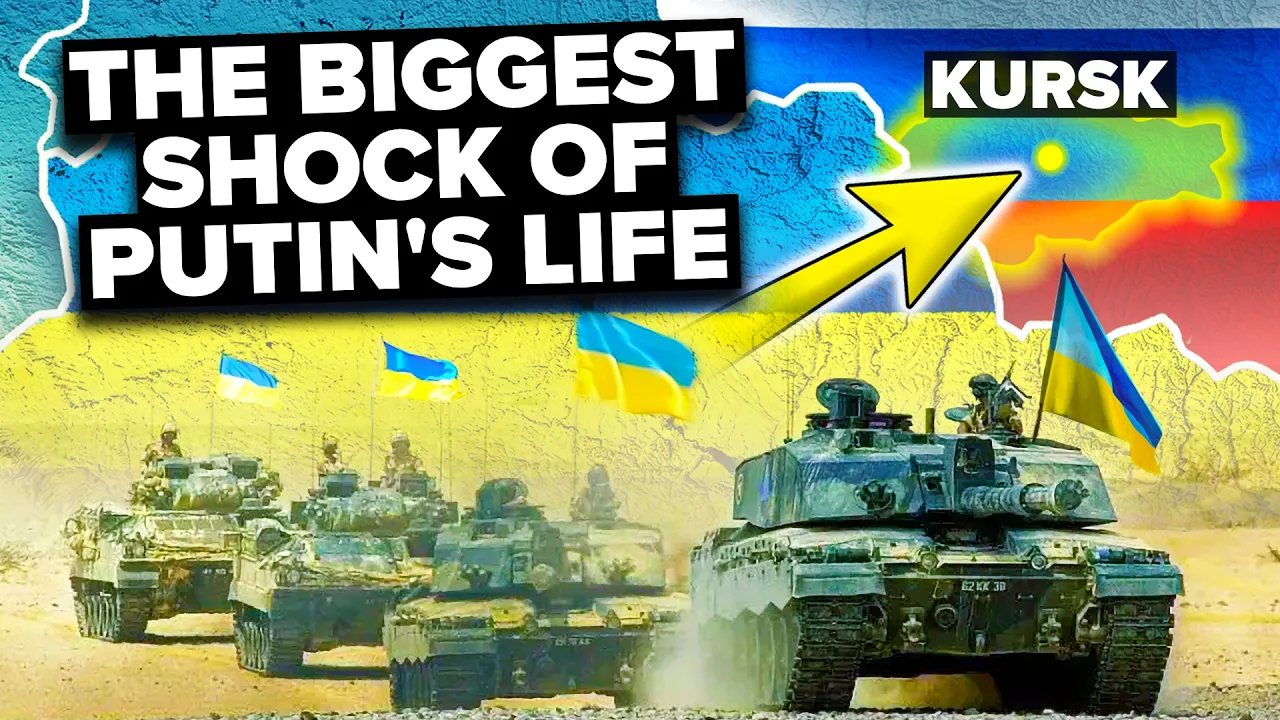
Specifically, its forces are going to break the front lines to the north of the country and pour into Kursk – a Russian Oblast that is sparsely populated and even more sparsely defended. Russia hasn’t placed much importance on the region, instead preferring to focus most of its invasion efforts in Donetsk as it continues a slow push toward Kyiv. But the night of August 6, 2024, changes everything.
Ukraine officially holds territory in Russia. In this video, we’re going to explain why Ukraine’s invasion of Russia has changed the entire complexion of the war – to the point that Putin may never fully recover – and explain why it’s such a crucial event. But before we do, we’ll start with a quick recap.
On August 7, reports started circulating that Russia had supposedly repelled a group of 300 Ukrainian fighters – supported by tanks – that had broken through the front lines in the north of Ukraine and entered Kursk. Russian officials claim the Ukrainian offensive resulted in five deaths and 20 injuries, but the implication was that it had been successfully fought off. The implication was wrong.
As more details emerged about Ukraine’s unexpected foray into Russian territory, it was quickly revealed that this was no small attack. For Russia, the situation was far from “controllable,” despite the words of Kursk regional head Alexei Smirnov. Instead, Ukraine hadn’t just gotten into Russian territory.
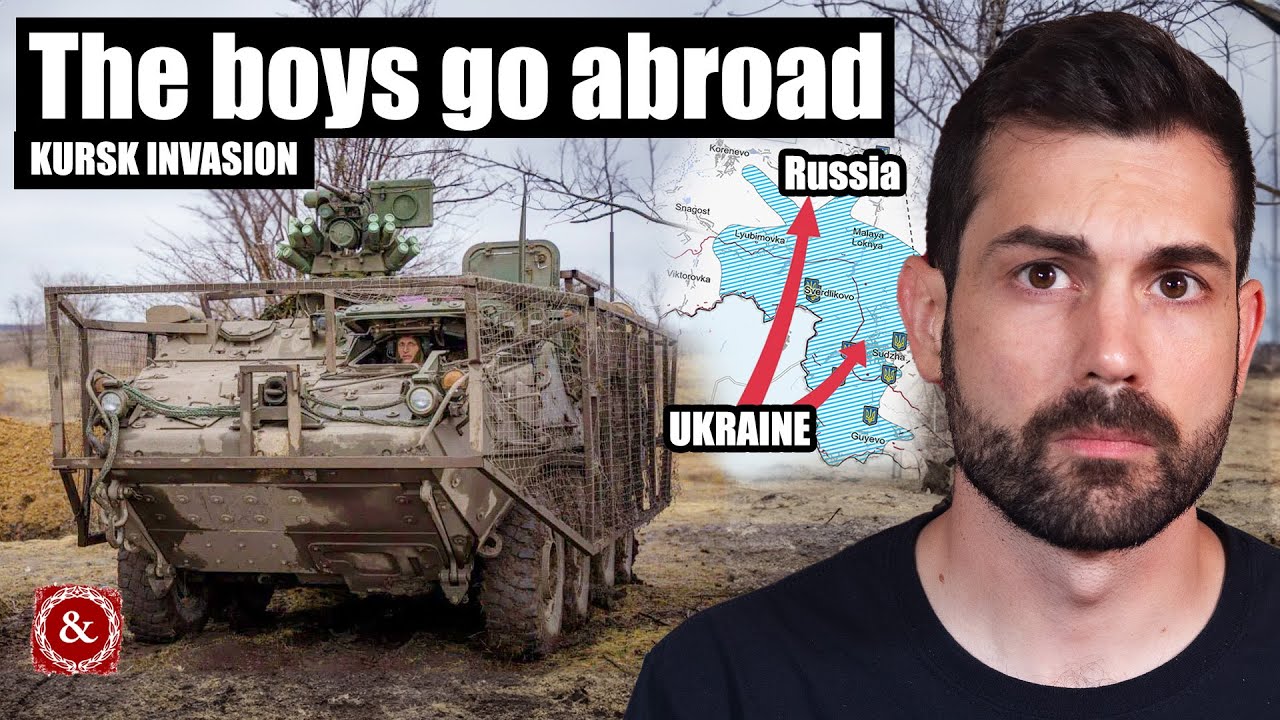
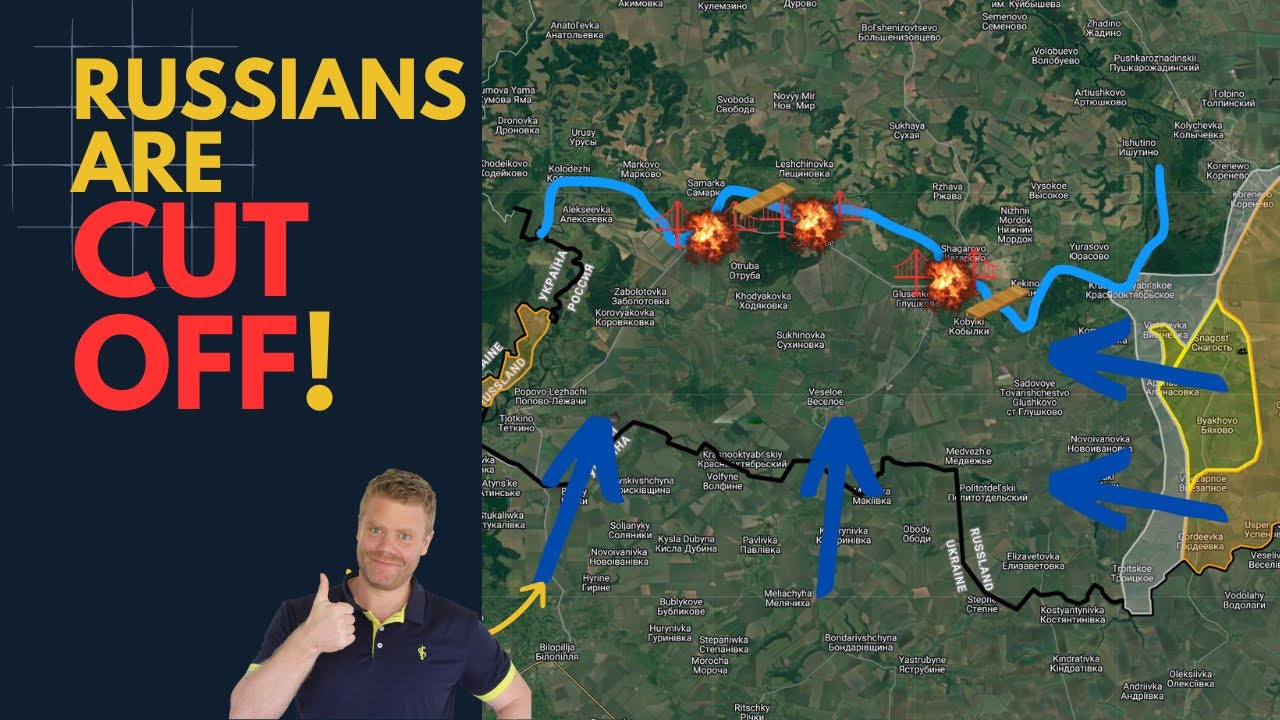
It was advancing at a rapid pace. Intense fighting marked August 8, with more details rapidly emerging. The French news outlet Le Monde revealed that Ukraine’s incursion involved as many as 1,000 soldiers, with a further 2,000 backing that initial group up from behind the Ukrainian border, and that the invasion was of a far larger scale than Russia claimed.
It has also been remarkably successful. Ukraine had pushed nine miles into Kursk, taking 20 villages along the way. Among those villages was the small town of Sudzha, which is home to a gas transmission station that Russia uses to send natural gas to the rest of Europe.
Far from controlling the situation, as Smirnov claimed he would, the Kursk regional leader instead declared a state of emergency. Thousands of Russians have been evacuated from their homes so far, indicating that Russia has failed to prevent the Ukrainian advance despite all of its claims to the contrary. The advance has continued to August 13 – the date of this video script’s creation.
Between August 8 and now, Ukraine has launched multiple drone and artillery strikes against locations in Kursk. It’s also advanced even further into Russian territory. August 9 saw the Institute for the Study of War claim that Ukraine had pushed on from the initial nine miles it had captured, with its soldiers advancing as far as Kromskiye Byki, which is over 21 miles into Russian territory.
That day also saw Ukraine officially confirm the invasion, with the country having remained tight-lipped during the initial three days of fighting. More attacks followed in the coming days. Russia claimed that the U.
K. was helping Ukraine with its invasion, with State Duma member Adalbi Shkhagoshev saying that English had been heard among the soldiers. That isn’t confirmed, and it’s an indicator of just how much chaos Ukraine’s forces are spreading throughout Kursk.
The strategy was also unfurling. Ukraine was sending small groups of soldiers into villages, bypassing Russian fortifications in the process before fighting and withdrawing to attack elsewhere. Those small groups were being followed by larger ones, which consolidated and kept the territory the smaller groups attacked as Russia’s forces found themselves further spread out and confused.
This was no quick raid. Ukraine was actively capturing and keeping territory in Russia. Russia responded by sending more forces to the Kursk region, diverting soldiers who had previously been on the frontlines in Donetsk in an effort to tackle the emerging problem.
Those diversions haven’t stopped Ukraine. Over the last few days, it has expanded its incursions to include the Belgorod region – another Russian Oblast close to the Ukraine border which is now seeing small groups of Ukrainian troops launching attacks and taking territory. Today, there may be as many as 6,000 Ukrainian soldiers occupying territory inside Russia.
Over 76,000 civilians have been evacuated, with many en route to Moscow, and Ukraine is claiming that it continues to take territory. On August 12, Commander Oleksandr Syrskyi, who is one of Ukraine’s leading military minds, claimed that Ukraine controlled 28 villages and a staggering 386 square miles of Russian territory. Ukraine had taken a massive gamble with this invasion.
Faced both with encroaching Russian forces in Donetsk and the possibility of international blowback over it finally taking the role of aggressor in its fight against Russia, it rolled the dice. It gambled that it would not only be able to get away with fighting in Kursk but that it would successfully capture Russian territory without Putin resorting to nuclear weapons. It also gambled its relationship with its Western partners – crossing the final red line had the potential to anger some of the countries that have provided weapons and financial support to Ukraine.
The gamble paid off. Ukraine officially holds Russian territory. And even more worrying for Putin, he’s had to watch as his forces have crumbled, and the responses that he’s attempted to muster have not only failed to dispel Ukraine’s forces.
Those responses have also failed to stop Ukraine from pushing further. The Kursk invasion has changed everything. Putin has suffered the biggest humiliation he’s ever experienced as Russia’s leader, and it’s a humiliation from which he may never recover.
Why? It all starts with exposure – Ukraine’s actions in Kursk have exposed Russia’s military as being far weaker than anybody anticipated. Of course, you could argue that the entire war has been a cavalcade of this type of exposure for Russia.
When Putin first launched his “special military operation” in February 2022, much of the world assumed it would be over quickly. After all, Russia had a far larger and – on paper – much stronger military. Even today, Russia has 1.
32 million active military personnel compared to Ukraine’s 900,000, with rounds of conscription leading to more being called up as needed. Russia has more than 10 times the number of aircraft, as well as 13,000 more tanks and more than 139,000 more armored vehicles. It should have steamrolled through Ukraine, even with the military support Ukraine is receiving from Western nations.
Instead, we’ve seen a protracted war in which Russia has failed to establish any sort of aerial dominance. As the Journal of the JAPCC points out, Russia quickly started losing not only its outdated Su-25s, but also its far more modern Su-30s, Su-34s, and Su-35s when fighting Ukraine. The losses were so bad that Russia resorted to launching aerial attacks from behind the front lines.
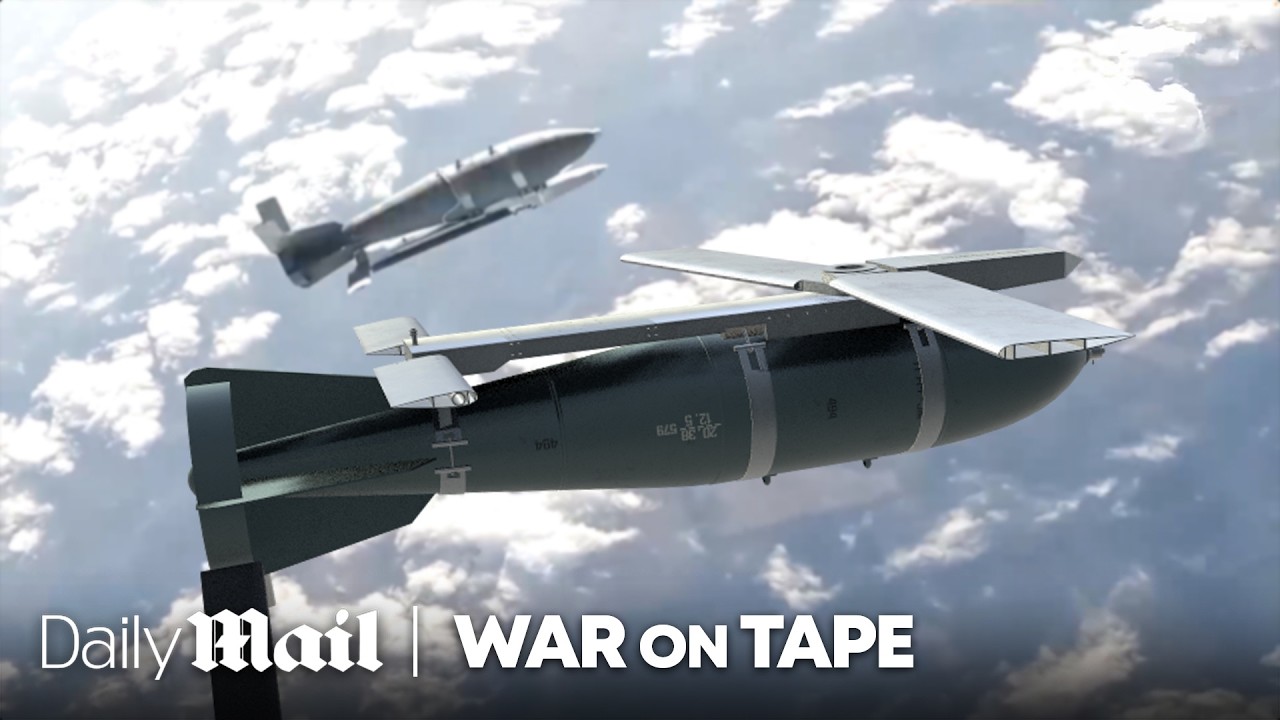
It uses glide bombs – old Soviet-era bombs fitted with a modern wing mechanism – to assault Ukrainian fortifications rather than risking its helicopters and fighters. That shouldn’t have happened. With its aerial might, Russia should have been able to support its troops on the ground with precision strikes from its fighter jets, but it has failed to do so.
Russia has also lost about a third of the Black Sea Fleet to Ukrainian missile and drone strikes, meaning the small naval component of the war that should have been in Russia’s favor has become largely irrelevant. On the ground, Ukraine’s Ministry of Finance claims that Russia has lost around 594,400 soldiers, along with nearly 8,500 tanks, over 16,000 armored fighting vehicles, and around 16,800 artillery units. Then, there’s the increasing reliance on Soviet-era equipment.
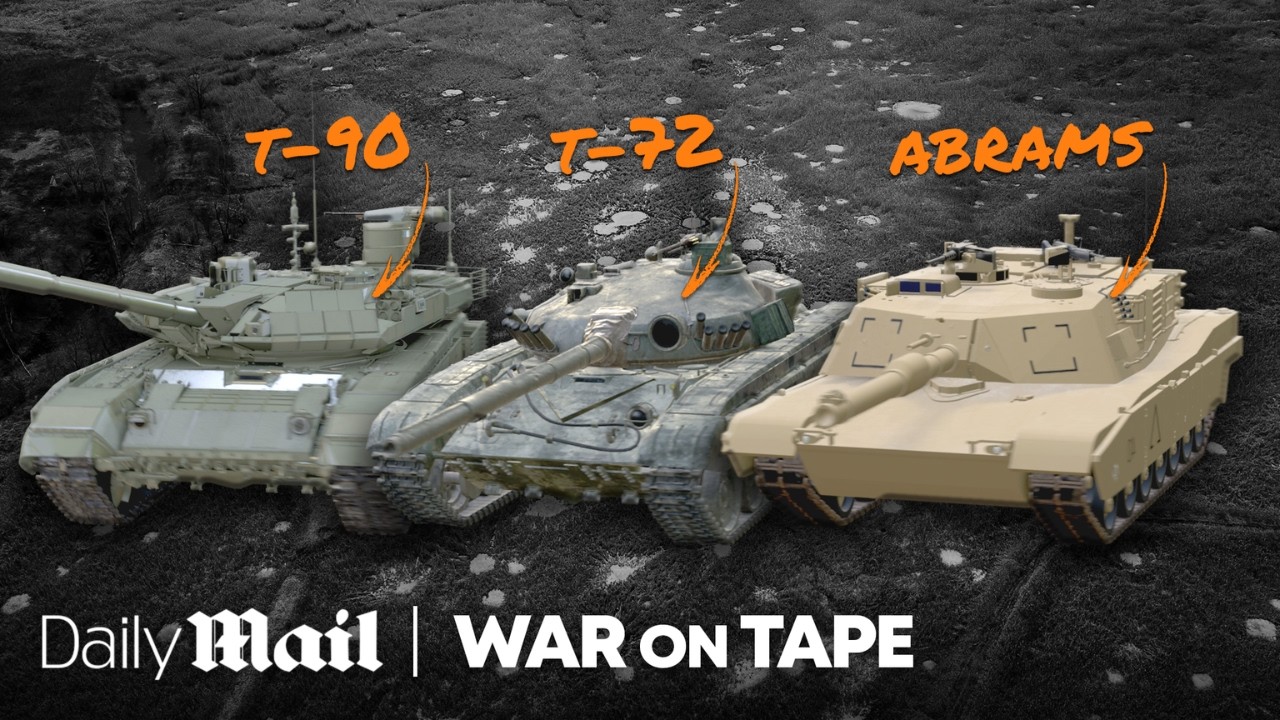
Reports suggest that Russia has resorted to using old T-55 tanks, which are 65 years old and far from capable of serving in direct assaults against Ukrainian positions due to their thin steel armor being easily penetrable by even basic rocket-launched grenades. That’s without mentioning the more modern drones and weapons Ukraine has been using to take out Russian tanks. In short, the entire war has offered humiliation after humiliation to Putin, with his increasingly aging stocks of equipment failing to achieve the victory the world assumed would have happened long before now.
Fast-forward to today and the Kursk invasion further exposes Russia’s weakness. It shows that Russia has failed to properly fortify the entire front line, which stretches around 620 miles. To the north, in particular, Russia didn’t dedicate enough manpower or equipment to guarding the front line, allowing a small contingent of Ukrainian soldiers to break through and enter Kursk.
It was too focused on Donetsk and too complacent elsewhere. Now, it faces attacks on its own territory that wouldn’t have been imaginable when the war began. It gets worse for Putin.
Not only does Russia face attacks in its own territory, but it’s failing to fend them off. Ukraine is advancing through Kursk, as well as encroaching into Belgorod. Russia is actively losing villages and townships, showing that its faltering attacking might is matched by a lack of proper defenses behind the front lines.
From there, add the lack of Western response to these attacks. None of Ukraine’s allies have come out to oppose the strikes, with the biggest response being a request from the White House for Ukraine to provide details about its objectives for the Kursk invasion. That’s more bad news for Putin – it shows that the West believes he’s too weak to do anything about Ukraine invading Russian territory.
Now, Putin’s threats – which he has repeatedly failed to follow up on – seem even weaker than they did before as the Russian leader instead faces the humiliation of allowing a war that he started to come to his doorstep. All of this brings us to the second reason why the Kursk invasion represents a pivotal moment for Putin as Russia’s leader. It represents the crossing of the final “red line” in the Ukraine war.
These “red lines” are the actions that have been taken throughout the war that the West believed would provoke Putin into further action. Providing military aid to Ukraine was considered a “red line” at the war’s beginning, leading to several countries choosing to only offer non-lethal equipment. That “red line” has since been thoroughly crossed – Ukraine has received over $121 billion in aid from Europe, along with about $82 billion from the U.
S. , with more incoming. Other supposed “red lines” included the installation of NATO infrastructure in Finland and Sweden, which is now extremely likely given that both have become NATO members since the Ukraine war began, and Western countries allowed Ukraine to use the weapons they provide in Russian territory.
All of those lines have been crossed. Putin has done nothing about them. With Ukraine’s advancement into Kursk, the final “red line” in the Ukraine war has disappeared and Putin has quickly revealed that he will once again do nothing in response.
At least, he’ll do nothing to the West. For all of his bluster about what such an incursion could mean in the context of global war, Putin has barely been able to summon defenses against the few thousand Ukrainians within his border. Ukraine continues to advance as Putin looks weaker than ever.
The invasion is a humiliation. It’s something that not only should have never happened from a militaristic point of view, as Russia was supposed to be so strong that Ukraine would never break through the front lines, but it's also an invasion that represents humiliation for Putin geopolitically. His lack of follow-through on his threats throughout the war has shown the West that Russia’s leader likely believes that his military isn’t capable of taking on the rest of Europe.
And psychologically, as The Atlantic Council points out, this crossing of the final “red line” also strikes “a powerful blow against enemy morale. ” Russia, having already seen its military fail to defeat Ukraine quickly, now has to contend with mass evacuations and the panic that comes with having an invading force in its own territory. Putin’s failures have forced his people to experience a taste of the medicine he’s trying to deliver to Ukraine.
The result is a growing lack of appetite for the Ukraine war in Russia itself. This was revealed by Euro News in December 2023 when it reported on a poll conducted by the independent company Chronicle. That poll discovered that support for the Ukraine war in Russia had nearly halved since a similar poll conducted in February 2023.
Speaking to 1,199 adults across Russia between October 17 and October 22, the Chronicle found that those who expressed “consistent” support for the war dropped to 12% from the previous result of 22%. What’s more, 40% of those surveyed supported Russia’s withdrawal from Ukraine, even if Russia’s war objectives weren’t achieved. The poll also revealed that 33% of Russians were against exiting Ukraine now that Russia is there, but even that number fell substantially from the 47% seen in February 2023.
These dismal numbers – from Putin’s perspective – were recorded before Ukraine invaded Kursk. With the final “red line” disappearing into the distance, it’s only logical to assume that even more Russians will now want the war to end because they’re scared that their homes could be next on the Ukrainian agenda. And as if to add to all of these problems for Putin, America’s response to Ukraine’s actions has been flippant, at best.
Beyond the previously mentioned inquiries from the White House, August 13 saw President Joe Biden tell reporters in New Orleans that the invasion is “creating a real dilemma for Putin. ” While the U. S.
has been quick to deny any involvement in the operation – “We had nothing to do with this,” said White House spokesperson Karine Jean-Pierre – this is far from the response Putin would have wanted. The U. S.
should have been on Ukraine’s back from the moment it crossed into Russian territory. It was meant to warn Ukraine that this was an escalation that couldn’t be tolerated while telling them they needed to get out and only fight to defend Ukrainian territory. None of that happened.
So, Putin is left with a situation where the West isn’t trying to stop Ukraine from invading, which tells him – and the Russian people – that the West isn’t afraid of Russia anymore. The tentative approach taken at the beginning of the Ukraine war has evaporated. The “red lines” are all crossed, Putin has done very little in response other than continue his “special military operation,” and the Russian president’s humiliation runs deeper.
He’s even had to deal with his own people losing their appetite for the war even long before it arrived in their country. Russian morale is low. Putin’s positioning as a “strongman” in Russian politics is now on shaky ground.
And even worse for Russia’s leader is that there are even more issues that the Kursk invasion has caused. Issues like Ukraine forcing Russia to change its strategy. As The National Interest pointed out in an August 10 article covering Ukraine’s high-stakes gamble, the incursion into Kursk may have been as much a strategic play as it was a move designed to expose Russia’s weaknesses.
On August 1, Al Jazeera reported that the last week of July 2024 saw Russia launch the largest assault in eight months within the Donetsk region of Ukraine. That assault was successful, as it led to Russia claiming several Ukrainian settlements and brought Russia closer to cutting off key supply lines that are helping Ukraine’s troops fight against it in Donetsk. With those supply routes cut off, Ukraine would be forced to withdraw from the region en masse.
Donetsk has been a key Russian focus through much of 2023 and into 2024. Earlier in the year, it managed to take Avdiivka, which many saw as a key Ukrainian fortification. That followed the taking of Bakhmut in May 2023 – a similar fortified location that was key to Ukraine’s defenses.
Through these advances, it’s clear that Russia is attempting to slowly take territory in Ukraine’s east and south. By taking these fortified towns, Russia can press its advantage because it now has multiple launching points for offensives in southeastern Ukraine. August 4 brought with it more bad news for Ukraine in Donetsk.
The country was forced to order the mandatory evacuation of children – along with their guardians – from Donetsk’s eastern region in the face of Russian advances. More villages were falling and more locations were being bombed. Ukraine has been standing on the edge of losing one of its key territories for months now.
Russia has even claimed that it successfully annexed Donetsk back in 2022, even though it still doesn’t have full control of the territory. Why does any of that matter in the context of the Kursk invasion? Russia’s advancement through Donetsk had forced Ukraine into a position where it couldn’t make any significant breakthroughs in the south or east.
Russia’s forces are simply too strong in those regions, with Russia also sending a seemingly never-ending supply of manpower to the region to fortify the positions it takes. Enter the Kursk invasion. By committing so many people to Donetsk, Putin failed to properly supply the troops occupying the northern front lines.
That paved the way for Ukraine’s forces to break through and into Russia. Now that Ukraine is in Kursk, and taking territory itself, Russia will be forced to divert forces away from Donetsk to defend itself. Forces and equipment will have to go north to fight back against the invading forces in Kursk, with much of those resources coming from Donetsk.
Thus, Ukraine gains new opportunities. It weakens the fronts in the south and east of its territory, opening up the possibility of counterattacks that could allow it to reclaim some of the territory Russia has taken in Donetsk. It also forces Putin into a strategic rethink.
For the entire war, Putin has operated under the assumption that Ukraine posed no threat to Russia. He could afford to dedicate more troops to one region than another because all of the fighting would take place in Ukraine. So what if the front lines to the north were poorly equipped?
Even if Ukraine pushed them back, it would never break through and actually enter Russia. Except it would. And it has.
The Kursk invasion has changed the entire complexion of the war in that regard. Now, Putin has to account for the possibility that Ukraine will enter other areas of Russia, meaning he can’t afford to allow any sort of weakness across the front line. On a practical level, that means Russia is going to need more soldiers and more equipment, the latter already being an issue given that the country is relying on Soviet-era equipment and is rapidly seeing its stockpiles dwindle.
The alternative is that Russia will have to spread its troops further across the front lines of the war. While that will strengthen some areas, it’ll also mean pulling soldiers away from regions that Russia wants to take. The result is likely going to be a net loss as Russia is less effective in the areas in which it wants to advance because it’s being forced to guard itself against Ukrainian incursions elsewhere.
For the first time since the war began, the issue of where the fighting takes place is no longer in Putin’s control. Ukraine had taken the initiative and shifted the war’s momentum in ways Putin couldn’t have anticipated. He was happy to keep throwing soldiers into the meat grinder while whittling away at Ukraine’s defenses in Donetsk.
That’s still an option, though it comes with the ever-increasing threat that Ukraine will break through elsewhere. That brings us to another way that Ukraine’s Kurak invasion has changed everything: It’s the first time since February 2022 that Ukraine has had any leverage. In May 2024, Reuters reported that several sources within the Kremlin believed that Putin was open to negotiating a ceasefire with Ukraine.
One of those sources, who remained anonymous, claimed that Putin can fight for as long as it takes to claim Ukraine, but “Putin is also ready for a ceasefire – to freeze the war. ” Putin himself seemed to confirm this when quizzed about the source’s comments while in Belarus, saying that peace talks could resume, but only if they were based on “the realities on the ground. ” This was Putin’s way of telling the world that he would have all of the leverage in any negotiations that took place.
Russia had already taken much of south Ukraine and was advancing deeper into the Donbas. He was in a position of power – Putin could set the terms because Ukraine had no leverage aside from the aid it was receiving from the West. That changed on August 6.
Ukraine now controls 28 villages in Russia – and it’s still advancing through Kursk – along with a key gas transmission station. If negotiations were to begin now, it would finally have something to hold above Russia. Ukraine could ask for Russia to withdraw from some of the locations it has fortified in Donetsk in return for Ukrainian soldiers withdrawing from Kursk, for instance.
That leverage couldn’t come at a better time for Ukraine. It faces the possibility of Donald Trump being re-elected as U. S.
president, which creates uncertainty that isn’t helped by Trump’s claims that he could end the Ukraine war within a day if he was elected. Nobody knows what that means and Ukraine is rightfully wary of what a change in the political structure of the U. S.
could mean for the support it’s receiving from America. That uncertainty is compounded by events in Europe, as The National Interest points out. Several European countries that support Ukraine are due to hold elections – or have already held them – in 2024.
Leadership changes could create problems for Ukraine as those changes lead to re-examinations of the support these countries are delivering. Add to that the fact that Hungarian Prime Minister Viktor Orban now holds the European Union’s rotating presidency. Orban has maintained ties with Putin throughout the war, to the point where he could be considered something of an ally to Russia.
As recently as July 2024, the Hungarian Prime Minister traveled to Moscow and shook Putin’s hand in what Orban calls a “peace mission. ” This is a man who already blocked the EU from sending $55 billion in aid to Ukraine in December 2023 and it’s very likely he’ll continue to argue for the EU to limit the funding it provides to Ukraine in the future. These changing political tides must worry Ukraine.
So, by taking territory in Kursk, it’s working to minimize the impact that changes in European or U. S. politics might have.
That’s bad news for Putin. He was likely relying on his friendly relationship with Orban to limit the support the EU could provide while hoping for political turmoil in the U. S.
to do the same. He didn’t account for Ukraine gaining leverage outside of its Western allies, meaning he has to face up to the fact that his position at the negotiating table has changed. He’s still in the driver’s seat if negotiations do occur.
But now, he will likely need to concede territory in Ukraine to regain the lost territory in Kursk – essentially setting the slow advances made in Donetsk back again. And this brings us to the final reason that the Kursk invasion has changed everything about the Ukraine war. Why it’s such a massive humiliation for Putin and why he may never recover from the situation: Putin has lost his strongman image.
We’ve touched on this concept already. In politics, a strongman is a leader – typically authoritarian – who not only claims to have strong popular support but relies on military enforcement to maintain their control. Through that military support, they’re able to claim themselves as the only person who is capable of solving whatever a country’s problems may be.
In Putin’s case, that problem has changed over the years. Earlier in his reign, he tackled issues related to Russia’s economy. But through the late 2000s through to today, that problem has evolved to focus on Russian sovereignty.
Putin’s invasion of Georgia in 2008 saw him cast himself as the strongman while waging war against another nation. The same goes for the annexation of Crimea in 2014 – Putin was taking back territory that rightfully belonged to Russia, according to his own political dogma. The Ukraine war was meant to be an extension of Putin’s strongman position, reinforcing him as the leader for life in Russia.
Instead, Ukraine has whittled away at the image Putin has so carefully crafted. By crossing “red lines,” it has shown that Putin’s bark is worse than his bite, which is a message that Europe and the U. S.
have taken on board. By staging such a solid defense against the far larger Russian forces, Ukraine has also demonstrated that Putin’s military threat isn’t as powerful as once thought. The Russian military is increasingly looking like a paper tiger – a military that looks strong on paper but is far weaker when put to the test.
With Ukraine’s invasion of Kursk comes yet another chink in the strongman’s armor. For so many years, Putin has positioned himself as the protector of the Russian people. A man who would ensure they came to no harm even as he pushed aggressive policies externally.
That image has been shattered – thousands of Russians are being evacuated and Ukraine is driving deeper into his country. Even if Russia manages to push Ukraine out of Kursk, Putin faces a political future in which doubt can be cast on his leadership. That doubt is the enemy of the authoritarian leader, and it could slowly lead to Russia’s people losing confidence in Putin.
He isn’t helping himself. As The Guardian pointed out in an August 13 article, Putin easily won Russia’s presidential elections in March 2000 and has held onto power with an iron grip ever since. But it’s now over 24 years later and Russia finds itself staring down the barrel of a gun that represents so many of the problems it faced when Putin first took power.
There is war, just as there was in September 1999 when Russia was bombing the Chechen capital of Grozny. Only now, the war is on a grander scale and Russia is finding itself fighting on its own territory for the first time since World War II. As for Putin’s response, it’s been lackluster at best.
At the time of the writing of this script, we’re entering the ninth day of the Kursk invasion. Ukraine isn’t being pushed back. If anything, it’s gaining more territory, showcasing how poor Russia’s defenses are.
And the best Putin can muster up is a promise to provide a 10,000-ruble handout to those who are affected. That amounts to about $109 – a pittance for people who now face losing their homes. The strongman has been brought to his knees by the Kursk invasion.
Only time will tell if he is able to get back up or if Ukraine’s invasion of Kursk truly stands as a pivotal moment in Putin’s presidency. With that, we turn the questions over to you. What do you think the situation in Kursk means for the Ukraine war and Putin’s future?
Will Ukraine launch further invasions on the back of this success and is it possible that Putin will be forced to the negotiating table in the wake of these events? Share your thoughts in the comments and thank you for watching this video.