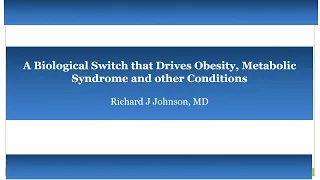
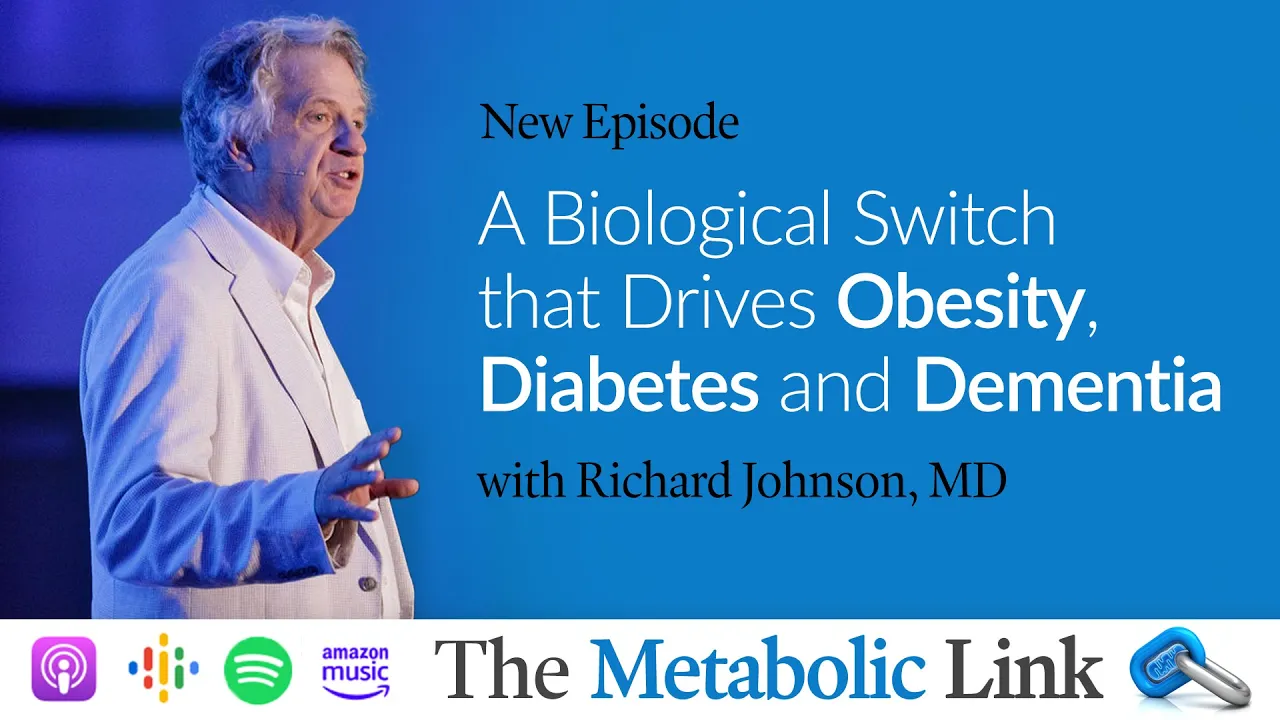
welcome to the metabolic link a medical and science focused podcast that explores the common thread of metabolism in health and disease this is where science meets Society welcome to another episode of the metabolic link I'm your host Victoria field and today we are going to take a deep dive into the groundbreaking research that is really uncovered the central role of fructose in potentially driving the epidemics of obesity diabetes and a variety of other metabolic conditions now this episode is extra special because we're actually sharing a full presentation from our scientific and medical conference metabolic healthit
2024 and this presentation is by Dr Richard Johnson if you're familiar with Dr Johnson you know that he's an internationally acclaimed scientist and physician he's really well known for his investigations into the metabolic effects of fructose consumption and he's honestly revolutionizing our understanding of how it's impacting our health he's also known for his groundbreaking research on the role of uric acid in a variety of metabolic disorders I think you're really going to enjoy his full presentation I want to mention if you're watching this on YouTube you can see his slides but if you're listening on
your favorite podcast players make sure you check out the full video to be able to see his slides as well because you may find them helpful as you go about listening to his uh presentation before we begin though I want to say a very special thank you to our sponsors uh J NOA Diagnostics is a sponsor of this podcast and goova connect powered by goova Diagnostics offers simple atome Advanced lab testing that's ground that's grounded in research really takes the guesswork out of understanding your health uh their tests help you make informed decisions alongside your
Physicians so you can actually work towards reaching your health goals really no matter what they are because otherwise you're kind of if you don't know what's happening inside your body really are spinning you can spin your wheels quite a bit so this helps uncover a variety of things whether it's gut health hormonal balance nutritional insights I've actually personally used their gut microbiome test uh which is their GI effect test I used that when I was dealing with a chronic illness and actually my physician and I were able to work together using the information that that
test provided to make informed decisions about next steps uh in you know how we were going to approach me recovering which I eventually did which is really great um metabolomics plus is another test that I would I've been able to try uh through goova connect and that's probably one of the best nutritional profiles there is you can really uncover a wide variety of things whether you want to under better understand how to support your digestive system uh what vitamins you might be deficient in or amino acids and so much more it's really uh wealth of
insights when it comes to just you know the the results you get are there's not really a comparison um not only do they provide you with your information about your body but they actually provide you with action items uh which I found really really helpful uh their compan is really dedicated to education which I love so you're not just getting results you're getting results with actionable things that you can do to help improve your health um so whether it's gut health hormones nutrition their tests really cover the basis and they're offering 15% off to our
listeners which is really exciting on any of their tests when you use the code metabolic Link at gdx.net slthe metabolic link that's gdx.net slthe metabolic link using the code no thee here just metabolic link uh and I really think you're going to just love what their tests have to offer you along your journey to better metabolic health I also want to say a special thank you to our sponsors at element now if you're familiar with element you know it's a zero sugar electrolyte drink mix that's free of artificial colors and really any other dodgy ingredients
I personally have loved it for years it's formulated for anyone on a mission to restore their health through hydration I mean whether you're an athlete whether you're um fasting whether you're on a ketogenic or low carb or paleo diet It's amazing And um you know optimal hydration doesn't just mean more fluid fluids it also means getting the right electrolyte balance right and if you dilute that balance that's when you can feel really tired I can't tell you how many times I've been out in the Arizona Sun um and just felt very lethargic until I grab
myself an element packet and I'm feeling a whole lot better uh and despite what you hear sodium is really important a critical important part of your health uh so whether you're you know outside in the Heat or you're super active or you just want to feel better uh I would certainly check them out I've actually personally used them I I personally use them when I was pregnant and also now when I'm breastfeeding and it's been amazing because it's actually really hard to consume to just to stay hydrated right consume enough water but maintain your electrolyte
balance when you're building and nourishing a human so uh for me it's been incredibly helpful in keeping my energy levels up and um they're actually offering an exclusive deal to our listeners by using our link you'll get a free element sample pack with any drink mix purchase when you visit drink element.com metabolic link that's a free sample pack which is pretty awesome with any drink mix purchase when you visit drink LM nt.com metabolic link thank you so much for supporting our partners because when you support our partners you're supporting us so please head on over
and check out Genova connect and element and without further Ado please enjoy this full presentation by Dr Richard Johnson our next speaker is Dr Richard Johnson Dr Johnson is a medical doctor he is a professor of medicine at the University of Colorado for the last 20 plus years he's been a clinician and a medical scientist uh who's been internationally recognized for his work on sugar and how it plays a role in obesity and diabetes he has been funded by the National Institutes of Health and has uh widely published with over 500 peer reviewed Publications uh
with a particular topic on uh sugar and also fructose and his most recent book is entitled nature wants us to be fat the title of his talk is a biological switch that drives obesity diabetes and dementia nice to see you all and to be have the opportunity to present to you uh it's a it's a pretty exciting story that I'm going to tell you about which is that uh we more or less stumbled on a discovery that could turn to be very important in terms of obesity and metabolic syndrome these are my disclosures I'm uh
NIH funded uh I work halftime at the University and I recently joined RX sugar which is a company that's uh marketing allulose and I'm their Chief scientific officer and then I have a book nature wants us to be fat I also brought uh you know a dozen or 20 copies or so of my older book which I'm put out on the front desk there if anyone wants a copy they're they're free and feel free to take one it kind of talks about the discovery of this switch okay we're going to begin by uh talking about
the fact that we really are in a world of epidemics it isn't just the epidemic of obesity and diabetes which everyone knows about they call it the twin epidemics but also almost most most of the common diseases of today used to be quite uncommon you know like high blood pressure for example was present and only 5% of the population in 1900 now it's the most common disease in the world 40% or so cardiovascular disease was UN you know es schema heart disease was unknown in 1900 there were a few people who had angena and so
forth it was discovered in 1910 it became a massive epidemic in the 1900s and then death rates decreased because of all the drugs and surgeries we have but actually the underlying problem is still there chronic kidney disease has increased liver disease Nash or fatty liver was was wasn't heard of before 1970 and now it's uh 25% of the adult population have fatty liver today you know we are it this is an epidemic that's affecting a a wide range of diseases there's a and and it isn't just obesity and diabetes and metabolic syndrome and so forth
It's also dementia Alzheimer's disease we now know that it's really is increasing dramatically behavioral disorders ADHD bipolar disease increasing dramatically cancers especially cancers associated with obesity such as colon cancer breast cancer Pancreatic Cancer all increasing marketly and so we see a cluster of diseases that weren't here a hundred years ago and so that raises the question why are all these epidemics occurring and what is the cause and then what if there was just one critical factor that could be driving all of these now that critical factor that most people think about is this thing called
the metabolic syndrome where you develop insulin resistance as you heard Ben speak about um and Ben bman and also with height it's associ with elevated blood pressure obesity and the classic associations of metabolic syndrome have been known a long time you know it predicts the development of severe obesity diabetes hypertension fatty liver etc etc but what we're also really is that realizing is that metabolic syndrome is really associated with all these other diseases like what Chris Palmer was saying yesterday about behavioral disorders dementia preclampsia uh and even aging and muscle Wasing so in some respects
the big problem is met abolic syndrome and insulin resistance and that's what the focus has been on and most attempts to try to block obesity have involved different there's basically dietary approaches and the classic one that Jocelyn introduced was the energy balance hypothesis which basically says we're eating too much we're exercising too little just cut back on calories and there's a carb insulin model which you all know of which is basically saying carbohydrates are stimulating insulin High insulin levels are the problem the seed oil hypothesis is a new one where they're talking about uh oils
uh and basically vegetable oils particularly that have increased dramatically in the last century that may be pro-inflammatory and have problems and then there's this question that maybe we're not eating enough protein so what do you do do you do a vegan diet a carnivore diet do you do a low fat diet you and remove seed oils or you do a low carb diet I'm talking to a low carb audience and and frankly I think that the low carb diet is the best and I'll try to prove it to you but the big issue is you
know all these diets work to some extent so what do we do so the energy balance hypothesis is really supported by the fact that we are eating more than we were like we're eating about 600 calories more than we did in 1965 you know the average per day we're watching a lot of TV and that's associated with obesity so it makes sense we're eating too much we're exercising too little but of course it isn't so easy to lose weight the carb insulin model is really convincing you have a dramatic increase intake of sugar uh you
know over the century and we have this very compelling argument showing that high insulin levels are bad and can be associated with all kinds of things and you have to have high insulin levels to become obese the seed oil hypothesis shown on the left panel you know I mean there's no doubt that it correlates with the rise in obesity the meat intake doesn't correlate as well but there really has been a drop in red meat intake for example since about 1970 but it's not as dramatic but you can see how all these hyp hypothesis make
make it difficult to understand and certainly the scientists you know the NIH and so forth they're confused too everyone is confused so are these hypothesis mutually incompatible I've heard people say that the carb insulin model and the energy balance are about as Polar as the heliocentric and geocentric view of the of the solar system and and what's the center of the solar system is it the Earth or the Sun or are they all partially right but only feeling a part of the elephant not the whole elephants like the blind men touching and I'm going to
argue that all of these hypotheses are partially right so the way we're going to address this is we're going to talk about the fact that normally in nature weight is tightly regulated and actually there's evidence in the early you like 1950s that weight was regulated in humans too but but for sure if you take an animal in the wild and you fast you you fast it it will lose weight you stop the fasting it will go right back to the weight it was supposed to be if you overfeed it like uh and then you stop
overfeeding it it will go back to the way it's supposed to be and it will go back to the same the way it's supposed to be for that time of the year so if you're working with an animal that's like hibernating it will know I mean that hibernates in the winter it will know what weight to go to it's pretty fascinating weight is normally tightly regulated but there are times when certain animals will suddenly change their behavior and dramatically gain weight the bear for example will maintain its weight through the summer but beginning about 8
weeks before it hibernates 10 weeks or so it will suddenly become ver graciously hungry it will develop it will eat and gain 10 pounds a day it will become insulin resistant its fats will go up in its blood and in its liver it develops metabolic syndrome and in fact all hibernating animals will develop H uh metabolic syndrome before they hibernate same thing with long-distance migrating birds they will actually develop insulin resistance and fatty deliver elevated blood fats and high fats in their tissue before they migrate it's purposeful it's a survival tactic and it's done like
a switch and the question is could we be accidentally activating the switch ourselves and could that be driving the problem we have so what we wanted to know is what triggers the switch and could it be driving all all these modern diseases and I'm going to just summarize in a very important this is a very important slide and it points out that you know glucose is the main carbohydrate in our blood it's the main fuel but there's another sugar that looks just like it called fructose same molecular weight you know it's very similar but they
have completely two different purposes glucose ised used to increase ATP levels if you uh if you give GL glucose to uh animal ATP levels go up acutely at least and the glucose the way it works is when it's like giving that immediate Fuel and when you get that fuel and and actually all nutrients do this except for fructose that is so let you you have two forms of energy you have an active energy which we call ATP that's the energy we use and then we have a stored energy which is mainly fat and that's used
to protect us and normally if we're not eating the fat can be broken down to provide the energy that we would otherwise get from food so there's this nice balance where the fat is to protect us when we when there's no food around and that's why animals get fat before hibernation and Etc so but when you eat glucose it'll fill the ATP levels back to normal first and then the extra energy gets really spilled over into fat it's really the the goal is to replace the ATP but when you give fructose there's this really interesting
finding fructose actually lowers ATP levels you can say how does it do that well it actually blocks it at the mitochondria as well as other spots and it and when it blocks the production of ATP the energy has to go somewhere so it goes into the fat and the uh and so the calories preferentially shift to Fat the low ATP sounds an alarm you're at risk of starvation it makes the animal hungry and the animal will start eating more than it should and eventually the ATP levels will be recovered but at the expense of more
fat it's a brilliant system and also there's a block from the fat being able to release its energy for ATP so it's a system to trick the animal into thinking it's in a low energy State even when there's food around and by creating that low energy state it makes you want to become uh you know eat more and store fat a great example of this was shown Years Ago by a guy named Lane and what he did was he injected glucose or fructose into the brain of of rats and if you inject glucose into the
hypothalamus ATP levels go up immediately and the animal feels full and it won't will eat less but if you inject fructose ATP levels plummet and the animal will get hungry and eat more this is a constant finding you know that uh low ATP is really associated with obesity It's associated with metabolic syndrome if I biopsy a person with obesity I bioy their liver or their muscle their ATP levels are low or fatty liver you know they have low ATP States obesity and metabolic syndrome are low ATP States this nutrient fructose lowers ATP other nutrients do
not so the way it works is when you eat fructose this is a complicated slide but um it there's there's like five mechanisms by which it lowers ATP and we're not going to go through all the five mechanisms but there's one mechanism I want to emphasize and that it produces when it when fructose is metabolized it produces uric acid and uric acid recruits an O nadph oxidates it's an oxidant to the mitochondria and it suppresses the mitochondrial production of energy and and so that's the key there's a suppression of the mitochondria it's driven by this
pathway and by lowering the ATP it creates this low ATP state which creates an alarm signal there's only one enzyme that does it it's called fructokinase or khk that's the enzyme that does this there's actually two isoforms one form lowers ATP and the other one doesn't and we've knocked out both and guess what you protect the animal if you maintain the ATP levels if you block the other one there's more ATP depletion in the animal gets fatter well fructose is used in nature by animals to trigger this switch there's bears that will eat tons of
of fruit uh in the fall now we're not talking about the couple fruit that we know are healthy for us these guys are eating hundreds of fruits 10,000 grapes in a 24-hour period they're they're loading themselves up with sugar and all these animals do that and the fructose then is used to trigger this switch that then allows them to be develop metabolic syndrome in fact our group has shown that fructose drives more than just what we call the metabolic syndrome it drives hunger it drives thirst it drives foraging foraging is a very important one we'll
talk talk about later it increases food intake there's an acute increase and then chronically it does it by inducing uh leptin resistance it decreases resting metabolism but not metabolism while we're active it wants to maintain that activity so you can forage it causes insulin resistance which allows the blood glucose levels to go up which provides fuel for the brain it decreases the glucose delivery to the muscle it reduces energ energ expenditure uh and it does all those things that Ben bman talked about insulin levels are high fat Dr is driven it causes inflammation which was
probably meant to to help protect against infection because a uh an animal that's in a low energy State needs to be able to protect itself it maintains the blood pressure by increasing blood causing Vaso constriction and effects on the kidney to maintain blood pressure to maintain the circulation and it maintains the Glam circulation and excretion by increasing pressures in the glami and it also switches to glycolysis to protect animals because when it suppresses the mitochondria there is some ATP produced through a non-m mitochondrial pathway and that pathway doesn't need oxygen whereas mitochondria they need oxygen
so it actually protects animals in a low oxygen State this this mechanism protects animals from low from not having enough water fat or calories oxygen it's like a major major pathway only seen with fructose so could this fructose survival pathway be important in driving what metabolic syndrome and obesity and how does it work so these are litter mates their brothers they've been put on the same amount of uh you know they they were born but one group is one uh Mouse is getting fructose drink in the drinking water and the other one is not and
fructose is sweet it's like a soft drink they drink a lot they they love it but interestingly when they when this happens the what what happens is uh the they will eat less initially as they get the calories from fructose so they maintain a normal balance they continue to regulate their weight for about a week or two and then around the second week they lose their ability to regulate their weight and they become voraciously hungry they eat more than they should they're they're exercising less they actually they become more it isn't so much that they
exercise less but they they will rest and kind of huddle be like couch potatoes because they're try drop dropping their energy metabolism and they gain weight they become insulin resistant this pathway is so strong that it isn't just that mechanism when you eat fructose it makes your gut in elongate and the Villi increase in size the the lining so that you can absorb food more easily and more effectively it isn't just the calories if the gut is working to absorb more calories when you eat fructose there's no taste for fat in our taste puts but
it was just recently shown that when animals become left in resistance and fruit a given carb that they start liking fat more and that makes sense because if you're trying to gain weight and you're activating this switch you want to be able to eat fat because fat has the most calories this is how we did it you know if you give fructose to an animal normally uh if you give an injection of leptin they'll they'll reduce their food intake you give fructose they don't they become leptin resistant and everybody with obesity just about everybody has
been shown to be LEP and resistant this is the mechanism and and you can block it by blocking fructose metabolism and when you become left in resistant you eat more than you should and you uh so suddenly we realize this the energy balance hypothesis is correct people are eating more because they are Le in resistant they're burning less because fat oxidation blocked the equation's the same it's just that it's not Choice the energy balance theory is correct but only partially this is where we did it we we pair fed animals so they're all getting the
same calories one's on a high sugar diet and one's not and we have them on diet they're in a caloric restriction so their their calories are low and what you get is these animals that are getting sugar still become hyperinsulinemic and they still and they develop Frank diabetes and there there's still enough calories there that they can actually increase their body fat even though they can increase their weight so the because they're all eating the same and low calories there's no change in weight between the control group no real significant change but the sugar-fed animals
develop uh fat increase fat increase blood pressure increase fatty liver incre they become diabetic it isn't just calories carbs and particularly fructose are driving metabolic effects independently of calories and in fact what we've shown is that the weight gain is driven by eating too much it's through LEP and resistance there is a little bit of weight gain from dropping the energy M expenditure but it's the mitochondrial effects that are driving driving everything else the the the Mental effects the insulin resistance and everything are driven by the effects on the mitochondria and there are actual Pathways
that we've described that I don't have time to talk about so when we were doing this we were going my gosh you know we found this major pathway it's working through the mitochondria and lowering ATP but it's it's really sugar it's really high fructose corn syrup and table sugar that are rich in fructose that's doing this but what about French fries right do you you think french fries are healthy no they and they don't contain fructose they contain starch which breaks down to glucose so what are we saying could glute make could glucose cause obesity
yes yes if you feed an animal glucose you put in the drinking water they get fat too they become obese they develop metabolic syndrome they get diabetes the whole bit the insulin is being stimulated they do have high insulin levels and so maybe maybe it's just that there're two Pathways but and and that the carb insulin pathway is correct but there's also this fructose story but there's a trick and the trick is that there is a way the body can make fructose there's only one one way it makes fructose from carbs and specifically from glucose
it's called the polyol pathway it's active in people who are eating Western diets and it's activated by high carb diets it's activated by being diabetic and having a high BL blood glucose and that pathway is like the fuel that to as you increase the glucose levels it's a it's an equil equilibrium equation you increase the glucose you're going to increase the fructose so now we got these two theories we got glucose which is uh stimulating insulin causing fat we have fructose dropping energy and causing fat which is the real one which is are they both
real and here's the trick if you give glucose to an animal they start making fructose you can measure in their blood you can measure in their brain you can measure in their liver they start making fructose and they become all those things now if you give that glucose to a animal that cannot metabolize fructose what we call that khk knockup you block a lot of these Effects by 50% or more the fatty liver the insulin resistance everything is blocked but not completely there's about a half of the effect seems to be driven by insulin and
the other half is driven by this shift over to fructose it's actually we've done this in multiple ways it's a 50/50 the insulin is driving it from the glucose or they're becoming uh or it's the fructose but look at this they're actually both compatible because when you give fructose and you drop that ATP it causes insulin resistance it makes the insulin levels rise so that you actually come back to insulin the bad guy is high insulin and low energy that is the bad guy the bad guys and and so you realize that the carb insulin
model completely fits with the fructose story and adds to it because glucose can also Drive insulin on its own obviously so if you these are recent studies in people if you give uh glucose neural glucose tolerance test your serum fructose goes up right away you can measure it and and the serum is just a tiny picture of what's going on like in the liver and in the brain and this the one on the right is a study from Sherwin and Yale where they used a special way to measure brain fructose and if you bring serum
glucose up and clamp it brain fructose levels rise dramatically within about 30 40 minutes so there's like a 45 minute delay because it takes a while for the glucose to be shifted to uh to fructose so now we can see it's a little bit more complicated it's really a carb story right high glycemic carbs and sugar they make fructose the fructose drops the energy stimulates and activates a biologic switch to create metabolic syndrome it works through uric acid and it's independently of the calories from fructose they go through a different pathway but then we see
stuff like this we realize that once we know that how fructose is made that there other ways that can be made stress for example just stress will increase the enzyme that converts glucose to fructose stress is actually you know emotional stress can activate this pathway another thing that does it is salt because salt raises serum osmolality or serum salt concentrations that makes an animal thirsty and that actually triggers to the switch too and and so interestingly animals do eat salt they go to Salt Licks and so forth because they use it to help stimulate food
intake before before the winter for example so interestingly there is this there's actually a literature that high salt intake is associated with future obesity and F future diabetes and there's an old literature from 20 years ago where they took people and they put them on a high salt diet and you become insulin resistant within five days that's like un unbelievable just by increasing salt intake so what's interesting is we G we uh gave salt to animals and when we did that they maintained their weight for several months they could they ate more but they uh
were more active they kept everything under control and uh they also uh ate less chow and but what happened was eventually they broke through and they became just like an animal on sugar they became fat they became diabetic they developed fatty liver and when we blocked the fructose metabolism we could block it completely despite them getting the same amount of salt we could block Diabetes by just preventing the salt by by just blocking the fructose and what's interesting is that the effect of salt to raise blood pressure is through fructose and when you block fructose
you block that rise in blood pressure and also the cardiac changes it's amazing this is a really important pathway so we said okay okay well can we reverse this by giving water you know I I I always heard you know I'm a kidney doctor people come in and they say you know I drink like 10 glasses of water a day and I take a water bottle wherever I go and I'm convinced it makes me healthy and the physicians in the world they say h you know the kidneys hold on to water for you and do
you really need to drink a lot of water you know go ahead but it's real drinking water protects we actually did this study we could block not just salt induced obesity but sugar and high fructose corn syrup induced obesity by increasing hydration we should be drinking eight to 10 glasses of water a day okay now if you're running marathons be a little careful because you can suddenly retain water if you drink huge amounts but for the normal for most of us here drink 8 to 10 glasses of water a day it makes a difference so
then the question is but why why would nature want salt to cause us to be obese and the answer is that fat has more than a role than just giving calories fat also produces water and there are animals in the world that live in hot environments or live in the sea where water's not freshwat is not around and they use fat to get to provide not just calories but to provide them water so in the desert a lot of animals will have ectopic fat like on their humps or in their neck or in their tails
and they use that to help them when when there's severe dehydration they break down the fat to produce water because when you break down fat water is released we call it metabolic water whales get onethird of their water from their fat which the most of their water comes from the food they eat cuz they don't drink salt water they don't drink sea water fat is critical for their survival and so guess what if you create mild dehydration by and it's got to be mild with salt you know just get the little bit of mild dehydration
that's stimulates the production of fat which is a way to protect the animal just like a low ATP says hey I'm in danger giving salt doesn't actually take away water it just makes you thirsty and that's all linked with trying to find a way to become fat so when you're eating salted pretzels in the bar that's not good the salt on French fries that's not good okay so just uh the french fries is that good period but the when you put salt on it it's making it worse now interestingly when we were looking at this
we realized that there's a hormone that holds on to water it's called vasopressin and it helps reduce water and these animals on the desert that chronically have these fat they have very high vasopressin level so we were wondering could there be a link of vasopressin with uh obesity and what we found is that when we created dehydration that we activated this polyol pathway and the Brain started making fructose and that actually drove the vasopress in production and when we gave fructose to animals we found that Vas oppress hormone levels go up in the blood it's
called copeptin and when we looked in the literature and others have done this Serum copeptin is a major predictor of obesity it's a major predictor of diabetes it should be it you know this metabolic Health conference should have a booth with someone measuring serum copeptin because it's it's a fantastic biomarker and then we said to ourselves could vasopressin actually have a role in obesity could it be important in holding on to Fat because that would be another way to hold on to water and it turns out that Vaso pressent has several receptors and there was
one that for which there was no function and when we blocked it we blocked obesity and that's the v1b receptor shown and we blocked not just obesity we blocked fatty liver diabetes so there is a hormone that drives obesity and metabolic syndrome besides a high insulin it's called vasopress so now we it's getting complicated we've got salt we got sweet and these are the tastes we like bitter and sour we don't like but there's another taste that that people like and it's called Umami and what's interesting about omami is it's the MSG you know they
add MSG to food monosodium glutamate that gives you the Yami taste a lot of people like it you know the Doritos and okay and but the it isn't just MSG that activates omami it's am and imp and you may not have remembered or seen recalled but that's part of this pathway amp and imp are part of the pathway that makes obesity and in fact Umami foods we began to realize they're foods to help raise your uric acid every Umami food is a food that raises uric acid and what we realize is that that might also
be a taste that the survival switch wants to attract foods like bone marrow and savory you know things for the animals that they like that actually activate this pathway and it turns out that it isn't so much from just being in the pathway but the uric acid amplifies the polyol pathway and so we put animals on monosodium glutamate and they got fat they got they increased their food intake their Uric acids went up their ATP levels went down oh shoot everything I like turns out to activate the switch and and am you add the in
and you make them fat you know don't tell me this and if you put uric acid in the drinking water the animals get fat so suddenly I realized that this the this HP this story is incredible the animals are are see the way reason we have the tastes we like is to specifically attract foods that can do activate this switch but the big Behemoth are the carbs they're the big Behemoth because they the high glycemic carbs and sugar these are the major mechanism salt and Umami don't work on a low carb diet they will not
drive obesity if you're on a low carb diet because the make fructose you have to have carbs so the keto diet the low carb diet is the answer or intermittent fasting perhaps and here is a p a figure from one of our recent papers and it shows if you look at the you know you begin with high carb intake you got the carb insulin model driving insulin but it's also driving fructose now fructose stimulates leptin resistance that makes you eat more you particularly like fats the seed oils are fat it dries over obesity it's in
the it's in the pathway and but everything really the all the diseases go through the mitochondria that's where it is it isn't the weight gain it's not really the weight gain that's the problem that's just storing fat for us the problem is the mitochondrial dysfunction now to show how powerful this is this is a a study that was published in nature remember that when you suppress the mitochondria you are suppressing oxygen utilization so what happens is the mitochondria use a lot of oxygen so when you suppress it you're not only making low ATP but you're
preserving oxygen so there are these animals that live in Africa you know the naked mole rat it goes into these burls where there's like no oxygen there's like little oxygen and they survive and guess how they do it paper in nature they start making fruit ose in their body low oxygen actually stimulates fructose production esia stimulates fructose production that's another mechanism to activate that polyol pathway so what happens is they they make fructose they suppress their mitochondria and they start living off glycolysis to make their ATP which does not need oxygen it's brilliant you put
a mouse in a in a burrow it dies and what very very quickly you put a a naked mle rat they have this fructose pathway it's a survival pathway and it's doing it by switching from mitochondria to glycolysis well guess what inflammation all the diseases heart attacks kidney disease they're all associated with this shift to glycolysis and when you block that shift you start improving disease but look at what happens in cancer you put cancer cells love the living on glycolysis because they they have to live in low oxygen settings especially when they metastasize they
can't they don't have uh oxygen supply initially they've got to create blood vessels to to the tumor so when you take a tumor and you put sugar on it or you put high fructose corn syrup on it the tumor grows like mad you give a fruct high fructose coin serve to an animal they metastasize if you block fructose metabolism with that HK knockout you can block it nature paper science paper and we found it too what about dementia what about behavioral disorders Chris Palmer gave a fantastic talk yesterday uh and he said you know the
problem is is the energy it's the metabolism it's the it's the mitochondria well if you give sugar to an animal they start having trouble walking through a maze they can't get through a maze many papers the sugar causes insulin resistance in the brain there's certain regions of the brain that require insulin and the glucose can't get in they're not getting the fuel the they shift the the the mitochondria become the mitochondria actually decrease their their function goes down there's oxidative stress and these are uh from the fructose that you're feeding if I give high fructose
corn syrup to an animal its ATP levels on the brain go down immediately within within minutes actually and if you keep giving them sugar they start getting amalo plaques and they become demented and you know what if you there's actually a recent study where they knocked out khk in a diabetic animal to rescue cognitive dysfunction and if you look in the brains of patients with Alzheimer's their fructose levels are high five to six fold higher their ATP levels are low they have all the findings all the findings of fructose so why would that be the
reason that is is because fructose drives foraging behavior and foraging behavior requires you to go into an environment you've never been you've got to be looking around quickly you can't deliberate you have to have lose your self-control because you got to go into a dangerous area you don't want to remember how dangerous it is you're going to have to go into areas where there's predators you're going to have to be impulsive you're going to have to be brave you're going to when you find the food you have to eat it fast and keep moving on
all these behaviors are driven by changes in the brain and that what it is is when you the CeX control has self-control so you want to inhibit the cortex the hypothal or the hippocampus dries recent memories you want to depress that but the visual cortex where you can see you want to tighten that so guess what you give fructose to a person the visual cortex lights up the blood flow to the brain goes down to the cortex whereas if you give glucose acutely it will increase it until it converts to fructose and then the fructose
decreases the blood supply it turns out that it completely explains why those regions of the brain are affected in Alzheimer's and other a regions are not it also explains how this happen this was meant to be a foraging response it was to help us but if you continually activate it and activate it the mitochondria are being suppressed and suppressed it's an oxida stress eventually they start dying and when the mitochondria and the ATP levels go too low you start getting neuronal death there's this wandering response in Alzheimer's and uh oops I shown that uh there's
this wandering response where they you know eight eight out of 10 Alzheimer's patients kind of just wander off that's probably a foraging response that's probably the foraging response all right uh and it's also you know explains things like ADHD and Chris I I I think you're in the audience here somewhere but um I we would love to work with you because your your ideas are fantastic and I think that this could could link well so in summary what we things happened is that fructose was a nutrient developed in nature based in evolution to be a
nutrient to help store energy to a survival mechanism animals and the wild use it we've actually shown it in evolution as well that fructose was meant to protect forage fat accumulation insulin resistance infl but we developed taste so we could find those foods and now we can eat 247 the grocery stores are open you know if you're hungry just go down I want popcorn I want sugar I want this and and so we're activating the switch it's mainly a carb story but it's not a fully a carb story and it's creating all these diseases so
I believe that if we can block this pathway we will we will rid ourselves of a huge number of illnesses so what can we do do we stop eating fruits no don't stop eating fruits you're not eating a hundred you know mangoes you're you're eating one or two and the the intestines will actually inactivate the first eight grams or so six grams of fructose so don't worry about that don't worry about you know something that has two grams of fructose carrots or something don't worry about that worry about sugar worry about high fructose corn syrup
worry about soft drinks uh and uh and but don't worry about natural fruit worry about fruit juice don't eat a lot of dried fruit but basically so here are my general recommendations reduce sugar reduce salt reduce starchy carbs go on a little car diet go on a keto diet that will get them all reduce alcohol alcohol actually gets converted or in induces fructose as well I just don't have time to go into it seed oils that's that's like the firewood fructose is the fire but you know if you're on a low carb diet or keto
diet you can probably eat all the fat you want I don't think you're going to get fat because you you're going to regulate your weight processed Meats salty Meats meats are particularly bad if you're not on a low carb diet if you're on a low carb diet the meats again are they're working primarily by stimulating fructose production and if there's no glucose around carnivore diet's not going to make you fat hydrate take omega-3 they do block this pathway vitamin C blocks this pathway vitamin D and B are good natural fruits allulose we're going to have
a conference on allulose I'm remember I'm a I I joined a company that sells allulose but it's a really interesting sugar you should list come to the workshop this is a natural sugar that looks like fructose and does not activate the switch and it's really looks uh as a beneficial sugar it actually lowers glucose vegetables Dairy keto Foods olive oil chocolate coffee these are all good I just don't have time to go through them exercise sleep read use your brain and all these diets low carb keto paleo intermittent fasting vegan Dash Mediterranean I even put
in a diet in my book there are all all these diets you can you know we can't live in a world where we don't eat any carbs or any you know uh Umami food or any salt I mean we're going to eat some so the trick is we're going to have to learn how to regulate it and we're making a difference you know the sugar intake has gone down the incidence of diabetes is slowly coming down obesity is leveling off a little bit but we we're still inundating our our our world with sugar salt processed
foods and so forth so special thanks I have a website I have this book and I have free books for my previous book that was uh it's kind of old but it really uh it was around the time we discovered the switch thank you thanks so much for listening this episode of the metabolic link I hope you enjoyed that full presentation by Dr Richard Johnson uh if you want to watch the slides and you're listening to this on a podcast player head on over to our YouTube channel at metabolic Health Summit if you like this
episode leave us a review leave us a comment let us know uh the more reviews we get the more eyes and ears that are going to be able to really consume the metabolic link and help us spread the science of metabolic health and therapy we really really appreciate you listening or watching and uh make you stay tuned because we release a new episode every other Tuesday and we've got some really great ones in store for you coming up so until next time thanks so much for being here and I'll see you soon