hey guys it's a chases CS Joseph dot life so welcome to the next 9 video series we're gonna do eight videos on learning about specific components and a ninth video where we'll be learning about how it all ties together and I'm talking about the temperaments and the interaction styles and how to utilize them to type yourself and others without using a test again there's a lot of problems with tests they're inaccurate prone to weak against human error they're incomplete they only test for ego and they don't give you the rest of the information as very
limited and they lead people to have wrong ideas about their type or their ego or any component of their cognition and remember type is about one's nature it's not about measuring nurture which is what big five hexaco or things like Aniyah gram and the like those are what they attempt to test on or at least a mixture of nature and nurture are not actually just nature which is what we are going to be focusing on with depth psychology it's just nature so anyway nature is able to be classified in these 16 archetypes according to young
because young identified the first primary and secondary cognitive sense in someone's head right well you notice that there were 16 variations and after and since the chain of custody since young to today we have been able to identify sixteen archetypes the problem is is that we have a hard time identifying those archetypes and someone came up with the brilliant idea Isabel Myers for example to create a test with which we can utilize to identify their type the problem with the test is that it really focuses on just those four letters like so ENTJ estp INTP
ISTJ those types of things there are four letters verses extraversion sensing versus intuition thinking versus feeling judging versus perceiving right and that's what these tests focus on again it's still pretty limiting and definitely not ideal so let's dive into the temperaments so the temperaments came from Plato you know and some people also would say like hypocrite us or hypocrites or however you say his name also did but not quite the temperaments I'm referring to came from Plato's Republic and those are the Guardians the artisans the thinkers and the idealists each of those four things is
how Plato would categorize people in his with his philosophies as well as those that followed Plato or who Plato followed himself that is generally how the Greeks of antiquity would basically classify people they may be those guys walk on the street and be like hey you know there's four kinds of people and they do this and this etc but again it's still pretty limiting at least the Greeks we're definitely on the right track because what they identified was the temperaments and the temperaments are absolutely legitimate so this video because I just kind of basically did
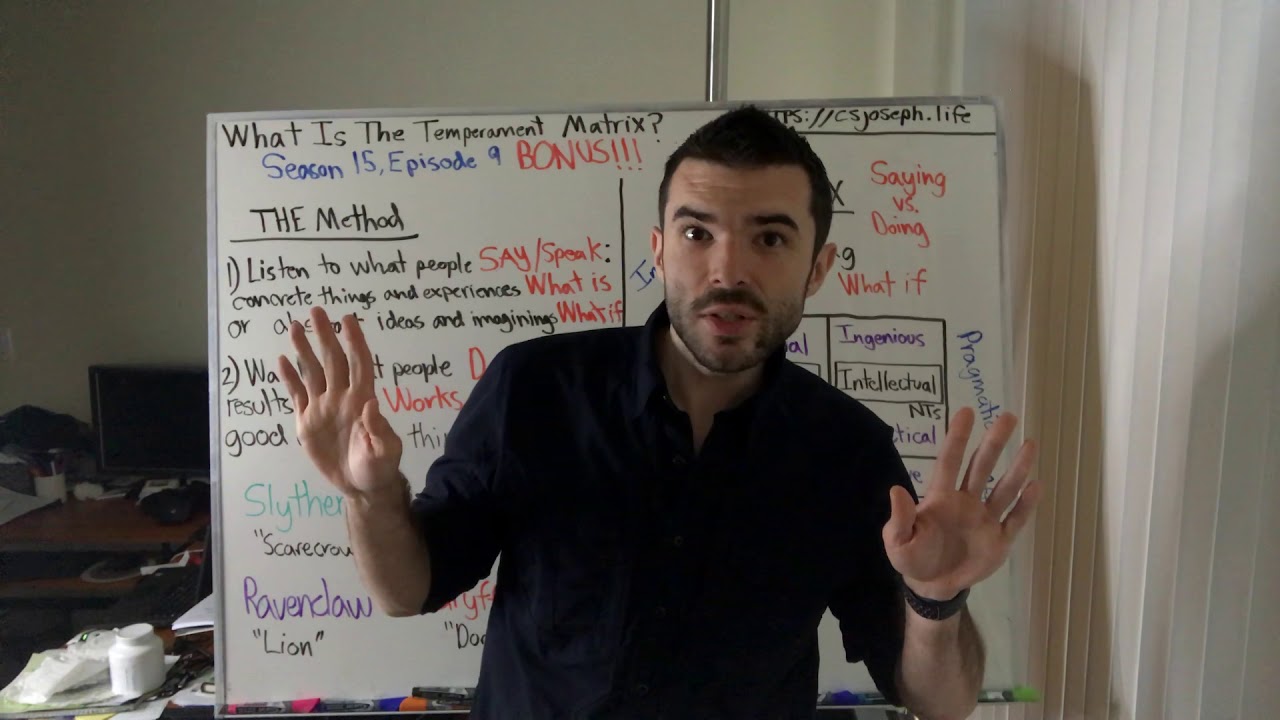
an introduction to the temperaments we're just going to start with one temperament and each subsequent video will just go into another temporary and another temperament until we get to the interaction styles and then I'll introduce the interaction styles and we'll just focus on one of those until they're done and then a final video that will review all of it and I will provide basically a grid on my whiteboard to show how you can utilize these in a times table like times tables like multiplication tables to basically identify your type or identify anyone else's type right
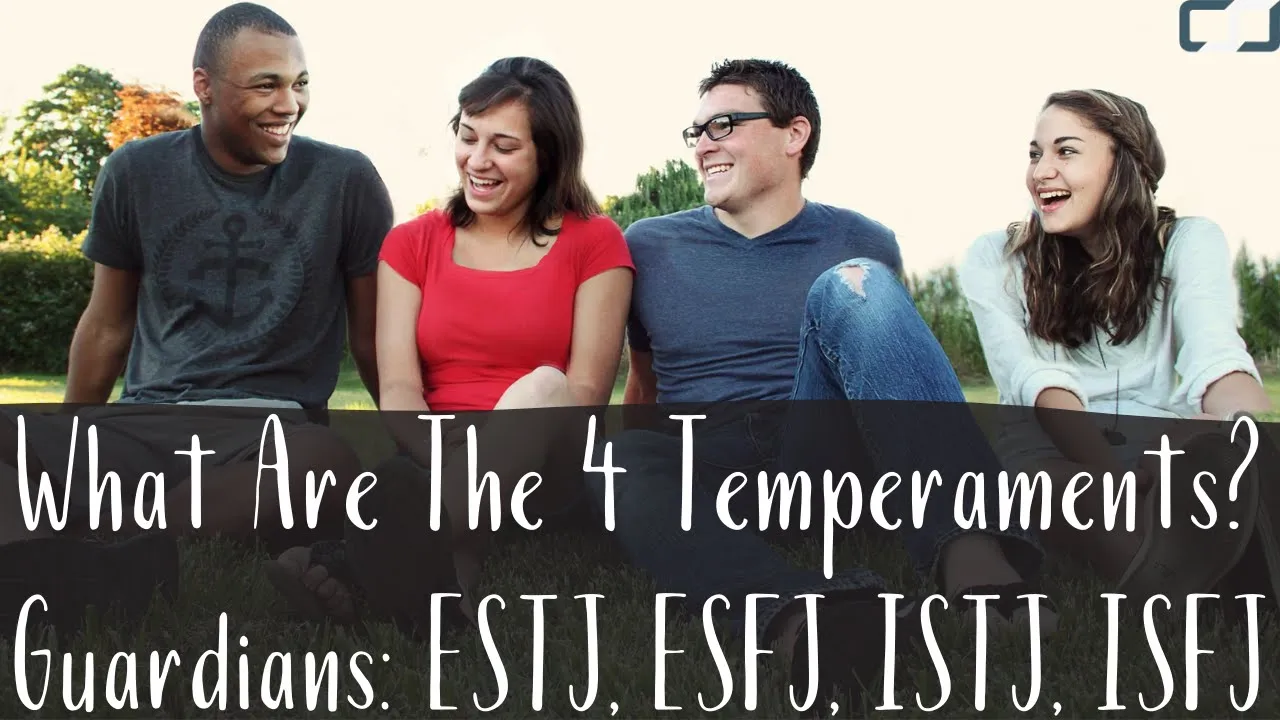
so okay so the first temperate we're gonna talk about are the Guardians according to Plato I like to call them the traditionalists they're the most common of all the types in the world so there's four types that make up the traditionalists and that's the ESTJ the ESF J the is TJ and the is F J also known as the S J's sensing judging types the setting judging types are all about tradition their past focused their duty based that are focused on safety and protecting and they'll even go so far as to justify they're lying and
saying I was lying to protect you you know you see those you see that all the time in like television for some reason that's because American television is very SJ focused right American culture is SJ focused we are in SJ society we are a traditionalist society that's why military people firemen policemen which are usually almost always SJ types are revered above the rest in our nation because this is an SJ focused society it's not like Japan which is an NT focused society and n T's are the thinkers or the intellectuals but we'll get to that
in a few videos but SJ types this is an SJ dominated society and our television is dominated by it every aspect of our culture is dominated by it what's worse is that s J's make up 40% 40% of the world's population they are super common and that is you know compared to the others you know artisans are 30% ok well s J's plus SPS our sensors right at 70% of the population those are sensors and then they look at the intuitive think there's something wrong with the intuitive's right well that's that's that's just not going
to work that's not how it is intuitive czar just rarer right there are a lot rarer than sensors but anyway SJ types there are the kind of people that always you know they always do what they should do it's not about what they want it's all about what they should and they live in the past they're always aware of the intentions of other people either from a childlike point of view where they're like hey I'm just gonna give you what you want or just tell me what you want so I know what I can do
you know that type of thing or what I should do tell me what you want so I know what I should do or they're just afraid of what other intentions people have and and automatically a suit you know it just turns into some kind of like needless paranoia in some cases because again they're focused on safety and protection it's all about safety and protection to these people and they s Jays have to be comfortable it's all about their comfort and they want to receive sensation they're willing to try anything they're really gonna have any experience
out there they'll try any flavor of ice cream let's be honest they'll go into any form of social situation they they have that that Yolo type of point of view of you know I've never done it before so I'm just going to do it to see if I like it and then I could say okay no I did it so an SJ could be convinced to try anything at one point in time and there's not really much you can do about that now sure like once they've tried it if it has a negative experience they're
never going to forget about it that's one of the things about yesterday is they have exam long-term memory access and they can remember everything they're literally that that wife that you've had and you've been married to her for 30 years and she'll bring up something from 26 years ago and you're like really how it like that happened so long ago how is that even remotely relevant to right now you know they do that they'll bring up stuff old pains old her old wounds from decades before to make a point in the present right because they
don't remember everything because they remember everything and they had this long-term memory access they're all about loyalty loyalty and honor means everything SJ that's why they make up the majority of the people who are in the military or who are on the police force or who are firemen you know those basic SJ oriented career paths because they're all about protecting people protecting the United States of America protecting the locale from fires protecting people from crime to serve to serve and protect that that police slogan is everything that is an SJ it is dominated by s
J's and in fact s J's are the little kids that are constantly telling everyone I'm gonna be a fireman when I grow up I'm gonna be that policeman when I grow up you know and and that's why it's become this cultural you know tradition where we ask little kids hey you know what are you gonna be when you grow up that came from the fact that s J's would always be telling everyone that they wanted to be a fireman or policeman and they make up the majority for their temperament on the planet because there's 40%
of the population in our s J's so because of that they have dominance they have you know and our society especially American society and in fact most first world society is basically you know biased in favor of the S J's and if you're not Nesta you're probably weird or there's something wrong with you and everyone's trying to make to become an S J or be like them and in some cases and some really bad cases if you're not like an SJ you're gonna be put on ritalin or you're gonna be diagnosed with a DD ADHD
or you be diagnosed with autism because you're not like everybody else because they make up the majority right so those are some cultural problems that come because we are in an SJ dominant society right but again that's what this temperament is all about past focus they are always living in the past they don't really live in the moment they can but it's a secondary function to them primarily they live in the past that's about what they're experiencing all about what they are experiencing and the experiences that they can get they want to receive sensation SJ
types like specifically in the bedroom like sexually they want to receive sensation which means they have no problem being on the bottom being on the top is a very secondary thing to them imagine an SJ man with an SP woman the SP woman would be on tight on top primarily where he would be on top secondarily because he's more focused on receiving sensation she's more focused on giving sensation right because that's what SPS are all about the artisans so so their past focused their duty base they do what they should they don't make decisions about
what they want never ask an SJ what they want that's a bad idea you only tell an SJ what they should do hey you should do this and then you say well you should do this because I saw someone else doing and it worked out from them you know because I saw someone else did it I want to do it so you should do it with me right that's how that conversation that's a very extroverted sensing and I approach to introverted sensing a expert intuition approach you know because the SE user is trying to give
the si user s J's are all si users to have that experience you know again they're all about tradition if you don't have traditions or if they don't have or if you're not supporting their traditions they're they're just gonna hate you they're all they're very regular people they like to play it safe they think they're very intelligent in their investing if they're playing it safe and not taking much risks and then they judge you for being you know taking too much risk SJS can be very risk-averse and then they judge other people who are not
risk as risk adverse as they are which is kind of really sad let's be honest so but yeah that is the first temperament s J types estjs es f JS is TJ's is f J's some pretty quick so pretty slow they go at their own pace you know very control oriented versus very movement oriented but there's still s J's past focus Duty based protectors safety oriented and and it's just and they make up the majority so it's very frustrating for me because I'm an intuitive right and they look at me like I'm the weirdest thing
they've ever seen of course my type makes up less than 3% of the population whereas like an is F J is like 7 and 9 percent in some cases which s J's just look at me and they like wow you're weird or wow you don't belong here or wow there's something off with that one wow he's mental or you know just insert label after label because again everyone is like them they know that they're like everybody else they're the ones that can easily fit into any situation because they make up the majority and our society
is structured around them completely around them so what are you gonna do right so the only thing an intuitive is left to do is to try to navigate that territory and pretend to be an e an s J or even in some cases an S P just to be able to cope with the fact that we're in an s J society right so and don't forget like there's every society in the planet has some kind of archetypal bias towards it not every society is an SJ society some of them are SP society it's like there's
a lot of societies or Nations in Africa they're very SP oriented Japan is very NT oriented you know so like so being SP oriented means you're an artisan oriented or NT oriented means you're an intellectually oriented there's also some nations that are nf oriented which is idealist they're very idealistic right which means they sometimes value progressivism really really high with how they structure their a nation in their laws etc so it's very interesting to see the temperaments you know it certainly affects the micro level but it also affects the macro level as well and all
of these different archetypal biases are present and we need to be aware of it so so yeah that's the first temperament I'm probably doing another video in the very near future about the next temperament which is the artisans so if you found this video educational helpful or assist you in any way please I leave a like and subscribe if you have any questions leave a comment and I will go out of my way to answer your question and yeah so thanks for watching I'll talk to you later