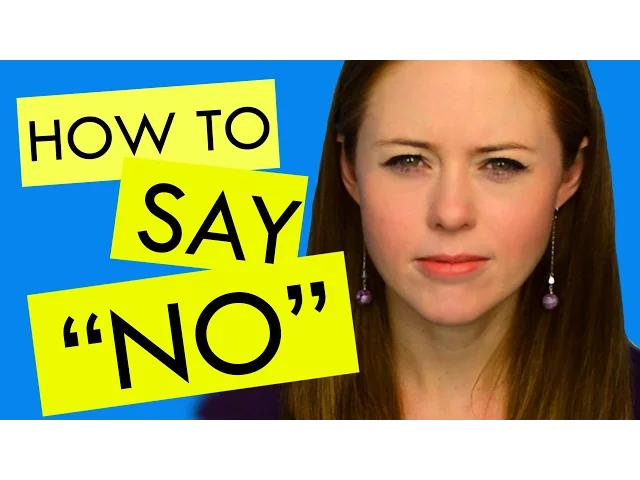
Hello brains! If you're anything like me, you have a hard time saying no. In fact, you probably say yes to just about everything.
[intro music] As strange a concept as this seems to most of us with ADHD, Our time, money, attention, and energy are all resources, and they're limited. There are only so many hours in a day, so many dollars in our bank account, and we only have so much energy to burn. Anything we take on draws from at least one of these resources, which means, if we say yes to everything, we're going to end up broke, exhausted, and overwhelmed.
Chances are, you've experienced this but you still have trouble saying no. It's not easy. Part of the reason we have trouble saying "no" is everything interests us.
We love a challenge, and it's hard to turn down a new project or a great opportunity. Another reason? We want people to like us and we're afraid saying no means disappointing them or hurting their feelings.
One way to deal with both of these is to set some boundaries: guidelines, rules or limits that we set for ourselves to help us know when to say no, and help others know when we will. That way, it's not personal! We'd love to start a new project so absolutely we can.
As soon as we finish the one we're working on. We would love to lend them money but we've decided not to lend money to or borrow money from friends because it makes things weird. The first time you do this it might feel super weird, selfish, and even a little embarrassing.
If people aren't used to you setting boundaries they might even get angry that you're not giving them the answer they want. But just like you're supposed to put on your own oxygen mask before helping the people around you so you don't pass out, you absolutely have the right and even the responsibility to take care of yourself first so that you could help others without passing out. If you're still not convinced remember this: Anything you give your time and attention to is time and attention that you can't give to something else.
So before you say yes to something you that you know will over-commit you try to think about the things you're going to have to say "no" to. How do you figure out how to set your boundaries? A good place to start is to get realistic about how much time, money, and energy you actually have free to spend.
And then pay attention to how your body feels when somebody asks something of you. That includes yourself. If someone asks something of you and you feel anxious that may be crossing a boundary.
If you want to buy something but you feel guilty about it that may be a good sign that you need a boundary there. Of course, there are healthy boundaries and there are unhealthy boundaries. Healthy boundaries are guidelines you set for yourself and then follow.
Unhealthy boundaries are walls you put up to keep other people out, boundaries you let people negotiate with, and boundaries you try to put on other people. Healthy boundary: I can relax but I have to go back to work in half an hour. Unhealthy boundary: I never get to relax.
Healthy boundary: I don't lend money to friends. Unhealthy boundary: I don't lend money to friends unless they bully me into it. Healthy boundary: If you yell at me I will discontinue this conversation until you are calm.
Unhealthy boundary: You're not allowed to yell. Basically, you should feel safe and comfortable without being walled off from the rest of the world or trying to control somebody else's behavior. And you shouldn't have to explain your boundaries.
In fact, the more you do the more people tend to feel like they're up for negotiation. Full disclaimer: People who don't have boundaries may not be happy about yours. That's OK.
They don't have to be. Remember that them being upset is about them not getting what they want not you not giving it to them. And most of the time you're not the only one who can.
Even if you are it helps to understand that sometimes over-giving to someone actually hurts them rather than helps them because it keeps them from growing and developing on their own. Whatever you do once you set a boundary it's important not to let another person's behavior change it. Otherwise you're teaching them and yourself not to respect your boundaries in the future.
Side note: There may be some cases in which this is difficult or even dangerous, in which case make sure you have a good support system that can help you through it. OK. Time to set boundaries.
Step one: Get realistic about your resources and how you feel. I don't have a lot of extra time lately because I've taken on this show in addition to everything else I'm already trying to do in life so time and energy are both kinda low at the moment. Step two: Establish a boundary that can help.
I don't work on the show or respond to messages on Mondays Step three: Communicate that boundary to those who're affected by it. Check Step four, and this is the hardest: Resist the urge to explain or apologize or offer something in return. Remember that it's OK to ask for what you need.
Step five: Wait for who ever's affected by the boundary to be upset, or disappointed, or supportive and understand that they're entitled to their feelings but they're not entitled to make you change your boundaries. Step six: Enjoy your reclaimed resource. Once you have healthy boundaries in place not only does it help keep you from feeling overwhelmed, it improves your self-esteem and helps others as well because now they know what to expect from you and what they'll have to figure out themselves.
It also gives them permission to establish their own boundaries. This actually improves relationships over time and allows everyone to feel respected. That's it for this week.
Leave a boundary you'd like to set in the comments below and, if you like what I do and you want to learn more ADHD tips and tricks, like my page on Facebook, follow me on Twitter, and Subscribe. Bye brains!