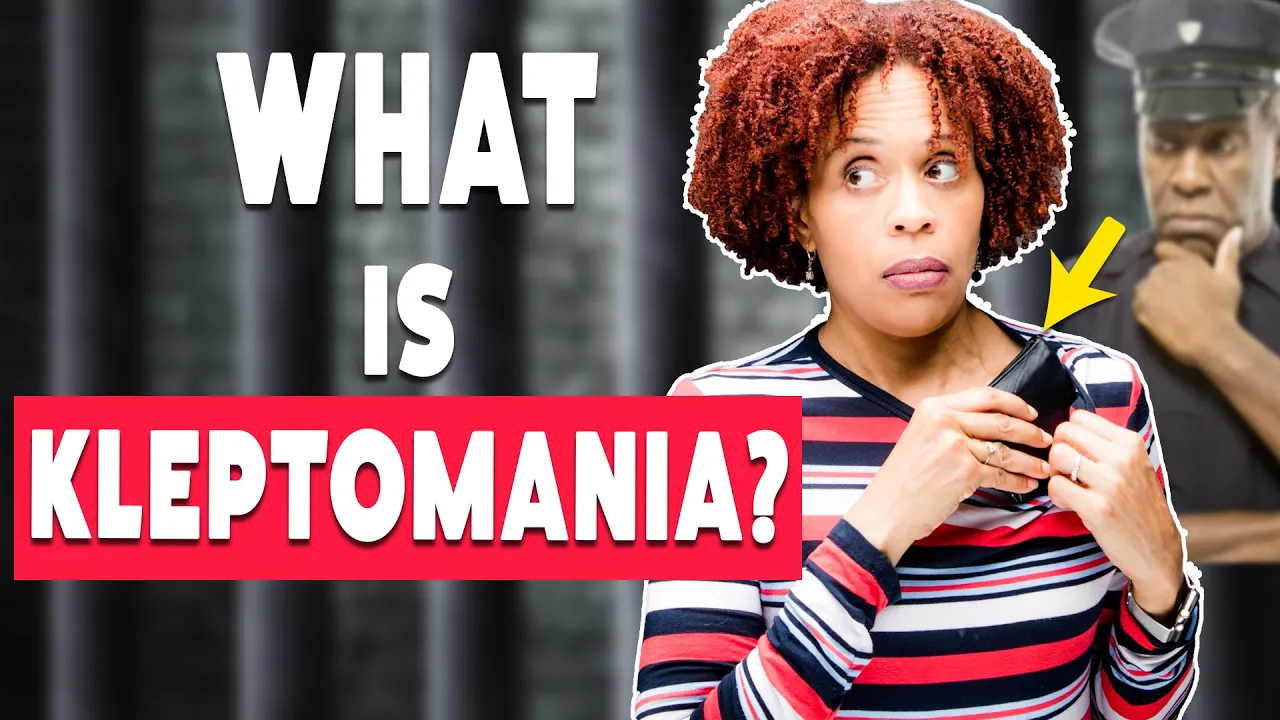
Hi, I'm Dr Tracey Marks, a psychiatrist and I make mental health education videos. Today, I'm answering a viewer question about kleptomania. Patrice asks, "Dr Marks, can you please make a video on kleptomania.
"My husband just found out "I've been taking things for years "and he said he feels like he's married "to a criminal. "He doesn't understand why I take things "when we have the money to buy them. "He thinks I'm lying when I say I can't help it.
"He makes me feel like a disgusting person. " Thanks Patrice for your question. And I'm sorry this condition leaves you feeling this way about yourself.
Kleptomania is an impulse control disorder. Let's look at how it's defined using the Diagnostic and Statistical Manual of Mental Disorders Fifth Edition. Here's the criteria.
There are five things and you need all five. Recurrent failure to resist impulses to steal objects that are not needed for personal use or for their monetary value. This is one of the main things that distinguishes it from ordinary stealing or shoplifting.
Shoplifting is usually planned or it can be impulsive, but the items are taken for some benefit to the person like they need them, or a teenager may do it to be part of a group. But with kleptomania, it's like mindless acquisition of objects. The second thing is an increasing sense of tension immediately before committing the theft.
And this is a common characteristic of the impulse control behaviors and the compulsive disorders like obsessive compulsive disorder. You can feel very tense just before taking the object or performing the compulsion in the case of OCD. And then you experience number three, which is, pleasure, gratification or relief at the time of committing the theft.
So it's like this tension builds up and you have to take the item. And the act of taking the item releases the tension. Number four is the stealing is not committed to express anger or vengeance and is not in response to a delusion or hallucination.
And this goes back to the mindless taking. There's usually not a motivation behind it. Number five, the stealing is not better explained by a conduct disorder, a manic episode or antisocial personality disorder.
And this brings me to a point that I wanna make about this and that even though it has mania in the name, it's not related to bipolar disorder at all. It's not something that people do because they're in a manic state. And there are other disorders that have mania in the name like pyromania, which is compulsive fire setting.
And trichotillomania, which is compulsive hair-pulling. Another couple of points that Patrice touches on in her question is because the person often takes small objects as opposed to filling up a backpack with stuff, they can avoid detection and the behavior can go unnoticed for a long time. Typically, they won't admit it to anyone, even people close to them.
So in Patrice's case, she was married for what sounds like years before her husband realized she had been taking these things. Another thing people will do is return the items or give them away. And there's usually a lot of remorse or self-loathing associated with taking the items afterwards that leaves people to wanna get rid of them.
Patrice even said in her question that the things that her husbands said makes her feel like a disgusting person. Well, she probably already felt that way anyway about herself and his comments just made it even worse. So in response to this feeling bad about taking these items, people may anonymously return them or give them a way to people who can use them.
This disorder isn't studied much because it's usually not that common in the general population and people don't seek help usually unless they're faced with negative consequences like a spouse threatening to leave or facing legal troubles. This disorder usually starts in the teenage years to early adulthood. Because it's not studied much, we don't have treatment protocols for it.
Medication may help somewhat and it's usually the mood stabilizers that we use to treat other impulse control problems. Some specialized cognitive behavior therapy may also be helpful. If the person develops other problems like depression or anxiety, the treatment that they get for the other problem may also help their kleptomania.
It is the kind of condition that can come and go over time and people can have several episodes, then have long periods of remission, where they aren't very active. So that's kleptomania. Thanks for watching.
I'll see you next time.