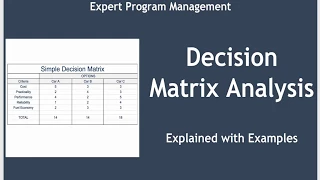
in today's video we're going to talk about the weighted scoring decision matrix when to use it and how to create a weighted scoring model what's up everybody Hellena here from air focus the product management tool that enables you to confidently prioritize what to work on next build and share clear roadmaps and collaborate on strategy this is our second episode in our video series on prioritization frameworks so if you haven't seen the first one yet on rice scoring you can check that out by clicking on the link in the description box below now let's get into
today's topic which is weighted scoring there are two main types of decision matrices weighted and unweighted the weighted decision matrix assumes all criteria have the same importance while the weighted one applies different ways the weighted scoring decision matrix is a powerful quantitative technique it evaluates a set of choices such as ideas or projects against a set of criteria you need to take into account to make things a little bit easier let's use a simpler example weighted scoring of tests a teacher will place more importance on the essay portion of an exam than in a multiple-choice
section so let's say that there's an essay part of the exam that accounts for 40% of the final score while the remaining nine multiple choice questions account for the remaining 60% similar to that example a company might want to assign different weights to projects that have bigger business value or will greatly impact the user experience now that we have a basic understanding of what weighted scoring is let's dive in till when you should use a weighted scoring decision matrix and how the weighted decision matrix is particularly useful specifically when you have multiple features projects and
campaigns to work on or many decision criteria to consider with varying or similar levels of importance by extensively evaluating your choices in quantifying the process you'll be able to greatly reduce and in many cases remove emotion and guesswork from the decision process next let's talk about how you can create a weighted scoring decision matrix start by listing out all the decision choices in rows don't forget any relevant choices since these rows will form the foundation of your decision matrix for an example let's use a videoconference app our decision choices are creating a Google Calendar integration
a new onboarding flow and a slack but now that we've listed our choices let's determine the influencing criteria go ahead and brainstorm what criteria will effect those decisions this could be things like strategic fit revenue increase costs project hours and risk of failure for example sometimes deciding whether to add some criteria can be a bit of a trade off having fewer criteria makes the prioritization process easier and less time-consuming while leaving some criteria out makes your model completely blind for some type of impact in our example we'll use the following three criteria business value costs
and risk and we're going to list them as columns now that you've listed your choices in the influencing criteria we can move on to waiving the criteria establish a clear and consistent rating scale for each one for example we can use the 1 to 5 scale for our example we're rating the business value criteria of 5 costs will be rated as a 2 and risk will be rated as a 3 similarly to how the SI accounted for a higher percentage of the tests in our first example we're placing much more value in the business value
of our ideas than in the cost or the risk we can now move on to rating each choice our project for each criteria while using a defined rating system which in our case is 1 through 5 rate each criteria individually for example if you think your mobile app has tremendous business value give it a 5 keep in mind the values for each choice don't need to be different for each of these values you have to make sure that the higher value represents more preferable option for example a high ROI should lead to a high business
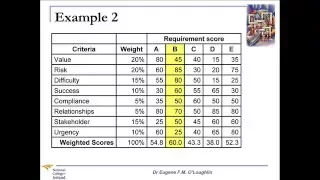
value score because a great ROI is beneficial to your business on the flip side high development cost should result in a low cost value because high costs are negative now that we have the criteria in the ratings for each project we can calculate the weighted scores multiply each of the choice ratings by their corresponding weight and then sum up each of the choices and compare the total scores you can now prioritize the ideas and projects that have the highest scores in our example the total score clearly favors the google calendar integration so that is the
option we'll prioritize and there you have it a step by step guide for how to create a weighted decision matrix if you don't want to create a decision matrix from scratch feel free to try air focus air folks allows you to combine different value types such as currency our project hours and what's more it enables you to visually map out your priorities on a chart and transform your priorities into an actionable roadmap at the click of a button also if you want to learn more about weighted scoring and other amazing prioritization frameworks you can check
out our ebook on mastering prioritization the links to air focus in the e-book are in the description box below if you enjoy this video let us know in the comments section and make sure to subscribe so that you can be notified of our new actionable guides and tutorials and of course until next time happy planning [Music]