Dave or Professor Snowden welcome to the decision-making Studio podcast it's a real pleasure and honor to to have you on the show and I'm really looking forward to this yeah and greetings from Manchester where just for once it's sunny all right Fabulous As uh just a way of introducing you and your work so I I we were talking a bit before I I've come across your work far far too late in my career I I think I would have made Some career changes if I had read your piece in the Harvard Business Review which is
where I first came across your work if I read that earlier I think my professional life would be would be perhaps more interesting but anyway we're we're here but imagine my some of my listeners will know who you are others may not it would be that would be a really good place to start for you just to give a little bit of some background around you your work and and This this Canan framework if I pronounce that correctly what it is and where where it comes from I think that'd be a really good place to
start okay so there's a general name for what we do within the company and I set it up 20 years ago now when I left IBM although the initial work was actually during my seven years with IBM and then three or four years before that yeah in data scienes where I was strategy so the general name for what we do is called Naturalizing sens making and sens making with a hyphen so we Define sense making is how do you make sense of the world so that you can act in it and with that comes a
key concept of sufficiency you never know all that you would like to know in order to make a decision but what type of decision can you make based on what you do know which is one of the key things canvin does naturalizing that comes from philosophy it means to base what you do in the Natural Sciences so Basically our approach to Method development is we spend four or five years researching the field that means reading in physics biology anthropology philosophy whatever and then there's a point where everything sort of comes together I anybody from theoretical
physics you know it it's the point where the mass looks beautiful and then we move into the experimental stage and then when it gets boring when you hand it over to the engineers so that's our Approach what we don't do is go and study 10 cases derive a general model and then go and sell an industrial recipe based on that I think that's criminal and I think people should stop doing it so canvan came out of that process toally the history of it it started off as a response to Max bro's ipace and braso was
a mentor of mine great personal friend as well and he looked at abstraction against codification against diffusion So if something is high abstraction High codification it will diffuse very quickly but it's then stable but the Innovation comes when things are low abstraction low low low codification because then they adapt quickly and the example I normally use to illustrate the extreme is the difference between a London taxi driver and a map user a London taxi driver if you don't know it goes through two and a half years of training in which they drive around the Streets
of London until they know the name of every name and the exam is to be be given two points in London and you have to describe the rout out and the route back from memory yeah and it has a 40% pass rate over multiple attempts and interestingly London taxi driers hypoc campus is enlarged compared with other human beings which is why it takes two and a half years because the body has to change itself physically to hold that level of knowledge that's going to be Really important Downstream by the way we that was one of
the first cases where we realized most human cognition is body based or social based not cognitive based and that breaks a lot of current methods um and the Other Extreme the map user and the difference is the map user takes a lot of time to use boy to go through observe Orient take decide act whereas the taxi driver is do it intuitively so that for me was important Max and I develop stuff based on that And the initial canian framework was actually a cross which looked at the difference between informal networks and formal communities and
explicit knowledge and tasset knowledge that was its early stage development and that was published in a book and various other things and then the five domain version happened one day on a flip chart at Aston University I never understand why academics refuse to teach it's when You're teaching you really get good ideas and new new Frameworks emerge and then that got stabilized you know way back at the turn of the century and then gradually over the next 20 years it evolved i' I've run through it in the three stages of the way we presented because
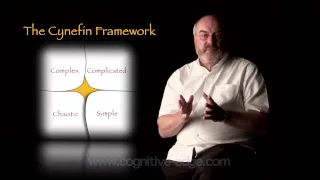
that makes s that so great the fundamental version is called the three plus one version so that talks about three three major systems ordered systems complex systems And chaotic systems and if you look in physics if I added superconductors and plasma that would be the five states of nature right so I'm taking three and that allows me to use a metaphor which is solid liquid and gas so if something is solid molecular bonds are very tight it's predictable it's stable I know what I can do with it if it becomes liquid I can contain it
but it's difficult to contain and if it becomes gas it's almost impossible to contain and that Carries it with it the can't the the phase shift metaphor so it's latent heat right which most people remember when you explain it but they forget the name so if I heat water to 100° it doesn't become steam till I put more energy in so the fundamental three domains of can order complex and chaos and it's a phase shift between them so if I make something complex I release energy like heat is released when when gas become solid in
the environment yeah sorry Water becomes solid in the clouds and if I want to make something formal constrained it's going to cost a lot of energy and then the final principle on that is the triple point in physics in which it's a point where the it's AC probable it's a balance between temperature and pressure where it's equ probable whether something would become solid liquid or gas and that's the Central and actually the most critical domain of canian which people often Forget which is the atic domain and apara is a common use in Greek it means
an unanswerable question it means you ask a question and you can only answer it if you think differently about the problem problem and that's a really important Concept in Kev so the basic framework for canevin is order complex chaotic solid liquid and gas with the aaric domain in the middle and if you over constrain something you create something to Ordered then it will collapse into chaos so that the phase shift there is a catastrophic failure between Order and Chaos right so that's level one often you don't need to go beyond that okay level two you
break order into two yeah clear and complicated and that's more of artificial decision it's kind of like it's a spectrum it's not a phase ship and the distinction is in clear it's like everybody in the UK drives on the left everybody in Germany drives on the Right it's best practice we all know what we should do whereas complicated experts will know what to do if it's within the bounds of their expertise so that's an extra level and that's the one most people are most familiar with that's the five main F of cani okay and then
you can add liminality which is the more sophisticated version which basically says there are things which are complex transition into to be complicated Yeah you can use chaos as a temporary space because it's follows a gausian distribution so you can use that for distributive sense making and then that also creates two other areas it divides the atic into atic which is good and confused which is bad and it creates this really interesting linal area and complicated where the experts disagree yeah so we' got those three levels and you can build increasing and I think one
of the points about Frameworks is you Should get them instantly and then you should learn more as you learn them more because the fourth stage is to add dynamics of movements between the meds and so for people who aren't familiar with it it isn't 2 by two Matrix or a four quadrant thing at all and so just so I'm clear the liminality piece is where you've got these sort of curves or these spaces in between the different domains that it's always had curves Sor I know well I'm I'm Welsh We're Kelts we draw curves we
don't draw straight lines they're bad for the soul right no I think what liminality does is it gets this concept of transition about things Gan is not a static framework the origin of the word Gan in Welsh so it literally translates as habitat but that's not what it means what it means is that you're entangled in many which you don't really understand but influence where you are and you can and You've got to ride that entanglement going forward so Canan is a movement concept and I think that's one of the key principles most of Canan
work is about moving things between domains not classifying things into domains right right I think that's a very very important point and if I'm thinking about a decision maker in an organization and I I think the vast majority of people who are listening to this work in organizations of of some in Of some persuasion and have decision-making responsibilities that ordered piece we we it what I find very useful about the framework is that so many problems and so many processes and things in most organizations most people that are listening to this the assumption is that
somehow it falls in one of these ordered these two ordered parts right that there's a process there's an answer there's some sort of right answer either I've got it or I call an expert and maybe we could talk a little bit about that but then start to talk about the complex what is it what is complex mean I think there's two extremes you see so one is the everything is ordered and that's the business process re-engineering what Gary Klein calls sex stigma yeah which I think is a lovely name for it's actually ironically not tailor
ISM if if you actually read Taylor he accepted complexity people When they criticize taylorism in scientific management are generally criticizing business process re-engineering and systems Dynamics so that's a mistake people make so yeah so fundamentally you've got that extreme then at the Other Extreme you've got people like Ralph Stacy who say everything is complex and everything is about perception now canvan actually comes from a materialist and a realist background in philosophy that's new Materialism not conventional materialism basically saying reality exists right so some things are complex and some things are ordered and sometimes our knowledge
is not aligned with that or our perception is not aligned with that so a lot of our methods are about increasing alignment thereby increasing friction between perception knowledge and realities that there's can sits between the two and I think one of the reasons it was so successful is it recognized The value of order it said order is important if you can make things ordered it's valuable so for example in agile software development scrum is a really good transition ition technique between complex and ordered we develop methods and tools to better feed the backlog on scrum
but the whole goal is to shift things from complex to order not to actually keep them in complex because then you can scale now if you have to hold things in complex and this is the New work we're doing on risk which we can talk about later if you want one of the key approaches is one of the ways you know something is complex is there are multiple competing hypotheses about what we should do right this is the heris we give for executives if you got five or six credible groups of people all of whom
sound credible then it's complex and by the way that's what you get as a SE level executive it's you know you get five minutes to make a Decision between five presentations all of which are very sensible and what the hell do you do so one of the key things canavan says in that circumstance don't try and make a decision give everybody a small amount of funny to run a safe to fail experiment but run those experiments in parallel don't run them in sequence because if you run them in sequence you get a hathorn effect the
first one will always succeed you want to run them in parallel because they'll Change the What's called the substrate or the environment in which you're working and then Solutions will become more obvious so you move and this is by the way massive cost reduction risk reduction if it's ordered let the experts do it if it's complex gather the hypotheses run small experiments around each hypothesis see what changes so that reduces your time and energy and everything else if you don't think you've got enough hypothesis well that's Where you use the Lial domain of chaos so
for example we can present a situation to the whole of your Workforce get the whole of your Workforce to interpret it and then we can identify common patterns of interpretation but we can also find outliers people who are seeing the situation radically differently and that's where you may need to go because that's a new hypothesis which you wouldn't have paid attention to in the EU Field Guide by The way this is all I mean there's two sources on this the EU Field Guide which is based on canev calls this the aptic turn um and then
1 of March every year I update all the methods and Frameworks on the blog so if you go to that you can actually see and you can trace the development of right right okay make sure those things are in the show not first I I just I wanted to just touch on something fairly quickly and then maybe we could dive into the world of Complexity but as a some a former Management Consultant I've have I've have many sins one of which is being a former Management Consultant uh and uh the one of the things that
I despise is this concept of best practice not necessarily because it's wrong but because when I've looked at the Canen framework is was misapplied your why why despise it I don't I despise how okay that's different so I despise how it's I don't want them Randomly right right but if faced with a situation of complexity there's no the the best practice isn't a you you can't follow a flow no it isn't but the key thing is is not to say best practice is wrong it's saying best practice is right to is Right within boundaries that
was one of the big things Canan did it didn't say there is one approach right yeah yeah it didn't say everything has to be ordered per most management Consultants or everything has to be Complex per Staci and people that is it actually has nothing wrong with order yeah the issue is to recognize this this multiplicity of methods and tools and understand the boundaries between them and the best practice good practice division is an important one yeah for example and we talk about exaptive practice in in complexity because that's much more experimental but it's not single
line experimentation it's you've got to experiment in parallel not in s Good okay that that's a very interesting very useful explanation it's best practice that's misapplied I've seen seen that far too often that we have this methodology or this thing and it applies in a variety of contexts and so that's it so that's the ordered chaotic division so one of thing I mean when I work for IBM that gave me load of examples everybody learned to do workarounds so you you didn't challenge the process so everybody found ways to Work around the process right and
that builds NE that builds basically contradiction into the system so when the system fails it fails catastrophically so an over constrained system will all human beings are a lovely Scottish word canny human beings do not fight bureaucracy they find ways to work around the bureaucracy so for example one of the things we do in organizations is to stimulate the formation of informal networks because If we can get everybody within three degrees of separation of everybody else we don't have to worry about the bureaucracy anymore because the informal networks will solve the problems but there'll be
generic across the organization not perverted based on which school did you go to yeah so I think there's there's a lot of pragmatism about this approach comple complexity we sometimes say is the science of common sense or the science Of inherent uncertainty and when people say they're unfamiliar with it I say look how the hell do you think you manage your children and your friends you manage complexity every moment of your life except when you walk through the door of the office so it's not like you haven't got the framework yeah yeah fabulous so one
of the Hecks is competing expert opinions if for whether knowing I'm okay okay okay how would I know that so so you can get competing Expert opinions but that's a Lial area of complicated okay so if you look at what happened during covid you had epidemiologists competing with economists competing with behavioral scientists and we have ritualized methods for that like trioptic to deal with that in complex is different in that people haven't got different approaches they've got different hypotheses and I can agree that your hypothesis is coherent even though I Think you're wrong and that's
really important because if I agree your hypothesis is coherent I don't mind us running an experiment if I'm forced to decide whether something is right or wrong that's much more problematic and so the coherence thing is a really important Concept in philosophy of science at the moment so I can say that evolutionary theory is wrong but coherent whereas young Earth creationism is wrong and incoh so a key thing in Modern management is the ability to ident identify what's a coherent idea without you having to commit to it until you've run an experiment and hence the
parallelism if you just do one experiment you there's a thing called the hathorn effect yes so this comes from so they were doing experimentation in the cable Manufacturing hathor in the upper Hudson Valley and they increased the lighting level and people became more productive now you know these days Particularly in the agile Community they would now publish a book called like the secret to productivity and sell certificates in how to switch on light bulbs yeah then they had some pretention to be real scientists so they lowered the lighting level people became more productive if you
do something novel and pay attention it will nearly always work which is why pilot projects are a disaster because they always work but then they don't scale once you Understand complexity you don't do pilot projects you do small hypothesis based testing and you see what emerges and it's unlikely any of the hypotheses will be right but it will be some conflation of those hypothesis which will okay and that's the definition of an EXA exaptive practice well exaptive practice is where you repurpose something you're already good at and that's the most successful way of managing complexity
so finding something you already know how to do and Use it for something novel is the best way of making progress and we have formal methods for that and actually most of human evolution is exaptive so your cerebellum for example at the base of your brain actually evolved to manipulate muscles in fingers so you could feed better as an ape it exams in humans to manage grammar so grammar is too complicated to have emerged in a linear way it required a nonlinear repurposing and yeah we got microwave Ovens because somebody realized the significance of a
chocolate by melting in their pocket when they were maintaining the magnet of a radio machine so exaptive Innovation is something human and it's also linked with abductive reasoning which is human so computers and AI thinks inductively humans think abductively so abductively works for abstraction and it creates novels Association so we're really good at repurposing things I've lost count of The amount of things I've repurposed to open beer bottles in a hotel late at night when there isn't a pop opening I'm really creative on that and that's what human beings are good at we can find
something and we can use it for something novel and that's a key skill to developing a company in a complex and you would never get that it's kind like a if you want it existing capability New Market you it's there in the Boston matric right right and by the Way if you want to look examples on that IBM dominated Compu because they were the world expert in typewriters and punch card control machines so they didn't have to work out how to do that so they got first mover advantage and that that's the key principle if
you look at the history of industry it's an exactive leap or Industries go under because they don't make it so Kodak invented digital photography but refused to accept it and Went under okay and you could never get that from a a pilot project no you can't because a pilot is novel people respond to novelty and attention yeah and you got your best people on it people are focused on it doesn't work yeah you you need to get closer to real life yeah so that's why we work on the parallelism you know at least seven safe
to fail experiments running in parallel it's say cheaper or we can do more extensive things so for example we put somebody Young and naive together with somebody old in experience together with somebody on The Fast Track management P that's called a trio and then we throw 15 trios at a problem for a month and see what they come up with that's much more successful than having a tiger team or a task force which will entrain very quickly so deliberately creating cognitive diversity and experiential diversity trans trans transgenerational pair is Young Drivers see things Experienc drivers
W and vice versa so we're doing that for example in in software development young brigh Coda with cynical systems architect with user train to talk to it people and it's a lot easier to train users to talk to it people and train it people to understand users so we throw 15 of those trios at a problem they end up with a much better specification to go into the backlog but we've also this is a key principle of complexity we've built informal networks Between users and it people which will actually help the project when it runs
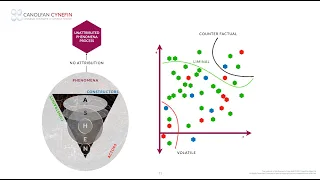
life because we're creating that micro entanglement which is key for human sense making how would a decision maker or how would anyone really um use the the fra framework to set to to establish the context what what are we dealing with here looking at context we use what we call EST mapping so EST mapping gets brainstorms three separate things who are the actors in The system which are often roles not individuals what are the constraints which you're currently facing and then also what are the constructors now Constructors Constructors are things like processes so they're things
which transform things but don't change themselves in the act of transformation so an object is a transformer in software for example yeah you know the input the output and you know and You' got stability in the Things so what we do is we create a triangle between those three for which the collective name is actant by the way okay and then those get mapped onto a framework between the energy cost of change against the time to change and there's a basic principle and this is a really important complexity principle is people if you can't agree
what it is you break it down until you agree if you can't agree where it's placed on the gridge you break it down until you agree So we don't allow descent we we're going to that finally grained level and then you draw three lines on that so there's a line around the upper right so these things the energy cost to change or the time to change is so high they aren't going to change and what's quite interesting is when people get together and do an idealistic where do we want to be in 5 years time
they always end up with stuff which we find isn't counterfactual yeah it's not going to Happen then we create a Lial area where these things are difficult to change but we could if we really wanted to and then a volatile area bottom left these things can change without impetus therefore they're really dangerous so what that does is it Maps the dispositional state of the system and then to drisk projects for example you then move things around you say how could we reduce the energy cost of this to change it how could we increase the energy
cost this won't Change with that direction so what you're doing is you're changing the substrate or the landscape so that the things you want are going to be easier to do and that's now a pre-process before you start a program or a project and it's it's interesting it creates an objective situational assessment because of the breakdown process and it's a major risk reduction device because you first of all identify where the hell you are and where you can go next and the Trouble with systems thinking which has dominated the last three or four decades this
always starts with some idealistic definition and tries to close the gap okay in fact Peter seni makes makes a huge thing about that you know we need to have these challenging objectives and we try and close the gap complexity says to hell with that describe the present identify what you can change and then try and change the substrate so it's easier for things to happen this comes From Constructor Theory and theoretical physics as well Do's work and the principle is whatever has the lowest energy gradient is going to win out anyway so if you don't
change the energy integr in the system it doesn't matter what project you've got it's going to go badly wrong so once you've done that then the actions going to heav okay okay I think I think I I've got a a sense but what I'm wondering about I've listened to you talk about this but if and I I've Been involved in many failed change management initiatives attempts to change a culture an organizational culture now of God if for maybe we could talk a little about some of your work on narratives in in this regard but if
an organization wants to let's be be more Innovative or let's just let's find ways in which we can listen to weak signals warnings from from our employees about things that we should have spotted that in the past have gone they' blown up and We we should have spotted maybe you know the crowd strike thing maybe or something that something will happen in the future that is unanticipated certainly but probably someone knew about I I've been involved in those postmortem exercises and someone knew about X someone's dodging some someone's fudging the numbers on some accounts it
wasn't until after and they will do that my friend Gary Klein created a technique called a premortem which is worth Looking at yes yes yes yeah I think I mean from my point of I would ban the transformation word the minute you're anoun you're going to transform something you're dooming yourself to failure okay all right it's almost inab all right okay and you can't engineer a culture because people will gain the system so yeah I've worked on loads of these things and what you find is the people who use a new language are the people
you should fire because they're Just playing the political game they're not really changing right I mean I I said that once in IBM and got really imp poopular with Sam on it I said anybody who talking about you know the new brand within less than a year is somebody you should fire because they're just doing find and replace on this slet and that was too close to the truth for some people to live with it right right so we would take a different approach um really culture is culture and cultures We often talk about at
udes now rather than culture because culture is a misused word and attitudes matter right so we'll gather day-to-day stories yeah of people's existence one of the questions we use for that is what story would you tell your best friend if they were off a job in your workplace so what we want is richly contextual data or one we've used a lot in military is you're a grandparent your grandchild says they want to join the Arm Forces what story Will you tell me so what we're doing is we're Gathering narrative at a rich level then we
and this is something we originally developed on counterterrorism with the US government because we're looking at how do you identify and this was a large part of my life in in Washington how do you identify when a civilian population is about to go from explicit to tacit to tacit to explicit support of terrorism and after the event you can always see what you should have Spotted but nobody spots it in advance right retrospect that coherence is a wonderful thing so that's where we developed this stuff so basically you if I'm doing a new talk I
can ask you that question what story would you tell best friend and I asked you to index that story and I give you a triangle and one of the triangles for example we use says in this story my manager was altruistic assertive analytical so three positive qualities so I don't know what the right Answer is whereas with an employee engagement serve I always know what answer they want me to receive right what's interesting is that causes less stress because I'm only saying positive things I can't say anything negative right but with six triangles I get
18 data points so I can then draw a landscape map which does literally look like a landscape where Contours close together mean that I've got a strong attitude and Contour far apart means I've got a weak attitude and I can identify clusters so I can literally then click on a cluster and say I want more stories like these and click on another cluster and fewer stories like those this is called a micron nudge so if I say to you how do we create more stories like these and fewer stories like that everybody understands what you're
talking about if you're saying how do I create a more customer Centric environment everybody Says but we already are customer Centric if you say I need more customer stories like these and fuel like those and the system changes yeah so that's really important and if anybody's interested we just made that really easy we've created an absolutely standard approach to this which uses cartoons from gaping void from comic agile so you choose a cartoon Which represents the culture of your company you tell a story about why you chose it which by the way can be Anonymous
you index it and we're now doing that at sub 1,000 just to get people into this so they can get the idea that you can very quickly understand narrative across an organization and you can make change that way so complexity is all about where are you where can you go next there go go to several next steps and then see what happens and if you want a simple way of remembering this I call it the Frozen 2 strategy Okay so if you've ever seen Frozen 2 the movie the Disney movie okay it's a great movie
so go watch it it's it's a brilliant complexity movie all right you have to watch Frozen one as well to understand it but that's okay and in in the middle of Frozen 2 the younger sister without the magic who's the real heroine she's the Ayman person um sings a beautiful song all I can do is do the next right thing and that's in complexity it's called the adjacent Possible from C's work so faced with uncertainty you can see where you can go next but you can't see where you should end up so you start Journeys
with a sense of direction and you literally map the adjacent poses and you step there and you may step to several places and look and see what's more successful that's a safe to F experiment H okay okay so if for example the organization wants to they just want people to to say to say things that that Provide more warnings of stuff of things that they might that's mic level so we're working with one big public transport infrastructure project at the moment for example where we got the end I mean we first did this in the
with the US army in Afghanistan so we said if you keep your Patrol records up to date in narrative form you don't have to write a Patrol report okay now that gave us better data it relieves the stress on soldiers and we could look at that data Compared with traditional military metadata in real time and that meant we could actually forecast you know IED probability which is a key thing because you save lives if you do that so we're now doing that on engineering projects because I I've managed big projects all right several million dollars
and I know that as a project manager I will never report early week signals of failure until I've tried everything to solve it and anybody who tells you they don't is A liar all right what we can do is if we say to Engineers just keep your records up to date continuously throughout the day you don't have to write reports anymore we got better data we can look at patterns in those micro reports which indicate a project is starting to go wrong and we're now using that by the way for weak signal reporting of fraud
safety issues and misogyny and racism and that people can now record something index it we lose the original data so They can't be identified but then we can look at patterns in multiple micro reports to tell you've got a problem emerging in this area now that for safety of fraud or misogyny that's key because it allows Executives to intervene before it becomes an issue and that's key so that was again came from the counterterrorism if you know the civilian population of living this well nobody trusts the police anymore you want to know early enough that
you can Do something before you get a catastrophic failure yeah because once you get a c catastrophic failure it will take you a decade or so to recover I mean I remember I was working in Northern Ireland on peace and Reconciliation in the 70s all right was when I was going to be a Jesuit and I was walking down the Falls Road in Belfast and the Protestant police picked me up and asked me which of my legs are they what broken first completely at Random and I said I didn't want my legs broken they heard
my accent and realized I was a Mainland Catholic not an Irish Catholic so threw me out at the Land Rover now if the Provo Commander had come around that night if I'm honest I'd probably join and what You' got is these micro acts which basically trigger people to think differently and actually in that time the Catholic population nobody would go to a police station because they couldn't trust the Police but what you want is to understand that in a way that leaders can take action and leaders will take action if they can see real stories
not if they can see General conclusions so if I go to a group of Executives and say look we pulled all of your staff we got these statistical patterns these are the stories which explain a statistical pattern they'll take action MH if I give them the stories they'll dismiss the stories if I give them the numbers They'll dismiss the numbers but put the two together you're in a really powerful position it's not how things are often diagnosed and done in organizations they just exactly how they used to be okay but remember if you go back
to Taylor and I T leadership with drer and one of the conclusions we both came to is that Scientific Management had more in common with complexity Theory than ether systems thinking because if you go back to Taylorism he assumes management Apprentice models and he assumes that people will have at least a c consider number have lifetime employment so at that point the informal networks are strong and everybody knows everybody else so the system can adapt very quickly what happened with system sying is it reduce everything from a military metaphor which is adaptive to an engineering
metaphor which is non-adaptive and people had shorter life Cycles you had people doing a ba and business studies and MBA joining a big consultancy firm and coming in to manage a company with no experience so I think you know that historically we actually did manage things through informal networks and narrative and we managed Things Early the engineering metaphor which came in in the 80s and 90s destroyed that capability and part of the problem we got with AI is AI is seeking to perpetuate that way of Thinking and actually human beings did not evolve to work
and think in that way we evolved to handle abductive informal networks small groups we're really good collective decision makers in small groups we're really bad decision makers as individuals and I've heard you talk about silos and why it makes no sense to try to break silos and people like to organize in groups and I traced it back once the first person to complain about silos in government is Zeno the Tyrant Of Athens so we've been trying to get rid of these for for centuries and nobody's got rid of them the reason is silos allow you
to work at a level of abstraction and codification appropriate to your expertise so if find at a conference with other people in complexity science is a completely different discussion than they find at a general conference with people who don't understand it so silos are necessary otherwise you're having to reinvent the Wheel every time you do something the big errors in communities of practice is not recognizing different levels of knowledge so silos are important informal networks are the ways you break Silo you don't break silos you network them so if you want a metaphor for this
trees in a forest are connected with symbiotic roots of mushrooms so the tree roots are arbital they're going straight straight lines if you break a route everything Downstream dies the muscle The sorry the mushroom roots are bomic so you can break one and it reforms yeah now interestingly the mushroom Roots will redistribute resources to saplings in a forest in a drought yeah and that's how informal networks work in an organization when I did the postco stuff everybody fell back to their informal networks not the formal system because the informal networks are natural trust Network so
what we're doing for example is to build those networks so my Favorite illustration the Singapore government I do a lot of work with everybody does national service together so they have very dense informal networks in Britain the elite all go to the same limited schools and the same limited universities so the networks aren't dense aren't distributed enough so they're perverted right so what you want to do and the same if you go to a French company everybody went everybody in Senior Management went for the same two or three Grande calls so what we do is
how do you actually create that Network density which means anybody in the organization within two leaps can get access to the managing director and once you got that you can Target HR to achieve that by the way because it's measurable then you got an organization which is resilient and react okay I I want to delve into the world of uncertainty and risk you've been Thinking about it and doing some some work in in the space and many of my followers have worked working in in Risk Management one way shape or form and maybe first of
all how where does uncertainty as a concept where does it sit in either the Canan frame or just in how do you how do you look at it we say complexities are science of inherent uncertainty yes so if you're in a chaotic environment it's random yeah Which actually means you can use it so if you got a random pattern you can use Garian distributions it's called deterministic chaos if things connect it forms aerated distributions so you get the fat tail and that's where you get high levels of uncertainty there's too many variants you can handle
so one of the things we've now done I published this on the blog recently and presented it in cozy two weeks ago in Dublin for the first time so that software Engineers is a risk Matrix so the vertical Dimension sorry do key Concept in complexity is emergence so a lot of people think reductionism is wrong if the environment is complex but reductionism isn't breaking things down you should break things down it's reductionism is assuming that the whole is constituted by the properties of the public so one way you can approach strategy is just to wait
for things to emerge go with the flow wait for Patterns to emerge you need sense networks to stop the patterns early the other way is you try and force emergence so that's where for example what are the hypotheses will run experimental probes to try and force emergent properties so that's my vertical Dimension my horizontal Dimension goes between fine grained interventions on the left and coar grained interventions on the right if you got that picture so top right to that Matrix I'm forcing and Understanding the position I'm doing one big thing that's traditional project that's really
risky yeah bottom left I'm just waiting for things to happen and responding that's also risky because I may miss an opportunity right yeah bottom right I monitor for things happening and I move in with large interventions to try and exploit happens top left that's classic complexity I do multiple hypotheses now what we're actually saying is for an organization This that Matrix the distribution pattern in the center of that Matrix is your risk profile to go to any of the extremes is a bad idea here you need to get the balance right in the middle and
we're working on risk reduction profiles in all of those now that's get that's got a lot of traction very quickly because it basically says portfolio approach not single approach there's nothing wrong in massive interventions but be aware if the market is changing Rapidly that's the most risky strategy if the market is stable it may be the most sensible strategy and again it's this key principle of complexity is context is everything and we we talk about we need shafts not recipe book Ed so what consultancy has done the past three or four decades you and this
has really come from systems Dynamics in the main and some exent cybernetics is to try and create recipes and what we're saying is What you need is chefs who understand the ingredients and then and put them together in different ways we just launched that with hexi for example breaking down methods and Frameworks into their smallest parts so you can recombine from different vendors and again that's the principle a chef can make a meal with whatever you happen to have lying around a recipe book user is lost if you don't have all the right ingredients and
resilient organizations Need more chefs and fewer recipe book users but there's still a role for recipes yes yes okay when I'm sure some of my listeners when you said when you said risk Matrix that has a that has a connotation that's that's a risk Silo thing it has a connotation that's not I don't know if it's necessar it's not positive but you're describing something that's completely we're open to names on this to be honest it may get I mean Kavin was wasn't called canvin until I Well I can tell his later if you want we
may give it a Welsh name but we may just give it another name so that this is this is in this has come out of the theoretical physics it's now with the experimental guys yeah so that's where it is yes and we by the way we always do that open open so everybody can get involved okay if you search for risk Matrix in LinkedIn on you get lots of posts about something that is not that but it's just classic sort of risk heat Map thing that is a um it's if you want a lot of
reaction bash bash the risk Matrix it it usually creates um okay I may put blue or red after Matrix and see what we get from that yeah yeah it just um we and we love our so the classic risk management is um digress a little bit but it's it's very um it's it's all the kindergarten stuff so we love colors so red Amber greens shapes and numbers and animals so Black Swan and things things like that okay I've seen poers with all of those yeah yeah so I I think what you're talking about is something
that is fundamentally well it is certainly there more fundamental principle here what what you see in virtually all systems thinking are the you know systems thinking is systems Dynamics cybernetics soft systems it's and there's a range man I came from a soft systems background originally it just doesn't scale so that's check's work is that People people and this is a this is what I call a North Atlantic phenoma I refuse to call it West because it isn't Western it's North Atlantic so it's northern Europe North America there's an Enlightenment model of decision making so the
assumption is if people have the right training the right competences and the right information they will make the right decision yeah and any failure is a lot of a failure in those components and you see that in the shuttle disaster Reports and everything else and that is fundamentally bad science that's not the way human beings make decisions it's an Enlightenment my myth that's where new materialism comes in so for example a narrative pattern and you can see this if you want to look around the the magga movement in Trump narrative patterns get material reality independently
of the storytellers and people can't escape them and Engineers actually have they're called assemblages yeah Engineers have Their own assemblages their own belief systems and you can't break out of those belief systems it's not a rational process so Delo talks about territorialization and deterritorialization so if you look at estr Ma and I mentioned earlier what we're doing is by breaking things down and down and down we're deterritorializing the space so you can can see things differently we're not telling people to see things differently We're creating a different system in which people do see things differently
and again that's substrate management okay okay I that I in fact if you want a simple urtic is manage the substrate before you even think about doing a project manage the substrate before thinking about doing a project okay yeah because if you do that you may actually change what you're doing right well that's EST mapping they map the energy gradients right and then see and Basically say well look until actually this until this is easier to do old projects are going to fail anyway so we'll have some pre- projects to change the energy gradients right
and again that's that's all about cost reduction risk reduction which is the main focus I mean complexity that's the main thing complexity does is it reduces risk it reduces costs because it use methods and tools authentic to the nature of the system rather than trying to force you Into a straight jacket of order which actually would increase your risk ironically yeah yes yes and this is this is traditional risk M just why I don't do do it anymore is because that it is the straight jacket it is it is that's and it's a it's kind
of that's where our work measure attitudes so for example right if we're looking at risk and safety we present and we use cartoons again for this we present dilemas which whatever you do it's wrong because That's the reality of large project that's the reality of the world yeah do you follow the rules do you get the job done do you make people safe do you not we then gather those stories and from that we can measure attitudes now intervening to change attitudes is a lot lower cost than intervening to manage compliance so on cyber security
for example we can measure people's attitudes to cyber security at scale and that actually is a lot easier Than trying to force compliance system so you manage Risk by managing human attitudes as well as compliance yeah yeah you manage Risk by managing human attitudes I I just want to touch on that a little for example one of the big things is when when I left IBM I had my own computer I all of a sudden got more paranoid about viruses right yeah because I haven't got IBM to back me up if something goes wrong so
my attitude Shifts right so and and just setting people up to click on things they shouldn't click doesn't do something yeah I mean that's I'm not even feel as ethical but actually measuring people's attitudes is also the measurement creates the creates changes the attitude anyway and the key thing in complexity is every intervention is a diagnostic and every diagnostic is an intervention and you need to design accordingly okay so everything you do will change the System okay I've I've heard you talk about this and what you what you mentioned just reminded because I think you're
certainly not saying change change individuals no you can't the whole mental model I mean when people talk about mental models that was a cute Concept in the 80s but we know it's wrong we know most of your decisions are mediated or entrained by the narrative patterns of your communities and by your body the brain Only actually engages when there's an anomaly so if you want people to think about a problem you got to create anomalies which is why conflict is really important if you don't have conflict the system is become homogenized so all this nonsense
about common values common principles respecting everybody's point of view is a way to destroy a company because you lose Variety in the system and when we talk about the difference between Homogeneity and coherent heterogenity so the way I normally explain that is you know I'm Welsh I come from Cardiff that means I support Cardiff rugby yeah we play in blue and black we play at the arms Park we're a highly civilized team if the other side do well we cheer them we never cheat all right we never bribe referees you know we're we're the big
city club right and there's those basts down the road inal We call them Turks right because they hijacked a Turk ship in 19 we're not going to let them forget it right yes they definitely bribe referees it's the only reason why we got a red card against them last time we played they played B they crowded partisan right yeah I hate the buggers until the English arrive and then we're Welsh right and that's coherent it's the ability to be different but be the same in some context and that's a key Principle for organizations to understand
you do not want everybody having the same Mission the same values the same beliefs being orientated in the same way because then you've destroyed ad Ive capacity you want friction in the system or gradients as biologists would call it yeah okay yeah I do have a blue and black scarf somewhere by the way but you can see that we we've seen that in the you know the Euros recently or wherever this this type of of behavior Was it a handball was it not I had a Spanish shirt I had a Spanish shirt for the finals
right right yes I'm sure this little digression now but uh I've been contemplating the v a little bit and we still we still argue right so this this is supposed and maybe it's part of the fun you know V on and off side and it just it doesn't it's too far I think rugby is actually better at that a we got yellow cards which means something so you go Off for 10 minutes yes yeah that would make a big difference all right and the referee still makes a decision but the conversation around the V is
different but there again I mean to be quite honest you can pick up the rules of soccer just by watching it you can't pick up the rules of rugby by watching it right right yeah so and I was a number seven forward the key role of a number seven forward is to work out how the how the hell a referee Is referee in These things time and play to the limits yeah right you and the number 10 are the two do that right and that makes it a more interesting game I mean the other thing
about rugby just to make the point is you can't win or lose based on one goal you know the points reflect the dominance of the side but I say I think we use V properly because the referee it can the referee attention can be called to something it's a ref's decision whether they follow it or not they can Ignore it yeah and they can call in for VR if they want it yeah and we you know there's conversation about putting stuff in rugby balls but to be quite honest it's such a fine art these days
I mean we lost to the Australians recently because the referee didn't spot a all with pass if it hadn't been for that we'd have won right so you know and that and to be honest the financial consequences are huge these days for teams so you do need I think you do need A v equivalent but you need to have a balance of human and machine processing by the way the offside law soer is ridiculous anyway right well the way I sort of look at it is if I can if I can get it an advantage
in the referee can spot or the VR can spot that I've advertently or inadvertently tried to you know get an advantage then fine that's offside but if if it's because half of my toe is slightly ahead of the defender then yeah but yeah you could Put a sensor on and you could give people warning when they're crossing the offside line I mean computers could do that these days so I get a little tweak it's like when I'm walking I'm in the eyew watch tells me whether I'm going off F or not sure yeah and that's
useful because then you're using the V to inform play rather than to and that's more the at that's the attitude yes okay interesting um yeah interesting Digression there I I'm just conscious of of time but perhaps to close out I would I would love to dive into uncertainty a little bit more but I'm not sure we don't don't have we don't have um heaps of time but there was one there was one thing that it just came from your EU Field Guide there's there's a there's another Matrix there that I find interesting where it has
Noble you know a noble noble known and then you've got feasible plausible Unimaginable and there's a there's a piece in there that Serendipity where something is plausible but unknowable they I I'm just just C just wondering if you I updated that in a blog recently human beings actually understand Serendipity we understand beneficial accidents and we're quite good I mean technically in the complex system there's no linear material causality but some of us are starting to think that in human systems say theological causality We can influence events right and I think the issue about human beings
are really good at spotting how to repurpose things but and man we made that point earlier that's yeah we're really good at it and one of the reasons for that is our comes before language in human evolution which is why an emphasis on stem education is actually quite dangerous because what art does is you know whether it's music or painting or whatever it moves you Away from the material world so you see novel connections and that's where human beings Excel and that's something that it and AI can never do the danger is we'll lose the
capacity if we over depend on AI and I had this argument with s poano he wanted to get rid of middle management and I said where the hell do you think Senior Management are going to come from a lot of those routine tasks that AI does you need human beings to do because unless they Do those they won't develop the higher capacity which the AI can never get anyway yeah okay okay interesting there's yeah the there's a there's almost um an argument to say that we need more of like the the the art we need
art and music and and poetry and all these things that yeah but you don't have to get new age fluffy bunny about this all right right we need to I mean there are way we can handle abstraction at scale with high abstraction metadata The key thing is to understand the abstraction all right and then to find ways to engender that I mean it's like and people canuse effect with cause all right so for example we've had loads of people run creativity programs to increase Innovation now the reality is that if you starve people of resource
you put them under pressure of time and you give them a different perspective they will be Innovative and they will be creative so Innovation and creative are Both emerging properties now if that happens long enough that creativity becomes habituated then creativity can generate Innovation but just setting up rooms with children's games and bringing in somebody to teach people how to sing that's not going to make any difference whatsoever that that pass it's what I call New Age fluffy buning we we have we have a canav by the way which has certified New Age bunny fluffy
bunny Slayer on the front of it yeah agree That's a reference to Buffy the vampires sler as well so yes right right I was just I was think thinking more in terms of I mean I heard the acronym instead of stem steam with the a being you know the Arts but um yeah again you need experience my classic example on that is we try and teach things rather than creating processes by which people learn things so when I went up to school at the age of 11 this is a Welsh grammar school all right allowed
to wear long Trousers for the first time which in British Winters was a good thing and I walked up to the front of the class on Friday and I got given a card and it said you support Capital Punisher and I had to speak for something I profoundly disagreed with and the teacher was being naughty because my mother was leading the labor party campaign against Capital punishments at the time so this was deliberate I speak for seven minutes without preparation For something I profoundly disagreed with we did that every week from 11 to 18 that
process meant we read everything because we know what we're going to get hit with it made us hypocritical because arguing of things you don't believe in makes you critical yeah and that was a process and I think that's the thing we forget we forget it's like London taxi drivers you have to drive the Streets of London for three and two and a half years before you can get the knowledge So creating processes by which people develop capability is far more important than trying to teach those capability and that's been a fundamental error of the OD
movement for the last three decades is to assume you can teach emerging properties which you can't emerging properties have to emerge yes okay I think that's a great place to wrap things up was there anything that you wanted to mention that you don't think we got no I've enjoyed this time To okay like why this was this was great before before we go for my for my listeners and your company's the Canan company I know there's lots of things you've guys got going on webinars and things but anything that people want to call out or
how can they best find you and uh we're just launching the quick senses around culture and attitude mapping and attitudes to AI yeah so those are going up and those to sub 1000 and we're going to push more stuff out Like that because the Market's changing to be tool-based all right it's gone from early adopter and we run training courses and the new stuff if you want the new stuff read the blog so search on keywords on the blog you'll find it I write on the blog first and these days I only teach master classes
so I don't take prisoners so if you want to be stretched come on those if you watch conventional training go on the stuff great okay wonderful Dave Professor Snowden thank you very much this was a pleasure um wish you all the best and yes thank you once again