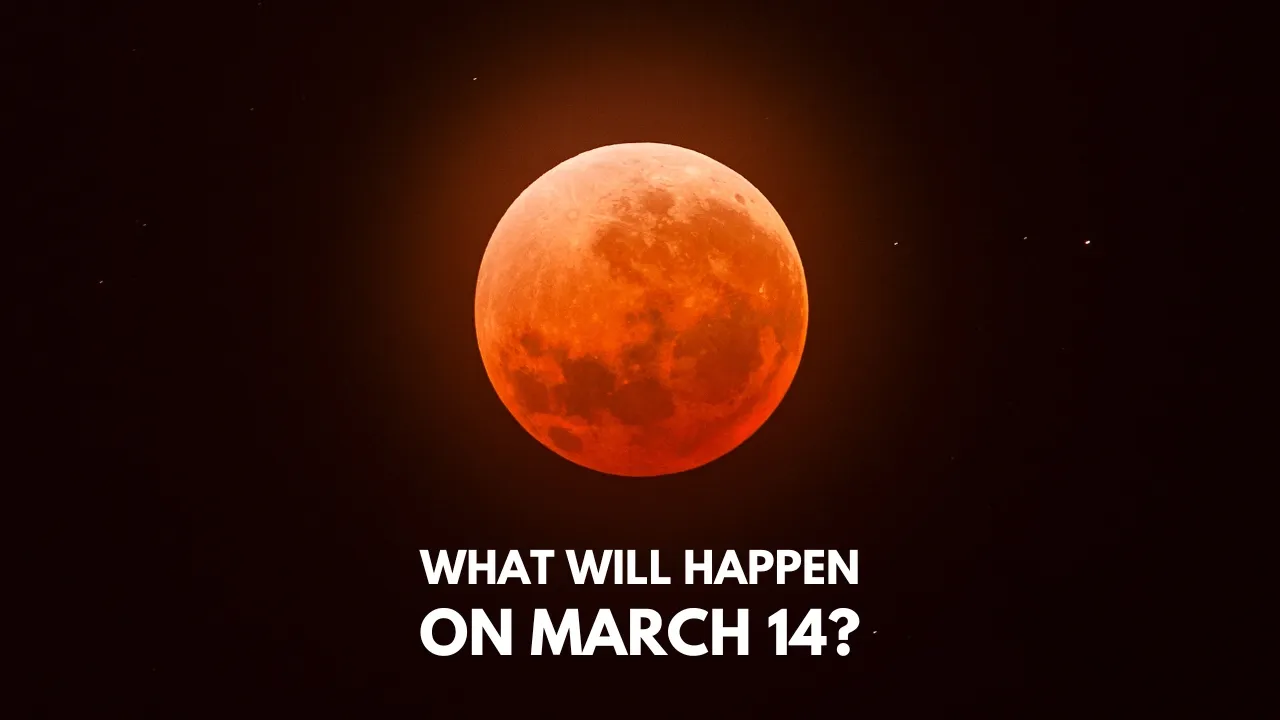
on the night of March 13th through 14th skywatchers across North and South America will be treated to a spectacular Celestial event a total lunar eclipse commonly known as a blood moon during this phenomenon the moon will pass through Earth's Shadow resulting in a mesmerizing red Hue that is captivated observers for centuries this particular eclipse is notable not only for its Vivid coloration but also for its duration with totality lasting approximately 65 minutes the last time North America saw a total lunar eclipse was on November 8th 2022 which was the longest one visible from most of the continent since 1989 a total lunar eclipse is one of the most breathtaking celestial events visible to the naked eye unlike a solar eclipse which requires special glasses anyone with a clear sky can witness a lunar eclipse without any protective gear this event occurs when the Earth moves directly between the Sun and the Moon casting its shadow on the lunar surface but why does the moon turn red what exactly happens on the moon during this event let's explore these questions and more before we begin make sure to subscribe to our channel for regular space updates a total lunar eclipse happens when the moon passes completely into the Earth's umbra the darkest part of its shadow since the moon orbits the earth and the Earth orbits the sun their positions occasionally align in such a way that the Earth blocks direct sunlight from reaching the moon this alignment occurs only during a full moon when the sun earth and moon are in a straight line lunar eclipses don't happen every full moon because the moon's orbit is slightly tilted relative to Earth's orbit around the sun this means that most of the time the moon either passes slightly above or below the Earth's Shadow however when the alignment is just right a total lunar eclipse occurs unlike a solar eclipse which can only be seen from a specific part of the world a lunar eclipse is visible from anywhere on Earth where the Moon is above the Horizon at the time this makes it much easier to witness one of the most fascinating aspects of a total lunar eclipse is the deep red or coppery color the moon takes on often called a Blood Moon this phenomenon occurs due to a process known as raay scattering an atmospheric refraction when sunlight passes through Earth's atmosphere shorter Bluer wavelengths are scattered in all directions just like during sunrise and sunset however the longer wavelengths mainly red and orange are bent by Earth's atmosphere and refracted into the umra this filtered light then illuminates the moon giving it a reddish Hue the exact shade of red varies depending on the amount of dust pollution or volcanic ash in the Earth's atmosphere at the time if there are many particles in the air the moon can appear dark red or even Brown if the atmosphere is clear C the moon might appear bright orange if you were standing on the moon during a total lunar eclipse you would witness an incredible sight instead of seeing a dark sky you would observe a deep red Earth surrounded by a glowing ring of orange and red light this is all the sunrises and sunsets happening at once on Earth projected around its edges the entire event would unfold over several hours with the sun slow disappearing behind the Earth and then emerging again since the Earth is blocking direct sunlight the temperature on the lunar surface would drop dramatically without an atmosphere to retain heat the moon surface can quickly go from extremely hot over 220° F indirect sunlight to bitterly cold 100° fenit or lower in the shadow this drastic shift can create tiny cracks on the lunar surface as rocks expand and contract due to temperature changes according to GMT the upcoming lunar eclipse will occur on March 14th the Pi Day the penumbral Eclipse will begin at 357 a. m. GMT on March 14th or 11:57 p.
m. EDT on March 13th Earth penumbra is the outer part of the Shadow during this phase the moon enters Earth's penumbra causing a subtle dimming that is often difficult to notice with the naked eye the partial eclipse will begin at 109 a. m.
EDT when the moon starts moving into Earth's darker inner Shadow the Umbra at this stage it will appear as if a bite is being taken out of the lunar disc with the shadowed region looking significantly darker the most dramatic phase totality begins at 2:26 a. m. EDT or 626 am GMT at this moment the entire moon is engulfed in Earth's umbra glowing in an eerie copper red Hue due to sunlight refracted through Earth's atmosphere this breathtaking spectacle will last for an impressive 65 minutes until 3:31 a.
m. EDT using binoculars or telescope will enhance the view and for those interested in photographing the event a camera on a tripod with long exposures of several seconds is recommended as the moon begins to emerge from the Umbra the red Hue Fades and the bite effect appears on the opposite side the partial eclipse will conclude at 4:47 a. m.
EDT leaving the moon fully within Earth's penumbra Shadow once again however just like at the beginning this dimming is subtle finally the eclipse will end entirely at 6: a. m. Ed T 10: a.
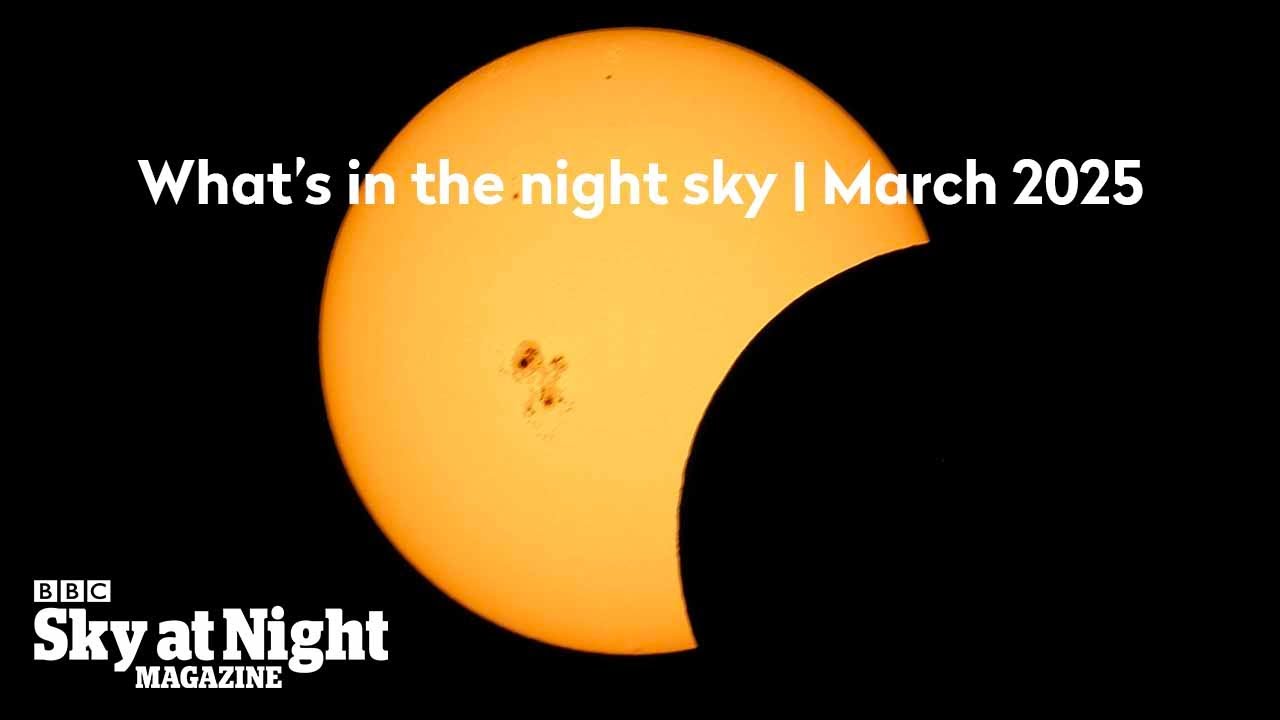
m. GMT bringing this spectacular Celestial show to a close besides the eclipse you can also see two bright planets with the naked eye look towards the west and you will see Jupiter and Mars Jupiter will set about a couple of hours after local midnight when the moon plunges into Earth's umbra Mars in Gemini will set a couple of hours after Jupiter viewers in South America can also glimpse of a few meteors during totality as the gamma norid meteor shower reaches its peak activity it's a weak annual shower that can produce up to 6 meters per hour an eclipse never comes alone it is always followed by another eclipse 2 weeks later following the March 14th total lunar eclipse a partial solar eclipse will occur on March 29th during this event the moon will cover up to 93% of the Sun at its peak the eclipse will last nearly 4 hours starting at 4:51 a. m.
EDT and will be visible from parts of the Americas Western Russia Europe and Africa for those on the other side of the world who missed the March 14th lunar eclipse there's another spectacular opportunity later in the year the third eclipse of 2025 will once again be a total lunar eclipse occurring on September 7th this event will be visible from Asia Russia parts of Africa oana and Europe offering a stunning Celestial display the eclipse will begin at 4:27 p. m.