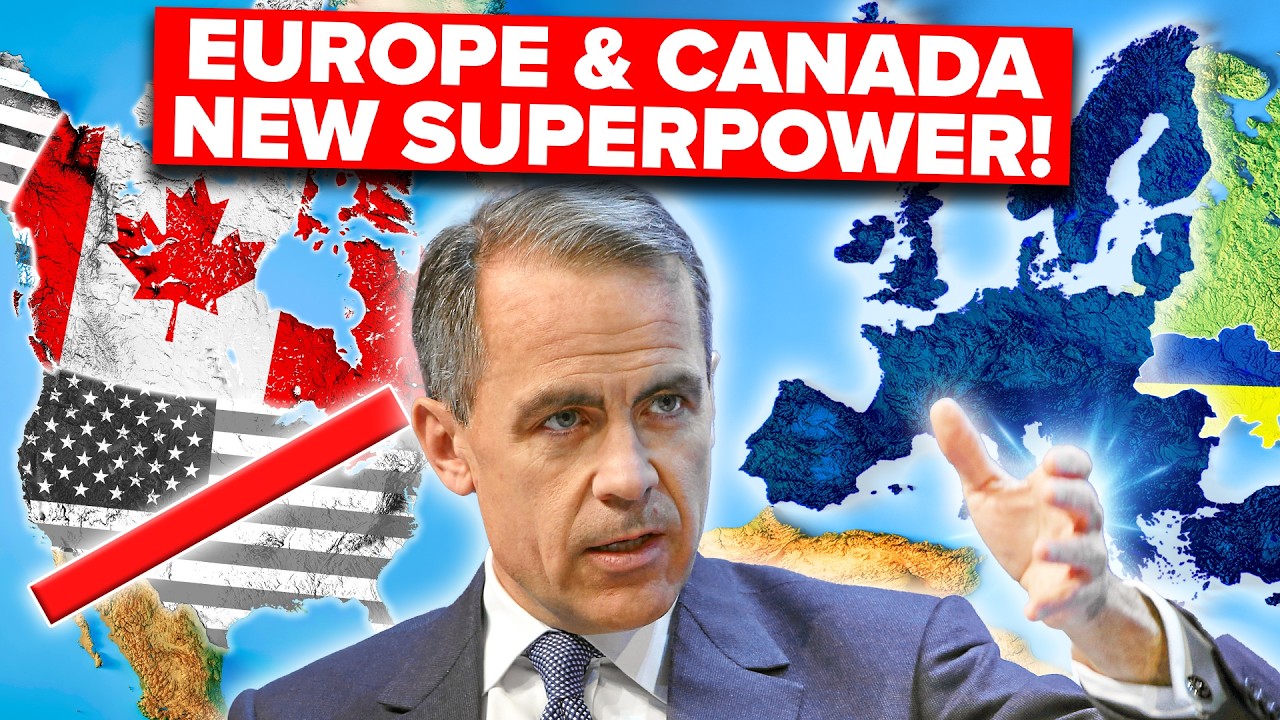
the US and Canada, two massive neighbors. But what if that border wasn't so permanent? What if certain states fed up with Washington's politics or drawn to Canada's stability actually broke away?
Sounds crazy, right? But the truth is, some states already have deep economic, cultural, and even political ties to Canada. Think about it.
What if Vermont embraced its independent streak and left? What if Minnesota's northern charm felt more at home in Canada and Alaska? It's already cut off from the mainland.
Some of these might surprise you, but others the signs are already there. Let's break it down. Number 10, Vermont.
What if an entire state already felt more like Canada than the US? You might think of maple syrup, small towns, and crisp autumn air. But guess what?
That's exactly why Vermont could be the first to say goodbye to America. This state has a long history of independence, once existing as its own republic before joining the Union in 1791. And politically, Vermont leans heavily toward progressive policies, much like its northern neighbor.
But here's where it gets interesting. Some residents already want out. A movement called the Second Vermont Republic has been pushing for secession for years, arguing that the state would be better off on its own.
Add in strong trade ties with Quebec, a shared love for social programs, and an economy built on industries that align with Canada's, and suddenly the idea of Vermont breaking away doesn't seem so far-fetched. Could this be America's first real secession in centuries? Number nine, Maine.
You'd be shocked to know that one US state already depends on Canada for survival. Without its northern neighbor, it would struggle to keep the lights on, literally. That's because Maine imports a huge portion of its electricity from Quebec, and its economy thrives on crossber trade.
In fact, over 3 billion worth of goods flow between Maine and Canada every year. But guess what? Culturally, Maine already feels more Canadian than American with its rugged coastline, tight-knit fishing towns, and French-speaking communities.
It has more in common with New Brunswick than, say, Texas. Even politically, Maine often aligns more with Canada's policies than Washington's. And let's not forget, Maine was once part of Massachusetts until it split off in 1820.
If it could do it once, who's to say it couldn't do it again? Before we move forward, hit that subscribe button. It helps us keep bringing you eyeopening content just like this.
And trust me, you won't want to miss what's coming next. What if a state that prides itself on freedom decided to take it a step further? Live free or die isn't just a catchy slogan.
It's a way of life. New Hampshire has always been fiercely independent with low taxes, a strong libertarian movement, and policies that don't always align with the rest of the US. But what if that independence led it away from America entirely?
Number eight, New Hampshire. What if a state decided it didn't need America anymore? It already resists federal control, fights against high taxes, and values personal freedom above all else.
Sound familiar? That's because New Hampshire is one of the most fiercely independent states in the country. And guess what?
Some of its residents are already talking about secession. This isn't just some wild theory. In 2022, a group of lawmakers actually proposed an amendment to the state constitution that would have put secession on the ballot.
It didn't pass, but the fact that it was even debated in the legislature, that's huge. New Hampshire has always been different. no income tax, no sales tax, and a live free or die mentality that sometimes feels more in line with Canada's decentralized government than Washington's federal oversight.
But here's where it gets even crazier. New Hampshire's economy is already deeply tied to Canada. Over $8 billion worth of trade flows between the two every year, and many businesses in the state rely on Canadian partnerships to survive.
Plus, culturally, New Hampshire has more in common with its northern neighbor than, say, California or Florida. It's a small rural state with a love for the outdoors, winter sports, and a strong regional identity. And don't forget, New Hampshire has been a battleground for political movements before.
The Free State Project, a movement encouraging libertarians to move to New Hampshire and push for limited government, has already made waves. But what if the next step wasn't just resisting federal policies, but leaving the US altogether? It might sound extreme, but in a state where independence is a way of life, anything is possible.
Number seven, Minnesota. You'd be shocked to know that one US state is already so connected to Canada that leaving America might actually make sense. It has deep economic ties, a shared culture, and a population that, believe it or not, sometimes gets mistaken for being Canadian.
That state, Minnesota. Let's break this down. Minnesota shares a nearly 550 mi border with Canada, and its largest trading partner is, yep, you guessed it, Canada.
In 2023 alone, Minnesota exported over $7 billion worth of goods across the border, making Canada a lifeline for the state's economy. But it's not just about money. Minnesota and Canada share a similar lifestyle.
The people friendly, outdoorsy, and known for their thick accents and love of hockey. The weather brutally cold, just like Canada's, and the politics often more aligned with progressive Canadian policies than conservative American ones. And guess what?
There's a history here. Before Minnesota officially became a US state in 1858, parts of it were actually governed by the British and its fur trade industry was heavily tied to Canada. Even today, many motans hold dual citizenship or have close family ties to Canadians just across the border.
But here's where things get interesting. Some experts believe that if the US ever faced political turmoil or economic collapse, Minnesota would be one of the first states to seriously consider alternative options. And with its deep connections to Canada, it wouldn't be surprising if some people started looking north instead of west.
Before we move forward, make sure to hit that subscribe button. It helps us keep bringing you content like this, packed with eye-opening facts and unexpected possibilities. And trust me, you won't want to miss what's coming next.
What if a state realized it was more dependent on a foreign country than its own? Imagine being so economically tied to another nation that breaking away actually made sense. North Dakota is in exactly that position.
But is anyone paying attention? Number six, North Dakota. What if an entire state relied more on a foreign country than its own government?
It sounds ridiculous until you realize North Dakota isn't exactly that situation. This state might seem like a quiet, forgotten part of America, but guess what? Its economy is practically glued to Canada's.
Here's where things get wild. North Dakota exports more goods to Canada than any other country. a staggering $6 billion annually.
And it's not just about trade, energy. Canada supplies a huge portion of the state's power. Agriculture.
North Dakota farmers depend on Canadian buyers to keep their businesses running, even travel. A shocking number of residents routinely cross the border for health care, shopping, and work. In some towns, you're just as likely to see a Canadian license plate as an American one.
But let's talk about politics. North Dakota's small government, pro business mindset, and close trade ties actually align more with Canada's western provinces, especially Alberta, than Washington, DC. And here's a crazy historical fact.
At one point, there were serious discussions about North Dakota and Manitoba merging into a single economic zone. It didn't happen, but the idea hasn't completely disappeared. So, what happens if the US ever faces a political or economic crisis?
North Dakota is already deeply dependent on Canada. So, could it one day decide to make things official? It sounds shocking, but when a state's lifeline is a foreign country, the question becomes, why stay loyal to a system that barely notices you?
Number five, Montana. What if a state had more in common with Canada than the rest of the US? What if its rugged independent spirit made it question whether staying in America was the right call?
That's exactly the case for Montana. Here's the thing. Montana already operates like a Canadian province.
It shares a 545m border with Alberta, Saskatchewan, and British Columbia. But here's the kicker. Those provinces aren't just neighbors.
They're economic partners. In 2023, Montana exported over $700 million worth of goods to Canada, making it one of the state's biggest trade partners. And culturally, the people here live and breathe the outdoors, just like their Canadian counterparts.
Whether it's ranching, hunting, or surviving brutal winters, Montana and Canada are practically twins. But guess what? There's a historical precedent for Montana being more connected to Canada than the US.
Back in the 1800s, before it officially became a state, much of Montana's fur trade was dominated by Canadian companies. Even today, many Montanaans have dual citizenship or close family ties across the border. Some even joke that Alberta and Montana are basically the same place, except one has universal healthcare.
And here's the part nobody talks about. Montana is home to a strong anti-federal government sentiment. Many Montans believe Washington ignores them, and some would rather be part of a system that aligns with their values and economy.
If things ever got bad enough, who's to say Montana wouldn't look north instead of east. Before we move forward, make sure to hit that subscribe button. It helps us keep bringing you content packed with shocking facts and unexpected possibilities.
And trust me, you won't believe what's next. What if a state felt more connected to its northern neighbor than its own country? What if its biggest city was already tied financially, politically, and culturally to Canada?
Washington might be known for its tech industry and coffee culture, but beneath the surface, there's something brewing. Something that could change its future forever. Number four, Washington.
Why does this state feel more connected to its northern neighbor than the rest of the US? Why are its biggest cities already financially, politically, and culturally intertwined with another nation? Washington isn't just close to Canada.
It's deeply linked in ways that might make you wonder where its future truly lies. Could a shift be more likely than people think? The answer might surprise you.
Let's talk numbers. Washington's number one trading partner, Canada. In 2023 alone, over $20 billion in goods moved between the two.
That's not just pocket change. That's a full-blown economic dependency. And it's not just trade.
Washington relies on Canadian energy with massive amounts of hydroelectric power flowing south from British Columbia. Even its biggest port, Seattle, is deeply linked to Canadian shipping routes, moving millions of dollars worth of goods between Asia and North America. But here's where it gets really crazy.
Washington isn't just financially tied to Canada. It's politically aligned, too. This is one of the most progressive states in the US with policies on health care, environmental protection, and social services that often look more Canadian than American.
Washington has also pushed for closer ties with British Columbia, including proposals for high-speed rail that would connect Seattle and Vancouver in under two hours. Some politicians have even floated the idea of deeper economic integration. And guess what?
The cultural overlap is impossible to ignore. From Vancouver to Seattle, people share the same outdoor lifestyle, techdriven economy, and love for coffee. In fact, many British Columbombians live and work in Washington while still calling Canada home.
If the US ever faced a major political split, it wouldn't be surprising if Washington started looking north, not east. Number three, Oregon. What if a state felt so disconnected from the rest of the country that it started considering alternatives?
What if its people, culture, and economy aligned more with another nation? That's exactly what's happening in Oregon, and the shift is more serious than most people realize. First, let's talk money.
Oregon's economy depends heavily on trade with Canada, moving over $4 billion in goods annually. But here's where it gets wild. Oregon has closer environmental and social policies to British Columbia than to its US neighbors.
The state's stance on health care, sustainability, and labor rights looks far more Canadian than it does American. And guess what? Some Oregonians already want out.
You've probably heard of the Greater Idaho movement, where rural counties want to leave Oregon and join Idaho. But here's the twist. Some residents argue that Western Oregon would be better off joining Canada.
It sounds extreme, but when your state constantly clashes with the federal government, at what point do people start looking for a system that actually fits their values? And let's not forget the geography. Portland and Vancouver, Canada, not Washington, are practically twins.
From outdoor lifestyles to progressive politics, the two cities feel more connected than Portland does to say Texas or Florida. So, if a major crisis ever forced states to reconsider their allegiance, don't be shocked if Oregon started looking north instead of south. Before we move forward, make sure to hit that subscribe button.
It helps us keep bringing you content packed with shocking facts and unexpected possibilities. And trust me, you won't believe what's coming next. What if a state was so isolated that it already functioned like a separate country?
What if its strongest economic and military ties weren't with the US, but with another nation entirely? Alaska might be America's last frontier, but what if it didn't stay American forever? Number two, Alaska.
How does a state even feel American when it's physically cut off from the rest of the country? How does it stay connected when its economy, military, and daily life are more intertwined with another nation? Alaska might be America's last frontier, but look closer and you'll see just how deeply tied it is to Canada.
Could it ever break away? The signs might surprise you. Let's start with geography.
Alaska is closer to Canada than the US mainland by a lot. In fact, the only way to drive from Alaska to the rest of the country is by traveling through Canada. And it's not just about location.
This state is deeply tied to Canada's economy with billions of dollars flowing between them in oil, seafood, and raw materials. Some of Alaska's largest fishing operations rely on Canadian waters, and Canadian companies own massive stakes in Alaska's natural resource industries. But here's where things get really interesting.
Alaska actually used to be part of Russia. And while that might sound unrelated, it proves one major point. Alaska hasn't always been American.
If the US ever faced political upheaval, would Alaska decide to go its own way, or would it look north, where its economy already has deep roots? And guess what? The military presence in Alaska is another huge factor.
The state is home to some of the most strategically important US bases, but Canada already plays a major role in joint defense efforts. The North American Aerospace Defense Command, NORAD, integrates Alaskan and Canadian forces, meaning that in the event of a major geopolitical shift, Alaska and Canada would likely work together before anyone else. So, if a day ever comes when the US no longer feels like the right home for Alaska, don't be shocked if this state considers its options.
Because when you're already living like an independent nation, making it official isn't such a wild idea. Number one, Michigan. You'd be shocked at how connected this state is to Canada.
So much so that it almost feels like part of it already. Michigan relies on Canada more than any other US state with $80 billion in trade flowing across the border every year. Detroit and Windsor, they're practically one massive industrial hub with thousands of trucks crossing daily.
First, let's talk money. Michigan trades more with Canada than any other state, moving a staggering $80 billion in goods across the border each year. The Detroit Windsor corridor is one of the busiest trade routes in North America with thousands of trucks crossing the border daily.
If that connection were ever cut off, Michigan's economy would collapse overnight. And guess what? The auto industry, Michigan's economic backbone, is heavily dependent on Canada.
Factories in Detroit and Windsor are so intertwined that some cars are assembled with parts made in both countries. If you've ever driven a Ford, Chevy, or Chrysler, there's a good chance it was built with Canadian labor. But it's not just about money.
Michigan and Canada share infrastructure, including bridges, tunnels, and power grids. The state relies on Canadian electricity, and the Ambassador Bridge, the busiest border crossing between the two countries, is owned by a Canadian billionaire. And here's something shocking.
Michigan once considered merging with Canada. Back in the 1800s, after the Toledo War, some Michiganders actually wanted to join Canada instead of staying with the US. That didn't happen.
But the sentiment hasn't disappeared. With its economy, energy, and even history tied to Canada, could Michigan one day rethink its place in the US? It sounds crazy until you realize it's already living like a Canadian province.
So, could these states actually break away and join Canada? At first, it sounds like pure speculation, but when you look at the facts, the connections are undeniable. From economies that depend on Canada to cultural and political alignments, these states are already closer to their northern neighbor than most people realize.
And if the US ever faces a major political or economic crisis, who's to say that some of these places won't make a drastic move? History has shown that borders change, nations shift, and sometimes what seems impossible today could be tomorrow's reality. So, what do you think?
Could any of these states really leave the US and become part of Canada? Let us know in the comments. And don't forget, subscribe, like, and share this video to help us keep bringing you mind-blowing content like this.
Until next time.