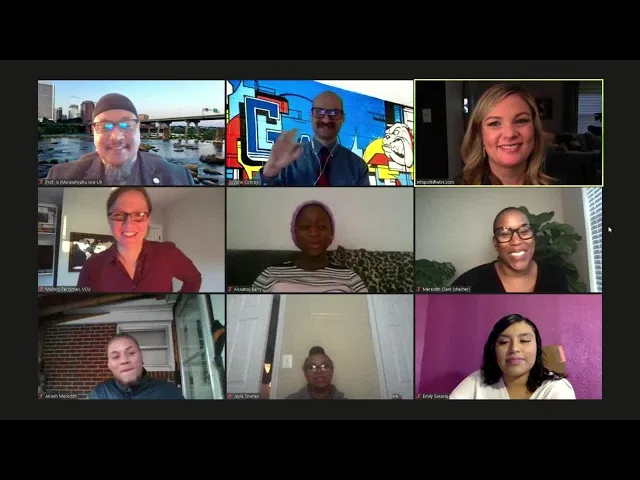
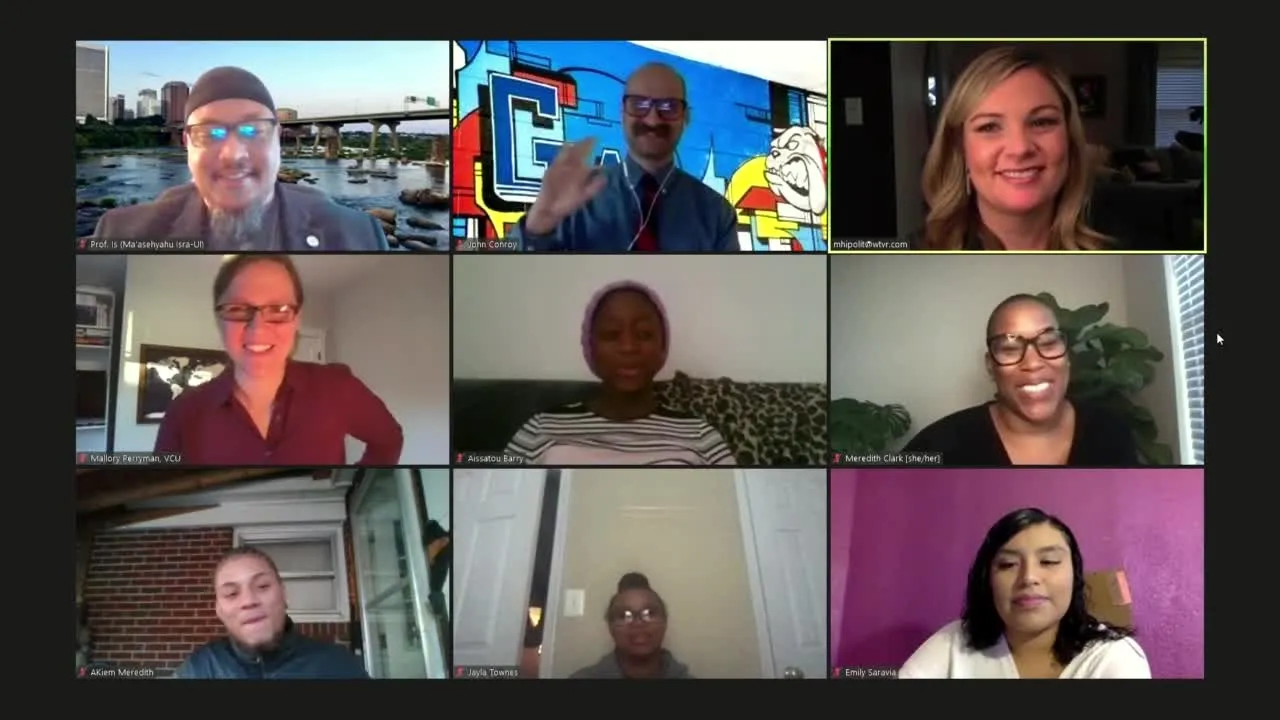
all right good afternoon everyone i'm melissa hipplet from cbs6 and thank you for joining us for this virtual town hall today we are talking about news literacy and very hot topics right now fake news and public distrust in the media so i've assembled a nice group of folks together to talk about this topic we've got students in the richmond public school system we have a couple of journalism professors from vcu and uva and then we have some folks who work for the richmond public school system so i want to get started by going straight to
our students because this is about news literacy and learning and if you guys could just introduce yourselves when you start talking and explain where you get your news from these days because i remember when i was in high school the place that i got my news was my parents i mean they talked about what they were reading in the washington post which is our local paper and they talked about what they saw on the national television news that was essentially my news sources so things have obviously changed quite a bit in modern times where everyone
has a phone and internet access and access to social media so if you guys could just introduce yourselves and then explain where you get your news and if you ever hear about fake news or opinion-based news that would be really helpful so i'll open it up to you all anyone can jump in i'll go first um hello my name is jayla towns and i'm a senior at thomas jefferson high school and i currently get my news from my local my local news um stations and the cnn app i know i've been watching cnn like crazy
since election and i've recently stopped watching fox news because some of the information they give out is false so i use cnn as one of my main sources thank you for sharing someone else emily or azatu okay i can go hi my name is isa tuvari and i am a student at richmond community high school i get most of my news from what i think are credible sources such as cnn and the new york times i tried to get both political parties views i tried to i try to be well informed on what both parties
believe so i also watch um fox news but you know take with the grain of salt um i also get a lot of my news from twitter i just made a twitter account um through twitter you can actually see what people think instead of getting it from the news you can actually see what they believe in their opinions so yeah those would be my sources okay and hakeem or emily my name is emily soravia i am a student from george with high school and the news sources i rely on is cnn nbc cbs and if
i'm on social media i rely on the shade room also because it will give information on what's going on today um i could say not all news sources are reliable because some of them don't provide facts i don't watch fox news because to me in my opinion it's not reliable or and it's it's it's agreeing on one political side of the party what is shade room i'm not familiar with that the shade room is where all the all the drama or everything that's going on in the world today is posted on instagram okay cool well
i learned something and akeem do you want to share where you get your news hello so my name is ike meredith i apologize for what popped up on the screen when i logged in at first um i get my news i watch cnn when i go to mr conroy's class every day you start that off for the first five minutes i watch the news occasionally get most of my news from twitter and if if left around i will read the newspaper not a fan of it though and for our students have you ever heard friends
or have you yourself fallen victim to believing something that actually wasn't real news or maybe you don't know you know i don't know if you would bring it to your teachers and ask them but yes uh i was about to say i would not know we wouldn't really know if we what we consume is credible or not i try to like many of the other panelists i try my best to consume media news from an outlet that is widely accepted and the most popular because usually like if many people will read it there tends to
be like less fraud because people will be able to detect it like more people will be looking for it it's so hard today because you've got people who i know i noticed a lot of you said you you love cnn or that's what you use and you know a lot of people will say they're biased these days or that's a lot of opinion news there just on the other side of fox news so it's really hard to discern and i want to go to mr conroy government teacher in richmond public schools um you know what
is what is real what is fake and what can you trust and what can you not trust i mean something like cnn they do have a lot of people that come on there that are opinion people you know they have their news segments but then they also have um chris cuomo for example and he provides his opinion on the day's events so you really have to be able to parse that out and mr conroy if you could open up and kind of talk about how you teach that to your students yeah of course so my
name is john conroy and i teach at george with high school i'm a us government and history teacher there and you know this is something that is incredibly important you know a part of our curriculum as teaching students because uh when we're looking at researching topics you know we have to make sure we're looking at credible sources so that's something that we're always looking at and something that we understand with news sources primary sources is that they do carry bias with them and that's something that you know i love that iso 2 is saying like
oh i want to try to get both sides of the story because it's important to see you know just because something is leaning the way we want it to lean doesn't necessarily not mean it's unbiased um and this is something you know emily and aki my students will tell tell you that we're always looking at you know what is the currency the relevancy the authority you know the accuracy and especially purpose of articles and information we're looking at online so have you heard about some of these alternate sources like emily mentioned shade room which again
i wasn't familiar with do your students come to you with these social media sites and ask you you know do you think this is credible what i just saw on tick tock for example or something actually usually what students will come to me with is showing me stuff and be like look how incredible um some of these things they'll see they'll see on the news is i'll see some students send me screenshots of articles that they've seen on facebook or twitter and they're like can you believe someone's actually posting this and trying to make this
seem like it's real um i'm amazed at how well our youth is at not how well how good our youth is at um really discerning um bias um in media sources especially when looking at social media it's something where when we were talking about it on the first couple weeks of school you know none of my students really were jumping up and saying oh yeah social media we should be citing that in our research papers and in our arguments so what do you teach your students about fake news and then we can also go to
professor iz as well the curriculum coordinator to talk about what is fake news and how do you um impart that on your students well i'll just start off and i would love to hand this over to um richmond uh city's uh curriculum uh specialist uh professor mazzarelli myself um but one of the big things is just like emily said they don't have facts they don't have evidence where is the evidence where is the authority from the person writing the article like anyone can post anything online like social media make it sound nicely packaged and true
but is that someone that we should be listening to do they have the background the education the you know the qualifications and um also just always trying to examine what is their purpose what is their goal is it to inform or is it to convince you of something yeah i like how you said that just today my husband was raving about something he was listening to on barstool now i'm not familiar with barstool i never go to barstool me personally i only you know go to places like wall street journal new york times washington post
et cetera for my news and um he claimed you know he was just listening to it for entertainment purposes and i just kept saying well who is this guy that's being interviewed like is this a credible person to be learning information about wall street from you know and i think that's something that everybody has to take into consideration to ask those questions who am i hearing this information from what is their background what could their potential political leanings be and i assume that's something that um you would talk about in the school system definitely i
would love to actually hand this over to professor is some because i know that this is something that we um we've talked a lot in some of our district-wide trainings a lot about is just you know how to remove um some of the bias from the teaching to make sure that we're sticking to the facts and the skills we're get sticking to those standards and skills that we're wanting to impart to the students yeah well um my name is massiah um people call me mrs professor is but um yeah i'm so i'm the k-12 instructional
specialist for rps and so um you know i i have to oversee the program for for history uh in the school system and um you know one of the things that is very important for me is to make sure that i put a very great emphasis on uh providing supports trainings and resources for the teachers in our district as you've heard our students right none of them are uh using cookie cutter you know methods of response like none of them are saying the exact same thing right they're expressing in different ways and so whether or
not someone you know agrees with this point or that point regardless they're expressing themselves right they're here they're talking about the issues and so uh i've always believed that the more that we can inform our educators right and the more that we can support our teachers the better they can support our students and this is why you know our close relationship in in working with the history department at the virginia department of education you know we're constantly looking at those standards and you know recently the governor had uh the edits come out right uh based
on the african-american history's uh education commission and you know those edits are now being used in our district and so um you know the the objective is for for us to to really see our biases right to see where we have uh some blindness and so we developed a website grow history rps.com uh in which we've placed a lot of resources on historical lens training and anti-racism training so our teachers can grow in the understanding and knowledge we can we can never assume that because someone has a degree or because someone is a classroom educator
that they are quote woke or that they have uh you know a real sense of society that they still can have views that have been marginalized or perceptions that are outside of the norm and so we need to make teachers um you know more aware of information and make more information available to them that opens up their critical lens and then that provides the opportunity for them to model that for our students so you know that's really big for us and as i said we created a website for that purpose to support that process and
uh you know we continue to put out resources and have training i've been doing training since march since uh you know covert first hit every thursday right and mr conroy is one of those teachers who came in and was brave enough to jump on zoom with us and has been with us at every single training just about from march until now so that's the kind of stuff that we're looking to do in rps with our teachers and i think you brought up a great point we are all human beings we are all people we all
have our own implicit biases and opinions i mean that's just what it is to be a person living in society however you know if you want to get into something like journalism you do have to learn how to set that aside and present just the facts in my opinion that's how i do my job you know i'm not sure if any of the students on this town hall are interested in going into journalism but that is something so important that you have to learn if you do want to go into journalism is to set your
personal opinions to the side and move forward with just the facts so that's why i want to go to dr perryman now with vcu who has done some research into public trust in the media or shall i say distrust so dr perryman just introduce yourself and tell us about your research what have you found why is there seemingly widespread distrust in the media quote unquote right now yeah so people are always really surprised to find out that journalists are not in fact just robots we're uh we are we're people too um my name is mallory
perriman i am a broadcast journalism professor at vcu uh in a former life i was a tv news producer and i worked for a company called newsy which is pretty big now um and part of my job is research and i have a really big research question that's you know why do people hate the media because people do in fact hate the media whatever the media might be to them which of course is a whole bag of questions um most of my research tries to break down that question into you know who is it that
has distressed the media and why the biggest predictor of distrust in media is in fact partisanship people on the political right distrust media much more than people on the political left in fact if you look at a gallup poll of public trust in media over time you'll see that we're down to oh god it's it's pretty low now i have the graph up actually it's a disturbing trend but 73 percent of democrats and only 10 percent of republicans at this point say they have a lot or a great deal of trust and media so you
can certainly see that partisan split um so you've definitely got some stuff going on there but you also see big splits and things like ask people if they trust the media and they'll be like nah ask them if they trust their news sources they say yeah if they trust local media they say yeah they can name local reporters that they know and they trust so it all depends on kind of how you're coming at that question and do you think they're biased do you think they're fair do you think they're accurate they're going to get
different answers depending on exactly how you frame it the biggest takeaway that we're learning from public distrust and news though is that people do have news sources that they like and they trust and that's where they get most of their information from you ask these guys like hey where do you guys get news they can come up with sources that they like they can come up with journalists that they can turn to people have resources for this information it's just that it's kind of like this reputation at large right like the media is bad but
what is the media when you actually break it down and we see that phenomenon with a lot of things people will say yeah i hate the affordable care act but then they like all the premises within the affordable care act so it's actually pretty common but it is kind of a problem when you've got people saying things like i don't like the media i don't trust journalists they're less likely to talk to journalists to be interviewed by journalists which makes it harder to get different voices in the news we've seen the same voices over and
over again and one reason is because i'm sure you know this melissa sometimes it's hard to get people to talk to you they won't return your phone calls when you've got this whole perception of the media and even if it is people only on the political right just trusting media well that's kind of a problem because there's a lot of people on the political right they need to be informed as well they need to have new sources and we don't want to see this sort of siloing into i watch cnn and i watch fox news
and we do unfortunately have quite a bit of that not as much as people think um most people actually get their news from sources like nbc and abc and cnn these sort of kind of mainstream middle-of-the-road sources which are very traditional and classic journalism um but there definitely are sources on the left and the right people gravitate towards those not necessarily a problem i'm assuming you're getting a wide spectrum of news and then most of your news is kind of neutral and balanced and traditional but you can see that it does cause problems when you
even if you have a small section of the country i'm consuming misinformation or disinformation or conspiracy theories as we saw with the insurrection at the capitol you know a small group of people consuming dangerous information can lead to outcomes even if it's not super widespread so it's definitely a problem certainly a problem we talk about in uh journalism classes when you get to vcu being a journalist is a tough job this day everybody hates you and they don't pay you well but it's fun you guys should totally come be journalist well dr perryman you do
the research you find out it's a problem do you have any ideas for how we solve this issue so news literacy workshops have actually been really effective and they're finding especially and i'm sure these guys know it um at the high school level you know these kids are savvy you guys you four right there you guys are savvy you grew up with information onslaught like you're you're people are advertising to you and talking to you constantly and they're actually pretty dang good at sorting through information because they've had it they've been bombarded with it their
whole life so we have a lot of news media literacy training um and that helps a lot just letting people know about like what you know mr conway was talking about with like the different you know where does information come from and what's the purpose those are really basic things but these high school kids grow up knowing that kind of stuff so by the time they become news consumers they're just a lot smarter we actually see most of the like when you track people's fake news consumption actually by tracking their web habits and looking at
what they click on the people most likely to click on fake stories are people who are extremely political usually older so 60 plus usually on the political right um but you're not really seeing it among these young kids except for you know to click on the headline and laugh at it um like you know john was saying like they show up and they're like look can you believe anybody believed this i mean these guys are pretty smart to begin with but then these literacy training groups they really do help so getting those into high schools
building them into the curriculum is going to make a huge difference if that's something we can do thank you dr perryman i want to go now to dr clark at the university of virginia um if you could introduce yourself and i you know i think in listening to dr perryman we're hearing that um there's a major split between the right and the left politically obviously in terms of trust of the media but it's not just politics to determine if you trust your media sources right i mean we're talking about minority communities there has been some
mistrust among them over the years with the media yeah absolutely thank you for having me i'm meredith clark i'm an assistant professor in the department of media studies at the university of virginia and before i was in academia i was also a journalist i was a newspaper journalist so i was on the other side of that great print television divide i study race media and power and specifically the relationship that people have with news media as it is seen via the lens of social media so i'm very interested in what people are commenting on on
social media platforms what they're sharing and how they consume their news and to the point about mistrust and where mistrust is uh fomented or sort of built and developed in this country when it comes to news media we can't ignore the historical legacy of exclusion in the press and the legacies of bad and malinformed coverage that certain communities get specifically communities of color and poorer communities that's something that we still see taking hold today with a number of the stories that are being reported now on the insurrectionists at the capitol at the earlier part of
the month one of the common themes that folks may notice is this issue about so-called economic anxiety but how the people who are assembling at the capitol seemingly without jobs without steady income people who have lost their jobs in the pandemic are somehow more mobilized to go and take this information that they get and i refuse the term fake news in my classroom so it's either propaganda opinion or fabrication but taking this information and acting on it that comes from somewhere and it's not just a matter of mistrust it's a number of different factors so
it's being sidelined and not seeing stories about people like yourself told in the news and then when you do see stories about people like yourself they are told improperly right they are not culturally competent um they don't tell the full story perhaps even the images that are used aren't reflective of the community that you are a part of that alienates people over time and so one of the big differences that i like to point to between my generation tail end of gen x the beginning of the millennials uh and gen z and the generation of
zoomers i guess is what you folks are called now um is that yes these students high school students in this day and age had an onslaught of information and a number of different platforms to choose from my parents had the big three in the beginning and then cable news really became popular uh by the time i was a child and certainly by the time i was in high school but there is this gap in between a couple of the generations i would say right around gen x and beginning at the tail end of the millennial
generation just before gen z where folks realized that there were a number of different places that they could get information often that information was info that did not fit in with mainstream media news narratives uh so the ones coming from the big three that being abc cbs and nbc and they learned that they could find info in other places and so they began to mistrust and have reason to mistrust because they found out that they weren't getting the full story so there are a number of factors for us to consider when we think about what
communities have been privileged in news medias and which communities have been left out and something you mentioned when we were setting this up is um covid and you know some rumors that have spread via news sources or social media that perhaps we're not accurate absolutely so one of the things that i've been paying attention to uh here recently it started with following memes about covet again i study social media so i study memes um and the things that people were laughing about when we still had something to laugh about in those early days of the
pandemic um but then taking a look at how the conversation turned in those memes and those memes became sources of misinformation now we saw this in the election leading up to 2016 but to see it with health information on such a wide scale was something that was really concerning and where my concern comes from as a researcher is how the relationships we have with other people affect our information consumption so at the very beginning of the program you mentioned that you used to get your news from your parents well if your parents or your friends
or even your teachers have somehow found some misinformation and are recirculating that whether it's a meme or a blog or an email or pictures with no real context it's very easy for misinformation to circulate within a community among people who have trust with one another so they have reason to believe that and so we're tracking the flow of information about kovid we were looking at information about the election and seeing how memes were playing a role in that but it's another thing that i i like to caution people around when you're presented with a meme
or with anything that doesn't have context and something you can't independently verify to ask the person about where they got it from who produced it and how they have been able to verify those claims or not and if you can't verify them then there's reasons to doubt these issues that you're bringing up seem almost overwhelming to overcome i mean me as a single person you know trying to do that i think would be impossible but what the advice you just provided of just asking a question about where did this come from i think is very
helpful any other ideas about how we can combat you know misinformation misinformation the spread of misinformation certainly in getting information directly from primary sources mr conroy mentioned it uh when he was talking about the students and working with them about information when we talk about primary sources in research we are talking about the very creation of documents of quotes going directly to the source to find out information and corroborate what you see another thing to do and the young folks here know this i'm sure better than i do searching information like pictures via google image
search find out where those pictures have been used before going directly to the source of what is being cited in some of the information that's being passed around so often you'll see memes that mention the cdc is keeping this information from you they reported this and so many years ago you can go on to the cdc's website and find information that relates to the topics at hand that's pretty easy to do and then the last thing i would say is get other people involved actually that's not quite the last thing but get other people involved
so put together a little team if someone is sharing a meme then challenge everyone that's on that text message or that's liked or commented on it to find a piece of factual information that others can also access that comes directly from a primary source and contributed to the discussion the last thing i will actually say is if you see a meme or some piece of false information propaganda or fabricated information don't share it don't click on it don't recirculate it don't tweet it don't repost it on facebook that is the primary way that misinformation gets
circulated through information channels by doing what we naturally do as people who want others to see things whether they're true or not even if we're just looking at them to see how ridiculous they are you don't want to share that information and let it go any further than you great tips dr clark thank you for that and i think i'll just finish with our students um you know have you ever used any of these tips that she's talking about to try to combat misinformation or have you seen any of your fellow students you know sharing
things that you're kind of like uh what is that i don't know if i trust that [Laughter] um i think like when the pandemic first started i actually have a screenshot on my phone and i had sent it to my mom it was saying like how every four years since we have an election every four years there's always like an illness that's going around so like they said like 2016 was ebola then there was the swine flu and i um had seen somebody repost it and so now what instagram is starting to do is starting
the flag post for fake news and like now once you post stuff about covid it flags it for fake news if it's false and it flags it with information to send you directly to the cdc to see if the information is true which is something that's like really helpful nowadays because now people are just posting stuff because oh somebody else has posted it and if it's on social media then it should be true i don't feel like everything on social media is definitely not true it's certain people that just want to spread false information to
get like a reaction out of people which isn't right i think that's an interesting point for sure i like you know the concept of sending you back to the cdc website to verify for yourself um you know some people might say well i can't even trust instagram and you know if they're flagging something is fake news i mean who are they they're a company they're a private entity so to send you back to the primary source i think that's an excellent way to handle things um any of the other students on here can you think
of any fake news misinformation opinion um articles or posts on social media that you notice that you you kind of question yes um this goes back to what happened a couple of weeks ago at the capitol adam online i saw that it was a post that was photoshopped but it was hard to tell if it was photoshopped or not they were saying that someone was hung and that the uh capital was completely on fire so that sort of kind of gives you like some anxiety right so like a shot of inju adrenaline or something so
what i immediately did was like go on google and find out more information about that um that's what i did but someone could have taken that like in a whole different way someone could have well i don't know what anyone else would have done but yeah yeah i think that's really scary the photoshop stuff it's so easy to do that now and um i mean things can look very very real when they're not real so i appreciate you bringing that up mr conroy have you heard anything to that effect from your students i know you
said they do come to you and show you posts that they're questioning i remember last year there was a lot of scary reactions from students when deep fake videos were becoming a big thing and you know basically you could create a video of anyone saying anything at any time you know and that's something where i love that i asked two said um that she immediately jumped on and was googling it and it's like that's what we try to teach our students is okay you heard it from one information it might have come from a tweet
a news article a history book can we verify that multiple sources is this something that we're seeing um that's correct in multiple sources and you know it's can be very very scary and that's something where i love that she immediately was just like okay take a deep breath let's confirm that this is true and if it is true okay let's take that road but then let's confirm it is true before we do these things and i love that um dr perriam was saying our students are really really good at doing this and seeing these things
and being like this ain't real this is not real why i'm looking at like what is going on here and they will go and try to confirm and you know research it you know and they've been doing this their whole lives with coming up on social media so i would say that that that's been what i've been seeing a lot that would be my my big reaction to kind of that those fake pictures and doctor things and that is really all we can ask of them that they do question and do their own research and
try to verify um we are out of time here for this virtual town hall but i really appreciate everyone taking part in this and i hope the students may consider going to journalism in the future um thank you so much and i hope you guys have a great day and thank you to everyone for tuning in