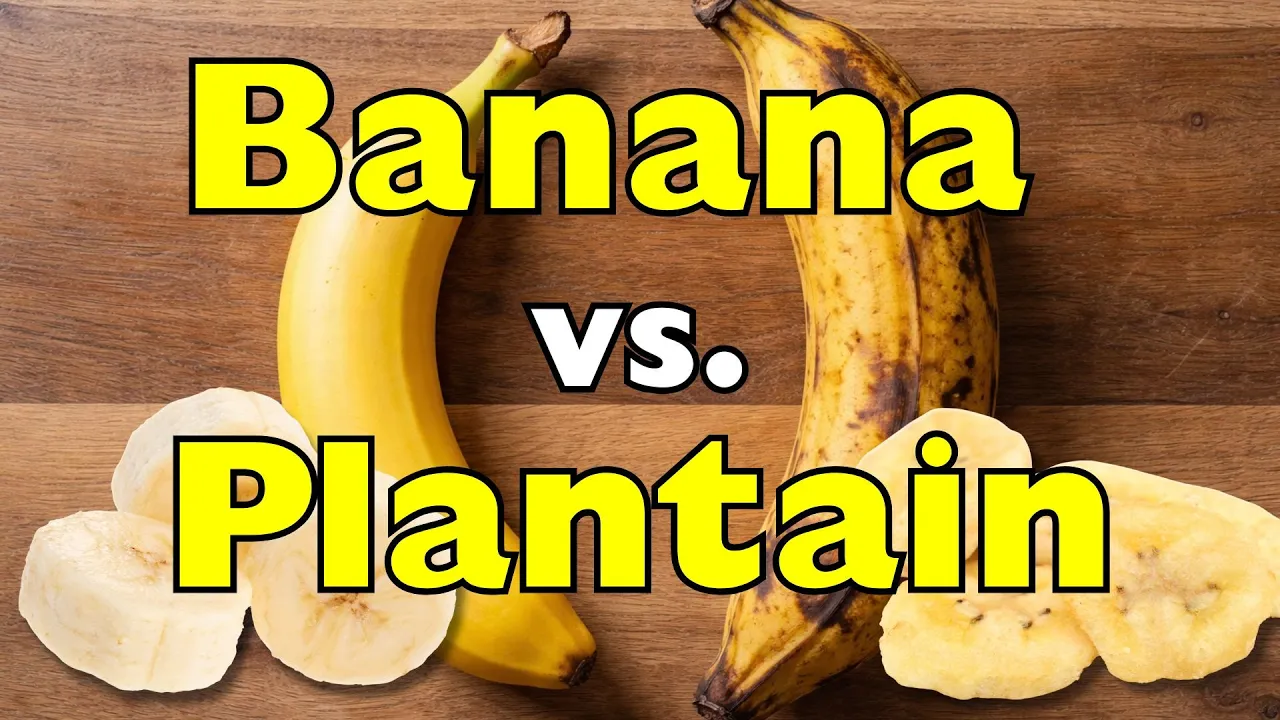
[music] Walk through any grocery store and you'll probably see bananas and plantains sitting not too far from each other. At first glance, they look almost [music] identical. Long curved yellow fruits that seem interchangeable.
Many people assume plantains are just big bananas [music] or bananas that haven't ripened yet. But that assumption couldn't be more wrong. While bananas and plantains belong to the same botanical family, they [music] live very different culinary lives.
So today, let's uncover [music] banana versus plantain. Understanding the difference between bananas and plantains reveals how two nearly identical fruits can end [music] up playing completely different roles in kitchens around the world. Let's get into [music] it right here on History of Simple Things.
Bananas and plantains both belong to the genus Musa, which means botanically speaking, they are very close relatives. In fact, neither fruit grows on a tree. They grow on large herbaceous plants that only look like trees.
From a scientific perspective, bananas and plantains are technically berries, which surprises many people. Despite this shared background, humans have selectively cultivated them for different purposes over thousands of years. Bananas were bred to be sweet, soft, and easy to eat raw.
Plantaines on the other hand were cultivated to be more filling, durable, and suitable for cooking. This divergence shaped everything from their flavor to how they are used in daily meals. The most noticeable difference between bananas and plantains [music] is taste.
Bananas are naturally sweet, even when slightly underripe. As they ripen, their starches convert into sugars, giving them that familiar dessert-like flavor. This sweetness makes bananas perfect for smoothies, snacks, baked goods, and breakfast bowls.
Plantains, however, are much lower in sugar, especially when green. Instead of sweetness, they offer a mild, earthy flavor that becomes slightly sweet only when fully ripe. Even then, ripe plantains never reach the sugary intensity of bananas.
This difference in flavor explains why plantains are treated more like a vegetable than a fruit in many cuisines. Texture is another key difference. A ripe banana is soft, creamy, and easy to mash.
That's why bananas are often used in baking. They blend effortlessly into batters and doughs. Plantains, by contrast, are much firmer.
When green, they are almost potato-like in density and can be difficult to peel. Even when ripe, plantains remain sturdier than bananas. This firmness allows plantains to hold their shape during frying, boiling, or baking, making them ideal for savory dishes.
In practical terms, bananas melt into recipes, while plantains hold their ground. Both fruits change dramatically as they ripen, but the effects are very different. Green bananas are starchy and mildly sweet, but still edible raw.
Green plantains, however, are extremely starchy and almost never eaten uncooked. As plantains ripen, their skins turn from green to yellow, then to deep black. With each stage, their starch converts into sugar, and their flavor becomes richer and more complex.
Green plantains are often fried into crispy chips, while ripe black plantains are caramelized and soft, commonly served as a sweet side dish. Ripeness doesn't just change taste, it completely changes how plantins are used. Bananas are often associated with desserts and snacks, especially in Western cultures.
They're eaten raw, blended into smoothies, baked into bread, or sliced over cereal. Plantaines, however, are culinary staples in many tropical regions. In Latin America, Africa, and the Caribbean, plantains are fried, boiled, mashed, or baked as part of everyday meals.
Dishes like tosses, mofongo, and fried plantains are cultural icons. In many households, plantains are treated like rice or potatoes, reliable, filling, and versatile. Bananas rarely play that role.
Their softness and sweetness keep them firmly in the snack and dessert category. Nutritionally, bananas and plantains share similarities but serve different needs. Both are rich in potassium, vitamin B6, and fiber.
However, plantains contain more complex carbohydrates and fewer sugars, especially when unripe. This makes plantins more filling and slower to digest, providing sustained energy. Bananas with their higher sugar content offer quick energy, which is why athletes often eat them before or after workouts.
In simple terms, bananas give you a fast energy boost, while plantains provide longlasting fuel. Bananas are globally popular and widely available year round. They're often seen as a convenience food.
Cheap, portable, and easy to eat. Plantains, on the other hand, hold deeper cultural significance in many regions. In parts of Africa and the Caribbean, plantins are central to traditional meals and celebrations.
Recipes are passed down through generations, and the fruit itself is tied to history, agriculture, and survival. While bananas are global snacks, plantains are cultural cornerstones. The confusion between bananas and plantains comes down to appearance and language.
In some countries, the word banana is used to describe both fruits, with plantain simply considered a type of cooking banana. In other regions, the distinction is clearer. Supermarkets don't always help either, as plantains are sometimes mislabeled or placed next to bananas without explanation.
Over time, this has blurred the line between the two, even though their uses couldn't be more different. So, the next time you see them side by side, you'll know that choosing between a banana and a plantin isn't just about ripeness. It's about what kind of food experience you want.
Thank you for watching. If you have suggestions for our next video, feel free to share them in the comments below. We'll be sure to give you an acknowledgement for your contribution.
If you enjoyed this video, please check out our other bingeable channels. Thank you for joining us on this journey through the history of simple things. Don't forget to like, subscribe, and stay tuned for more stories woven through the smallest details.









![Shallots vs. Red Onions: What’s the Real Difference? [ID0615]](https://img.youtube.com/vi/GYOAl7kTQw0/mqdefault.jpg)
![Tallow Vs. Lard: What's the Real Difference? [ID2101]](https://img.youtube.com/vi/sPpMoHNbNKQ/mqdefault.jpg)
![What Is Paprika Really? The Red Powder You Thought You Knew [ID0610]](https://img.youtube.com/vi/9WtIEZH-sqE/mqdefault.jpg)