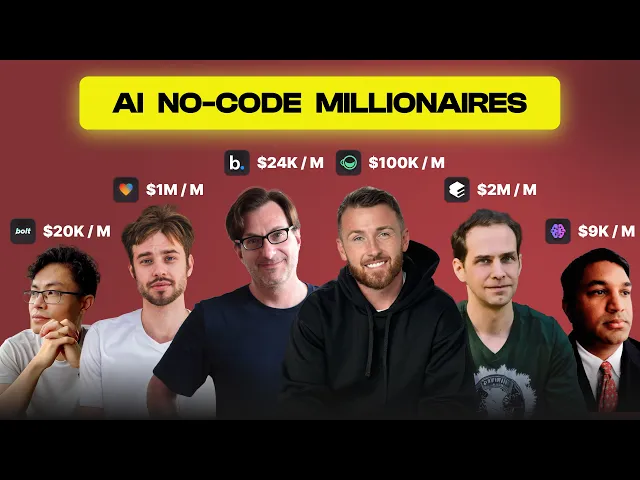
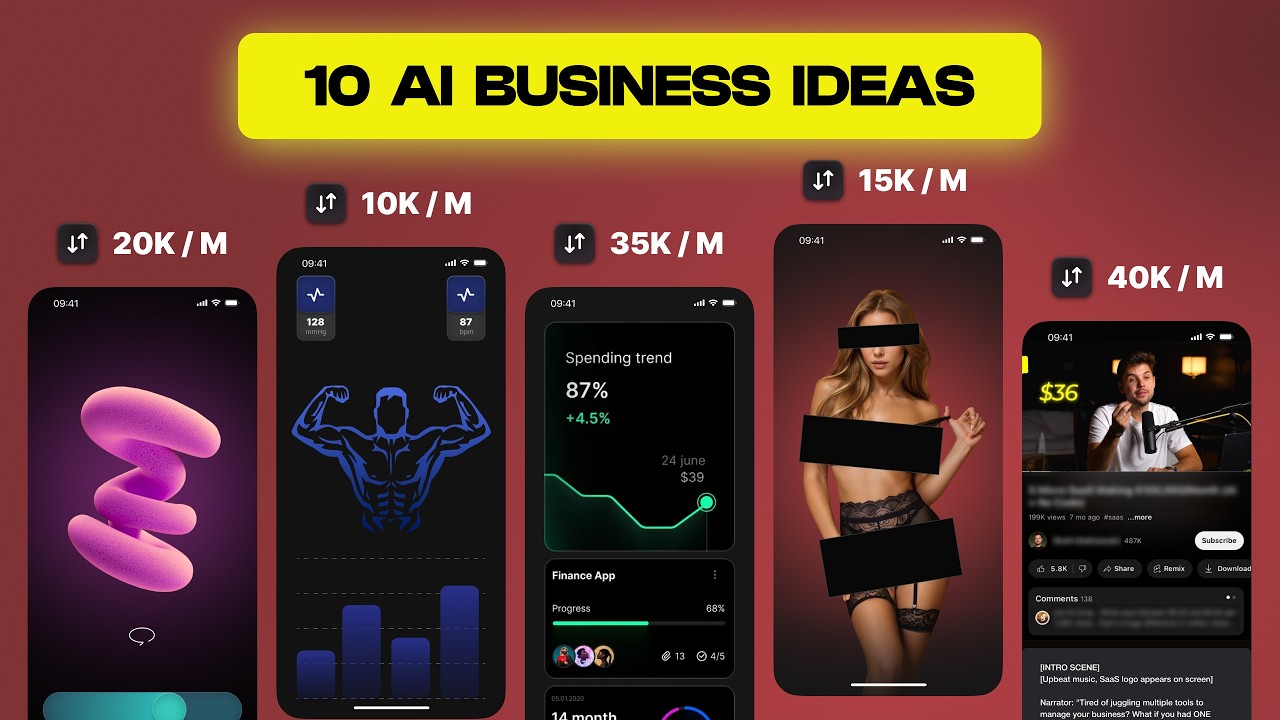
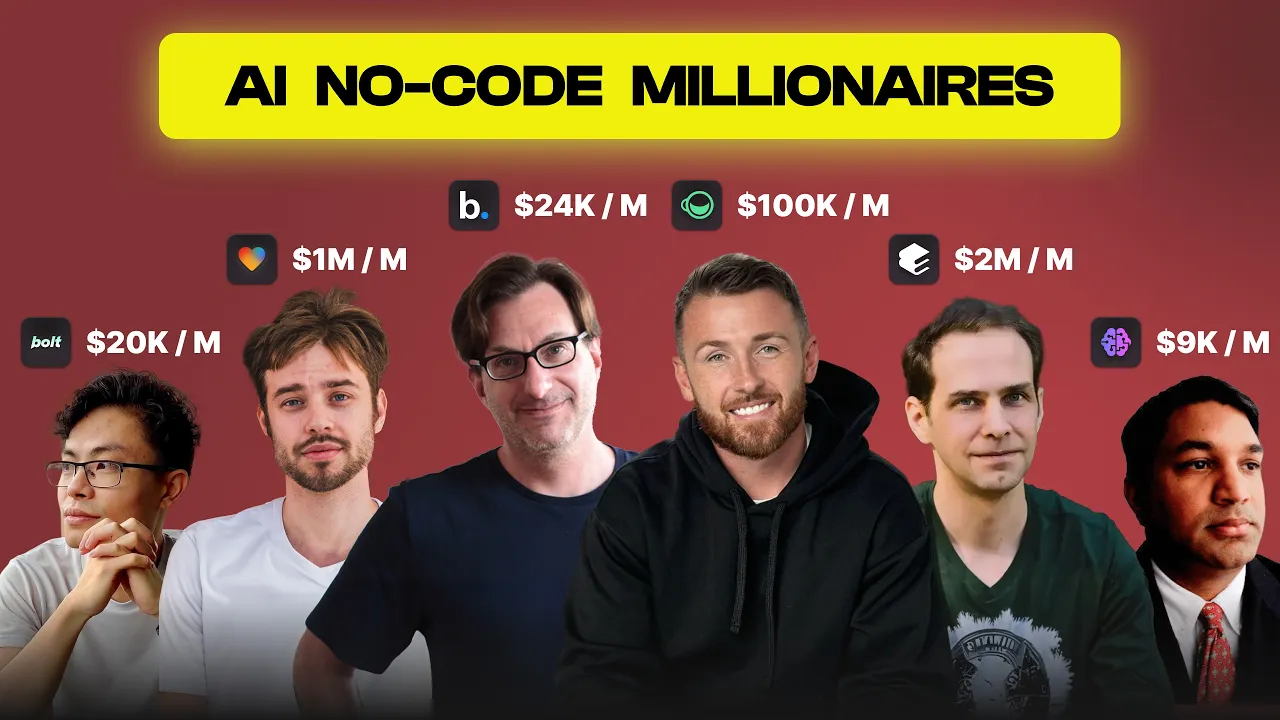
AI apps like this, this and this are generating millions for their Founders every single year. And the best thing about it is that these startups that anyone, solo, without coding experience, without money can do similar Startups using No-code AI tools like Cursor AI, MCP, AI agents, LangChain, Vector Database and LLMs like ChatGPT, DeepSeek, Claude AI and Grok. Look, you don't need to have 5 years of programming experience or hiring expensive developers to make your idea come into reality.
So, in this video I will tell you how all these founders found their ideas, how they validated their ideas, how they build their Startups, what tech stack they used, how they run their marketing and get first paying customers and of course we will do some reverse engineering on how you can repeat the same things and earn your first $10,000, $100,000 or even $1,000,000 using no-code AI tools. Let’s go. Daniel Nguyen needed "some quick cash" to stay afloat.
That’s why he decided to build BoltAI, a tool for native Mac apps that will help him keep all GPTs chats in one window. Daniel built a quick MVP in a single weekend—an ugly but functional app that let him add different GPTs within Mac desktop app. He tweeted about it and posted to multiple communities including IndieHacker, Reddit, and WIP.
The post went semi-viral, bringing in early adopters who provided valuable feedback. This quick market response confirmed he'd found a real problem. Daniel's first version focused solely on "AI Inline" functionality—using keyboard shortcuts to add ChatGPT, Stable Diffusion and other AI tools to the desktop app.
But he soon discovered this approach was "too complicated" with a high refund rate of nearly 15%. He quickly pivoted, adding a traditional chat UI similar to the ChatGPT web interface, making BoltAI accessible to average users while keeping advanced features for premium users. His biggest mistake?
Feature obsession and over engineering. Daniel used Twitter and multiple communities for initial traction. He submitted BoltAI to various AI directories and newsletters, which helped it go viral multiple times.
Building in public created transparency that resonated with early adopters. BoltAI adopted a model where users connect their own API keys and only pay for the services they use. This approach helped him to attract over 7,000 customers, generating approximately $15,000 monthly.
BoltAI is a native Mac application. It supports multiple AI models. Instead of building useless mobile apps for kids Danial wisely build a Mac native desktop app because Mac users have money and they ready to pay for solving their problems.
He used Xcode and Swift to build the app. But today, anyone can create similar app using Cursor or Windsurf AI for coding, with Xcode combination, basics AI API integration which can be fully created by AI. And, of course Python for a back-end, Swift for front-end, Supabase and PostgreSQL as a database and a simple deployment using Coolify to the cheapest server Hetzner.
Resend for Emails, Stripe for payments, PostHog for analytics and Sentry IO for monitoring. Daniel success with BoltAI inspired a second product, PDF Pals—a native application for chatting with PDF documents. After a customer asked about using BoltAI with PDFs, Daniel recognized another opportunity and launched a pre-sale that quickly generated $1,000.
Within four months, PDF Pals reached $6,000 in revenue, bringing his combined AI app revenue to around $20,000 monthly. So, even if you’re broke and in debt, you still have a great opportunity at building your own micro-startup using AI tools. By the way, more and more people making money just by watching my videos.
So you know what to do. Next, Anton Osika and his LovableDev. During engagement trip he decided to build an AI agent that can write the code but no one of his tech friends supports him and he decided to build a basic MVP solo.
Instead of validating the idea via traditional channels, Anton released GPT Engineer as an open-source project with a video demo on Twitter. The response was explosive—millions of users and academic papers started mentioning it over night. After the product engine received significant interest, Anton quickly found a CTO and secured $3M to develop the complete version.
He would probably still be continuing to develop his product and doing over-engineering if not for the huge BoltNEW release and its enormous success. This motivated him and his team to do a fast release with tons of non-working and unfinished features. To get users, they created a waiting list and only accepted those who could provide valuable feedback.
Anton and his team were not chasing profits. By the way, this strategy bring huge success, because now Lovable has passed $17M in 3 months. Lovable now has 500k users, and 30k paying customers, while users create 25,000+ products daily with their platform.
They achieved this with only $2M in costs. By the way, they started building their product in Python but then completely migrated to Go, to improve performance, scalability, and developer experience. Go enables faster processing, lower latency, and better efficiency, especially for handling large-scale AI-driven tasks.
The main lesson is not to be afraid to move forward with baby steps even if it's a new market, even if everyone around you says you won't succeed. And of course, focus on web, and not on mobile apps sweetie. Next, Mitch Grasso felt a huge pain when he used tools for creating presentations as it was very hard and time-consuming.
So he took old and existing problem but used an AI to create a new shape for an old solutions. AI-powered design presentations would eliminate guesswork and save time. He integrated design best practices directly into the software, ensuring all presentations looked professional by default.
The software dynamically adjusted elements—text, images, charts—to maintain visual harmony. Beautiful. ai prioritized simplicity, letting users focus on content, not design.
He debuted the product at SaaStr, directly reaching early adopters in the startup and business community. By addressing common pain points (such as, “how to make a beautiful presentation fast”), Beautiful. ai attracted organic traffic.
Individual users started free, with paid plans unlocking additional features. Over time, Beautiful. ai introduced team and business plans, targeting organizations with brand consistency needs.
Grasso built Beautiful. ai with React for front-end, Nodejs for a back-end and AWS cloud infrastructure. Look, the best strategy it’s to take an old and existing problem or a startup and copy it but improve only one thing using AI.
That’s it. Do not overthink regarding problems. Copy.
Next, Ryan Darani was successful SEO expert but he was shocked when one of his clients spent $10,000 on AI generated content and get nothing at the end of the day. So, this how idea was born. But, Ryan took an unexpected path building their tool.
They acquired an underperforming AI tool for just $9,000 via Twitter connection. The reason because tool was already built and it needs to be only polished a little bit using Ryan SEO experience. They quickly validated the idea provided a life time deal for their early adopters and quickly generated $9k that covered their expenditures and prove that their idea and SaaS is legit.
They started from $20 per month, slowly motivating their users to increase the subscription plan giving them more and more AI agents value. You can easily create similar service using AI agents. All you need to do is to use next.
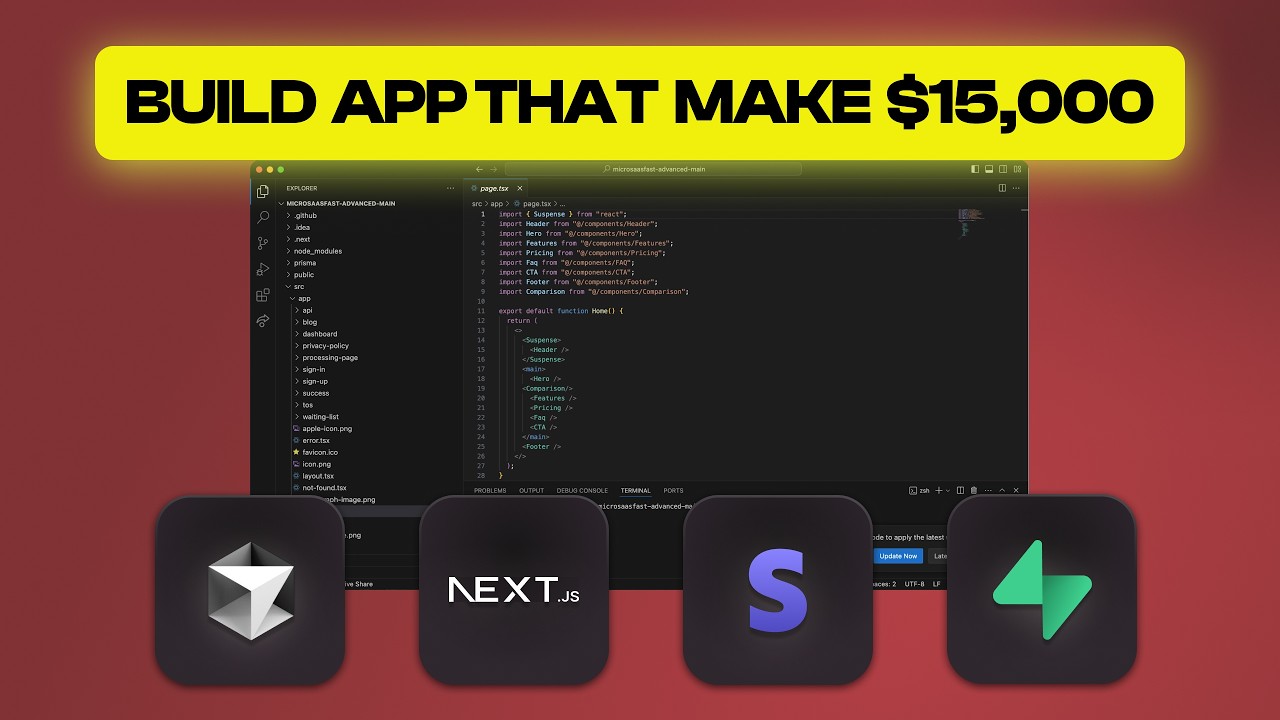
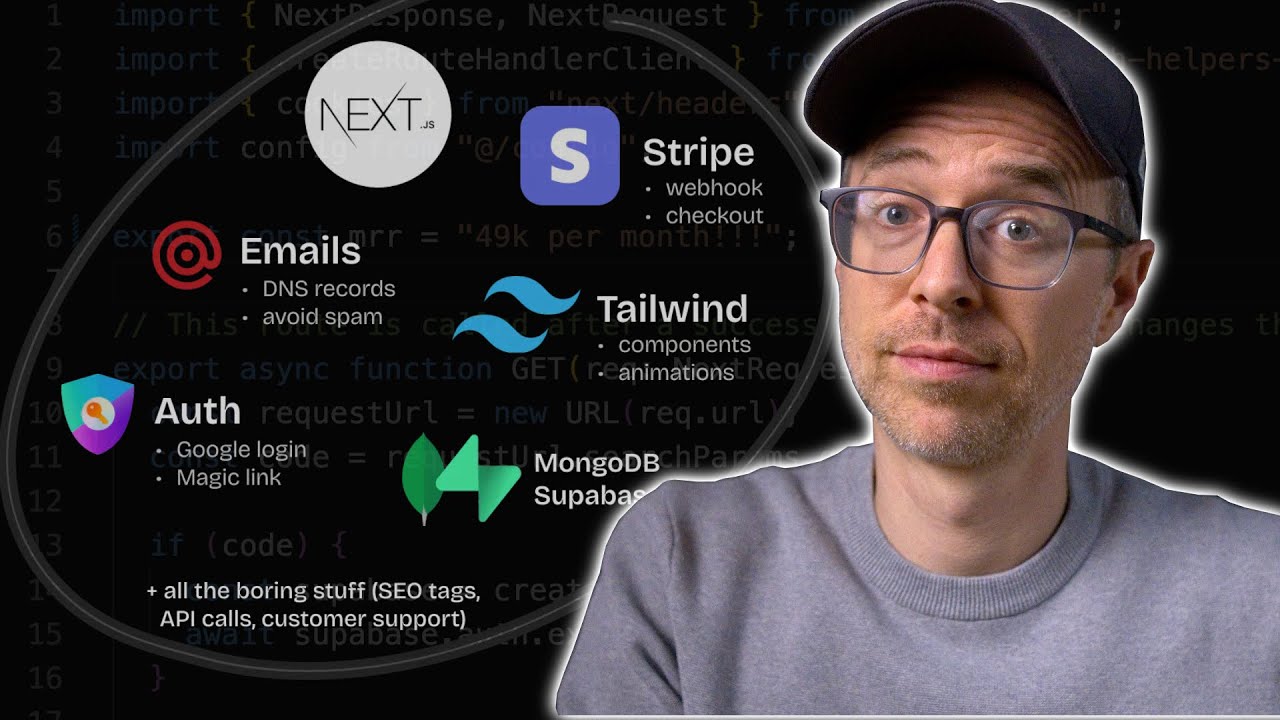
js for you web app, postgreSQL for database, basic TailwindCSS design, Resend for emails, Stripe for payments and super basic AI agents flow that can be created even with AI tools like Cursor AI or Windsurf AI within one week. By October 2024, Cuppa generated $30,000 in Monthly Recurring Revenue, 1,200 paying subscribers and $460,000 in Annual Recurring Revenue Sometimes acquiring existing software instead of building from scratch might be a really great idea. So, I have a great option for you.
You know what's killing most Micro SaaS startups? Information overload. People get stuck before they even start—and that's not even the worst part.
Instead of building your actual product, you waste months setting up Stripe payments, designing landing pages, configuring emails, optimizing SEO, adding metatags, creating sitemaps, setting up blogs, managing databases, building user auth, designing user profiles, and squashing endless bugs. That's why most people give up. I've been through this pain 15 times over, and I knew there had to be a better way.
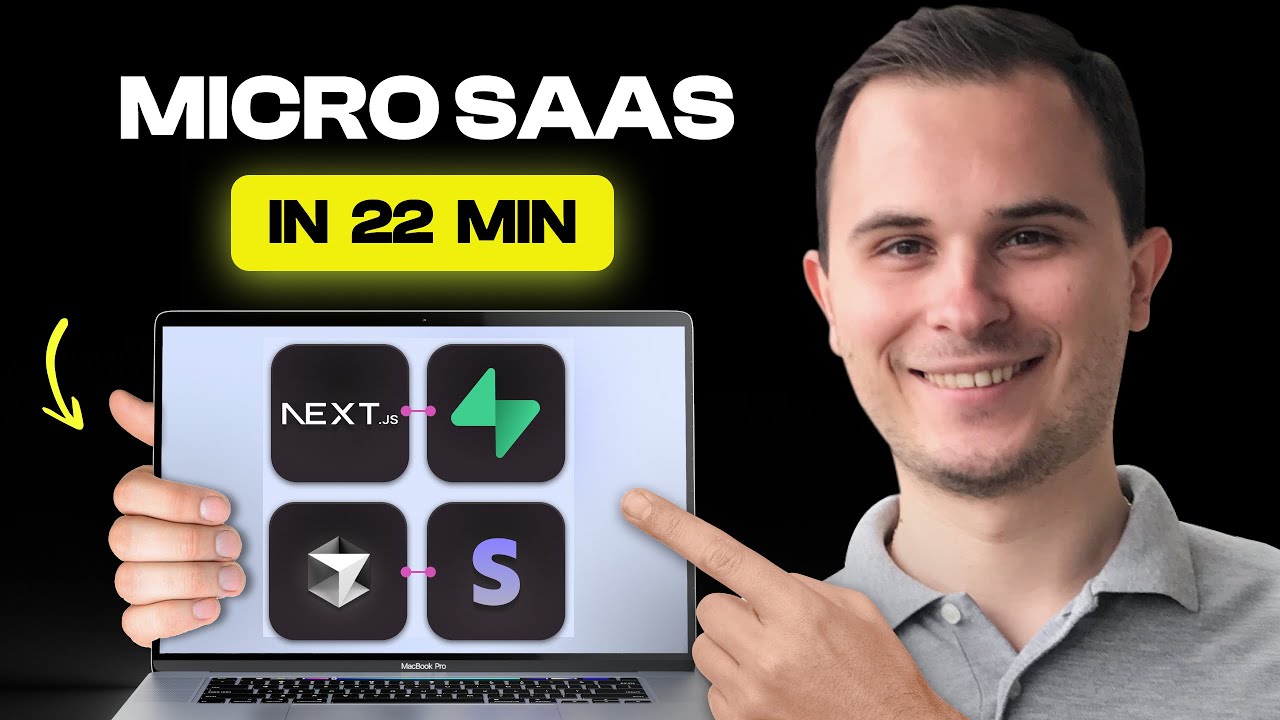
So I built the Micro SaaS Fast Starter Kit—a complete Next. js SaaS boilerplate that helped me launch three successful projects, each making over $10,000. And here's the twist: it's not only perfect for developers who want to get up and running fast, but it's also an absolute dream for anyone skilled with automation tools like n8n or Make.
With native integration built right into the boilerplate, you can easily plug in your n8n flow scenario and start selling a ready-made business in just 1-2 weeks. Stop wasting months building features that are already done, and stop overthinking your minimum viable product. With one week of work using my ready-to-use infrastructure, you'll be making money from your Micro SaaS today.
And remember: you should never rely on just one chick—your startups are your chicks, and you, my friend, are the PIMP. Link in the description. Next, Alden do Rosario.
A guy who hated AI hallucinations and decided to stop them. While thousands of companies were burning millions integrating ChatGPT, Alden saw the opportunity of a lifetime. Businesses don't need AI with hallucinations they need perfect accuracy.
And Alden started creating and AI agents that will bring on the table "truth cage" for vector search. Alden showed their MVP product to MIT and get tons of positive feedbacks. After, he started building product and validating it simultaneously with big companies that needed such type of services.
He built every part of the AI system himself instead of using pieces from different companies. This made everything work better together. Alden created a boundary that keeps the AI from messing things up.
As he says, "An AI that's 97% accurate is 100% useless for business. You need 99. 9% accuracy.
" Securing MIT created an instant credibility cascade, opening doors across industries. Also, his product crushed independent benchmarks, where CustomGPT embarrassed giants like OpenAI, Google, and Amazon which helped also landed additional clients and interest. If you wanna build something similar you have to use Python for your AI agents and your back-end.
Your main focus when you are creating such product it’s just an AI agent structure because all other things can be developed using standard tools and services that you see on your screen right now. He created 3 plans: $89/month for small businesses, $449/month for big businesses, and an enterprise plan for custom cooperation. This confirms once again that B2B is always better than B2C, and businesses are willing to pay any amount to solve their problems.
Cuppa AI hit $460K in 18 months, with $30K monthly revenue, 1,200 subscribers. Tiny team helped them make high profits. So, if you are planning to start your own startup with AI, your main focus it’s an AI agents in 2025 and AI trained LLM on your data.
And of course B2B, because it’s a goldmine comparing to a B2C. Which AI Startup would YOU launch first? Drp it in the comments.
Also, I share tons value about ideas, tech stack, AI tools, AI Agents in my YouTube posts. So, click like and subscribe before you miss the next AI goldmine! Next, Andreas Stuhlmüller saw researchers struggling with academic information overload, making it tough to find what matters.
Using his machine learning expertise, he decided to build an AI tool to help them quickly uncover relevant info without missing the essentials. So, rather than building yet another AI chatbot that would hallucinate facts, Andreas envisioned a fundamentally different approach: an AI research assistant that would augment human reasoning by making it more systematic, transparent, and unbounded. Early Elicit versions impressed academics by accurately extracting info from papers, saving time and boosting research quality by uncovering missed studies and revealing patterns.
When MIT adopted it, Andreas saw its potential confirmed: researchers used AI that enhanced reasoning, not just fast answers. Andreas built Elicit with a clear strategy to stand out among AI tools. He broke complex tasks into smaller, accurate steps and designed it to show its chain of thought, so users could spot and fix errors.
The focus was on a user-friendly design that let researchers define what success looks like and check results themselves, while user feedback confirmed they loved this control and the way it tied answers to real sources. Andreas started with biomedical researchers who needed precise systematic reviews, partnered with top schools like MIT for trust and testing, let happy users spread the word naturally, and kept them hooked by releasing new features every week. Elicit’s pricing offered a free tier for basic searches, plans from $10 to $65/month based on research needs, and extra credits for big projects with pay as you go option.
Andreas used Python for flexible data and ML work, TypeScript for a smooth user interface, multiple AI models like GPT-4 and Claude tailored to tasks, clear reasoning prompts, a vector database for fast paper searches, and a hybrid search mixing meaning and keywords for better results. Andreas led Elicit to big success: it grew to 400,000 monthly users, raised $22M at a $100M valuation, hit $9M in revenue in 2024, and expanded from a small team serving academics to a growing business aiding enterprise decisions. Andreas showed that breaking big challenges into small, steady steps can lead to massive success, even with limited resources.
All you need to do is to start today. Non of us was born as an entrepreneur. Start today and enjoy your success in 1 year.
Love these AI success stories and insights? THAT'S WHY I share even more on X and on Telegram BUT not just ideas - exact prompts, tech stack, no-code tools, action plans and real case studies of solo founders who want to start without money. Follow me on X or Telegram or both before you miss the next big opportunity.
See you!