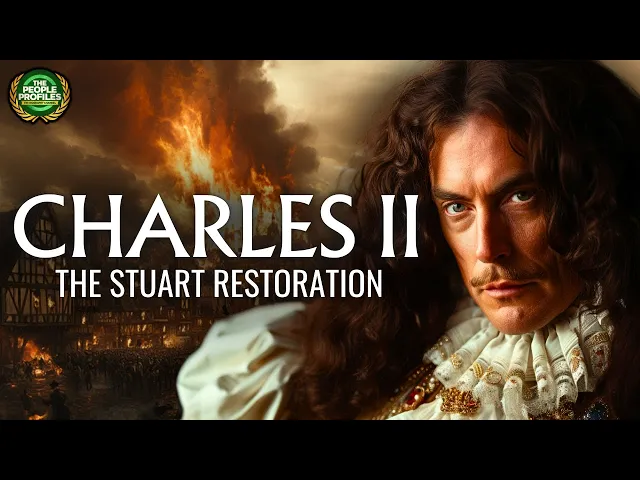
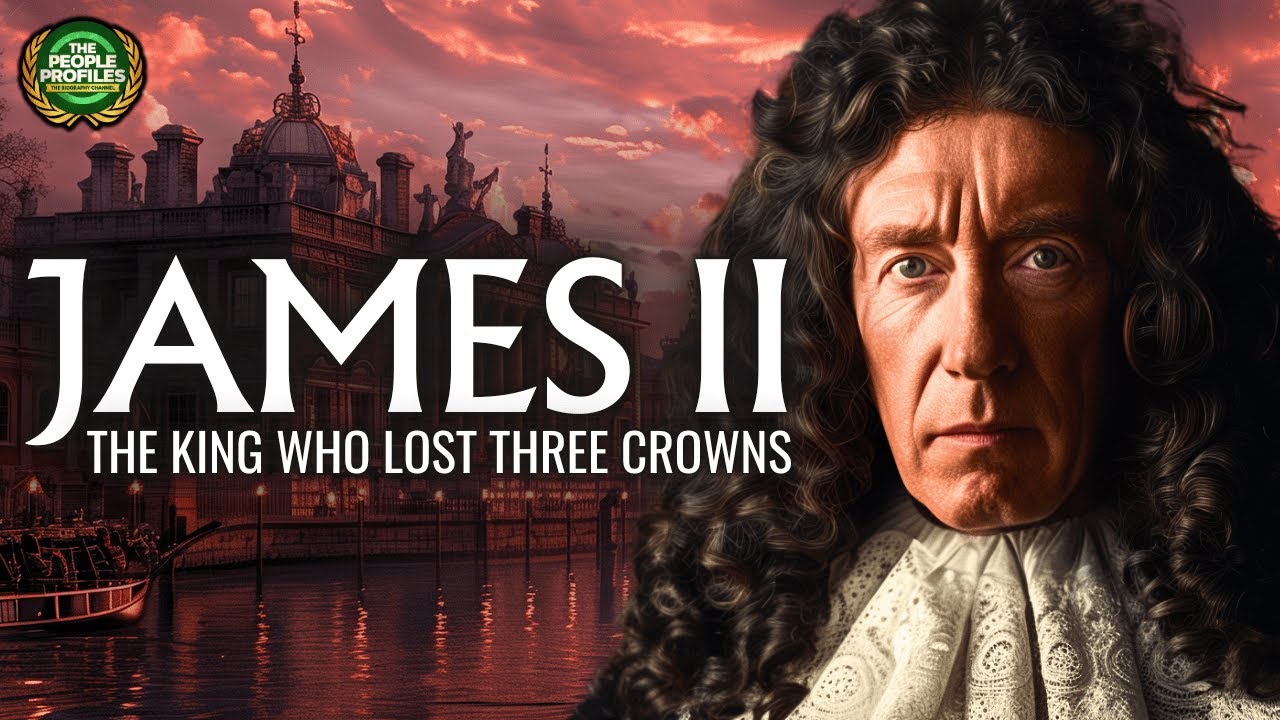
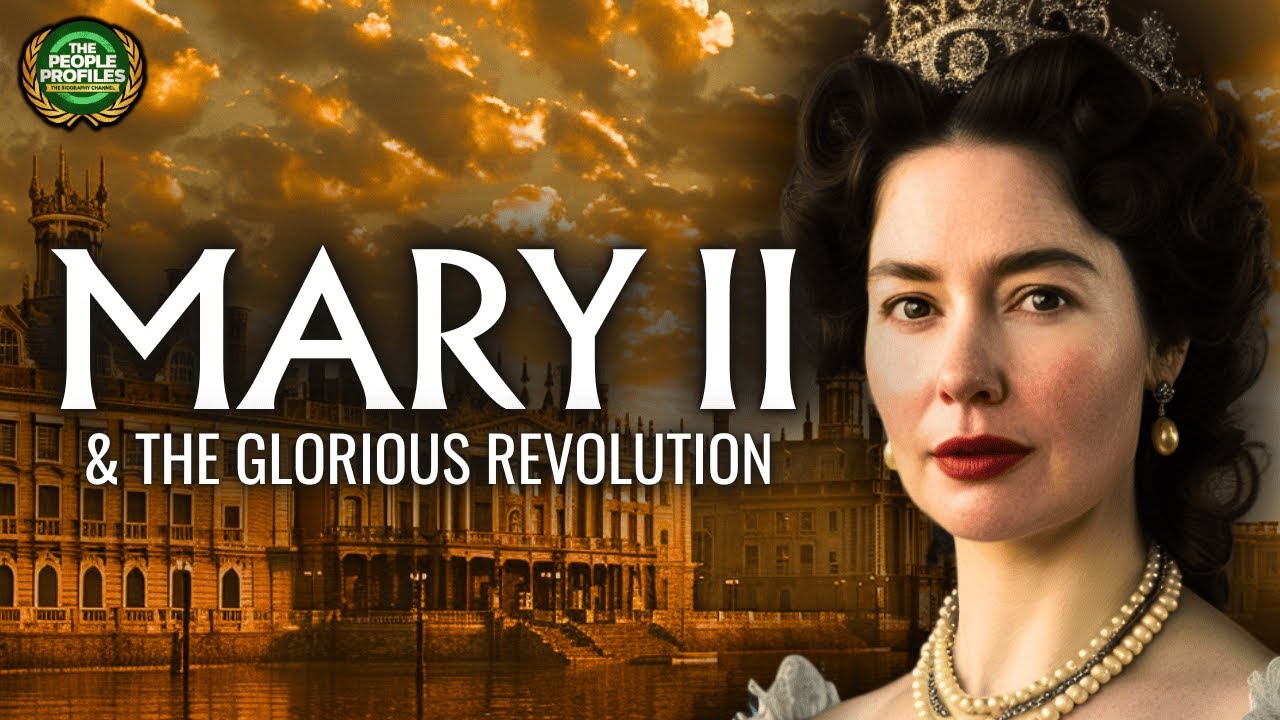
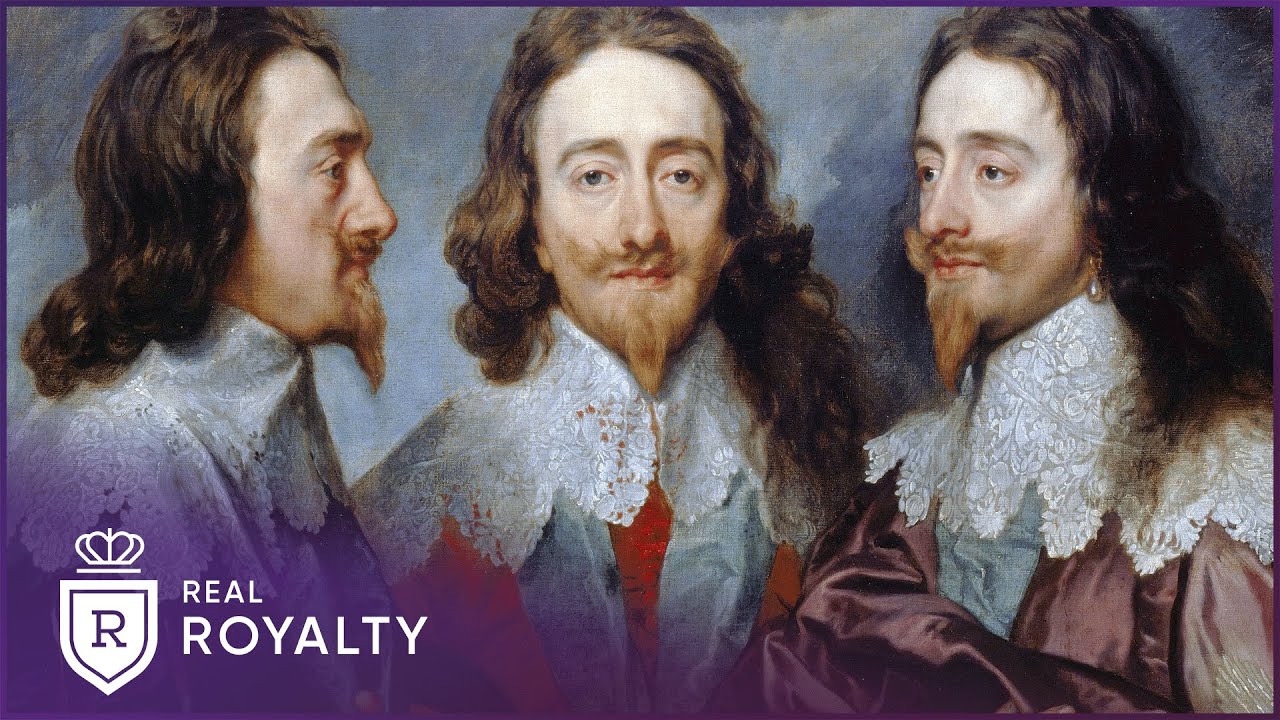
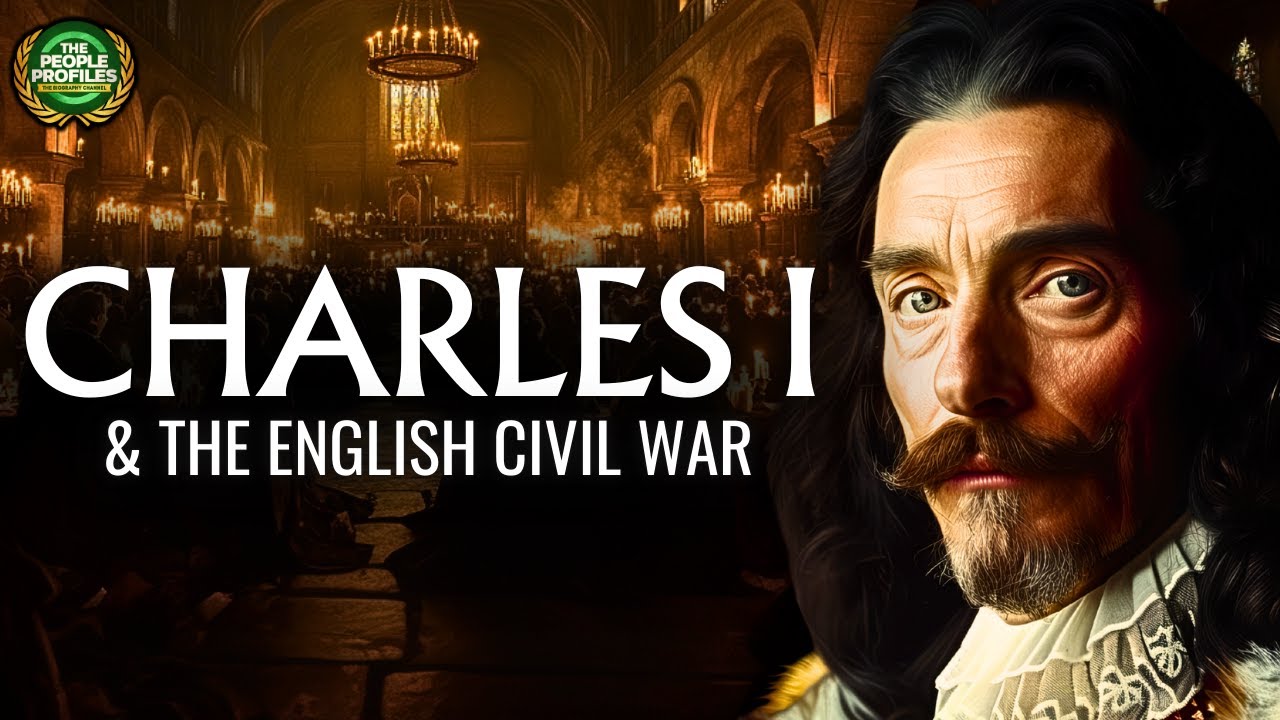
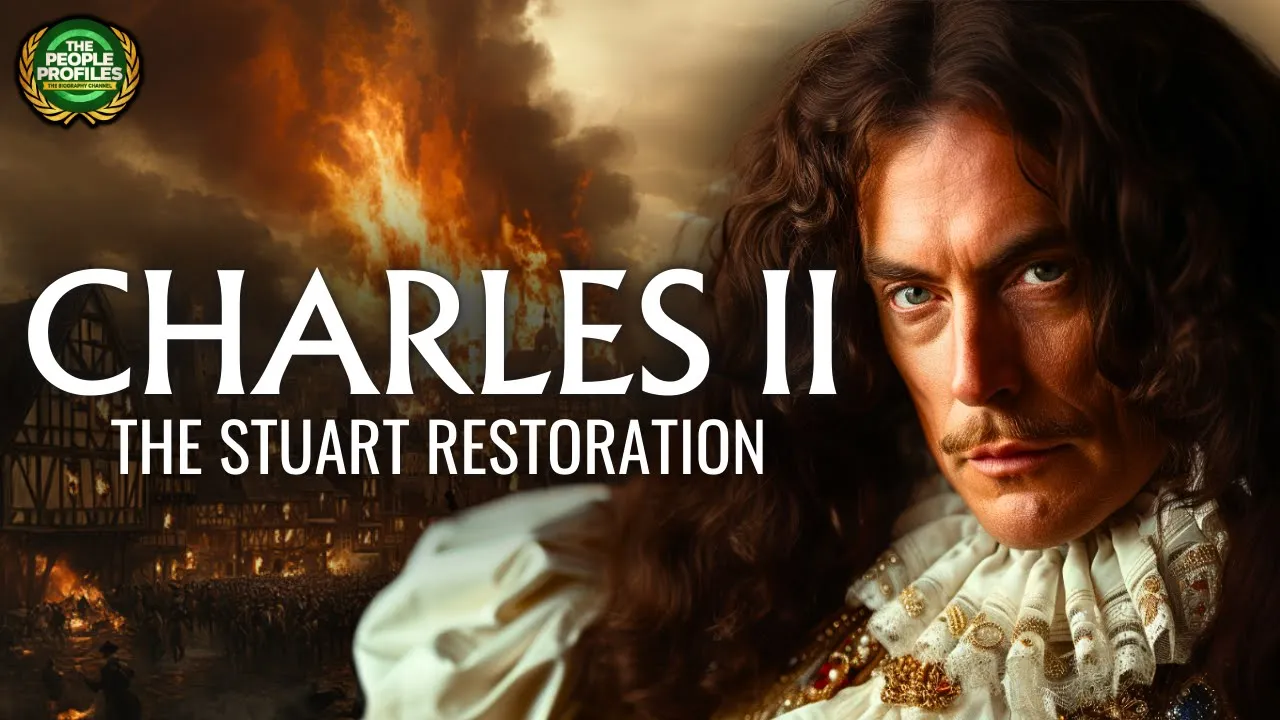
The man known to history as King Charles II was born on the 29th of May 1630 at St James’ Palace in London. His father was King Charles I of the House of Stuart, who had ascended to the thrones of England, Scotland and Ireland in 1625. When the future Charles II was born his father was entering into a period of controversial rule, one in which he sought to establish an absolutist monarchy, one which had no need for consulting with or even convening parliament and which sought to establish uniformity of religion as a form of moderate Protestantism
across the three kingdoms. As we will see, his efforts to do so would profoundly shape the lives of both the king and his son. Charles’ mother was Queen Henrietta Maria, a sister of King Louis XIII of France who Was somewhat controversially a Roman Catholic queen consort. Charles was the first son born to her and the king, though another child had been stillborn the previous year. More healthy offspring would follow, with Mary born in 1631 and James in 1633. Further children were born in the mid-to-late 1630s and early 1640s, but two would die in infancy and
Elizabeth, Henry and Henrietta would all pass away in their teenage or early adult years. Upon his birth in 1630, Charles was automatically bestowed with the titles of Duke of Cornwall and Duke of Rothesay. In line with royal practice in early modern times, a governess, in this case the Countess of Dorset, was appointed to oversee the infant’s rearing in 1631. Then, in 1638, he was made Prince of Wales, the formal title which had been granted to The heir designate in direct line to the throne in England since the early fourteenth century. At the same time his
own household was formally established, with the earl of Newcastle, William Cavendish, serving as governor thereof. The Dean of Christ Church at Oxford, Dr Brian Duppa, was appointed as his senior tutor. Charles would eventually develop a curious and searching intellect and in later life he was a keen patron of the new sciences which were emerging in the seventeenth century. Charles’ education and early development would be overshadowed and ultimately interrupted by the growing instability which was shaking his father’s kingdoms. Charles I’s determination to rule as an absolutist monarch was most clearly seen in his efforts to establish
a uniform religious landscape in both England and Scotland, two countries with different religious environments, but in which there was a large community of radical, evangelical Protestants who were utterly opposed to the king’s efforts to Impose a moderate form of Protestantism across the Stuart dominions. In the late 1630s this eventually led a huge number of the Scottish lords, religious leaders and gentry to revolt against the crown, beginning a series of conflicts known as the Bishops Wars. In an effort to raise an army to confront these Scottish rebels, Charles convened parliament in England for the first time
in eleven years, but he found they were unwilling to help him financially without political and religious concessions in England. Eventually the Scots invaded and occupied northern England, while parliament began to initiate political reforms without consulting the king. Then another revolt broke out amongst the Roman Catholics of Ireland late in 1641. Faced with such an accumulation of problems, the king ought to have agreed to some of the English parliament’s demands and then raised an army to confront the Scots followed by The Irish. But he was an uncompromising ruler and instead prepared for a civil war, one
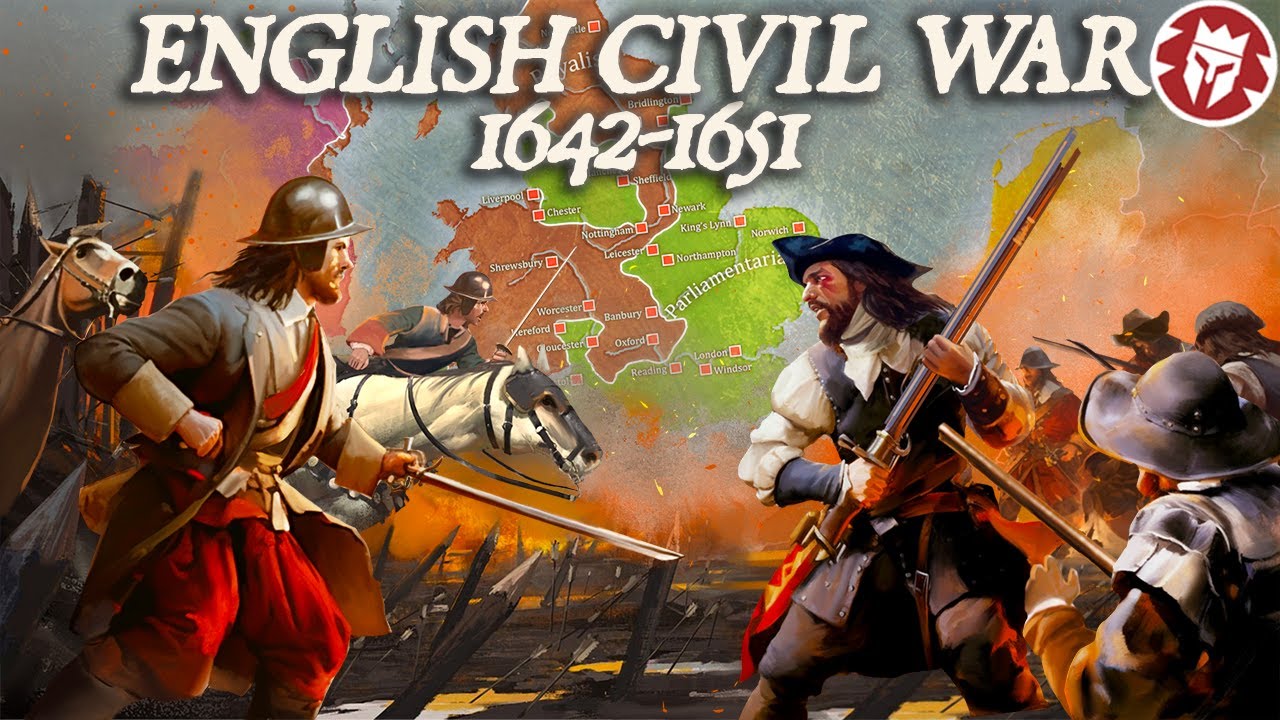
which duly erupted in August 1642 when the king declared war on parliament. The young Prince Charles was not even a teenager when the War of the Three Kingdoms broke out in the early 1640s, but despite this, his father was determined that his heir would be present with him in England during events, whereas after a time the rest of the royal family, including Charles’ mother, were sent into exile on the continent, variously moving between France and the Dutch Republic. The prince was often used as a negotiating chip by the king during these years, with Charles I
holding out the possibility of his son marrying the daughter of a European ruler if that same ruler would aid the royalist cause in Britain in return for a marriage alliance with one of Europe’s major royal houses. Few such offers were being made after the royalist cause suffered a major defeat to the parliamentarians at the Battle of Naseby in the summer of 1645. Nevertheless, the king was determined that his son and heir would continue his training as a future monarch and that same spring he sent Charles, before he even turned fifteen years of age, to command
the royalist cause in the English West Country, albeit with a council of advisors which included the duke of Richmond, Lord Culpeper and Edward Hyde. The latter would play a significant role in Charles’ later life. As the war turned further against the king during the course of the second half of 1645 and into 1646, Charles received orders from his father that, if he was in danger, he should flee from his command in the West Country and head to join his mother and siblings in France. As the king surrendered to the Scots and the First English Civil
War came to an end in The summer of 1646, the prince accordingly left England and headed for the French court where he reconnected with his mother after several years apart. He was there in 1647 and 1648 as news reached the continent that Charles I had attempted to escape from the house arrest parliament had placed him under, but had subsequently been re-detained on the Isle of Wight. Negotiations over various political and religious matters between the king and parliament continued to prove fruitless and there was now a worrying contingent within the parliamentary army led by figures like
Oliver Cromwell who believed the king would have to be placed on trial and ultimately dispensed with. With such news circulating, the king’s Scottish subjects, who had rediscovered their loyalty after many years, called on Prince Charles to join them in Scotland to make war on parliament in England. Charles headed to the Hague in the Dutch Republic to make preparations for his return to Britain, but he was still there when the news was received in early February 1649 that on the 30th of January his father had been executed by the English parliament after what was widely deemed
to have been a show trial by a group of MPs who were in favour of doing away with the king. Two days after Charles I was killed, the crown’s Scottish subjects proclaimed Prince Charles as King Charles II. Yet Charles could not immediately sail for the north of Britain, as there were too many moving parts. Scotland was not unequivocally in his camp yet and there was a possibility of winning over the Catholic rebels in Ireland, who had been in control of much of the country throughout the 1640s, to a co-ordinated opposition to the English parliament. A
quick campaign by Cromwell into Ireland in the autumn and winter of 1649, however, had begun to crush the Irish revolt and deciding that there could be no further delays Charles sailed for Scotland in the summer of 1650, landing there in late June. Enormous problems remained to be resolved there when he arrived and the royalist cause in what is variously known as the Third English Civil War or Anglo-Scottish War was bedevilled by conflict over future religious and political settlements between Charles’ supporters. These were still unresolved when Cromwell invaded southern Scotland in late July and laid siege
to Edinburgh, which fell after a delay in the late autumn. By the end of the year his forces had occupied southern Scotland and the new year brought further defeats. Notwithstanding this, Charles attempted to lead his forces into England, but after defeat at the Battle of Worcester in early September, he determined instead to flee from Britain. His efforts to disguise himself as a servant to find shipping out of England were made more difficult by Charles’ conspicuous height, who at six foot, one inch, was unusually tall by seventeenth-century standards. Nevertheless, he eventually managed to depart from England
for the continent. With the Third English Civil War over, the Commonwealth or Republic which had been established in England in 1649 would secure control over all of Britain and Ireland and would eventually be governed through the 1650s by Oliver Cromwell as Lord Protector. On the continent, Charles quickly headed for Paris where he and his mother and their supporters ensconced themselves in the Louvre, at that time a royal palace rather than a museum. They hoped to garner support for a new attempt to restore Charles to his thrones, but none would be forthcoming any time soon. France
was then ruled by the twelve year old King Louis XIV whilst it was in the grips Of its own minor civil war, while Spain had been mired in war for decades and could not afford to support Charles’ ambitions. In France it was a wretched existence for Charles. His mother and their supporters, during the mid-1650s, were generally ignored by the French government, eking out survival using Henrietta’s pension from her family and with Charles periodically departing to various parts of Europe to meet with middling rulers in the hope of obtaining aid from some of them in his
plight. He even toyed with converting to Catholicism to obtain aid from the Papacy and the former queen all but made her younger son James convert to Roman Catholicism to increase the chances of finding allies amongst the continent’s Catholic powers. War between the English Commonwealth and Spain in 1654 changed matters slightly and negotiations with the Spanish viceroy in what was then the Spanish Netherlands, but which today is Belgium, saw Charles relocate his court in exile to the Spanish Netherlands in the second half of the 1650s. However, negotiations with the Spanish for a possible invasion of England
never materialised into anything of substance and as the years ticked by Charles was looking less like a king in exile and more like a deposed monarch rotting away on a pension at various European courts. These years were notable for the emergence of Charles’ philandering character. The exiled king was, to put it plainly, fond of women and certainly had none of the stereotypical compunctions about sex outside of marriage which we often tend to associate with more religious times. In France in the 1640s he had already established a reputation for ceaselessly courting young women of the court
and this continued throughout the 1650s. What was more, it soon began to result in illegitimate children born out of wedlock, a problematic issue for any future king as it raised issues about a possible succession in decades to come. The first such illegitimate child had been born in Rotterdam in the Dutch Republic in the spring of 1649 as Charles was making preparations to head to Scotland. Named James Scott, the boy’s mother was Lucy Walter, the daughter of a prominent Welsh gentry family which had headed into exile at the royalist court on the continent in 1647. An
illegitimate daughter named Charlotte followed a year later in 1650. Her mother was Elizabeth Killigrew, the wife of Francis Boyle, later Viscount Shannon, a member of the Irish peerage. Elizabeth had been serving as a maid of honour to Charles’ mother in France when he began A brief affair with her in 1649. Less fleeting was Charles’ relationship with Catherine Pegge, a member of another royalist family in exile who began a relationship with Charles in Bruges around 1656. Two children, a son named Charles and a daughter named Catherine, were born in 1657 and 1658. Charles would later become
earl of Plymouth in 1675, but Catherine’s fate is a mystery. She may have died in infancy, but some believe she entered a nunnery at Dunkirk and lived a long life there. Whatever the truth of this, Charles’ activities on the continent in the late 1640s and throughout the 1650s set a precedent of him having a constant string of mistresses and siring a large number of illegitimate children. During the late 1650s, Charles’ fortunes suddenly began to prosper. Oliver Cromwell died somewhat prematurely in September 1658 and his son Richard Cromwell, Who succeeded him as Lord Protector of the
Commonwealth, proved unable to hold the state together in the manner which his father had. In this environment parliament was reconvened in England in 1659. Into the political breach stepped General George Monck, the governor of Scotland and a man with residual royalist sympathies. He called for the dissolution of parliament and fresh elections for the first time since 1640, resulting in the formation of the Convention Parliament early in 1660. At the same time, he began gathering a party of individuals both amongst the British nobility and the gentry and moneyed classes who believed that the best means of
restoring order was to have Charles return to England and to restore the Stuart monarchy. They also believed that the broader population were eager for such a measure after years of dour and repressive Puritan rule during the 1650s. Contact was soon made with the Stuart court in exile in the Low Countries and Charles began considering what political concessions he was willing to make in return for acquiring his father’s crowns. The end result of these negotiations between Charles and the delegates from England and Scotland was the Declaration of Breda, which Charles issued from the city of Breda
in the Dutch Republic on the 4th of April 1660. It was drawn up by the king-in-waiting and three of his closest advisors, Edward Hyde, first earl of Clarendon, James Butler, first duke of Ormond, and Nicholas Monck. In it Charles made known to the political nations of England, Scotland and Ireland that if he was to return to England and restore the monarchy that he would offer a general Act of Oblivion to pardon anyone who had taken up arms against his father and his family during the Wars of the Three Kingdoms. He also held out the promise
of religious toleration for all, be they Anglicans, Puritans, Presbyterians or indeed Roman Catholics. The Declaration was sent ahead of him to England as Charles began making his preparations for returning home triumphantly, but the wording of the Declaration of Breda became a point of contention in years to come as it was debated whether or not, it had absolved those who had been directly responsible for killing Charles’ father in 1649, the regicides who had signed Charles I’s death warrant. It would also not be long before religious tensions emerged yet again, notably because while the Puritans demanded religious
toleration for themselves, they could never tolerate the granting of the same rights to Roman Catholics. With the Declaration of Breda drawn up and being distributed across Britain and Ireland, Charles made haste to return to England. In England the Convention Parliament under Monck’s direction issued its own statement on the 8th of May 1660 declaring that Charles II had become King of England, Scotland and Ireland on the 30th of January 1649 at the time of his father’s execution and that the Commonwealth had been an illegitimate government. In one of the strangest constitutional overhauls in European political history,
the political nation simply decided to pretend that the previous twenty years of conflict between parliament and the crown had simply never occurred. Charles left the Hague two weeks later and landed at Dover in southern England on the 25th of May 1660 before undertaking a long triumphal procession to London, entering the capital on the 29th of May, his thirtieth birthday. His official coronation would not take place for nearly a year, but in late May 1660 the Commonwealth officially came to an end and the Stuart monarchy was restored, developments Which have led to the period of the
1660s and 1670s becoming known as the Restoration era in British political and social history. Despite the almost rapturous enthusiasm which the restoration of the Stuart monarchy was greeted with in the summer of 1660, there were many problems confronting Charles’ government. Most of the political and religious problems which had fomented the wars in England remained issues in the early 1660s. England was still a country with a varied range of religious denominations, with the state-sanctioned Anglicanism being a very moderate form of Protestantism, whereas the Puritans who had led the resistance to Charles I in the 1640s wanted
a more strict form of Protestantism along the lines of European Calvinism. On top of this, the unrest and religious turmoil of the 1640s and 1650s had seen the emergence Of all manner of new radical religious groups such as the Quakers, a religious movement who didn’t celebrate any form of traditional mass, the Baptists and even dangerous radicals such as the Fifth Monarchists whose leader Thomas Venner tried to launch an abortive rebellion in London in 1661 in the interests of placing ‘King Jesus’ on the throne of England. Beyond this, there were issues around the respective powers of
the crown in relation to parliament, the dominance of Scotland by the Presbyterians, whom Charles had grown to loathe during his time there in the early 1650s and the land issue in Ireland where a great many of the Stuarts’ stronger supporters in the 1640s and 1650s had their estates confiscated and colonised by the Commonwealth government in the 1650s. To begin to address the wide range of issues which the new government had to deal with, the Convention Parliament was dissolved and a new parliament, which would become known As the Cavalier Parliament, was convened in May 1661. It
would sit for the next eighteen years and was packed with supporters of the monarchy, hence the name Cavalier which was a term used to refer to royalist supporters during the civil wars of the 1640s. Its activities were broadly managed by Edward Hyde, first earl of Clarendon, Charles’ longstanding political ally who had also become his in-law when Charles’ brother James secretly married Edward’s sister Anne in 1660. Clarendon would serve as Charles’ chief minister and led the government until 1667. Together Charles and Clarendon introduced a range of legislation through the Cavalier Parliament in the early 1660s, notably
the Licensing of the Press Act in 1662 which introduced major censorship to the London press in the interests of clamping down on publications by radical groups like the Fifth Monarchists; the Corporation Act of 1661 requiring officers To swear the oath of allegiance to the crown; and the Act of Uniformity making use of the state-sanctioned Book of Common Prayer, which was mandatory for religious services across the Three Kingdoms. Thus, for all the talk of religious toleration in the Declaration of Breda, Charles and Clarendon quickly moved to establish religious uniformity across the Three Kingdoms in the early
1660s. Clarendon would not remain as Charles’ chief minister throughout the reign and a series of political and personal setbacks in the mid-1660s saw him removed from power and sent into exile in France in 1667. He was replaced by a cabinet-style government of several of Charles’ leading nobles and bureaucrats over the next several years until Thomas Osborne, earl of Danby, was appointed as chief minister in the mid-1670s. These would be years in which religious tensions continued to simmer. For instance, in 1673 the Test Act was introduced as a successor to the Corporation Act of 1661. This
allowed for a new formal declaration of obedience to the crown and also a declaration against the concept of transubstantiation in the mass. Charles was often happy for his ministers and parliament to manage these elements of policy, but he should not be viewed as an aloof monarch. He left the day to day management of government to his ministers, but intervened when he wished to make a decision on a range of matters. That Charles was an activist monarch in many respects is important to note, as he has generally been viewed as a frivolous king, who is often
referred to as ‘The Merry Monarch’. This was in line with the general tenor of the 1660s and 1670s. The Restoration era has been characterised as one of loose morals, sexual promiscuity, heavy drinking and a generally more flamboyant court culture, all of which contrasted sharply With the dour Puritanism of the 1650s. At parliament there were many famous rakes who frequented Westminster’s three bars, ironically named Heaven, Purgatory and Hell, while prominent poets of the age such as John Wilmot, second earl of Rochester, were known as much for their prodigious drinking as their writing, though Rochester’s A Satire
Against Mankind is an important statement on the evolving atheism of the age as the Reformation gave way to the Enlightenment across Europe. Charles presided over all of this, with the Stuart court in the 1660s becoming a place of conspicuous wealth and consumption, with elaborate feasts, extensive drinking and widespread marital infidelity amongst the court’s senior figures. All of this was facilitated by a major economic boom as England began to benefit from its growing trade and empire, as well as its emergence, along with the Dutch Republic and certain parts of Germany, as the first major capitalist centres
of western society. A significant element of this Restoration ethos was its stage culture. The Puritans had largely shut down London’s theatres in the 1650s, believing that they promoted sin and dealt in immoral themes. This decision was immediately reversed by Charles who was a great lover of the theatre. Accordingly, the Restoration era witnessed a major revival of English theatre and in particular the development of Restoration comedy, with playwrights such as John Dryden, William Wycherley and George Etherege producing some of the foremost English comedic plays of the early modern era. Charles was open to plays which were
considered obscene, with Wycherley’s The Country Wife being surely the bawdiest play ever staged in England up to that time when it appeared in 1675. Owing to its sexual themes it was banned in Britain between the mid-eighteenth century And the mid-1920s. An important development during the 1660s and 1670s was that women first began to play female characters, where in the past these had been played by younger men or boys, while Aphra Behn became England’s first prominent female playwright. This was all symptomatic of Restoration literature’s blossoming in general and Charles’ reign also witnessed the publication of John
Milton’s Paradise Lost and John Bunyan’s The Pilgrim’s Progress, two works of theological fiction which are considered masterpieces of early modern literature in the manner in which they explored religious mores and social and political change. It would be all too easy to dismiss Charles as a hedonist, given his reputation as the merry monarch and his preoccupation with the London stage and overseeing a court whose members enjoyed themselves, but there was also a thoughtful aspect to Charles’ character, A hardly incongruous feature of a monarch who during his exile in France in the 1650s had studied under Thomas
Hobbes, the masterful author of Leviathan, one of the most significant works of political science ever written. This is seen most clearly in his patronage of the emerging sciences. The seventeenth century witnessed the emergence of whole new fields of scientific inquiry across Europe after the groundwork had been laid down by continental scientists like Copernicus, Galileo, Tycho Brahe and Johannes Kepler in the sixteenth century. In England the circles of intellectuals who had begun to coalesce around Samuel Hartlib and which included figures like Robert Boyle, the father of modern chemistry, had been working in London in the 1650s,
but they really began to flourish during the Restoration period, often with crown patronage. Within months of his accession Charles sanctioned the establishment of the Royal Society of London for Improving Natural Knowledge. In the years that followed Charles patronised the work on telescopes being undertaken by Sir Paul Neile, the anatomical work of Timothy Clarke, Boyle’s ongoing experiments, Sir Thomas Williams’ work on developing new medicines and the many different types of inquiry being pursued by the Restoration polymath, Robert Hooke. Finally, while Charles would not live to see Isaac Newton’s Mathematical Principles of Natural Philosophy published in 1687,
Newton was able to produce this, one of the most ground-breaking works in the history of science, primarily because England had become an environment in which scientific inquiry was promoted and funded during Charles’ reign. When Charles was restored as monarch he was still unmarried despite having entered his thirties. It was consequently a pressing issue for him to wed and produce a legitimate heir. A prospective bride was soon identified. For decades between the late 1570s and the early 1640s Portugal had been effectively ruled as a vassal state of Spain, but in the 1640s a rebellion there had
freed the country from Spanish domination and established a new royal line, the House of Braganza. It was in need of allies against any future attacks and in 1660 began exploring the possibility of cementing such an alliance by marrying Catherine of Braganza, the daughter of King John IV who had been King of Portugal until his death in 1656, to Charles II. A union was soon agreed and when Catherine arrived to England in the early summer of 1662 the couple were married. Queen Catherine brought a valuable dowry in the shape of the port of Tangiers in Morocco
and the colony of Bombay on the western coast of India, both of which now became English colonies. England also received extensive trading concessions with Portugal’s colony of Brazil, though in return Charles had to promise the Portuguese, naval and financial assistance if Spain tried to retake Portugal. It was, though, a problematic marriage, not least because Catherine’s Catholicism was viewed unfavourably by many in Britain, but also because Catherine would not be able to have children, suffering several miscarriages in the years ahead. If Catherine could not have children, there was no doubt about Charles’ ability to do so.
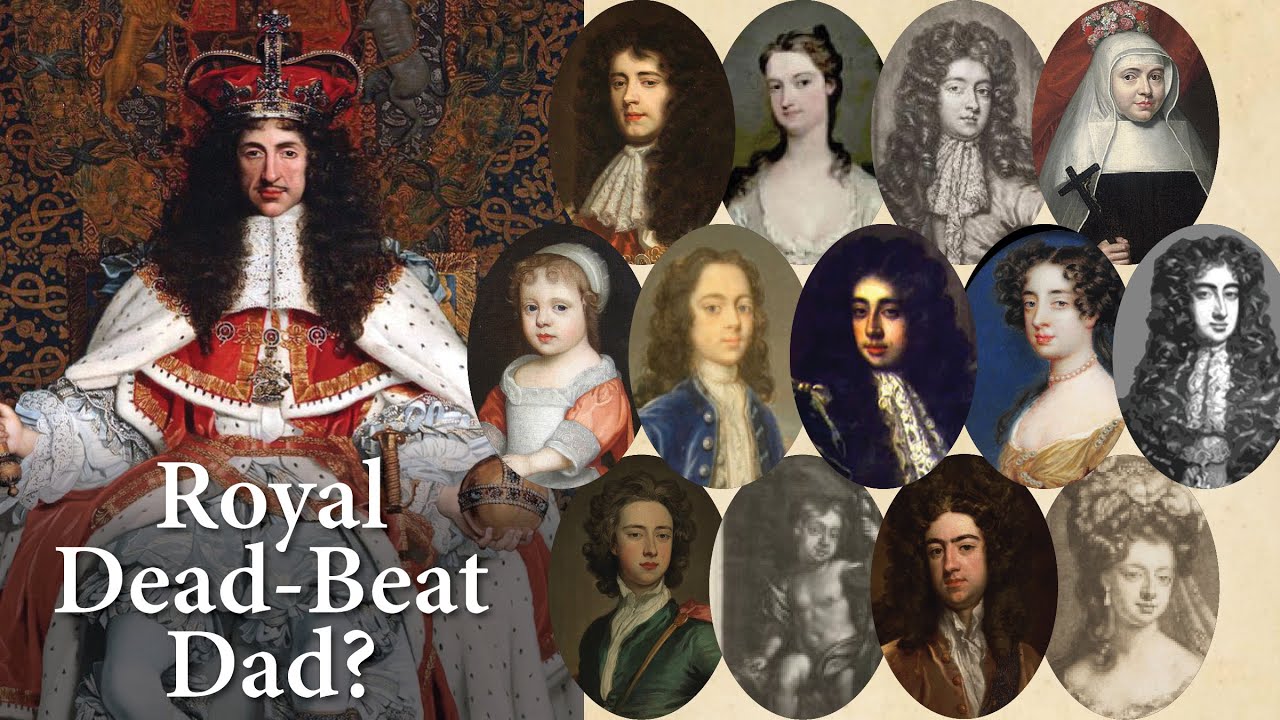
He continued to have a string of prominent mistresses throughout the 1660s and 1670s even as he became a married man. Of these easily the most well-known and the one who the king made no efforts to disguise his relationship with was Barbara Palmer, a scion of the Villiers family who had come To occupy a major position in England during Charles’ father and grandfather’s reigns. She was married to Roger Palmer, first earl of Castlemaine, when she first became the king’s mistress, though Charles would later make her the first Duchess of Cleveland as well. With Barbara, Charles had
at least five illegitimate children who took the Fitzroy surname, which means ‘Son of the King’, two daughters named Anne and Charlotte born in 1661 and 1664, and three sons named Charles, Henry and George born in 1662, 1663 and 1665. A sixth child, Barbara, was born in 1672, but the king always disputed the fact that he was her father and he refused to acknowledge her, unlike the other five who he admitted he had fathered and raised to positions of considerable wealth and prestige in later years. Charles Fitzroy, for instance, was made the Duke of Southampton in
1675 when he was just Thirteen years of age, the same year the king bestowed noble titles on several of his illegitimate children. It was not just with Barbara Palmer that Charles sired illegitimate children. In the late 1660s his love of the stage extended to an amorous engagement with one of the Restoration theatre’s finest actresses, Nell Gwyn. This dalliance eventually resulted in two sons who were given the surname Beauclerk. These were Charles and James Beauclerk, born in 1670 and 1671. With another actress-mistress, Mary ‘Moll’ Davies, Charles had an illegitimate daughter named Mary, who was born in
1673, while in the early 1670s Charles became involved with a French noblewoman who was visiting England on a diplomatic mission by the name of Louise Renée de Penancoët de Kéroualle. With her he had another son, also called Charles and given the surname Lennox. What this meant in practice is that the king had at least four different sons all called Charles by four different women and two sons named James. Overall he had at least a dozen illegitimate children, but Charles had fourteen or more confirmed mistresses, as well as engaging in casual flings and sex, so that
it seems plausible that he had more illegitimate children. In all likelihood he did not know himself how many children he had fathered. Charles faced a difficult situation across the Irish Sea, though one doubtlessly less complicated than his amorous affairs and family arrangements. In Ireland the largest ever transfer of land out of the hands of Roman Catholics of Irish and Old English descent into the hands of land adventurers and Cromwellian army captains had taken place in the mid-1650s. Nearly half of all the land available in Ireland had changed hands as parliament rewarded its Supporters and punished
both royalists and general rebels against English rule. Now, in the early 1660s, Charles was presented with a dilemma. Many of his father’s and his own staunchest supporters had been individuals with large Irish estates who had lost their lands in Ireland in the 1650s, figures like James Butler, duke of Ormond, Ulick Bourke, fifth earl of Clanricard and Murrough O’Brien, baron of Inchiquin. Charles could hardly not restore them to their lands, but in doing so he threatened to upset the delicate political consensus which his reign rested on in its early years. Eventually a compromise was reached whereby
an Act of Settlement was established in 1662 and a Court of Claims founded to adjudicate on who should be restored to their lands. It would continue its work throughout the 1660s, but it ended up satisfying few interest groups, with some feeling their piecemeal restoration to their lands was a betrayal Of their support for the Stuart cause in the 1640s and others that they had been robbed of estates which they had rightfully acquired in the 1650s. The mid-1660s were difficult years in Charles’ burgeoning reign for other reasons. 1665 saw the outbreak of the last major wave
of bubonic plague in England and in particular in London. Although the bubonic plague is typically associated with the first major outbreak of it in Europe in the middle of the fourteenth century when the Black Death claimed over a third of Europe’s people between the late 1340s and the mid-1350s, it remained a perennial part of European life for over three centuries thereafter, with regular outbreaks in large cities. An outbreak in 1625, for instance, had killed 35,000 people in London and the surrounding region. However, 1665 witnessed the worst outbreak in early modern times, a development which Was
substantially owing to the swelling of the city’s population to 400,000 people by the Restoration era from 200,000 in 1600. The outbreak began in the St Giles area of the city in the first weeks of 1665 and spread quickly. It peaked in the late summer and autumn of 1665, with over 7,000 deaths per week recorded in the city in September. By then Charles and the royal family and court had fled to the countryside, the only effective means of avoiding contamination in the midst of such a virulent outbreak in early modern times. By the time it abated
in early 1666 approximately 100,000 Londoners had lost their lives. The Great Plague of 1665 was the last major outbreak of bubonic plague in London, but the city’s suffering continued nonetheless in the period that followed. Fire was the enemy in 1666. In the early hours of the morning of the 2nd of September 1666 a small fire at the home of a baker on Pudding Lane in the heart of the old city began, one which spread to many other buildings as the Mayor of London, Sir Thomas Bloodworth, dithered over taking effective preventative measures by pulling down the
neighbouring houses to stop its spread. In the hours that followed heavy winds spread the conflagration far and wide. It would take four days to get it under control. By the time the Great Fire of London abated on the 6th of September, two-thirds of the old medieval walled city had been destroyed and a significant section of the city to the west of the old walls. This included over 13,000 homes, scores of churches and, most notably, St Paul’s Cathedral. Luckily, the death toll seems to have been relatively limited, with most Londoners having Had time to flee the
city before the fire reached their homes, though this remains a matter of debate amongst historians of Restoration London. Charles was actively involved in trying to prevent the fire spreading, heading up river to view the scene on the afternoon of the 2nd of September and ordering that all measures possible be taken to put it out. In its aftermath he called for calm as Londoners sought to blame the capital’s significant communities of foreigners and Roman Catholics for starting the fire. While Charles had been actively involved in trying to stop the spread of the Great Fire over those
four days and nights in September 1666, ultimately all anybody could do when it got out of hand was wait for the wind to die down and the rains to come. More active measures could be taken following it to begin rebuilding the capital. There was a great need to do so, as in the aftermath of the fire tens of thousands of People were living in makeshift homes on the outskirts of London without access to adequate supplies of all kind and with the cold winter in what was the Little Ice Age of the seventeenth century approaching. Welfare
measures were put in place by the crown to see people through the worst of this and Special Fire Courts were established to resolve land disputes between those who had lost their homes. The latter were in operation until 1672 to work out all of the conflicting land titles. But Charles was most involved in the rebuilding of London in the years afterwards, hiring individuals to reconstruct the old city along medieval lines and hiring the famed architect Christopher Wren to build a new cathedral on the site of St Paul’s. In the 1670s Charles also had the Monument to
the Great Fire of London, a two-hundred foot Doric column situated near the northern end of London Bridge, erected as a testament To the events of September 1666. Both the dome of St Paul’s and the Monument still tower over the old City of London today as a testament to the events of Charles’ reign. By the time London was being rebuilt in the late 1660s, Charles had to confront a significant foreign policy issue. As Europe entered the second half of the seventeenth century it was clear that Spain, the superpower of the sixteenth century, was in major decline,
whereas France under the autocratic and effective King Louis XIV was emerging as the major power of continental Europe. Charles had to determine what stance England should take towards a country which had traditionally been its ancient enemy, one with whom England had fought the Hundred Years War throughout much of the fourteenth and fifteenth centuries and which was also a Roman Catholic power. Despite these issues, Charles was inclined to favour an alliance with France, in large Part because of England’s rivalry with the Dutch Republic for dominance of the European carrying and overseas trade in the mid-seventeenth century,
London and Amsterdam being the major financial, economic and trading centres of the world by the 1660s. Cromwell’s government had already fought one war against the Dutch in the mid-1650s to try to wrest control of much of its trade away from it and Charles and parliament were determined to go further. To that end he sought a French alliance in the early 1660s and in 1662 agreed to sell the port of Dunkirk in northern France, England’s last remaining continental possession, to Louis XIV for approximately £375,000, a significant cash injection into the English treasury at the time. Despite
Charles’ efforts to court the French, when the Second Anglo-Dutch War broke out in 1665, principally between England and the Dutch Republic, France was forced to enter It, in a nominal fashion owing to an existing alliance between the French and the Dutch agreed in 1662. But King Louis XIV tried to prevent the outbreak of the war and did little in practice to help the Dutch when it erupted. It came about owing to the English invasion of the Dutch colony of New Netherland in North America in 1664, a region corresponding to the modern-day states of New York,
Pennsylvania and New Jersey. In its initial stages Charles’ forces won the significant Battle of Lowestoft against a Dutch fleet in the English Channel in June 1665, but the difficulties England encountered in the shape of the plague outbreak and the Great Fire of London in 1665 and 1666 left it weakened and the Dutch managed to destroy much of the British fleet at anchor at Chatham in Kent in June 1667, an event which forced Charles’ government to negotiate the Treaty Of Breda a few weeks later. Under its terms the Dutch were theoretically the victors as the treaty
affirmed their dominance of certain elements of world trade, but the British did retain New Netherland and the town of New Amsterdam on Manhattan Island, both of which were renamed New York after Charles’ brother, James, Duke of York. In the aftermath of the Second Anglo-Dutch War, Charles began more aggressively pursuing a French alliance. To that end in 1670 he agreed the secret Treaty of Dover with King Louis XIV. Louis had already determined to try to conquer parts of the Dutch Republic himself and agreed to pay Charles a large annual pension in advance of the war, if
Charles agreed to convert to Roman Catholicism at some later point and allied with him against the Dutch when the time came. Charles was happy to accept the agreement, but he knew that it would be unacceptable to his subjects and the terms of it were kept secret. The Treaty of Dover was a precursor to the declaration of war on the Dutch by Britain and France in 1672. The Third Anglo-Dutch War, as it is termed, consequently overlapped with the Franco-Dutch War. Charles’ government benefited greatly from the fact that the French launched a massive invasion of the Netherlands
in the late spring of 1672 and virtually overran the entirety of the Dutch Republic, though they were unable to capitalise politically on this military victory and the war dragged on between the French and the Dutch for another six years, following which France would only make minimal territorial gains. In 1672 and 1673, with the Dutch severely weakened, Charles might have expected to make Considerable gains in the war, but he was hampered from doing so by the discovery in England of the terms of the secret Treaty of Dover. When these became known publicly Charles came under immense
political pressure owing to the promise within it that he would convert to Catholicism. He tried to brush this aside, but the continuing alliance with France was deemed politically unacceptable by parliament and the court. In this environment he had no option but to make peace with the Dutch and renounce the French alliance in 1674, bringing the Third Anglo-Dutch War to an end. It was not a victory for Charles, but the Franco-Dutch War was just the first of a series of conflicts which the Dutch Republic became embroiled in during the second half of the seventeenth century and
as its fortunes declined England was in a position to replace it as the pre-eminent mercantile power in Western Europe without winning an actual war against The Dutch. That England was in a position to eventually eclipse the Dutch as the major naval and trading power in Europe was perhaps due to the expansion of its colonial empire during Charles’ reign. England’s first major moves towards empire had been made in the late sixteenth and early seventeenth century with the plantations in Ireland, the establishment of the first colonies on the islands of Nevis and St Kitts in the Caribbean
and at Virginia and New England in North America, but rapid advances were made under Charles II. His marriage to Catherine of Braganza brought England its first major territorial acquisition in India at Bombay, while Jamaica was settled after its conquest from Spain during the Cromwellian period. The focus of colonial growth, though, was in North America. The Second Anglo-Dutch War had ended with the transfer of New Netherland to England From the Dutch, which subsequently became New York. New colonies were established here as the reign progressed, notably Pennsylvania, which was granted as a private charter colony to the
Quaker, William Penn, by Charles II, and who began establishing the city of Philadelphia there as a haven for European religious minorities in 1681. The New England colonies continued to grow, with a population of over 40,000 in Massachusetts alone by the end of Charles’ reign, while in the south the settlers in Virginia and North Carolina expanded into what is now South Carolina in the 1660s, with forays into what would become Georgia in the early eighteenth century beginning tentatively in the years that followed. All of this was underlined by efforts by the crown to increase government oversight
of the American colonies after years of quasi-independent rule. While the colonies were flourishing, towards the end of Charles’ reign England was increasingly beset with political turmoil, conspiracies and crises. These began with the so-called Popish Plot of 1678. This was a highly peculiar and entirely fictitious plot which was engineered by two individuals with markedly opposed political and religious views, Titus Oates, a Catholic priest with ties to the Jesuits, and Israel Tonge, a radical evangelical Protestant who is believed to have been mentally unstable. What united them was their anti-monarchical stances and their general desire to create political
instability. In the late summer of 1678 they, along with a number of co-conspirators, revealed details to the king of a supposed Catholic conspiracy to assassinate the king. Charles reacted with understandable concern and in the weeks that followed as investigations Were launched and arrests made to identify the imaginary conspirators, anti-Catholic hysteria built across England. Eventually concern over the Popish Plot reached into parliament and trials of Catholic peers were even held. At its height in the early winter of 1678 the queen was even accused of high treason by some elements on account of her Catholic background. Overall,
the imaginary conspiracy had the desired effect. It destabilised England’s politics and created renewed religious tensions, even though there is no evidence to suggest that there ever was a genuine plot against Charles. Rather the entire thing was invented by Oates and his accomplices. The Popish Plot and the hysteria it created were bad in and of themselves, but what was worse was that they directly led to another crisis which impacted to an even greater extent On Charles. This concerned the issue of the succession. By the late 1670s, Queen Catherine had reached her fortieth year and it was
clear that there would be no legitimate heir born of her and Charles’ marriage. In this light, despite Charles’ large brood of illegitimate children, a succession crisis was looming, one in which the crowns of England, Scotland and Ireland would have to pass to another member of the royal family once Charles died. In certain circumstances this might not have been a problem. Charles had a younger brother who as a son of King Charles I was next in line to the throne and would succeed. Moreover, while James had been unusually unlucky as a father in that he had
had fourteen children through his marriages to Anne Hyde and Mary of Modena by the end of the 1670s, only two Of whom had survived birth, infancy and childhood, the two who did survive, Mary and Anne, were healthy daughters who held out the promise of a secure succession after James’s reign. The only problem was James was a confirmed Roman Catholic. The issue of James’ religion became a major political issue in England in the wake of the Popish Plot. Matters were compounded when James’ private secretary Edward Colman was named as a possible participant in the Popish Plot.
In the weeks that followed a large section of MPs within the Cavalier Parliament began calling for James to be officially excluded from the succession on the grounds of his Roman Catholicism, with the succession instead to pass upon Charles’ death to a confirmed Protestant, possibly James’ daughter Mary who in 1677 had married William of Orange, the Stadtholder of Holland in the Dutch Republic. In response Charles dissolved the Cavalier Parliament and assembled a new one, known as the Habeas Corpus Parliament. However, this proved even more hostile to the thought of James succeeding than the Cavalier Parliament and
attempted to introduce a bill designed to legally exclude James from the succession. The Exclusion Crisis was only brought to an end when Charles peremptorily dissolved the Habeas Corpus Parliament after just a few weeks of it sitting. But while the crisis temporarily passed, antipathy to James becoming the first Catholic monarch of England in nearly a century and a half remained and, as we will see, emerged again very quickly after James eventually succeeded. Incidentally, the Exclusion Crisis was a major episode in the development of a party system in England, with the Whigs emerging as a party who
were opposed to James continuing as Charles’ Successor, while the Tories emerged as supporters of the crown and James’ right to succeed. The Tories are the forerunners of the modern British Conservative Party, the name being derived from a pejorative term for an Irish bandit which was applied by the Whigs to the supporters of the crown to insinuate that they were no better than the Roman Catholic bandits who ranged around the Irish countryside disturbing the country’s political stability. While the Popish Plot had ultimately been an invented conspiracy against Charles’ life, a much more tangible and real plot
against the king’s life was uncovered in the early 1680s. This was engineered by a cohort of individuals who were opposed to Charles and the possibility of James’ succession led by Robert West, a member of the Middle Temple in London, the lawyer John Ayloffe and Sir Thomas Armstrong, a member of parliament. The goal was to have some conspirators hide in Rye House, a medieval manor which the king Was known to stop at when returning to London from his country retreat at Newmarket, which was already established as a major horse-racing venue in the seventeenth century. The Rye
House Cabal, as they have become known, intended to assassinate the king and his brother James there on the 1st of April 1683 and then launch a number of uprisings around the country to seize control of the government. However, the Rye House Plot was ultimately scuppered by the outbreak of a major fire at Newmarket on the 22nd of March which burnt down half the town and led Charles to depart early for London. Details of the plot were also uncovered and several of the main conspirators were arrested and executed. Ultimately the Rye House Plot met with no
success, but it was all indicative of the continuing opposition to Charles and the possible succession of James which characterised the Last years of his reign. The succession issue was to become a major political concern sooner than anyone had expected. Charles was born in 1630 and was only entering his mid-fifties in the mid-1680s. He seemed in relatively good health and many expected him to live for several years to come. Consequently, when he suffered a seizure on the morning of the 2nd of February 1685 and died four days later on the 6th of February many people suspected
foul play. Perhaps the king had been poisoned, many speculated? One of Charles’ doctors even supported the theory, however modern medical assessments have noted that the autopsy of Charles which was carried out by his physician, Sir Charles Scarburgh, noted that the king’s kidneys were in a poor state and it is generally assumed that he died from uraemia which was exacerbated by the bloodletting which his physicians tried To treat him with after his initial fit. More controversial was that Charles had finally confirmed the suspicions of so many of his enemies over the years about his religion by
converting to Roman Catholicism on his deathbed. This last-minute conversion may well explain why Charles’ funeral when it was held on the 14th of February at Westminster Abbey was kept a low-key affair, while no major monument to him was erected, although the latter decision was possibly owing to a lack of space in the chapel and a life-size wax effigy of Charles by the sculptor John Bushnell was placed there the following year. With Charles’ death, despite his siring of many, many illegitimate children, the crown nevertheless passed to his brother, James, Duke of York, as Charles did not
have a legitimate heir. This was immediately problematic, as much of England’s political community was still unwilling to accept James’ Roman Catholicism. Moreover, as he became King James II, the new monarch indicated not only that he did not intend to change his religion, but also that he intended to favour Roman Catholics in England and Ireland and would actively attempt to begin the reconversion of his realms to Catholicism. Furthermore, when he produced a male heir himself in 1688, his enemies became extremely concerned that a new Catholic line of kings was imminent. Thus, that year a number of
British lords and political figures who opposed James offered the thrones of England, Scotland and Ireland to James’ Protestant daughter Mary and her husband, William of Orange, the Stadtholder of Holland in the Dutch Republic. When William landed in England with an army in November 1688, James’ supporters abandoned Him and he fled the country in an event known as the Glorious Revolution. But it took years of civil war, primarily played out in Ireland, before Queen Mary II and King William III were secure in their position as monarchs. Following defeat to William at the Battle of the Boyne
in Ireland in the summer of 1690 James fled to France where he lived out the remainder of his life in exile. Consequently, within a few short years, Charles II’s failure to adequately provide for a stable succession cast Britain briefly into a new civil war. Charles II was a peculiar monarch. On the one hand he could be dismissed as a rather trivial king, one who was more interested in his mistresses, siring many illegitimate children, drinking, attending horse races and hunts and visiting the Restoration theatres of London. But there is an inherent contradiction in the image of
‘The Merry Monarch’, for He was also the individual who managed to restore the monarchy after the tumultuous civil war period and Commonwealth, bringing political stability to the three kingdoms and reconciling for a time the many different religious groupings and parties which had created the tensions of the 1640s and 1650s. He also oversaw the redevelopment of London in the wake of the Great Fire, fought the Dutch Republic in the Anglo-Dutch Wars to begin Britain’s ascendancy as the pre-eminent mercantile and trading power in Europe and also oversaw a significant expansion of England’s burgeoning colonial empire. But the
good times only lasted so long. By the mid-1670s the hangovers were setting in and Charles’ weaknesses as a king were becoming apparent as he failed to address the re-emerging religious and political tensions across his realms. Admittedly he was not aided in this by the fictitious Popish Plot, but his handling of the Exclusion Crisis suggested to the political nation that the king had developed the kind of antipathy towards parliament which his father had displayed in the 1630s and which led to the civil wars of the 1640s. And it was ultimately his failure to address the succession
issue and the religious stance of his brother that would ensure a new civil war in Britain within just a few years of his passing. Thus, Charles’ reign might be said to be one that started in success and ended in failure. What do you think of King Charles II? Was he a frivolous monarch who failed to guide the ship of state steadily and in so doing, sowed the seeds of a new war during the reign of his brother or was he a shrewd king in so far as he actually succeeded in stabilising affairs in England after
the turbulent period Of the 1640s and 1650s? Please let us know in the comment section, and in the meantime, thank you very much for watching.