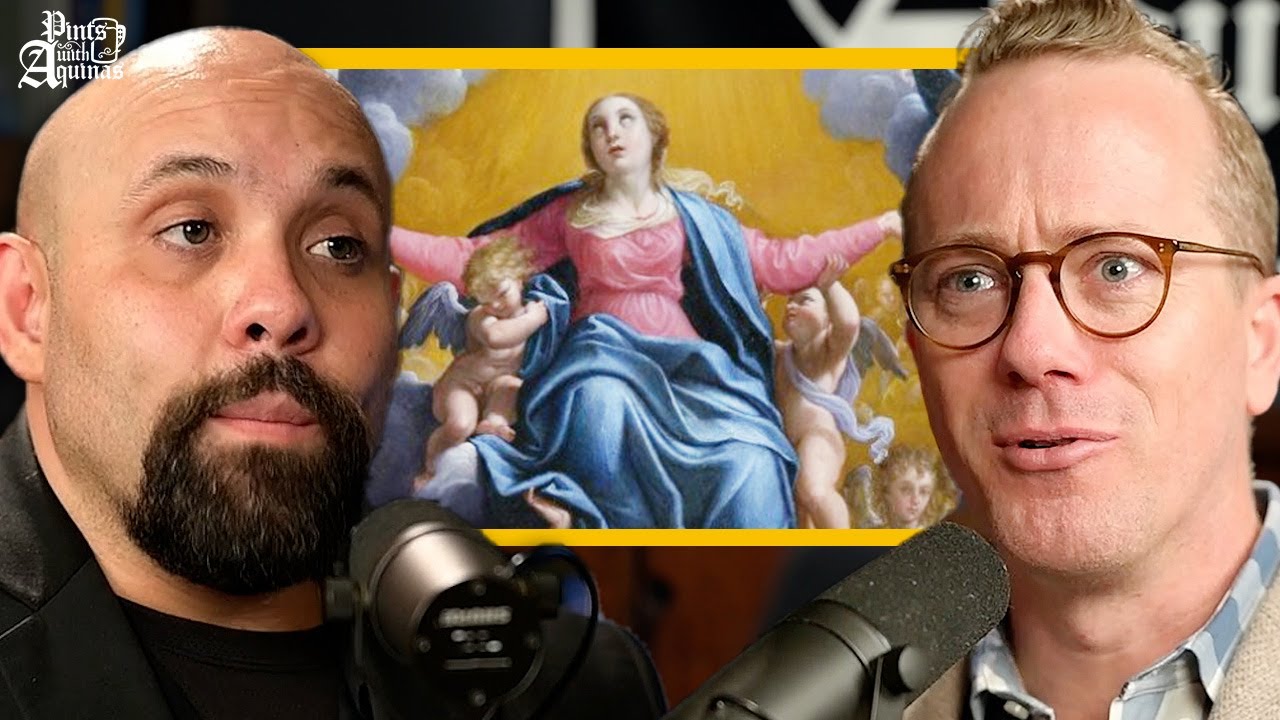
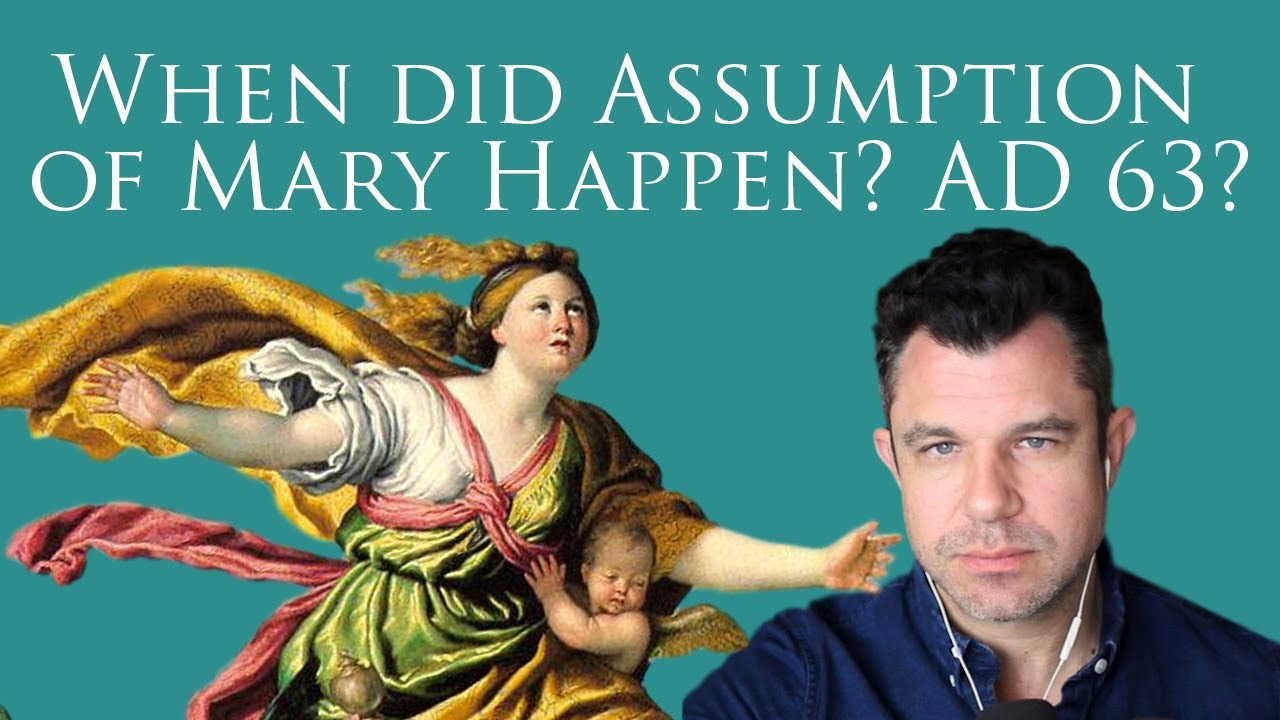
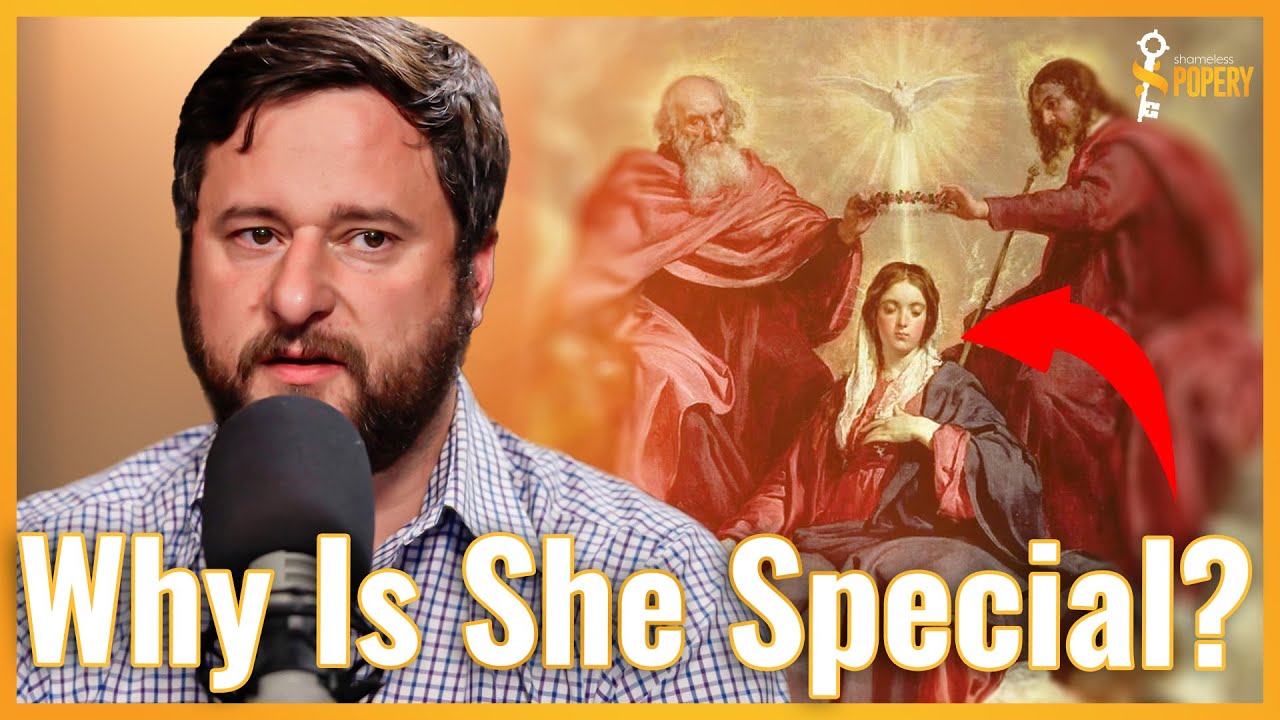
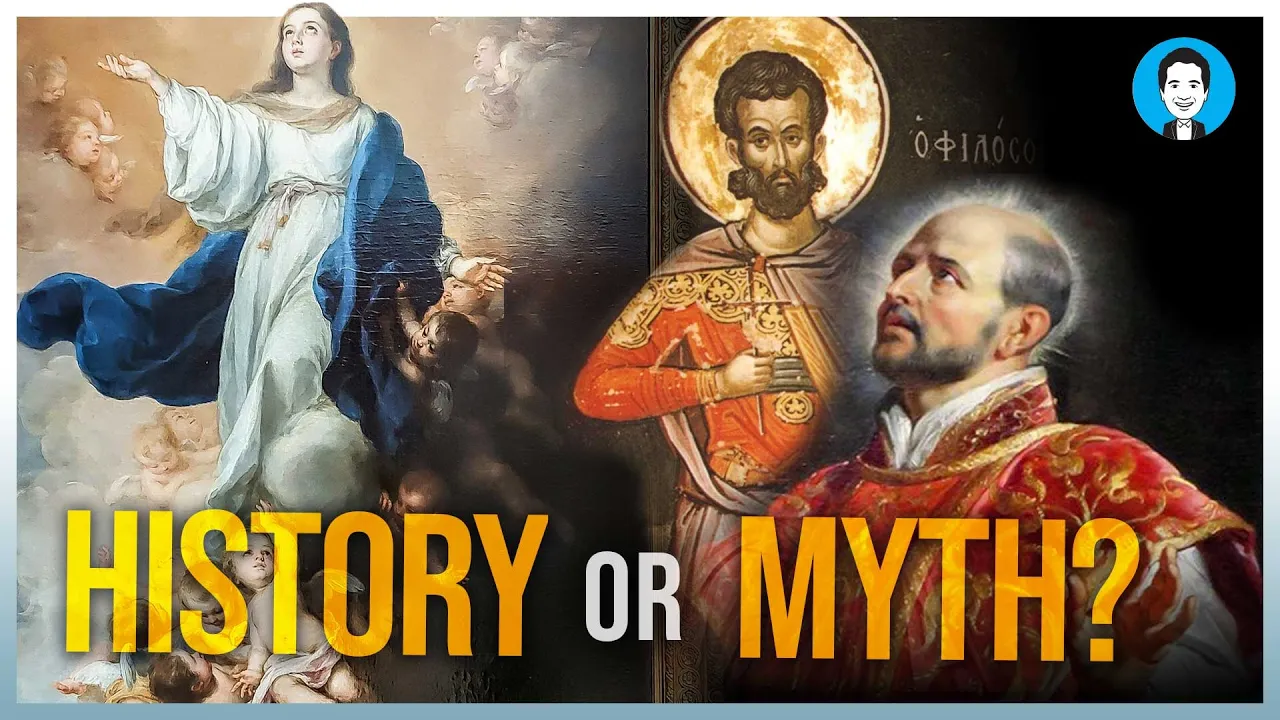
[Music] hey everyone today is the Feast of the bodily Assumption of Mary so in this episode I'm going to be talking about how I reply to a particular argument from Silence against this dogma and rather than making an assumption wink wink I'm just going to kindly ask you to subscribe to this channel because it really helps us to grow and reach more people we just made it past 90 000 subscribers and you you can help us get to a hundred thousand and I can get a fancy plaque from YouTube just hit the Subscribe button alright
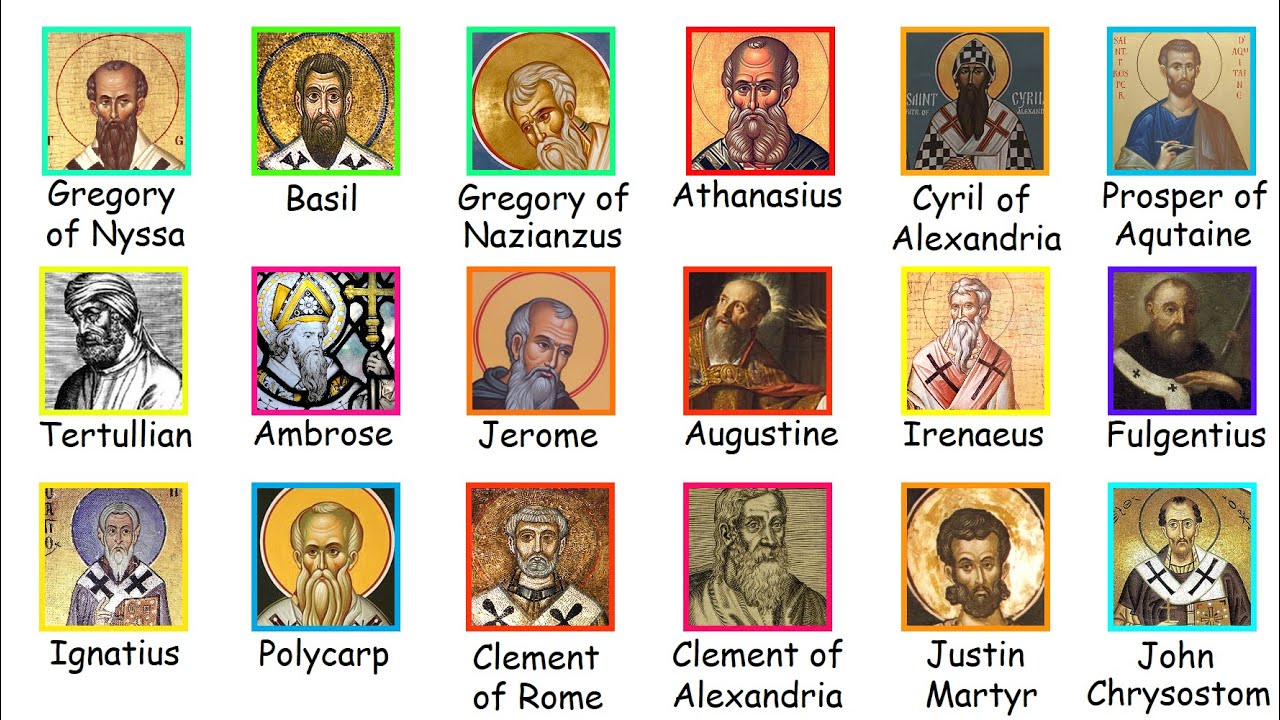
so about a year ago I responded to one of Gavin ortlin's videos on the bodily Assumption of Mary but unfortunately that file became corrupted and I lost all the video elements I was only able to save the audio so for today's episode I'm recreating a part of that Original Episode and just focusing on a more General argument from Silence against Mary's Assumption that many Protestants make the argument basically says that Mary was not assumed in to Heaven because if she were then we'd expect the early church fathers to mention it but we need to be
careful because arguments from Silence can be faulty an author may not mention something even though it still happened for example Francis Woods is a historian who defends The Fringe claim that Marco Polo never went to China because Polo's travel diary never mentions the great wall and Chinese sources don't mention Marco Polo but mainstream historians reject Wood's claim that it was necessary that these things would be recorded in order for us to know Marco Polo went to China in the 13th century Protestant apologists have a similar burden of proof when they say the church fathers would
have mentioned Mary's Assumption in heaven it can't just be fitting for them to do this they'd have to show it's necessary or that the fathers absolutely would have done this which is a high bar for the argument from Silence to make so one argument though they make is that when the fathers talk about assumptions in general they mention Enoch or Elijah but not Mary but in many of these cases the fathers have a reason to specifically talk about Enoch or Elijah being assumed into heaven and not other people who were assumed be it Mary or
even other holy people from the Old Testament so let's take a look at some of the texts that these apologists cite first Clement which was written between 80 60 and 90 talks about Enoch who being found righteous in obedience was translated and death was never known to happen to him his true Mary isn't mentioned in first Clement here but neither is Elijah who is mentioned later in the letter but not about his assumption into heaven what's interesting is that first Clement almost always cites the Old Testament to scripture and as I showed in a previous
episode the early church fathers overwhelmingly relied more on the Old Testament of scripture in their disputes with other authors than the New Testament in the ancient world older was better and Enoch and Elijah were stock figures to discuss the concept of assumptions so it makes sense that the fathers would cite them instead of more recent figures like Mary in fact in this section Clement was recounting the virtues of people in the Old Testament and he begins with the oldest Enoch before going on to Noah Abraham law Etc he's not talking about assumptions in in general
he's talking about heroes of the Old Testament so there's no reason he'd mention Mary's Assumption in this context Clement also doesn't describe most of Jesus's life when he talks about people being persecuted or betrayed Clement never mentions that Jesus was betrayed by Judas or what happened to John the Baptist mythicists claim that this shows that Clement believed that Jesus never had an Earthly life he was just a cosmic savior figure but mainstream historians reject that view which shows the dangers of relying too much on an argument from Silence something similar happens in the late 3rd
Century writer Saint Methodius who mentions Enoch and Elijah being assumed into heaven in that context Methodius was specifically talking about people who went to heaven before Christ therefore wouldn't make sense for Methodius to talk about Mary in that section of his work discourse in the resurrection because Methodius says quote if no one rose before Christ went down into Hades why are several recorded as having risen before him end quote other Church fathers mention Elijah and Enoch but they do so in the context of people who weren't just assumed into heaven but who never died at
all in his Treatise on the soul tertullian rebuts the heretic menander who says his disciples don't die tertullian says in response that all people die though he notes Enoch and Elijah are exceptions they were assumed alive into heaven though even these two may still die tertullian says in order to stop the Antichrist based on what Revelation 11 3 says but the dogma of the Assumption makes no Claim about whether Mary was assumed into heaven before or after her death if Mary's body were reunited with her soul after death in heaven then we wouldn't expect the
fathers to discuss her to discuss her assumption in the context of other people who were simply assumed alive into heaven this also explains other passages Protestant cite that talk about Enoch and Elijah being assumed for example the apostolic constitutions say if it had pleased him that all men should be immortal it was in his power he showed in the examples of Enoch and Elijah while he did not suffer them to have any experience of death you find something similar in the writings of Saint Jerome Enoch was translated in the flesh Elijah was carried up to
heaven in the flesh they are not dead they are inhabitants of paradise and even there retain the members with which they were wrapped away and translated and quote this also explains why Saint irenaeus would mention Enoch Elijah and Paul being taken up into Paradise but not someone like Mary because all three of these men were taken up alive into Paradise Paul then returning to Earth to die as a martyr though we're not sure whether Paul was taken up in a bodily way or not irenaeus is rebutting those who say God cannot keep people alive forever
whereas he puts it those who quote imagine it impossible that men should survive for such a length of time once again if Mary died she would belong to a category of holy people who died but still had their bodies taken up into heaven which is different in fact early Christians and Jews believed other holy people had their bodies taken up from the earth into heaven after they had died for example there was an early belief that Adam's Body was taken up into paradise and buried there there's also good evidence that early Christians and Jews believe
that Moses's Body and Soul have been taken up into heaven after his death Deuteronomy 34 Verse 6 says Moses was buried in the valley in the land of Moab opposite bethpayor but no man knows the place of his burial to this day however Moses is mentioned in the New Testament on the Mount of transfiguration alongside Elijah which is interesting because Elijah was assumed into heaven and Peter recommends making a tent for Moses which would imply Moses also had a physical body stokes's article not over Moses's dead body says quote in addition to the fact that
Moses is clearly alive on the mountain Moses's company Jesus and Elijah suggest that the gospel authors considered him to be among those who had ascended to God's presence and quote the Jewish historian Josephus said Moses was taken in a cloud rather than buried in the earth and Jude 9 in the New Testament says when the Archangel Michael contending with the devil disputed about the body of Moses the idea that Moses was assumed into heaven is reportedly found in the now lost ending of a first century work called The Assumption of Moses that Jude is citing
from and that origin and Clement of Alexandria are familiar with and one of Augustine's critics said it is not only Elijah but Moses and Enoch you believe to be immortal and to have been taken up with their bodies to Heaven many scholars have thought that what the devil disputed with Michael was about the honorable burial of Moses and that the Assumption of Moses only refers to the Assumption of Moses's Soul into heaven and not his body as well however Stokes writes of quote the earliest Christian commentators on Jude 9 who Associated this verse with a
story of Moses's assumption into heaven not with his burial on the earth end quote so it's quite probable many of the fathers who cite Enoch and Elijah in the context of assumptions into heaven were also familiar with Moses's assumption into heaven they simply chose not to include it because as I said earlier it didn't belong to the gold pedigree or standard of being a story from the Old Testament even even though they believed that this assumption did happen so once again we need to be careful about using arguments from Silence to think that an ancient
author did not believe in something when he may very well have believed in it but just had reasons for not including it in his own writings we also have to remember that Mary's Assumption may have taken place after most or even all of the books of the New Testament were written so this wouldn't be an event that was widely known or commented on in the early Apostolic Community instead it would have been preserved in a part of the church where Mary was known such as Ephesus before it spread throughout the wider Christian Community I do
want to note though that the data we have for Mary's Assumption in heaven it's not just a curious silence during the patristic Age we also have early positive references to Mary's Assumption during this time period Stephen Shoemaker is a very good scholar on Mary's Assumption whereas it's called in the East her dorm Mission and he's often cited by Protestants against the Assumption I especially recommend his work on the palm narratives these were accounts that were popular in the ancient eastern part of the church that described the angel Gabriel giving Mary a palm from the Tree
of Life to signify she would be taken up to heaven after her death she then dies she's buried and her body and soul are taken to heaven in his 2006 book on the subject Shoemaker says of these narratives we may conclude with some degree of certainty that the earliest Palm Traditions were already in existence sometime before 400 CE and very probably earlier perhaps even as early as the second century in his 2016 book on Mary Shoemaker goes further and talks about the book of Mary's Repose he says it only survives as a fragment in the
Ethiopian language that was dated to the 5th Century however he writes this ethiopic version reliably transmits a very early account of Mary's dormition and assumption that had been composed already by the 4th century and is most likely even earlier than that we can locate this text with some confidence to the third Century although the possibility of an even earlier origin perhaps in the second century should not be excluded end quote now some people object that all this shows is that Mary's bodily assumption grew out of a gnostic Legend not an Apostolic tradition but the more
we study these sources the more we can find that isn't the case for example Pope Pius XII dogmatically Define the Assumption in 1950 but in 1955 a new homily was published from Bishop Theo technos of Palestine which said if Enoch had been translated and Elijah had gone to heaven how much more Mary who like the moon in the midst of the Stars shines forth and excels among the prophets and apostles end quote Protestants usually say Saint Gregory of Tours was the first to proclaim the Assumption in the year 590. Theo technosis homily can be dated
to around the same time but it's much closer in its source material to Traditions directly from the Holy Land Paul Duggan writes in his dissertation on the assumption that quote theotechnose surprisingly called his homily not the dormicio or posseo of Mary but her assumptio and wrote as if the belief were Universal he based his belief in the Assumption not on the authority of Legends even though he used some of these but upon faith in Jesus and Mary as revealed in scripture toward the end of the sermon theotechnos quoted 20 passages from the Old Testament all
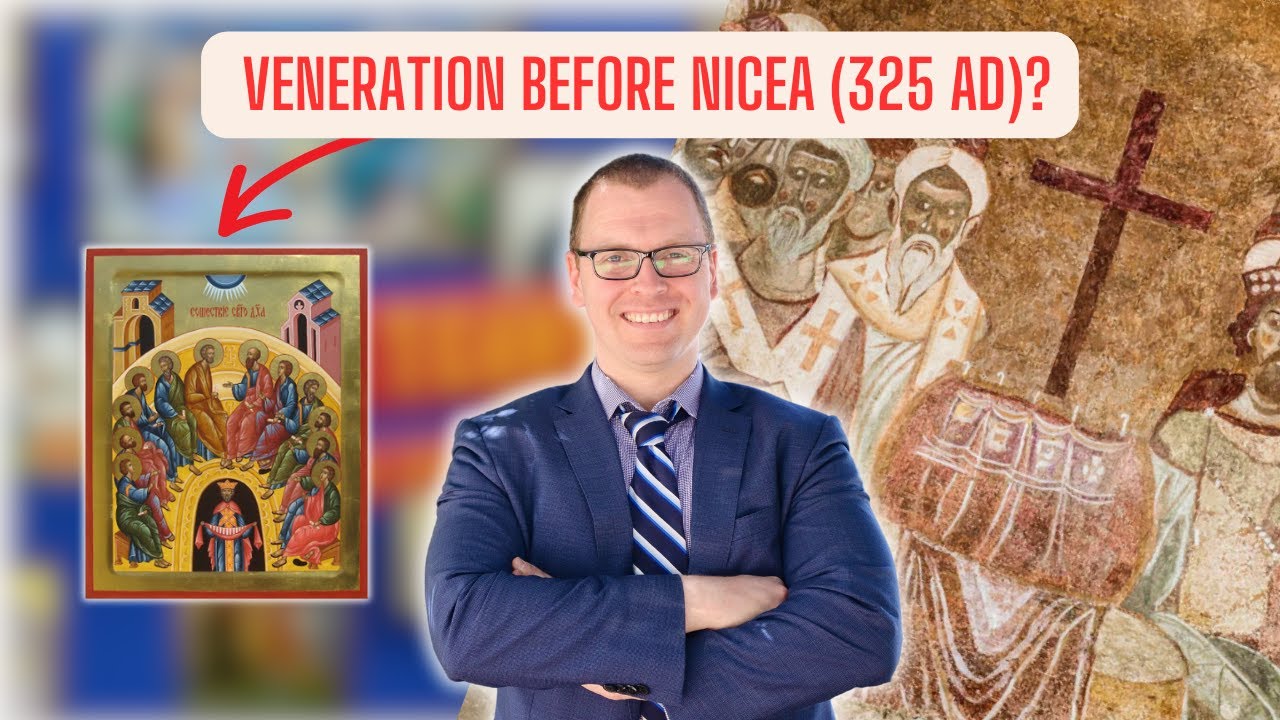
of which typified Graces which Mary later received end quote another reason to think the Assumption of Mary goes back early in church history is that the practice of venerating relics was common in the early church with a few exceptions when it comes to Christ it was only those things he left on earth like the cross of thorns that are venerated why because Jesus's body and soul ascended into heaven what's interesting is the same thing happens to Mary and that the only relics people say exist are things like her clothes not her bones or body parts
they're nowhere on the earth here's what Shoemaker says since her body had been miraculously removed either to some hidden place or together with her soul into Paradise there were no relics tying her cult to a particular place thus these Legends effectively prevented her cult from becoming linked with a particular region and quote Saint Ephraim of Syria lived in the early 300s then he describes Mary saying before her death I shall enter in a moment The Verdant Gardens of paradise and there I shall praise God where Eve fell so ingloriously most Scholars say the text is
too vague to ground a belief in Mary's bodily assumption but let me add a detail from Shoemaker that's interesting he writes it may be of significance however that no one is present in Paradise without his or her body the implication that no one is without a body might suggest that one must be embodied to be present in Paradise if one were forced to make a decision Mary's final state in this narrative seems more like an assumption than not since Mary's Resurrection in Paradise is clearly both special and enduring end quote shoemaker's conclusion on the narratives
about Mary's dormition and assumption he's fairly agnostic about the historical origin he does not just bluntly say Mary's Assumption is a gnostic Legend and then call it a day he writes the following we may identify the period between 450 and 500 CE as the time when the ancient dormition Traditions first come into historical view from a somewhat uncertain past although we are able to trace a clear development in the Palestinian Cult of Mary nothing in this pattern correlates with the early narratives in a way that would allow us to identify one type as the original
source of all the others and quote in this episode I haven't tried to prove through historical evidence alone that the doctrine of Mary's Assumption has an Apostolic origin I'm only showing that the arguments from Silence offered by Protestants do not disprove the dogma's apostolic Origins ultimately the reason I believe Mary was assumed into heaven is because Christ's Church teaches this but that is not an unintelligent use of Sola Ecclesia for example I'd ask a Protestant do you believe God's people were enslaved in Egypt and left through the Miracles of The Exodus most would say yes
but most historians say there is not enough historical evidence to show that this happened and they'll say the biblical account is written too late to justify those events but a Protestant would say that silence in things like Egyptian sources does not disprove The Exodus and since scripture says it happened that's good enough to know what did happen or consider the evidence from genetics that makes it difficult to believe we all came from Adam and Eve a Protestant would say that we did come from them because the Bible tells us so even if it's really difficult
to trace a history of this happening in the human genome in both the Exodus and the fall of Man divine revelation clearly illuminates an event in the past that secular historical Sciences can only dimly reveal if they can even reveal it at all by secular methods alone in order to truly disprove events that Protestants believe in like the fall of Man or the historical Exodus you'd have to disprove the authority of the Bible that revealed them to us likewise a Shoemaker says strictly secular historical scholarship does not tell us the exact origin of the belief
of Mary being assumed into heaven though it can be traced back to as early as the second century but Christ Church does infallibly tell us it comes from the apostles and so to disprove the Dogma you'd have to disprove the authority of the church that reveals this Dogma to us in fact if Protestants were consistent about arguments from patristic Silence they'd have to give up many other doctrines they believe in like eternal security which I discussed last week here on the show they'd have to give up denial of baptismal regeneration as well as the foundational
doctrines of solo scriptura and solofide I would much rather be in a position of wondering why the fathers do not mention a secondary mystery like Mary's Assumption then why they don't mention something that's foundational to what I believe like Solo scriptura or solofide so while the arguments against Mary's Assumption do not succeed this also is not a Dogma that can be proved from historical evidence alone to do that we have to go back to the nature of the church herself which is fitting because Mary's role in the economy of Salvation is never to attract vain
attention to herself but to always lead people to her son Jesus Christ and her bodily assumption is a sign that in spite of how the body is often denigrated or mistreated in this life we have hope in knowing that we will have an eternal glorified embodied existence with our Lord forever just as his mother had this with him ever since she departed from this Earthly life so I hope this is helpful to you all and that you have a very blessed feast day hey thanks for watching this video if you want to help us produce
more great content like this be sure to click subscribe and go to trenthornpodcast.com to become a premium subscriber you'll help us create more videos like this and get access to bonus content and sneak peeks of our upcoming projects foreign