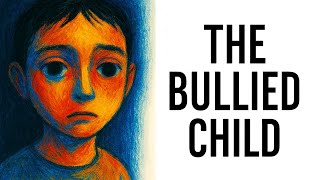
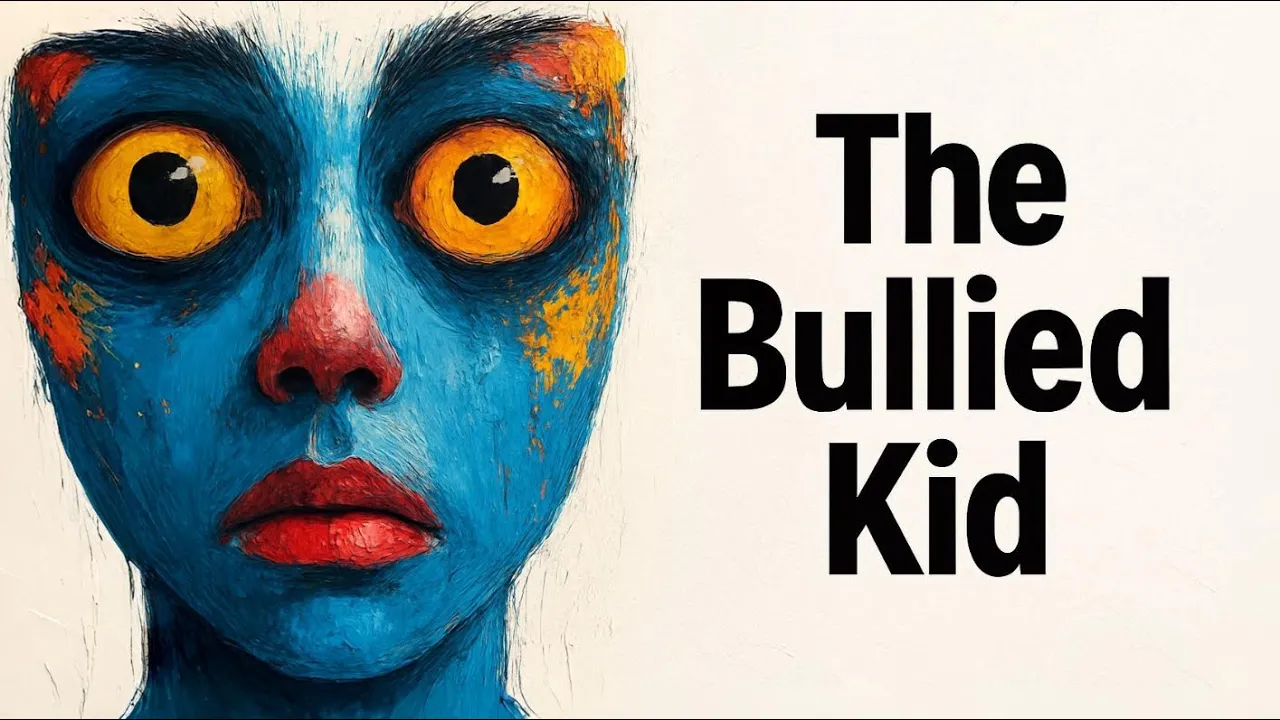
[Music] Aiden sat with his head pressed against the window. He was young, only 9 years old, but already his heart carried the weight of rejection. His father rarely looked at him, and when he did, it was with eyes that seemed colder than the wars around them.
Aiden learned early that no matter how hard he tried, no matter how much he brought home from school, no matter how quickly he obeyed, his father's affection remained locked away. And so he made a secret vow, though he never spoke it out loud. If he could only prove himself enough, if he could only please the man who never smiled at him.
Maybe then he would be seen. Maybe then he would be loved. This small boy carried that vow into the outside world, the classroom, the playground, the cafeteria.
[Music] He laughed at jokes that weren't funny. He gave away pieces of his lunch. He did homework for others just to hear the sound of their approval.
And for a brief second when someone said thank you or patted him on the back, he felt a flicker of warmth. The kind of warmth he imagined he might have felt if his father had ever said, "I'm proud of you. " But here's the tragedy.
Children who chase love that is withheld at home often find themselves easy targets elsewhere. Other kids noticed his eagerness, his hunger to be accepted, and some twisted it into cruelty. They teased him.
They called him names. And sometimes they excluded him just to see him scramble to get back in their good graces. Why does this happen?
Why does a child who is desperate for connection end up in the cruel loop of rejection? Psychology has an answer. A neglected child often develops what's called a fing response.
It's a survival strategy where the child learns to appease others in order to avoid pain and hopefully earn affection. Aiden was not defiant. He was not loud.
He did not fight back. Instead, he smiled when he wanted to cry. He apologized when he had done nothing wrong.
He said yes when every fiber in his body wanted to say no. He believed that if he made himself small enough, agreeable enough, kind enough, maybe the world would stop hurting him. But the world rarely rewards desperation.
other children can sense it even without understanding it. His kindness wasn't seen as kindness, but as weakness, and so the bullying grew sharper. Every cruel word, every laugh at his expense, every shove in the hallway became proof in his mind of something he already believed, that maybe he was unworthy, that maybe he was the problem.
This is how the cycle deepens. When neglect at home plants the seed and the cruelty of peers waters it until it grows into a forest of self-doubt. Think about this for a moment.
Imagine being so young, so fragile, and having your entire identity revolve around the hope that one day you'll be good enough for someone to notice you. Children don't rationalize neglect the way adults do. They don't say, "My father has his own wounds and struggles.
" They say, "If my father doesn't love me, it must be because I'm unlovable. " That belief becomes the lens through which they see every friendship, every relationship, every interaction. For Aiden, every classroom felt like a stage, and he was the actor desperate for applause.
And when he didn't get it, he blamed himself. But here's where the psychology gets even more complex. When you grow up learning to please, your nervous system wires itself around other people's approval.
There's even a term for it, externalized selfworth. It means your value is determined not by who you are, but by how others respond to you. Aiden didn't know who he was outside of what others thought of him.
If they liked him, he felt a little bit alive. If they ignored him, he felt invisible. And if they mocked him, he believed he deserved it.
This fragile dependence is one of the reasons bullied children sometimes remain stuck in toxic patterns long into adulthood. Now you might be wondering why didn't he fight back? Why didn't he stand tall and defend himself?
The answer lies in something called learned helplessness. When a child tries again and again to win love, to win safety, and consistently fails, eventually they stop trying to resist. Their brain learns that nothing they do will change the outcome.
So instead of fighting, they fold. Instead of shouting, they whisper. Instead of saying no, they say yes.
This doesn't just make them vulnerable to bullying. It conditions them to accept unhealthy dynamics later in life, whether in friendships, workplaces, or even love. Aiden's story is not just his own.
It's the story of so many children who sit quietly in classrooms, who laugh a little too quickly at others jokes, who apologize for things they didn't do, all because they are secretly begging for someone, anyone, to tell them they're enough. And here's the haunting part. The very thing they think will save them, their endless pleasing, often becomes the very thing that attracts harm.
This paradox is brutal, but it's real. But let me ask you this. How many of us, even as adults, are still carrying pieces of Aiden within us?
How many of us learned as children that love must be earned through compliance? How many of us laugh when we want to stay silent, agree when we want to disagree, or hide our true selves because we're afraid of losing approval? This is not just a child's story.
It's a human story. When psychologists study bullied children, they often find similar long-term effects. Lower self-esteem, difficulty setting boundaries, anxiety around conflict, and a tendency to overanalyze relationships.
It's not because they are weak. It's because their early environment trained their brains to prioritize survival over authenticity. Aiden's desperate attempts to win his father's approval became the template for every other connection.
He didn't just want friends. He wanted to be chosen. He wanted someone to tell him what his father never did.
That he was worth loving simply for existing. There's a moment I want you to picture. A young Aiden, after being mocked by classmates, goes home and sits at the dinner table.
He tries to tell his father what happened, but his father barely looks up. Maybe he mutters something dismissive. Maybe he stays silent.
And in that silence, Aiden's heart cracks a little more because in that moment, the message is reinforced. No one will come to save you. No one will validate you.
So what does he do? He doubles down on pleasing. He decides that maybe if he becomes perfect, perfectly obedient, perfectly generous, perfectly invisible, then maybe one day he will be accepted.
But perfection is a cage, and cages are where true selves slowly wither. And yet there's something strangely universal in his struggle. How many of us carry invisible cages built by the neglect of others?
How many of us are still trying to earn the love of people who could never give it in the first place? The bullied child grows into an adult who still hears echoes of laughter in every silence. Who still mistakes rejection as proof of worthlessness.
Who still feels the need to bow in order to be seen? But here's where curiosity opens. What happens when this child becomes an adult?
Does he ever break free? Or does the pleasing spiral continue into every friendship, every romance, every workplace? Can a wounded child truly learn to become a whole adult?
Or does the shadow of bullying and neglect linger forever, shaping every choice, every relationship, every belief about love? That is the question. And to answer it, we have to look deeper into the psychology of identity itself.
How the mind of a bullied child becomes the blueprint of an anxious adult. Aiden grew older, but the echoes of childhood did not vanish. They simply disguised themselves in more sophisticated forms.
The boy who once offered his lunch to classmates became the young man who offered his time, his energy, his very sense of self to anyone who would give him the smallest sign of approval. He learned how to read people's moods like weather patterns, adjusting his words and expressions to fit whatever might keep the peace. At work, he stayed late, never complained, and smiled even when he was exhausted.
In friendships, he became the reliable one, the one who always said yes, the one who never dared to place his own needs first. And in love, he mistook conditional affection for devotion. Because deep down he still believed that love was something fragile that could only be maintained if he pleased enough, gave enough, endured enough.
But beneath the mask of the agreeable adult, the bullied child still lived. Every compliment felt temporary. Every relationship felt fragile.
And every silence felt like danger. When someone didn't text back, Aiden's mind spiraled. When someone was upset, he immediately assumed he was to blame.
And when someone pulled away, it felt like a reenactment of his father's cold indifference. This is how psychology works. It weaves our early experiences into invisible scripts that we act out again and again, even when we don't realize it.
The fascinating part is that neuroscience actually confirms this pattern. Studies show that when children experience neglect or bullying, their brains wire themselves around vigilance and appeasement. Their nervous systems become hyper sensitive to rejection.
This isn't weakness, it's adaptation. The child's brain learns if I can predict people's moods, if I can keep them happy, maybe I'll be safe. But what begins as survival in childhood often becomes a prison in adulthood.
Because constantly monitoring and pleasing others leaves no space for authenticity. No room for the messy, honest, imperfect self that all of us deserve to live as. Aiden's life, like many who share this story, became a performance.
He played the role of the agreeable colleague, the loyal friend, the selfless partner. And yet, deep at night, when the world grew quiet, he often felt hollow. He wondered why despite giving so much, he always felt so empty.
The truth was painful but simple. You cannot fill the void of neglect with other people's approval. The applause of the crowd will never heal the silence of a father.
But here's the curiosity that psychology asks us to wrestle with. Can a child conditioned to seek love through pleasing ever break free? Can the bullied child learn to stop bowing and finally stand tall?
The answer is yes. But it requires a kind of inner revolution. It begins with the simple but terrifying act of turning inward.
Because for someone like Aiden, silence has always been dangerous. To sit with his own thoughts meant hearing the echoes of rejection, the whispers of you're not enough. So he avoided silence by filling his days with tasks, with favors, with endless service to others.
Healing began only when he dared to pause and ask himself a question he had never asked before. What do I want? apart from what others want from me?
At first, the answer was nothing but confusion. He had built his entire identity around the needs of others. But slowly, painfully, he began to recognize his own desires.
He realized that he liked painting even though no one praised him for it. He realized that he enjoyed long walks at night, not because anyone joined him, but because it gave him space to breathe. and he realized that saying no did not make him unlovable.
It simply made him human. This is where psychology meets philosophy because healing from bullying and neglect is not just about learning boundaries. It's about redefining the very meaning of love.
True love is not earned through sacrifice or perfection. True love is not conditional upon how well you perform. True love, whether from a parent, a partner, or a friend, exists when you are accepted in your imperfect wholeness.
And until someone like Aiden learns to believe this, they will continue to repeat the cycle of pleasing and pain. But what about the scars? Does the bullied child ever fully forget the laughter, the rejection, the silence of neglect?
Number scars do not vanish, but scars can transform. They become reminders of survival, proof that you endured, and sometimes even sources of unexpected strength. Many who were once bullied develop profound empathy, the ability to notice pain in others with almost supernatural clarity.
They know what loneliness feels like, and so they carry a deep desire to make sure others don't feel the same. This empathy can become their gift, but only if it is balanced with self-respect. Because empathy without boundaries becomes self-destruction, but empathy with boundaries becomes wisdom.
So let us imagine Aiden years later standing in front of a mirror. He sees not just the reflection of a man, but the ghost of a boy who once begged for love. He knows that the boy is still inside him, but he also knows that he is no longer trapped by him.
He whispers to that child, "You were always enough. It was never your fault. " And in that moment, he feels something he had chased his entire life.
Not applause, not approval, but peace. The psychology of a bullied child teaches us something universal about human beings. We all long for connection.
We all fear rejection. We all carry invisible wounds from times when we felt unseen or unwanted. Some of us respond by withdrawing, others by fighting, and some, like Aiden, by pleasing.
But the common thread is this. Our earliest experiences of love and neglect shape the architecture of our hearts. And unless we become conscious of it, we live our lives replaying old roles in new theaters.
So the question is not only about Aiden. The question is about you. Where in your life are you still trying to please, still trying to earn approval, still trying to heal an old silence with new applause?
What would happen if for once you stopped bowing and simply stood as you are? What if love was not something to be earned, but something you deserve from the very beginning? The ending of Aiden's story is not about becoming flawless or finally gaining universal approval.
The ending is about reclaiming his right to exist as himself, even if not everyone claps, even if not everyone stays. That is the quiet victory that every bullied child can one day claim. the victory of authenticity over performance, of self-respect over self-sacrifice, of inner peace over outer applause.
And so the story leaves us with a final thought. The bullied child believes that survival comes from being pleasing. The healed adult learns that survival and more than survival, joy, comes from being real.
Between those two identities lies a journey of courage, of self-discovery, of breaking patterns so deeply wired they feel impossible to escape. But escape is possible. Healing is possible.
And for anyone listening who has ever felt unseen, unwanted, or unloved, the truth is simple and unshakable. You are always worthy and you always will be.