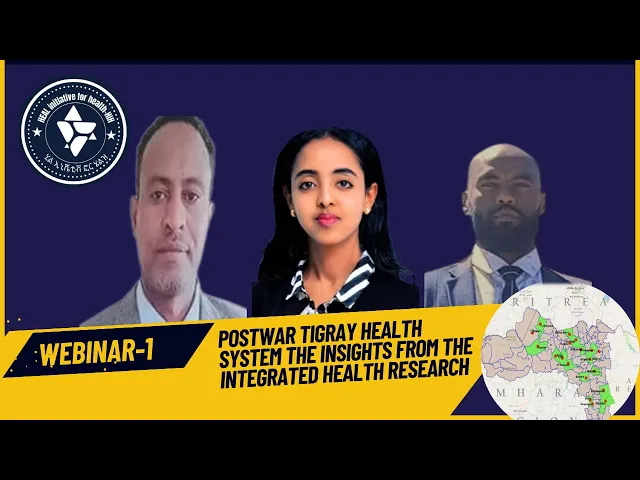
[Music] so yeah it is a great great pleasure to part of organizing wonderful platform uh saying this I'm going to proceed uh to present on the post conflict revitalization of the health system and mainly Focus the case of the Integrated Health research which was done by collaboration with different partners Integra as outline I have introduction method result in discussion conclusion and recommendation plus implication for future partnership as well as the challenge for partnership uh saying this H we say uh postc conflict head system revital and it is a process of restore an arit conflict uh
I think uh I'm not going detail what by the post conflict Health System reation uh my colleagues for my colleagues appr uh she did a wonderful research reorienting and rebuilding the health system in war and we are interested until he can read that paper it is really amazing uh the other paper also it was done by the impact of system of the system of the was severely affected by the war so in general uh H the stage in the state becomes vi from time to time after deterioration the system becomes collapsed then uh the system
then uh at this time the health system will recover from the conflict and uh this actually in a normal scenario then uh the heal system move okay work to follow for to ra as and development some system from the to the peace and development so hopefully we should contribute a lot to reach the peace and development so H is the character of the post conflict Health System uh usually it is uh basically we have a lot of uh things to be described by the uh the postc conflict Health System basically there is insufficient coordination oversight
and monitoring the integrate most of the 7% of professionals uh and it increase the speed of infectious disease nowadays we see tra of colaria and malaria especially the trend of colaria and malaria becomes increased from time to time and the consequence of instability on people ability to get health care and facility as a result uh it's difficult for decision maker uh to take action uh than uh due to there is a limited or there of evidence on what is uh the need of the community and it's also difficult to map uh the health facility and
to map uh the community need regarding the health system and in light of this uh we carried out an Integrated Health survey and uh it was also s the M part of this integr survey it was published in the East Africa Journal of Health Science it's is a pleasure to have Professor a here the editor in for this journal so the that integration of heal survey brings cost Effectiveness into evidence generation in post that is it is basically theed part so you can access it for more detailed information so as uh as integration survey we
have a lot of objective uh the first objective was to determine the use of maternal heal service especially the farm planning ANC inal delivery and postal CL because uh uh as you see most of the it was in better place in most of the health indicator before the war but as a result of the war most of the health systems becomes collapsed and it increase inequity and inequality uh the other objective also to determine the woman's level of knowledge on OBS fisa and Po and we are going also to determine the magnitude of woman with
fisa and poop and we determine the achievement of the integr mus supplementary imation activity conducted during the postar and we identify the routine immunization among childrens from zero up to3 months of childr and we Det determin the proportion of vaccine intention and use among adult workers for covid-19 vaccination finally uh we see it was really shallow and determine the magnitude of bayet coverage and utilization in the selected districts so as stud area our study was uh almost includes uh all gen except the W with OB reason this is the secret reason we do not include
the Western Z so here the yellow color indicates the stud area for integrated survey and we carried out uh our study in 19 districts out of the nth districts we include uh three Tavia from each district which gives 57 D and from each D we select one push so uh s to have representative or S to have include a for IDP we include six IDP sites from the zonal city of TI so for this purpose we includes 51 districts or 51 host community and six IDP sites a total of 57s so uh This research it
was some it was exceptional we carried out in an integrated approach coach basically we integ integrate our study uh data was collected from the community from the host as well as from IDP and it also includes from uh data from the facility including from Health po Health Center primary Hospital general hospital and the comprehensive hospitals ID and a uh and the survey also covers a range of Health area mainly matal and Child Health Service as well as the covid-19 vaccination and the most great thing which give a great pleasure to be part of this event
we suspects case for the suspect case for fisa and P were linked to the and Technical and financial resource were mobilized from diverse stakeholders for example technically those from mity thri buau and F Center and financially the fund was obtained from wh UNF NFPA months for months and Africa so uh for our parameter for example for covid-19 vaccination we include adult women and men health workers and health facility and for the covid-19 vaccination uh we include uh more than 16 uh households uh it almost 14,000 are for women and almost 3,000 where for men and
we also collect data from health workers about for Co and in addition we included 85 health facility from Health post to oppressive special Hospital and we collect also quality data for Co particular for covid we collect six um focus group disc seven IDE and six SK and the denom for Co was large then it will also decrease to PO of P maternal Health Service Integrity mus supplementation activity as well as rtin immunization for example for p includes woman age of 50 years and above we include those humans above 49 because as age increase the risk
of P also becomes high but for OB F we include only those who give livees and we restrict for OB f for 50 up to 49 so the some size for f so for uh for the matter Service uh it is basically The Source population was woman of reproductive age group from 50 up to 49 years and the samp size was 10,000 so for the poop of sister p and maternal Health Service includes 51 health facility from Health post to comprehensive specialized hospitals and we include qualita data also for that one especially we do not
carried out focus group recation for Po and rather we conduct for refug or refug for maternal Health Service for the NC delivery postnatal and F planning uh the other issue is the integrated me supplementation activity our Target was of those childrens from age zero up to 59 months and households which children age Z to 5 months so we include a total of 9,4 44 childrens it it is an approximate what 7 7,000 households because one household May contains one or two or some extent three households so for the Ortin immunization uh our Target was those
children's age from zero to 27 months and we get to Children of 3,1 so for the integrative me supplementation imation activity as well as for the REM activity we encourage 72 health facility it includes from head po to the primary hospital because most of the imation carried out from head post to primary hospitals and for this we include for focus groupid and cki so here we include data we collect data from delivery poal [Music] same extent ly as as what we see from other a single survey so the data was collected using odk and it
also sent to the m server and the collect data bod was exported for our softw for analysis especially descriptive and adverse St out so as a result Henry I'm going to present the pertinent findings here the data we obtain from the integr survey for example the F plan cage was it was 28 28.4% for the NC for us it was 6% and4 it was 33% ins delivery it was 38% and the postal p% so this is the figure how much the war has an impact in producing the basic maternal Health Service for example before the
war the farm planning was 36% but it was decreased to 28 28% the NC it most more than 94 but as a result of far it was decreased to 6% the same for inal delivery as T was in a better place and it shows a remarkable achievement in all his indicators including the maternal service but the result of the as a result of the war most of the matal service becomes drops for example before the war it was the initial delivery was 72% but after the war it significant decrease to 38 38% so as a
is know most two s of the maternal mortality occur during birth so as a considerable number of hum birds at health facility Bas of our survey uh more than 60% of the women they give birs at home at Bush or at Forest so as a result a stud done by collaboration from different colleagues from m h which was lead by Dr a the matter mortality was 840 we are back to 200 in 200 ages it was 871 then currently it was 2000 wind so it is obvious that how much the were service it significantly increase
maternal mortality and significantly decrease the coverage of farm planning ANC deliv and postal so the global Target the sustainable developed goal it was planed to R M to 70 or 10,000 100,000 live veres by 23 but we are far away from such Target we just five six years so it would be difficult to capture rather we need we think out of the box so this is actually the absolute number four OBS PO for surprise before the one it was rare find a woman with f m for example a study done by Ms fors and was
in collaboration with NFPA and M Mercy uh the three which was a stud by M for University Center and N 20150 but after the war we found that6 suspected women for OBS the same for organ prolapse in for the in 2050 it was 31 but currently we obtained 500 PS so how much the morbidity of the near becomes increase from 30 to 160 to from 31 to 523 for and so the target was for the Target was to eradicate of by3 so it is difficult because OB by 2015 it was 1.4 thousand but it was
significantly increased to 12 by the study which was found from integr so uh thanks for the Reginal based on the lesson taken from the integrate survey p and we carried out into phases uh in Phase One and phase two and basically we found that 1,174 womens out of the 8,000 was confirmed for pic organ prolapse and for a phase of we know that the war has signicant the near of the morbidity and such manifestation of morbidity also described by po and obsess uh before the war it was rare to found a woman with obsess but
due to the following the war the number of hum with fista and po becomes increased following the war for example said that why would you go facility you will lose all your money and gold or on something that is not cable you will not get better and the health professional are not good this actually 70 years old record and entry to the ID pars woman how the community passes about the PO and F so this actually the image of Po from our campaigns is difficult for our womans to have such this because someone they live
with such number of such case of P for more than 40 years so it's is difficult how the people especially the woman suffers from and F this actually one some of the our image from our campaign it is a really horrific SE such a woman especially Integra this also some of the image from our campign is difficult to see how our wom suffers du to the from Po and damage for po so on uh H is uh vaccination uh here I I try to compare the vaccinations before the during the bical due to the dam
adustment and the Curran is for the integrate survey so the penta pent 3 pent one m and full vaccinated it is significantly decrease due to the work before 5% for p uh for example the full vaccination also becomes also decreased due to the war significantly decreased before uh integrate basically we were in a good position in the imization the pent pent 3 m and full vaccination but following the war it was really really really becomes decreas this such figure also veryl so uh the P it was decreased from 954 to 64 and the full imization
it was 73% before the war but Bas on the finding from integrate survey it was 31 uh 31.4 so it gives a lot of childr unvaccinated uh that high integ common this is vaccine vaccine prev is common the for CES from the dis from vac for and the different problems also becomes prevalent in so P Town it was uh as you compare with before and after there were 31 P it was decreased by 31% and p 3 it was decreased by 42% and M one it was decreased by 45% and the full vaccination it was
decreased by% so it is clearly observed that how much the water affects us in Cas in the terms of imun ation in addition uh we also collect data on covid-19 vaccination the AED on covid-19 vaccination it was 8 80.5% among adults and it was also 90.7% among professionals their intention also it was 81% among adults it is almost similar the intention to you uh for vaccination of covid-19 was similar among the adult as well as among uh so part of our integrate survey we try to compare the cost Effectiveness this is actually the cost meting
setting the total cost for the unintegrated survey was it approximately 33 million but the cost for the integr survey was uh 11 million so since we have a lied resource but we need uh data for making and maps for the community problems we try Reduce by 20 more than 20 Millions so accordingly we carried out the detest so the average value for the UN integr survey was 80 million but for the integr survey it was 2 million which a m difference of 5 so there was a significant difference is the cost of integrated in an
integrated Sur so the integr surve was C effective to bring evidence in postc setting this actually a golden opportunity or it is a golden opportunity to capture data in uh resource limiting so as conclusion and recommendation since it is a l huge study I I try to focus mly on main points Z what had a pronounce effect on a pronoun effect it a significant effect on decrease in the maternal head service ANC delivery and postal so as recommend it will better to strengthen the primary Heth care uh on PO and obsess it was most the
most neglected dis and for surprise we do not capture data on PO from the DS survey rather some extent we capture data on conception about its treatment and there is also most of woman so as a recommendation it will be better to have morbility zance and here significant number of children left unvaccinated and undervaccinated the war so it would better to strengthen the surveillance on vaccine preven this this common TC nowadays the vaccine disas pares and different issue in TIG and for covid-19 vaccination one every five parp was not vaccinated overall uh we found that
the integr survey was likely to reduce the cost as opposed to the an integrated approach but doing such integr survey it needs quality also matters because it uh it would be difficult to Carri out a large uh study almost more than five big research in one so the quality matters to bring quality data for better decision making so as implication for future partnership uh partnership uh basically I want to acknowledge for our funders UNICEF World am and Ms uh I really appreciate for for the Bureau for collaborating such H integr survey and technically the research
was done from mality the andin is Center so as challenge for the partnership uh it was difficult to mobilize the F from different sources because such source for the integr Ser it was mobilized from from six uh organization and there also delay in release promised budget which affects our activity the budget also limited has significant effect on it also compromise the quality and especially the approval of the budget at the national level it also becomes most ERS some or or challenge so as opportunity it is is better to change the challenge to opportunity with a
limited budget we try to capture uh data and we bring data for making and it also better to active engagement of Partners from the planning to implementation phase usually we try to include Partners as a as a implementation phas and it is also better to work in multidisplinary approach here uh we strongly work collabora with different professionals for example from medical Prof uh medical doctors such as Dr Muhammad and Dr malaku public health and different Health profal mobilized to Carri out the integr Sur and it will also better to hunt for local National and international
gr as we have a limited so finally I would like Toge and our fers ini n Africa for and technically ual and for the coordination thanks so much also for inititive for giving this opportunity thanks so much back to you thank you very much Dr for the insightful presentation uh not to chew on the time of our participants I would directly provide the floor to Dr azer for our second presentation please I for any uh inquiries or questions that you have for our um for our Q&A session later on once again thank you so much
so I proceed and thank you for the opportunity I want to thank everyone involved on this uh program and thank you for respecting and inviting me for this uh uh presentation so I will just go through some of the main activities uh and the postconflict status in the region so I will not take much of your time Dr mus has uh eloquently described the researches conducted so far so I will not go to any additional information regarding to that so as you all know TIG has been in a good health system had a good health
system prior to the war relative to the other regions as well as if you take it in the absolute terms in terms of the basic parameters or the in in the accepted uh parameters we are doing good until the war so the war has a devastating effect as you all know so uh we have we have conducted a lot of Assessments and researches as Dr M was mentioning which one which the research he presented was one of them so it just to give you some how we are accessing the region so even though much of
uh TIG is accessible to the health system there are still significant Chun of the region which are not accessible to the health system which we are we have no idea how our people there are do dealing with their health issues and how the health system is functioning there so we can say most of even though most of them are accessible still the challenge still pursue as we all know so I try to categorize the issues in terms of the health system blocks and the six blocks as we all know the wh h building system blocks
so I will begin with uh overall uh health system as you all know we have conducted heram assessment uh which was conducted almost a year and half back and it shows uh the status of health system and it was conducted in collaboration with the Ministry of Health wh and also ethopian Public Health Institute and it was the first actually after the war after the Peace treatment I mean the peace treaty the cion of hosties it was the first major uh assessment and it give us a glimpse of how the health system was and it was
not uh good it was not in a good shape as we all know significant part of the heal facilities has been damaged looted and some of them has been actually repurposed into camps so it was really a Troublesome numbers that we got from the haram's assessment so only like less than 2% was untouched undamaged but the rest from partial to complete Dam damage was uh that was what they have been uh through the health facility so this is a number just to give you some graphs and the medical equipment is worse because this the building
May stand still but yet the medical equipment inside them had been looted so more than 27% of heal facilities has been looted so when you see the post conflict situation one of the most important thing is the leadership and governance and it's one of the building blocks and Tig due to this current situation even though there is no active conflict the the aftermath are still uh sensible or they are really affecting the system as you all know there is a weak governance and leadership as you all know due to the postc conflict and the situation
in the region in in the region not in in terms of uh the regional state but on the whole whole Horn of Africa this have an impact on the health system as we all know as we are part of the system so there is weak governance uh one of the the epoms or the strings of Tigra health system was the strength of the government as we all know any health initiatives Health um ideas used to come up from experts and they used to be implemented over almost overnight at the lowest level of the echon of
uh uh Power or the Eon of administration at the as or at the lowest governmental apparatus they used to be implemented because there was a strong government and yet but now our strength that was our strength but now we don't have that and these have uh created impacted into poor coordination lack of accountability and a lot of mismanagement the very few resources we get are not being managed well so this is one of the effect we have and there is some sort of erosion of public trust to the health system as we all know it
have a lot of factors me it's not it may not be today's agenda but have a lot of it have impact on that and the insecurity and political instability also have some impact to the health system as you all know we all know that a lot of towns in the region a lot of zones have two parallel administrators or Mayers and such these have significant effect on the health system so this is something that should take in account so health system and human resource lot of people has flee killed and and of course they have
been capacitated as and also we have drained our there is a brain drain as we all know some a lot of Physicians Health Care Professionals overall has immigrated from TIG even though activities are being done to reverse that but still that is a significant problem in the region in the postc conflict situation and there is somehow an equal distribution now because a lot of healthc Care Professionals have vacated their posts at the rural area and somehow have been emerged or they are being uh uh they are being collected at the main population centers as a
big town so this is another issue I will not go through the numbers but I can re assure you a lot of in terms of standard we still miss a lot of health professionals against the standard against the need in the ground so this is the latest assessment we conducted is wh we conducted a health care force uh assessment not assessment it census we include everyone including not only the public sector but also the private sector also so because they are part of it so Nationwide uh the poverty line the number of uh the poverty
rate has increased significantly the people have fall from the poverty line has increased significantly before the war our poverty line poverty rate in the as a country was uh it have drastically dropped to 24% but now due to the conflict and the economic shock the nation is facing due to a lot of factors of course it have increased to 68% this is not my number this is the world Bank's number the tical agency actually increase the number to for t to about 73% so 73% of the the Nations our our citizens are below poverty line
which means it affects everything from the nutrition to the health care or to the health to the Health Quality they get it affects everything so this is the most the most important indicator for all social activities not only Health actually it affects the education system our water every social activities are being affected by this poverty uh rate so we have dropped significantly and the damage to the health system was significant the World Bank actually reports about 20 billion conflict the to Total damage but of course they they included some damages to the afar andara of
course but well the number may not they they conducted this assessment during the active War which may not in include the third round of conflict so the number is expected to be much but by our experts we have H Economist buau they estimated by W World Bank tools they have the the standard tools the estimate the total damage was about $3.7 billion which is a significant number it it does not only actually include the vandalism or the Looting but also the economic loss because if if facility is not giving service it is a loss it's
not only being damaged but not giving service by itself is a loss so that is what I want to add our health uh he information manag also have been disrupted and the to recently began so this have affected a lot of things by the way a lot of Partners a lot of international and local ngos could not function because we they cannot get the they cannot access the data data was not available and a lot of uh planning was done using some sort of expertise opinion than evidence based instead of being in so this has
affected on the post conflict recovery activities even though now we are trying to recover it but still it have significant impact on the last two years after the conflict so when you see the health system delivery as I mentioned infrastructure damage was a big issue and fragmentation of Health Services because there is Gap in the governance as I mentioned earlier there's High burden of disease like outbreaks I will mention some of the current ma major burden to the region as well as there is somehow limited Community engagement it's not that as we used to have
so M nutrition has increased as we all know this is actually shocking number and we have compared it I wish I have some time to add to compare it with other regions in the nation as well as other regions in the with other countries some southern Africa some experts from South Africa came to the bureau and when he sees this number he was shocked that he have never seen such numbers in his whole life was somehow well experienced expert so these numbers are shocking it's really affected this actually is correlated with a poverty I mentioned
as you all know poverty is a main factor for malnutrition because the ultimate solution for malnutrition is the economic empowerment of society so this is what I want to add this is the starvish assessment by th I conducted after the suspension of the aid and one of the most important indicator maternal mortality rate as you all know we have now reached back to 20 20 I mean to 2000 um the Gregorian calendar which is almost 25 years back and we are back to 25 years in terms of maternal mortality so this is I'm trying to
elaborate or to show you the the context of the postc conflict situation Kera it have been rampant was we are lucky that yesterday we have uh we have now declared it's no more of course but it was a big burden it consume a lot of resources and it of course we have also lost lot of young young citizens on this indor so on this disease malaria has been we have been hit by malaria outbreaks especially the last November and September and still Mala is a rampant in a lot of areas in the region idps our
biggest uh our biggest priority as a as a region was idps and rury so still we have uh we have not returned we have significant of them have not able to return which was from the you know so they have add to the already shambled health system so they are additional burden to the already shambled health system so I don't want to take much time this is integ sorry but just the studies that been conducted I this is what I want to emphasize with about uh we all know that the world we are in humanitarian
crisis we have been in humanitarian crisis the world have a single pocket or donors have a single pocket and every conflict that come up in the world it is from the same pocket that is being given whether it's in Gaza Ukraine or in Syria whatever the nation or Sudan it's from the same pocket so if there is additional conflict if there is a new conflict it's from the the same pocket that's being drained so TIG is no more as as topic as ised to be which means it have direct correlation to the decrement of the
donor appetite to to support which we are witnessing actually significant partners are phasing out there are their donors are no more supporting them so this have really really effect on the post conflict heal recovery activities because we should have been during the the the hot time of TIG conflict which was on 2021 we were besieged a lot of donors were giving money and that money was not coming to T as we all know because were not able to access to this International donor the whole donation was uh being siphoned by the federal government sorry to
it's not like I'm not talking back doors it is opally you can find it on the ethopian humanarian fund AHF during that period during the highest or the worst humanitarian crisis in which is in 2011 to 22 TIG was a force in terms of recipient of the regions from the global from the donors Oria amhara and afar was and was of course that was the time we should be the top one because all was the only human the only region with the worst humanarian crisis in the 21st century at that moment and yet the funds
were not being coming here so with Miss that period even now after the post conflict after the I think after the session of hostilities we are not getting enough because there are additional conflicts in the region in the nation it'sa or in Amara and also in other region in other countries like Sudan Gaza Ukraine and Ukraine was as you all know Ukraine War began after our conflict so as significant as I told you the pocket is the same it is a western pocket that gives money to be frank I think we have to mention this
because there is no other countries or donors that are capable enough to cover such significant such uh amount of money so that Western pocket is being now stretched in to to cover all a lot of conflicts and humanarian crisis across the world so so I why why I'm mentioning this all the Western donors have the Western mindset which they believe in evidence-based uh uh they need an Evidence to proceed to for their planning for their decision- making process and if you if you if we need uh uh if we need that money we need to
come up with a better uh system studies researches that are palatable they can something they can accept with so the research come into picture now that's why we need more researches and more surveys that are standard that are lead by researchers as Dr M and his colleagues elsewhere by the tools that are standard because that's how they believe heram was significant in the in the process of Don acceptance by the way before that we don't have anything so when heram came the heram assessment that we conducted with and other big institutions it was acceptable so
they endorsed that so if if the government and if the tools are acceptable they can plan accordingly and this helped to raise funds to get the Dos to get grants and this is very important so that's why that's why today also as that's what I want to emphasize for today research are really really important because they make a difference all the numbers I mentioned earlier are based on the researches based on the researches conducted so far so they are very important for to strengthen Partnerships every ambassy Ambassador or International Organization country directors or any leaders
every time they visit they ask for data they ask for uh research and if you don't have any we lose that opportunity to support our people and we represent the people either academic or governmental official we represent we are out of the people an IDP mother could not come up with a research or data we the mother there expect us to come up with the research I mean with the data and with all the the appropriate tools that the Western mind can understand so it's up to us and that's why I want to emphasize on
that and I want to thank Dr mus and his colleagues at the region at the school of Public Health and at either over all who have been very vital for our activities and uh thank you for taking much of your time thank you thank you sorry for much taking much of your time sorry sorry thank you very much dranzer and Dr for all the great presentations uh I see that we have one question we're going to proceed to our Q&A session not to take much of your time uh and I would also love to thank
you for going through all the session with the patients I see Dr abaha has asked one question uh whether we should call it post-war or postc conflict while a huge issues of uh Calamity on board and there are still sufferings so how do we see this while the considering the various parameters into account uh I I would give the floor to uh Dr benzar or Dr M if they have anything to add on this thank you okay so I see uh some of our participants raising their hands I I think it would be good also
to provide the floor to our participants so over to you Professor aor if I am correct and then Dr Brook will continue thank you so much thank you thank you very much Dr har going can you can you hear me yes Professor it's clearly audible okay thank you very much Dr M and Dr a for your excessively detailed presentations and actually very educational and uh insightful uh deliberations quite few questions to both of you first to to Dr M uh do you see any difference between the host communities uh and the idps in terms of
uh accessing the child and maternal Health Services I see I don't see uh you know comparisons between the host communities and the IDP communities secondly uh you have mobilized a large number of data collectors supervisors and of course uh uh research team members what were the challenge to coordinate such a a huge a huge number of uh number of people uh in in such in or in such research do you do you expect any uh any impact on on your data uh if yes uh what do you do to address uh this this challenge uh
third you have you have shown as uh un's plan to eradicate obric fista by 2030 how about and and do we have any any plan to eradicate or any plan on on on o or on obstetric uh formula and lastly we have seen reductions in many services in many Health Services particularly very many Essential Health Services uh but this study was conducted way uh after after the war so what actually were the reasons you were mentioning this are due to the war and and related related issues but uh what actually do you feel are the
reasons was it because of the lack of the healthare workers or lack of equipments like the cold chain for the immunization or because the war was wasn't there when you when you collect the data this was done before before a year I guess uh but the war stopped before couple of couple of couple of years so we must have very specific reasons for this reductions Dr M my my my next question goes to Dr azzar I must be honest with you Dr Azar you were uh mentioning about the harams I'm so Sor we've got a
very good result I mean a very good study I would say even better than the the harams I I I I can say because uh there was there was a damage assessment conducted by Mal University the regional health Bureau and which we call it the the damage assessment this is one of the very strong studies that was conducted after the War I would say because uh it has produced papers very strong papers that were published in late publish papers published in bmj papers published in Jama and papers published in conflict and health and others to
be honest so how come as as original buau Regional Health Bureau ignored this paper and appreciated harams we know that it is it is actually supported by wh and other people who have got the money but uh the tant themselves without any money without any sents from this uh uh donors have produced papers that have informed the globe that have informed the International Community by publishing you know in the high leading journals that's how the issue of uh I mean the impact of the war on the health system was known to the world so it
is it is I would say a disservice to the people who who got involved in uh in the damage assessment I was I was expecting an appreciation from the regional health Bureau but you you you were actually actually uh praying the the harams study ignoring the damage assessment which resulted in the publication of more than 10 uh papers the the results from I mean that show the results that shocked the International Community for example the the the gbv was done by the by the damage assessment team 80% of the health facilities it was reported before
before the harams that's how the International Community get get informed so and these are not uh you know papers that were sheld they are published in the leading journals across across the Health Sciences so it's good Dr A address or to appreciate those works from University the regional health Bureau and the th honestly you might not know okay but uh but I think it's good it's good for the health Bureau to appreciate those those efforts thank you very much Dr har thank you so much uh professor hi I come back yeah can Pro some some
of the questions forwarded from Professor a were related to the data about the timing of the state of the war and also eliminating or eradicating obstetric PESA at a regional level so so you you can go ahead and provide your feedback on that doctor thank you okay thanks so much uh sorry for the interruption uh I think my connection was interrupted uh thank you so much Prof uh I think uh regarding the data quality uh I Tred to mention it uh uh being research with on an integrate matter it needs a quality of data because
it is l the questioner was really ly and it is also conversome to ask a woman more than 222 items uh at a single time because it may last more than one hour so it is difficult for a woman to to interview such things because uh you know that uh during a interview The woman there might be also some Interruption from the relatives or from the neighbor so however uh since uh as the data quality is matter uh we try to provide strong supervision and uh we are also provide the training for data collector and
supervisor and for prise in our integrate survey we deploys the data collector from the local from local facility this is basically to follow the women's for OBS Pilla and po uh then uh hiring the data collector from the local facility helps us to link the woman to nearby health facility than to Hing F Center so the issue of quality is really really matter I agree with the pro thank you Dr for providing your sorry yeah I hope Professor you have got some responses from doctor on the inquires that you had I think we can proceed
to Dr Azar if we had any Reflections on the questions raised by professor and Dr Abra as well thank you okay so thank you uh I think if it's audible I will proceed with the questions and I will begin with Dr AB has question it is actually uh the right question we have been uh uh to be frank like uh Str not struggling but using the words interchangeably between the postc conflict and postwar well personally I believe the main the main the situation Integra is more described and we has been using postwar but the the
thing is especially when related to the when you engage with the Ministry of Health and with the federal government most of they want they prefer the post conflict because they say there is conflicts elsewhere too when if we go to the legal definition it may have its own terms or mean mean means maybe war is between two parties who have like who can declare officially War upon each other and such conflict could be of course it could range from SC small scare mes into even non Leal kind of conflict is also part of the conflict
so it's broad of course but for we it was a conflict because we have to stand alone parties with armies who declare with legal activi so we can use postwar but somehow most of if it's Civil War they somehow tend to use uh post conflict in a lot of partners that I came across actually I'm sure we are in the middle of a lot of experts here especially so they may say they may have say on it I am just saying reflecting from my side from my engagements with other special Min of Health they prefer
the postc conflict and um well there could be a right time for right to speak our minds of course but now we have to engage with uh all stakeholders in the nation so we have been using postc conflict in most of activities so that's how you should that's my response maybe if I'm we are in the middle of a lot of experts here I'm sure some of you will have better answer or better understanding of this but this is from my side second question to Professor a it is the most it's the most uh ambitious
uh assessment conducted it and it was during the War I mean there was some uh some U break in between but a lot of experts especially from the regional H Bureau who are actually still asking us to cover for Paradigm for that period because all of all people all experts have been deployed out of their pocket they did this assessment after out of their pocket with fervor of nationalism and doing for the nation so it was a big and a very large assessment it was vital for the bureau we have been using it and we
are still using it by the way but the problem is the inter when we have been after the session of hostilities and after the pror agreement after Partners began coming to the region they ask us they ask us the data when you share them that assessment and they say this is your internal data that's the main issue was it is the legitimacy or the acceptance by partners and by federal government so it was uh so the issue was they want some sort of a standardized a sto they use elsewhere also some other reg and other
countries and also somehow accepted by the federal government that's why we had to use a very when we compare it by the way to the the damage assessment to harams harams is very somehow low quality in terms of quality in in terms of the the questions it have the way it is conducted is somehow low quality than the damage assessment but the legitimacy issue comes to picture it is conducted by wh Ministry of Health the ethopian Public Health Institute and the regional health Bureau after that after the even the finding were very shocking they hesitated
to release it for almost two months there were back and force communication to release it because it may not show this inter well their what they were thinking or they whatever they were looking after but it shows the horrific nature of the health system so after back and forth after two months it was officially used and it helped us a lot it is so it's more like legitimacy not in terms of the quality of the data itself or the methods it use it the data the damage assessment is very comprehensive and we are still using
it in a lot of activities and we are happy actually lot of it was published in a lot of Journal so that's the reason it's not on the experts the methods or the it is just the legitimacy issue that and also it does not cover also the ground of conflict as you all know which was very damaging especially in the Central and Northwestern zone of T significant damage happened on the third round of conflict so that's what I want to say so I'm you trying to use not I'm speaking as an expert to be frank
because we all share the same I think the last question that that came ask about the Civil what does Civil War means we all know we have we have been through this together we all understand I'm just using the words that we use with the partners and all stakeholders so that's why I don't want you to misquote me or misund understand me so that's what I want to add thank you and if it's not clear I'm more than happy to come again now okay thank you very much DRZ Dr for your clarifications on the present
ations and the questions that were raised I see Dr BR has been raising his hand so I will give the chance to Dr BR Brook to provide his questions thank you okay thank you can you hear me uh thank you for the nice presentation uh and also thank you H City for organizing this uh Channel and my question is since most of them mentioned I will focus on healthare financing uh because uh one of the building blocks of health is Healthcare financing and one of the goals of is to achieve Universal Health Coverage by 2030
and the current status of T is one of the war affected is the financing system before the war there was Community Based healthare insurance but currently uh even either uh the main in the main referral I has stopped the insurance Community Based insurance so what uh on the pipeline or what's the plan is there anything uh or any experience from other countries since most of the around as mentioned by around 70% of the population is in poverty now so how can the population gets uh coverage did you hear me yes thank you so much Dr
Brook yeah I believe Dr VZ can give us uh some Reflections on universal the vision of attaining a universal health coverage despite having such uh proportion of population under poverty and the approaches that are provided in uh healthare financing so over to you Dr aena thank you okay thank you for the opportunity and for um I have returned so yeah it's a good thing we have two schemes as you all know there is a social the social health insurance and the cbhi the committee based health insurance social health insurance have not begun as you all
know it's it's supposed to begin some years back before the war and it should be Nationwide but T was doing good in cbhi as we all know before the conflict in terms of enrollment and especially uh when we see the it was highly impact on the health system cbhi was very important and in terms of enrollment coverage amhara was a number one actually back but when we see the in terms of the cost and the Quality quality not quality of car itself but the number of uh the number of users per uh the per the
enrollment was better in I think I if I I may not I'm not the expert here but that's what I know currently we after the conflict cbhi has been disbanded all the documents has been uh lost because we was not we we our we were not documenting or we are not using the digital one so a lot of file files has been lost so it have to begun from scratch so Publications are needed publication in a sense we need to we need to publish uh registers the IDS cbhi IDs which is being done but the
most important part is uh that we need a lot of Mone and our our people at this moment cannot afford the premium or at of course a sliding scale kind of uh payment is being uh planned which means sliding scale in a sense there is an we put we will categorize the population to three so we will people will pay the premium according to their economic status So currently in order to begin the cbhi the region needs 1.2 billion 1.2 billion it's a significant number and for those who are supposed to be Indigent people for
for for the people who who we believe cannot afford to pay is about 400 million so this is a main stumbling blook we need a Kickstart funding for this the bureau is like talking to every partner including we had a high level meeting with World Bank actually this week of course I'm not sure whether I'm to talk about this on this platform but the bureau is doing the best to get this money at least a Kickstart money so that it will begin to revolve and let when we got that money I think and if we
try to build people's confidence into the platform on the into this scheme it will somehow improve the health system so this one I want to say on cbhi uh I would not go deep into it because that's not I think today's topic but this is the information I think you believe need to know thank you thank you very much everyone I think we have taken too much time into the Q&A session as well as the presentations we are very um happy that you've been through all the session uh I believe since there is no participant
that I see with any questions or who has raised any um who has raised their hands I would love to wind up this this session with a very um um High appreciation to the presenters panelists and those who has invited us H Initiative for H uh advocacy theme thank you so much everyone um I I hope to see you in the next sessions that we will have thank you [Music]