Let me ask you something real quick. When was the last time you actually felt excited? Not scrolling excited.
Not this is kind of cool excited, but genuinely happy, fully present, lost in the moment excited. Yeah, exactly. Here's the scary part.
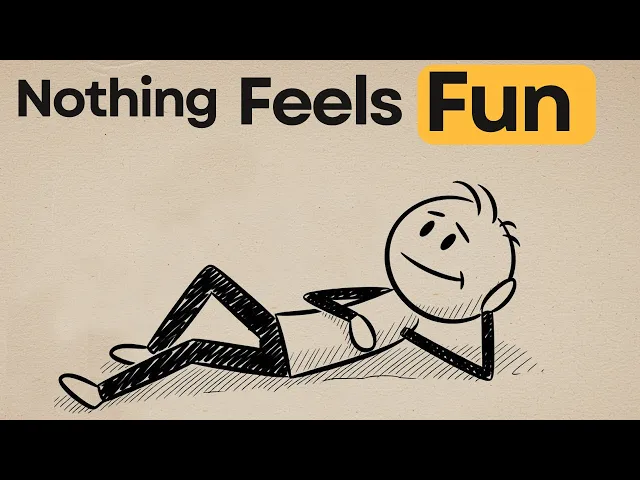
If you've been feeling bored, numb, unmotivated, or like nothing hits the same anymore, it's not because you're lazy, and it's not because life suddenly got boring. It's because your brain has been quietly rewired. And today I'm going to explain why nothing feels fun anymore.
What dopamine actually does to your brain and the last habit we'll talk about is the most important one. Miss it and nothing else in this video will work. Trust me.
Don't miss the last habit. By the end of this video, you'll know exactly how to reset your motivation, enjoy things again, and feel excited about life without quitting everything, or living like a monk. Let's get into it.
Habit number one, stop stacking dopamine. Let's start with the habit almost everyone is doing without realizing how damaging it is. It's called dopamine stacking.
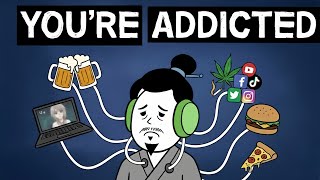
And once you notice it, you'll see it everywhere. Dopamine stacking is when you pile multiple sources of pleasure on top of each other at the same time. Not one reward, not two, but a full overload.
For example, you're eating, but also watching YouTube. You're scrolling while music is playing. You're gaming with snacks, notifications, and background videos.
You're not just enjoying something. You're flooding your brain. And your brain, it was never built for this.
Your brain evolved in a world where pleasure was rare. You had to hunt for food, build shelter, move your body, wait for rewards. So when dopamine was released, it meant something.
It was a signal that said, "This matters. Remember this. " But today, you're giving your brain more stimulation in 10 minutes than your ancestors got in weeks.
So your brain adapts. And when the brain adapts to constant pleasure, it dulls everything else. That's why food tastes less exciting.
Videos feel boring faster. You need more stimulation just to feel okay. It's not addiction.
It's overload. Here's what dopamine stacking quietly does over time. It teaches your brain that one thing alone is not enough.
Silence is uncomfortable. Focus is unnecessary. Effort isn't worth it.
So when you try to study, work, read, think, sit still, your brain panics. It says, "Where's the extra stimulation? " That's when boredom hits instantly.
Not normal boredom, painful boredom. And that's when most people reach for their phone again. The cycle continues.
Motivation doesn't disappear randomly. It disappears because your brain has learned something dangerous. Why do something hard when I can get instant pleasure instead?
When you stack dopamine, your brain gets used to maximum reward for minimum effort. So, anything that requires patience, focus, discipline feels impossible. That's why you can binge content for hours but struggle to do one meaningful task.
Your brain isn't weak. It's just been trained wrong. Here's the good news.
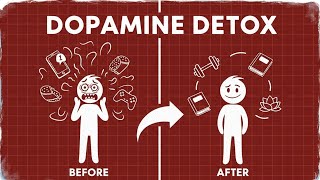
You don't need to quit everything. You don't need to suffer. You don't need a dopamine detox.
You just need one rule, one dopamine source at a time. That's it. If you're eating, just eat.
No phone, no videos. If you're listening to music, just listen. Don't scroll.
If you're watching something, watch it fully. No multitasking. This feels uncomfortable at first because your brain expects more.
But that discomfort, that's your dopamine system recalibrating. Something surprising happens within days. Food tastes better.
Music feels deeper. Shows feel more immersive. Why?
Because dopamine sensitivity starts coming back. You don't need more pleasure. You need less at once.
This single habit raises your baseline dopamine without adding anything new to your life. You're not removing joy, you're restoring it. Don't try to be perfect.
Just pick one activity per day where you stop stacking dopamine. One meal, one walk, one song. That's enough to start the reset.
And once this habit locks in, the next habits become easier. Focus improves. Motivation starts showing up again naturally.
This is the foundation. Get this wrong and nothing else works. Get this right and everything else becomes possible.
Habit number two, delay the reward. This habit sounds simple, but it's one of the most powerful brain resets you can make, and almost no one is doing it anymore. It's called delaying the reward.
Not removing it, not quitting pleasure, just putting it after the effort. That small shift changes everything. Think about how life works today.
You wake up, reward. Scroll your phone, reward. Eat, reward.
Watch, reward. All before you've done anything meaningful. Your brain is basically being told, "Here's pleasure.
No effort required. " And your brain learns fast. It learns effort is optional.
Waiting is pointless. Discipline is unnecessary. So when it's time to work, study, or focus, your brain pushes back hard.
Your brain is a prediction machine. It constantly asks, "What do I get if I do this? " If rewards come before effort, your brain stops seeing a reason to try.
That's why you procrastinate. You feel zero drive. Small tasks feel overwhelming.
Not because you're lazy, because your brain sees no payoff. Motivation doesn't come from willpower. It comes from expectation of reward.
When you delay the reward, you flip the script. You teach your brain effort comes first, reward comes after. That creates something powerful.
Anticipation. And anticipation is dopamine. Suddenly your brain starts releasing dopamine before the task is done.
That's motivation. Not forced, not hyped, natural. Here's what delaying the reward looks like in real life.
Work for 30 minutes, then check your phone. Finish a task, then watch a video, exercise, then relax, study, then scroll. Same reward, different timing.
And that timing is what retrains your brain. Let's be honest, at first this feels terrible. Your brain is used to instant pleasure.
So when you delay it, your brain reacts with resistance, boredom, excuses. That's normal. That discomfort is not failure.
It's rewiring. It means your brain is learning patience again. Here's the part people don't expect.
When you delay the reward long enough, the reward actually feels better. The same video feels more enjoyable. The same rest feels more satisfying.
Why? Because dopamine spikes higher when it's earned. You didn't remove pleasure, you amplified it.
Most people think discipline is something you force. It's not. Discipline is a side effect of a brain that trusts effort leads to reward.
Once your brain learns this pattern, effort, reward, it starts offering motivation automatically. You don't need hype. You don't need pressure.
You just start moving. This part matters. Don't delay rewards all day.
That backfires. Instead, delay one reward per day. Tie it to one task.
That's it. Example, I'll scroll after I finish this one thing. One promise, one follow-through.
That's how trust with your brain is built. Once this habit sticks, focus gets easier, hard things feel lighter, motivation shows up earlier. You stop relying on willpower, and now you're ready for the next habit.
Because once effort starts feeling rewarding again, you can push yourself further without burning out. This habit alone can bring motivation back in days, but combined with the next ones, it completely changes how life feels. Habit number three, do one hard thing daily.
Let's be real for a second. Most people don't avoid hard things because they can't do them. They avoid them because hard things feel painful now.
Not physically painful, mentally painful. And that pain isn't weakness. It's what happens when your brain forgets how to struggle.
This habit teaches it again. Years ago, effort was normal. Walking, waiting, thinking, solving problems.
Now, discomfort is optional. If something feels boring, scroll. If something feels hard, quit.
If something feels slow, skip. So, your brain adapts. It lowers your tolerance for effort.
That's why you feel drained quickly. You give up faster. You avoid challenges.
Your brain isn't broken. It's just out of practice. This is where people mess it up.
One hard thing does not mean extreme workouts, waking up at 4:00 a. m. suffering all day.
That fails. One hard thing means something slightly uncomfortable, something you'd normally avoid, something that requires effort. Examples: finishing a task without checking your phone, taking a short, cold shower, starting the project you've been delaying, going for a walk without headphones.
small but intentional. Here's the key idea. Dopamine doesn't just spike during pleasure.
It spikes after effort. When you do something hard and finish it, your brain releases dopamine as a reward. That dopamine says, "That was worth it.
Do this daily and your brain relearns something powerful. " Effort equals reward. That's the foundation of motivation.
Confidence doesn't come from thinking positive. It comes from keeping promises to yourself. Every time you do one hard thing, you prove you can handle discomfort.
You build self-rust. You stop seeing yourself as unmotivated. You start identifying as someone who shows up.
That changes how you act the rest of the day. After a few days of this habit, something shifts. Hard things don't disappear, but they stop feeling impossible.
Your brain starts saying, "I've done harder than this. " And that voice, that's momentum. Most people fail this habit for one reason.
They make it too big. They turn one hard thing into a massive workout, an unrealistic schedule, an all or nothing challenge that triggers burnout. The goal is consistency, not intensity.
If it feels doable, you're doing it right. Here's a trick that makes this habit 10 times more effective. Do your hard thing early in the day.
Why? because it sets the tone. After you win early, procrastination drops.
Discipline feels easier. Your brain stays energized. You start the day with proof.
I can do hard things. After weeks of this habit, your tolerance for effort increases. Distractions lose power.
Motivation becomes reliable. You stop waiting to feel ready. You act first, feel motivated later.
That's how productive people operate. The real reward isn't discipline. It's freedom.
Freedom from procrastination, self-doubt, numbness. You stop feeling stuck. You start feeling capable.
This habit prepares you for the final and most important one. Because once you can handle discomfort, you're ready to face silence. And that's where everything changes.
Habit number four, relearn how to be bored. This is the habit almost everyone skips. Not because it's hard to understand, but because it's hard to sit with.
And if you miss this habit, everything else eventually stops working. This is the habit that brings motivation back from the inside. It's about relearning how to be bored.
Boredom didn't always feel this bad. Years ago, boredom was normal. Waiting, thinking, daydreaming, doing nothing.
Now, boredom feels almost painful. The second there's silence, your hand reaches for your phone. Not because you want to, but because your brain is trying to escape.
That's not your fault. Your brain has been trained to avoid boredom at all costs. When you feel bored, your brain isn't dying.
It's resetting. Boredom is your brain saying, "I have no stimulation. What should I create?
" But when you immediately fill boredom with scrolling, videos, or noise, your brain never finishes that process. So creativity shuts down. Curiosity fades.
Motivation disappears. Your brain stays dependent on stimulation from the outside. This is the hard truth.
If you can't tolerate boredom, you can't tolerate effort. If you can't tolerate silence, you can't hear your own thoughts. And if you never hear your own thoughts, you never figure out what you actually want.
That's why people feel lost. Not because life is meaningless, but because there's no space left to think. This does not mean sitting in a room doing nothing for hours.
That's unrealistic. Relearning boredom means intentionally removing stimulation for short periods, no phone, no music, no scrolling, just you and the moment. Examples: standing in line without checking your phone, walking without headphones, sitting quietly for a few minutes, driving without background noise.
small moments but powerful ones. The other habits train your brain to handle effort. This habit teaches your brain how to create desire again.
Without boredom, motivation stays external. Pleasure stays shallow. Focus stays fragile.
With boredom, motivation comes from within. Joy feels earned. Life feels real.
This is the reset button. If nothing feels fun anymore, it's not because you need more stimulation. You need less.
Less noise, less scrolling, less distraction, and more space. Because when you relearn how to be bored, your brain remembers how to feel excited again. And that's something no app can replace.
So if nothing feels fun anymore, it's not because you're broken. It's not because you failed. And it's definitely not because life is meaningless.
Your brain just adapted to the wrong environment and now you know how to fix it. After watching this video, you'll be able to understand why your motivation disappeared. Stop feeling numb and bored all the time.
Enjoy simple things again. Build excitement without forcing it. Start small.
Pick one habit today and protect boredom like it's sacred. Because once your brain resets, life doesn't just feel fun again.