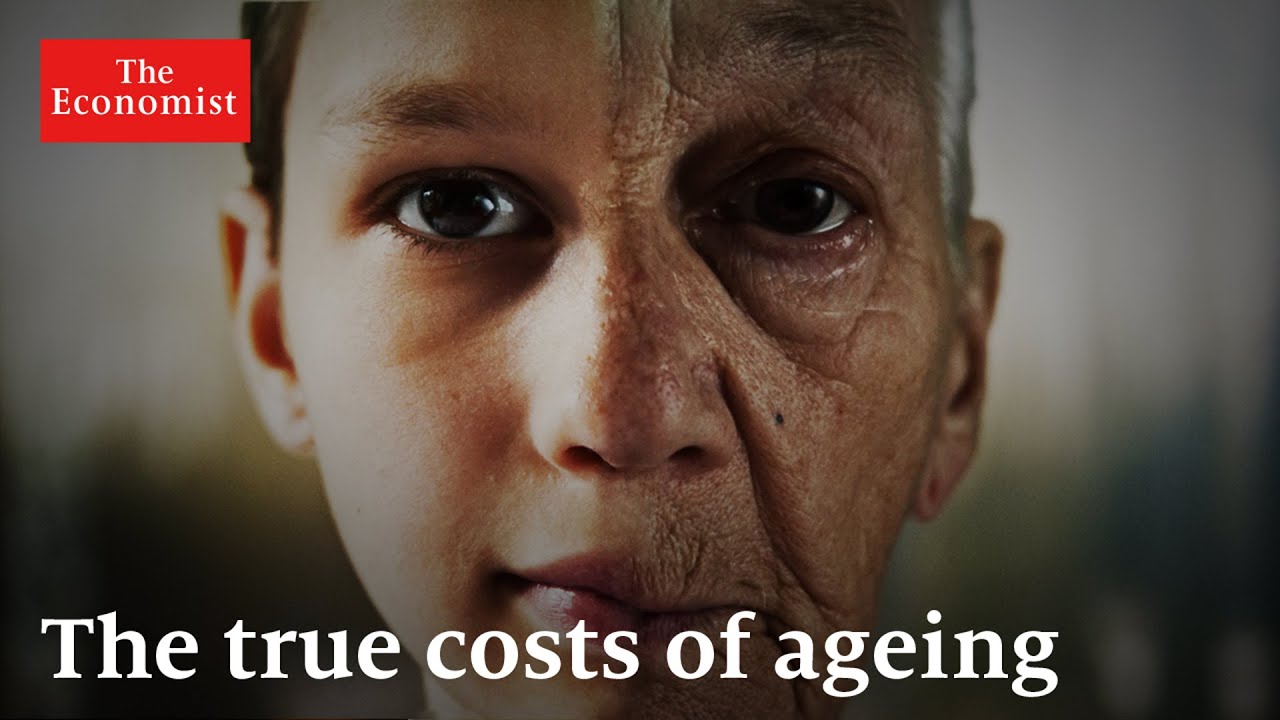
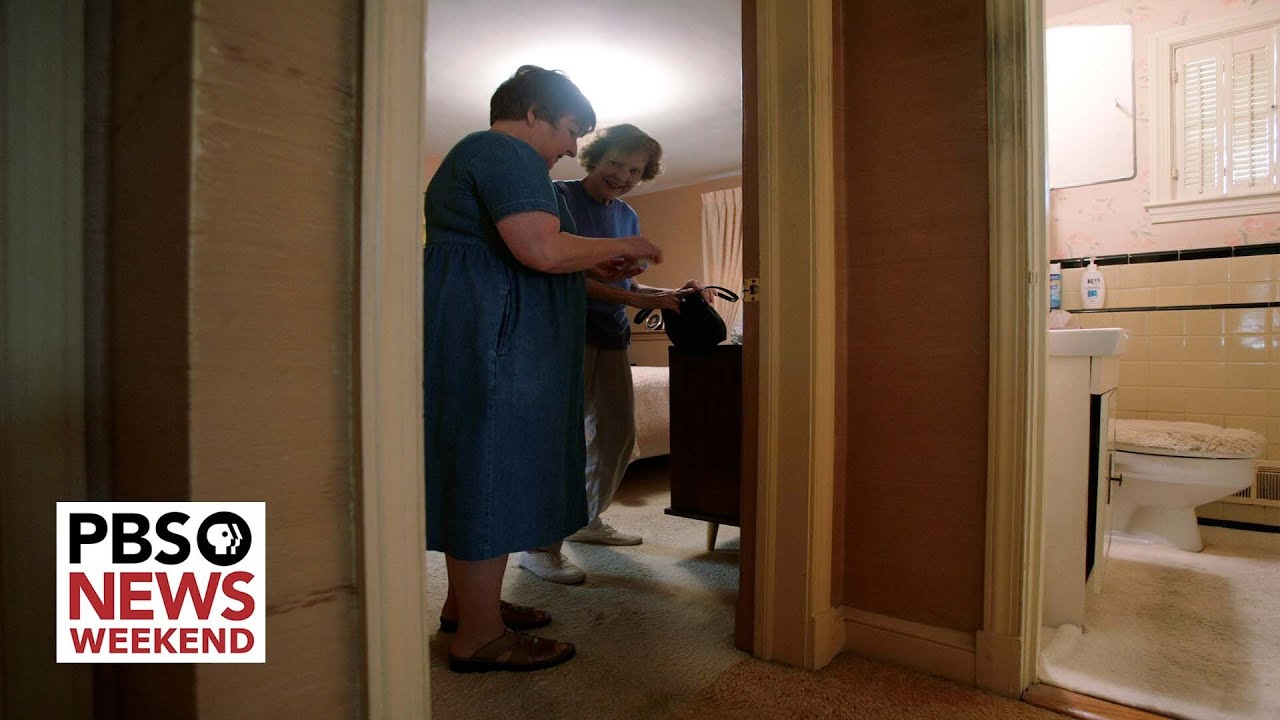
geoff: New numbers from the census bureau show the U. S. Population is older than it's ever been, with the nation's median age over 38.
William brangham explains how an older America could pose significant challenges for the economy, workforce, and social programs in the years to come. William: Between 2021 and 2022, nearly every state in the U. S.
Saw its population's median age go up. In about a third of states, more than half of the population is older than 40. Maine had the highest median age of 44.
8 years and Utah is our youngest state with a median age of 31. 9 years. As the share of older Americans continues to rise, the need for benefits and assistance from medicare and social security will grow.
At the same time, an aging workforce could cause worker shortages in the years to come. Joining us to discuss the implications of this shift is Philip bump. He's a national columnist for "The Washington post" and author of "The aftermath: The last days of the baby boom and the future of power in America.
" Also joining us is Wendy edelberg. She's director of the Hamilton project at Brookings. She's a former chief economist for the congressional budget office.
Thank you both so much for being here. Wendy, to you first. The median age in the country is 38.
Back in 1980, it was 30. What is the main reason why this trendline is taking upwards? Wendy: Two main effects.
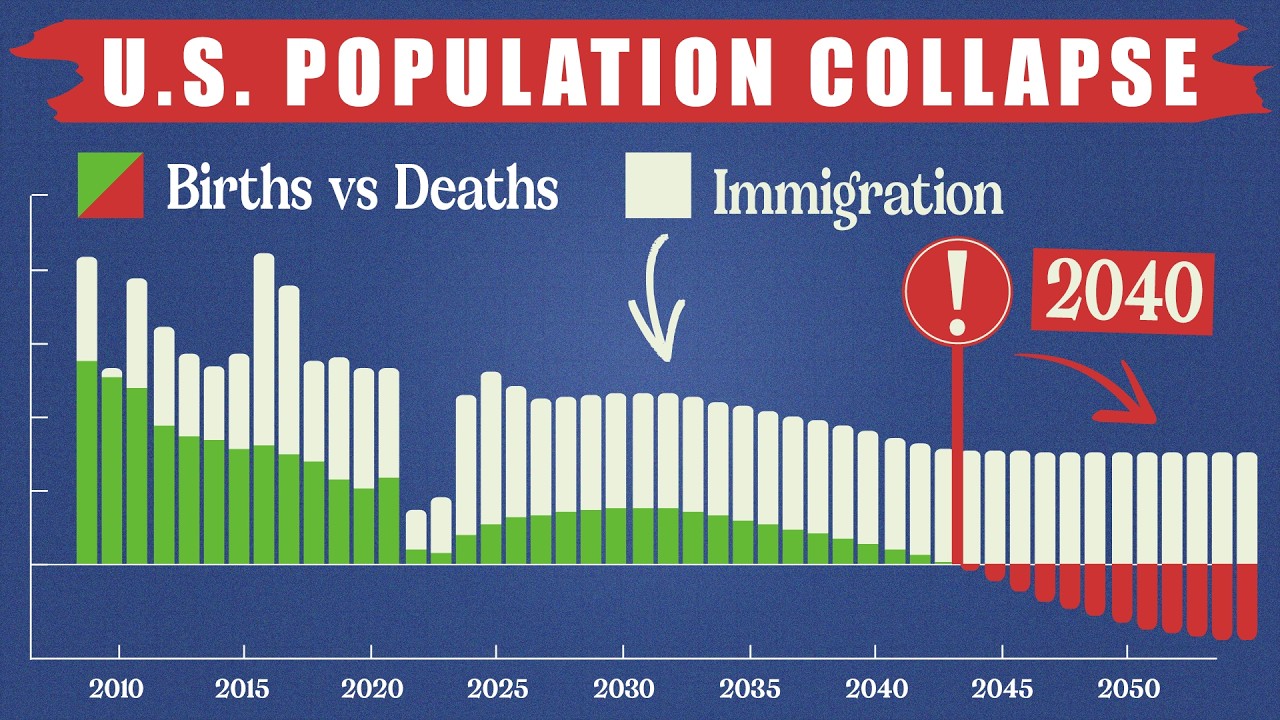
One is that we have improvements in mortality rates. We are living to older and older ages and that is only good news. But we also, like many countries across the globe have declining fertility rates.
We are getting hit on both sides. William: Do you know why we are having fewer kids in general? Wendy: There seems to be a trend that goes along with countries as they get richer.
It is not in and of itself a worrying development. It is absolutely true we are on track for slower labor force growth. Half the pace of growth than recent decades.
But, we are also a country that is greatly valued by immigrants. There are immigrants from all over the world who desperately want to come to the united States. We have a very simple way of boosting our population growth if that becomes a priority for us.
William: Philip you mentioned in your book and your column this is not just all Americans getting older. It is principally white Americans getting older. Can you explain both of that, the demographic reality and the implications?
Philip: One of the reasons the United States is getting older is we have this massive surge in births in 1946 and 1954 that we call the baby boom. This massive influx of Americans all in the same age range. The size changed over time because immigration laws were loosened, and of course, because people die over time.
This is a continuation of the pattern we saw with the baby boom in the 1940's. A big cluster of people all in the same age group that are reaching age milestones together. When you think about the year, 1957, you get 2022 for their retirement age.
The baby boom was a very heavily white generation. Immigration was restricted by law about a century ago, and that lifted after the baby boom was over. That led to a very white population.
What we see when we look at the population today is that older Americans are disproportionately white. The youngest Americans are about half nonwhite. About half of them are black, hispanic or Asian.
Older Americans, that is not the case. That overlaps with a lot of the political and cultural trends we have seen. William: Wendy, as you were touching before, a lot of potential implications here.
One of them seems that programs like medicare and social security require a larger pool at the bottom to feed a relatively smaller pool at the top. Does that mean for us policy was, if we are seeing this aging population? Wendy: Payroll taxes as a share of the whole economy have been roughly flat for decades and are on track to remain flat over the next decades.
But at the same time, our spending on social security, ignoring the fact that the trust funds will get exhausted in about the next decade, social security benefits are projected to increase by 50% relative to its share in previous decades. And medicare, health care spending on the elderly, is projected to double. The challenge here is that largely because of our aging population, but also because of increases in health care costs, we have very significant increases and benefits on the horizon, but we have not planned for those with increases in taxes.
William: Hearing what Wendy is describing, that the demographic reality and the cost going upward, what do the policymakers have to address that? Philip: It depends on a number of factors. It depends on the willingness of policymakers to raise taxes, decrease spending, reduce the amount of benefits people are receiving, which will cause a lot of political backlash if they choose to do so.
It depends how money people are paying into the system. If we bring a bunch of immigrants -- we have seen this strain on the number of people being hired. Whenever started researching my book in 2021, we are going to be gasping for jobs to people to fill these jobs in short order.
Again, we have seen this pattern. Over the course of the beginning, when the baby boom first emerged, we have to build a bunch of schools. Luckily, we were able to accommodate it.
Now, the baby boom is having to compete for power and resources with another comparably sized generation, millennials. We see there is additional political tension for the baby boom generation at this moment when they have reached a stage that it was foreseeable, but causing a lot of strain. William: Wendy, the tensions that Philip is describing are not easily remedied.
Addressing medicare and social security are third rails of American politics. Immigration is right behind that. What do you see as the most likely things policymakers will do to try to address this?
Wendy: Because of the way we have organized the social security program and the medicare program as trust funds, these will become very politically salient over the next several years. So, because we are spending out more in social security benefits and in medicare benefits, particularly hospital insurance benefits, because we are spending on more than we are taking in on taxes, the trust fund for social security is projected to run out of money by 2031. And the medicare hospital insurance trust fund soon thereafter.
What that will mean is under current law, if there are no changes, then the social security benefits would be constrained by how many taxes -- how big the tax revenues are that are coming in. We only taken about 75% in taxes for the benefits that go out. Without any change in law, you are talking about an across-the-board cut in social security benefits of 25%.
Talk about third rails. That will never happen. So, that will be a strong impetus for policymakers to act.
William: One of the things you both have touched on is the idea of bringing in more immigrants to add to that workforce, to create more payroll taxes to help fulfill these gaps. Again, you cover national politics as closely as anybody. How likely do you think this issue will help be a lever to true immigration reform in this country?
Philip: It depends what you mean by true immigration. It is certainly the case that both parties have a vested interest in changing the system and away they might not have previously. The Republican party is very heavily old.
There are a lot of old Americans that are members of the Republican party more than the democratic party. Hey, we need to cut what they call entitlements. There is no longer the same push within the Republican party now that a third of the Republican party will be the age of 65.
These things are shifting. I think it will be the case as well that the Republican party may be increasingly open to the idea of reforming immigration in a way that makes it sustainable to be able to pay out social security benefits. Now, they can be the competing in the party and it needs to be resolved.
This is the moment of flux. It is caused largely by the baby boomers having reached this age, but a moment influx where the party's positions may change. William: Philip, Wendy, thank you both for being here.
>> Thank you.