hi everyone today I'd like to talk to you about the writing skills necessary for documentary film production so far what we've been talking about is the kind of quick stories that a journalist might do for a television or newspaper station where they go out and essentially cover a spot news story or maybe even a feature story that's got a shorter time frame and a more condensed story narrative uh that the reporter is able to develop on the Fly for most film projects related to documentary they they occur in multiple stages and here's a list of
stages that we go through starting with a great story idea we move into the real work which is the pre-production planning uh and then finally we go into production and then we go into post production I think it's important to highlight that uh most larger film projects require some form of funding and that there are generally two places in the process where the funding is actually released to the filmmaker the first is in pre-production where you develop a proposal and a pitch and you receive funding for either developing a script or uh for doing the
production and the second point is after the production when you're into editing your project uh generally the funds aren't released until either at at a minimum a rough cut has been made or ultimately after the final film film has been submitted for approval so this is a really important uh presentation today about the business side of being a filmmaker in terms of how do you get funding how do you get support for what you're doing I want to point out the difference between a documentary film versus a feature film with a feature film you will
typically have a story pitch a proposal and go straight into script production however with documentary films often times a scripts not used because you can't predict what will happen when the camera is actually rolling and so in place of a script we use film treatments and written proposals or even outlines to describe and help plan out that documentary project so that's really what we're talking about is how to do that pre-production planning necessary for producing a really strong documentary film we're going to go through uh a simple film treatment and then we're going to extend
that out into a written propos proposal to take you through all the steps of how this can really help you with your Film Production so what is a film treatment well it's a document that gives an overview of your project with sufficient detail to allow a client or funding source to understand your story and your visual approach to telling that story a film treatment is not only used for creating Film Festival films it's also used in commercial uh work as as well where you're being paid by a client to tell their story they want to
know what they're receiving before they release any money for production so a film treatment is this really important first step towards getting any project off the ground and getting paid to do it it's also thought of as a very detailed story pitch and in fact what we'll see is if you develop your treatment out of that you'll develop your uh very quick story pitch at the end a treatment differs from an outline because it shows you how you will film your story rather than just telling us the story a treatment is a document that can
become kind of The Guiding principles for your Film Production making sure you have continuity in the look feel and the story arc of your documentary so this is a really important first step to developing a strong uh film I want to caution you though that a treatment is not a shot list don't make mistake of describing crane shots or Dolly shots for a particular scene it's about keeping the focus on the story and how it's going to move forward um if you get approval to move forward on a project you can go further in depth
and develop what's known as a shooting treatment that contains more of those production notes that your production team will actually use to stay on task uh but really a treatment um is about the story and what's compelling about that story and so from that standpoint the very first step towards making a effective film treatment is is to start with research about your story so I'm going to show you a couple of examples of treatments and one in which I've actually written myself and here are the basic contents of any film treatment and I want to
tell you there's no standard uh to film treatments people do them a wide variety of way but it's really about telling your story in a compelling way so somebody understands what that film's going to look like before they ever see it or pay for it so here are the basic contents that I found uh that are recurring in most film treatments first of all is an overview a log line scope of the film length distribution and media outline production elements and the characters and storyline I'm going to go through each of those right now the
overview is a brief explanation about what the topic of your film is and it's also a presentation of your hypothesis in order for this to be a compelling documentary we have to be trying to ask a question and see what kind of response we might get from that so uh the overview is really where you describe what is the topic of our film and why do you think it's relevant and important to our audience the log line is the actual story that you're going to be telling condensed down into one or two sentences this is
really the way we hook our viewer or the way we hook the the client or the funding source to hold their attention otherwise the project will end right there so log line is just your story condensed down into almost like an elevator pitch the scope of film is really important element because it's a list of what issues you're examining within your film and it's really important because we need to limit the scope of the film and not try to say everything there is to say on a topic in a single film it's where we really
hone in the focus of what this film is about we want to describe the technical attributes of what equipment are we going to use to record and edit the film we're going to talk about the length of the film which might affect where our distribution will be whether it needs to be in movie theaters on the internet uh or television broadcast we want to start thinking about what is your intended audience and where do you plan to share this work this is very important if you're trying to get investment into a film project because they're
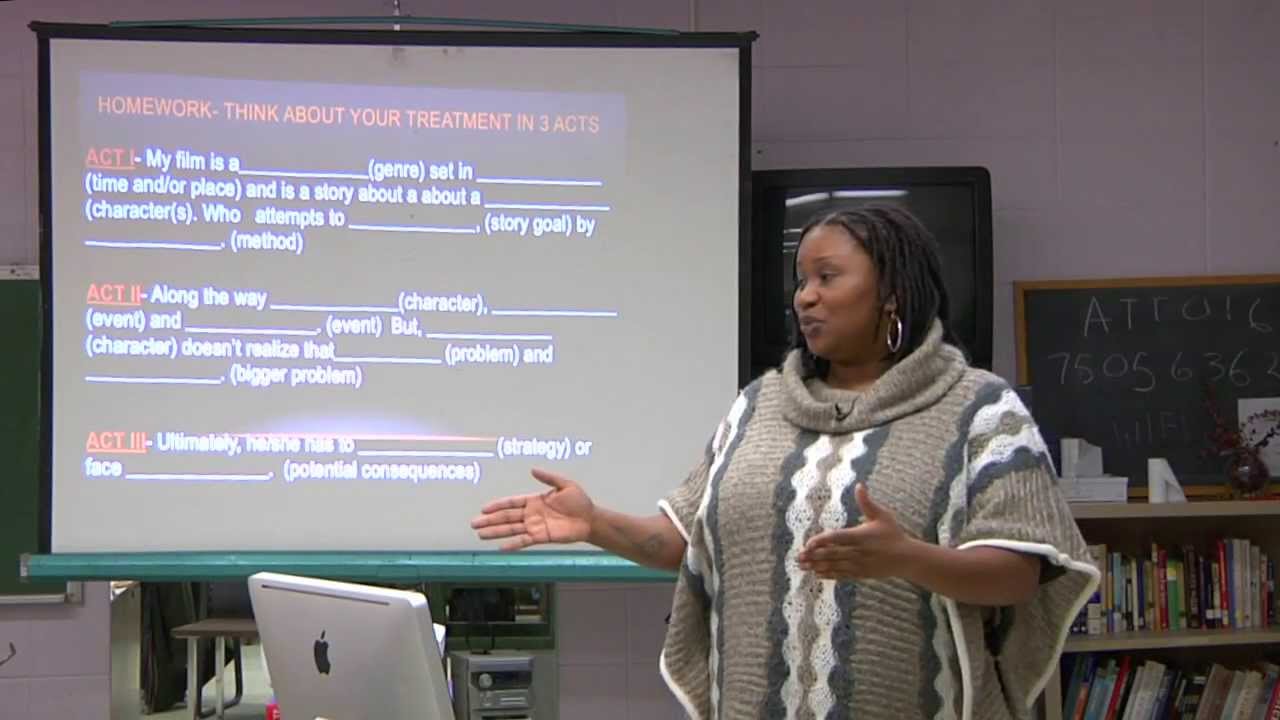
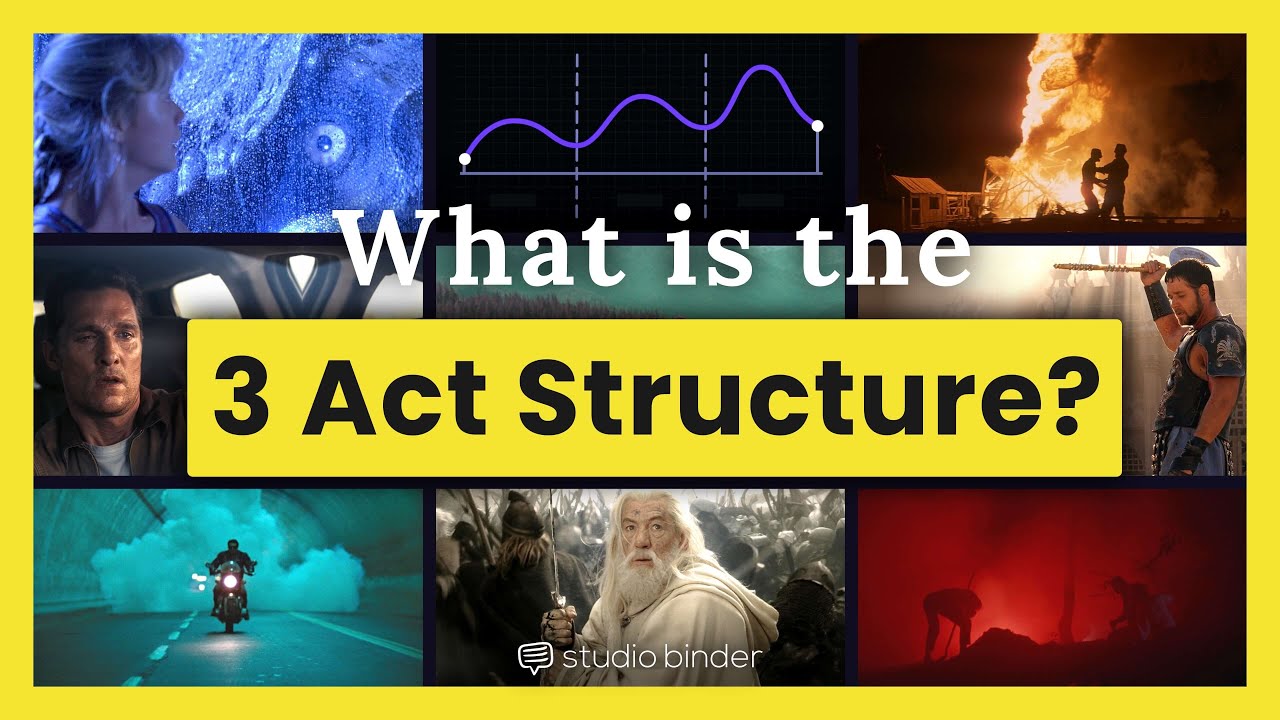
going to want to know whether or not you're going to have both the reach and even the possibility to commoditize it to realize some return on that investment the outline is a sketch of your film that describes the narrative Arc of your story generally we see a threea story outline the First Act introduces the characters and the conflict of the story the second act shows how the character faces The Challenge and then the third act shows the resolution and we'll take a look at some examples of that the next element of a film treatment is
a list of the production elements and this is a description of what the film will look like how you're going to approach telling the story what genre um is it going to be Cinema ver is it going to be an expository is it going to be a participatory documentary where you're actually one of the characters in it uh what are those production elements that you need what's the mood the look to your production um and it's also where you list all the resources you will need such as any archive footage music locations interviews event coverage
uh and what is your timeline for production the last element of a film treatment are the characters and storyline and this is where you list all the characters that'll be in your story and what is their role in relation to the narrative Arc of the the log line in terms of who are the characters that are going to help Drive Your Story forward and what is the role within that story so this is where you make sure you're keeping your story within the scope of work by eliminating any unnecessary characters that will distract or pull
attention away from your uh main story arc speaking of story I'd like to talk for just a moment about our goal with storytelling is to create a sticky story and what we mean by a sticky story is where you take all the knowledge that you have about your subject about the the people in your film about the everything you know and you just transform it into the most basic simple story that's easy to remember that the problem we have is when you're really invested in a story and you become an expert you try to shove
everything possible into your documentary film project with a sticky story we are really wanting to focus on what is the minimum amount people need to know to be able to remember that story and so you have to keep your story simple and you have to find the core of the idea behind that story uh and you have to find out what is the message you want your audience to take away from that story so here's some uh steps that I found for you uh from a great resource uh there's a documentary film organization called from
the heart Productions that actually funds documentary film projects and this is uh their list of items for making a sticky story that you'll find over and over first thing is is Define the core story what is what is the essence of it and prioritize that as being the most important aspect of your Film Production the second aspect is what what is something that is unexpected uh that you can reveal to your audience that will kind of get their attention make them ask questions and want to hang in there to find out the answer the uh
next idea is to provide some concrete examples uh uh some concrete ideas that are easy to understand and this is where you might think about how your visuals of showing instead of telling come into play as photographers we have to be able to really make things memorable by uh showing rather than telling our audience what to remember and then we need to add some credibility to our story and and this is where you bring in experts to uh substantiate why what you're saying is valid so we want to bring in some expert content into our
story and then finally we want to tug at the heartstring and here you see Caroline saying that if you touch my heart I'll reach for my pocketbook and so um this is where it gets that what's really important to understand about storytelling is that knowledge and facts does not change Behavior actions moods feelings Etc it's about emotions that drive people to act an example this is how people can know that smoking will kill them but they will continue to smoke the knowledge of The Facts of the medical crisis are not very compelling but when you
see a documentary that talks about and shows the effects of lung cancer that shows the effects of loss on families and if you can show that graphically uh people's attitudes change towards a particular subject matter so uh be thinking about where is that that emotional heart string being pulled in your story now what I'd like to do is actually look at an example of a film treatment that I've written uh that I've recently updated actually the first original treatment was done in 2011 uh but sometimes over time you see new elements that you want to
go back and rework a film and this is one I definitely want to go back to this is actually a film treatment I originally wrote for a film that was shown in Sp International Film Festival was actually selected from a jured uh panel to be presented at that festival and I've recently updated it because I'm going to go back and rework this film but it has all the elements of a film treatment that I'd like to show you for uh conclusion to this particular lecture first thing I want to point out with any film treatment
is to not try to make it overly sophisticated in terms of graphic quality people just want you to present something honestly and straightforward uh and so we just have a title the project sitting between two chairs and a simple statement that this is my film treatment the next page is a table of contents and you'll see the different elements of the treatment listed here the overview long line scope of film Etc so here we have the basic overview of the film that is setting up the scenario where we're going back to the Cold War era
uh with a famous speech by Ronald Reagan where he asked Mr gorbach off to tear down this wall and the rise of a current conservative political movement in the United States we welcome change and openness for we believe that freedom and security go together that the advance of human Liberty the advance of human Liberty can only strengthen the cause of World Peace there is one sign the Soviets can make that would be unmistakable that would Advance dramatically the cause of freedom and peace General Secretary gorbachov if you seek peace if you seek prosperity for the
Soviet Union and Eastern Europe if you seek liberalization come here to this gate Mr gorbachov Open this gate what I'm looking at is the role photography plays in either supporting or resisting political corruption through the presentation of Truth and fiction and then I go on to say that it's a story told from the unique perspective of a Russian photojournalist loned balv who covered news uh who covered world news events for the Soviet Union throughout the Cold War in 1991 and later immigrated to Spokan Washington and I'm adding the detail that Spokan has received award as
an All-American City so I'm setting up that Jos of a Soviet era Cold War photojournalist immigrating to the United States in Spokane Washington which is an All-American City I'm also explaining the background of the term sitting between two chairs that it's a common phrase among Russian immigrants that describes the aarness of feeling disconnected from their original identity in Homeland and yet still not fully adopted into becoming an American so this idea of of sitting between two chairs is sitting between two cultures the man must leave at home now the situation is not so simple I
cannot come back home because I have no home there I'm always already not Russian and I'm not American yet and will be never I'm sitting between two chairs and will stay in such a position until the finish so here we have the log line and what I've done is I've basically told the entire story in one uh or two sentences here uh here I've said a Russian photojournalist who worked under Nikita kushev at the height of the Cold War moves to America and discovers that the propaganda he left behind in the Soviet Union was actually
more truthful than what is being published in Contemporary American news media and warns us that America may be heading down the same path of political corruption war and economic collapse right there one sentence that's setting up the drama of what this story is about in addition to this I'm adding an element to the story which is to express what it's like to be a first generation immigrant and how uh he feels trapped sitting between the two cultures of Russia and America and how there's this huge gap between his experience and his granddaughter who's born in
America who will become an American and so I then further Express the conflict which is that he can't find meaningful work uh due to the economic meltdown after 911 and that he's lost his life savings and his home and he's left without any way of returning to Russia where their life was much more prosperous and then I'm introducing a little irony to the story uh where I'm actually showing that he learned the craft of doing photography from Western photojournalist in Life magazine and how he met them in the 50s and that they inspired him to
pursue an objective truth and that it's in effect his Silent Way of protesting against the dictatorship of the Soviet regime and so from behind the Iron Curtain he made images that were so well respected because of their documentary uh qualities that he actually eventually was published in Life magazine in 1972 so what I'm doing there is I'm setting up that he's uniquely qualified and connected to the United States and Western news media uh to come here and say that you know what things are not like they used to be in American news media and that
the work he was doing from behind the Aon curtain was actually more objective and truthful than the work that he's seeing here in America the most interesting uh impressions of America I can see in America everybody knows everything including photography including foreign life including everything because all of them I think think about photography not as a real art not as a weapon for self Impressions self-expressions self-expressions but only as an instrument to make money look at any American newspaper what do you see you see you see 75% of absolutely the same pictures with different faces
only all of them are smiling all of them are looking at the lens all of them are waiting when the uncle push the knob for whom such a picture is interesting only for these persons for their relatives and for their managers maybe not for readers uh readers don't know all of these people and their faces only faces without any reality are not absolutely interesting for anybody the picture a good picture must have some action some part of real life maybe a little bit but real life such a photography is died everybody has digital camera everybody
see the screen everybody PS the knob everybody are photographers but there is no photography so with that I've kind of painted the story of my film uh and then I'm defining the scope of the film that looks at the similarities between between today's political conservativism in the United States and the cold era and the Cold War era propaganda and then I'm looking at the dichotomy between socialism and capitalism through the relationship that he has with an american commercial photographer who makes his living selling advertising imagery versus he made his living doing uh social documentary work
and then wanting to show the differences between observational photojournalism and a contemporary media event coverage in Paparazzi and explain why we need visual literacy in the digital world further I'm going to be defining what is the difference between candid photographs and television in terms of objectivity and narrative structures and then finally I'm going to describe how the financial meltdown of the economy has impacted first generation immigrants who committed themselves to the ideals of the American dream are now stuck uh in their new country in looking at my target audience I'm really looking at a uh
what would be a typical onehour show segment on television so I have a Target length of about 44 minutes which will allows for the commercial ad breaks uh and then I'm looking at Distributing this through International Film festivals as well as public broadcasting television and making DVDs available and uh at the time this footage footage was shot on 1080i uh high def uh video and edited in Final Cut Pro 6.0 here we see the outline that starts with a beginning middle and end and in the First Act we're kind of painting the picture of the
Cold War and the American dream uh we're introducing Spokan as as a major uh place um for that that comparison and contrast with Russia and we're also looking at introducing uh the characters so we're introducing his background schooling Etc in the middle we're looking at kind of this conflict and and uh I use a couple of quotes from an interview where he says good for you you know you've got a flag in your hand and this idea of patriotism and and the rise of nationalism uh and and how that impacted him after he arrived here
when he came to visit his family and so I'm just kind of painting that story and uh describing the economic crisis that becomes a worldwide recession and how a new cold war is emerging uh between conservative and liberal ideologies and how it's very difficult for him to come to work uh come into work as a journalist and and then we're uh looking at very contemporary issues uh of how um our current climate has made it very unfriendly for immigrants to come to this country the final resolution is is going to be found in the volunteer
work that he is doing with the world relief organization that is responsible for welcoming and bringing immigrants to Spokan and the resolution is going to be how he finds usefulness and purpose by making these photographs of other immigrants and how he is having influence on a new generation of younger photographers by mentoring uh and actually I'm going to change this how he's having influence on new generation of younger phot photographers by mentoring a young Russian American photographer named Victoria Alexandra I have photographed since I was a little girl and I would make photos of family
moments later when I was studying Photography in college I was encouraged to do a research project about Leonid I first heard about Leonid berv when I read about him in the newspaper he was a very well-known photojournalist who was allowed to travel outside the Soviet Union and photograph world events he is probably most well known for documenting the career of Nikita kushev his photographs were published in Life magazine and he knew many of the Great photojournalists of that era including HRI cardier bran he did a book on China that is where he met a Spokan
photographer Don Hamilton who invited him to visit Spokane over the last two years I have gotten to know Leonid quite well I would come and have tea with him every week and he would tell stories about his life and his work and how different it is here in Spokan from where he lived in Moscow I visit him often because he has a lot to share sh with me about photography and about the Russia my parents left behind and then we're going to wrap it up with a kind of a universal uh story where we have
a um a new uh international student comes to Spokan and has this amazing experience where Spokane citizens welcome him uh with open arms and how he finds a connection here Spokane to me is a very beautiful place and people over here are very helpful and I was on the bus and I accidentally forgot my wallet at home so I wasn't having any idea what should I do then the bus driver came to me and gave me the full day pass and over that he also gave me $50 to spend for the whole day and I
can't forget that man for my whole life because coming to a new place you are very confused at the moment and you don't know what to do but he helped me like my father so we're we're talking about about how to break through all of that uh political propaganda through meaningful connections oneon-one when we get to the production elements I'm describing what the look and feel is going to be for the film I'm not saying a shot list but I am saying I'm going to use a combination of Montage interviews and narrations to paint a
picture of the American dream and the Cold War I'm describing the audio with which will consist of archival news footage MK interview responses and expository narrative to tie the chapters together and describing who the narrative will be uh and that narrative is going to be this first generation russian-american photography student who has interviewed Mr balv uh and then I'm going to create an ironic tone through a constant jux position of imagery and audio that are ideologically far apart so I'm giving some example here archive news footage discussing unemployment rate with jux toose with audio about
the Soviet system that guaranteed jobs uh and visuals portraying Spokane Washington as an All-American City will be josed against a narration that explains the poverty rate within the community uh and you'll see kind of this dichotomy existing here um in addition to that I'm describing what kind of interview footage I will be doing um what kind of basic montages of shots I'm going to be including what kind of archive materials I'm needing uh and just giving you an overall feel for the film and then finally I'm going to introduce the cast of characters and what
their unique connection to the story is so here I've got the main character I've got the secondary character Don Hamilton the commercial photographer who invited Leon Ed BAL of to America and the the Russian photography student who uh gets to know him and through that gets to know her own Heritage the film will primarily focus on the life story of L balza with secondary interviews of Don Hamilton uh providing a measure of contrast by which to illustrate the differences between Soviet and American political and economic systems we're going to include Victoria we'll provide the narrative
overview uh and actually we need to introduce um some additional characters so I'm going to add some expert voices so I'm add a media uh Professor James mcferson a professor of media studies at witor University who will talk about uh the changing media landscape and America and its impact on politics and then we'll also talk to uh Karen Dorne steel a retired investigative journalist who has exposed political corruption and America in American politics you at least get a sense we have some more expert interviews um almost like having expert witnesses to validate uh the hypothesis
in the beginning which is that the kind of imagery in our news and and the kind of news reporting that we're getting is having a a is having an effect on the political climate in the United States and then we'll add the uh student who's an international student from India studying in Spokan and who has made positive connections so to wrap things up the last thing I want to say about film treatment is it's the starting point for your project it may may or may not be the ending point what I mean by that is
it is a way to organize your thoughts a way to see if you've got a good story it's a way to organize some ideas about your Film Production but in the end when you go out and produce your film and when you go through the editing process you may end up with something that's slightly different than the treatment and that's completely okay it's part of the brainstorming process that goes into your projects the film treatment is a way to organize your thoughts organize your story and a way to start your Film Production it may change
in the process of doing the filming you might go down another path you might have to come back and revise it in the case of my project I actually produced a complete film I had it shown at a film festival but as I go back and revisit the treatment I actually see a better story and so I'm going to go back and rework that film uh and make it better so uh it's a continuous looping uh cycle where you start with a film treatment you work on the production you make adjustments you finish it and
then if you have time and you want to go back and revise that treatment and revise your project great if not like they say in the film industry a movie is never done it's just finally given up on and so with that I leave you to get working on your first film treatment for your final project in this class [Music]