dinosaurs often capture our imagination as the ultimate prehistoric giants however these mesic Titans were far from the first creatures to dominate life on Earth billions of years before the first dinosaur walk the land other extraordinary animals ruled the planet's oceans and continents but why don't we talk about them as much from ancient sea filled with bizarre predators to swampy forests teeming with massive insects each era of deep prehistoric history had its own dominant creatures today we embark on a journey into the past to explore the life that rained before the age of dinosaurs [Music] Our
Story begins in the Precambrian era which unfolded around 4.6 billion years ago this period witnessed the gradual cooling of the planet and the formation of the first oceans during this time Earth's surface became a dynamic environment where chemical reactions gradually laid the foundation for life volcanic activity frequent meteorite impacts and a shifting climate created the necessary conditions for the emergence of the first organic molecules which begin to combine into simple compounds around 3.8 to 3.5 billion years ago life first appeared in the form of single cell organisms bacteria and ARA Rose as microscopic colonies capable
of surviving in extreme conditions these early cells had metabolic functions that allowed them to extract energy from the surroundings gradually altering the composition of the oceans and atmosphere their biochemical activity triggered a chain of environmental changes that were crucial for the later development of more complex organisms as microbial colonies expand exp anded they began forming layered structures known as stromatolites built by the repetitive growth of photosynthetic bacteria stromatolites slowly accumulated sedimentary layers some of which are still visible in fossils today the oxygen produced by these organisms gradually enriched the atmosphere making the planet increasingly hospitable
for future life f filiz stromatolites served as some of the earliest and most tangible evidence of life on Earth marking a crucial step in evolutionary history later in the Precambrian During the ediacaran period approximately 635 to 541 million years ago the first multicellular organisms appeared this period saw the emergence of the Ed acran biota a collection of soft-bodied organisms that left only faint imprints in sedimentary rocks fossils of creatures such as dickin Sonia and spina exhibit body shapes distinctly different from those of modern animals although relatively simple these organisms represented a significant leap from single
cell life to organized multicellular structures hinting at evolutionary experiments that would ler lead to Greater complexity edaran organisms began copying ecological niches in a world still shaped by environmental upheavals lacking hard shells or bones their preservation depended largely on favorable conditions that allowed soft tissues to leave Lasting Impressions these fossil suggest that specialized cell types in primitive tissue organization were all already beginning to develop laying the evolutionary groundwork for the astonishing biodiversity of later periods and yet over 540 million years ago during the Cambrian Period life on Earth was confined entirely to the Seas this
is where the story of our first great rulers of the planet Begins the Cambrian Period witnessed an astonishing evolutionary surge known as the Cambrian explosion during which an incredible variety of strange Marine creatures emerged in a relatively short span of geological time most major animal body plans appeared for the first time this alien Underwater World saw the rise of the first complex animals laying the foundation for all future life in the Cambrian Seas life evolved at an unprecedented Pace the oceans teemed with invertebrates creatures without backbones including trilobites scuttling along the seafloor and strange gelatinous
animals drifting through the water trilobites in particular Thrive for over 270 million years evolving into countless species and becoming a defining feature of Paleozoic marine ecosystems during this period nearly all major animal groups made their debut there were no jawed fish no reptiles and certainly no land animals just a water world filled with bizarre forms that set the stage for future Evolution among the strange Marine landscape one creature stood out as the apex predator anomal loaris reaching up to 1 and 1/2 ft in length it was enormous for its time its body was shrimp-like and
flexible with a pair of spiny appendages at the front for grasping prey and a circular tooth line mouth for crushing it two large compound eyes provided anomalocaris with its sharp Vision allowing it to spot prey in the dim Cambrian Waters it likely fed on smaller animals possibly even trilobites tearing them apart with its unusual Jaws the absence of fish or larger Predators this formidable arthropod was the Undisputed top Hunter of the Cambrian oceans as the Ovis period began around 4 485 million years ago life continued to thrive beneath the waves some creatures even grew larger
this time marked the appearance of the first primitive fish though they were tiny jawless creatures often encased in bony armor however the Giants of the ordovician Seas were not fish at all they were seapods ancient relatives of squid and octopus es one of the dominant Predators was a massive straight shell cfop pod a squid-like creature living inside a rigid cone shaped cell species like caerus could grow up to 30 ft long gliding through warm shallow Seas using tentacles to capture prey and a beak-like mouth to consume it these colossal mullock hunted anything smaller than themselves
from shellfish to trilobites indeed during this era the top Oceanic Predator was a giant shell covered squid likely the largest animal on Earth at the time after a brief mass extinction the saluan period which began around 444 million years ago saw life rebound and even take its first steps onto land the earliest simple plants such as Tiny mosses began to Green the barren Coastal Landscapes though the land remain mostly desolate while fossil evidence is scarce some Hardy arthropods possibly primitive millipedes and scorpions are believed to have been among the first animals to venture on to
land during this time in the water jawed fish became more common and the first sharks and bony fish emerged however dominance often belonged to another Predator giant sea scorpions known as uids proud saluan rivers and shallow Seas some like the Jackal opterus reached over 8 ft long making them among the largest arthropods in history armed with spiny Claws and a pad like tail the sea scorpion could launch Swift attacks on fish and other prey in murky Waters at a time when life on land was just beginning these fearsome uids ruled aquatic food chains following the
saluan period the devonian spanning 49 to 359 million years ago is often called the age of fishing es the oceans teamed with life and new Predators emerged fish Diversified into numerous forms primitive sharks roam the depths lob Fin fish with strong fins hunted in coastal shallows and bony fish of all shapes swarmed Reef ecosystems Coral likee organisms built Reef systems that provided habitats for this Marine in abundance meanwhile on land plants Advanced further and the first Forest of tall trees and ferns spread across some continents subtly altering the atmosphere some adventurous L Fin fish even
began to venture onto land evolving into the earliest amphibious tetrapods however deep in the water some fish were transforming into true Giants ready to dominate their native environment one such giant was dun Asus a massive armored fish that ruled the late devonian Seas growing up to 33 ft long it had a front half covered in thick bony plates forming a formidable armored head and Jaws instead of teeth dunal atius had a sharp edged bony plate in its powerful jaws capable of slicing flesh and even crushing bone with one of the strongest bites among all fish
it could easily take down large prey possibly even other armored fish this giant likely patrolled ancient Waters launching explosive attacks to capture its victims with few creatures daring to challenge it dunal Aus sat confidently at the top of the devonian marine field food chain unfortunately at the end of the devonian period environmental upheavals triggered another mass extinction in the oceans bringing an end to the reign of such Giants this shift marked the beginning of life's transition from the Seas to the land heralding the dawn of the Carboniferous period around 359 to 20 9 million years
ago as the devonian gave way to the Carboniferous period life on land flourished like never before vast tropical swamp forests covered much of the continents filled with towering Club Moss trees horsetails and ferns these plants would eventually become today's coal deposits giving the period its name atmospheric oxygen levels were exceptionally High over over 30% compared to today's 21% in this humid lush world arthropods including insects spiders and millipede relatives grew to astonishing sizes in the air dragonfly like insects such as meura with a wingspan of more than 2 feet flitted among the Treetops hunting other
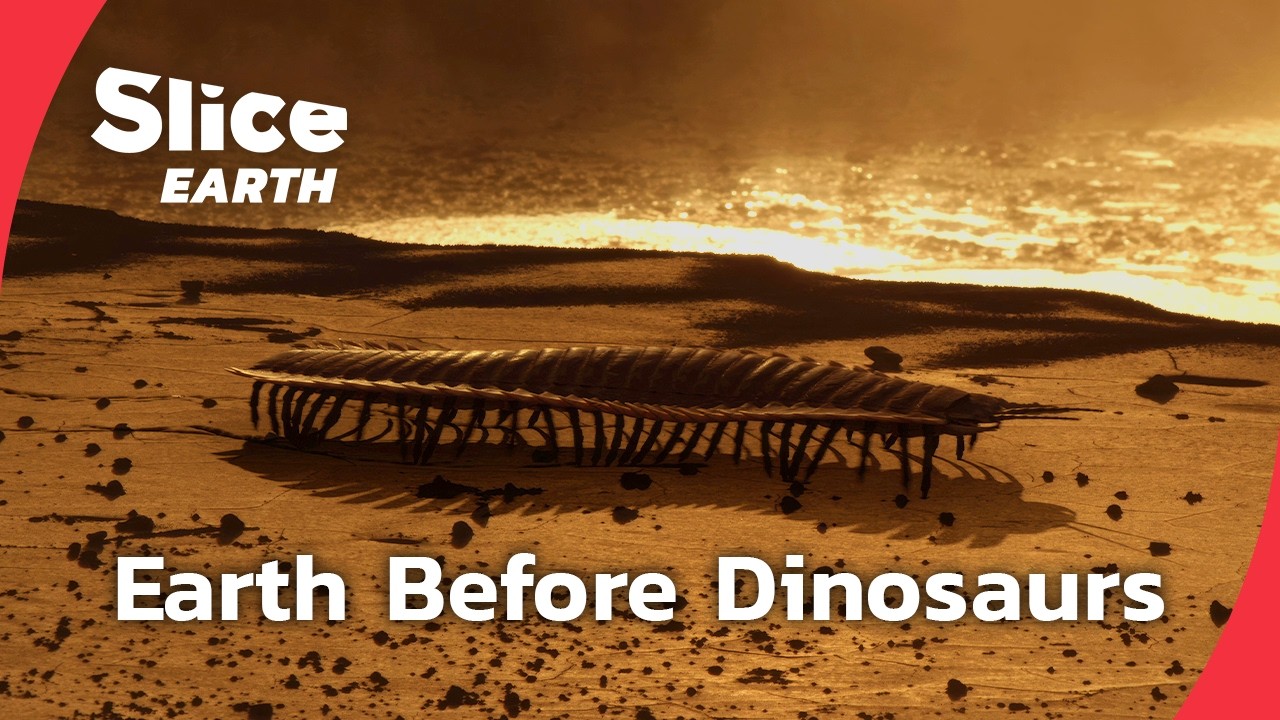
insects with no birds or bats yet present these Giants ruled the skies on the ground millipede like creatures also reached enormous proportion the most impressive was arop plura a milliped relative That Grew over 8 ft long crawling through the leaf litter alongside them throughout the Carboniferous period massive amphibians lurked in the waters of the coal swamps dominating the vertebrate food chain often referred to as Labyrinth adant these creatures resemble giant salamanders or crocodil like fish with limbs one example EO jinus also known as fol derpin could grow up to 13 ft long with an elongated
eel like body eel jinus lurked in grassy rivers and murky Lakes using its powerful tail to move through the water while ambushing fish and small tetra pods its thick skin and robust build allowed these amphibians to dominate their habitant meanwhile the first small reptiles had appeared on land by the late Carboniferous but these lizard like creatures were still minor players in an ecosystem ruled by giant insects and amphibians for millions of years these steamy carbon Rich swamps Remain the domain of enormous arthropods in the air and on land and monstrous amphibians in the water 299
to 252 million years ago at the beginning of the perian period Earth's continents had merged into the supercontinent Pangia and the climate in many regions was becoming increasingly Aid and extreme the once vast swamp of the Carboniferous period were shrinking making survival difficult for amphibians that had once thrived there due to the lack of water in this changing World new reptilian species Rose to prominence particularly the synapsids ancient creatures often referred to as mammal-like reptiles which were early relatives of mammals these reptiles had key advantages such as scaly skin and shelled eggs allowing them to
to live away from water and Outlast their amphibian predecessors in dry conditions among them were formidable predators and large herbivores unlike anything seen before in the early perum one of these Predators was dimetrodon a sailback carnivorous synapsid dimetrodon grew over 14 ft long and walked on four sprawling legs it had a distinct tall Sail on its back supported by its spine which may have helped it absorb sunlight or regulate body temperature its massive skull was armed with sharp teeth of various sizes including long Kines perfect for piercing flesh dimetrodon likely hunted anything it could catch
from large insects to amphibians and small reptiles with few other large Predators around it ruled the food chain in its environment dominating peran river valleys and plains much like big cats dominate their territories today meanwhile the peran oceans had their own fearsome Hunters one of the most notable was the helicoprion a shark-like fish known for its bizarre spiral of serrated teeth in its lower jaw resembling a circular saw blade growing up to 25 ft long helicoprion likely used its spiral jaw to slice through soft-bodied prey such as squid and fish as the perian period progress
the balance of power on land continued to shift rugged herbivores known as parasaurs tank-like reptiles the size of large pigs or cows roam the landscape their bodies protected by bumpy skin and bony scales lurking in the shadows were the gorgonopsians a terrifying group of synapsid predators the largest anrin CIA grew to about 11.5 ft in length and had a long narrow skull with saber likee fangs similar to a sabertooth cat with powerful Limbs and a sturdy spine it could Sprint and short burst to catch its prey when attacking inania used its saber likee teeth to
deliver deep lethal bites these gorgonopsids were the apex predators of the late peran fulfilling a role similar to big cats long before true mammals even existed actually by this time mammal-like reptiles of various shapes and sizes dominated the land both as predator and prey life had come a long way from the early Cambrian Seas a complex web of animals now span the continents but all of this was about to be tested by an unprecedented catastrophe around 252 million years ago the rain of the peran Beast came to a dramatic end Earth experienced the most devastating
mass extinction in its history so extreme that it was named the great dying massive volcanic eruptions in Siberia release greenhouse gases and Ash into the atmosphere triggering climate chaos the oceans became toxic and suffered oxygen depletion and nearly all food chains collapsed over 90% of marine species and around 70% of land species perished during this Permian Triassic Extinction event the dominant synapsid and many other creatures that had ruled the peran landscape were wiped out lush forests turned into Barren wastelands this cataclysm essentially reset the planet and it would take millions of years for ecosystems to
fully recover after the extinction from about 252 to 247 million years ago the early Triassic period was a desolate time with most large animals gone the survivors inherited a much emptier world one of them was lystrosaurus a squat Tusk herbivore about the size of a pig in some early Triassic fossil sites nearly every vertebrate fossil belongs to LR Source suggesting it Domin ated these postapocalyptic Landscapes living in large herds it fed on tough low growing plants and scrubby environments for a brief period this unassuming creature became one of the most successful animals on Earth as
the Triassic period continued life gradually rebounded and new groups of animals Rose to prominence among them were the archosaurs the the ancestors of crocodiles pterosaurs and eventually dinosaurs by around 230 million years ago the first true dinosaurs had appeared these early dinosaurs were relatively small and modest coexisting with other reptiles and surviving synapses however for most of the Triassic the dominant Predators were other reptiles Giant crocodil likee archosaurs known as rians such as postas suus grew 16 to 20 ft long and were fearsome Hunters that overshadowed much of the world yet dinosaurs were ready to
expand when another smaller Extinction event occurred at the end of the Triassic many competing large reptiles disappeared leaving the stage open in the following Jurassic Period dinosaurs rapidly Diversified and Rose to dominance in Earth's ecosystems however let's not forget that before the age of dinosaurs began the world was ruled by a completely different cast of creatures anomalous arthropods giant fish monstrous amphibians and mighty protor reptiles from anomala Caris to inostrancevia these long extinct beings were the rulers of their time their rise and fall demonstrate the everchanging nature of life on Earth and their fossils preserved
for hundreds of millions of years serve as a reminder that without these incredible creatures our modern world would not exist [Music]