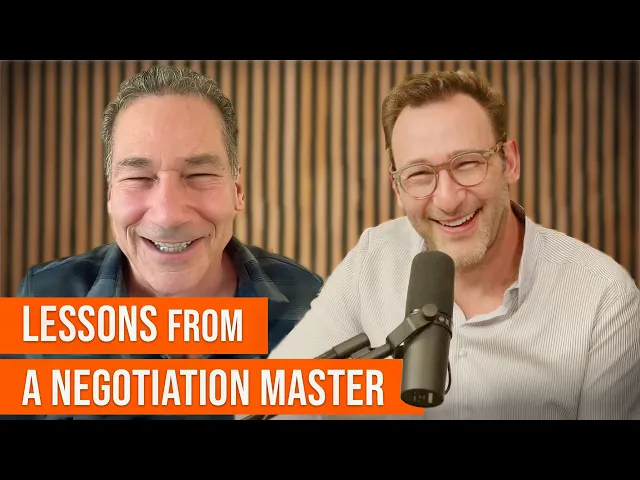
can you tell a specific story where two Waring parties were able to find Common Ground number of years ago there was a terrible Civil War raging in the country of Turkey between the Turks and the Kurds 3,000 Villages were destroyed tens of thousands of people were killed a group of Turkish leaders and Kurdish leaders they couldn't be known to be even talking to each other because they would be considered Traders by their own side there was a retired Turkish Admiral and he said I want to acknowledge the suffering that the Kurdish villagers and all the
Kurds suffered over the last 30 years and I want to apologize there was this kind of like quiet and then spontaneous Applause that one little apology shifted the tone and out of that meeting these same people agreed to form a network to work together and that work went on for years afterwards and a lot of it I tribute to that little shift one person making an apology you're a world famous peace negotiator do you have any competition I hope so hope I have plenty of comp I know right seriously I hope there's a whole industry
just of Peace negotiators you came to Fame by co-authoring the book getting to yes which is the Bible for anyone who studies negotiation and it's used in any number of universities and and and and and courses in your years of of understanding negotiation is there any difference between a peace negotiation a negotiation in in a business context trying to make a deal are all negotiations basically the same thing regardless of the stakes or are there or they actually different if I'm negotiating a contract or trying to negotiate a deal with my union versus a peace
negotiation at the highest levels of Israelis Palestinians Etc is there actually a difference or is all negotiation basically the same thing so is that book that you wrote not just a book on how to effectively negotiate but how to have relationships how to have a better marriage how to have you know peace is it is it all basically the same even though the words might be different well there obviously a lot of situational differences there's no question about it and we can go into all that but at the root of it is what you're asking
I think fundamentally it is in my experience I can just speak to my experience it is the same and I work in all i' I've work you know I started working in strikes and coal mines and you know in the Middle East and family disputes and a lot of business disputes and so on and yeah that's my experience it's basically human beings dealing with other human beings and having conflicts which we all have at every level and the evidence of that is that book because that book had examples from all of those Realms and it's
used in prisons with prisoners it's used in Divinity schools it's used in in diplomatic acmy it's used in the state department it's used in the Pentagon of the military and obviously a lot in the business world it's used by therapists and that's because they find it helpful across the different domain because we're talking about human beings trying to live with other human beings and to me this is the the key thing right now is we're in trouble here where you know the country stops ET Turvy the world stops ET Turvy social media artificial intelligence everything
that's going on all the changes climate change all that stuff there's more and more conflict because naturally because there's more and more change in the world and with more change comes more conflict and conflict is not something necessarily bad it's actually natural it's human everybody has conflict there's conflict all the time and the the choice is not about getting rid of the conflict it's about how do we deal with the conflict do we deal with the conflict by opposing each other getting into this fight where we all lose in the end or do we as
you were saying do we face the situation together and say how do we how do we resolve this or how do we how do we transform it or how do we agree to disagree how do we get along and on that question I don't think that's our personal happiness depends on it but our Collective survival as a species depends on how we answer that question I I think there's there's something very important here that when you and I talk about our desire for world peace there's nothing polyana polanish about that we don't imagine a world
without conflict we imagine a world in which all conflict can be resolved peacefully and that's what world peace looks like exactly peace is a process it's not it's not an outcome of like some fairy thing it's a process it's it's how can we deal with our differences constructively and you know in a sense I like to provoke I like to provoke people by sometimes say I personally believe the world needs more conflict not less and that's not to keep me in a job but that's because wherever there's change that needs to be done in families
in communities in businesses or whether there's injustices you need conflict you need to engage yeah you need stop avoiding you need to engage it but the way in which you engage is critical do you engage by listening do you engage by cooperation do you engage by using creativity you engage by collaboration or do you engage by you know going to war and uh and we all know how Wars turn out everybody loses can you tell a specific story from your peace negotiating where there were two sides that have historical hatred for each other how you
were able to find a breakthrough that they could see each other as actually more more the same than different or at least in common causes I'm going to tell a story I usually don't tell a number of years ago there was a terrible Civil War raging in the country of Turkey between the Turks and the Kurds there was a there was a Kurdish separatist movement and 3,000 Villages were destroyed tens of thousands of people were killed it was going on over many many years and in the midst of it a group of Turkish leaders and
Kurdish leaders who were former top military parliamentarians Congress people and so on small group of them we brought them out of turkey cuz they couldn't meet in Turkey in fact we brought them to a place in Switzerland just a quiet place and they couldn't be known to be even talking to each other because they would be considered traitors by their own side that's how tense it was and there is one guy who was one of the Turkish guys when he was young in the University he'd been member of the I think was called the white
wolves which was a kind of a shadowy paramilitary kind of terrorist organization and he was described to is someone who' rather shoot a kurd than sit down and talk with a kurd so he was there we're meeting in the morning and I say to them I want to hear from each side what do you most want what do you really care about what's really important to you here and one of the Kurdish leaders started talking about the right to self-determination to to choose your own fate choose your own destiny and as soon as that word
self-determination came up this Turkish guy got up and said that's treason you you that that's criminal to even use that phrase self-determination I'm leaving here what am I doing here and he stormed out of the room and everyone was in kind of shock and so I went after him and with a with another colleague of his and said look you know it's really important to your point of view be heard here come on back in he was he was going to leave was packing his back to leave he came back in and explained what what
it meant to him and then the kurish leader said uh you know I didn't get a chance to finish what I was going to say I believe that all human beings have the right to self-determination and I as a Kurdish citizen of turkey believe that we Kurds ought to exercise our right of self-determination to remain part of turkey and and I'll tell you something if an external enemy attacked turkey I would sign up for the Army and and give my life for turkey just that chance to really listen to what they actually said then something
really interesting happened which was that night that was that little breakthrough I saw everyone's eyes when when the Kurdish leader said that it was like the the the emotional reading in the room it kind of like oh that's what you mean when you get a chance to really listen to what the other person says rather you know that was that immediate trigger well that night I saw these that Kurdish guy and Turkish Guy having dinner we were having dinner and they were sitting at their own table and with a couple others and they were talking
heatedly and and whatever it is and then I noticed wow they're really deep into it and uh and then the next morning when we were starting the Turkish guy who'd been the member of the the white wolves and who' been so triggered said uh I I just want to start by saying something he said last night at dinner I heard for the first time what the Kurds have gone through in the course of this war what they've suffered the killings the Tor just even for being able to speak their language in this country it was
forbidden it was was against the law to speak the Kurdish language their own language or to have their own religious festivals it was all against the law and uh and he said I I finally got that and he said and that last night I didn't sleep a wek and I want to tell you something he said if someone had told told me a month ago that I'd be sitting here listening to courage talk about self-determination or Kurdistan I would have thought I was living my worst nightmare but now I understand I think I'm living in
a dream I want to thank you for opening my eyes and it wasn't that he abandoned his side he just understood The Other Side Story and it was like there was a real just like a shift in the whole room in and this is what I love about conflicts is you got to work with the ones who are not just the moderates work with the so-called extremists because they're the ones when they shift when they have that shift it changes the whole room I think people forget that you can't make peace with your friends you
can only make peace with an enemy right and so if you desire peace in a nation then you have no option but to Eng engage with someone that you consider literally the enemy right um that's it and you know so I mean this is why I do this work is you know because people wow must be really tiring you know I worked know 40 40 50 years on the Middle East Ukraine you know just name name the conflict and and you know must be absolutely exhausting but the thing is those moments when human beings are
actually touching into that thing there's an energy that comes there's a there's a light that comes in the darkness you can see courage you can see little acts of courage and it's alive there's an aliveness in the middle of those conflicts that often you don't find when people are just kind of you know off living their lives as you're talking about this what's going through my mind is this is not dissimilar than having a functional relationship of any sorts it's the exact same thing and I'm thinking about my own sort of relationships and I think
the mistake that we make is that the reason we get triggered and the reason we lose control and the reason we attack or feel attacked is to prepare and I know that in my relationships when I have been in a time of Peace whether with my partner or by myself to mentally prepare ourselves or to mentally prepare myself for the time the inevitable time where there will be disagreement tension or a fight that we establish the rules in peace time so that we're prepared in war as opposed to just trying to invent the rules each
time and I know one of the things that helped me was we agreed that if we fight or when we fight that we would fight instead of me versus her it would be us versus the problem or that we would fight to get to resolution and I remember being in an argument in tension and I would have to remind myself I'm not fighting to get to resolution here I'm fighting to be right I would catch myself but I did the work I was I I I built the muscle memory before the tension arrived and I'll
just give you one example of how it worked and I'm hoping that this helps for those political discourses we were having a a disagreement and it went something like this here's what I did right and here's what you did wrong and her response is oh yeah well here's what I did right and here's what you did wrong and my response is oh yeah well here's what I did right and here's what you did and you could see where this was going and it was getting more heated it was getting more personal and I realized that
we were breaking our own rules about how we're fighting we weren't fighting to get to resolution we were fighting against each other and I literally interrupted the fight I said this is clearly not working new rules I said from now on I'm going to tell you what I did wrong and what you did right and then it's going to be your turn and I'll go first I said here's what I did wrong and here's what you did right and she goes oh yeah well here's what I did wrong and here's what you did right we
were good in five minutes or less because we realized we realized the other person was actually trying yeah right as opposed to finding all the failures and I I think that's an interesting technique whether that works with political discourse or not which is here's something think you have fundamentally right what my party has fundamentally wrong yeah to to actually change to change the rules of the discourse engage in what can be called meta talk talk about the talk talk about the talk before you have the talk you know set the ground rules and so much
easier to do that when you're in peace with each other than when you're at War and uh a little bit of preparation I think about it those conversations are some of the most important conversations we have in our relationship there make or break conversations cumulatively right yeah a relationship fails or succeeds depends on the way in which we deal with those conversations when we have conflict I've seen surveys of psychologists say the single biggest success factor in a relationship is how people deal with conflict so if that's so important to you think about you're going
to make a presentation at work you don't just go on the Fly and do it you prepare you rehearse you think about it you prepare yourself mentally and emotionally yeah the conversations that you're going to have with your most intimate ones or with people your most intimate enemies you know or whatever the ones at the Thanksgiving table they're crucial for relationships that will go on for years they they matter to us so prepare take a moment to prepare as a rule of thumb take as much time to prepare as you're going to have the conversation
one to one but even if it's less even if you're about to get on the phone if you've got one minute just take one minute of Silence calm yourself breathe and then remember what the rules are remember what your intention is remember what your why is and it could be so helpful and you just came up with it right there in your conversation with your partner everyone will come up with the things that work for them but the most important important thing I think is just to remember to pause yeah we're in a world where
there's no pauses anymore yeah you know we've got these uh phones they deprive us of pauses we used to have pauses now you go to a restaurant everyone's looking at their phone no one pauses from where are those little moments between conversations when you can pause remember what it's about think about it give yourself those little micro pauses in the course of your day and um you'll be much more successful this is so interesting and as you're as you're as you're saying these things a lot of a lot of ideas and experiences are sort of
coming back to to my mind you know another one in relationship which is I remember we were having a conversation and and she was saying things to me that were triggering like she was hitting my insecurities she was hitting my just just I was getting defensive I wouldn't let her finish a sentence cuz I needed to defend myself there was some preparation at at a at another time for another reason that I was able to recall in the moment was this is her story it doesn't have to be right and I don't have to agree
with it it is her story and my job is to listen to her story it is the technique that you talk about going to the balcony which is I was able to remove myself from myself in that moment and I still got triggered but I was able to not take it as personally and I just like she's not attacking you she's telling you her story if you're feeling attacked it's okay just listen to her story her story doesn't have to be right it doesn't have to be accurate you don't have to agree with it it's
just the story just listen to the story and I was able to not disconnect myself from the conversation I remained present and I remained curious but it really helped me to not take the things that were being said to me personally and this is what you're talking about about going to the balcony that's it that's it the thing is it's so simple and it's something that any of us can do yeah it's like this isn't like something you have to go to school for this is something you know we have practice every single day I'm
I'm learning this I've been doing this for a long time but it's like this is our daily practice as human beings we're going to be faced with tensions and right now in the world in this country obviously they're Amplified so it's even more important but just put yourself in their shoes and hear their story it might be as simple as someone says something to you we're about to give our response oh let me tell you what it looks like from my point of view well that's important but what about just taking a moment and saying
let me make sure I heard what you're saying and you just paraphrase back to them what you heard them say and say have I got it right where did I get it wrong yeah and do you know what that does first of all we think we're communicating clearly but we may not be actually hearing them yeah yeah A and B is you just do that it g it it kind of slows down the conversation so you can actually the pace you can actually deal with something but it also signals them that you're trying to listen
to them that you're trying to hear their story and so it communicates basic human respect everyone every human being wants to be seen they want to be heard they want to be listened to this is our Birthright this is listening is our Birthright we've got two years and one for reason to listen twice as much as we talk can you tell us one of the uncomfortable truths about finding common ground or listening and I learned this from DIA Khan um I I think you know Dia Dia is a bafta winning uh documentarian I've told her
story a few times on here um she made some comments about Multicultural Society on the BBC and for some reason her comments went viral in the white supremacist community and the white supremacist started trolling her to the point where it got so dangerous that the police told her to stay away from Windows and the way that di reacted she's a Muslim woman living in the UK the way that she reacted is she moved to the United States to meet some of the white supremacists and she was walking in Charlottesville not marching in Charlottesville she was
walking with them in uh in charlotesville and she actually ended up making a documentary called White right meeting the enemy about her experience of going to meet these white supremacists and she gave them a safe space to feel heard because they don't usually get that right they either get attacked and one of the leaders of the white supremacist movement says when I go on TV it's a win-win for me because it's a recruiting tool he says they either let me spew my stuff in which case it's great for recruiting or if they shut off my
microphone I'm the victim and it's great for recruiting so it's a win-win for me right but he was he offered Dia a short period of time and offered her more and more and more and when Dia said why do you keep giving me more time he said because no one's actually been curious about my point of view now she didn't agree with him obviously but she she gave him a safe space to feel heard and I and I talked to DIA after January 6 and I've talked to De after uh George Floyd and she's worked
with jihadis and white supremacists and all these people oh I should tell you before I go on that um what you see in this documentary is these white supremacists who hate Dia because she's a Muslim right they over the course of time they start to trust her and consider her a friend and then they struggle to reconcile their racist points of view with the fact that they consider this woman a friend and slowly one by one they drop out of the white supremacist movement so so her her technique of making the other feel heard and
allowing them to come to the realization of the absurdity of their of their views actually was more uh helpful than her spitting on them at a rally which by the way she's done as well and she said I would go to these rallies and spit on the white supremacists when I was younger and we would go home and high five each other and feel like we were the best and all the self-righteousness but she came to the realization that she affected zero um that's beautiful and that's I mean that's such a powerful story and and
I bring it back to the question you asked the question earlier of like we're so polarized or we appear to be so polarized when actually there's an exhausted majority in the and the and the people on the extremes are Amplified what's the next step what what do we do and I think she just points the way any one of us has the ability to reach out to one person yeah whom we know who's probably a family member who's a f who was a friend who was a colleague who was something who was a neighbor who
we happen to suspect or no has a very different opinion than ours and is on the other side of the divide and do what she does which is listen to them respect them uh you know dignity is indivisible my dignity is the same as your dignity if if your dignity is assaulted my dignity is assaulted it's not like it's like a it's not a zero sum game here but go ahead no but just just reach out and prepare like you were saying you know prepare you know think about it and then listen to them prepare
so you don't get triggered you draw them out more you meet animosity with curiosity and guess what you're gonna have a lot more influence yeah in oh that person listened to me well maybe they're not also so you know just the same as the white supremacist began to drop drop out you're GNA have a lot more influence it's a much more powerful thing to do the the uncomfortable truth though that DIA has discovered and again I talked after January 6 I talked after George Floyd I've talked to uh Fair bit she says the uncomfortable truth
that people don't want to accept is in her experience almost always it's the victim that has to go first and the victim has to listen to the oppressor and the standard reaction is why should I have to I've I've been enduring their their my whole life and now I have to listen to them they should listen to me but the problem is they won't the problem is they won't that's it the white supremacist is not going to offer a safe space for Dia to feel heard it's just not and so the uncomfortable truth is as
exhausted as as they may be unfortunately it's the victim or the person who feels victimized that has to go first and offer the safe space for the other to feel heard and at that point when to your point when they when they feel respected and they feel heard they become vastly more open-minded to other points of view yeah we have really good examples of that I mean you know like Martin Luther King you know he he was the one who held the Olive Branch out that's what made the magic of the Civil Rights Movement Mandela
he's in prison 27 years he comes out and holds out the Olive Branch to his white enemies in fact in prison you know what did he did the first thing he did in prison was he learned Africans the language of his enemy that's what he studied in prison and not only did he study their language he studied their history their own history of traumas in the Boer War the first concentration camps he understood it so then that's what made him so effective so it's not just um kind of being nice it's actually being effective it's
actually being practical it's you want to change people's minds this is how you do it well so there's a Common Thread here which I think is so interesting which is usually when we we create caricatures of the other right we literally call them the other right and they become caricatures and we attack the caricature and that person feels triggered because they feel attacked and they they become even more sort of entrenched in their ideas even if they would disagree with themselves because they feel attacked they become entrenched defensive and in all of these cases whether
it was the white wolf or Mandela which is they took the time to decarat eyes they took time to get rid of the stereotypes or the assumptions and they actually whether by listening or by studying separately they learned the real history and they could understand the others point of view and why they would be so defensive about X Y or Z from a historical or realistic or P even a perception standpoint uh but they took time to understand the other doesn't mean agree and I think people misunderstand that which is which is giving someone a
safe space to feel heard does not mean you agree it does not mean you endorse and it doesn't mean you've let go of your own values your own point of view all you've done is allowed the other person to feel that they matter that there that there's dignity and when we get to the point where when we say to ourselves but they don't matter then I think we need to take a hard look at ourselves and say maybe I'm part of the problem that's it that's it you know it the work I mean interestingly enough
we project we Pro you know we project all the bad stuff on others it's easier you know we're the good ones and they're the bad ones and you know the most effective leaders the most effective influencers even on a onetoone interpersonal thing are people who do a little bit of work themselves just like you did in that conversation relationship this is what I did wrong and this is what you did right you switched it yeah you actually took a little bit of responsibility and by taking responsibility you gave yourself more power that's the that's the
key thing here it's not just about being nice it's about being powerful what is the powerful way to behave in the this world that gets you the world you want to live in and then the next stage is to leave behind the make wrong the right or wrong and just realize okay uh what if we actually set aside the blame game for a moment even the self-blame game and just said everyone's human being they've got their traumas they've got their own thing they're behaving the way they're behaving and maybe we can everyone has their own
you know point of view it's valid to them it may not be valid to me uh every human being no matter who they are no matter what they've done deserves basic human respect it's just a Birthright we're not talking about something they have to earn yeah because of approval or something like that it's just something you're born with hostage negotiators and I've dealt I've trained a lot of them what's their secret how how they take these uh situations that happen every day in the New York City hostage Department what do they do when they're dealing
with armed criminals who are supposedly evil people and thinking you know all this stuff it's like I remember talking to one New York cop who said what I learned is just be nice I mean but just respect a little bit of human respect you're trying to influence that person you're trying to get them to surrender the hostage you're trying to make sure that you know it's not a firefight where a lot of people die a little bit of human respect it's like that little bit of deposit you put in yeah changes the whole situation if
you're going to change someone first of all it's hard to change someone but if you're gonna do it it costs you nothing it's the cheapest concession you can offer a little bit of respect costs you nothing but it means everything to the other side because it's their dignity and so you're who no matter who you're dealing with a little bit of respect goes a long way towards being able to influence them to do what you want them to do yeah because negotiation is about influence you're trying to change someone else's mind how can you possibly
change someone else's mind unless you know where their mind is so it's not just about being altruistic it's like I mean know your enemy you know I remember once many years ago I was working on the Cold War I gave a talk at the US Naval War college and I was saying you know if we're going to deal with the Soviets we have to understand them and one Navy Captain got up and said you want me to put myself in the Soviet shoes that might distort my judgment but in fact in war what's the first
thing know your enemy so even in Warfare you've got to know your enemy so in any kind of situation the ability to put yourself in your in their shoes doesn't mean that you're taking their side just means understand them it's gonna help you so much more than sitting in your righteous Corner yeah and these PE and like my friend who we were talking about our friend you know who who when I said we need to learn to listen to the other side who got angry at me he thinks he does from his own bias point
of view and re and listening to his own media he thinks he does understand them he ha he believes the caricature that he's created in his mind and that his politicians keep hammering home and reinforcing and his Echo chamber and his friends and his dinner tables have all reinforced for him he thinks he understands even though he's engaged with the opposite side a total of Z hero right well that's the key we think we might be listening we're oh I'm listening and what we're doing is our mind is saying I disagree with that I disagree
with that I disagree with that this is what I'm gonna say I'm going to refute no what what genuine listening is is you move the spotlight from your thoughts for a moment to where they are their thoughts their feelings where they're coming from and try to understand them from within their perspective not from within your perspective but from within their perspective that's what putting yourself in their shoes mean you know what's funny is all these people who hate their enemies politically in our nation are probably pretty good at this exact skill with their kids you
know when your kid is angry about something the first thing we do is validate the kids' feelings we don't disagree with the kids feelings you know good parents will say boy yeah I understand why you're frustrated that that's really hard that your sister took took your cheese I I understand why you would be mad at that and the minute you validate the feelings now you can have a conversation about how to get to resolution instead of punching your sister that there's another way but we don't do that with adults for some reason we invalidate their
feelings on a regular basis and yet we know if we invalidate a child it's going to get worse and yet why we think adults act any differently because those lyic systems that control all of our emotions they don't mature as we get older they're the same exactly exact exactly it's like this capacity is within each of us it's not this is not rocket science this is something we know it does take practice but it does take practice it takes practice it takes a little bit of Courage it's like apology kids know you're playing a game
with other kids you break the rules somehow you say I'm sorry you're back in the game adults oh no I can't apologize I can't apologize lawyers I can't apologize no apology is the simple human capacity that we have to repair a relationship admit that you did something and then you can move on and you can be back in the game but no I'm too proud I'm I'm an adult now you know that something like 70% of medical malpractice suits are because the doctor refused to apologize right I believe it I'll tell you something I mean
back to that same Turkish Kurdish situation now that I'm thinking about it was happened 30 years ago but it was like in another session Turkish and Kurdish leaders were meeting at risk to their own lives remember it was really tense because there had been a lot of Bloodshed and suffering the issues were highly emotional at one point there was a retired Turkish Admiral and he said I let me just say something for a moment he said as a retired member of the Turkish Armed Forces on behalf of my you know my colleagues I want to
acknowledge the suffering that the Kurdish villagers and all the Kurds suffered over the last 30 years all the thousands of villages that were raised to the ground and people killed people tortured said and I want to apologize well you could have heard a pin drop in that room there is this like I mean this is the thing when when something happens genuine like that there is this kind of like quiet and it was like and then spontaneous Applause from from the Kurds and the Turks from everyone yeah and that moment that little moment that one
little apology that one little acknowledgement it's it doesn't like solve everything but it shifted the emotional tone and out of that meeting then these same people agreed to form a kind of a network to work together like you were saying instead up against each other against the problem of the war and so on and that work went on for years afterwards and a lot of it I tribute to that little shift one person making an apology W if I can summarize the magic that is Bill Yuri and the conversation that we've just had what I
what I've learned from you is that whether whatever conflict someone would like to resolve or lean into whether it's political disagreement disagreement or tension with a a loved one a business tension that if we take responsibility to set in motion to resolve the conflict peacefully if we set in motion our desire to try and understand the person with whom we disagree or we've labeled as evil or the problem we've labed them as the problem and if we ourselves can affect that change the ripples are incredible because if I am able to make someone who's prepping
for a fight with me because they think I'm prepping for a fight with them if I'm able to change the whole tone of that ation and that they leave my home feeling seen and heard then the next person that they engage with they will take the lessons that they felt and try and project them on the other as well and then those people will take the lessons how they felt from that and before you know it the ripples lead to World Peace and if we want to change the discourse in our nation then change starts
at home and instead of criticizing the other or criticizing the politicians or saying that they have to start we have to start every one of us needs to take responsibility to do our part to resolve conflict peacefully and then watch the ripples that's the key to World Peace starts right here bill every time I talk to you I hear I learn something new I'm inspired thank you so much for taking the time to to sit down with me I I always love talking to you I love talking with you Simon I love you and I
love it's it's funny right now we're at this kind of critical moment and I see so much possibility it's just all depends it's like we're on a Razor's Edge our future could go pretty dystopic or it could be pretty good and it all of it depends there's no problem on Earth that we cannot tackle if only we can work together and the only thing that's in the way of us working together is this quote conflict so if we can deal with our conflicts constructively we can work together and we can make the world we want
for us and for our friends friends for our families for our communities and for our world and that's the key amen thank you Bill thanks Simon if you enjoyed this podcast and would like to hear more please subscribe wherever you like to listen to podcasts and if you'd like even more optimism check out my website simon.com for classes videos and more until then take care of yourself take care of each other